Neuropsych Chapter 3 Neuroanatomy
 Studied by 0 people
 Call Kai
 Learn
Learn Practice Test
 Spaced Repetition
 Match
Match Flashcards
 Knowt Play
1/52

Earn XP
Description and Tags
Name | Mastery | Learn | Test | Matching | Spaced | Call with Kai |
|---|
No analytics yet
Send a link to your students to track their progress
53 Terms
What are the three reference frames used to describe the anatomical locations of the brain's layers, nuclei, and pathways?
1. Respect to other body parts, 2. Relative locations in the body, 3. Viewer's perspective.
What does ipsilateral mean?
Structures that lie on the same side.
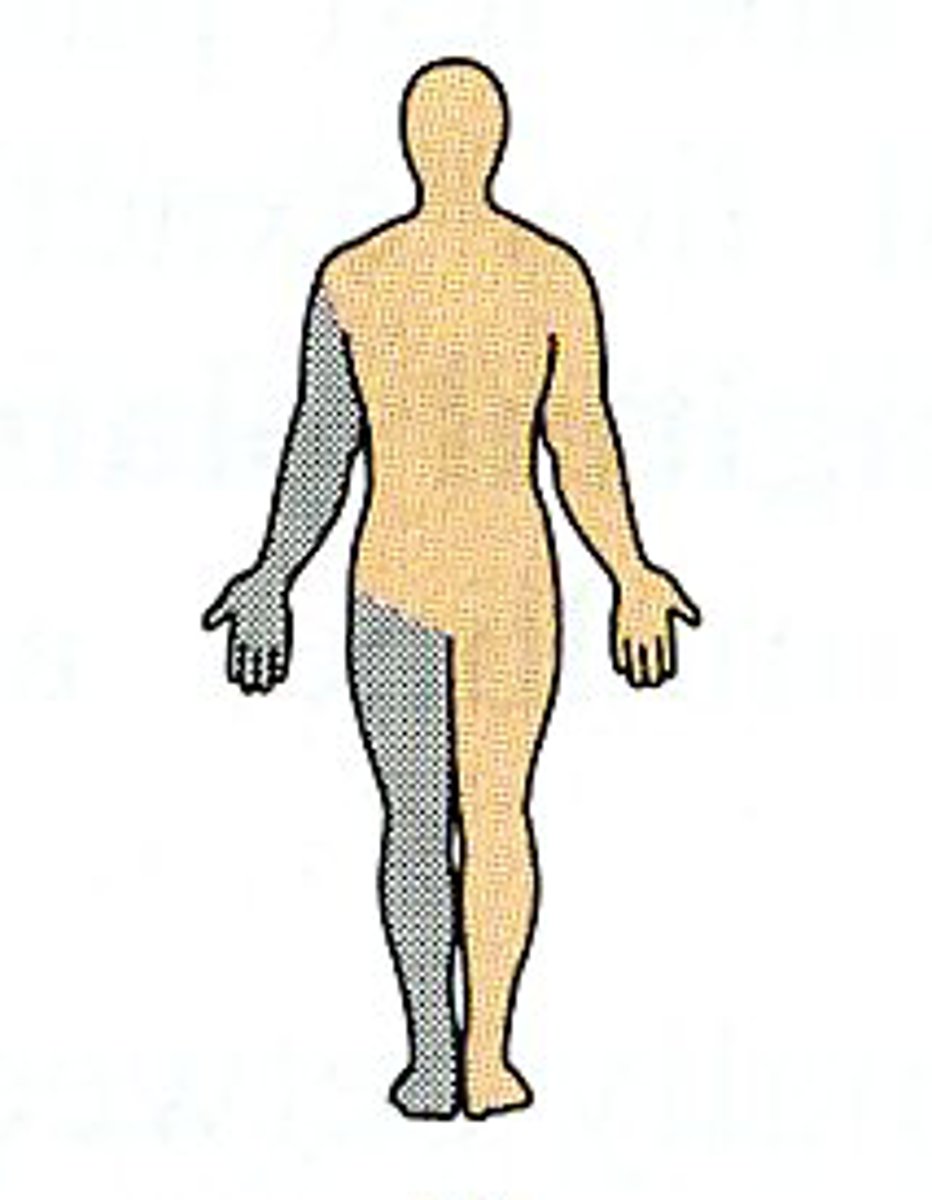
What does contralateral mean?
Structures that lie on opposite sides.
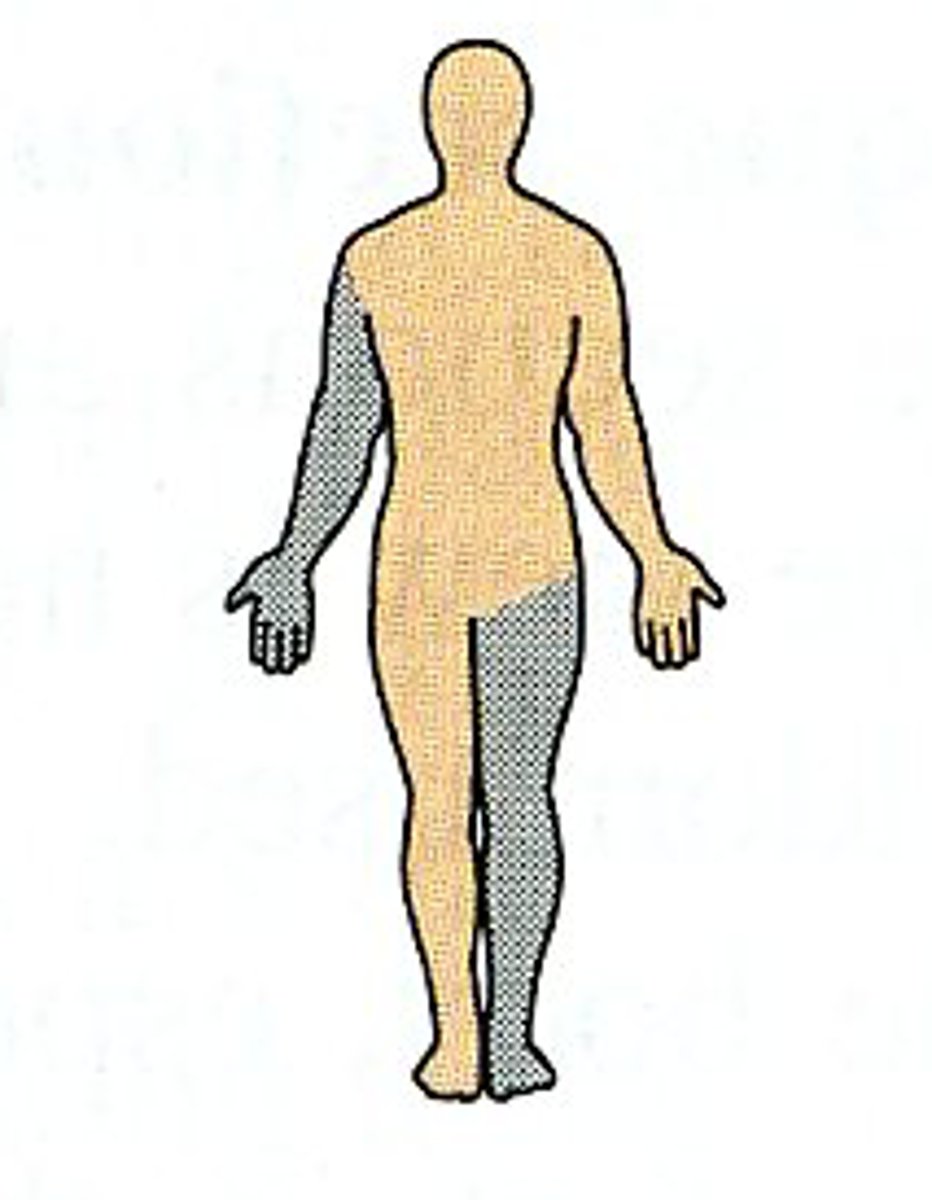
What is meant by bilateral structures?
Structures that exist in both hemispheres.
What is the term for structures that are close to one another?
Proximal
What is the term for structures that are far from one another?
Dorsal
What direction afferent does refer to?
Movement towards the brain
ex. sensory pathways
What direction does efferent refer to?
Movement away from the brain
ex. motor pathways
What is the function of the somatic nervous system?
It consists of nerves going to and from sensory organs, muscles, joints, and skin.
What is the role of the autonomic nervous system?
It controls the functioning of the body's internal organs, managing 'rest and digest' or 'fight or flight' responses.
What are the four ways the brain and spinal cord are protected?
1. Encased in bone, 2. Encased in vertebrae, 3. Protected by meninges, 4. Cushioned by cerebrospinal fluid (CSF).
What are the three layers of the meninges?
1. Dura mater (outer layer), 2. Arachnoid membrane (middle layer), 3. Pia mater (inner layer).
Dura mater
tough outermost double layer of tissue enclosing the brain in a loose sack (hard mother)
Arachnoid Membrane
middle layer of the three membranes that is a thin sheet of delicate tissue that follows the brains contours (resembling a spider web)
Pia Mater
Inner most layer of the meninges, moderately tough tissue that clings to the brains surface
What is the function of cerebrospinal fluid (CSF)?
To cushion the brain and spinal cord from shock and sudden pressure changes
is continually being made and drained in a circulatory system (the glymphatic system) via channels living in the brains ventricles
What condition can occur if the channels that circulate CSF get blocked
Hydrocephalus - result of build up of fluid and pressure
What is the blood-brain barrier (BBB)?
A protective barrier that limits the movement of blood-borne chemicals into the CNS.
How does the blood-brain barrier work?
Astroglia (a type of glial cell) stimulate endothelial cells in capillaries to form tight junctions, preventing substances from crossing.
What arteries supply blood to the brain?
Two carotid arteries and two vertebral arteries.
What are the three cerebral arteries that irrigate the forebrain?
1. Anterior cerebral artery, 2. Middle cerebral, 3. Posterior cerebral artery
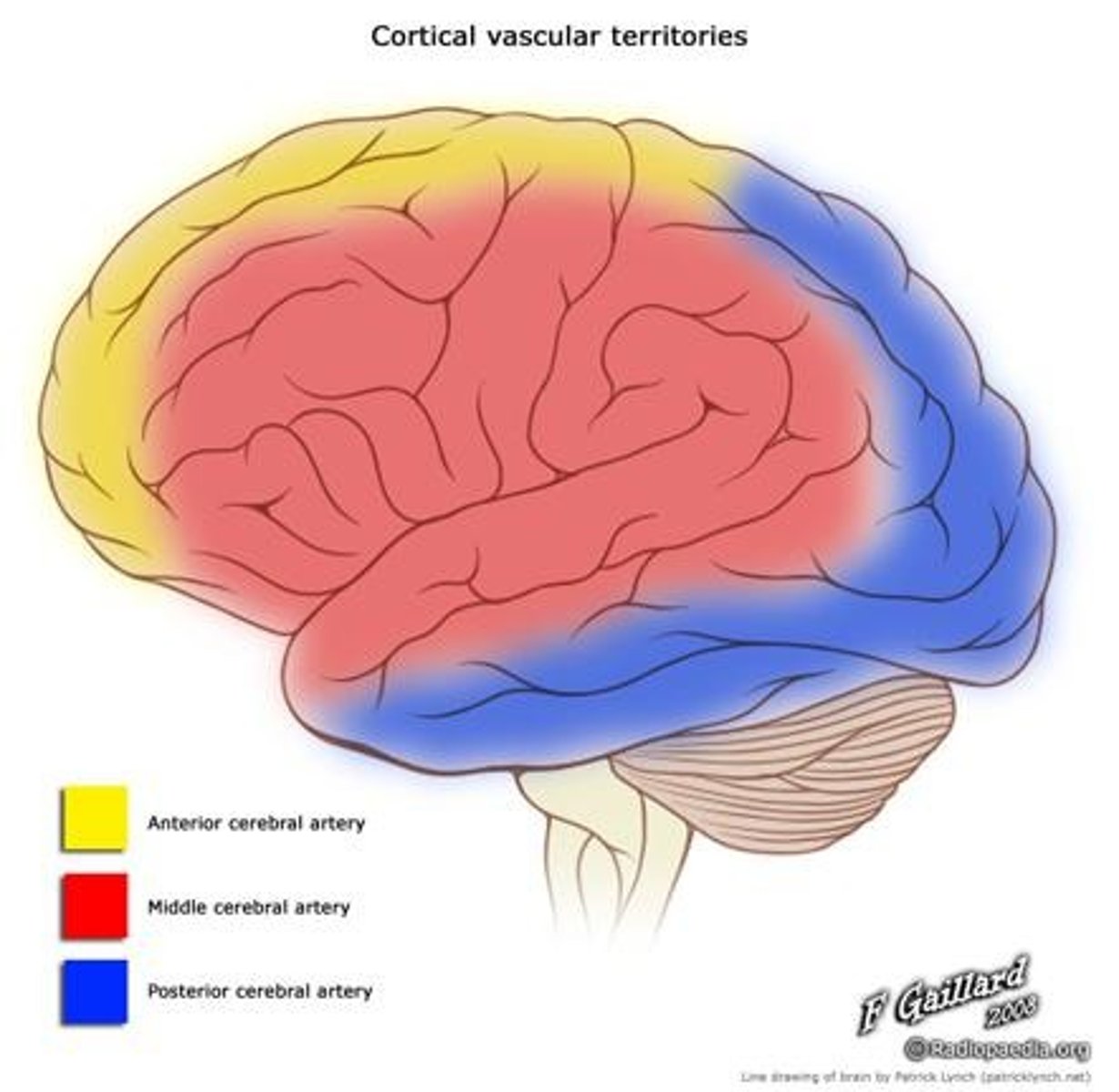
What does the anterior cerebral artery supply?
The medial and dorsal parts of the cortex.
What does the middle cerebral artery supply?
The lateral surface of the cortex.
What does the posterior cerebral artery supply?
The ventral and posterior surfaces of the cortex.
What happens if a blood clot forms in a cerebral artery?
It can cause a stroke, with symptoms varying based on the clot's location and degree of blood supply loss.
What is the role of collateral vessels in stroke recovery?
They may supply blood to the area and minimize the effect of a stroke.
How are the brain's veins classified?
As external and internal cerebral veins and cerebellum veins.
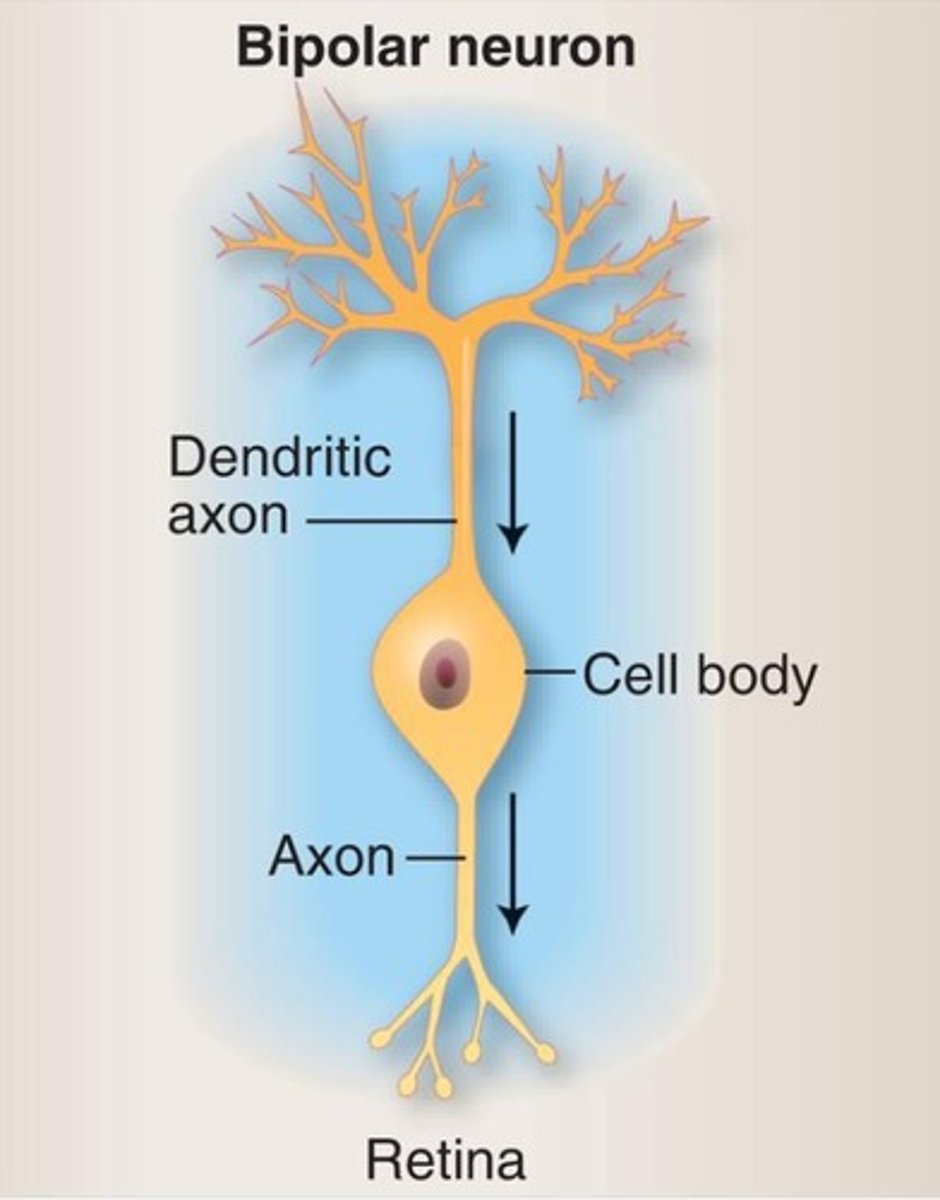
What is a bipolar neuron?
A type of sensory neuron with one dendrite and one axon
- simplest sensory receptor
What information do somatosensory neurons carry?
Touch information from receptors in the skin to the spinal cord.
What are interneurons?
Type of neuron that resides within the brain and spinal cord to link sensory and motor neuron activity
- can have multiple dendrites that branch extensively and only have one axon
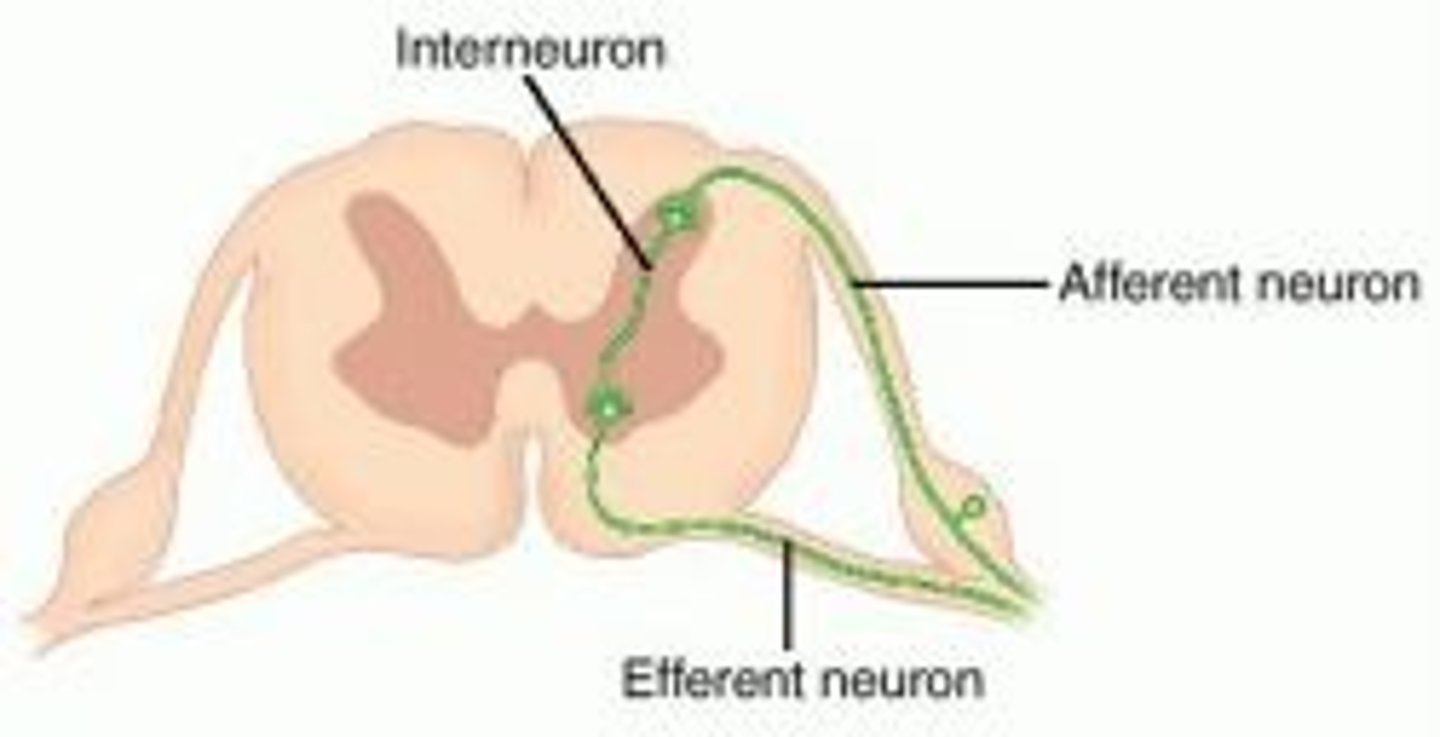
What cells are included as Interneurons?
Stellate cells, pyramidal cells, and purkinje cells
What are stellate cells?
Star-shaped interneurons found in the thalamus with many branching dendrites.
What are pyramidal cells?
Interneurons found in the cortex characterized by a pyramid-shaped cell body.
What are Perkinje cells?
Interneurons found in the cerebellum
What is the function of motor neurons?
They project to facial and body muscles to initiate movement. (efferent)
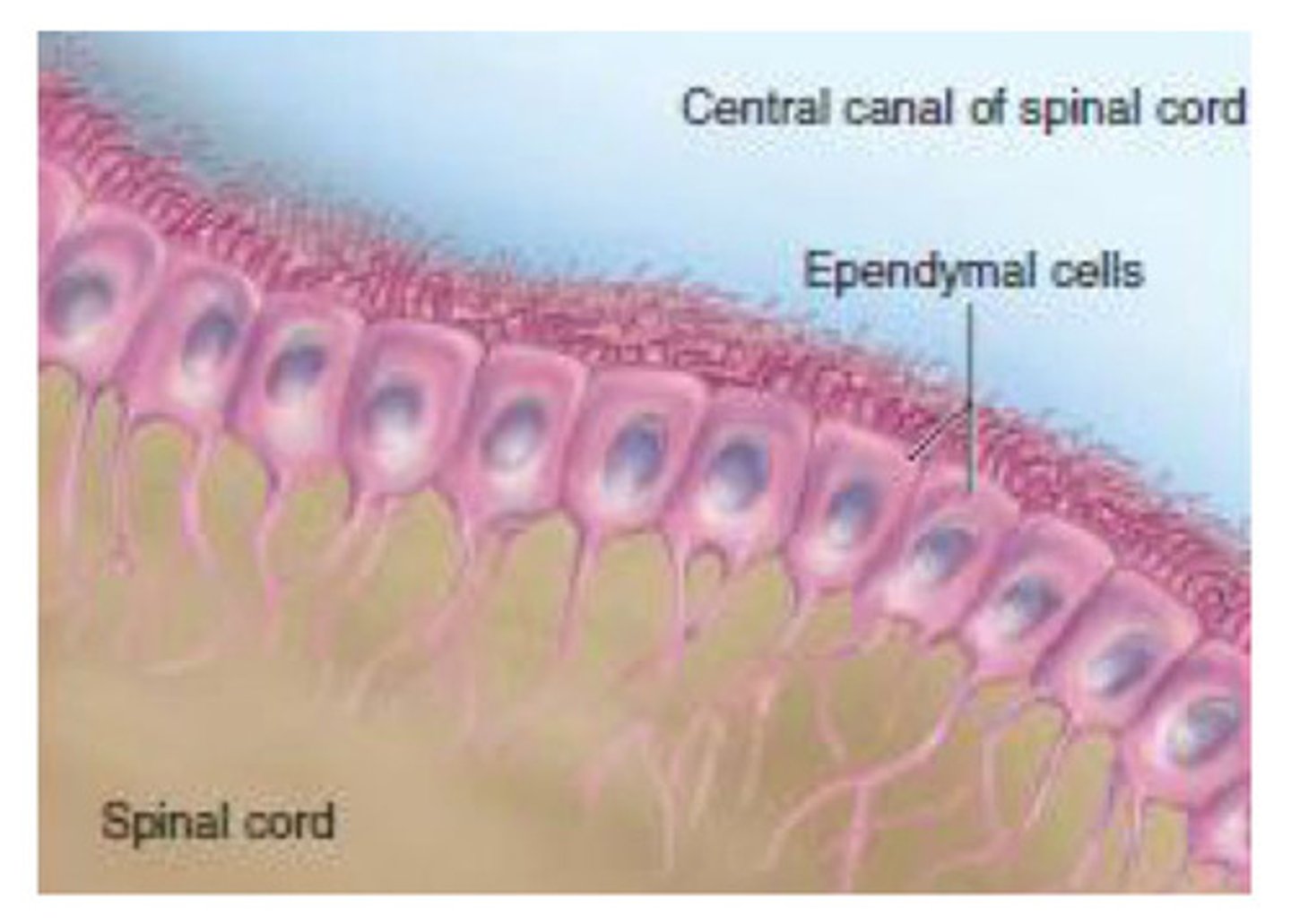
What are ependymal cells?
Glial cells that line the brain's ventricles and secrete cerebrospinal fluid (CSF).
What is the role of astroglia?
Glial cells that provide structural support, nutrition to neurons, and generate tight junctions around blood vessels in the blood-brain barrier (BBB).
What do microglia do?
They act as macrophages that remove debris near neurons by engulfing and digesting and killing anything recognized as foreign materials (microbes, cellular debris, cancer cells)
What is the function of oligodendroglia?
Asymmetrical glial cells that insulate neurons in the CNS and form the myelin sheath around some axons. (like Schwann cells but in the CNS)
What are Schwann cells?
Glial cells that form the myelin sheath around axons in the peripheral nervous system (PNS).
What is white matter composed of?
Largely myelinated axons, which appear white due to the high lipid to protein ratio in order to insulate axons
What is grey matter made up of?
A mix of capillaries, neuronal cell bodies, and their nuclei.
What is reticular matter?
A mixture of cell bodies and myelinated axons that gives a mottled grey-white appearance.
mid region of brain stem has an abundance of reticular matter
What are nuclei in the CNS?
Large compact groups of cell bodies found in grey matter.
What are nuclei in the PNS called?
Ganglia
What are tracts in the CNS?
Fibrous pathways made of large collections of axons that connect nuclei between the CNS to the rest of the body
What are nerves in the PNS called?
Fibers
however some cranial nerves like the optic nerve are technically CNS components because they connect directly to the brain. considered sometimes to be part of the PNS but once it enters the cranium from the eyes it is the '“optic tract” in the CNS
What segments categorize the vertebrae in the spinal cord?
Cranial, thoracic, lumbar, sacral, and coccygeal segments.
What is a dermatome?
A ring encasing the spinal column that connects to its dedicated spinal nerve. Ex. cervical segments control the forelimbs, thoracic segments control the trunk, lumbar segments control the hind limbs
Interior horns pf the spinal cord
Four horns that consist of grey matter
two horns oriented towards the front of the body contain efferent motor neurons
two horns oriented towards the back of the body contain afferent sensory neurons
What do spinal reflexes involve?
Simple automatic movements elicited by specific sensory stimulation.
What is the role of cranial nerves?
They convey sensory and motor signals to and from the head.
How many pairs of cranial nerves do humans have?
12 pairs.
 Note
Note  Flashcards (68)