Homeostasis NSC
 Call Kai
 Learn
Learn Practice Test
 Spaced Repetition
 Match
Match Flashcards
 Knowt Play
1/50

There's no tags or description
Looks like no tags are added yet.
Name | Mastery | Learn | Test | Matching | Spaced | Call with Kai |
|---|
No analytics yet
Send a link to your students to track their progress
51 Terms
Thermoregulation is at the center for body’s regulation of hemeostasis via> (Hint: Their are 4 important things to note)
Negative Feedback
Redundancy
Behavioral Homeostasis
Concept of allostasis
Body is the balance of our?
Biological, Physiological, and Behavior mechanism’s
What are these mechanisms maintained from?
Acidity, Saltiness, Water Level, Oxygenation, Temperature, and energy availability
These maintenance will maintain Homeostasis, what is that?
A relatively stable, balanced internal environment optimized for cellular activities
Deviations from the optimal internal state/ Homeostasis will affect the? (Hint: It’s the word and definition)
Motivation, psychological process that induces or sustains a particular behavior
Endotherms, are species/animals that
Produce their own body heat through metabolism and muscle activity
What is a key fact for endotherms
Can sustain activity for long periods because they use oxygen to fuel constant heat production
Exotherms are living species/animals that
Get their heat from the external environment rather than producing it internally
The closed system regulates our hemostatic mechanism balances between the?
Positive and negative feedback systems
What are a few homeostatic mechanisms that are primarily negative feedback systems?
Mechanisms that regulate temperature, body fluids, and metabolism
A deviation from a desired value called the ____ ___, will trigger a?
Set Point
A Compensatory action of the system
What is Negative Feedback?
Body detects a change away from a normal setpoint, activates a response to correct that change, and then shuts the response off once the setpoint is restored
Example of Negative Feedback and Positive Feedback (Mostly negative I think)
Thermostat regulation of the human body is within narrow range 36–38°C. In fever, high temperature triggers the thermostat regulation to release heat outside the body to prevent denaturalization of the proteins and vice versa in cold temperature to prevent the crystallization.
Redundancy is defined as an important assets to maintain?
Keep the internal environment stable—regulating temperature, water balance, and energy stores by monitoring what we have, conserving what we need, obtaining new resources, and eliminating excess.
Example of Redundnacy
Shivering, sweating, burning fat, and changing blood flow are just a few examples of the many ways the body can increase or decrease its temperature.
Kep players that regulate temperature is the?
Preoptic area, however, many areas of the brain and body are involved in regulating it
Behavioral Compensation relates to
Behavioral changes that are necessary for survival and maintaining homeostasis
Example of Behavioral Compensation
As a human we regulate body temperatures by (1) changing exposure of the body surface, for example by huddling or extending limbs; (2) changing external insulation, such as by using clothing or nests; and (3) changing surroundings, moving into the sun, into the shade, or into a burrow.
Allostasis is the?
Continuous shifting/adjusting in response of the body to accommodate sudden changes in the activity level and stress
Allostatic load is the?
Wear and tear of daily life
Two compartments are present in the body through which ions and salts pass being
Intracellular versus Extracellular Compartments
How does diffusion occur for ICF and ECF with things like glucose, and blood?
Idk ask Copilot
What does Extracellular compartments include?
Interstitial fluid (the fluid between cells) and Blood Plasma (protein-rich fluid that carries RBC and WBC)
Water movement occurs through these compartments in and out of cells via?
Specialized protein channels called aquaporins, and through ion channels that prefer water along it’s preferred ions
Two driving forces that drives the water movement across the cell are?
Diffusion and Osmosis
Diffusion is the process where in?
Passive movement of ions occur across water compartments to maintain uniform distribution (High concentration to Lower)
Osmosis is the movement of
Water across a semipermeable membrane from low solute concentration to high solute concentration to equalize the two solutions
She said a whole lot of stuff earlier
She skipped slides 8-9 so go back to them
Osmotic thirst is triggered when ______ increases.
Plasma Osmolarity (too many solutes, and too little water —→ Need water)
Solute increase in extracellular fluid increases pull of water from intracellular
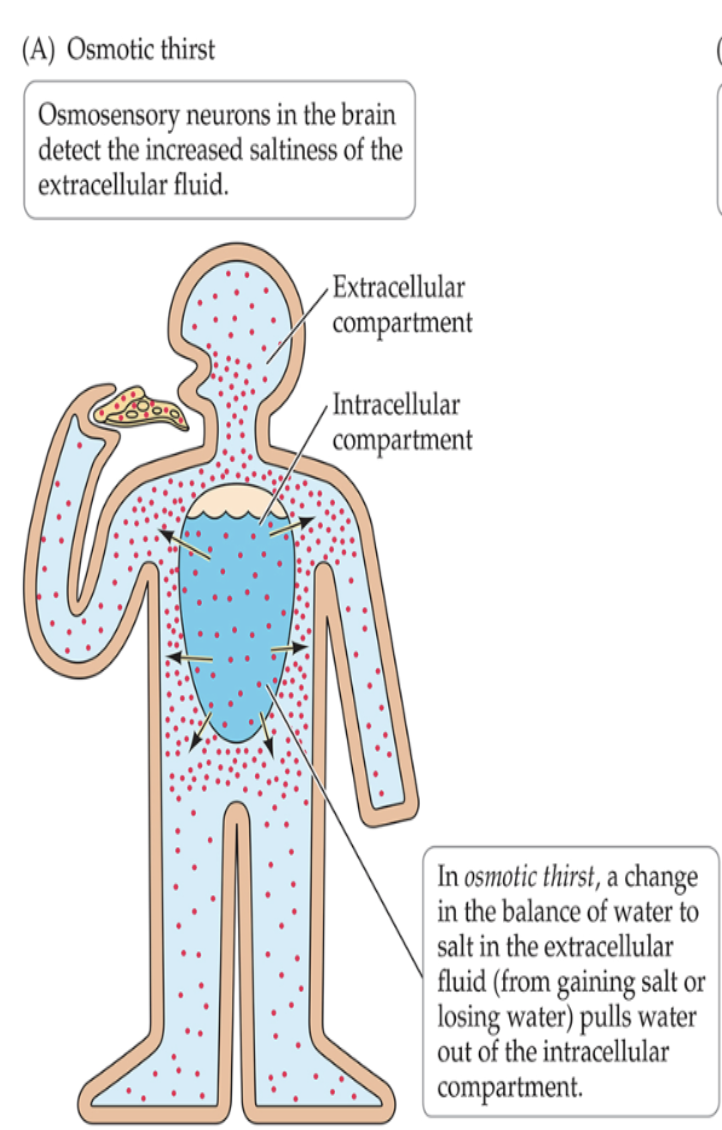
Hypovolemic thirst is triggered when ______ decreases.
Blood volume or pressure is low (loss of water from Extracellular)
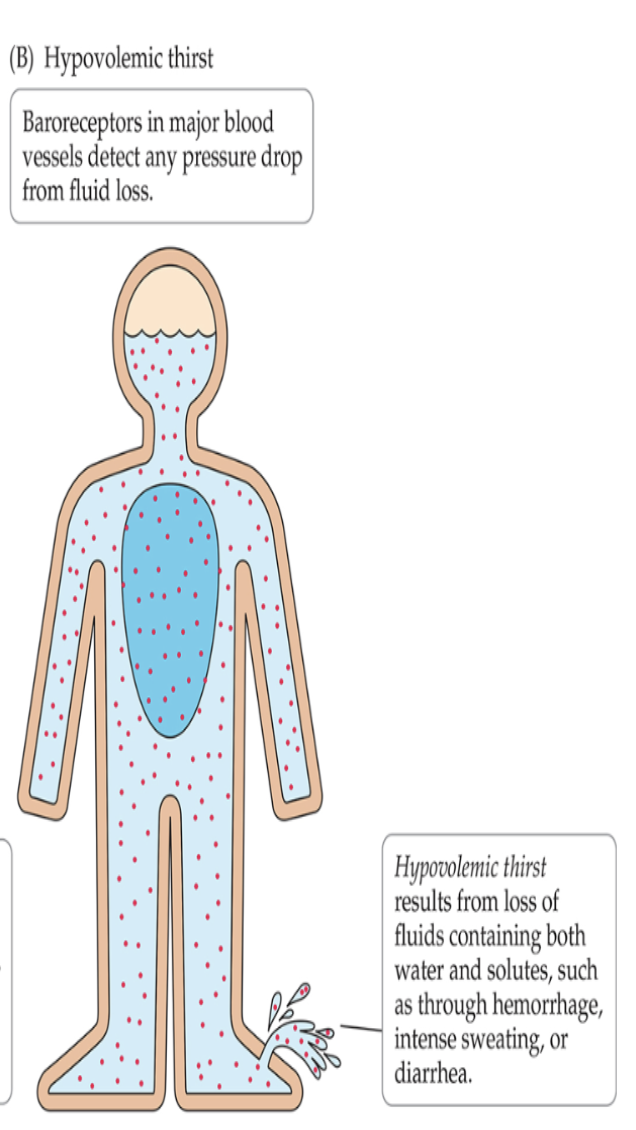
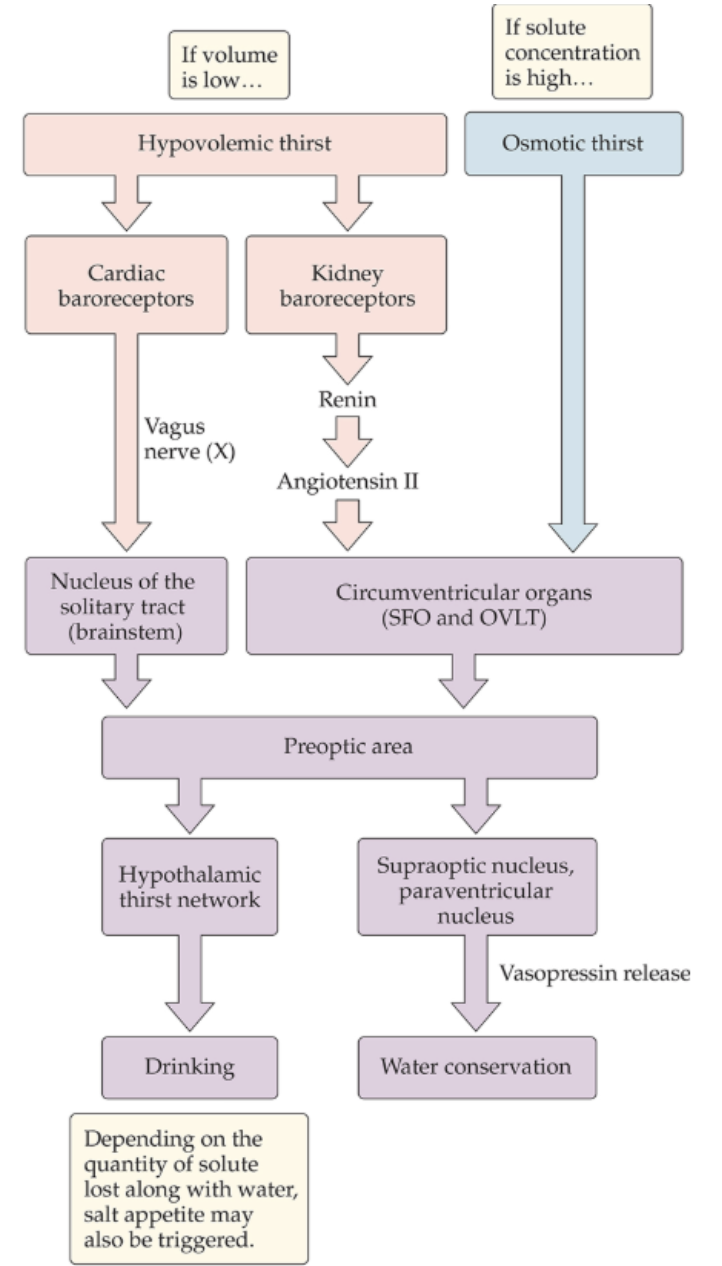
Summary of Thirst
For Hypovolemic Thirst, it is triggered by the decrease of fluid volume called Hypovolemia, what are some causes?
Blood Loss, Vomiting, and Diarrhea present with symptoms of low BP and pulse rate
The Rapid decrease in extracellular volume is first detected by the?
Baroreceptors present in Major blood vessels which send signals to hypothalamus
For Hypovolemic Thirst, what are the main two hormones involved in the conversation
Vasopressin, and Angiotensin are the main, but other hormones like Atrial Natriuretic peptide (ANP), Antidiuretic hormone (ADH) and Renin
Hypovolemia decreases ___ followed by triggering the brain to secrete more _________ which acts on the ____ ____ and _____ to activate _______ ______ ______ to conserve water and solutes
ANP
Vasopressin
Adrenal Glands and Kidneys
Renin angiotensin system
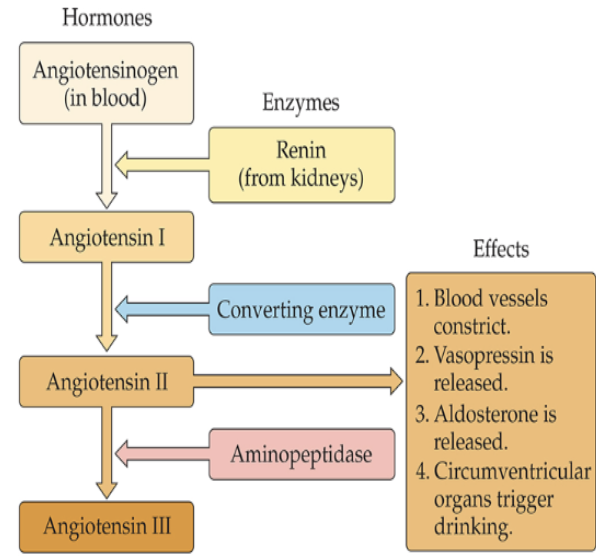
Go over Slide 9 and 11, on original slide show
Explain the terms of Glucose, Glycogen, Glycogenesis, and Lipids
Glucose is the main fuel for energy
Glycogen is glucose stored for short term in liver
Glycogenesis is converting glucose to glycogen using insulin
Lipds are long term storage in fat tissue
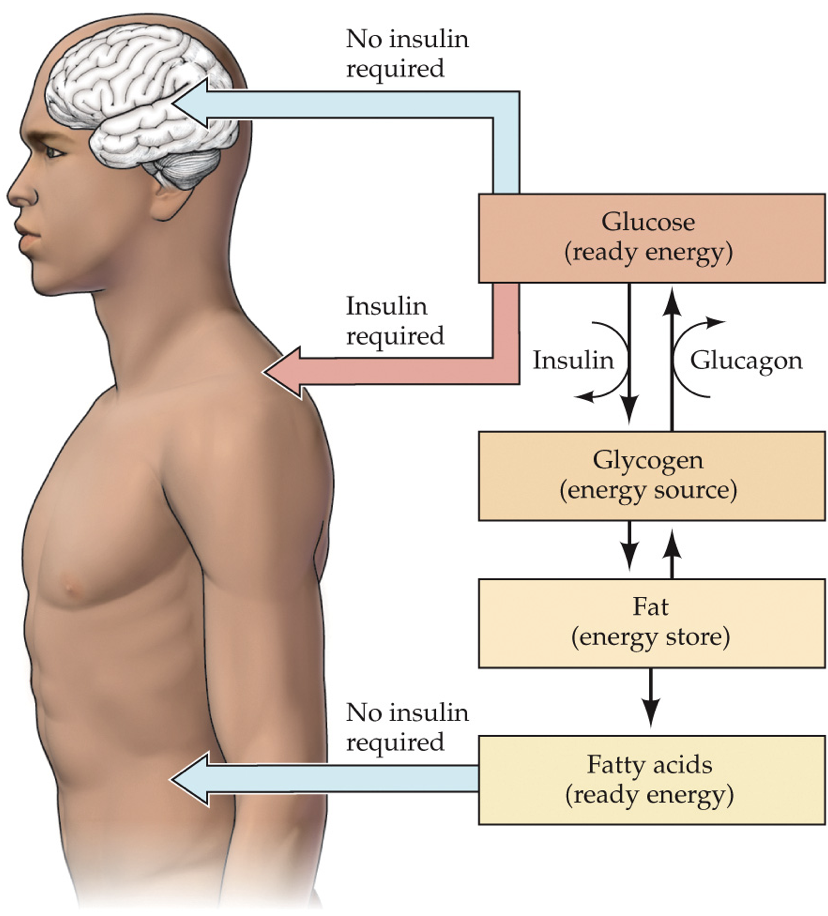
The brain integrates insulin and glucose levels with other information to decide when to start or stop eating (Diagram is flip side)
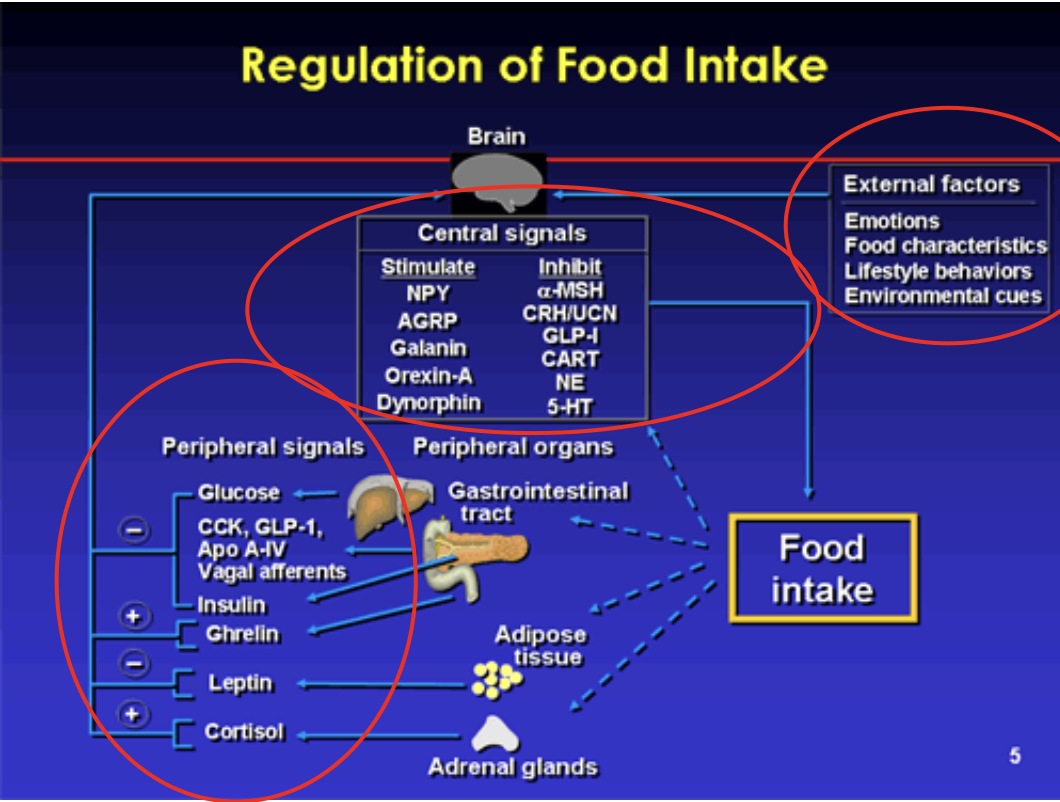
What is Ghrelin and Leptin? (Hint: function and location where it is made)
Ghrelin is the Hunger Hormone made from GI tract
Leptin is the Satiety hormone made from adipose cells
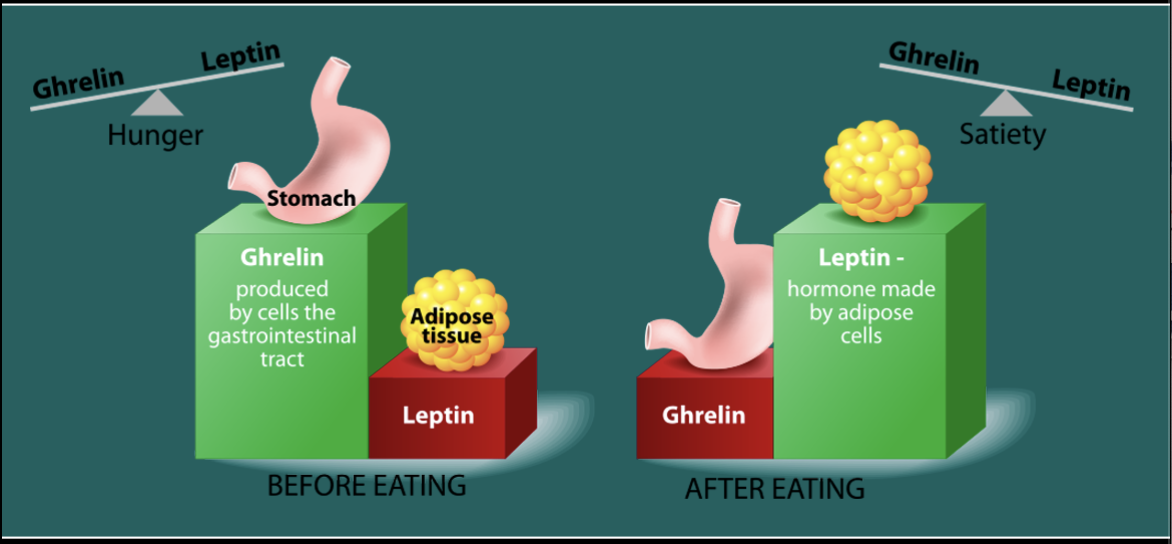
Leptins main function is to give a feeling of fullness, what happens if their was a defect in leptin production?
Give a falsely low report on body fat, causing animals to overeat
Obese people are?
Leptin resistant
Over nutrition inflames the Hypothalamus causing?
Obesity, diabetes, and heart disease
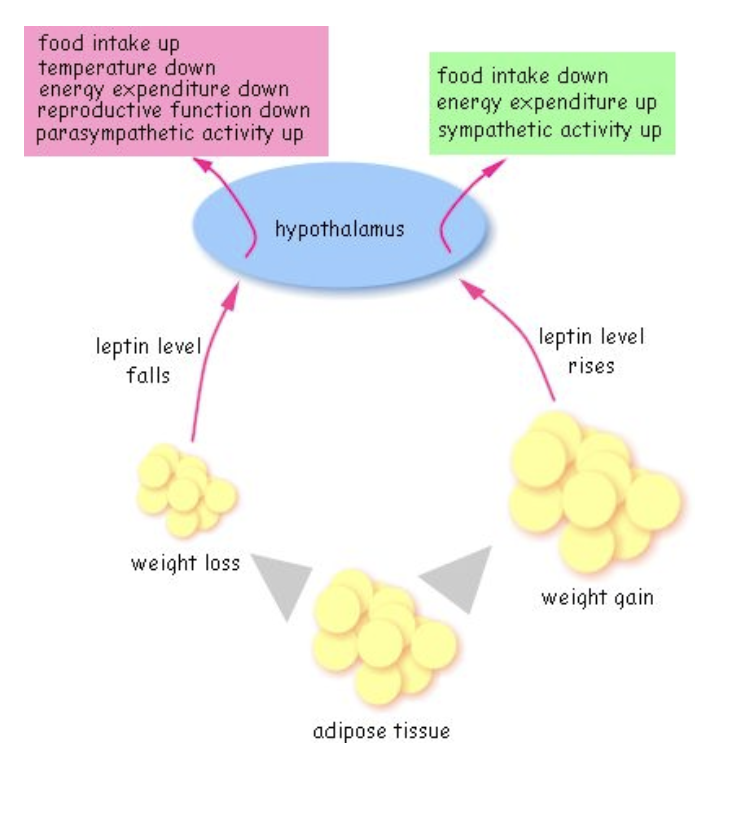
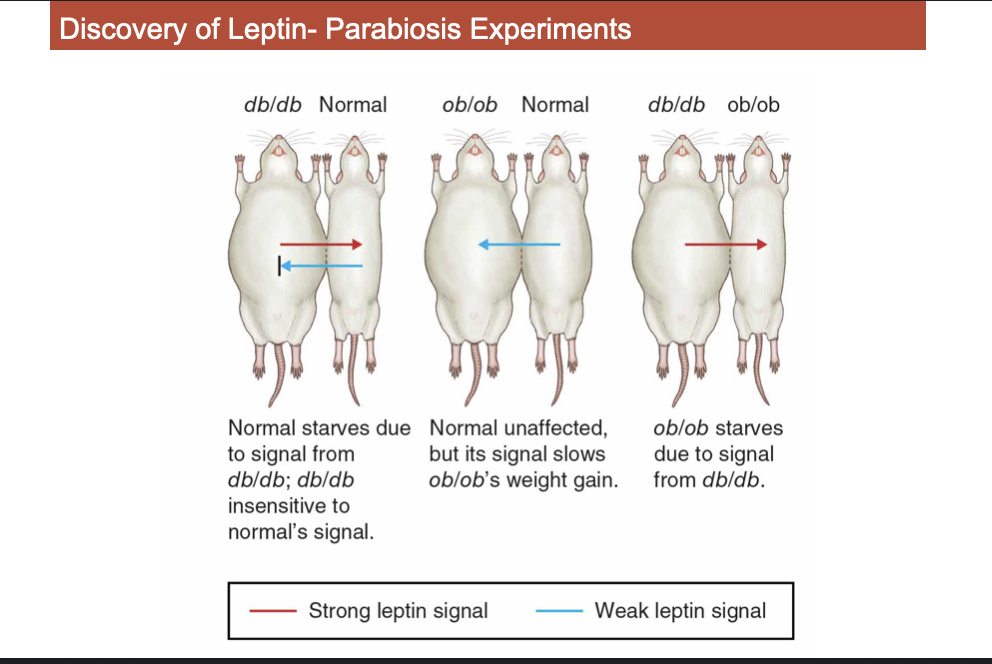
Two diagrams of Leptin, one on front other on Back
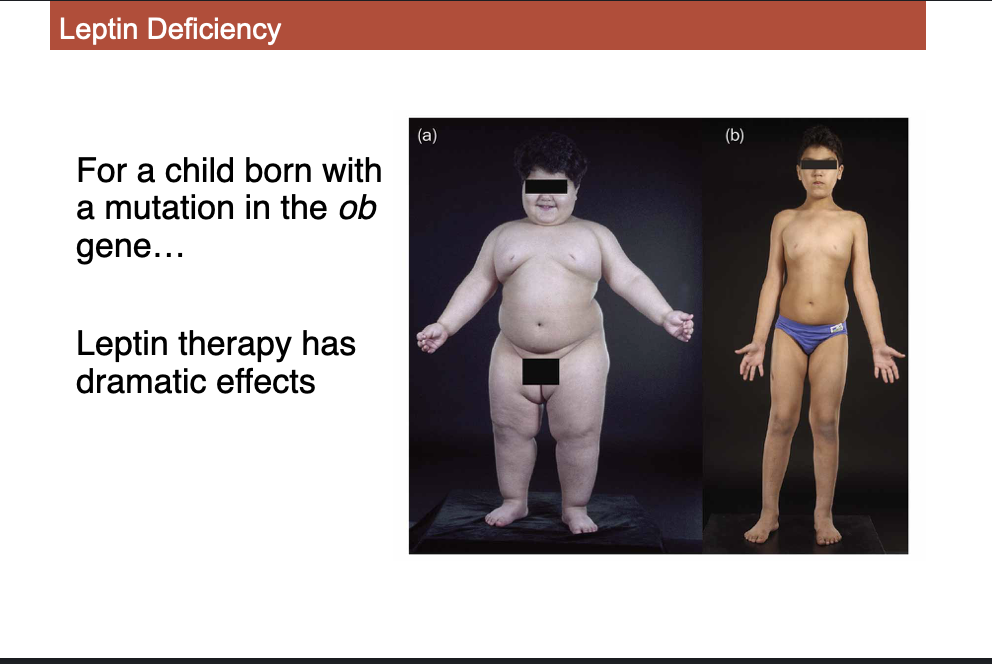
If Ghrelin levels are elevated a.k.a Prader-Willi it will cause?
Insatiable hunger, always hungry feeling
Prader-Willi is usually caused by a?
Deletion of a part of chromosome 15. Defects in the Hypothalamus
Their is a missing slide going over GLP-1, not present on Original Slide show, come back to this
Two regions of the Hypothalamus are the? (Hint: Name and Center Idea)
Ventromedial Hypothalamus: Satiety Center (Sensation of Fullness)
Lateral Hypothalamus: Hunger center (Sensation of hunger)
The Arcuate Nucleus of the Hypothalamus has two neurons being the?
POMC (Pro‑opiomelanocortin neurons): Inhibit appetite and raise metabolism
NYP (Neuropeptide Y) and AgRP (Agouti-related peptide): Stimulate appetite, and lower metabolism
Leptin inhibits _____ ________ and stimulates _____ _______
Inhibits NPY
Stimultes POMC

