melissa moore exam 3
 Studied by 0 people
 Call Kai
 Learn
Learn Practice Test
 Spaced Repetition
 Match
Match Flashcards
 Knowt Play
1/87

There's no tags or description
Looks like no tags are added yet.
Name | Mastery | Learn | Test | Matching | Spaced | Call with Kai |
|---|
No analytics yet
Send a link to your students to track their progress
88 Terms
Define supply chain
is the entire network of organizations, people, activities, and resources involved in producing a product and delivering it to the customer.
value delivery network,
•Company, suppliers, distributors, and customers who partner with each other to improve the performance of the entire system
channel of distribution
is the path a product takes from the producer to the final customer, including all intermediaries involved.
upstream and downstream partners
Upstream partners supply the raw materials, components, parts, information, finances, and expertise needed to create a product or service.
Downstream partners serve as distribution channels that link the firm and its customers
What is an intermediary?
Intermediaries create greater efficiency in making goods available to target markets. Through their contacts, experience, specialization, and scale of operation, intermediaries usually offer the firm more than it can achieve on its own.
Define retailer, wholesaler
Retailer: A retailer sells products directly to the final consumer.
Wholesaler: A wholesaler buys goods in bulk from producers and sells them to retailers or other businesses.
What is upstream? Downstream? What functions do channel members perform?
Upstream: Everything and everyone that provide the materials and inputs before production.
Downstream: Everyone involved in moving the finished product to customers.
Channel member functions: They gather info, promote, find customers, match products to needs, negotiate, move and store goods, finance, and take on risk.
What is the difference between direct and indirect channels? Example?
–Direct marketing channel: No intermediary levels
–Indirect marketing channels: One or more intermediary level
What is vertical conflict? How is it different than horizontal conflict?
–Horizontal conflict occurs among firms at the same level of the channel. (Ford Dealership vs Ford Dealership)
–Vertical conflict occurs between different levels of the same channel. (KFC parent company and its franchise operations)
Define a conventional distribution channel. How is it different than a vertical distribution channel?
A conventional distribution channel flows from a producer, wholesaler, retailer and then to the consumer.
A vertical marketing system consists of producers, wholesalers, and retailers acting as a unified system and the flows down to the consumer.
Which is preferred, conventional or vertical?
vertical
What is a horizontal marketing system?
in which two or more companies at one level join together to follow a new marketing opportunity
What is the difference between intensive, selective, exclusive distribution? When do you use which?
Intensive: Sold everywhere → for everyday items (e.g., snacks).
Selective: Sold in some outlets → for mid-range products (e.g., electronics).
Exclusive: Sold in very few outlets → for luxury/premium items (e.g., designer watches)
Define logistics? What are the key areas?
•Planning, implementing, and controlling the physical flow of materials, final goods, and related information from points of origin to consumption
Define inbound, outbound, and reverse logistics.
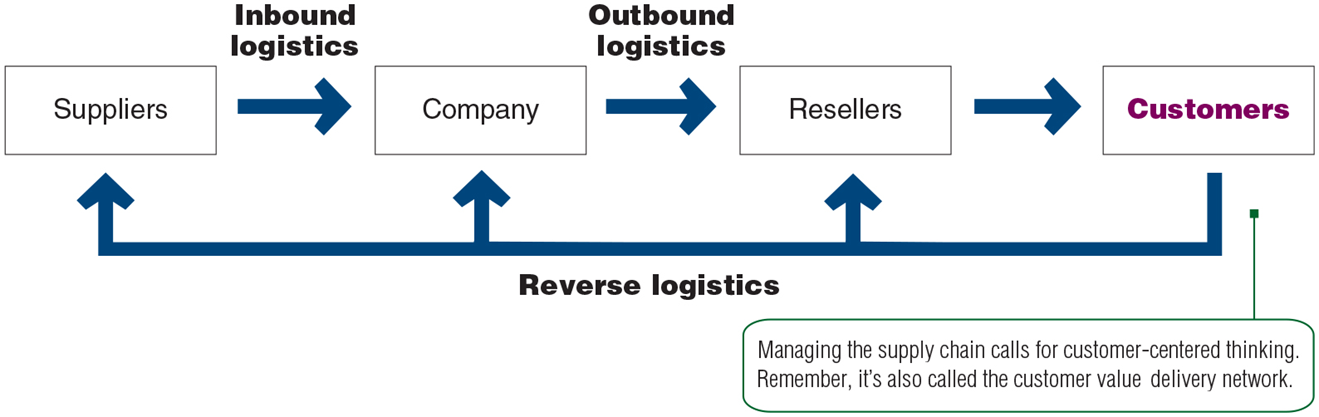
Inbound Logistics: Movement of materials from suppliers to the company.
Outbound Logistics: Movement of finished products from the company to customers.
Reverse Logistics: Process of returning products from customers back to the company for returns, recycling, or disposal.
Storage warehousing vs distribution center?
•Storage warehouses store goods for moderate to long periods.
•Distribution centers are large, highly automated warehouses that receive goods, take orders, fill them, and deliver goods to customers. (designed to move goods)
What is JIT? RFID?
–Just-in-time logistics systems (Carry small amount of inventory; new stock arrives right when you need it! Key? Forecasting!)
–Radio frequency identification, smart tag technology, gives the physical location of a product. (Makes the supply chain intelligent, transparent and automated.)
What are the different transportation options?
truck, rail, water, pipeline, and air.
Define personnel selling.
involves personal presentations by the firm’s sales force for the purpose of engaging customers, making sales, and building customer relationships.
The salesperson represents what? Are they boundary spanners? What does boundary spanners mean?
Salesperson: represents the company to customers and customers to the company.
Boundary spanner: someone who connects the company with the outside world (like customers or the market).
Yes: salespeople are boundary spanners.
List the six steps in sales force management.
• Designing sales force strategy and structure
• Recruiting and selecting salespeople
• Training salespeople
• Compensating salespeople
• Supervising salespeople
• Evaluating salespeople
List three types of salesforce structure.
–Territorial (geographic region)
–Product (certain product lines)
–Customer (or market; certain types of customers/markets)
List some traits that are used for selecting sales reps.
What are the sources used for recruitment of salespeople?
-Outside sales force - Travels to call on customers in the field
-Inside sales force - Conducts business from their offices via telephone, the Internet, or visits from prospective buyers
-Hybrid sales force - Combines outside and inside sales forces.
The goals of training are to teach salespeople what?
–About different types of customers (and how to build a relationship)
–How to sell effectively (trained in basics of the selling process)
–About the company’s objectives, organization, products, and the strategies of competitors
List the four components of a compensation plan.
–Fixed amount — salary
–Variable amount—commissions or bonuses
What tools of supervision are available?
Call plan: shows which customers and prospects to call on and which activities to carry out
Time-and-duty analysis: the salesperson spends time traveling, waiting, taking breaks, and doing administrative chores.
Sales force automation system: are computerized, digitized sales force operations that let salespeople work more effectively anytime, anywhere.
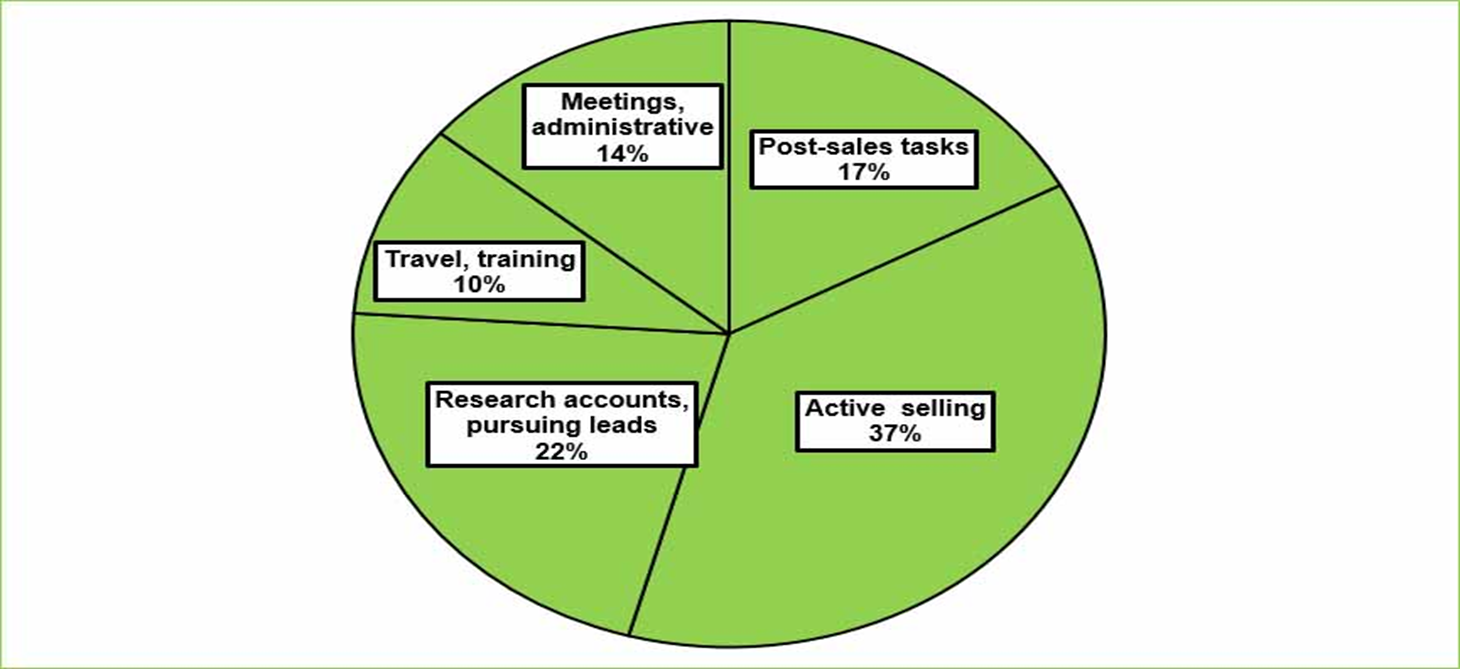
Fill in the following regarding how salespeople spend their time: 10% on what? 14%? 17%? 22%? 37%?
Management gets information about its sales force through what (page 421)?
–From sales, call, and expense reports
–By monitoring the sales and profit performance data in the salesperson’s territory
–Through personal observation, customer surveys, and talks with other salespeople
Be able to list the steps in the selling process.
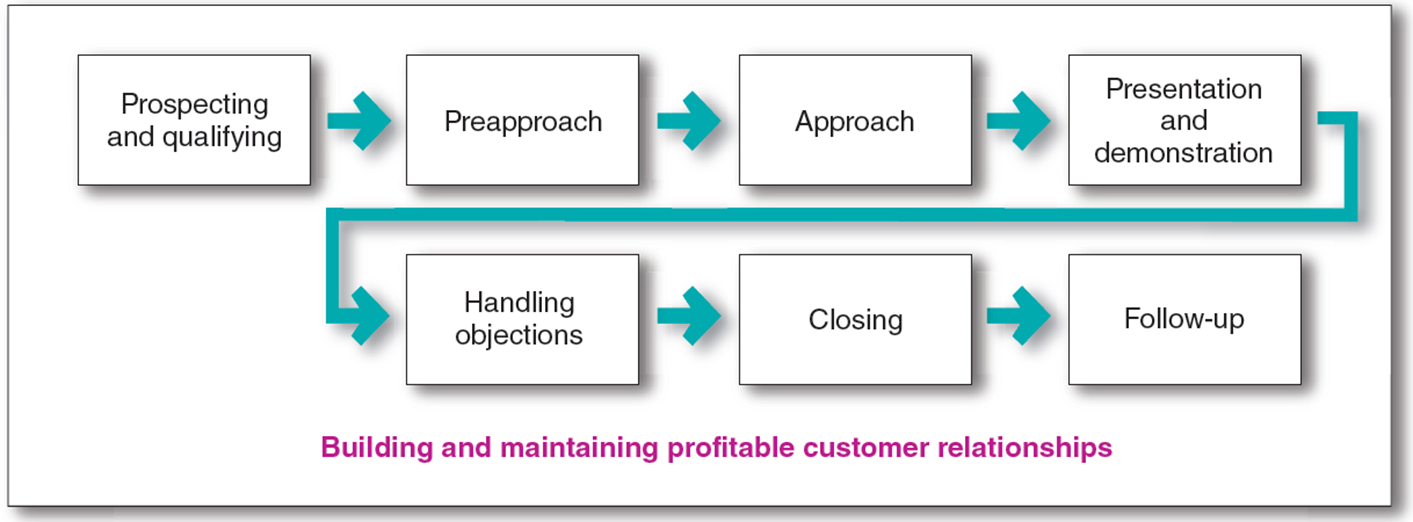
In your opinion, which steps do you think a relational salesperson focuses on?
a relational salesperson focuses especially on the steps that build and maintain long-term relationships, rather than just closing a single sale.
In your opinion, which step above do you think a transactional salesperson focuses on?
Transactional salespeople are usually less concerned with handling objections in depth or follow-up, because their goal is a quick, one-time sale rather than building a long-term relationship.
Define Sales Promotions.
consists of short-term incentives to encourage the purchase or sale of a product or service.
Why have the use of sales promotions grown?
–Product managers view promotion as an effective short-run sales tool.
–Competitors use sales promotion to differentiate their offers.
–Advertising efficiency has declined.
–Sales promotions help attract today’s more thrift-oriented consumers.
What is the objective associated with sales promotions for: Consumer, Retailer/wholesaler, Business
Consumer promotions: To urge short-term customer buying or boost customer-brand engagement
Trade promotions: To get retailers to carry new items and more inventory, buy ahead, or promote the company’s products and give them more shelf space
Business promotions: To generate business leads, stimulate purchases, reward customers, and motivate salespeople
List all the different types of sales promotions and provide a BREIF description.
Coupons – Vouchers that offer a discount on a product or service.
Rebates – Partial refunds given after a purchase is made.
Samples – Free product trials to encourage purchase.
Premiums – Free or low-cost items offered with a purchase.
Contests – Customers compete to win prizes, usually based on skill or creativity.
Sweepstakes – Chance-based promotions where winners are randomly selected.
Loyalty Programs – Rewards for repeat purchases, like points or discounts.
Point-of-Purchase Displays (POP) – In-store displays designed to attract attention and boost sales.
Trade Shows/Exhibitions – Events where products are showcased to generate interest and leads.
Price Packs (or Bundling) – Selling multiple products together at a reduced price.
Event Sponsorships – Associating a brand with an event to gain exposure.
What type of sales promotions was used with Kool Aid (see slides)?
Adding the spoon (the premium item) was brilliant. Not only did the spoon change color (like the product), it is functional, includes the kool aid face, and requires that 3 containers be sold at once (bundle).
What are the key tools for trade promotions?
–Contests, premiums, and displays
–Discounts
–Allowances
–Free goods
–Push money
–Specialty advertising items
What are the key tools for business promotions?
–Conventions and trade shows
–Sales contests
Define price. Both the narrow and broad definition.
•Price is the sum of all the values that customers give up in order to gain the benefits of having/using the product/service.
•Amount of money charged for a product or service
•Determines a firm’s market share and profitability
•Produces revenue(all other P’s cost!)
•Flexible
What sets the floor? The ceiling?
The floor is the product cost, the ceiling is consumer perception of value.
Know the difference between cost-plus, competition-based, and customer value-based pricing.
Cost-Plus Pricing: Set price by adding a markup to your costs.
Competition-Based Pricing: Set price based on what competitors charge.
Customer Value-Based Pricing: Set price based on how much customers believe the product is worth.
Fixed, variable, and total cost. Define.
–Fixed costs (overhead)…do not vary
–Variable costs…vary with production
–Total costs…fixed plus variable
What is a demand curve?
is a graph that shows the relationship between a product’s price and the quantity consumers are willing to buy.
What is the difference between market-penetration and market-skimming pricing?
Market-skimming pricing (price skimming)
•Setting a high price to skim maximum revenues from the segments willing to pay the high price
Market-penetration pricing
•Setting a low price to attract a large number of buyers and a large market share
captive-product
Captive-product pricing refers to setting a price for products that must be used along with a main product, such as blades for a razor and games for a video-game console.
Be familiar with different types of discounts: seasonal, functional, quantity, promotional allowances, trade-in allowances.
Quantity discount is a price reduction to buyers who buy large volumes.
Functional discount, to trade-channel members who perform certain functions, such as selling, storing, and record keeping.
Seasonal discount is a price reduction to buyers who buy merchandise or services out of season.
Trade-in allowances are price reductions given for turning in an old item when buying a new one.
Promotional allowances are payments or price reductions that reward dealers for participating in advertising and sales-support programs.
Reference price?
Prices that buyers carry in their minds and refer to when looking at a given product
Pure competition
Many sellers offer identical products, and no single seller can influence the market price.
by-product pricing
refers to setting a price for by-products in order to make the main product’s price more competitive.
Product bundle pricing
refers to combining several products and offering the bundle at a reduced price.
Optional-product pricing
refers to the pricing of optional or accessory products along with a main product.
Product line pricing
refers to determining the price steps to set between various products in a product line based on cost differences between the products, customer evaluations of different features, and competitors’ prices.
Segmented Pricing
•Selling a product or service at two or more prices, where the difference in prices is not based on differences in costs
Forms of segmented pricing: Customer-segment pricing, Product form pricing, Location-based pricing, Time-based pricing
Psychological Pricing
•Considers the psychology of prices and not simply the economics
–The price says something about the product.
Dynamic Pricing
refers to adjusting prices continually to meet conditions and situations in the marketplace.
Monopolistic Competition
Many sellers offer similar but differentiated products, giving each some control over pricing.
Oligopolistic Competition
A few large firms dominate the market, and each one’s actions significantly affect the others.
Pure Monopoly
One seller controls the entire market and can set prices due to a lack of competition.
What is the promotion mix?
consists of tools that the company uses to engage customers, persuasively communicate customer value, and build customer relationships.
Define advertising, personal selling, public relations, sales promotions. What are the pros/cons of each?
–Advertising (includes digital, broadcast, print, outdoor, and other forms)
–Sales promotion (includes online and in-store discounts, coupons, displays, demonstrations, and events)
–Personal selling (includes virtual or personal sales presentations, trade shows, and incentive programs)
–Public relations (P R) (includes news updates, stories, sponsorships, events, webpages, and blogs
What is Integrated Marketing Communication? Example?
Carefully integrating and coordination the company’s many communications channels to deliver a clear, consistent, and compelling message (3 C’s!) about the organization and its products.
Example: A company launching a new sneaker might use TV ads, social media posts, influencer partnerships, email campaigns, and in-store displays all with the same branding, slogan, and message.
What is content marketing?
They create, inspire and share brand messages and conversations across POES
What is the difference between a push vs pull strategy?
A push strategy refers to a promotion strategy that calls for using the sales force and trade promotion to push the product through channels. The producer promotes the product to channel members that in turn promote it to final consumers.
A pull strategy refers to a promotion strategy that calls for spending a lot on consumer advertising and promotion to induce final consumers to buy the product, creating a demand vacuum that pulls the product through the channel
Know figure 12.3 and define each stage.
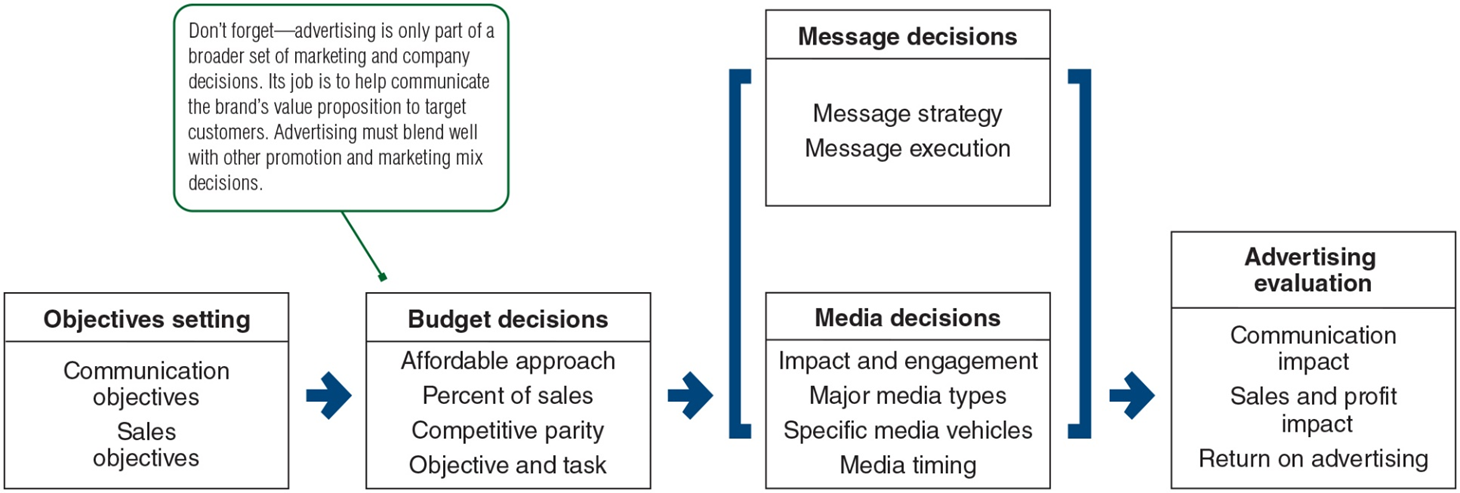
• Objectives setting: Communication objectives; Sales objectives
• Budget decisions: Affordable approach; Percent of sales; Competitive parity; Objective and task
• Message decisions: Message strategy; Message execution
• Media decisions: Impact and engagement; Major media types; Specific media vehicles; Media timing
• Advertising evaluation: Communication impact; Sales and profit impact; Return on advertising.
What is the difference between informative, persuasive, and reminder advertising?
Informative Advertising: Educates customers about a product’s features, uses, or benefits.
Example: A tech company explaining a new smartphone’s capabilities.Persuasive Advertising: Aims to convince customers to buy or switch brands.
Example: A soda ad claiming “Our flavor is better than competitors’.”Reminder Advertising: Keeps the brand top-of-mind for customers who already know it.
Example: Coca-Cola ads during holidays reminding people to enjoy Coke.
Is comparative advertising persuasive advertising (see page 389)?
Yes. Comparative advertising is a form of persuasive advertising because its main goal is to convince customers to choose one brand over another by directly comparing features, benefits, or prices.
Example: A smartphone ad highlighting that it has a longer battery life than Brand X.
List and define the four advertising budget methods. Which is the best? Why? Consider pitfalls of the other options.
Affordable: spend what you can → may underfund
% of Sales: fixed % of sales → ignores objectives
Competitive-Parity: match competitors → may not fit your goals
Objective-and-Task: budget to meet goals → most effective
What are the different media types?
television, digital, mobile, and social media, newspapers, direct mail, magazines, radio, and outdoor.
What is reach, frequency, impact?
Reach: % of people in the target market who are exposed to the ad campaign during a given period of time.
Frequency: a measure of how many times the average person in the target market is exposed to the message.
Impact: the qualitative value of message exposure through a given medium. (ad in Time vs. National Enquirer)
How do you evaluate advertising effectiveness?
•Return on advertising investment: Net return on advertising investment divided by the costs of the advertising investment
Advertisers should regularly evaluate: Communication effects & Sales and profit effects
Define public relations.
•Public relations should be viewed as an ongoing program during crises and good times
•Promotes products, people, ideas, organizations
•Builds good relations with consumers, investors, the media, and communities
What are the key functions? Key tools?
Press relations or press agency—Creating and placing newsworthy information in the news media to attract attention to a person, product, or service.
Product and brand publicity—Publicizing specific products.
Public affairs—Building and maintaining national or local community relationships.
Lobbying—Building and maintaining relationships with legislators and government officials to influence legislation and regulation.
Investor relations—Maintaining relationships with shareholders and others in the financial community.
Development—Working with donors or members of nonprofit organizations to gain financial or volunteer support.
What is publicity? Crises management?
Publicity:
Unpaid communication about a company, product, or service, usually through media coverage.
Crisis Management:
The process of handling unexpected events that could harm a company’s reputation, brand, or operations.
Involves planning, communication, and quick response to minimize damage.
Paid media
traditional media (such as TV, radio, print, or outdoor) and online and digital media (paid search ads, social media display ads, mobile ads, or email marketing).
Owned media
controlled by the company, including company websites, corporate blogs, owned social media pages, proprietary brand communities, sales forces, and events.
Earned media
PR media channels, such as television, newspapers, blogs, online video sites, and other media not directly paid for or controlled by the marketer but that include the content because of viewer, reader, or user interest.
Shared media
shared by consumers, companies, and other parties, including social media platforms such as Facebook, Instagram, TikTok, and X.
Define retailing and retailer, shopper marketing, omni-channel retailing
–Retailer: Business whose sales come primarily from retailing
–Shopper market: Turning shoppers into buyers
–Omnichannel retailing creates a seamless cross-channel buying experience that integrates in-store, online, and mobile shopping.
What are the four ways to define a retailer?
1.Amount of service offered
2.Breadth and depth of the product lines (narrow, wide)
3.Relative prices charged (high/low, margins)
4.Way they are organized (corporate chain, voluntary chain, retail cooperative, franchise)
What are the different levels of service?
Self: customers who engage in the locate-compare-select process
Limited: btw self and full (more shopping goods)
Full: assist customers in every phase of the shopping process (more specialty goods)
Be familiar with how product line and assortment vary with the different store types as well as prices
Convenience: narrow & shallow, high price
Supermarket: moderate breadth & depth, moderate price
Department: wide & broad, moderate–high price
Specialty: narrow & deep, moderate–high price
Discount: wide & shallow, low price
Warehouse/Club: limited & bulk, low price
Luxury: narrow & exclusive, very high price
major store retailer types
Corporate chains are two or more outlets that are commonly owned and controlled.
voluntary chain is a wholesaler-sponsored group of independent retailers that engages in group buying and common merchandising.
retailer cooperative—a group of independent retailers that bands together to set up a jointly owned, central wholesale operation and conducts joint merchandising and promotion efforts.
franchise refers to a contractual association between a manufacturer, wholesaler, or service organization (a franchisor) and independent business people (franchisees) who buy the right to own and operate one or more units in the franchise system.
What are the marketing decisions that face retailers? (see figure 11.1)
Product Decisions
What merchandise or services to offered, Product mix, assortment, quality, and brand choices
Price Decisions
Pricing strategy (high, low, competitive, or value-based), Discounts, promotions, and payment terms
Place (Distribution) Decisions
Store location and layout, Online vs. physical presence, Channels of distribution
Promotion Decisions
Advertising, sales promotions, and personal selling, Social media, loyalty programs, and public relations
Be familiar with the different shopping center types.
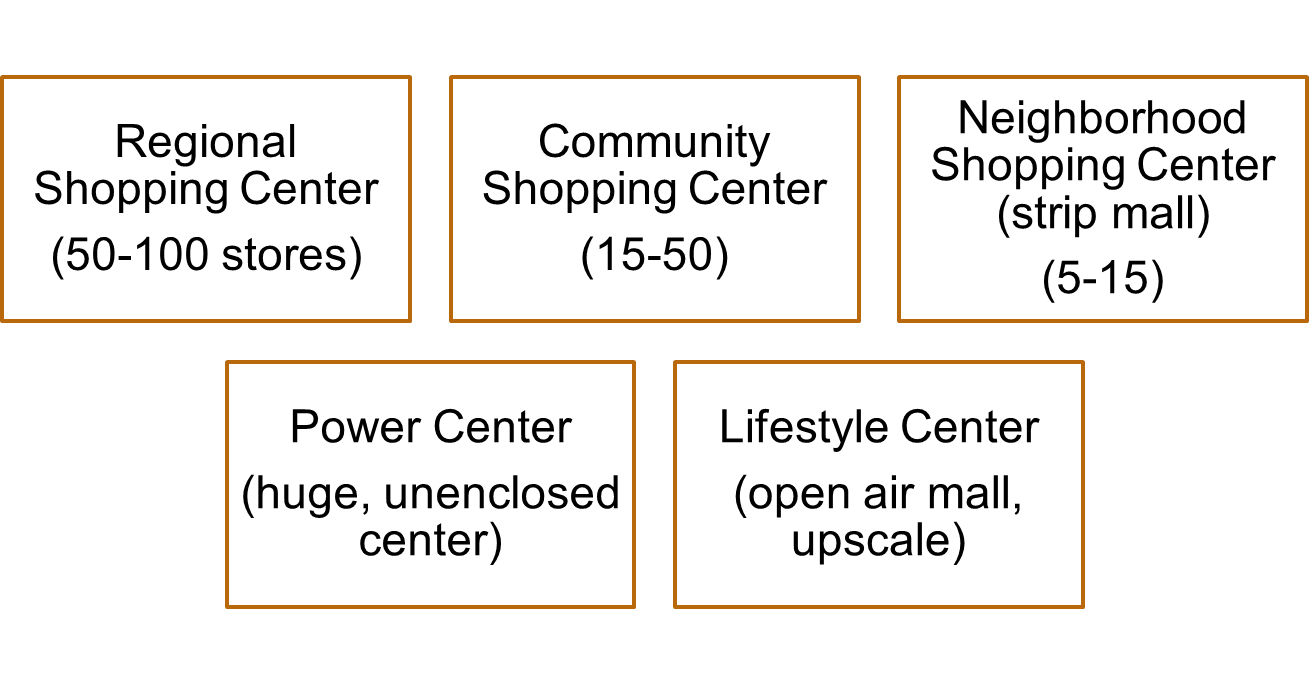
What are the major trends and developments in retailing?
1) Increased Uncertainty and Tighter Consumer Spending
2) New Retail forms and Shortening Retail Life Cycles
3) Advances in Retail Technology
4) Sustainable Retailing
5) Customer-Side Retail Technologies
Define wholesaling and wholesalers.
Wholesaling includes all the activities involved in selling goods and services to those buying for resale or business use.
Wholesalers buy mostly from producers and sell mostly to retailers, industrial consumers, and other wholesalers.
What are the key functions they provide?
•Selling and promoting
•Buying and assortment building
•Bulk breaking
•Warehousing
•Transportation
•Financing
•Risk bearing
•Market information
•Management services and advic
 Note
Note  Flashcards (56)