Chapter 13-Viruses, Viroids, and Prions
 Call Kai
 Learn
Learn Practice Test
 Spaced Repetition
 Match
Match Flashcards
 Knowt Play
1/58

There's no tags or description
Looks like no tags are added yet.
Name | Mastery | Learn | Test | Matching | Spaced | Call with Kai |
|---|
No analytics yet
Send a link to your students to track their progress
59 Terms
Virus
Nonliving tracellular parasite that depends on host for replication, at a minimum consists of nucleic acid surrounded by a protein coast
Smallest virus
~10nm
Largest virus
~800nm
Virion
Fully developed viral particle
Capsid
Protein coat of virus
Nucleocapsid
Nucleic acid (DNA or RNA) together with capsid
Envelope
A lipid bilayer outside the capsid of some viruses
Spikes
Carbohydrate-protein compmlexes that project from the surface of certain viruses
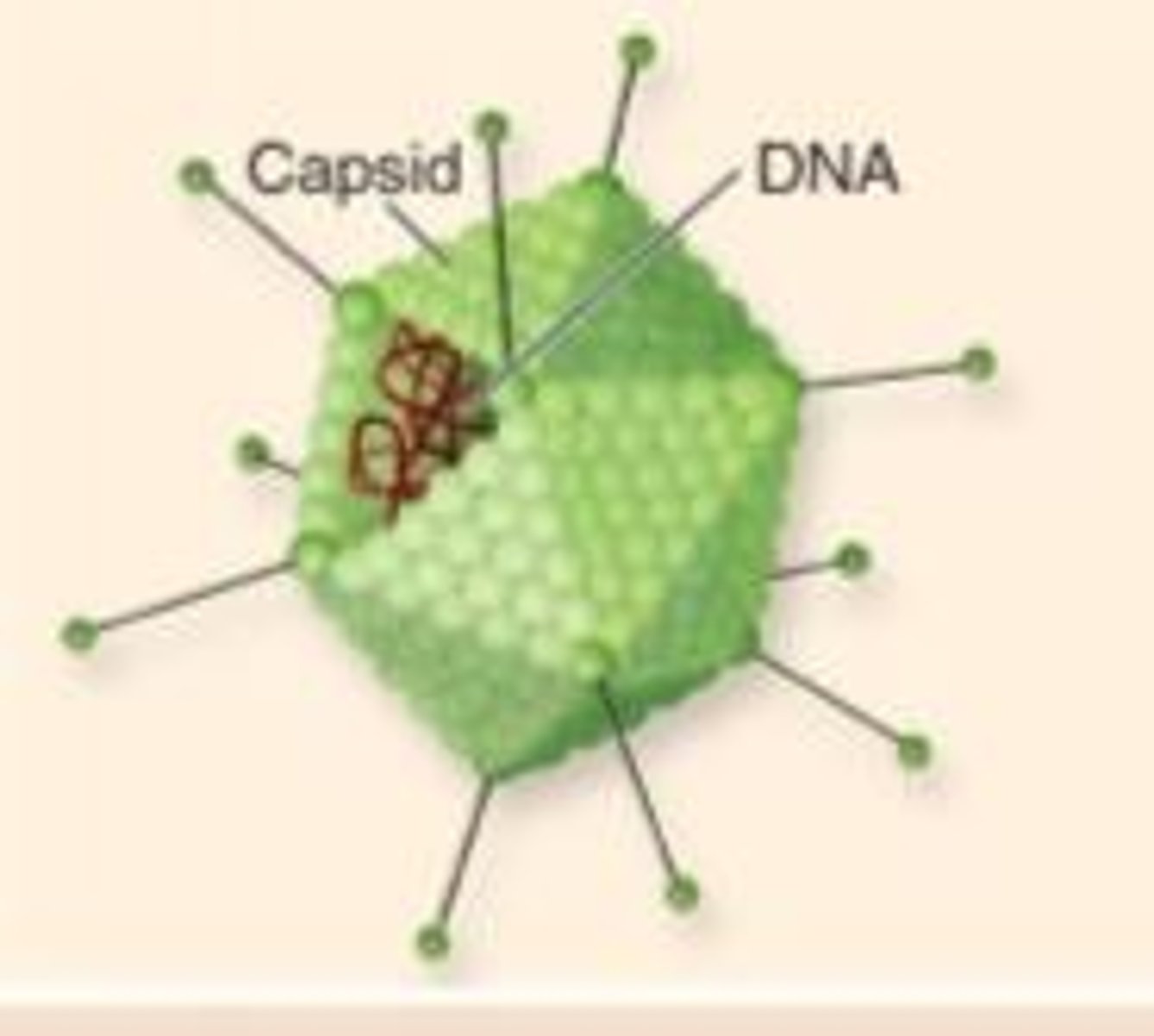
Icosahedral
Flat surfaces, forming equilateral triangles
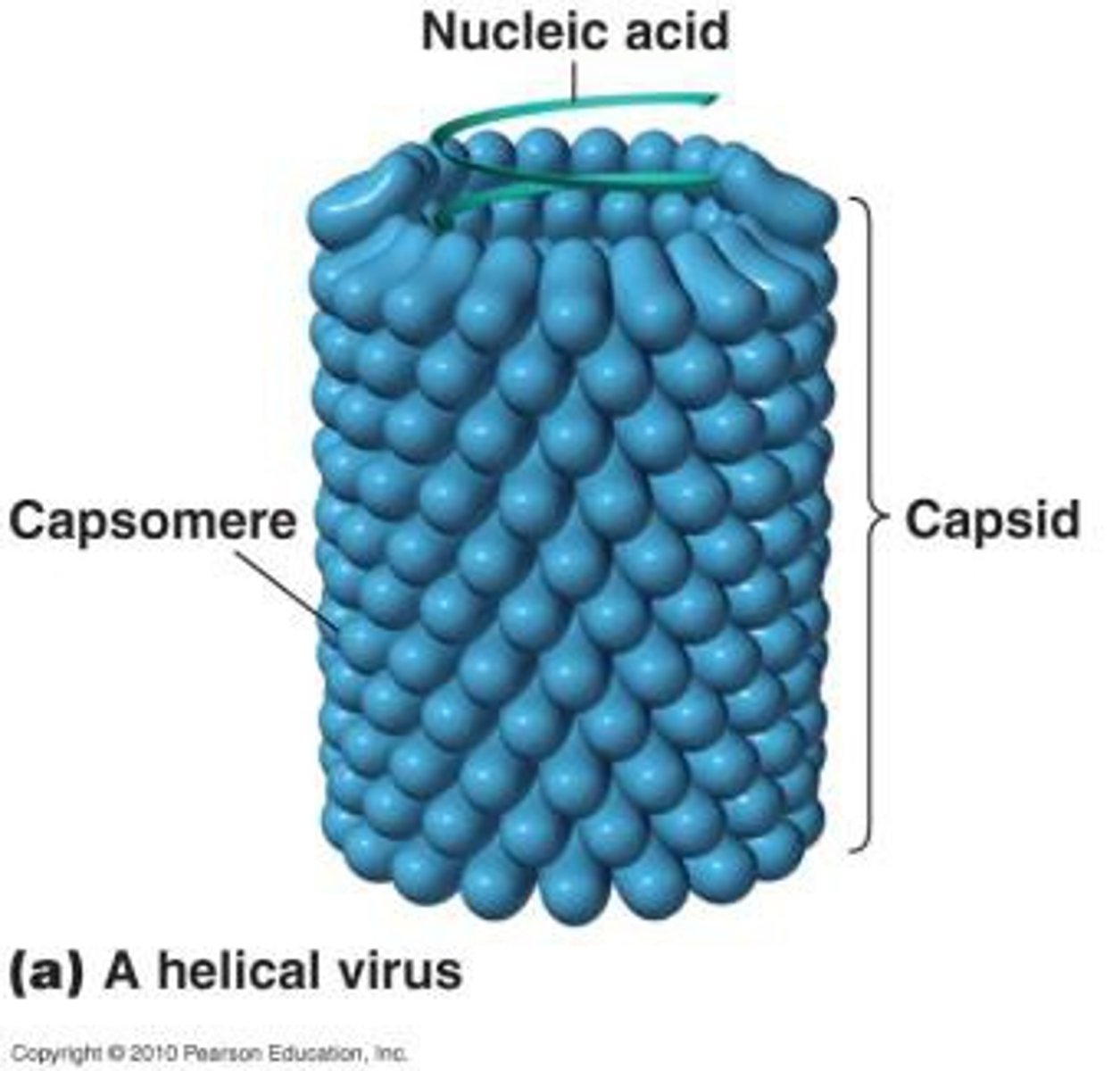
Helical
Filamentous or rodlike appearance
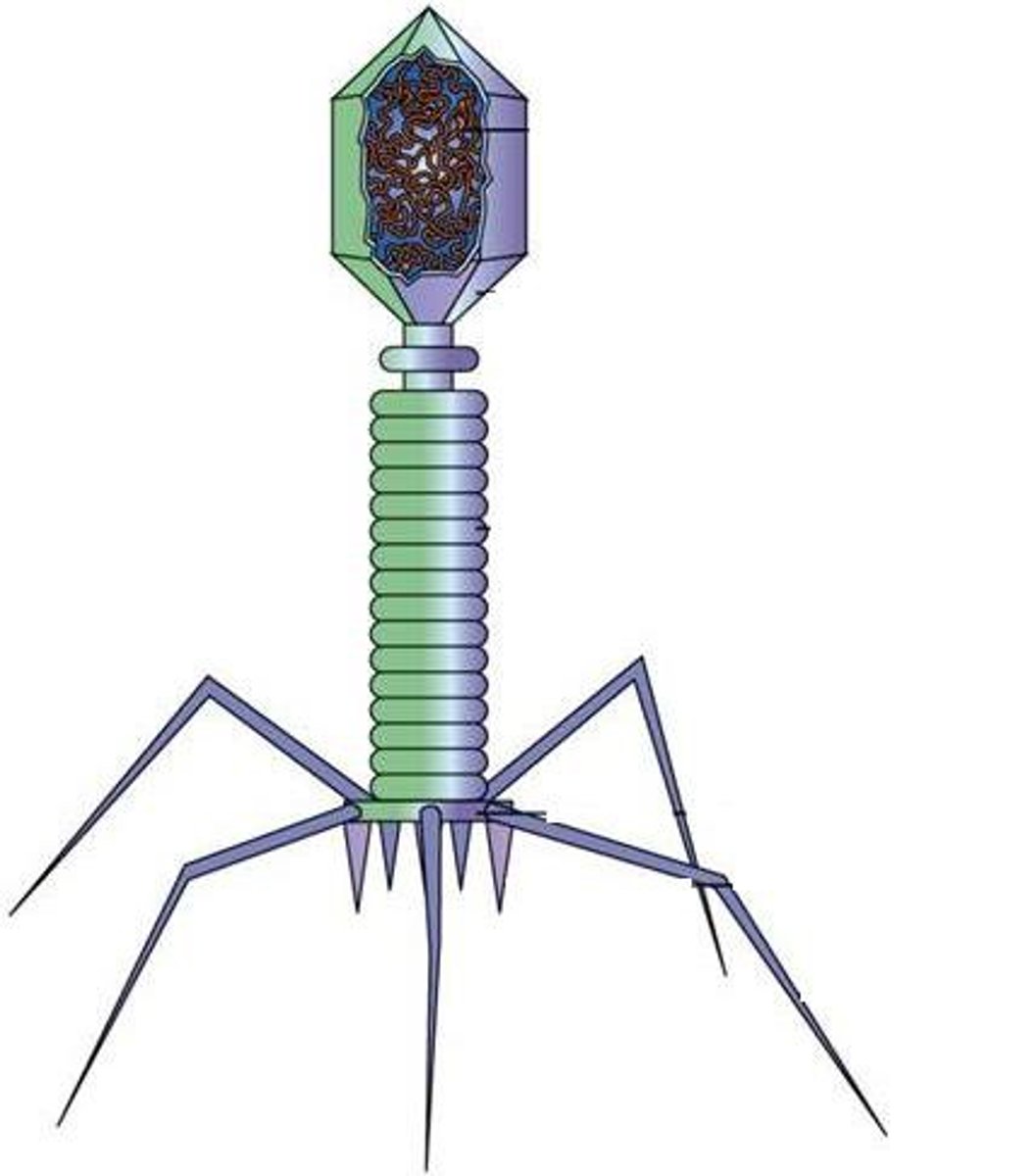
Complex
Has complicated structure, such as a bacteriophage
How many known viruses are there?
More than 6,000
What criteria are typically used to classify viruses?
Genome (DNA or RNA)
Number of nucleic acid strands (double or single [+/-])
Outer covering (enveloped or non-enveloped)
How many known virus families are there?
More than 100
Suffix of virus families
-viridae
How many known Genera are there?
More than 450
Suffix of Genera
virus
Number of Virus species
>2,800, name often name of disease
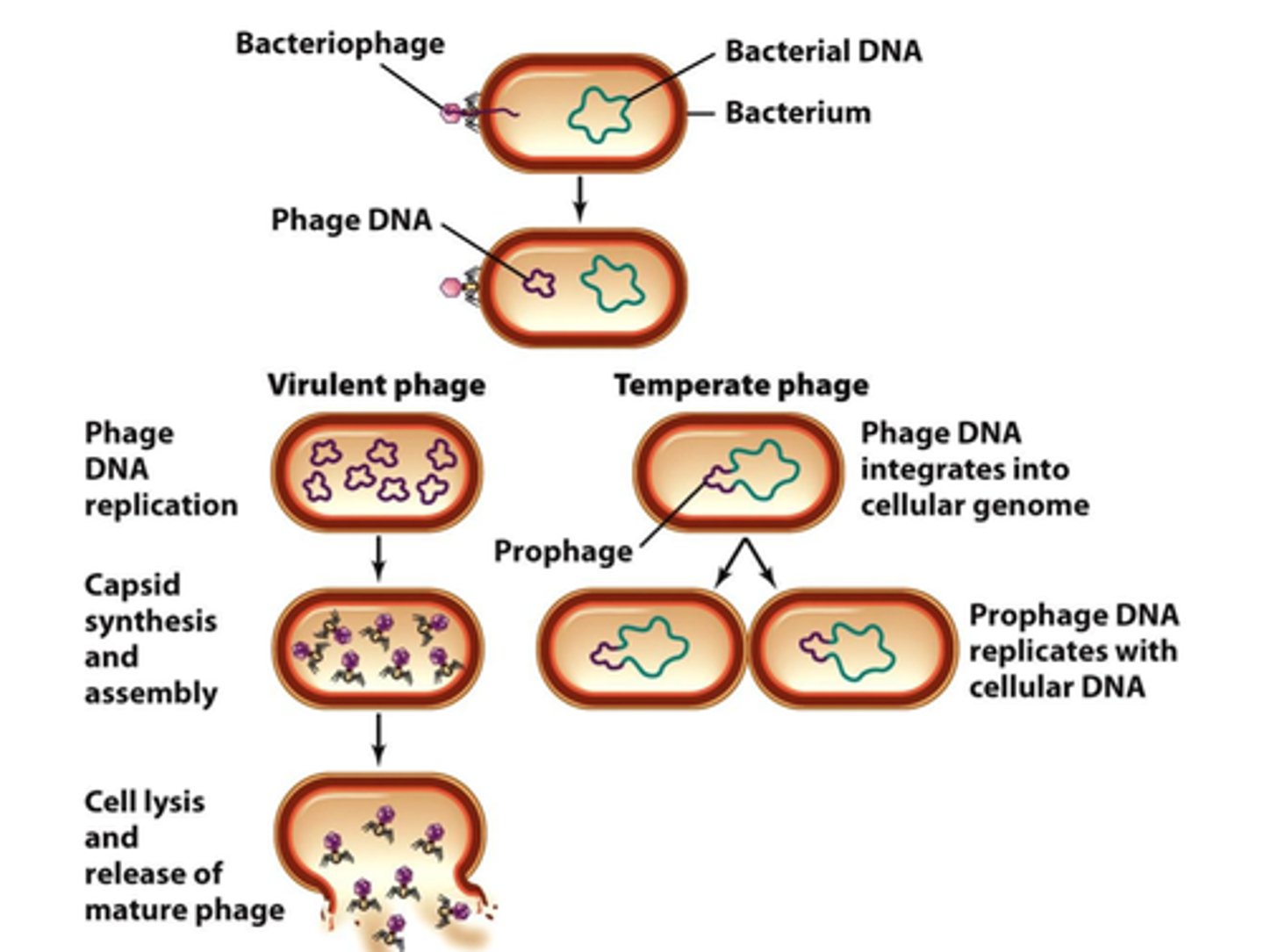
Lytic Bacteriophage
Exit host and cell is lysed
Productive infection
New particles formed
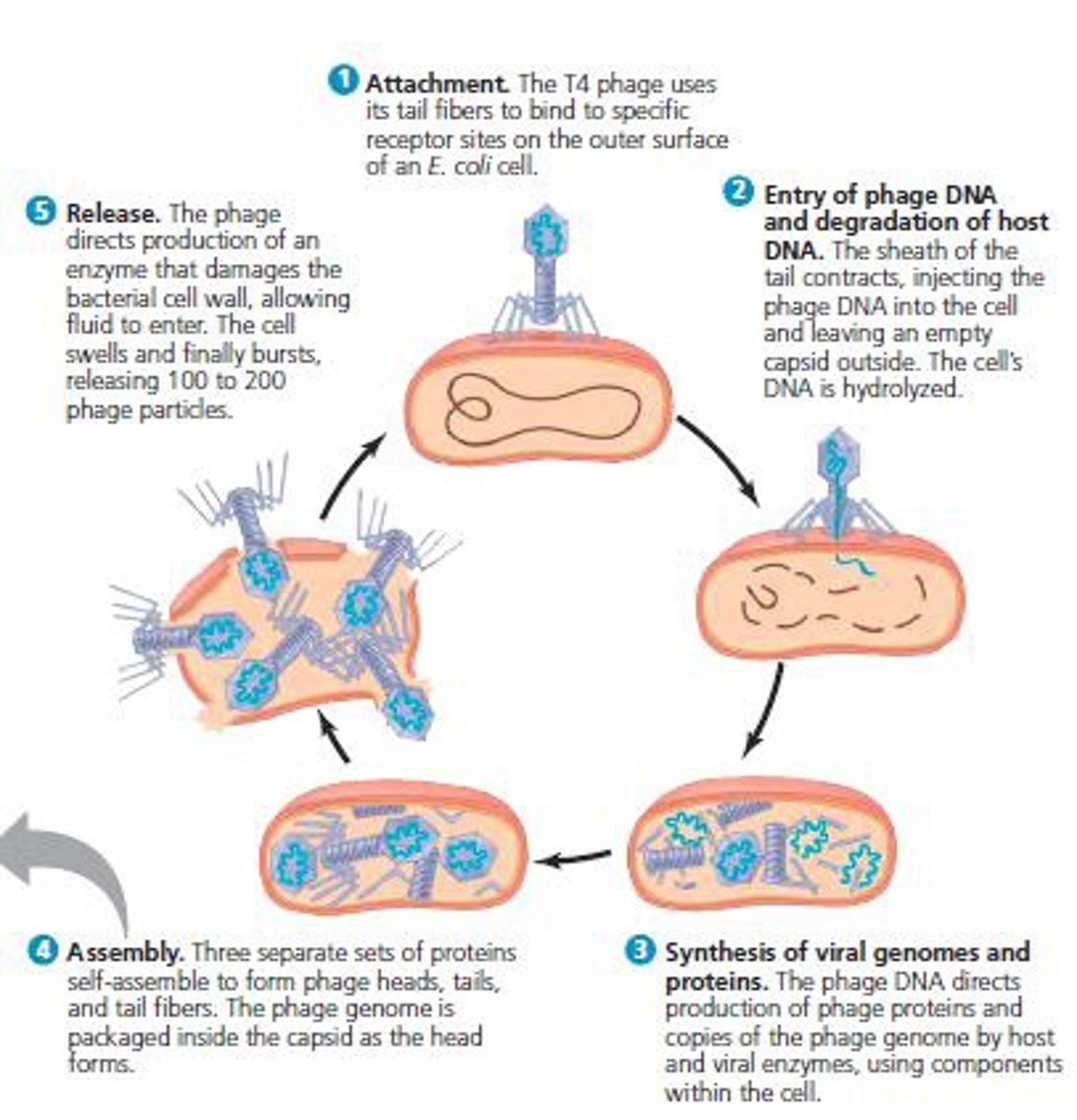
T4 phage
dsDNA takes ~30 minutes
Five step process of lytic bacteriophage
Attachment
Genome entry
Synthesis
Assembly
Release
Lysogenic bacteriophage
Incorporates into host genome and cell is not damaged
Prophage
Replicates along with host cell chromosome
Model of lysogenic bacteriophage
Lambda phage
Three step process of lysogenic bacteriophage
Attachment
Genome entry
Integration
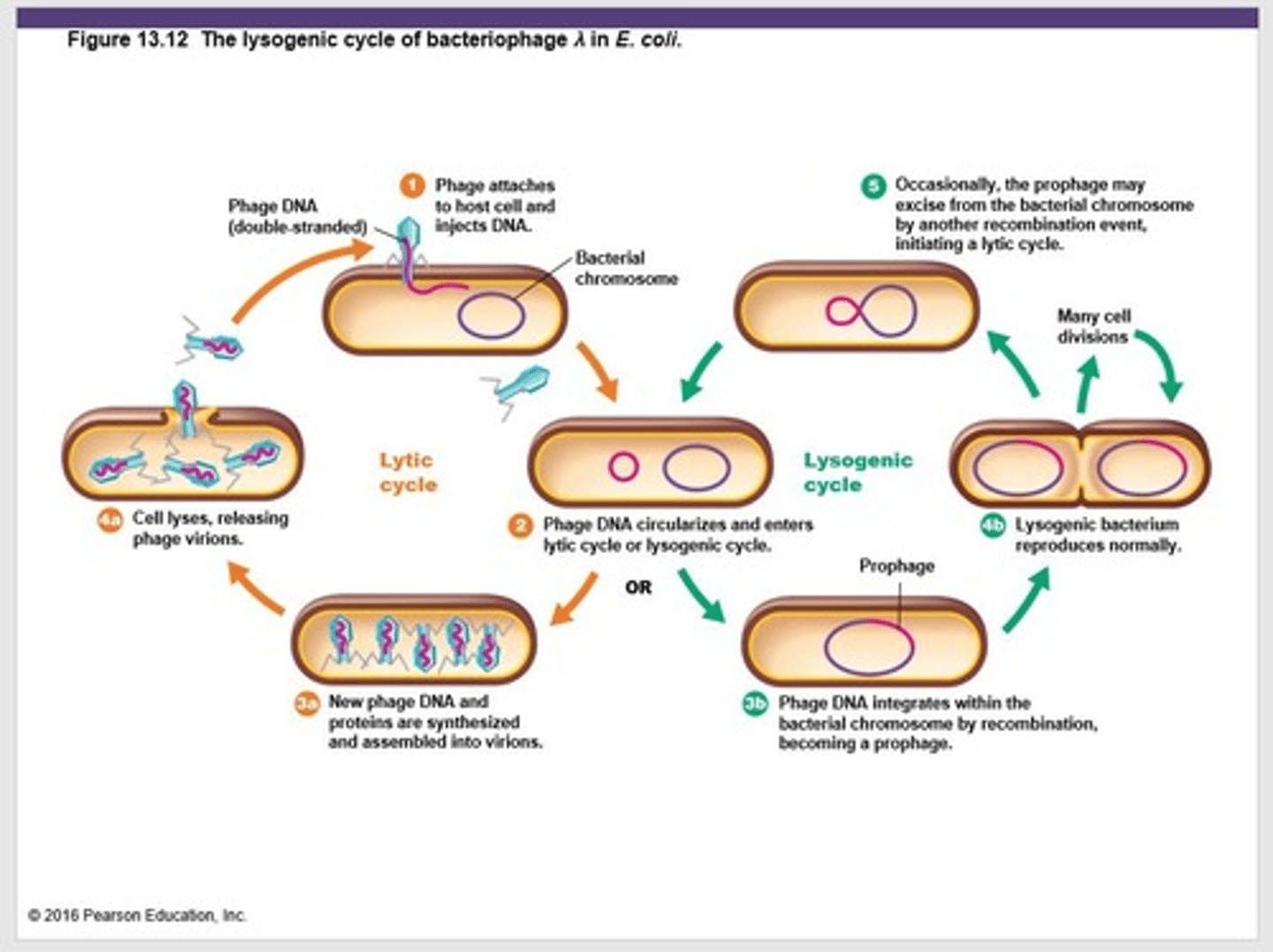
Temperate bacteriophage
Option of lytic or lysogenic cell
Seven step process of a temperate bacteriophage
Attachment
Entry
Integratoin
Excision
Synthesis
Assembly
Release
Prevent phage attachment
Alter or cover specific receptors on cell surface (ie capusles, slime layers, and biofilms)
Restriction enzymes
Recognize and cut short nucleotide sequences (that is the incoming phage DNA)
CRISPR system
recently discovered clusters of regularly interspersed short palindromic repeats
Allows bacteria to recognize and block repeat phage infections
Plaque assay
Used to quantitate phage particles in samples (sewage, seawater, soil, etc)
Process of plaque assay
Soft agar inoculated with bacterial host and phage, poured over surface of agar in petri dish
Bacterial lawn forms
Counting plaque forming units PFU yields titer or the concentration of phage
Plaques
Zones of clearing from bacterial lysis
Attachment
Viruses bind to receptors
Usually glycoproteins on cytoplasmic membrane of host
Penetration and uncoating
Enveloped iruses via fusion or endocytosis
Non-eveloped viruses only via endocytosis
Synthesis and replication
Viral proteins must be synthesized by replicating and expressing viral genes
Three gneral replication strategies depending on type of genome of virus
Three general replication processes of viruses
DNA virueses: nucleus
RNA virueses: cyptoplasm
Reverse transcribing viruses (encode reverse transciptase that makes DNA from RNA)
Assembly
Protein cpasid forms; genome and enzymes packaged
Takes place in nucleus, cytoplasm, or both
Release
Most enveloped viruses released via budding
Non-enveloped viruses relased when host cell dies, often by apoptosis initiated by virus or host
Acute infection
Rapid onset and short duration (influenza virus, mumps virus, and rhinovirus)
Persistent infection
continues for years or lifetime and may or may not have symptoms
Chronic infection
Continuous production of low levels of virus particles (hepatitis B virus)
Latent infections
Viral genome (provirus) remains silent in host cell, but can reactivate (varicella zoster virus and herpes simplex virus)
Proto-oncogenes
Stimulate cell growth (over activation can lead to cancer)
Tumor suppressor genes
Inhibit cell growth (inactivation can lead to cancer)
Oncogenic viruses
Can cause tumors/cancer (viral oncogenes can interfere with host control mechanisms)
Classification of viruses
Obligate intracellular parasites (require host)
Inoculate live animals or fertilized chicken eggs
Cell or tissue cultures
Cell or tissue cultures
Animal cells used as host, disassociated and grown as single cells or monolayer
Drawback is cells only divide limited number of times (50-100)
Tumor cells often used because multiply indefinitely
Quantitating animals viruses
Direct counts ia electron microscopy (if concentration is high enough)
Plaque assays using monolayer of tissue culture cells
Dilution yielding
Results from Quantal assayID50 infective dose
LD 50 lethal dose
Hemagglutination
Causes clumping of RBCs, yields relative concentration
Phages cannot infect
animals
How do plants get infected?
Do not attach to cell receptors, enter via wounds in cell wall, spread through cell openings (plasmodesmata)
Plants rarely recover, lack specific immunity
What transmits plant viruses?
Insects, soil, humans, grafting, and contaminated seeds, tubers, and pollen
Viroids
Small single-stranded infectious RNA molecules that are only known to infect plants
Genome about 1/10th of the smallest RNA virus
Prions
Proteinaceous infectious agents, composed of proteins, no nucleic acids
Diseases caused by prions
human: Creutzfeldt Jakob diease and kuru
animal: scrapie, mad cow, and chronic wasting disease
Accumulation of prion protein in neural tissue
Neurons die, tissue develop holes, brain function dteriorates (transmissible spongiform encephalopathy)
Hypothesized to be caused by misfolding of normal proteins

