Proteus-Morganella-Providencia
 Studied by 0 people
 Call Kai
 Learn
Learn Practice Test
 Spaced Repetition
 Match
Match Flashcards
 Knowt Play
1/15

There's no tags or description
Looks like no tags are added yet.
Name | Mastery | Learn | Test | Matching | Spaced | Call with Kai |
|---|
No analytics yet
Send a link to your students to track their progress
16 Terms
GENERAL CHARACTERISTICS
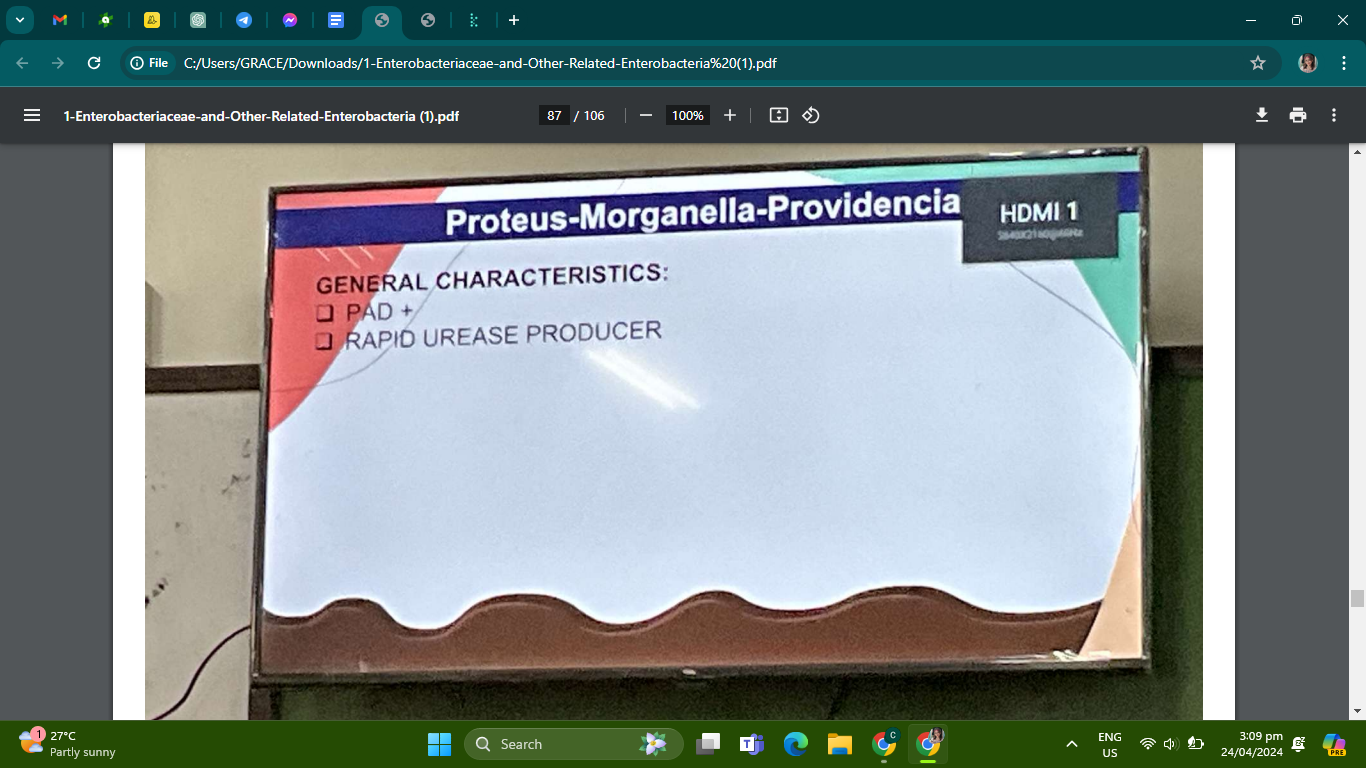
Widely recognized human pathogens in the genus Proteus
Proteus species
P. mirabilis and P. vulgaris
Have been isolated from urine, wounds, and ear and bacteremic infections
Proteus species
P. mirabilis and P. vulgaris
Associated primarily with UTIs, and also cause septicemia, and pneumonia
Proteus species
P. mirabilis and P. vulgaris
Highly motile (Hypermotile)
Proteus species
P. mirabilis and P. vulgaris
Proteus species
UTI
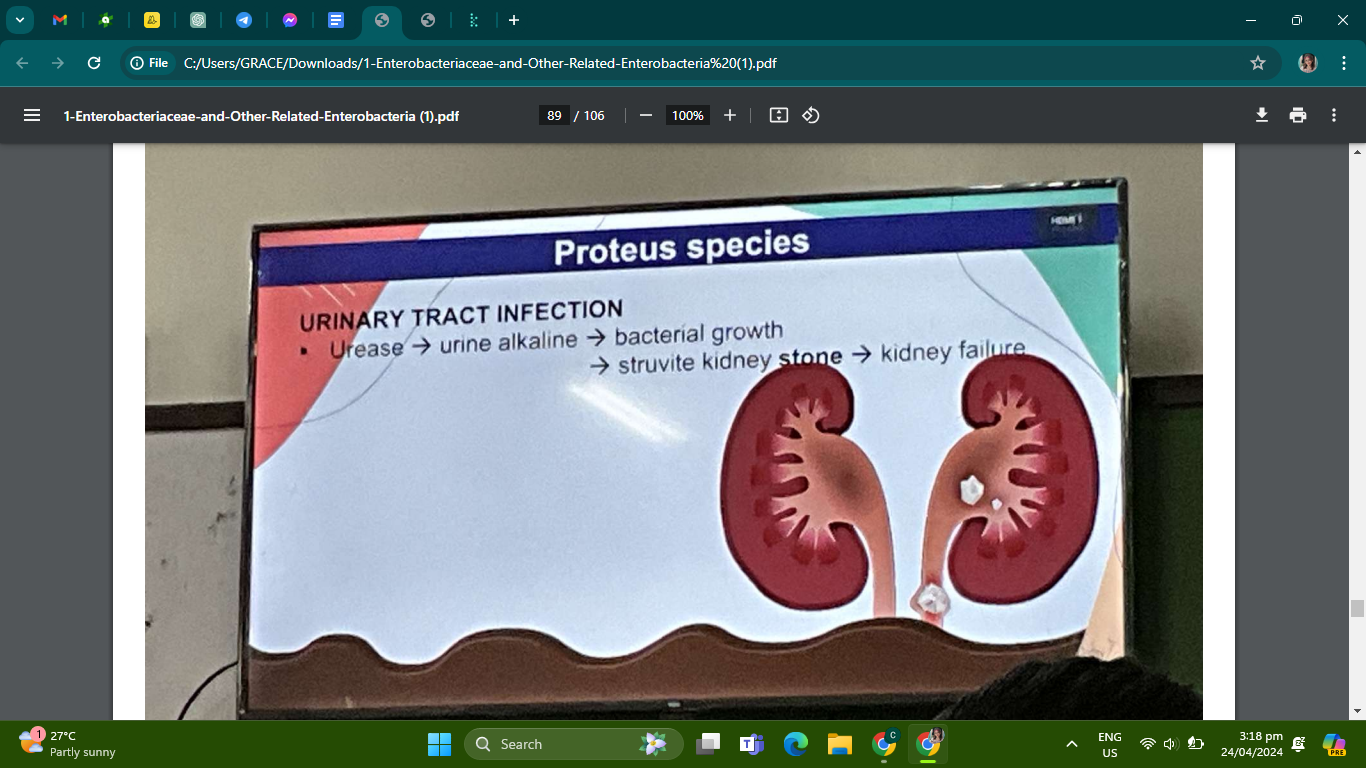
In UTI, they produce urease that hydrolyzes urea in urine to ammonia and ammonium carbonate making the urine alkaline, thus favoring bacterial growth; and, because acidification is virtually impossible, this results in the formation struvite kidney stones (or calculi) that can cause an obstruction and leads to kidney failure.
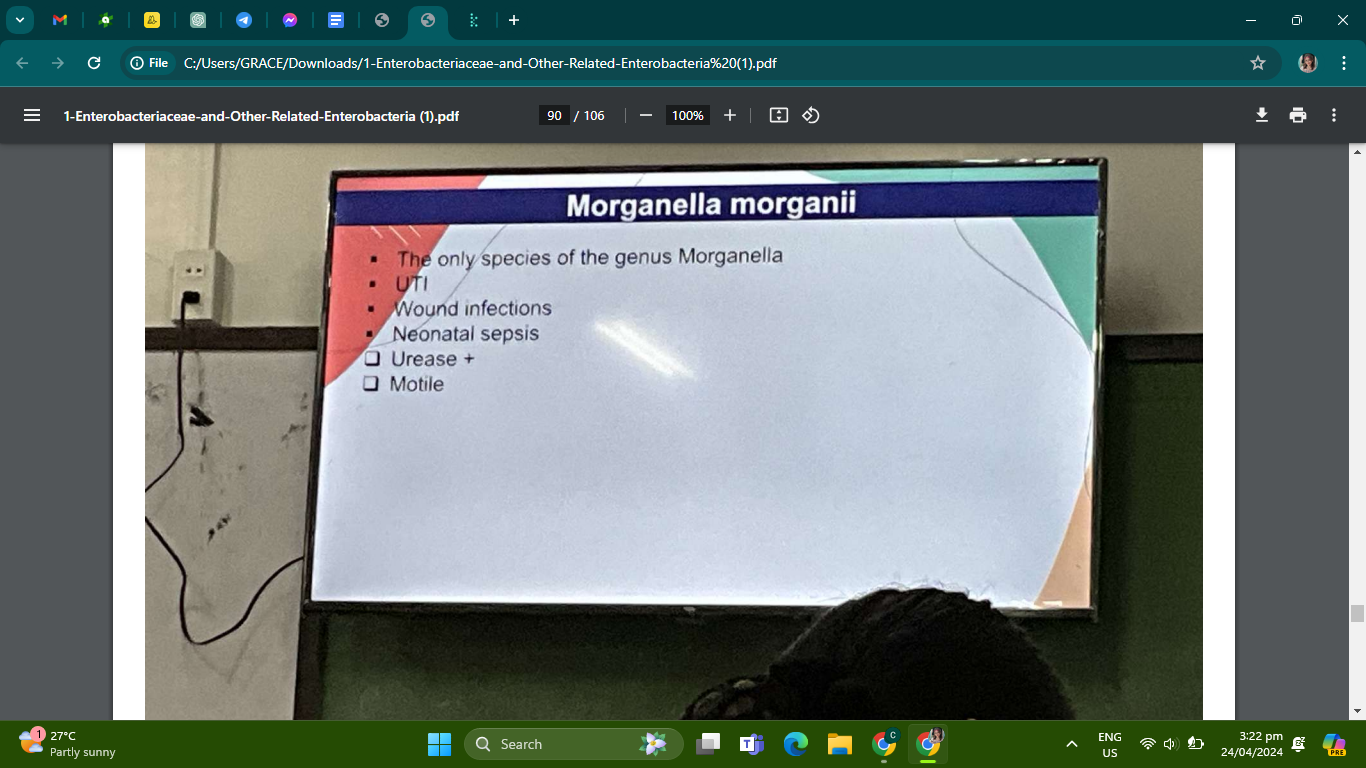
The only species of the genus Morganella
Morganella morganii
Previously designated as Proteus morganii
Morganella morganii
Cause of UTI and wound infections and has also been identified as a cause of neonatal sepsis
Morganella morganii
Also produces urease and is motile but unlike Proteus species, it does not swarm.
Morganella morganii
Morganella morganii
PPT
______________ have been associated with human infections
Providencia species
P. rettgeri and P. stuartii
_______________ is a documented pathogen of the urinary tract and has caused occasional outbreaks in health care settings and also been implicated in diarrheal disease among travelers.
Providencia species
P. rettgeri
_____________ has been implicated in outbreaks in burn units and has been isolated from urine cultures.
Providencia species
P. stuartii
_______________ is most commonly found in the feces of children with diarrhea.
Providencia species
P. alcalifaciens
Its role as a cause of diarrhea has not been proven.
Providencia species
P. alcalifaciens
 Note
Note  Flashcards (46)