Chapter 5: Structure and Function of Large Biological Molecules
 Studied by 0 people
 Call Kai
 Learn
Learn Practice Test
 Spaced Repetition
 Match
Match Flashcards
 Knowt Play
1/55

There's no tags or description
Looks like no tags are added yet.
Name | Mastery | Learn | Test | Matching | Spaced | Call with Kai |
|---|
No analytics yet
Send a link to your students to track their progress
56 Terms
Macromolecules
Very large molecules or polymers consisting of many smaller structural units linked together or monomers
monomer
a small building-block molecule
Carbohydrates, proteins, and nucleic acids are all…
polymers
Polymer
Large molecule composed of many similar or identical building blocks linked by covalent bonds
How polymers are built
Monomers join through covalent bonds to form polymers
Dehydration reaction (builds polymers)
removes a water molecule, forming a new bond
Hydrolysis reaction (breaks polymers)
Adds water, breaks a covalent bond
Four major classes of biological molecules
Carbohydrates, lipids, proteins, nucleic acids
Why lipids are not true macromolecules
do not have repeating monomers, their components (like glycerol and fatty acids) are not linked in long chains
Carbohydrates
sugar and polymers of sugars; function as fuels and building materials
monomers of carbohydrates
monosaccharides
what monosaccharides contain
one carbonyl group, multiple hydroxyl groups
Glycosidic linkage
covalent bond that joins sugars
structural isomers
glucose and fructose
enantiomers
glucose and galactose
disccharide
two monosaccharides attached by a glycosidic linkage
polysacccharides
macromolecules made from ~100 to ~2000+ monosaccharides joined by glycosidic linkages
example of polysacccharides
glycogen
starch
found in plant tubers and grains
starch monomer and glycosidic bond
α-glucose, α-1,4
starch branching and function
unbranched or branched helical structure, used as an energy storage marcomolecule for plants
Glycogen monomer and glycosidic bond
α-glucose, α-1,6
Glycogen branching and function
branched helical structure, energy storage macromolecule for humans
cellulose
found in the cell wall of plants
cellulose monomer and bond
β-glucose, hydrogen bond
cellulose branching and function
straight, unbranched, structural marcomolecule for plant cell walls, humans do not have enzymes that digest
cellulose is referred to as..
insoluble fiber
monosaccharide
one sugar ring
disaccharide
two sugar rings
polysaccharide
three sugar rings
lipids
a diverse group of hydrophobic compounds
fats (triacylglycerol/triglyceride)
long-term energy storage
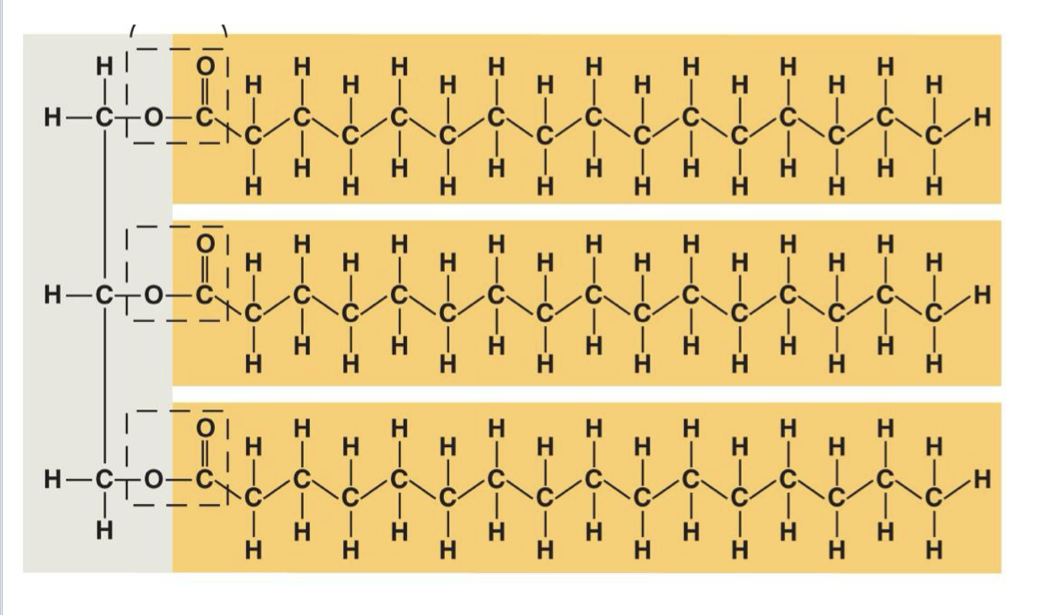
fats
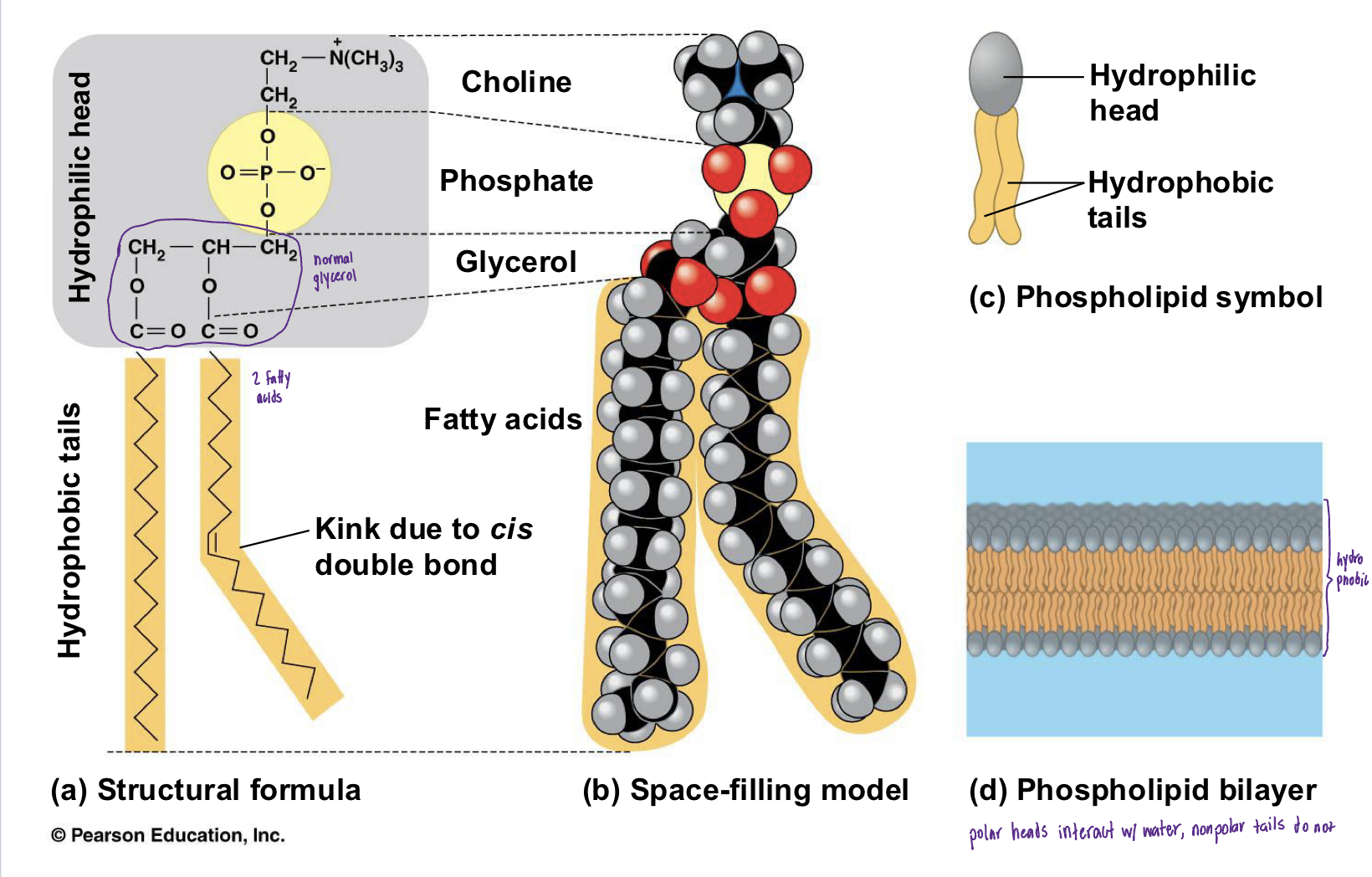
Phospholipids
cell membranes
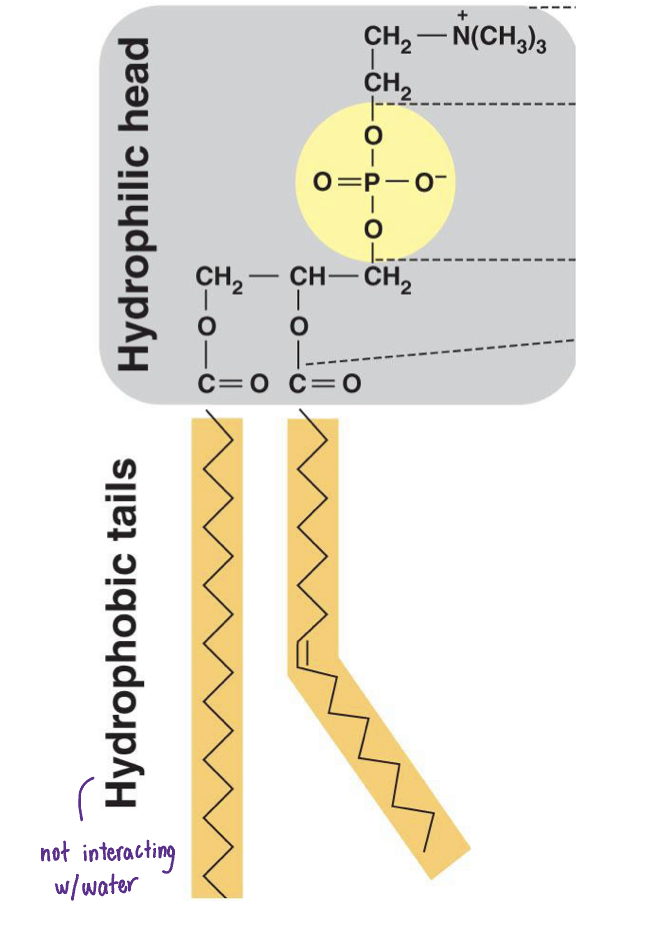
Phospholipids
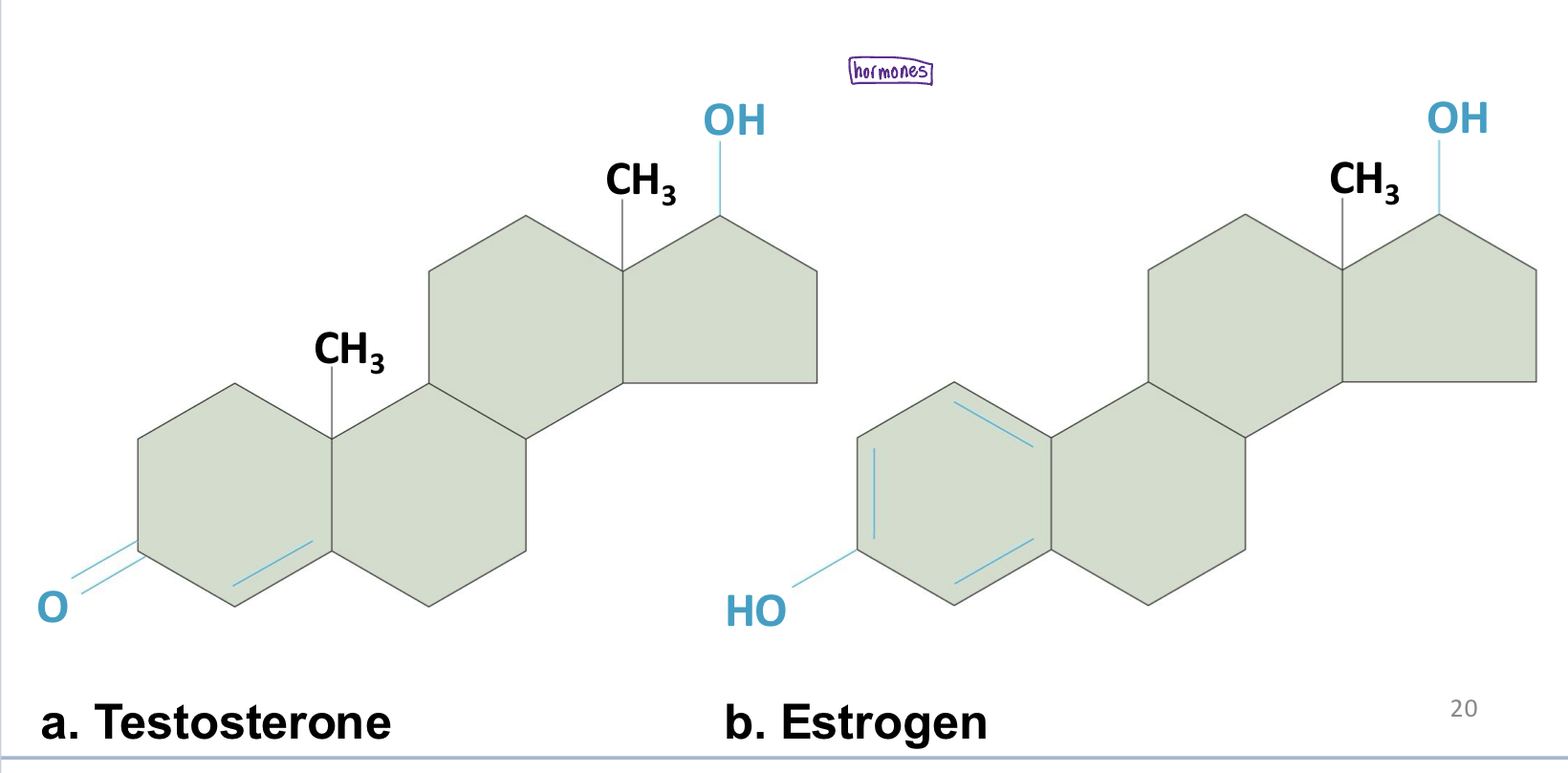
steroids
hormones, membrane structure
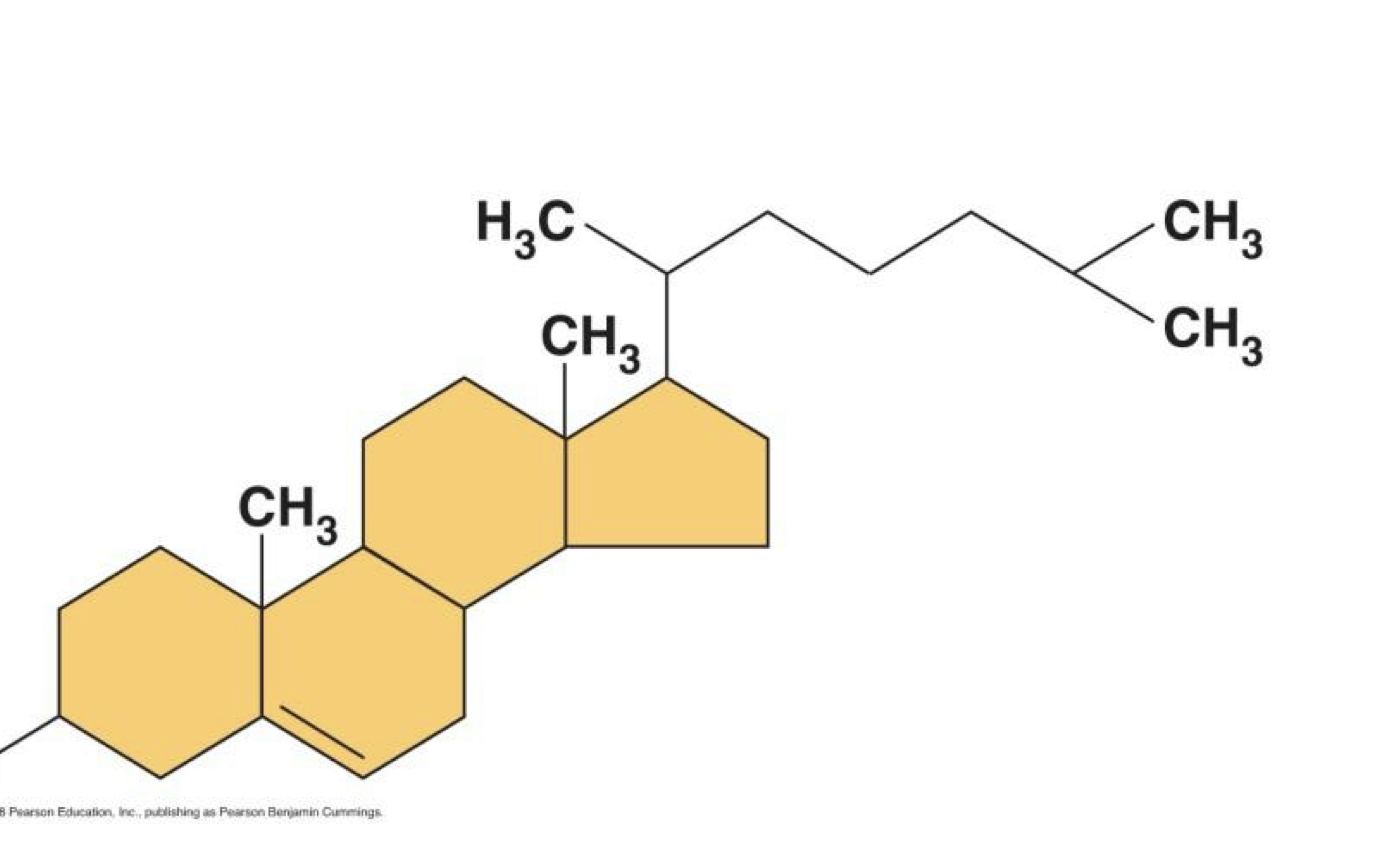
steroids
ester linkage
covalent bond formed between carboxyl group (–COOH) of a fatty acid and the hydroxyl group (–OH) of glycerol
Each fatty acid has a…
carboxyl group (–COOH)
Glycerol has…
three hydroxyl (–OH) groups
A dehydration reaction occurs between…
–OH of glycerol and the –COOH of a fatty acid
dehydration reaction between –OH of glycerol and the –COOH of a fatty acid results in
an ester linkage and releases water
After three ester linkages form, the result is
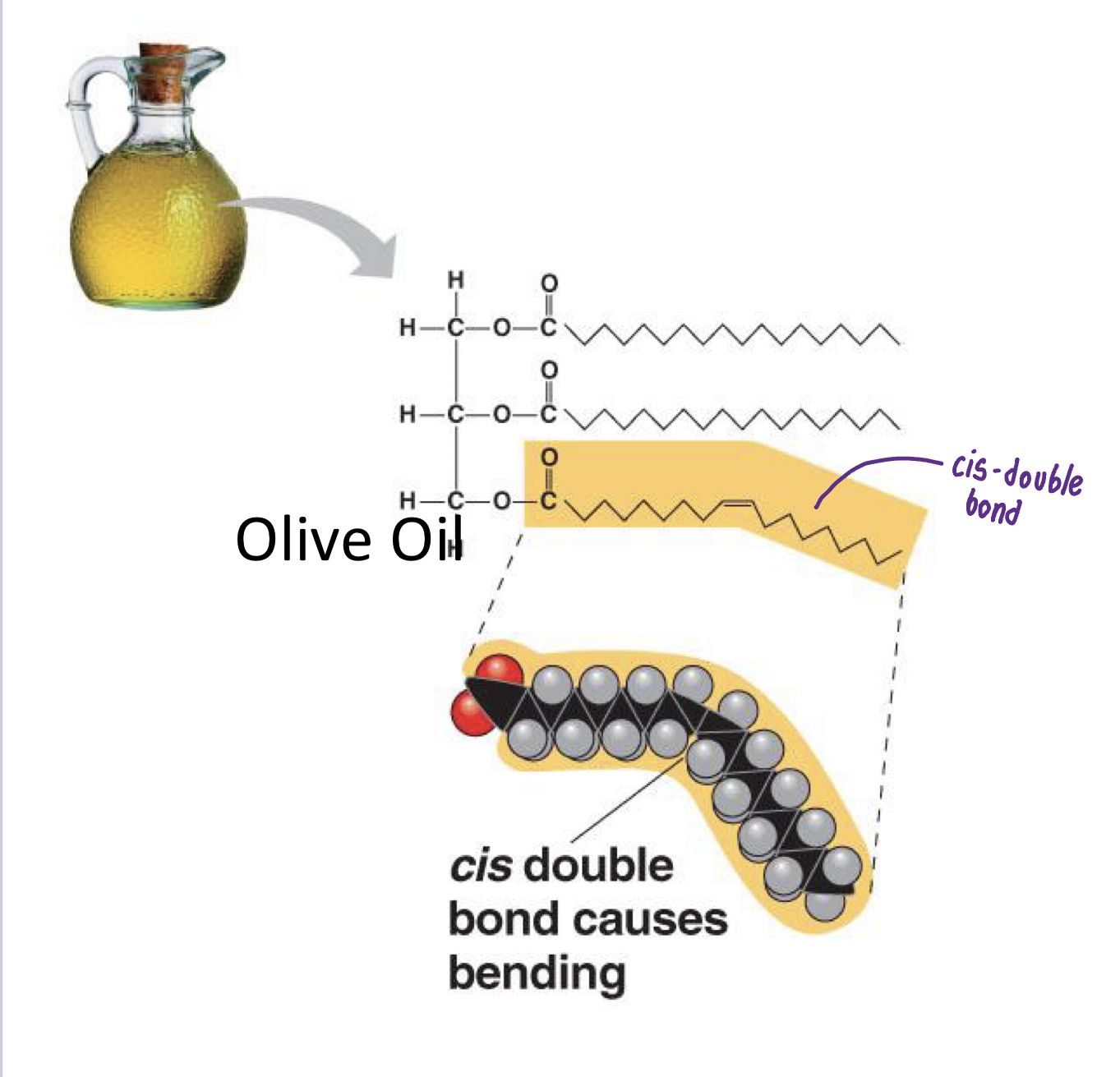
a triglyceride (fat)
saturated fatty acid
longer shelf life, no double bonds, solid at room temp, increases heart disease (diet high in saturated fats)
unsaturated fats
cis-double bonds (kink) in carbon skeleton, liquid at room temp, healthier
trans fats
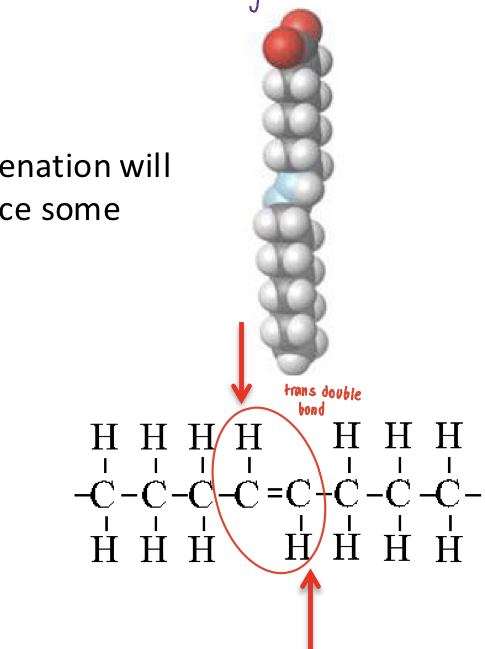
artificial double bonds, solid-like, very harmful
unsaturated cis fatty acid to saturated fatty acid
hydrogenated
hydrogenated
adds hydrogen, removes double bond, increases shelf life
side effect of hydrogenation
produces trans fats
Why trans fats are dangerous
Increase LDL (“bad” cholesterol), decrease HDL (“good” cholesterol), raise cardiovascular disease risk
saturated fat
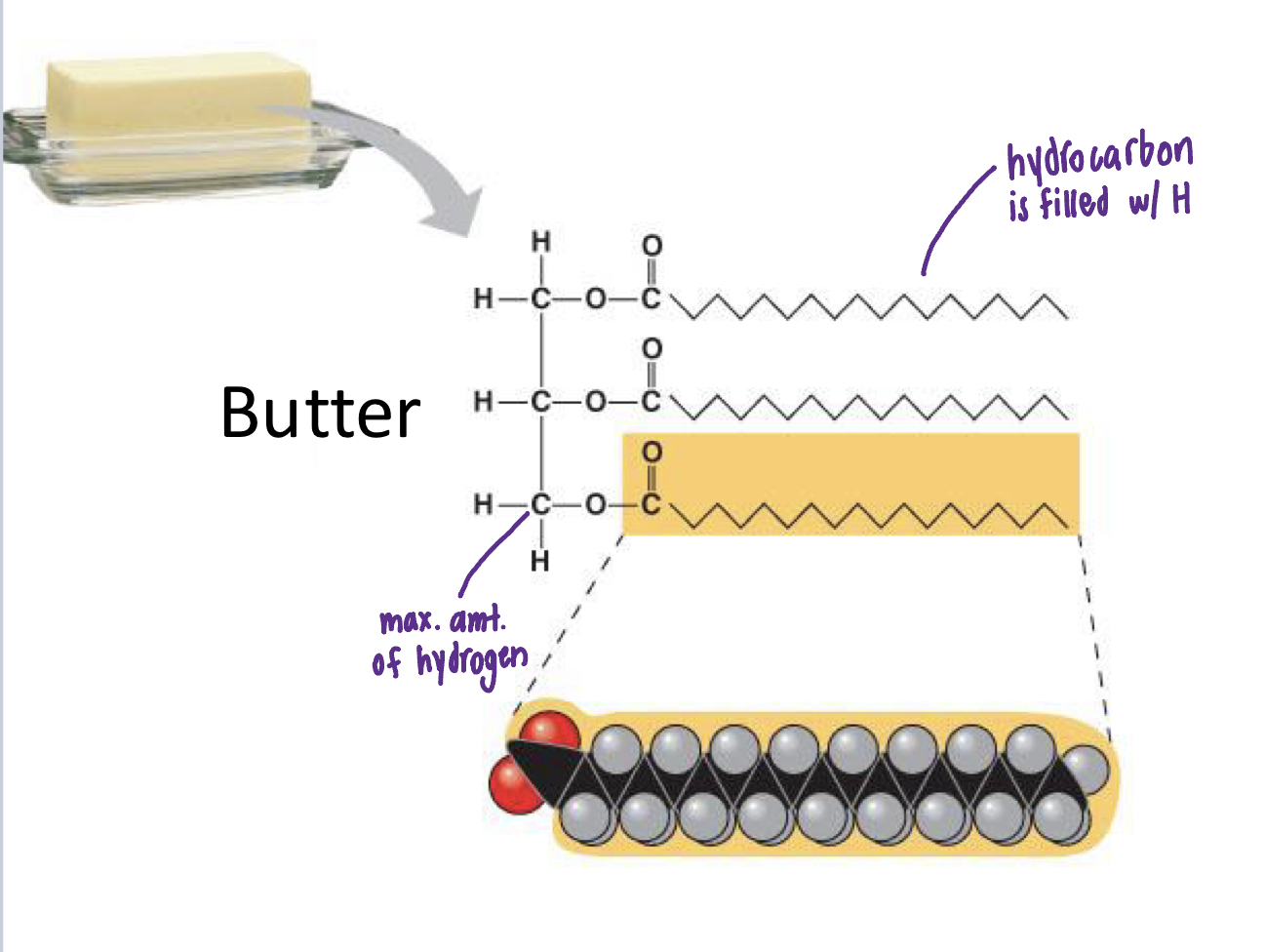
unsaturated fat
trans fat
Phospholipid
Steroid
peptide bond
covalently links carbonxyl group of one AA to amine group of another AA
 Note
Note  Flashcards (62)