chapter 23 - scrotum
 Studied by 0 people
 Call Kai
 Learn
Learn Practice Test
 Spaced Repetition
 Match
Match Flashcards
 Knowt Play
1/29

There's no tags or description
Looks like no tags are added yet.
Name | Mastery | Learn | Test | Matching | Spaced | Call with Kai |
|---|
No analytics yet
Send a link to your students to track their progress
30 Terms
acute scrotum
trauma may result of MVA, athletic injury, direct blow to scrotum, or straddle injury
if surgery is performed within 72 hours following injury, up to 90% of testes can be saved, but only 45% can be saved after 72 hours
acute scrotum (hematoceles)
contain blood; found in advanced cases of epididymitis or orchitis
presence of a hematocele does not confirm rupture
sonographic appearance of a acute hematocele
varies with age
echogenic with numerous, highly visible echoes that can be seen to float or move in real time
with time, — show low-level echoes and develop fluid-fluid levels or septations
acute scrotum (hematomas)
associated with trauma may be large and cause displacement of the associated testis
appear as heterogeneous areas within the scrotum
become more complex with time, developing cystic components
may involve testis or epididymis, or they can be contained within scrotal wall
epididymo-orchitis
infection of the epididymis and testis
most commonly results from spread of lower urinary tract infection via spermatic cord
most common cause of acute scrotal pain in adults
usually occurs secondary to epididymitis
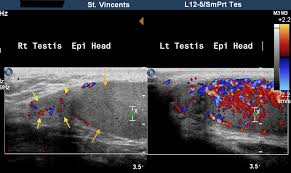
sonographic findings of epididymo-orchitis
epididymis appears as enlarged, hypoechoic gland
if secondary hemorrhage has occurred, epididymis may contain focal hyperechoic areas
hyperemic flow confirmed with color doppler
image of epididymo-orchitis
microlithiasis
benign
microcalcifications are <3mm
has been associated with cryptorchidism, Klinefelter’s syndrome (a male chromosomal defect in which there is an extra X chromosome XXY), infertility, varicoceles, testicular atrophy, and male pseudohermaphroditism
torsion
occurs as a result of abnormal mobility of testis within scrotum
testis and epididymis twist within scrotum, cutting off vascular supply within spermatic cord
up to 60% of — patients have an anatomic anomaly on both sides
undescended testes are 10 times more likely than normal testes to be affected by torsion
Bell clapper deformity
occurs when tunica vaginalis completely surrounds testis, epididymis, distal spermatic cord, allowing them to move and rotate freely within scrotum
presenting symptoms of torsion
sudden onset of scrotal pain with swelling on affected side
torsion saves rates
if surgery is performed within 5 to 6 hours of onset pain, 80% to 100% of testes can be salvaged
between 6 and 12 hours salvage rate to 70%
after 12 hours only 20% will be saved
venous flow
is affected first in torsion with occluded veins, causing swelling of scrotal structures on affected side
scrotal hernia
occur when bowel, omentum, or other structures herniate into scrotum
bowel mosy commonly herniated structure, followed by omentum
peristalsis of the bowel, seen with real-time imaging, confirms the diagnosis of a —
varicocele
abdominal dilation of veins of pampiniform plexus (located within spermatic cord)
more common in left
tubes may contain echoes that move with real-time imaging
measure >2mm in diameter
tend to increase diameter in response to valsalva maneuver
primary varicoceles
usually caused by incompetent venous valves within spermatic vein
sonographic evaluation of varicocele
shows numerous tortuous tubes of varying sizes within spermatic cord near epididymal head
secondary varicoceles
caused by increased pressure on spermatic vein
may be result of renal hydronephrosis, abdominal mass, or liver cirrhosis
abdominal malignancy invading left renal vein may cause varicocele with noncompressible veins
sperm granuloma
occurs as a chronic inflammatory reaction to extravasation of spermatozoa
most frequently seen in patients with history of vasectomy
may be located anywhere within epididymis or vas deferens
germ cell tumors
accounts for only 1% of cancers in men
most common malignancy in men between ages 15 and 35
one of the most curable forms of cancer
undescended testes are 2.5 to 8 times more likely to develop cancer
occurs most frequently between ages of 20 and 34
symptoms of germ cell tumors
painless lump, testicular enlargement, or vague discomfort in scrotum
extratesticular masses
usually benign
intratesticular masses
more likely to be malignant
elevated level of hCG and alpha-fetoprotein
germ cell tumors are associated with —-
seminoma
most common type of germ cell tumor, followed by mixed embryonal cell tumors and teratocarcinomas
tend to be homogeneous, hypoechoic masses with a smooth border
embryonal cell tumors
more aggressive than seminomas, which are the least aggressive form of testicular cancer
types of germ cell tumors
seminomas
embryonal carcinoma
teratoma (teeth & hair)
choriocarcinoma
yolk sac tumor (endodermal sinus tumor)
sex cord-stromal tumor
leydig cell tumor
sertoll cell tumor
metastatic tumors
lymphoma (secondary)
mixed germ cell tumor
most common malignant tumor overall
 Note
Note  Flashcards (145)