art of edo period 2
 Studied by 6 people
 Call Kai
 Learn
Learn Practice Test
 Spaced Repetition
 Match
Match Flashcards
 Knowt Play
1/7

There's no tags or description
Looks like no tags are added yet.
Name | Mastery | Learn | Test | Matching | Spaced | Call with Kai |
|---|
No analytics yet
Send a link to your students to track their progress
8 Terms
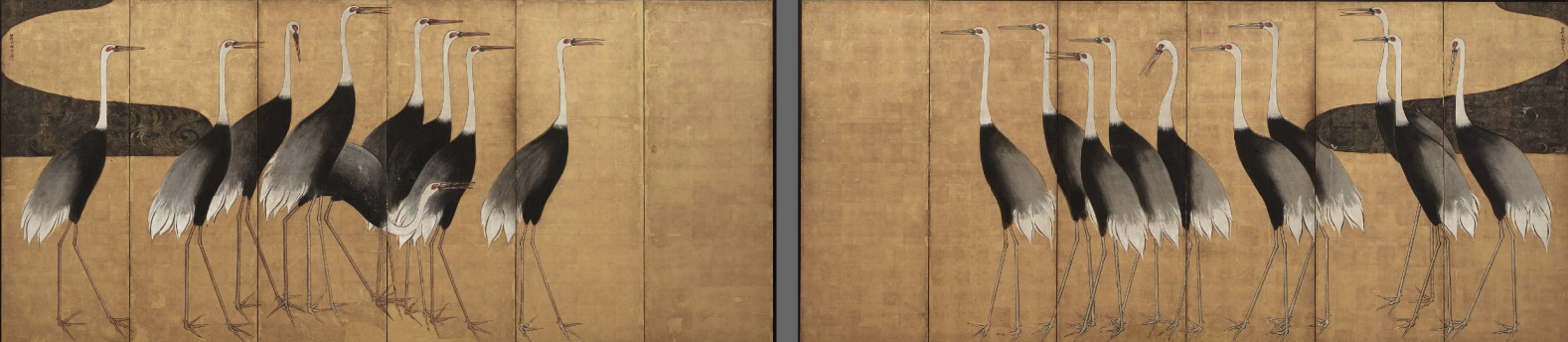
Ogata Korin
Cranes
17-18th C. (Rinpa)
Cranes symbolic of longevity, byobu. These represent grey cranes from Sibera that migrate to Japan every winter. The cranes move towards the center of the screen, while dark water-like patterns manifest at the top corners of the screens.
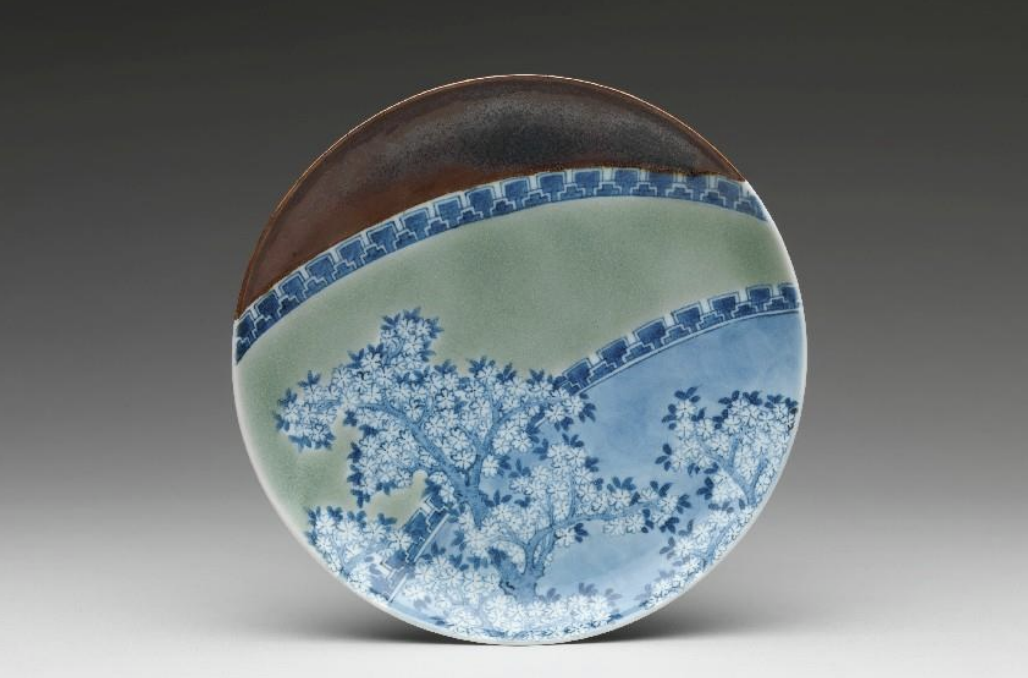
Anon
Dish with Cherry Blossom Design - Nabeshima Ware
17th C.
Dish shows iconic japanese cherry blossom motif using Nabeshima ware - cobalt blue, light green celadon, and rust-red iron glazes. This type of ceramic was reserved for military and nobles of Japan, more “sophisticated”. Type of porcelain carried out and fired on separate kiln in order to keep the techniques and designs secret.
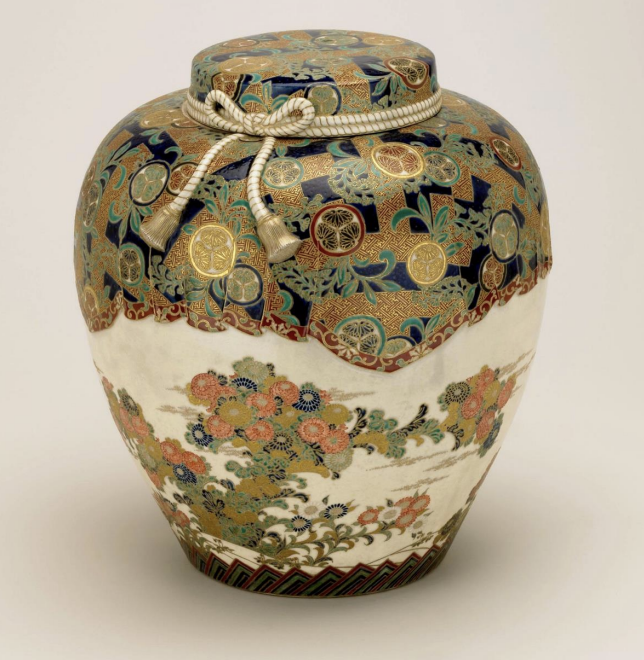
Anon
Brocade design storage jar with Lid
19th C.
Illusionist motifs, has a “coif” ceramic tie to imitate a real one at the top of the jar. Mimicking a secure jar. Similar to a tamba ware jar (storage for tea leaves) . Tokugawa clan (shogun) crests all around jar.
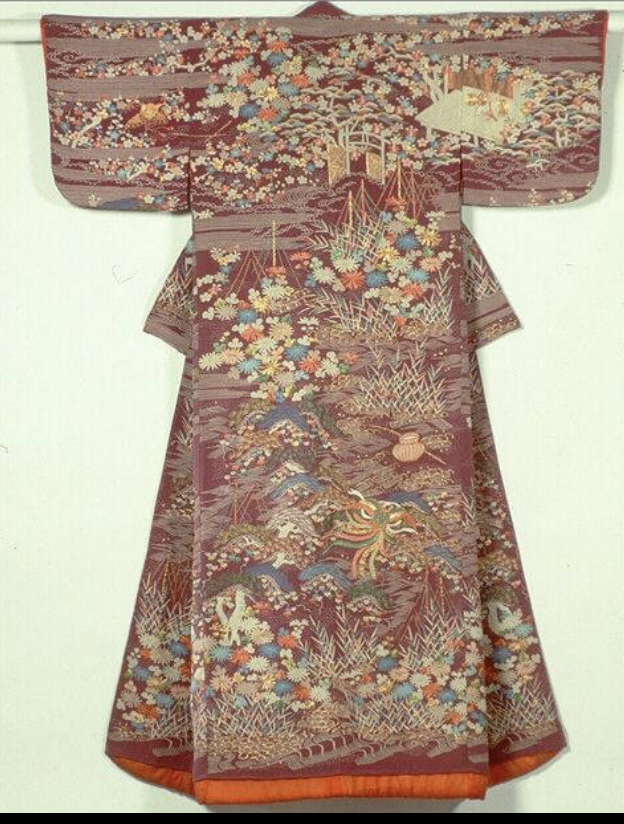
Anon
Kosode with Nō Motifs
18th or 19th C. Edo Period
Kosode - Small Sleeved Robes
Scenes alluding to scenes from Japanese literature, popular to women of the samurai class. 3 Nō plays represented. The Feather Mantle (fishing rod and creel at the lower center.) a play about a fisherman who finds a celestial being’s feather robe on a pine branch at Miho Beach. The divinity performs a dance to retrieve her robe and then ascends to heaven.
Near the left sleeve is a helmet, crossed arrows, and plum trees that show The Quiver (Ebira). A warrior of the Genji clan performs bravely in battle with a plum branch in his quiver.
Lady Shizuka at Yoshino (Yoshino Shizuka) is represented at the right sleeve by an eboshi court hat, a fan, and a drum in a stage-prop structure surrounded by blossoming cherry trees. the famous twelfth-century warrior Minamoto no Yoshitsune angers his powerful brother and is forced to flee. His lover uses a seductive dance to distract his enemies, allowing him to reach safety on Mt. Yoshino.
(info grabbed from the met)
Anon
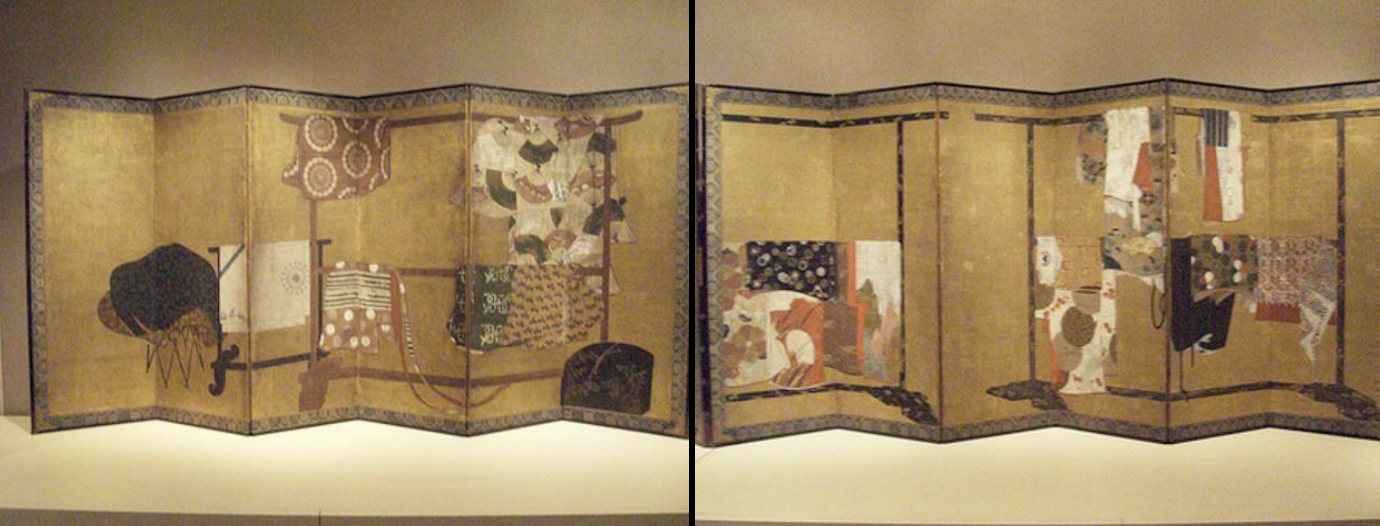
Tagasode Screens
17th C.
Tagasode - whose sleeves?
Saying that reflects the memory of an absent woman and her kimonos. Byobu that displays fashionable and different kinds of kimonos, showcasing the variety in textiles at this time.
Ogata Korin
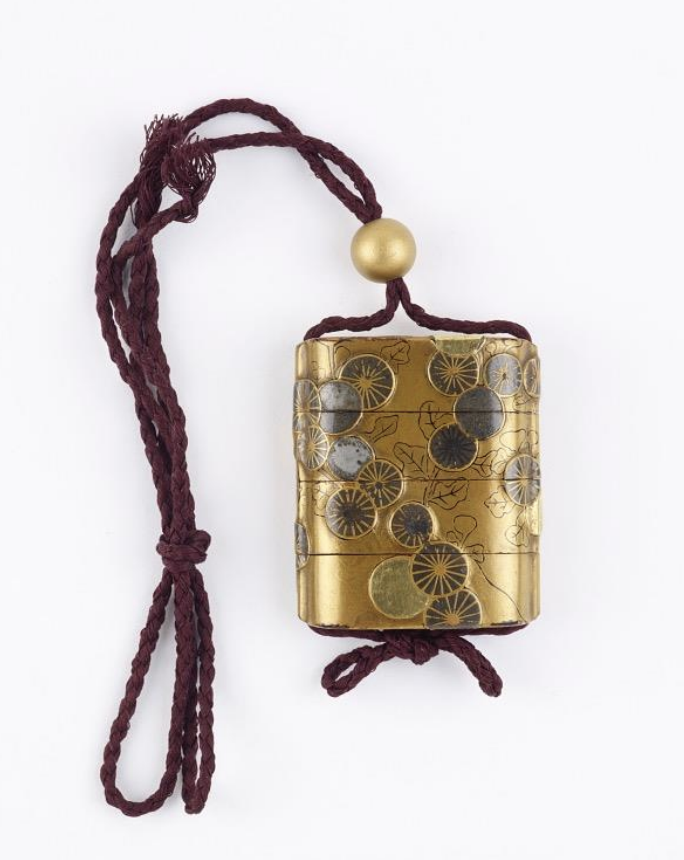
Inro with Chrysanthemums
18th C.
Also known as a “Medicine case.”, box made to carry medicine. Chrysanthemums are known to be symbolic of longevity and rejuvination, as they carry medicinal and culinary purposes.
Tobe Kofu
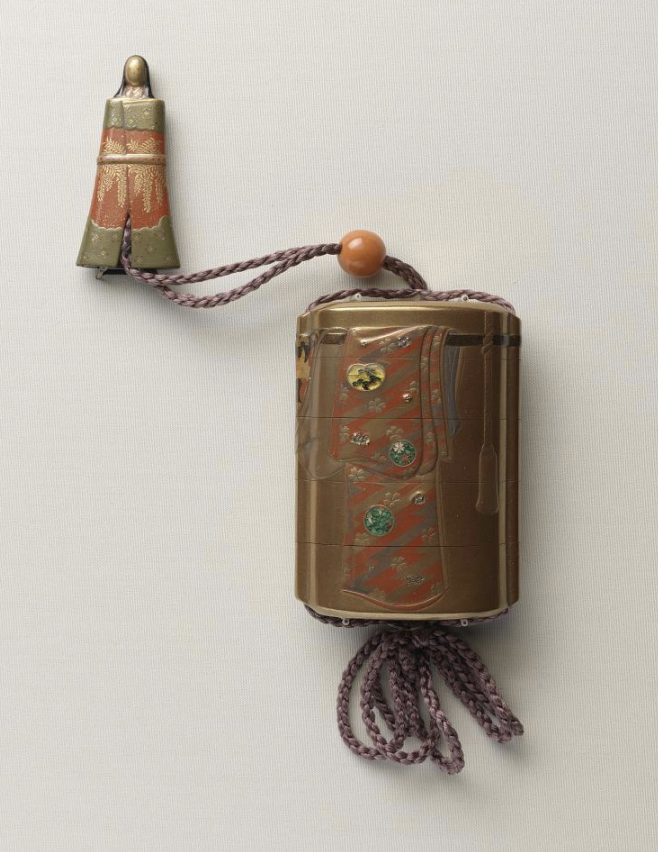
Inro and Netsuke (Tagasode Theme)
19th C.
Inro - ornamental box used for holding things like medicine and small objects, worn on waist sash as a traditional japanese garment.
Netsuke - small figure used for fastening sashes, usually representing different animals, or in this piece, a human.
This piece continues with the idea of Tagasode as it has multiple motifs of kimonos and textiles, as the figure carries a garment and there is a hanging kimono representative of it’s absent owner.
Anon.
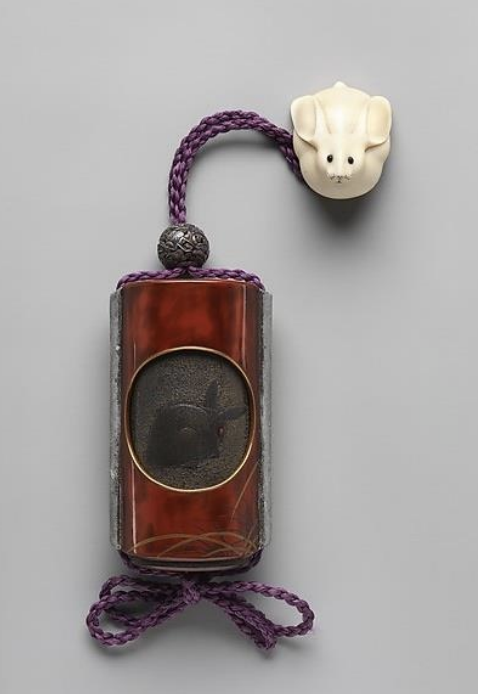
Inro with Rabbit Netsuke
19th C.
The rabbit netsuke is symbolic of prosperity, good luck, and longevity. There is a rabbit both shown on the inro and the netsuke, the netsuke looking like a more positive representation and the inro rabbit is representative of the folklore belief that the shadow markings on the moon resemble those of a rabbit (symbolic of selfnessless and self sacrifice).
 Note
Note  Flashcards (129)