Macronutrients & Micronutrients
 Studied by 0 people
 Call Kai
 Learn
Learn Practice Test
 Spaced Repetition
 Match
Match Flashcards
 Knowt Play
1/189

There's no tags or description
Looks like no tags are added yet.
Name | Mastery | Learn | Test | Matching | Spaced | Call with Kai |
|---|
No analytics yet
Send a link to your students to track their progress
190 Terms
organic vs inorganic
organic = containings carbon-carbon bonds or carbon-hydrogen bonds
inorganic = no carbon molecules
carbohydrates structure
carbon, hydrogen, oxygen
glucose is the preferred fuel source by the body, during times of starvation what will happen?
during starvation there is a lack of available glucose, so fat and protein will be broken down for energy. Fat is metabolized into ketones for the brain to utilize as an energy source.
what is glycogen and where can it be found?
a branch polysaccharide that is the stored form of carbs in mammals and is stored in the liver/muscles.
plants store carbs in the form of
starches
carbohydrates are readily available in which foods
fruits, veg, grains, cereals, dairy and sugars
gluconeogenesis
gluco = glucose
neo = new
genesis = formation
the formation of glucose from a non-carb source (such as pyruvate, lactate, glycerol, glucogenic AAs and some fatty acids) to prevent hypoglycemia
takes place in the liver and in the cortex of the kidneys
glycogenolysis
glyco = glucose
lysis = break down
the breakdown of stored glycogen to glucose
when your body is experiencing starvation, extreme exercise, high adrenaline / fight-flight responses, glycogenolysis is increased
what enzymes are involved in glyconeogenesis
glycogen phosphorylase
✔️ Breaks glycogen down
✔️ Cleaves off the terminal glucose units one at a time and adds a phosphoryl group
✔️ Produces glucose-1-phosphate (G1P)
"phosPhOrylase --> P.O. --> plucks one at a time"
phosphoglucomutase
✔️ rearranges the phosphate group so glucose can be used for metabolism
✔️ Converts glucose-1-phosphate → glucose-6-phosphate (G6P)
"Mutase = Moves stuff around."
glucose-6-phosphatase
✔️ Removes phosphate from G6P
✔️ Makes free glucose that can leave the liver into the bloodstream
"PhosphaTASE = TAKES phosphate away"
polysaccharides can be either _______ or ______
digestible or non-digestible (dietary fiber)
common digestible polysaccharides include
starch (digestible)
dextrin (digestible)
glycogen (digestible)
amylopectin (digestible)
common non-digestible polysaccharides include
cellulose (non-digestible)
hemicellulose (non-digestible)
inulin (non-digestible)
pectin (non-digestible)
psyllium husk mucilage (non-digestible)
amylose (non-digestible)
soluble fiber
dissolves in water and includes pectin, gums, mucilages
found in fruits, oats, barley and legumes
- delays gastric emptying and transit of chyme through the intestines
- delays glucose absorption
- can lower cholesterol levels
in-soluble fiber
does not dissolve in water and includes cellulose and hemicellulose
found in wheat grains, bran, rice, cabbage, brussels sprouts, nuts and seeds
- increases the transit of chyme through the intestines
- increases fecal wt
- slow starch breakdown and delays glucose absorption into the blood
pre-biotics
the meal preps that feed probiotics (the healthy bacteria in the gut) promoting a healthy bowel system
found in apples, bananas, berries, artichokes, asparagus, garlic, green veggies, onions, tomatoes, legumes, soy beans, wheat, oats, and flax seeds
- increase calcium absorption
- help avoid blood sugar spikes
- increase immune system
proteins are made up of
carbon, hydrogen, oxygen, nitrogen
nitrogen is _____% of protein
16%
which proteins contain sulfur
methionine, cysteine, homocysteine, and taurine
proteins are readily available in which foods
meats, poultry, fish, egg, dairy, nuts and seeds
___________ is the measure of protein quality and the ability of the human to digest it
PDCAAS = protein digestibility-corrected amino acid score
which three foods have the highest PDCAAS rating of 1.00?
milk proteins, egg protein and soy protein
describe the primary structure of protein
primary: AA sequence as a polypeptide chain held together by covalent bonds
describe the secondary structure of protein
secondary: alpha-helix/beta-pleated sheet configuration held together by hydrogen bonds
Describe the tertiary structure of a protein
tertiary: three dimensional folding of a protein
Describe the quaternary structure of a protein
quaternary: interaction between two or more polypeptide chains
Amino Acids
a single unit of protein that consists of a central carbon atom with an amine group, an acid group, a hydrogen atom, and a unique side group
what happens when too much protein is consumed?
when too much protein is consumed, the excess AAs are transported to the liver
deamination = the amine group and hydrogen atom are removed from the amino acid, then the two molecules join to form ammonia; the remaining amino acid is then converted to carb or fat
all amino acids are glucogenic except for
leucine and lysine
some amino acids are both glucogenic and ketogenic (they can be turned into glucose or ketones)
isoleucine, phenylalanine, threonine, tryptophan, tyrosine
complete vs incomplete proteins
complete proteins contain all essential amino acids your body requires daily, and incomplete proteins only contain some essential amino acids.
complementary proteins
with the exception of soy protein, plant proteins such as:
- beans and rice
- peanut butter and whole wheat bread
beans and nuts (legumes) are low in amino acid methionine and grains are low in the amino acid lysine....combining grains and legumes together fill in the gaps of the lacking essential amino acids.
daily protein needs for healthy adults
0.8 g/kg/d (10-15% of total kcal)
1 gram of fat = ____ kcals
9 kcals
sources of fats include
animal fat, veg oils, butter, margarine, eggs, dairy, nuts, some vegetables (avocados)
a healthy diet should have no more than ___% of kcal of fat daily, less than ___% of calories should be saturate fat and less than ____% of calories should be trans fat
30% of kcal daily (<10% Sat, <1% Trans)
dietary cholesterol is FOUND in what foods?
dietary cholesterol is ONLY present in animal foods (meat, fish, poultry, dairy, egg yolks)
majority of the fat from food that we eat are
triglycerides (glycerol backbone, three fatty acids)
fatty acids structure
a chain of carbon atoms w hydrogen atoms attached, one end has a acid group (COOH) and the other end has a methyl group (CH3)
usually 4 to 24 carbons long
can be saturated or unsaturated
the fatty acids most commonly found in our food are _____ carbons long
18
saturated vs unsaturated fatty acids
saturated fatty acids
- fully loaded with hydrogen atoms
- only single bonds btw carbon atoms
- solid at room temp
unsaturated fatty acids
- has at least two hydrogen atoms missing
- at least one double bond btw carbon atoms
- liquid at room temp
omega-3 (n-3)
three types of omega-3 are:
a. EPA = eicosapentaenoic acid
b. DHA = docosahexaenoic acid
c. alpha-linolenic acid
found in various fish
written as 18:3 (18 carbon chain, the first double bond is three carbons away from the methyl end)
omega-6 (n-6)
linoleic acid
"linOLeic --> OiLs"
found in various oils (soybean, corn, safflower, flaxseed), nuts (walnuts, cashews, pecans, pine nuts), seeds, poultry, eggs, and some grains
written as 18:2 (18 carbon chain, the first double bond is six carbons away from the methyl end)
omega-9 (n-9)
oleic acid
"OLeic ---> OLive oils"
found in olive oils and canola oils
written as 18:1 (18 carbon chain, the first double bond is nine carbons away from the methyl end)
phospholipid structure
glycerol + 2 fatty acids + phosphate group
the fatty acids make it soluble in fat and the phosphate group allows them to dissolve in water
_______ (phospholipid) is commonly used in the food industry to mix fats with water in products such as mayonnaise.
lecithin
natural sources of lecithin
eggs, liver, soybeans, wheat germ, and peanuts
what are sterols
lipids containing multiple rings of carbon atoms
ex: cholesterol
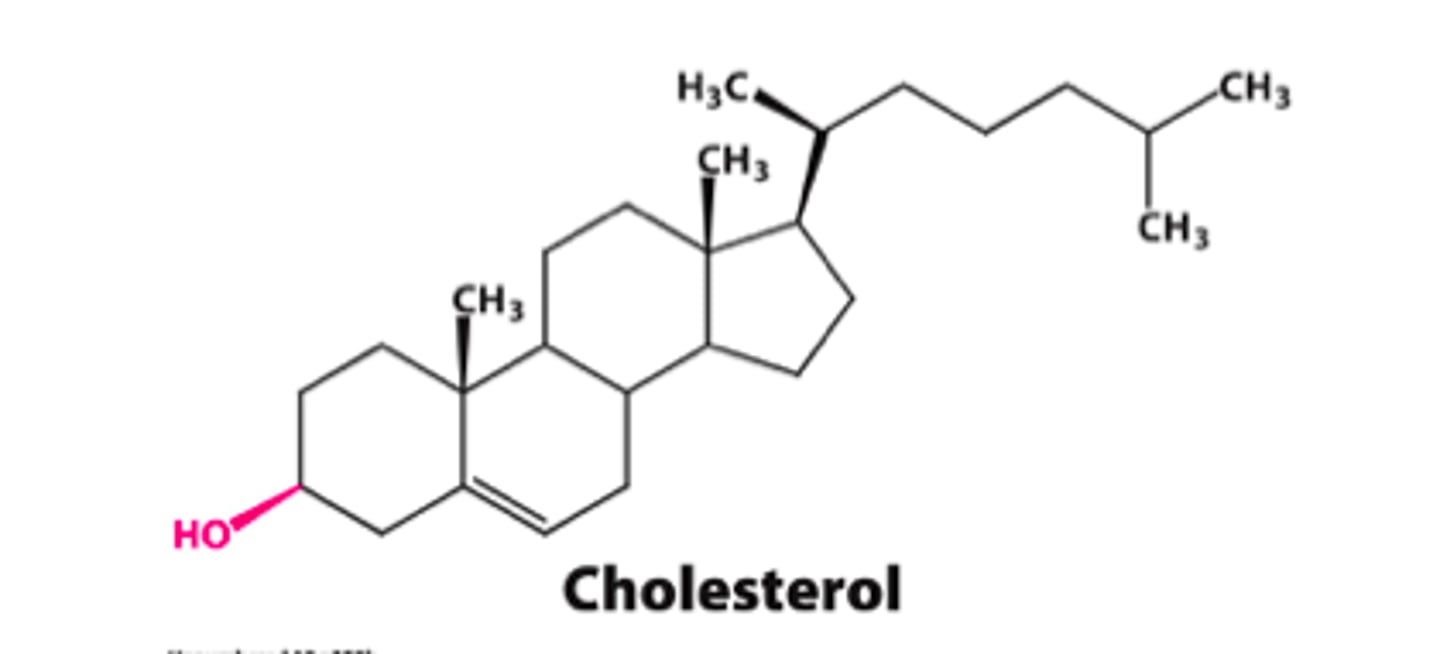
sterols in animals vs plants
meats, eggs, fish, poultry, dairy ---> provide cholesterol
plant sterols block cholesterol absorption (so if u need to lower blood cholesterol levels have a diet rich in plant sterols)
cholesterol can be synthesized into what
vitamin D
negative effect of cholesterol
can build up in artery walls leading to the formation of plaque ---> atherosclerosis ---> heart attacks/strokes
hydrogenation
turning a liquid fat into a solid by saturating an unsaturated fat with hydrogen atoms
fractionation
turning a liquid fat into a solid by heating the liquid at a high temp, removing the liquid portion and the solid fat is left remaining; this does not chemically alter the molecules
______ is a common fat used in fractionation
palm kernel oil
fat replacers / fat substitutes
non fat substances taht act like fat in a food
no health risks and tastes like and looks like a natural fat with fewer calories
commonly found in baked goods, cheese, sour cream, yogurt, margarine, salad dressings, sauces, gravies
can be fat, carb or protein based
examples of fat replacers
simpLESSe
BENEfat
salaTRIM
oLEStra
oLEAN
(key: all have words of being leaner, less calories)
bioavailability
the rate at which a nutrient is absorbed and used
precursor/provitamin
an inactive form of the vitamin, once in the body, it is converted into the active form of the vitamin
coenzyme
small organic molecule that associates with certain enzymes
many B vitamins play an important role as coenzymes
thiamin functions
part of TPP for energy metabolism
oxidation of carbs (increase need with an increase in carbs)
metabolism of pyruvate (high pyruvate means thiamin deficiency)
thiamin food sources
organ meat
wheat germ
enriched foods
whole grains
legumes
potatoes
Thiamin deficiency
beriberi (edema + muscle wasting) ---> "I'm beri beri weak"
muscle weakness
metabolic acidosis (high pyruvate)
tachycardia
memory loss
foot drop
wernickes ---> "Wer- confused"
korsakoffs ---> "Off- brain off (amnesia)"
how is thiamin easily destroyed
by heat (if any answers say "cooked" do not pick them)
riboflavin functions
protein metabolism
RBC production
helps release energy from pro, fat, cho by acting as a coenzyme (FAD/FMN) in energy metabolism
food sources of riboflavin
fortified/enriched grain products
naturally in whole grains
liver
milk!!! dairy products!!!
Riboflavin deficiency
ariboflavinosis
cheilosis/angular stomatitis
magenta tongue
skin lesions with greasy scales
cracked lips
growth failure
cheilosis
a disorder of the lips characterized by crack-like sores at the corners of the mouth (also known as angular stomatitis)
ariboflavinosis
sore throat and swollen mucous membranes
how is riboflavin easily destroyed
ultraviolet light and irradiation
niacin function
metabolism (cho/fat/pro) = B3
part of NAD & NADP for energy metabolism
food sources for niacin
**allllll protein containing foods**
nuts
fortified foods
"thats a niceeee piece of meat"
Niacin deficiency
pellagra = the 4 D's (dementia, dermatitis = rash in sun, diarrhea, and death) remember "niacin is not so nice if you're low in it"
glossitis
rash on areas of skin exposed to sunlight
______ is the precursor of niacin
Tryptophan
biotin functions
coensyme in FA synthesis
assist in converting pyruvate to oxaloacetate in gluconeogenesis
energy metabolism
AA metabolism
biotin food sources
soy beans
egg yolks
fish
whole grains
liver
produced by gut bacteria
biotin deficency can lead to
muscle pain
hallucinations
numb/tingling arms or legs
red scaly rash around the eyes, nose and mouth
brittle nails
hair loss
how is biotin easily inactivated / destroyed
it is inactivated by avidin (a protein found in raw egg whites)
vitamin B5 aka
pantothenic acid
vitamin B5 function
co-enzyme for acetyl coA/energy metabolism
food sources of pantothenic acid
animal products (chicken, beef, egg yolk)
whole grains
potatoes
oats
tomatoes
liver
brocolli
vitamin B5 deficiency
paresthesia (numb/tingling in feet)
anorexia (not eating)
increase sensitivity to insulin
restlessness
inability to walk
NOT COMMON: body needs such a little amount and it is in all foods!
how is vitamin B5 easily destroyed
by food processing
vitamin B6 function
part of PLP & PMP for AA and fatty acid metabolism
an increased pro requires and increase in B6
help convert tryptophan to niacin and to serotonin
help make RBCs
vitmain B6 should always be supplemented if a patient is taking a B6 antagonist such as __________
INH (isoniazid) an antibiotic
how can INH lead to vit B6 deficiency?
Isoniazid is an effective antibiotic used to treat or prevent tuberculosis (TB), but it interferes with the body's metabolism and function of vitamin B6, depleting its levels. This depletion can lead to a serious side effect called peripheral neuropathy, which involves numbness, tingling, and pain, typically in the hands and feet.
vitamin B6 aka
Pyridoxine
pyridoxine food sources
non-citrus fruits
meat and fish and poultry
starchy veggies
fortified cereal
legumes
liver
soy products
P foods:
Peanuts
Potatos
Poultry
Pork
a deficiency in vitamin B6 can lead to
elevated homocysteine levels (hyperhomocysteinemia = CVD)
scaly dermatitis
microcytic anemia
seizures
confusion
how is vitamin B6 / pyridoxine easily destroyed
by heat
folate functions
DNA synthesis
new cell formation
forms RBC in bone
prevents neural tube defects
folate aka
vitamin B9
folate food sources
seeds
fortified cereals
leafy green vegetables
legumes (lentals/beans)
folate deficiency
anemia
glossitis
mental confusion
elevated homocysteine levels
in pregnancy: neural tube defects, spinal bifida (split spine), anencephaly (no brain)
how is folate easily destroyed
heat and oxygen
vitamin B12 is also known as
cyanocobalamin or cobalamin
cobalamin functions
new cell formation
maintains nerve cells
break down assistance w/ AAs and Fatty Acids
vitamin B12 food sources
naturally found in animal foods (meat, fish, poultry, shellfish, milk, cheese, eggs)
fortified cereals
nutritional yeast
a deficiency in vitamin B12 can lead to
pernicious anemia (caused by atrophic gastritis and a lack of intrinsic factor)
paralysis
elevated homocysteine levels
how is vitamin B12 easily destroyed
by microwabe cooking; absorption decreases with age
vitamin C functions
wound healing
collagen synthesis (strengthens blood vessel walls, form scar tissue, bone growth)
antioxidant
thyroxin synthesis
AA metabolism
increase resistance to infection
increase absorption of iron
vitamin C aka
ascorbic acid

