Bio 158 Exam 1
 Call Kai
 Learn
Learn Practice Test
 Spaced Repetition
 Match
Match Flashcards
 Knowt Play
1/133

Earn XP
Description and Tags
Bio 158 Form and Function Exam Lectures 1-5
Name | Mastery | Learn | Test | Matching | Spaced | Call with Kai |
|---|
No analytics yet
Send a link to your students to track their progress
134 Terms
Levels of Organization
Atom —> molecule —> cell —> organ —> organism —> population —> community —> ecosystem —> biosphere
What is an organism? Must have 7 characteristics
1) Cellular organization
2) Ordered complexity
3) Response to stimuli
4) Growth, development, reproduction
5) Energy utilization
6) Homeostasis
7) Evolutionary adaptation
Cellular organization
Basic membrane-bound unit of life
Ordered complexity
Complexity: Many different components that interact
Order: according to a pattern
Response to stimuli
React to changes in environment
Growth, Development, Reproduction
Organisms can create more organisms of the same species
Energy utilization
take in energy and use it to perform work
Homeostasis
Maintain a stable internal environment that differs from the external environment
Evolutionary adaptation
Mutation + natural selection produces changes over generations
The 3 domains of life
bacteria
archaea
eukaryotes
Cellular structure of bacteria and archaea
single celled prokaryotes
Prokaryotic Cells
Simple organization:
Cytoplasm surrounded by a plasma membrane, encased in a cell wall
Lack membrane-bound organelles
Some move using flagellum/cilia (not unique to prokaryotes)
Plasma membrane carries out some functions in some prokaryotes
Example: Cyanobacteria
First to evolve
Eukaryotic Cells
Different organelles for different functions
Nucleus: contains majority of DNA
Many other organelles involved in protein synthesis
Cellular structure of different Eukaryas
Plantae: Cell walls made of cellulose and obtain energy from photosynthesis
Fungi: Cell walls made of chitin and obtain energy by absorbing digested material
Animalia: No cell walls, obtain energy by ingesting and then digesting internally
Protista: all unicellular eukaryotes except for yeast, and multicellular algae
Eukaryotic Cells: Plant vs. Animal
Plant
chloroplast
cell wall
vaucole
Animal
lack of chloroplast
lack of cell wall
lack of vaucoles
Both
eukaryote (membrane-bound organelles)
similar membranes
mitchondria
Prokaryote: Structure different Shapes
Bacillus
has more surface area per unit of volume
tube like
do better in more resource-poor environments
often solitary + move with flagella
Coccus
balloon shape
Spirillum
spiral
Prokaryote: Nutritional Strategy
Many strategies, including:
Autotrophs = make own nutritional molecules
Chemosynthesis = use energy from chemical reactions (e.g., using H2S)
Photosynthesis = use energy from sunlight
Heterotrophs = consume nutrients
Endocytosis = cell engulfs nutrients
Prokaryotes: Reproduction
Reproduce asexually with binary fission
Are able to exchange genetic information with conjugation
Prokaryotes: Diversity
Estimated over 99% of prokaryotes have yet to be discovered
so many
Prokaryotes example: Nitrogen-fixing bacteria
Convert Nitrogen in the air to forms of Nitrogen plants can use
Found in both water and the soil
Prokaryotes example: Bioremediation
Bacteria break down organic matter + toxins (e.g., oil spills, microplastic pollution)
Prokaryotes example: Human Disease
Bacteria Borrelia burgdorferi
Transmitted via tick vector
Protist
Eukaryotes that aren’t plants, fungi, or animals
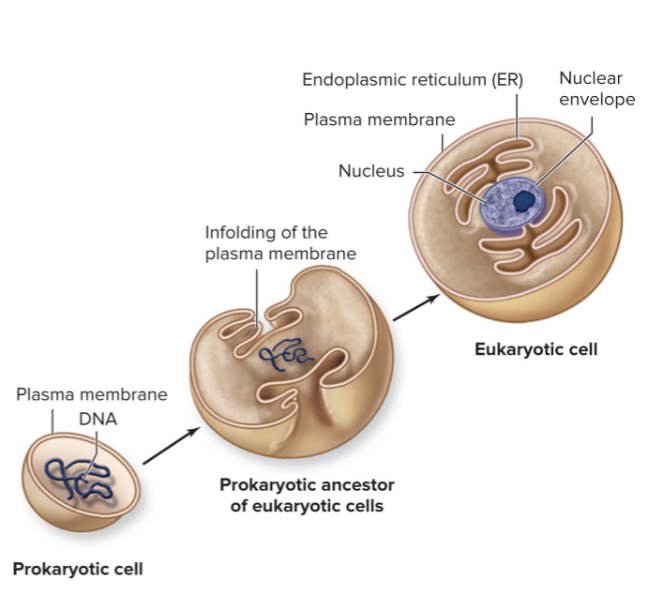
Origin of the nucleus
Cell wall had to be lost 1st
The nuclear membrane is an extension of the ER network
The nuclear membrane protects and isolates the nucleus
Thought to have evolved from infolding of plasma membrane
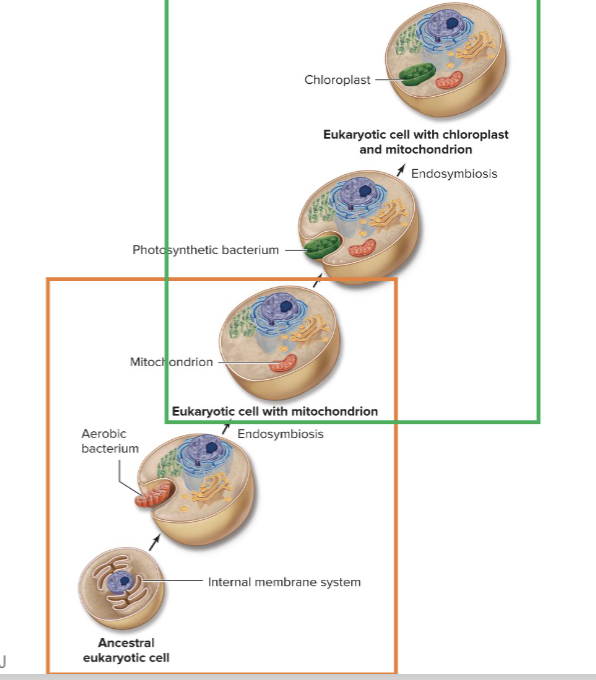
Endosymbiosis Theory
Ancestors were prokaryotes that lived symbiotically
Energy-producing (aerobic) bacteria lived inside of larger bacteria
These aerobic bacteria became modern-day mitochondria
Photosynthetic bacteria lived inside of larger bacteria
These photosynthetic bacteria became modern-day chloroplasts
Evidence for Endosymbiosis
Mitochondria and Chloroplasts have their own DNA: Where from?
Turns out to be very similar to DNA in bacteria
Many antibiotics that inhibit protein synthesis in bacteria also inhibit protein synthesis in mitochondria and chloroplasts
Chloroplasts and mitochondria reproduce in the same way as bacteria
Protist: Structure
Eukaryotic Cells
All eukaryotes that aren’t plants, animals or fungi are lumped into protists
No distinct cell type (some plant-like, some animal-like)
Micro and macroscopic
Protist: Nutritional Strategy
Wide range of nutritional strategies
Some photosynthesize
Some consume other organisms
Some can do both!
Some help decompose materials
Protist: Reproduction
Depending on the species, can reproduce:
asexually (binary fission)
sexually (conjugation)
Some species can do both
Protist example: Malaria parasite
Plasmodium
Complex life cycle
Blood stage causes symptoms
Protist example: Kelp
Are not plants—actually algae
Look like complex plants
Have specialized regions
Unlike plants, have no vascular tissue
Protist example: Slime molds
Can be:
many individual cells that sometimes cooperate in order to reproduce
one huge cell with many nuclei
Studied to understand evolution of multicellularity (transitional form)
Fungi
eukaryotes
in monophylectic group
Fungi: Structure
Can be single-celled or multicellular form with different cell types. If multicellular, body = mass of connected hyphae
Hyphae can be one continuous or branching tube with many nuclei, or chains of cells with pores.
Cytoplasm flows freely throughout hyphae, which allows hyphae to grow rapidly
Mass of connected hyphae: mycelium, can be up to many meters long!
Cell walls made of chitin, a polysaccharide
Fungi: Nutritional strategy
are heterotrophs that release digestive enzymes + absorb nutrients
Have a large surface-to-volume ratio
Break down cellulose and lignin in wood
Some are even carnivorous
Fungi: Reproduction
Can have sexual or asexual reproduction
Produce spores
Fungi ecological roles
Found in nearly every environment
Important decomposers
Important for plant nutrient uptake
Live in symbiosis with many other organisms
Important for many foods
Fungal example: mushrooms
Most familiar fungi
Mushrooms, toadstools, rust infections
Reproduce sexually with basidia
Gills produce millions of spores
Fungal example: “Humongous Fungus”
The largest known organism on earth is a species of honey
mushroom (Armillaria ostoyae) living in OregonMycelium covers 3.5 square miles and is estimated to weigh up to 25,000 tons
A smaller one in northern Michigan covers over 91 acres
Fungal example: yeast
Can be pathogenic
Can be used for fermentation: Bread, Beer, etc.
Plants: Structure
Multicellular
Plant cell:
Eukaryotic
Chloroplasts
Vacuoles
Cell walls made of cellulose
Plants: Nutritional Strategy
Almost all plants use photosynthesis to generate
foodPlants all require nutrients from the medium (typically soil) in
which they growNitrogen, Phosphorus, and Potassium are the most common
Plants: Reproduction
Plants have both haploid and diploid phases of the life cycle (haplodiplontic)
Can reproduce asexually: spores, vegetative propagation
Can also reproduce sexually with male and female gametes
Plants: Roles
Primary producers
Generate oxygen and store carbon
Prevent erosion + provide shelter
Provide many products:
Textiles, drugs, dyes, building materials, fuel, etc.
What have plants evolved from?
green algae
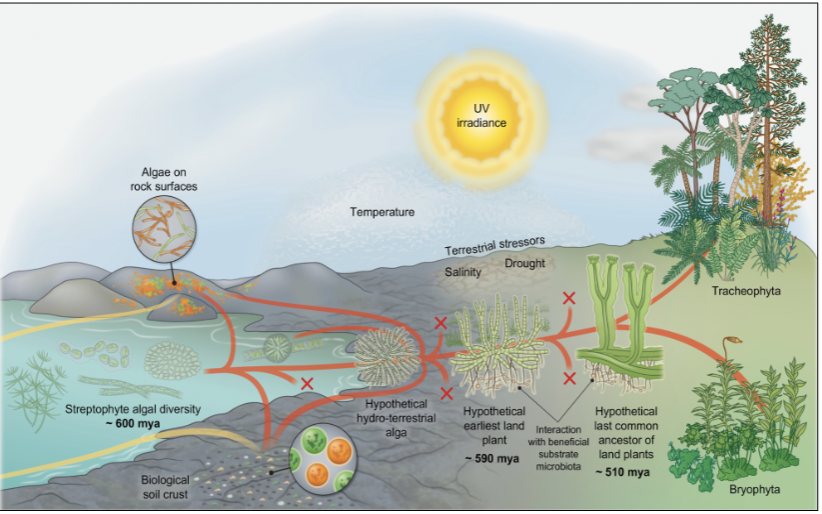
Challenges for plants to living on land
drying out
exposed to UV radiation
different temperature shifts
Adaptations to terrestrial life: Vegetative
Waxy cuticle: to prevent desiccation
Stomata: small openings that allow gas in and out
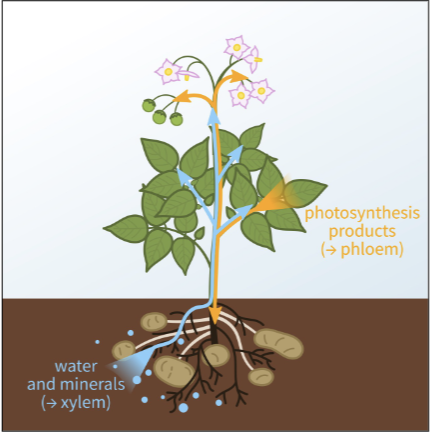
Some plants have specialized tissues for transport
Xylem: water + minerals
Phloem: sugars
Adaptations to terrestrial life: Seeds
Two main groups:
Seedless plants: mosses, ferns, etc.
Seed plants: forbs, trees, grasses, etc.
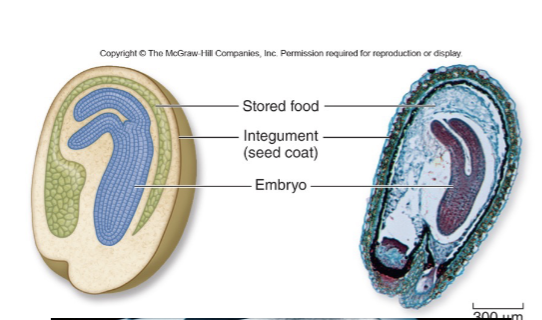
Adaptations to terrestrial life: Function of Seeds
Protects the embryo
Provides nutrition for the embryo
Provides a dormant phase to allow the embryo to survive until good environmental conditions
Seed plants: Gymnosperms
“Naked seed”
No fruits or flowers
Example: pine tree
Seed plants: Angiosperms
”Seeds in vessels”
Fruits & flowers
Have a unique double fertilization
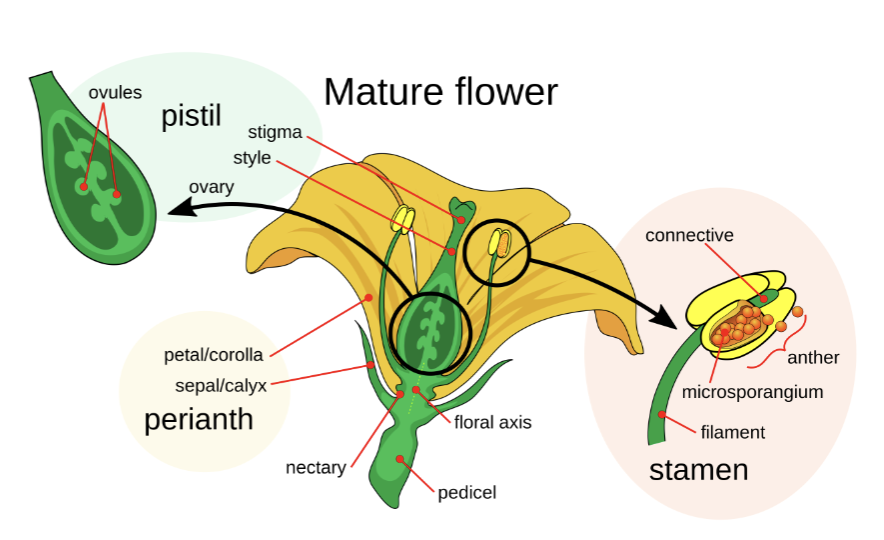
Flower structure
• Modified stems/leaves
• Embryo within ovary
Pollination syndrome
Pollination syndrome = sets of traits that have evolved to for different pollen vectors
How are wind-pollinated flowers different from animal-pollinated flowers?
Flower: Form and Function
What aspects of these flowers are different?
Color
Shape (petals, stamens, carpels)
Odor
Reward (nectaries)
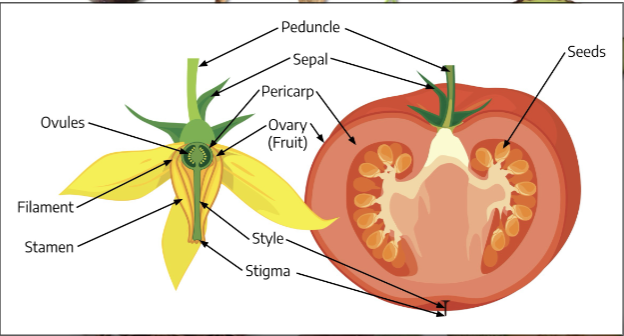
Fruit: Form and Function
What is the function of a fruit?
Protect seeds
Help them spread
Fleshy fruits do this by getting animals to collect/eat them
Fruit: Form + Function- Dispersal
ants
other
other
Pollen: Form and Function
Escape pods
they protect and provision
Pollen grains
protect from bacteria, drying out, and UV radiation
Characteristics of Animals
All animals
Structure:
multicellular
lack cell walls
Nutritional strategy:
heterotrophic (ingest nutrients)
Most animals
Reproduction: sexual
Other traits:
active movement
unique tissues
Animal Body Plans: Evolution 5 Key Innovations:
1) Symmetry
2) Specialized tissues
3) Body cavity
4) Patterns of Embryonic Development
5) Segmentation
Symmetry: Asymmetric
no lines because no equal on one side
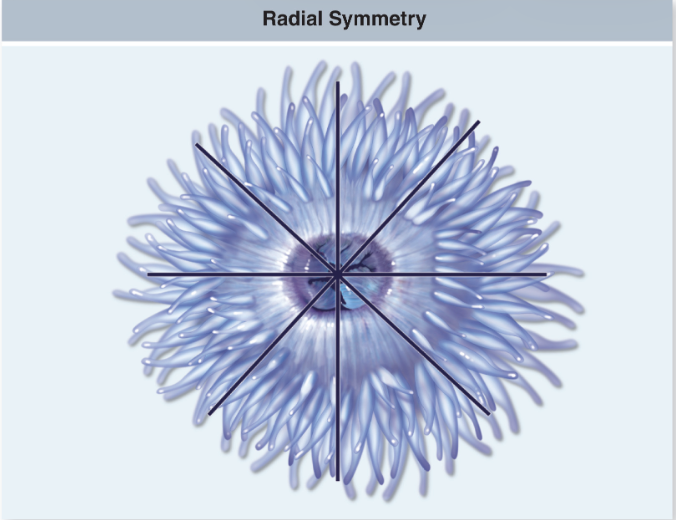
Symmetry: Radial Symmetry
lots of different lines splitting and all would be the same on each side
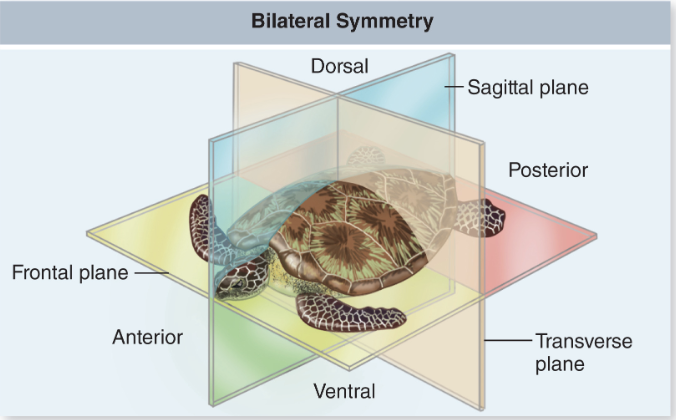
Symmetry: Bilateral Symmetry
2 sided symmetry
one line - humans but not all the same
Bilateral symmetry has this. What is it?
cephalization
concentration of nervous tissue at anterior end
Specialized tissues
All animals except sponges
4 main types:
Epithelial: forms the outer layer of the body and lines the inner cavities
Connective: support and protection of organs and limbs
Muscular: aids in movement
Nervous: carry electrical signals from the brain throughout the body and back
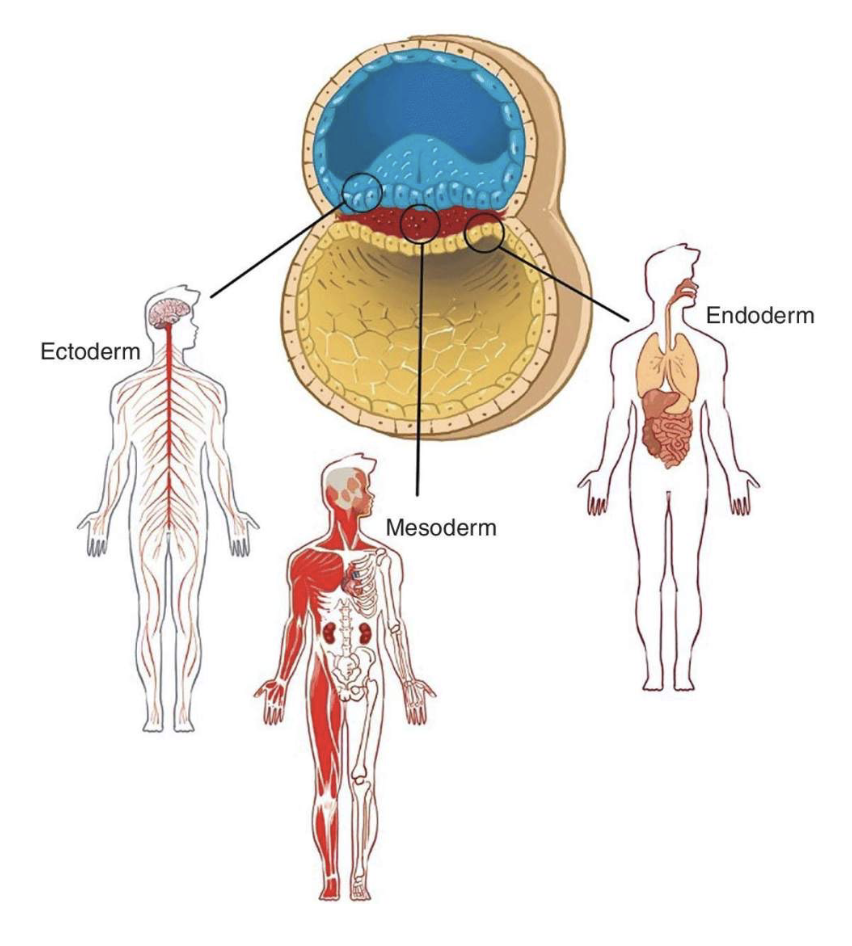
Body cavity: Germ layers
During embryonic development, cells of most animals organize into 3 layers:
outer ectoderm
intermediate mesoderm
inner endoderm
Give rise to different parts of the body depending on the organismal group
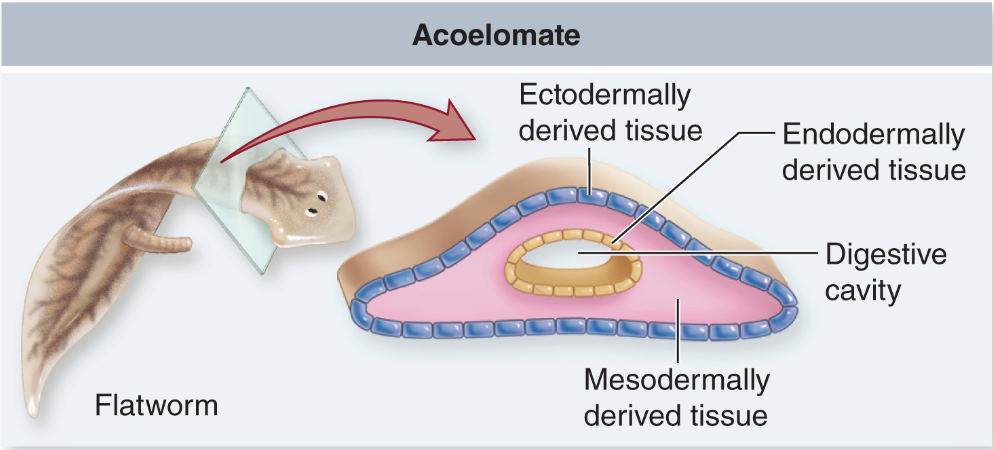
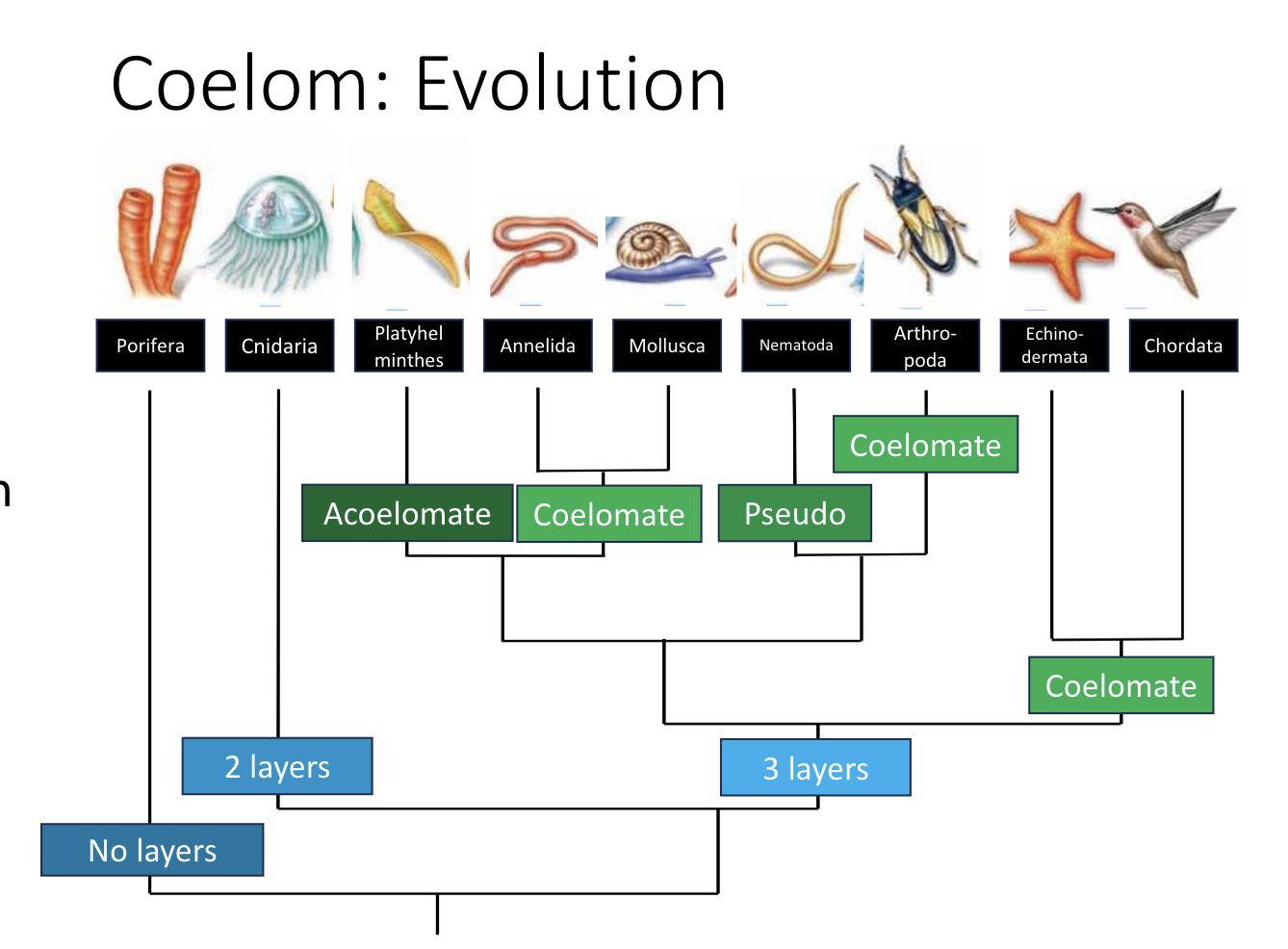
Body Cavity: Acoelomate
no body cavity between the digestive tract and the muscle layer
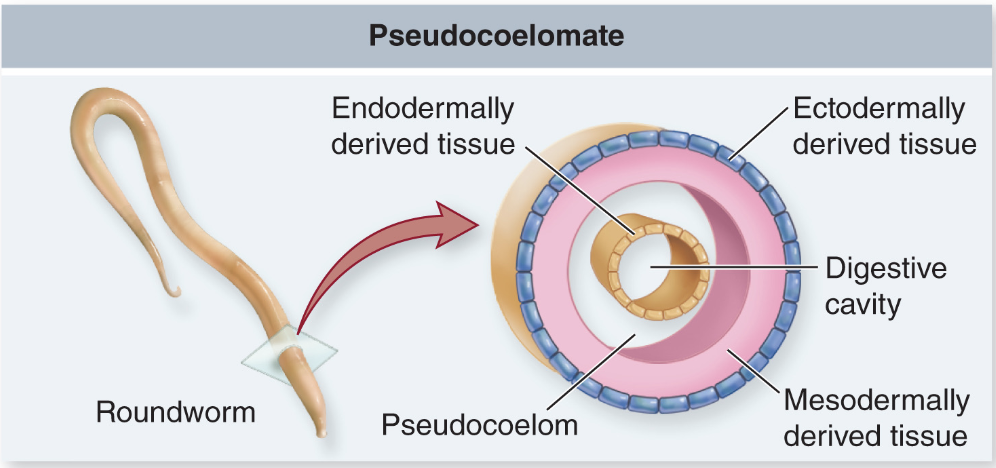
Body Cavity: Pseudocoelomate
have a body cavity between tissues partially lined with mesoderm
organs held loosely
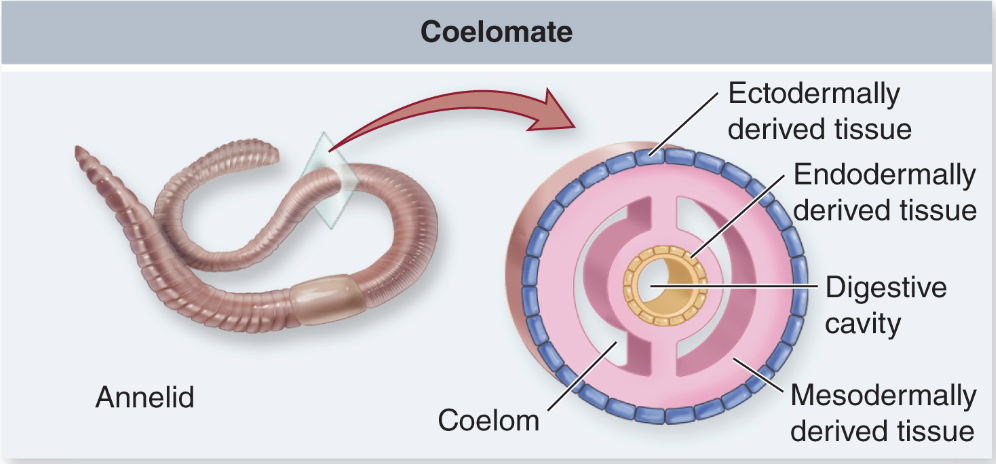
Body Cavity: Coelomate
have a body cavity with a complete mesoderm lining
organs are attached, but can still move somewhat
Allows:
more complex organ systems
distribution of materials
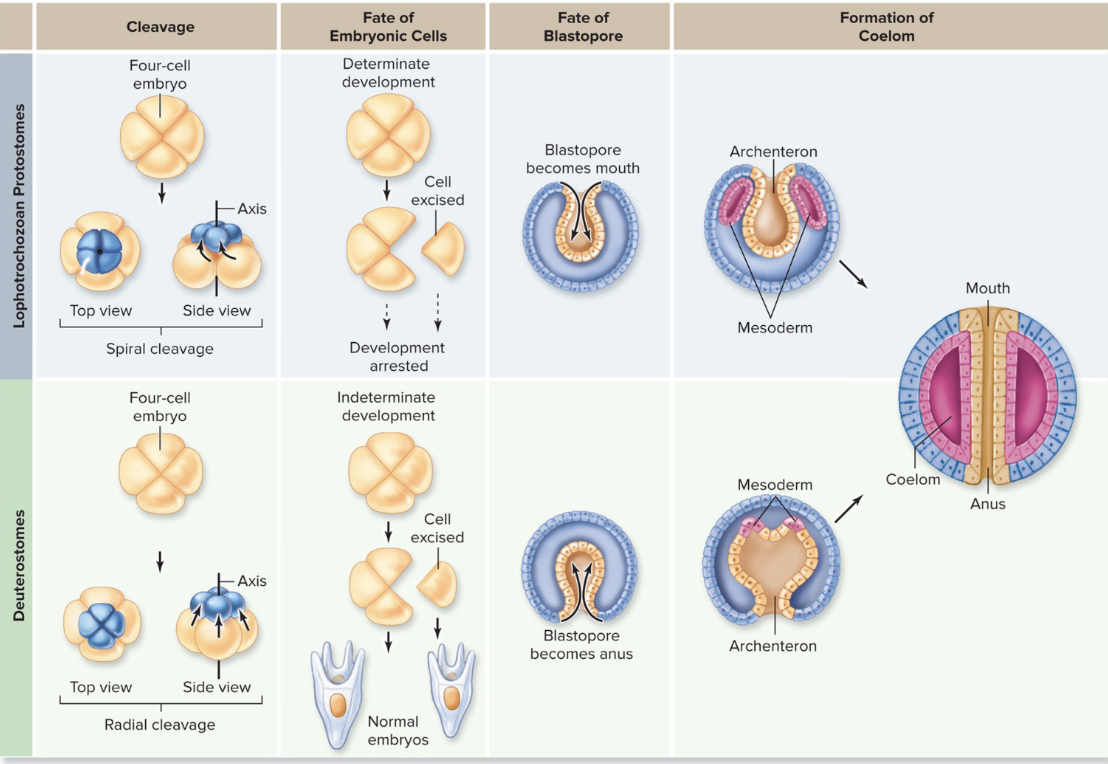
Patterns of embryonic development
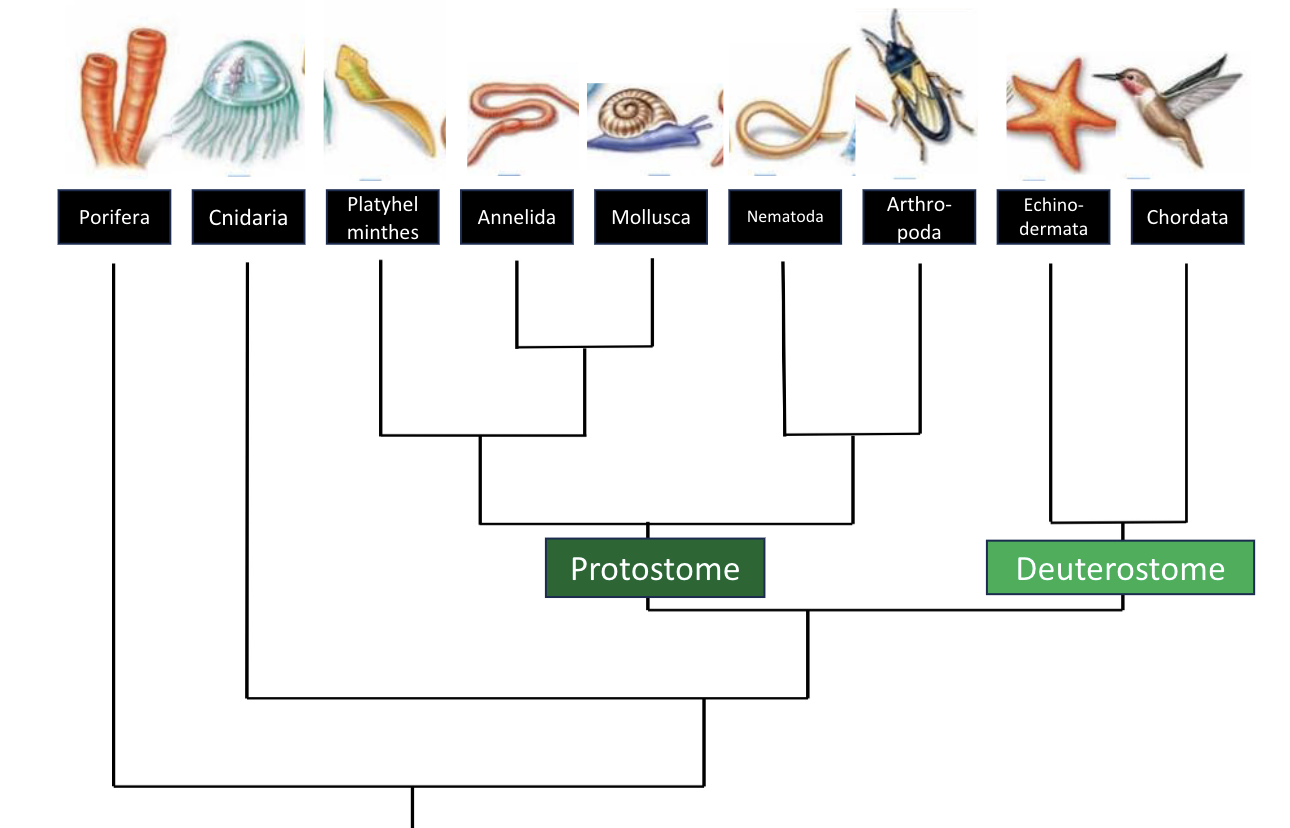
Protostomes:
first opening in development becomes mouth
determinate development
Deuterostomes:
first opening becomes anus
indeterminate development
Segmentation
Repeated units clear during early development (may fuse or differentiate later)
Benefits:
Damage to one segment may not be fatal to organism
Locomotion is more effective because individual segments can move semi-independently
Who is Asymmetric
Porifera (sponges)
Who has Bilateral symmetry
Platyhelminthes (flatworms)
Annelida (segmented worms)
Mollusca (snails, clams, squid, etc)
Nematoda (round worms)
Arthropoda (insects, crustaceans, etc)
Echinodermata (starfish, sea urchin etc),
Chordata (vertebrates)
Who has Radial symmetry
Cnidaria (jellies)
Echinodermata (starfish and sea urchin) and Chordata (vertebrates) as adults
Who has specialized tissues
All expect Porifera
Who does not body cavity
Porifera (sponges)
no germ layers
Cnidaria (jellies)
has 2 germ layers
Who has the body cavity Acoelomate?
Platyhelminthes (flatworms)
Who has the body cavity Pseudocoelomate?
Nematoda (round worms)
Who has the body cavity Coelomate?
Annelida (segmented worms)
Mollusca (snails, clams squid slug etc)
Arthropoda (insects crustaceans etc)
Echinodermata (starfish, sea urchin etc)
Chordata (vertebrates
Who does not have embryonic development?
Porifera
Cnidaria
Who has the Embryonic development Protostome?
Platyhelminthes (flatworms)
Annelida (segmented worms)
Mollusca (snails, clams, squid etc)
Nematoda (round worms)
Arthropoda (insects, crusteaceans etc)
Who has the Embryonic development Deuterostome?
Echinodermata (starfish, sea urchin etc)
Chordata
Who has segmentation?
Annelida (segmented worms)
Arthropoda (insects etc)
Who does not have segmentation
Porifera (sponges)
Cnidaria (jellies)
Platyhelminthes (flatworms)
Mollusca (snails, clams etc)
Nematoda (round worms)
Echinodermata (starfish, sea urchins)
chordata (vertebrates)
Other information on Phylum (first half of it)
Porifera
Several cell types
Reproduce sexually and asexually
Cnidaria
Have stinging cells for capturing prey (nematocysts)
Also includes anemones and corals
Platyhelminthes (Flatworms)
Some are studied for regeneration properties
Nematoda (Roundworms)
Some are microscopic
Have adapted to almost every environment
The other half of other info on phylum
Mollusca (Snails, Clams, Squid, etc.)
Have a protective body covering and often a shell
Annelida (Segmented worms)
Earthworms play key role in soil habitat
Arthropoda (Insects, Crustaceans, Arachnids, etc.)
Jointed appendages
Exoskeleton made of chitin
Echinodermata (Starfish, Sea Urchins, etc.)
Have an endoskeleton of calcium carbonate plates
Also studied for regenerative properties
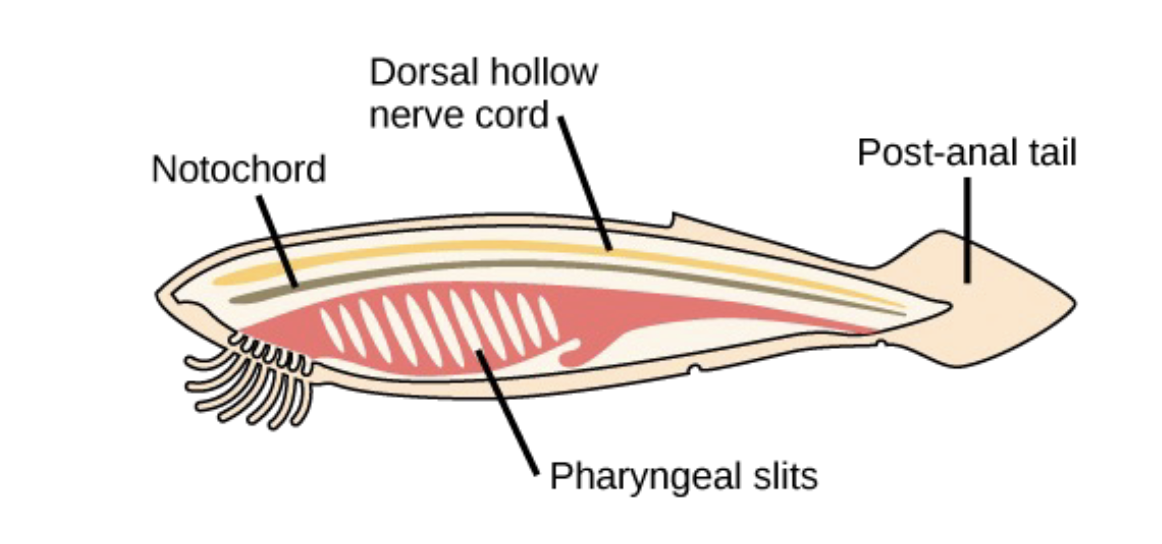
Chordates
MOST Have an endoskeleton made of bone or cartilage
3 subphyla:
Cephalochordata
Urochordata
Vertebrata
Characteristics of all chordates (at some part of development):
1. Hollow dorsal nerve cord
2. Notochord
3. Pharyngeal slits: filter feeding organ
4. Post-anal tail
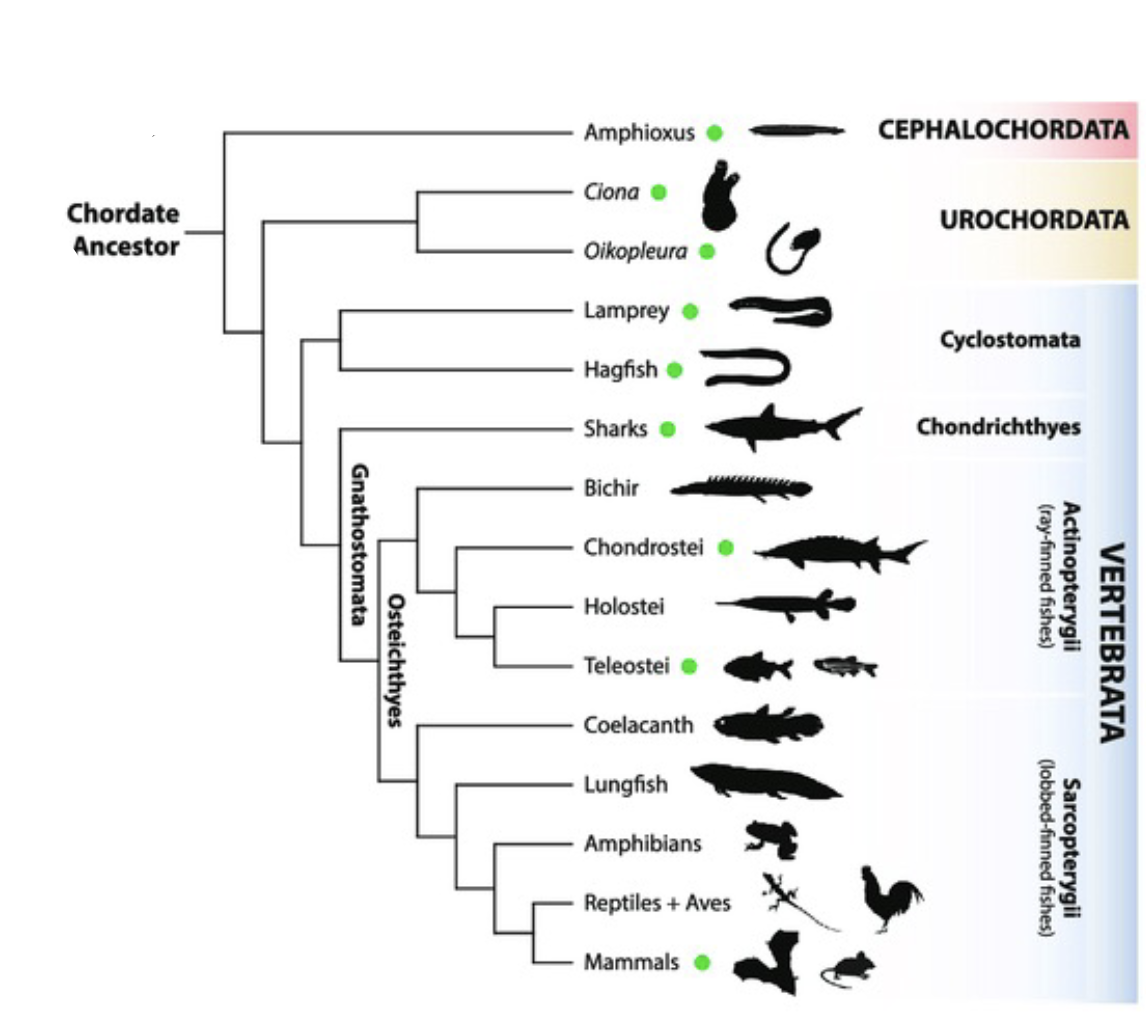
Non-vertebrate chordates
Do not form vertebrae or other bones
Look very different from vertebrates
Cephalochordata and Urochordata
Lancelets: Cephalochordata
Resemble a lancet (surgical blade)
23 species
Found in shallow marine habitats
Tunicates and Salps: Urochordata
About 1250 species
Immobile as adults
No major body cavity or segmentation as adults
Larvae stage exhibits all characteristics of chordates
Vertebrates: 5 Key characteristics
1) Vertebral column
2) Head
3) Neural crest: cells during development that migrate to form different structures
4) Internal organs
5) Endoskeleton
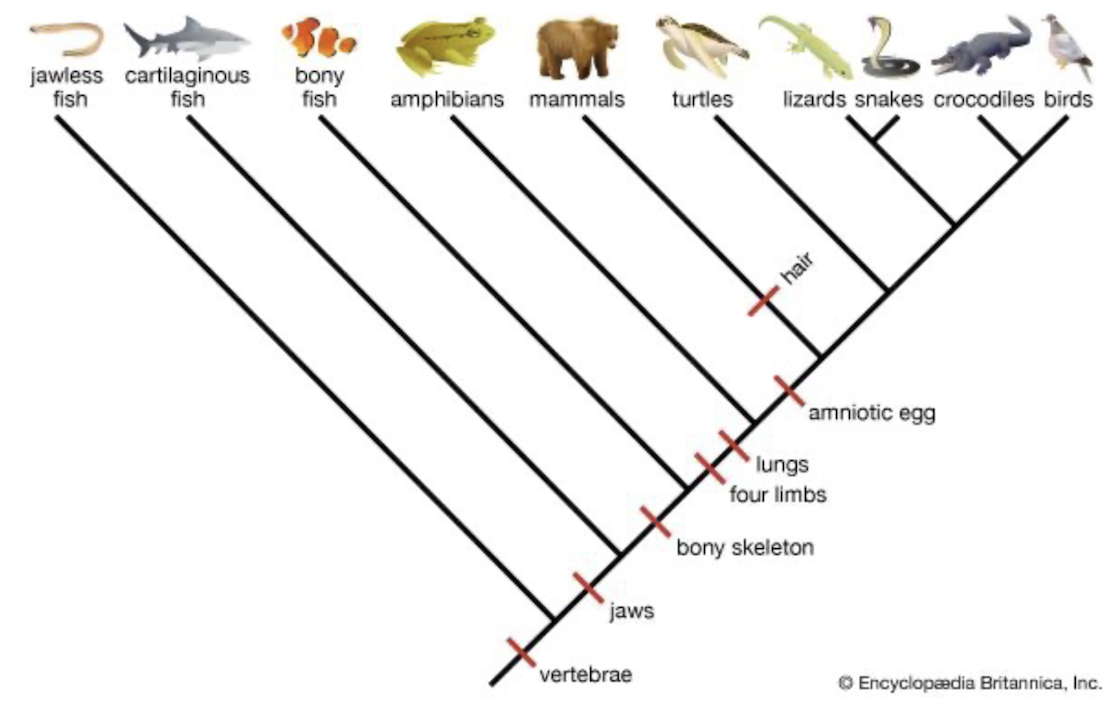
7 Classes of Vertebrates
Domain: Eukarya
Kingdom: Animalia
Phylum: Chordata
Subphylum: Vertebrata
Class:
Agnatha: Jawless fish
Chondrichthyes: Cartilaginous fish
Osteichthyes: Bony fish
Amphibia: Amphibians
Reptilia: Reptiles
Aves: Birds
Mammalia: Mammals
Agnatha
Jawless fishes
Lampreys and Hagfish
Hagfish secrete a slime to avoid predation
Chondrichthyes
Cartilaginous fishes
Include sharks, skates, and rays
Have electroreceptors
Have scales that are modified teeth
has jaws
Osteichthyes
Bony fishes
Most have a swim bladder
Highly mobile fins
Most fertilization external
has bones
Amphibia
Include frogs, toads, salamanders, and caecilians
First vertebrates to walk on land
Have a partially divided heart
Supplement lungs by breathing through skin
has 4 legs, lungs, and amniotic eggs
Reptilia
Include lizards, snakes, turtles, crocodiles, and dinosaurs
Have amniotic eggs
Dry skin
has lungs and anmiotic eggs
Aves
Birds
Feathers
Lightweight skeleton
Highly efficient respiration and circulation
Endothermic
has lungs and amniotic eggs
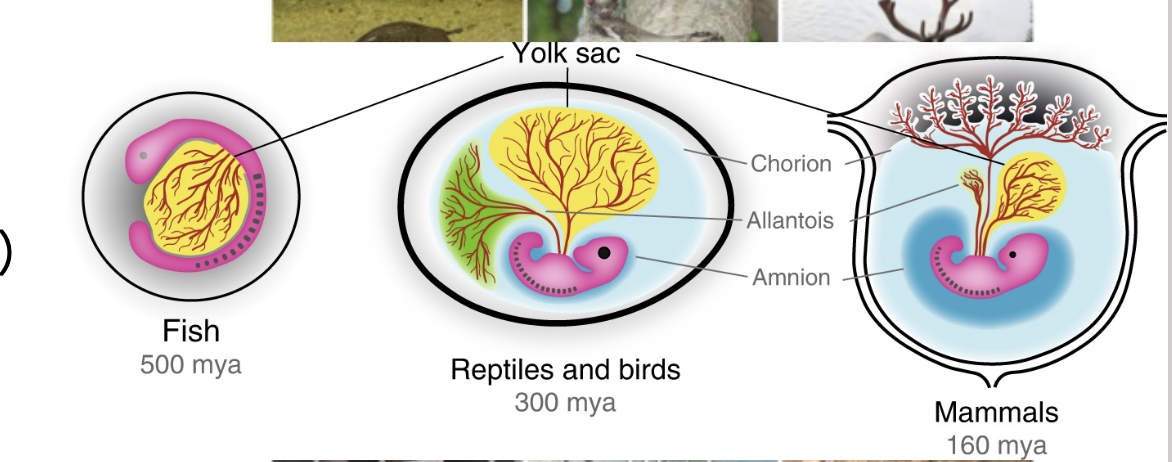
Mammalia
Traits:
Hair
Mammary Glands
Endothermy
Placenta (most species)
has bones, legs, amniotic eggs, hair and endothermic
Three groups of mammals
Monotremes
egg-laying mammals: echidna and platypus
Marsupials
pouched mammals: kangaroos, opossum, etc.
Placentals
embryo in uterus: everything else
Plant Structure: One of the systems
Shoot system: stems and leaves.
Allows: Photosynthesis, reproduction
Explore top notes

