Electricity
 Call Kai
 Learn
Learn Practice Test
 Spaced Repetition
 Match
Match Flashcards
 Knowt Play
1/41

Earn XP
Name | Mastery | Learn | Test | Matching | Spaced | Call with Kai | Chat |
|---|
No analytics yet
Send a link to your students to track their progress
42 Terms
identify common materials that are electrical conductors
copper, aluminium, silver and gold
identify common materials that are electrical insulators
rubber, plastic, glass, ceramic, and dry wood
how can insulating materials be charged by friction?
Two insulators are rubbed together
friction causes electrons to move from one to the other
Material that loses electrons becomes positively charged
material that gains electrons becomes negatively charged
magnitude of charge on each material is equal- they lose/gain the same number of electrons
explain the uses of electrostatic charges in a photocopier
drum is given positive charge
light is shone onto drum
negatively charged toner is applied
toner pattern is transferred to paper
paper is heated to fuse toner
explain the uses of electrostatic charges in inkjet printers
ink is broken into droplets
droplets are given charge
deflector plates create an electric field
field exerts a force on the droplets
charge controls where they land
What are the potential dangers of electricity when fuelling aircraft and tankers?
Fuel flows through pipes- causes friction
builds up static charge
spark can occur- fuel vapour is flammable
Spark → ignition → fire or explosion risk
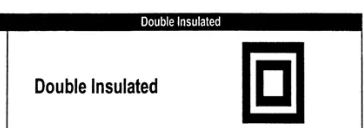
how does the use of insulation/double insulation protect the device/user
Insulation
—> rubber or plastic coating around wires prevents contact with live wires, stopping shocks.
Double Insulation
—> doesn’t need earth wire because outer casing is second layer of insulation, eliminating shock risk even if internal wires wear out.
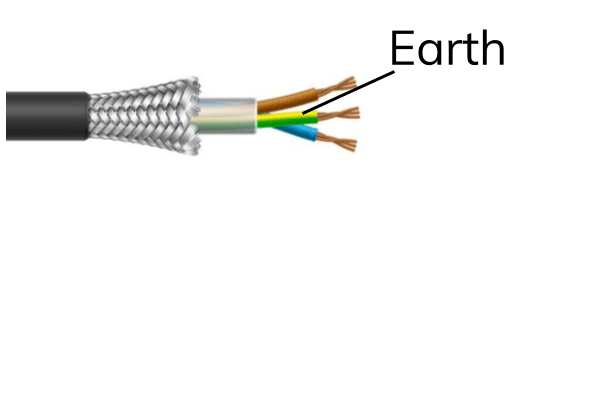
how does the use of earthing protect the device/user
Metal-case is connected to earth wire, if live wire touches case, earth wire has low resistance path to earth and blows fuse
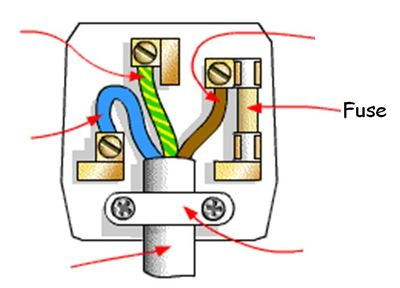
how does the use of fuses and circuit breakers protect the device/user
Contains thin wire that melts if current exceeds its rating, breaking the circuit
why does a current in a resistor result in increase in temperature
Flowing electrons collide with metal ions, transferring kinetic energy into heat, causing resistor to warm
what is the difference between alternating current (a.c.) and direct current (d.c.)
Flow: AC flows back and forth; DC flows one way.
Voltage: AC voltage varies; DC voltage is steady.
how does the current in a series circuit depend on the applied voltage
the current is directly proportional to the applied voltage and inversely proportional to total resistance, which increases with number and type of components
What is current?
Measured in amps (A)- the rate of flow of charge
What is potential difference?
Measured in volts (V)- work done per unit charge in moving between two points in a circuit
What is resistance?
Measured in ohms- the opposition to the flow of current
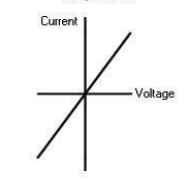
Resistor at a constant temperature
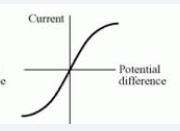
Current and voltage with a filament lamp
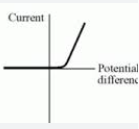
Current and voltage in a diode
Explain the resistor at a constant temperature graph
In an ohmic conductor the current is directly proportional to the voltage
Explain the current and voltage with a filament lamp graph
temperature in the filament increases as the current does, which means electrons and ions vibrate and collide more, increasing resistance.
Explain the current and voltage in a diode graph
A diode only allows current to flow in one direction
in reverse direction, diode has very high resistance, and therefore no current flows
what is electric current in solid metallic conductors?
a flow of negatively charged electrons
why is current conserved at a junction in a circuit
electrons can't be created or destroyed, so total current entering a junction must equal total flow leaving it

switch
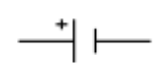
cell
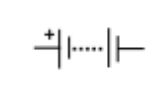
battery

diode

resistor
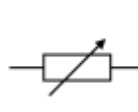
variable resistor

lamp
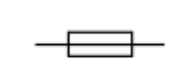
fuse
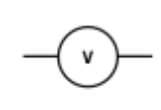
voltmeter
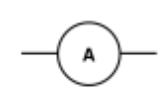
ammeter
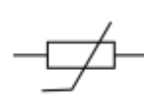
thermistor
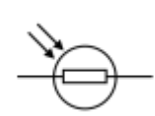
LDR- Light dependent resistor
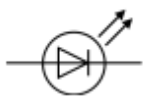
LED- Light emitting diode
function of live wire
carries the high alternating voltage (240V) from the mains supply to the appliance, delivering the electrical power
what affects resistance in circuits?
longer wire
thinner wire
higher temperature
what are the strengths of series circuits?
Simple to construct and understand
components controlled by a single switch
Less wiring needed
what are the weaknesses of series circuits?
If one component breaks, the whole circuit stops working
Adding more components increases resistance, reducing current throughout
what are the strengths of parallel circuits?
If one component breaks, the others continue working
Each component gets full supply voltage
what are the weaknesses of parallel circuits?
more complex to construct
requires more wiring