Calc AB Unit 1 Limits
 Studied by 3 people
 Call Kai
 Learn
Learn Practice Test
 Spaced Repetition
 Match
Match Flashcards
 Knowt Play
1/22

There's no tags or description
Looks like no tags are added yet.
Name | Mastery | Learn | Test | Matching | Spaced | Call with Kai |
|---|
No analytics yet
Send a link to your students to track their progress
23 Terms
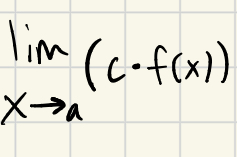
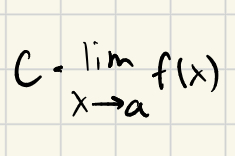
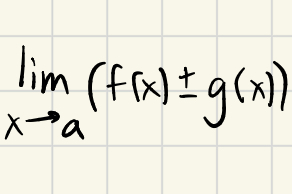
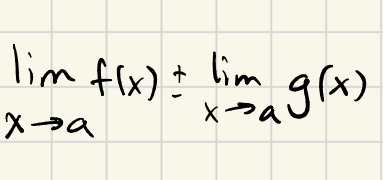
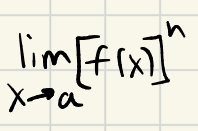
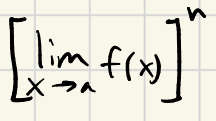
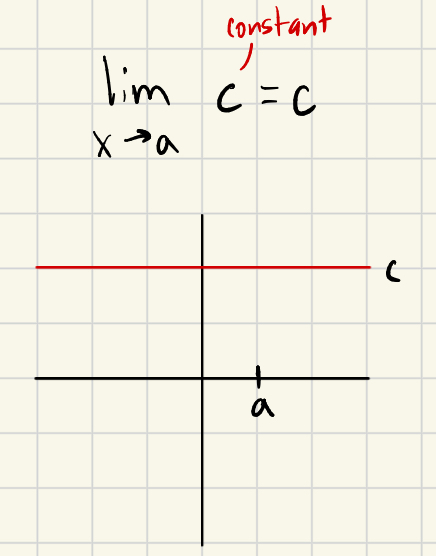
What does limx→ac equal?
c
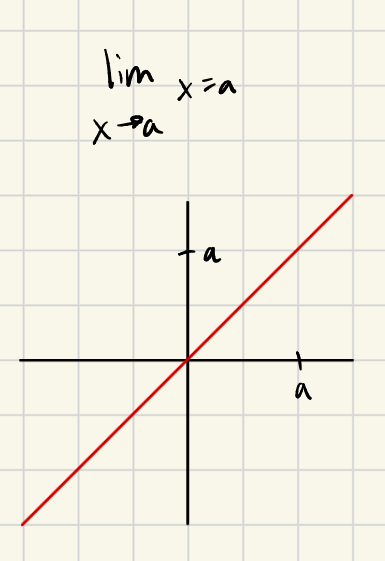
What does limx→ax equal?
a
When does limx→af(x) = f(a)
When there are no asymptotes
Denominator doesn’t equal 0
What is indeterminate form
f(a)/g(a) = 0/0
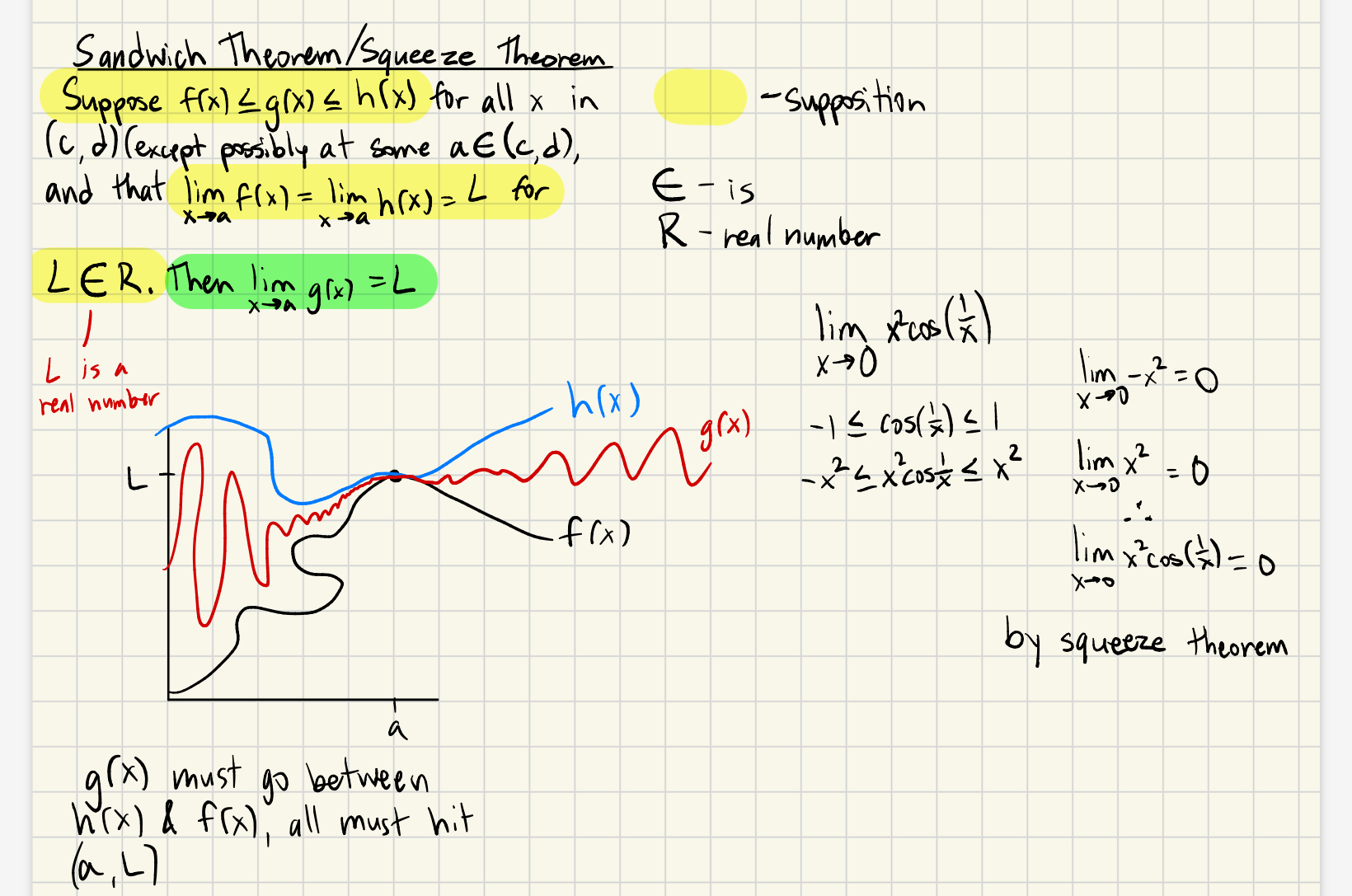
Squeeze/sandwich theorem
Suppose f(x)≤g(x)≤h(x)
And limx→af(x) = limx→ah(x) = L
Then limx→ag(x) = L
Continuous function rules
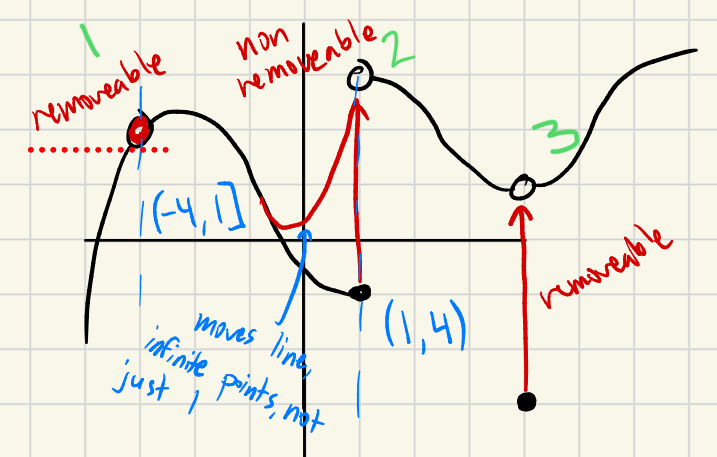
f(a) must be defined
every x value must have a y value
limx→af(x) must exist
overall limit
limx→af(x) = f(a)
lim must be at func value
Intermediate value theorem
Suppose f(x) is continuous on [a,b]
And W is a number between f(a) & f(b)
Then a number c is between [a,b] where f(c) = W
![<p>Suppose f(x) is continuous on [a,b]</p><p>And W is a number between f(a) & f(b)</p><p>Then a number c is between [a,b] where f(c) = W</p>](https://knowt-user-attachments.s3.amazonaws.com/c52861fa-662d-448d-ac7e-a8c52c800899.jpg)
If f(x) decreases without bound as x→ a, then what does limx→af(x) equal
-∞
If f(x) increases without bound as x→ a, then what does limx→af(x) equal
∞
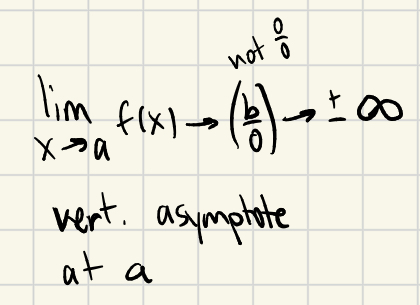
How to know if there is an infinite limit vertical asymptote
vertical asymptote: limx→af(x) = (b/0) = ±∞
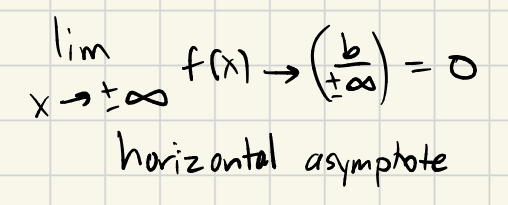
How to know if there is an infinite limit horizontal asymptote
horizontal asymptote: limx→±∞f(x) = (b/±∞) = 0
If f(x) approaches L as x gets very large/small, then…
Large: limx→∞f(x) = L
Small: limx→-∞f(x) = L
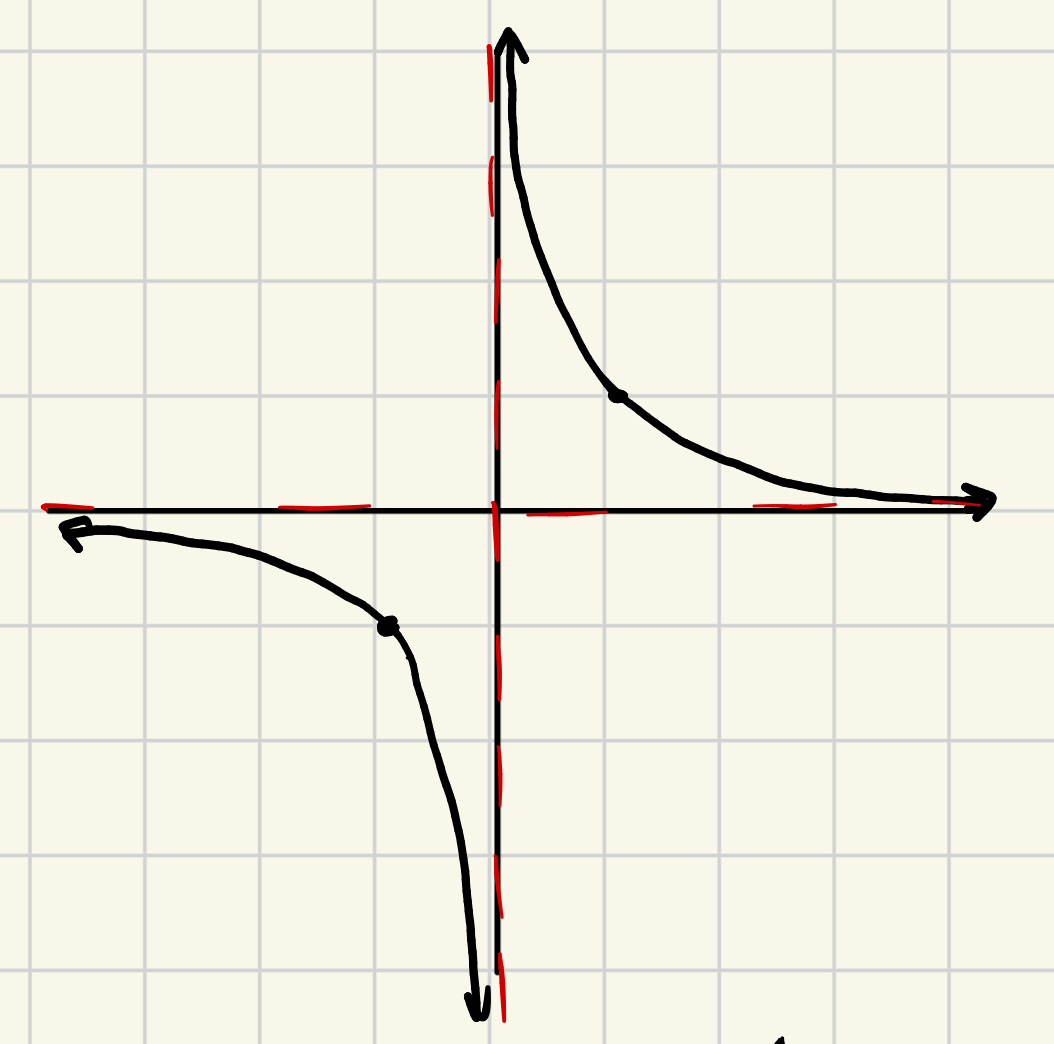
limx→∞(1/x)=
limx→-∞(1/x)=
0
0
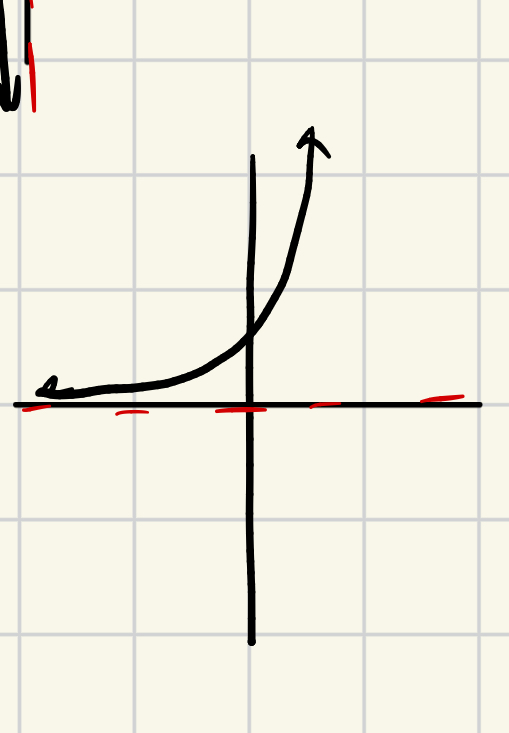
limx→∞(ex)=
limx→-∞(ex)=
∞
0
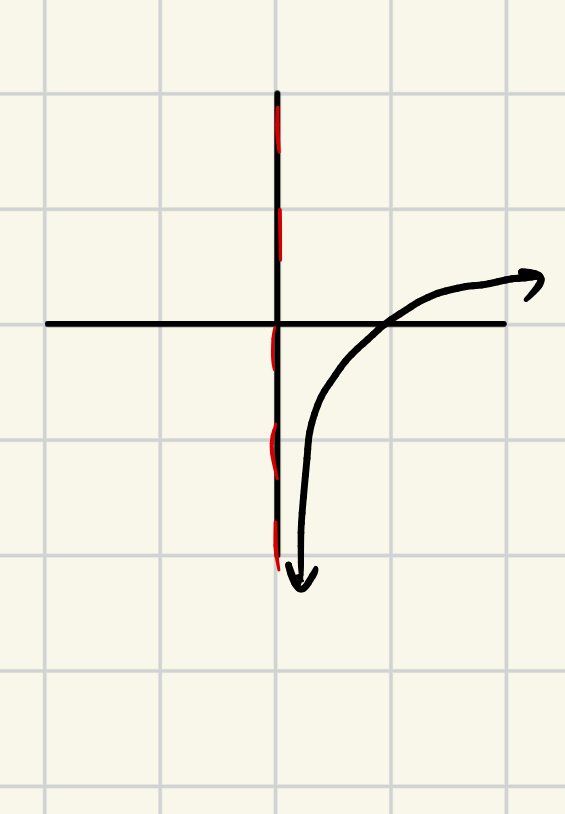
limx→0+(lnx)=
∞
How to know if a function approaches infinity?
When plugging in a, limx→af(x) = b/0
How to tell if discontinuous function approaches positive or negative infinity?
If a number to the left of a makes the limit negative, then it approaches negative infinity
If a number to the right of a makes the limit positive, then it approaches positive infinity
What does it mean if limx→af(x) = ∞
There is a vertical asymptote
Non-removable discontinuity
 Note
Note  Flashcards (150)