elaboration likelihood model
 Studied by 0 people
 Call Kai
 Learn
Learn Practice Test
 Spaced Repetition
 Match
Match Flashcards
 Knowt Play
1/13

There's no tags or description
Looks like no tags are added yet.
Name | Mastery | Learn | Test | Matching | Spaced | Call with Kai |
|---|
No analytics yet
Send a link to your students to track their progress
14 Terms
elaboration likelihood model
theory understands that all humans process stimulus differently, the outcomes of these processes result in changing attitudes and consequently behaviour. this model is a guide to develop more persuasive systems
how does persuasion happen
internally so no one can persuade anybody with certainty of success
what happens when a persuader present’s info to an audience
some level of elaboration occurs
elaboration
the amount of effort an audience member has to use in order to process and evaluate a message, remember it and accept or reject it.
what determines the chance of someone being persuaded by a message
their elaboration
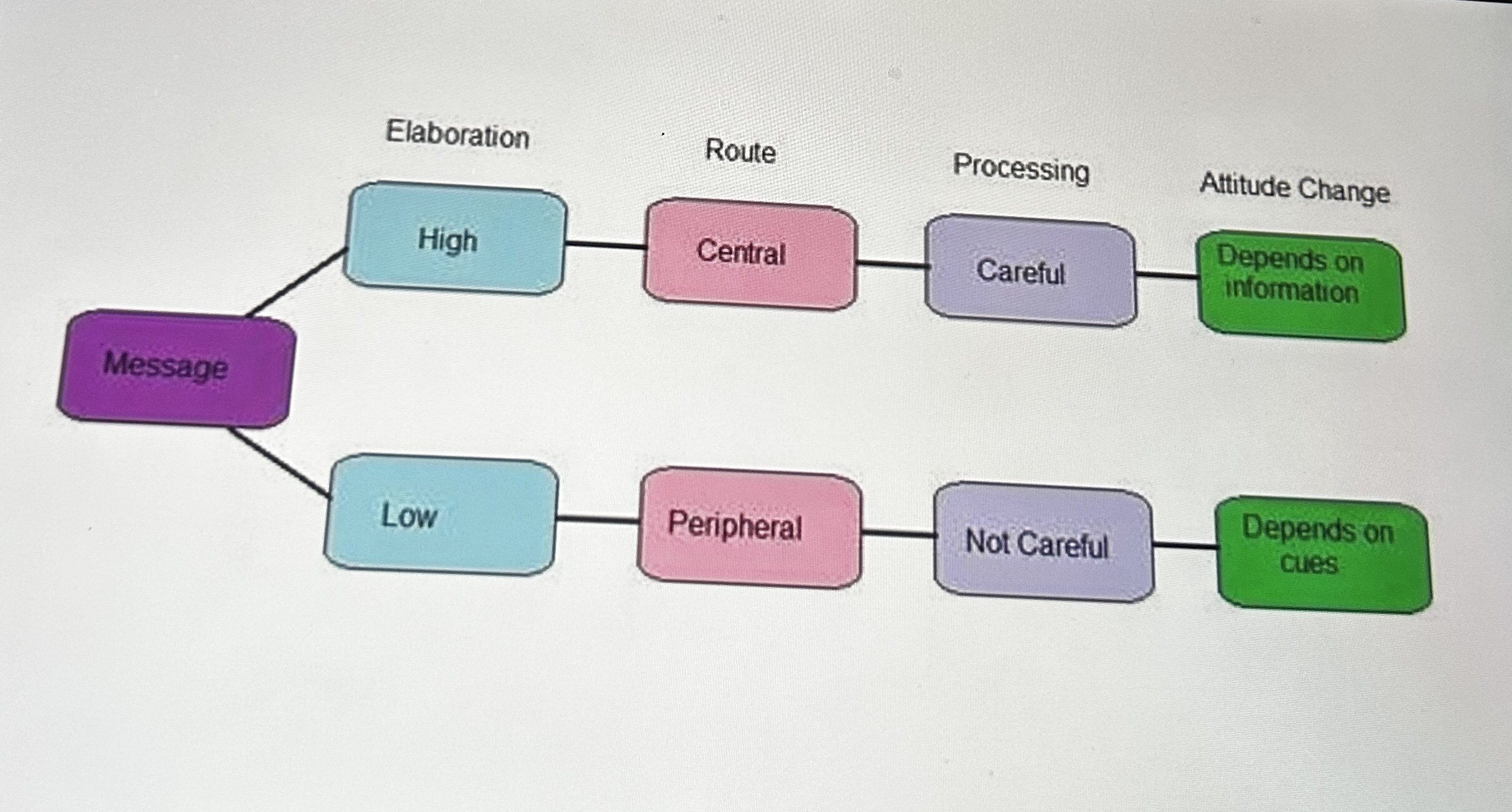
process 1 for elaboration
central route
what is central route
individual is persuaded by the message itself after the individual has processed the content in detail because they are interested in the issue and motivated by it (has personal relevance)
what level of elaboration does the central route have
high elaboration because they have thoroughly elaborated (evaluated) the message content
route 2
peripheral route
peripheral route
individual might be persuaded by factors other than the messages content (e.g. the attractiveness of the source). they do not process the content perhaps because they don’t have enough time or they don’t have the ability
what level of elaboration does the peripheral route have
low elaboration because the evaluation of the content is minimal
individual differences
people differ in their ability and motivation to process a message centrally
what is the key individual difference
the need for cognition. people with a high need for cognition are motivated to think about many issues they enjoy analysing arguments
which route are people with high need for cognition most persuaded through
the central route
 Note
Note  Flashcards (56)