BIOL1115: Lab 5 - Energy Transformations In Cells
 Call Kai
 Learn
Learn Practice Test
 Spaced Repetition
 Match
Match Flashcards
 Knowt Play
1/97

There's no tags or description
Looks like no tags are added yet.
Name | Mastery | Learn | Test | Matching | Spaced | Call with Kai |
|---|
No analytics yet
Send a link to your students to track their progress
98 Terms
what does life require?
energy
what is photosynthesis?
captures the energy of sunlight and converts it into a more easily usable form of complex organic compounds, carbohydrates (or sugars)
what organisms can perform photosynthesis?
- plants
- algae
- cyanobacteria
what is cellular respiration and fermentation?
metabolic pathways by which the energy from complex organic compounds can be released and converted into ATP
which organisms can perform both cellular respiration and fermentation?
- plants
- animals
- bacteria
- fungi
- protists
what is the equation for cellular respiration?
C6H12O6 + 6 O2 → 6 CO2 + 6 H2O + ATP energy
what are the four stages of cellular respiration?
- glycolysis
- pyruvate processing (acetyl CoA Synthesis)
- citric acid cycle
- electron transport chain and oxidative phosphorylation
what is the role of oxygen in cellular respiration?
act as the terminal electron acceptor in the electron transport chain
what molecule captures approximately 34% of the energy released during cellular respiration?
ATP
what happens to the 66% of energy that is NOT captured as ATP during cellular respiration?
released as heat
do all the stages of cellular respiration occur in the mitochondrion?
no, glycolysis occurs in the cytoplasm
- pyruvate processing (mitochondrial matrix)
- citric acid cycle (mitochondrial matrix)
- ETC (inner mitochondrial membrane)
what happens to the carbon dioxide produced by cells in cellular respiration?
diffuses out of cells into the blood. it is transported (mainly as bicarbonate ions) to the lungs, where it diffuses from the blood into the alveoli and is then exhaled
what can carbon dioxide produced during cellular respiration react with?
water, to produce carbonic acid (H2CO3) and could decrease blood pH
what is the equation for blood pH/carbonic acid?
CO2 + H2O ⇌ H2CO3 ⇌ H+ + HCO3
what can changes in pH do?
have dramatic effects on the normal working of a cell. many proteins when subjected to a change in pH will denature
what is denaturation?
the loss of secondary and tertiary structure of the protein
what happens once the protein has loss its secondary and tertiary structure?
it no longer functions
how does the vertebrate body minimize change in blood pH?
through the bicarbonate buffer system
what does the body do to sequester the excess H+ produced when the CO2 dissolves in the blood?
there are excess HCO3- that are made by the kidneys and are presented in the blood that will react with the extra H+
what was the lab demonstration that demonstrated CO2 effects?
exhaling CO2 into flasks and observing pH changes in the presence and absence of a pH 9 buffer
what indicator was used in the CO2 demonstration and what colours were there?
bromothymol blue
- yellow (acidic, pH < 7)
- green (neutral, pH = 7)
- blue (basic, pH > 7)
what causes the bromothymol blue solution to turn yellow when you exhale into it?
the CO₂ in exhaled breath dissolves in water to form carbonic acid, lowering the pH below 7 (acidic), causing the solution to turn yellow
what is the reason flask B required more breaths than flask A to turn yellow?
flask B contained a pH 9 buffer which resists pH changes, so more CO₂ was needed to overcome it and make the solution acidic enough to turn yellow
why was it necessary to add an additional 10 mL of water to flask A in Step IV?
to act as a control, ensuring both flasks had the same total volume so that any difference in results was due to the buffer in flask B only, keeping the experiment a fair comparison
what can the consumption of oxygen be used as since it's used as a reactant in cellular respiration?
an indicator of cellular respiration activity
what is the finger pulse oximetre?
detect a person's oxygen saturation level and pulse
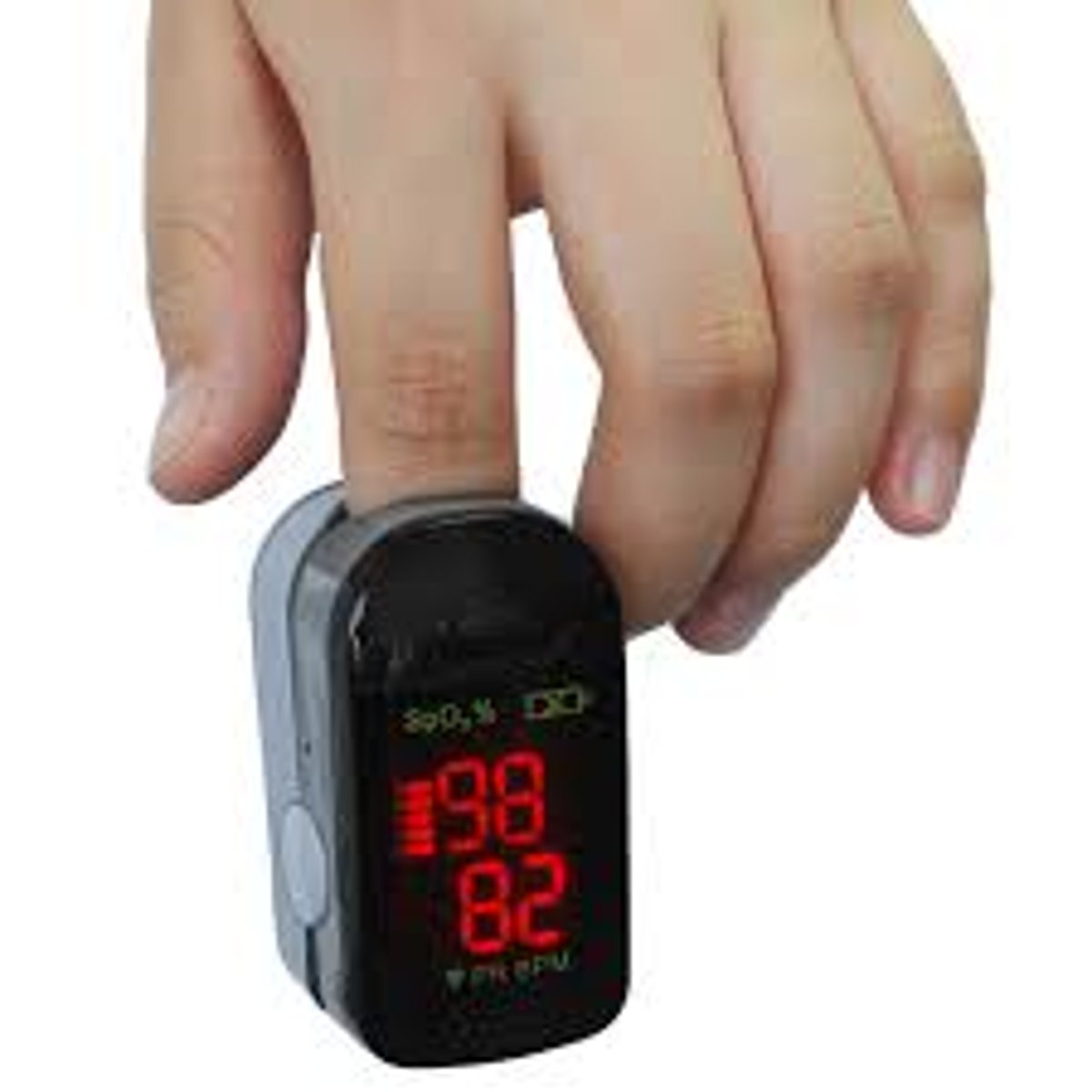
what is an oxygen saturation level?
the percent of hemoglobin in arterial red blood cells that is carrying oxygen
what is pulse rate?
the number of heart beats per minute
what is ventilation rate?
the number of inhale-exhale cycles per minute
what measurements increase after exercise compared to rest?
pulse rate and ventilation rate increase because muscles demand more oxygen and produce more CO₂, requiring the heart and lungs to work harder
what measurement stays the same after exercise and why?
O₂ saturation stays the same because the body compensates by increasing heart rate and breathing rate, keeping the blood fully oxygenated
what reasons explain variations in cellular respiration measurements between individuals?
differences in fitness level, age, body size, lung capacity, and overall health. fitter individuals show smaller increases because their bodies are more efficient at delivering oxygen
what does production of heat be an indication of?
that cellular respiration is occurring
what does the temperature increase in germinating seeds indicate?
that germinating seeds are actively undergoing cellular respiration, releasing energy in the form of heat as a byproduct of glucose breakdown
what does the lack of temperature change in dormant seeds tell us?
that dormant seeds are not actively respiring, so no heat is being produced
what process is responsible for heat production in germinating seeds and how do we know it is not photosynthesis?
cellular respiration, because the seeds are stored in a closed thermos flask with no light, making photosynthesis impossible as it requires light to occur
what happens in the absence of oxygen?
fermentation can occur to produce ATP
what is an example of fermentation in humans?
lactic acid fermentation
what happens during lactic acid fermentation?
occurs in muscle cells during intense exercise when oxygen supply runs out. glucose is broken down into lactic acid to continue producing ATP, causing a burning sensation in the muscles
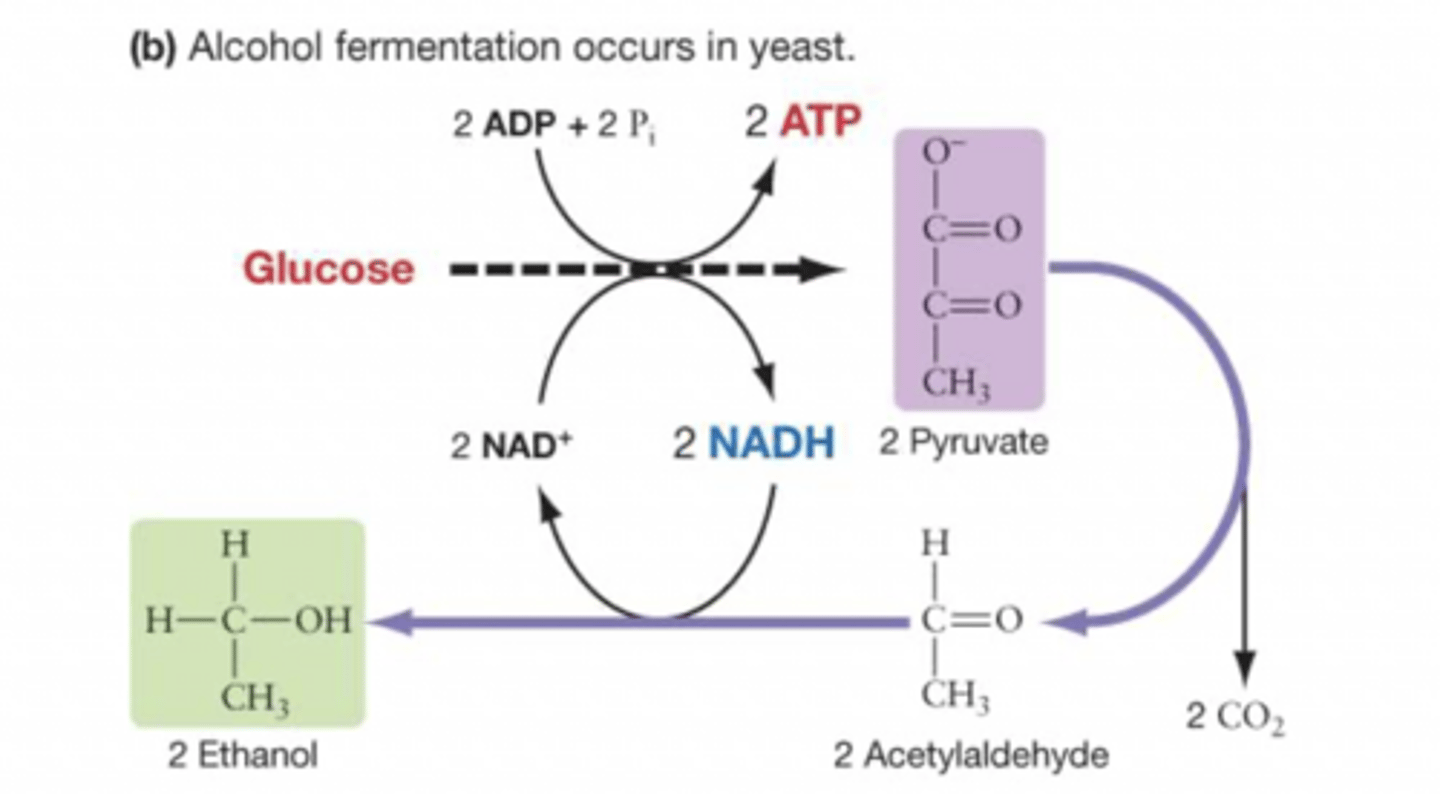
what are yeasts?
single-celled fungi that can survive and even grow and reproduce using fermentation to supply their energy needs
what are yeasts known for?
their ability produce ethanol by alcoholic fermentation
what experiment demonstrated the production of CO2 during fermention?
the fermentation experiment using yeast, sucrose, and limewater
what is limewater (CaOH2)?
the classic test for the presence of CO2. CO2 reacts with the CaOH2 to form calcium carbonate (CaCO3) which precipitates out of solution according to the formula:
Ca(OH)2 + CO2 -> H2O + CaCO3
what does the presence of CaCO₃ in flask 1b tell us about yeast and sucrose?
it confirms that CO₂ was produced by the yeast and sucrose mixture, as CO₂ reacts with limewater (Ca(OH)₂) to form calcium carbonate (CaCO₃), turning it cloudy
what does the absence of CaCO₃ in flask 2b tell us about sucrose alone?
it confirms that sucrose alone cannot produce CO₂, yeast is necessary for fermentation to occur
what reagent is used to test for ethanol?
potassium dichromate and sulphuric acid
what is a positive control?
shows what positive results look like, also checks that reagents are working correctly
what is a negative control?
checks to be sure the compound that is being looked for isn't an accidental contaminant
what information can you obtain in the test tubes labelled "+C" in the alcohol fermentation experiment?
the colour change confirms that ethanol is present and that the reagents (potassium dichromate and sulphuric acid) are working correctly
what information can you obtain in the test tube labelled "-C" in the alcohol fermentation experiment?
no colour change confirms that no ethanol is present, showing that the reagents alone do not produce a colour change and that ethanol is not a contaminant
what information can you obtain in the test tube labelled "E" in the alcohol fermentation experiment?
the experimental tubes showed the same colour change as the positive control, confirming that yeast produced ethanol through fermentation under anaerobic conditions
what principle of good experimental design is shown by having duplications of each test tube in the alcohol fermentation experiment?
replication, because duplicates ensure results are reliable and not due to chance or error
what are the products of fermentation in yeast cells?
ethanol and CO2
are the same products of yeast fermentation found in human cells?
no, in human cells ethanol and CO2 does not get produced, instead lactic acid gets produced (lactic acid fermentation)
what is the major reactants and end products in fermentation in yeast?
Glucose -> 2Ethanol + 2CO2
what is the major reactants and end products in fermentation in humans?
Glucose -> 2Lactate
what is the summary equation of photosynthesis?
6CO2 + 6H2O + energy --> C6H12O6+ 6O2
what does photosynthesis require?
energy, while respiration releases it
what is the waste products of cellular respiration?
raw materials for photosynthesis and the photosynthetic waste material, oxygen, is a critical reactant in cellular respiration
where does the plant get the energy to perform photosynthesis?
from sunlight, plants capture light energy using chlorophyll in their chloroplasts
what are the two stages of photosynthesis?
- light reactions (in the thylakoid membrane)
- calvin cycle (in the stroma)
what is glucose as a product in photosynthesis?
the high-energy molecule that can be used by all living cells for work or for building other organic molecules
what is the production of organic compounds by photosynthesis sometimes called
primary productivity
what is primary productivity?
the first and foremost production process upon which all other metabolic pathways depend
what are the primary producers?
plants, algae, and certain bacteria
what features allows the organisms to be primary producers and leaves the rest as dependent consumers?
chlorophyll
what happens to chlorophyll molecules in photosynthesis?
it becomes sufficiently energized by light waves to split water molecules. oxygen is a by-product and leaves the cell as a free gas.
what is the absorption spectrum?
shows which wavelengths of light a pigment absorbs
what two colours of light are absorbed best by chlorophyll?
red and blue-violet light
why do most plants appear green?
because chlorophyll reflects green light
what are accessory pigments that assist chlorophyll?
carotenoids (in plants) and phycobilins (in red algae)
what are carotenoids?
accessory pigments found in plant chloroplasts that absorb blue-green light and reflect yellow and orange wavelengths
what is a colour of a particular photosynthetic organism due to?
its particular mix of photosynthetic pigments plus any other pigments, such as anthocyanins, that may be there for such diverse reasons as pollinator attraction and UV protection
what are anthocyanins?
red, purple, or blue pigments that occur in all tissues of higher plants such as flowering plants. they do not contribute to photosynthetic activity
what is a common lab technique for separating mixtures?
chromatography
what is chromatography?
separates the pigments in a mixture on the basis of their different polarities
what do photopigments have?
one or more polar groups. the number of these groups will affect their tendency to "stick" to the chromatography paper and therefore affect the rate at which they migrate
what happens to pigments with fewer polar groups?
they are more soluble in the non-polar solvent, and less attracted to the polar paper, so they migrate further in the time allowed
what happens to pigments with more polar groups?
they stick to the paper and move a shorter distance
which pigment travels the furthest and why?
carotene, because it has 0 polar groups making it the least polar, it barely sticks to the paper
what is the cuticle of a plant?
helps plant resist drying
what is the epidermis of a plant?
protect the plant from water loss, disease-causing agents, and herbivores
what are the photosynthetic tissue of plants?
- palisade mesophyll
- spongy pesophyll
what is the palisade mesophyll?
primary site of photosynthesis in the leaf
what is the spongy mesophyll?
allows gases to diffuse through the leaf
what are the vascular tissues in plants?
xylem and phloem
what is the xylem?
conducts water and dissolved nutrients in one direction: from the root system to the shoot system
what is the phloem?
conducts sugar, amino acids, hormones, and other substances in two directions: from roots to shoots and from shoots to roots
what are guard cells in plants?
regulate gas exchange and water loss by opening and closing the stomata depending on conditions
what cells in the epidermis contain chloroplasts?
guard cells
what two cell layers does the majority of photosynthesis occur?
palisade mesophyll and spongy mesophyll
what pigment leaves the leaf during the first heating (in water)?
anthocyanin
what pigment is extracted from the leaf when alcohol is added?
chlorophyll
what have you learned about pigment solubility from the experiment?
anthocyanin is water-soluble and is removed when heated in water, while chlorophyll is not water-soluble but dissolves in alcohol and is only extracted when alcohol is used
what compound gives a positive reaction with iodine?
starch
what compound is stored in a photosynthesizing leaf?
starch
in which organelle is starch stored in?
chloroplasts (short-term daytime storage), but long-term in amyloplasts
why does only one leaf react with iodine?
only the leaf exposed to light carried out photosynthesis and produced starch, so it reacts with iodine. the dark-kept leaf did not photosynthesize, so no starch was produced

