symposium midterm
 Call Kai
 Learn
Learn Practice Test
 Spaced Repetition
 Match
Match Flashcards
 Knowt Play
1/42

There's no tags or description
Looks like no tags are added yet.
Name | Mastery | Learn | Test | Matching | Spaced | Call with Kai |
|---|
No analytics yet
Send a link to your students to track their progress
43 Terms
archaic period
~800-510/490/479 BCE
Started at the import of the alphabet from the Phoenicians
Ended at democracy in Athens, or the endpoints of the Persian wars (either the battle of marathon won or the battle of thermopoly
classical period
510/490/479-323 BCE
Period of Plato, Greek tragedy and comedy
commensality
communal dining/drinking
euphrosyne
good cheer, gladness, merriment “good-mindedness”
sophrosyne
self-control, moderation, prudence, “safe-mindedness”
hetaireia
companionship, comradeship
later as “political club”
komos
festive/revelrous procession after the symposium
libation
small amounts of unmixed/undiluted wine, sips of liquid sacrifice
to “good divinity” (agathos daimon; dionysus?), to others (e.g. health), to Zeus the savior
symposiarch/basileus
In charge of the mixing of wine with water in the krater
epidexia
counter clockwise
dais
the homeric feast
“to divide”
arete
excellence, what one should strive for
in demonstrating dais, men win time (honor) and kleos (fame)
polis
city-state
social/political organization
“ashurbanipal’s garden party” relief
Depiction from the Assyrian empire, ~640 BCE
shows power dynamic, king reclining, queen sitting on throne, everyone else standing (servants), vast inequalities
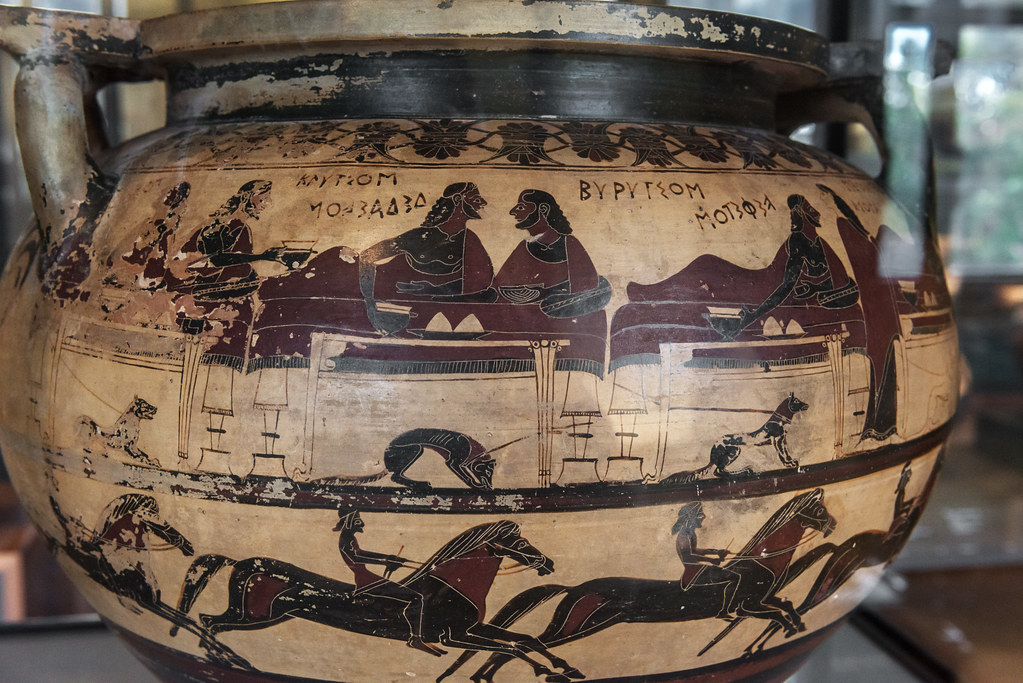
eurytos krater
~600 BCE, Corinthian
Greek painting of a symposium on a krater. men reclining on couches, drinking wine, etc
Socrates
(469-399 BCE), turn from nature to human concerns (ethics, epistemology, politics)
did not write, was only a character in other authors
was executed in 399
xenophon
(430-355/4 BCE)
Aristocratic family, pro-spartan, mercenary soldier and leader in Persian war of succession, writer
Wrote Symposium, set in 422 BCE
claims to have been present, but never speaks during the event
Callias
host, one of the wealthiest men in Athens, lover of Autolycus
Autolycus
athlete/honoree of the symposium; beloved of Callias; murdered by Thirty Tyrants oligarchy in 404/3 BCE
Antisthenes
follower of Socrates, orator, and writer of Socratic dialogues; predecessor of Cynic philosophical school
andron
the “man’s room”
can be thought of as an anti-polis or a mini-polis, depending on the context
tragedy
popular poetic genre, developed in Athens in 4th and 5th century BCE
classical genre (Xenophon is classical, red figure develops in archaic but becomes popular in classical)
presided over by Dionysus; ecstatic experiences, blurring boundaries, encounters with the other/becoming other
Aristotle says the purpose of tragedy is by instilling/representing pity and fear to bring forward a catharsis (should purge pity and fear out of you)
others think tragedy is a purification of pity and fear, feeling in a “correct” way
kline
couches inside the andron
standard is 7 or 11 kline
nesters cup
end of 8th century BCE, simple drinking cup, earliest e.g. of Greek alphabet writing found, geometric style
Useful evidence for potential essay questions
Eurytos krater impact
black figure krater, 600 BCE, Corinthian, earliest depiction of/evidence for the latest date of a reclining symposium/dinner party, relative equality of participants, sharing of couches, depiction of Hercules
Topper would like to maintain from this that it was not near eastern
need to be able to ID on midterm exam
Eurytos krater image
Nester’s cup discussion
-idea of play/playfulness
-quote on the cup personifies the cup/plays an active role in the symposium
-association between wine and love/lust/sex, early piece of evidence for eros at the symposium
-inscription is poetic, lines in quote reflect this
-wine and poetry go together, need Dionysian madness, step outside of yourself
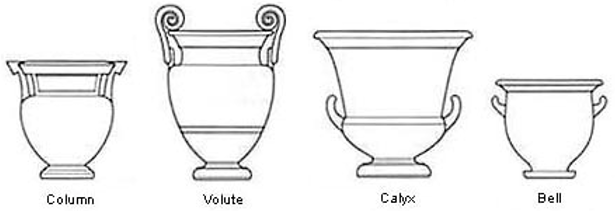
krater
mixing bowl
column, volute, calyx, bell
commensality
anthropological term
practices/rituals/socially and culturally determined ways of eating and drinking together
two examples in Greek context: symposium and Homeric feasts “dais”
Homeric feast- sitting, having merit-based system on basis of arete
Symposium- reclining, separation of drinking from eating, social equality, arete transmuted
hetaireia
comradeship/companionship
boundaries largely dissolved
symposium used to restrengthen bonds between social equals
komos also reflects great power and stability of the band of males
in changing social/economic/political model where symposium arises, hetaireia emerges
charis
grace, favor, charm
concept valued very highly at symposium
charm: very closely related to Euphrosyne
favor: reciprocity, reenforces hetaireia
krater ID
larger representation of the symposium, mixing
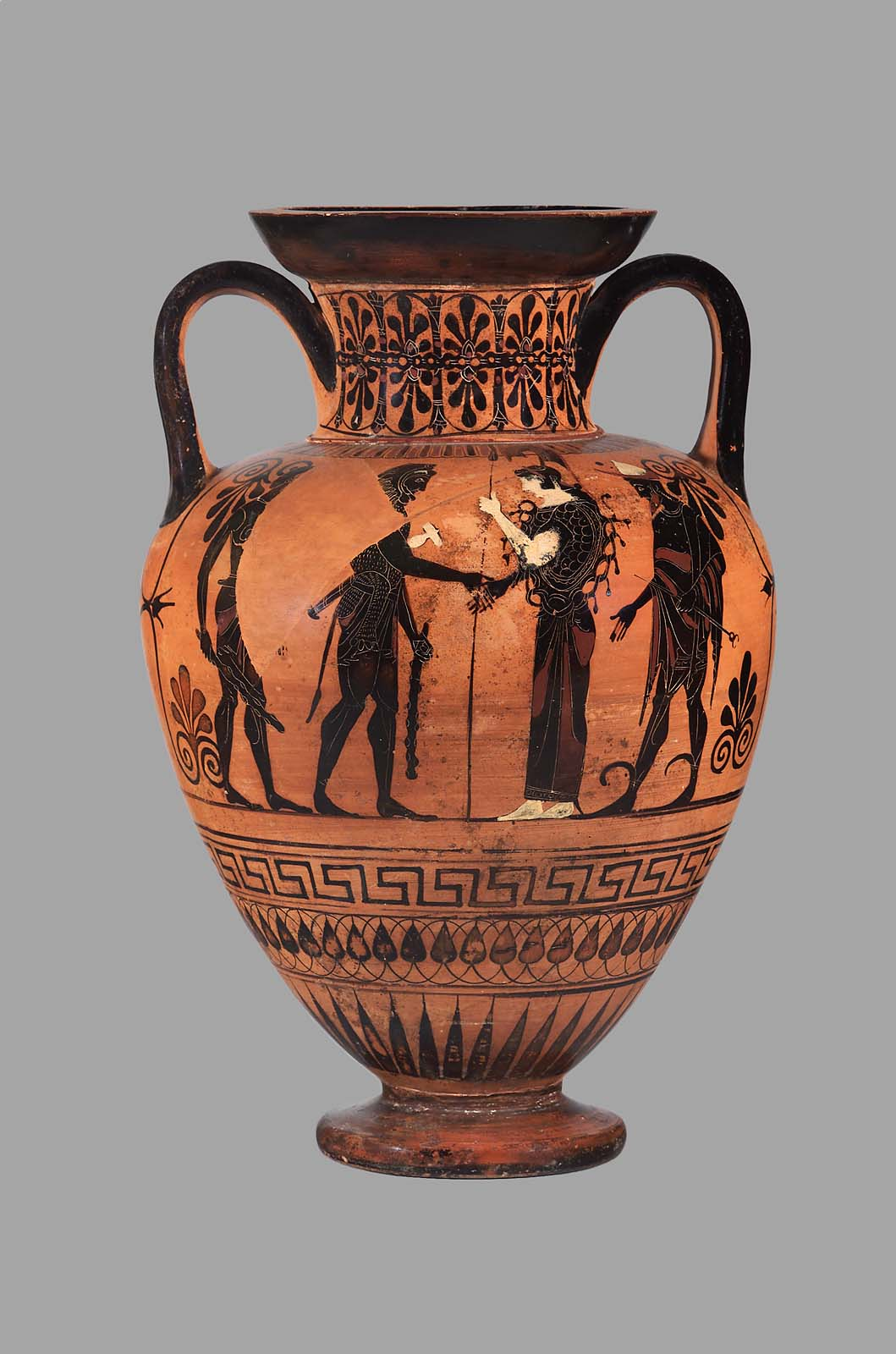
amphora ID
“ears on both sides”
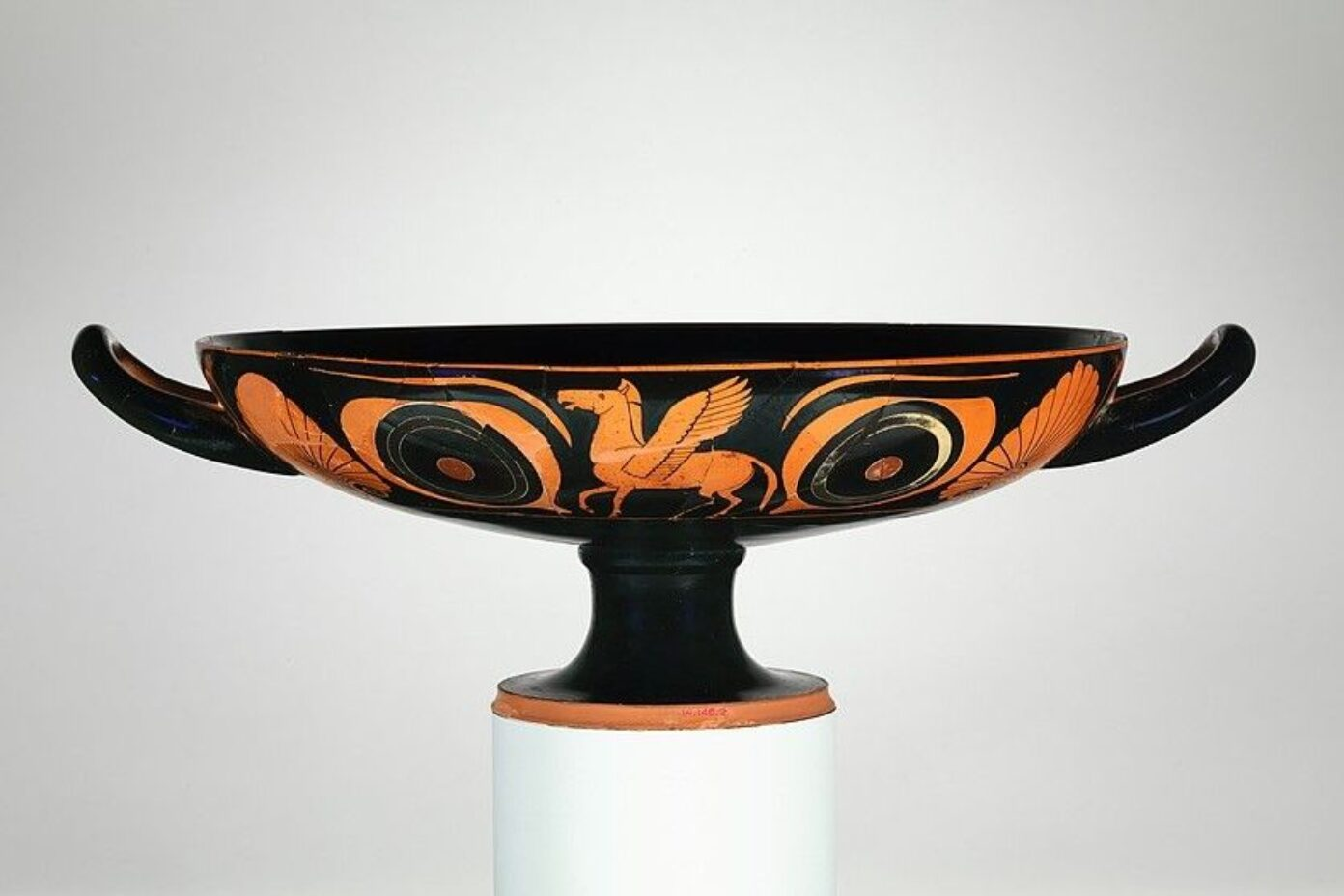
kylix ID
personal drinking vessel
used to throw slurry in kottabos
over time gets flatter and broader, brings in sophrosyne
oenochoe ID
used for pouring, trifold lip, handle for pouring
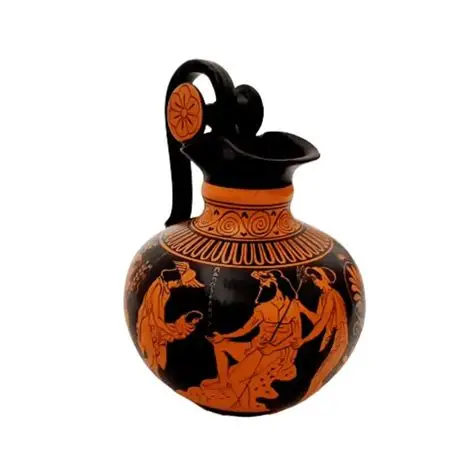
black figure
black icons on red pottery
red figure
black covering the whole vase to show the red base for the icons
satyrs
drunkenness, wildness, man-goat hybrid, male sexuality
maenads
madness, ecstasy, dancing, female sexuality(?)
pharmakon
a drug
can mean both medicine and poison
wine is the pharmakon in Bacchae play
Euripides
popular playwright, wrote Bacchae
18 extant plays, 4 wins, used the raising platform more often than others
thematic issues: more philosophical? questioning of the gods? psychology? female perspectives? (misogynist or protofeminist?)
Pentheus
man of suffering
king of Thebes
doubts Dionysus as a god
sparagmos
tearing limb-from-limb
how Pentheus is killed by his mother

