AP Euro Unit 1
 Studied by 7 people
 Call Kai
 Learn
Learn Practice Test
 Spaced Repetition
 Match
Match Flashcards
 Knowt Play
1/68

Earn XP
Description and Tags
all the important things from CED, AMSCO, INB, etc.
Name | Mastery | Learn | Test | Matching | Spaced | Call with Kai |
|---|
No analytics yet
Send a link to your students to track their progress
69 Terms
Explain the context in which the Renaissance and Age of Discovery developed (mention at least one of the answers)
The rediscovery of works from ancient Greece and Rome and observation of the natural world changed many European’s view of their world
Visual arts were used to promote personal, political, and religious goals
European exploration expanded, driven by commercial and religious motives
Most Europeans derived their livelihood from agriculture and oriented their lives around the seasons
Sovereignty within and among states resulted in varying degrees of political centralization
Secular
non religious; worldy
Humanism
Breaking free of medieval philosophy and showing interest in ancient Greek and Roman culture
Urban
dense, busy cities; draws people in
Civic Humanism
Humanism applied politically
Visual arts
painting, sculptures, architecture, etc.
Exploration
many explorers were sent to discover foreign land & return with anything valuable
Political centralization
sovereignty all under one person(the king)
Court society
all the people who surround the king
Indiviualism
emphasis on everyone having a unique identity
Explain how the revival of classical texts contributed to the development of the Renaissance in Italy
Explain the political, intellectual, and cultural effects of the Italian Renaissance
(mention at least on of the answers)
Italian Renaissance humanists, including Petrarch, promoted a revival in classical literature, some of with furthered the values of secularism and individualism
Revival of Greek and Roman texts, spread by the printing press, challenged the institutional power of universities and the Catholic Church
Admiration for Greek and Roman political institutions supported a revival of civic humanist culture in the Italian city-states and produced secular models for individual and political behavior
Rulers and popes commissioned paintings and architectural works based on classical styles
Pico della Mirandola
“Oration on the Dignity of Man”
wove together many ideas from other and earlier schools of thought to describe his idea of the place of humans and their relationship to God in the order of the world
Niccolo Machiavelli
Wrote “The Prince” that provided advice for rulers, separated politics from morality, said the prince should be feared rather than loved, and use any means to achieve as much political power as possible, very secular
Baldassare Castiglione
Wrote “The Book of the Courtier”
Three basic rules; Classically educated, skilled in arts, and engaged in civic life by serving the ruler
Michealangelo
Raphael
Brunelleschi
Explain the influence of the printing press on cultural and intellectual developments in modern European history (mention at least one of the answers)
The invention of printing promoted the dissemination of new ideas
Helped spread the Renaissance beyond Italy, encouraged the growth of vernacular languages, contributed to the development of national cultures
What is national cultures? Examples?
Explained how Renaissance ideas were developed, maintained, and changed as the Renaissance spread to northern Europe
Northern Renaissance retained more of a religious focus
More human centered naturalism that considered individuals and everyday life appropriate objects of artistic representation
Christian humanism, embodied in the writings of Erasmus; employed Renaissance learning in the service of religious reform
Albrecht Durer
created paintings and woodcuts, one of the first to sign his own paintings
Pieter Bruegel the Elder
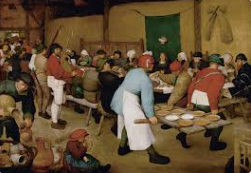
he painted scenes from the bible and scenes of lively peasants- ordinary people who worked the land
Rembrandt
bold, dramatic, complex artworks, dramatic use of light and shadow and his dedication to realism
Johann Gutenburg
made the printing press
Petrarch
Father of the Italian Renaissance
Influenced our criticism of the Dark Ages and popularized the study of classical texts.
Signori
Condotierri
Popolo Grosso
Papal States
states under rule of the pope
Medici
They were patrons of the arts, providing artistic freedom, three popes, two queens, and founded the medici bank
Sheep industry, than became loan sharks, florence thrived under their rule
Cosimo -
Lorenzo the Magnificent -
Giovanni(Pope Leo X) -
Savonarola -
Borgia
Rodrigo(Pope Alexander VI) -
Cesare -
Why did Charles VIII of France invade the Italian states in 1494?
Because he has a claim to the throne
To what extent did warfare contribute to the lack of centralization on the Italian Peninsula?
Warfare contributes a lot to the lack of centralization in the Italian peninsula. Charles VIII of France puts a lot of the Italian States at odds with each other by invading Italy through Milan.
To what extent did the politics contribute to the lack of centralization on the Italian Peninsula?
Politics contributes a lot to the lack of centralization. All of these separate governments/families in power like the Medicis and the Pope would not be willing to give up their power in order to unify the states.
Leondardo Da Vinci
Botticelli
Baptistry Doors Competition
The 1401` competition for the commission to create a set of bronze doors for the florence bapistry, first major event of renaissance art
Geometric Perspective
To use math to help create the appearance of space and distance in 2d paintings, da vinci
Fresco
Wall painting using watercolor on wet paper, michealangelo
Patronage or Commission
The commission of the arts by rich benefactors, such as wealthy goroups, people, Or cities
Chiaroscuro
An artistic technique that uses strong contrasts between light and dark to create a sense of volume and 3d
Sfumato
A painting technique for softening the transition bwrqeen colors mimicking the area beyond what the human eye
Contrapposto
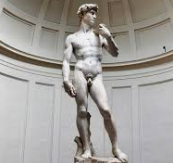
A human figure in a natural pose with most of their weight concentrated on one leg
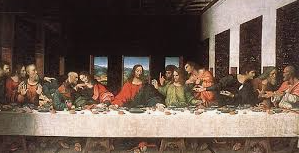
The Last Supper by Leondardo Da Vinci
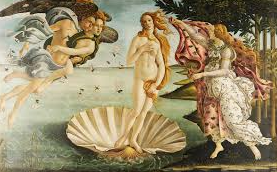
Birth of Venus by Botticelli
The David by Michelangelo
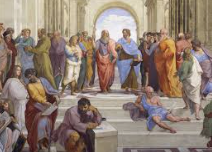
The School of Athens by Raphael
Van Eyck
Arnolfini Portrait by Jan Van Eyck
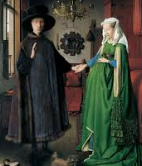
Peasants Wedding By Pieter Bruegel
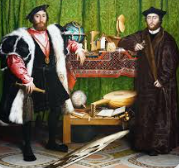
The Ambassadors By Hans Holbein
Self Portrait by Albrecht Durer
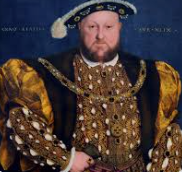
Henry VIII Portrait Hans Holbein
Made for a show of potential power or authority, the contrasts, his body filling the canvas
Christian Humanism
Human beings are made in the image of God, meaning that each one has the possibility of being a person of creativity and moral excellence
Latin Vulgate
Vulgate The Vulgate is a late-4th-century Latin translation of the Bible. It is largely the work of Saint Jerome who, in 382, had been commissioned by Pope Damasus I to revise the Vetus Latina Gospels used by the Roman Church.
Sacrosancta & Frequens
two pivotal decrees from the Council of Constance (1414-1418) that defined the principle of conciliar supremacy and established regular church councils to ensure the Pope's accountability and promote church refor
Pope Pius II & Execrabilis
a papal bull issued by Pope Pius II on 18 January 1460 condemning conciliarism
Pope Julius II “Warrior Pope”
Pope Julius II was head of the Catholic Church and ruler of the Papal States from 1503 to his death, in February 1513. Nicknamed the Warrior Pope, the Battle Pope or the Fearsome Pope, it is often speculated that he had chosen his papal name not in honor of Pope Julius I but in emulation of Julius Caesar.
Nepotism
the practice among those with power or influence of favoring relatives, friends, or associates, especially by giving them jobs
Simony
the buying or selling of ecclesiastical privileges, for example pardons or benefices.
Absenteeism
the practice of regularly staying away from work or school without good reason.
Pluralism
Pluralism as a political philosophy is the diversity within a political body, which is seen to permit the peaceful coexistence of different interests, convictions, ideologies and lifestyles.
 Note
Note  Flashcards (32)