Lecture 18 - Cardiovascular System II
 Call Kai
 Learn
Learn Practice Test
 Spaced Repetition
 Match
Match Flashcards
 Knowt Play
1/135

There's no tags or description
Looks like no tags are added yet.
Name | Mastery | Learn | Test | Matching | Spaced | Call with Kai |
|---|
No analytics yet
Send a link to your students to track their progress
136 Terms
How many types of blood vessels are there at the basic level?
3
The same ______ layers are found in arteries and veins
Tissue
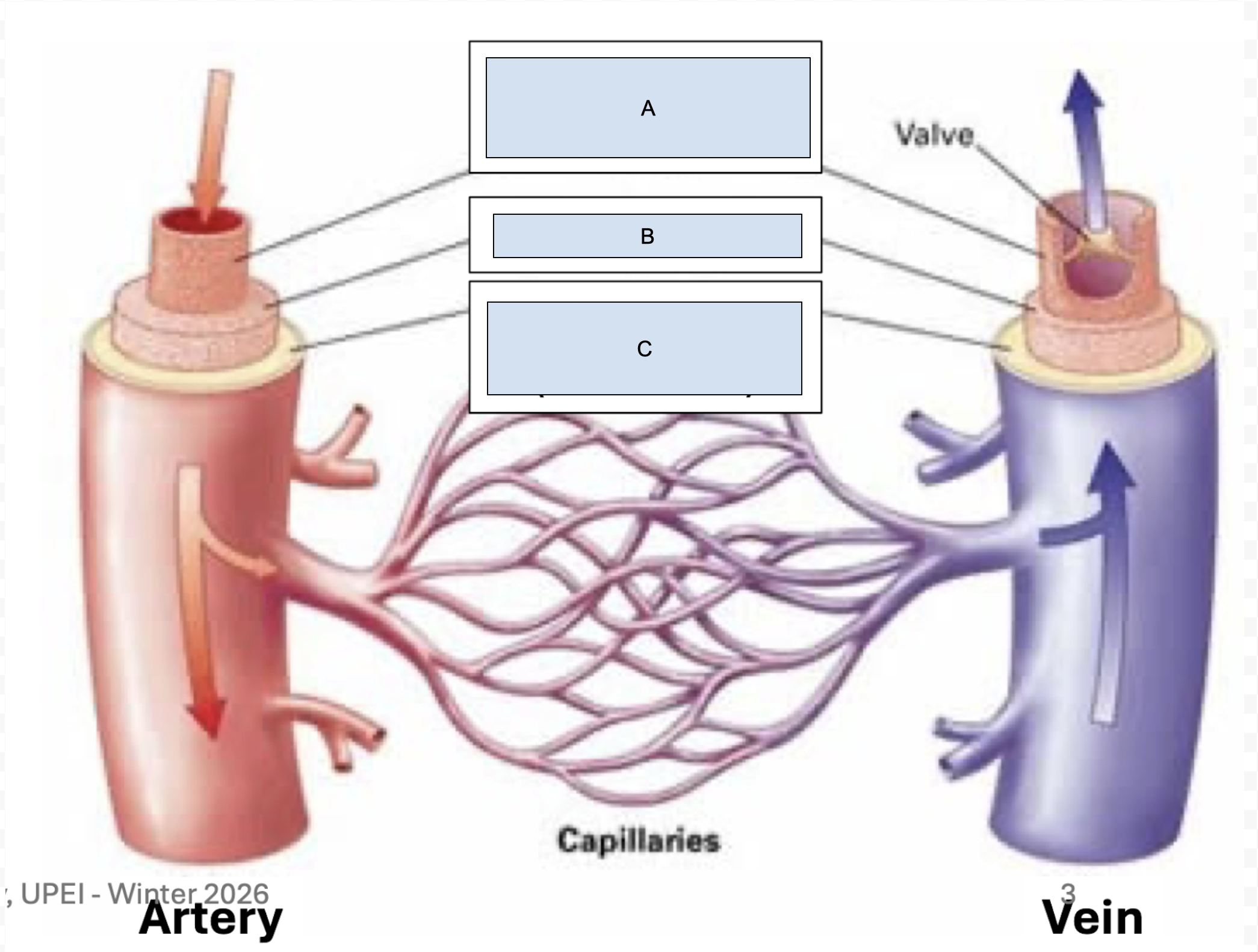
A?
Tunica interna (intima)
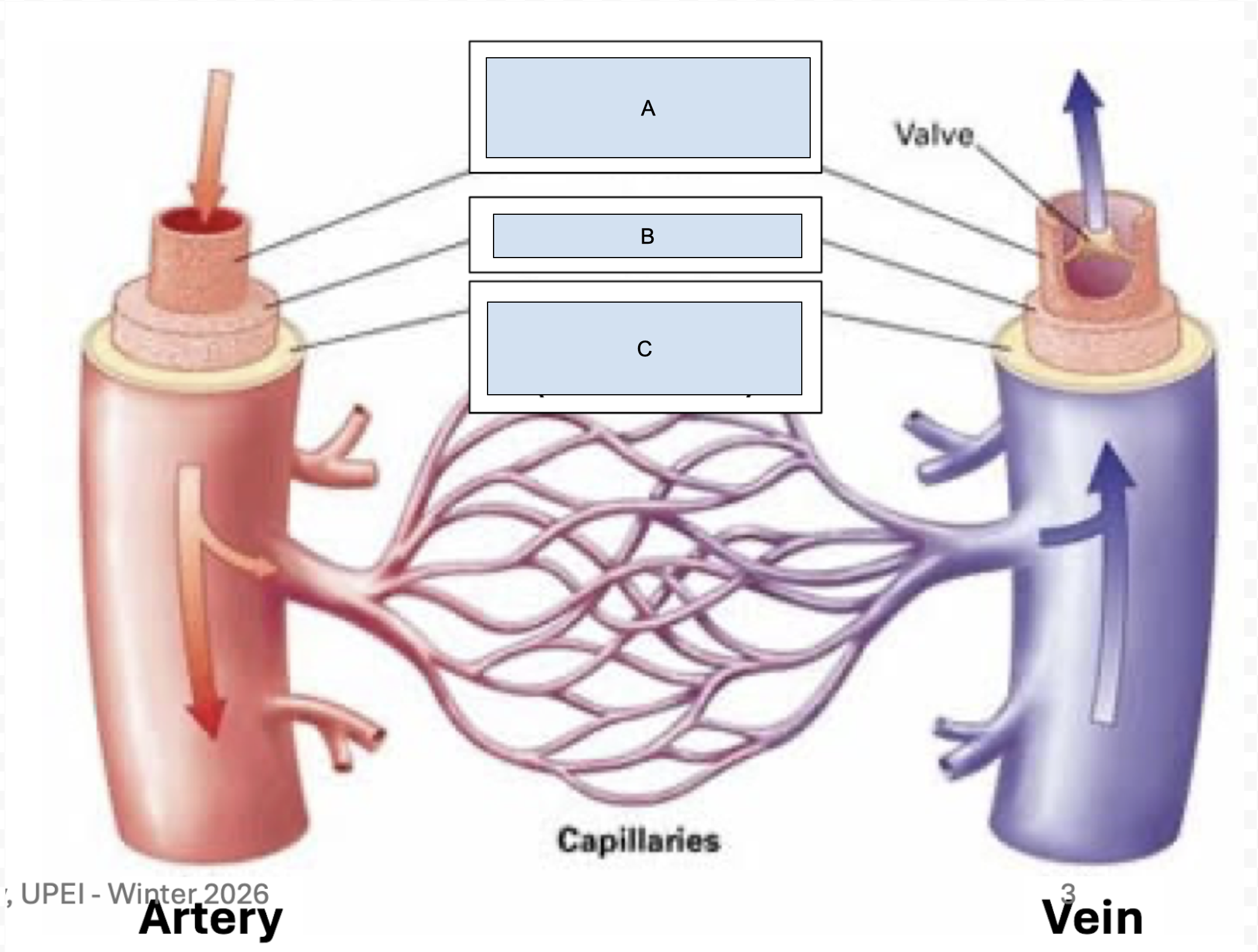
B?
Tunica media
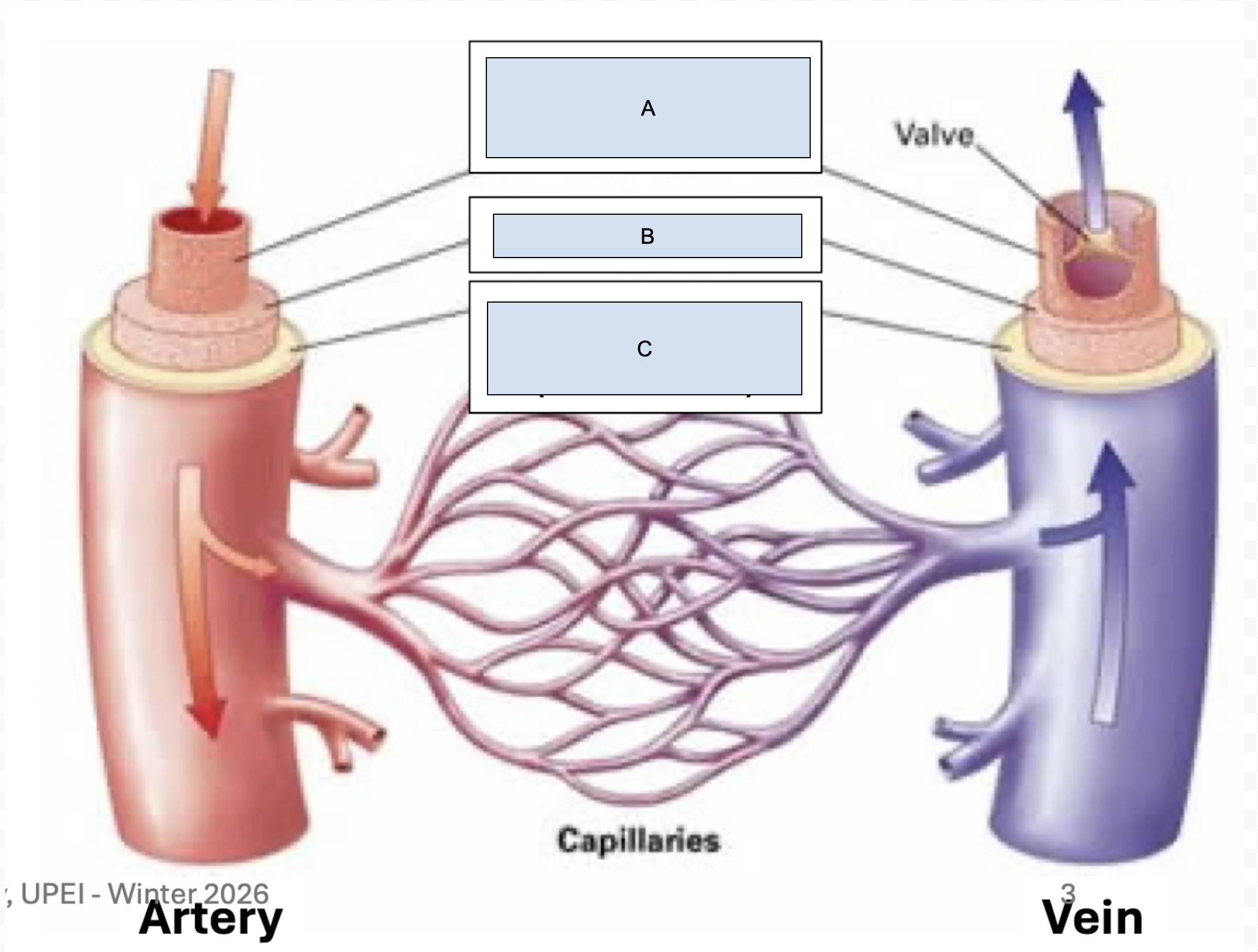
C?
Tunica externa (adventitia)
Tissue layers of arteries differ based on their distance from the…
Left ventricle
Which is closer to the heart, elastic or muscular arteries?
Elastic
What does the elasticity or muscularity of a vessel contribute to
Blood pressure
The study of blood flow and the physical forces governing the cardiovascular system
Hemodynamics
Flow rate equation:
F= P/R
In the flow rate equation, what is F?
Flow rate
In the flow rate equation, what is P?
Pressure
In the flow rate equation, what is R?
Resistance
Volume of blood that passes per unit time
Flow rate
The force blood exerts against chamber/vessel walls
Pressure
Opposition or friction encountered by blood as it moves through the vessels
Resistance
Difference in pressure between the beginning and end of a blood vessel
Pressure gradient

What is the pressure here?
40 mmHg

What is the pressure here?
80 mmHg
Contraction of heart provides _____
Pressure
Pressure decreases as blood flows through vessels due to ______
Resistance
Measure of hindrance to blood flow caused by friction between the moving fluid and the stationary walls
Resistance
Higher resistance means_____ blood flow can pass through at a given pressure
Less
Friction between molecules
Viscosity
Is viscosity constant in blood?
Yes
Friction between blood and vessel
Vessel length & radius
What does resistance depend on?
Viscosity, vessel length, and radius
If a vessel's radius is halved (via vasoconstriction), the resistance to flow increases by __ times
16
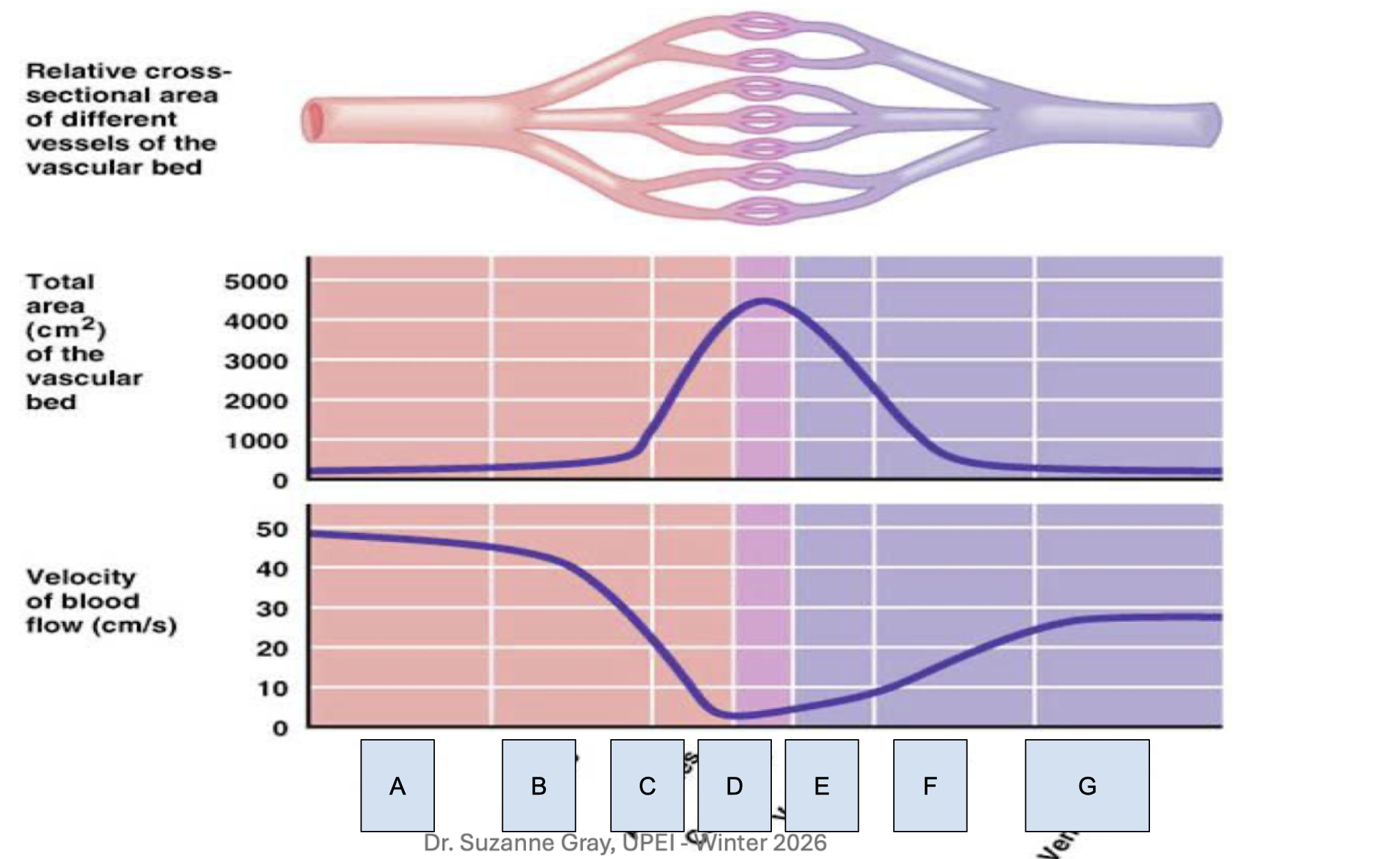
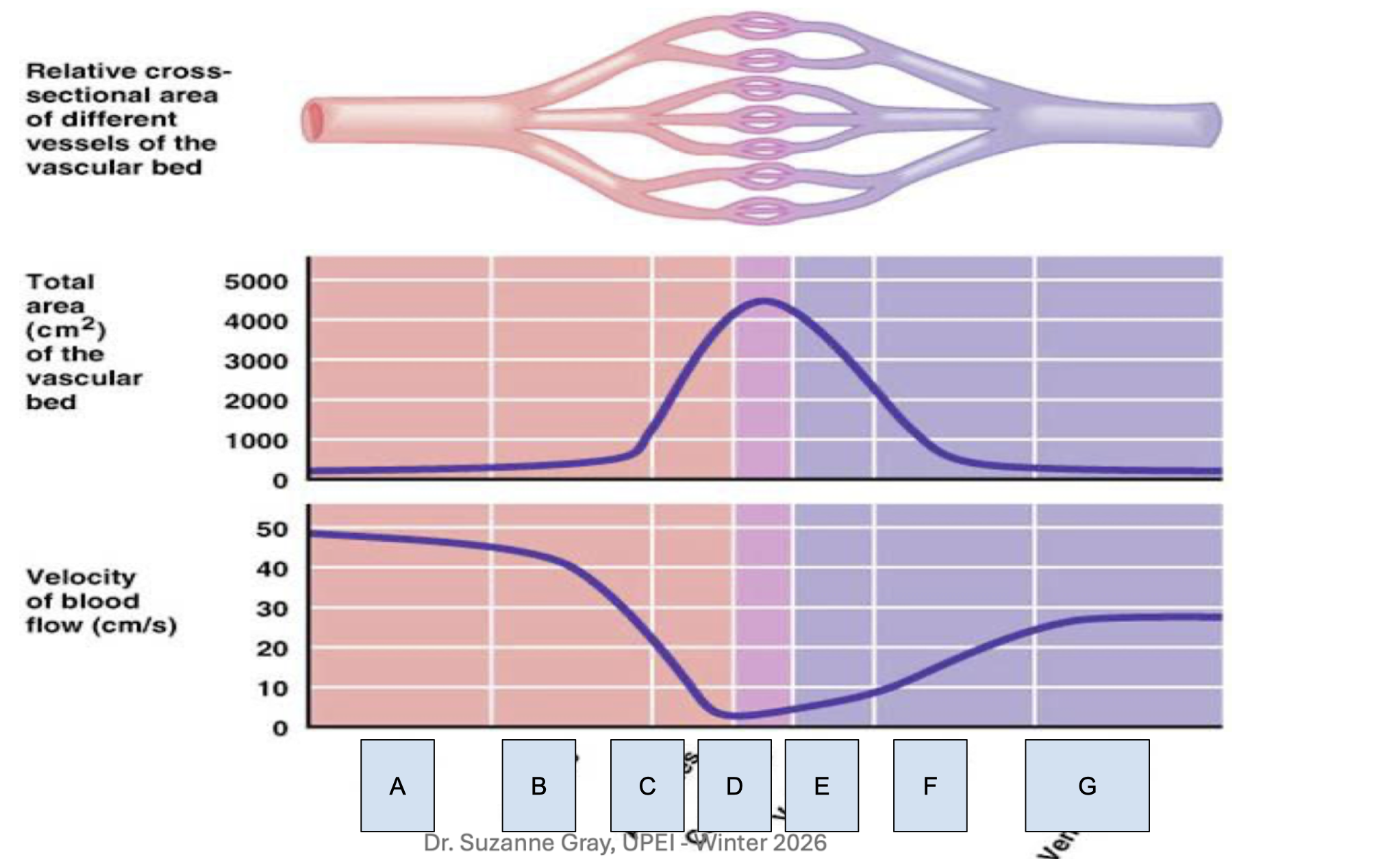
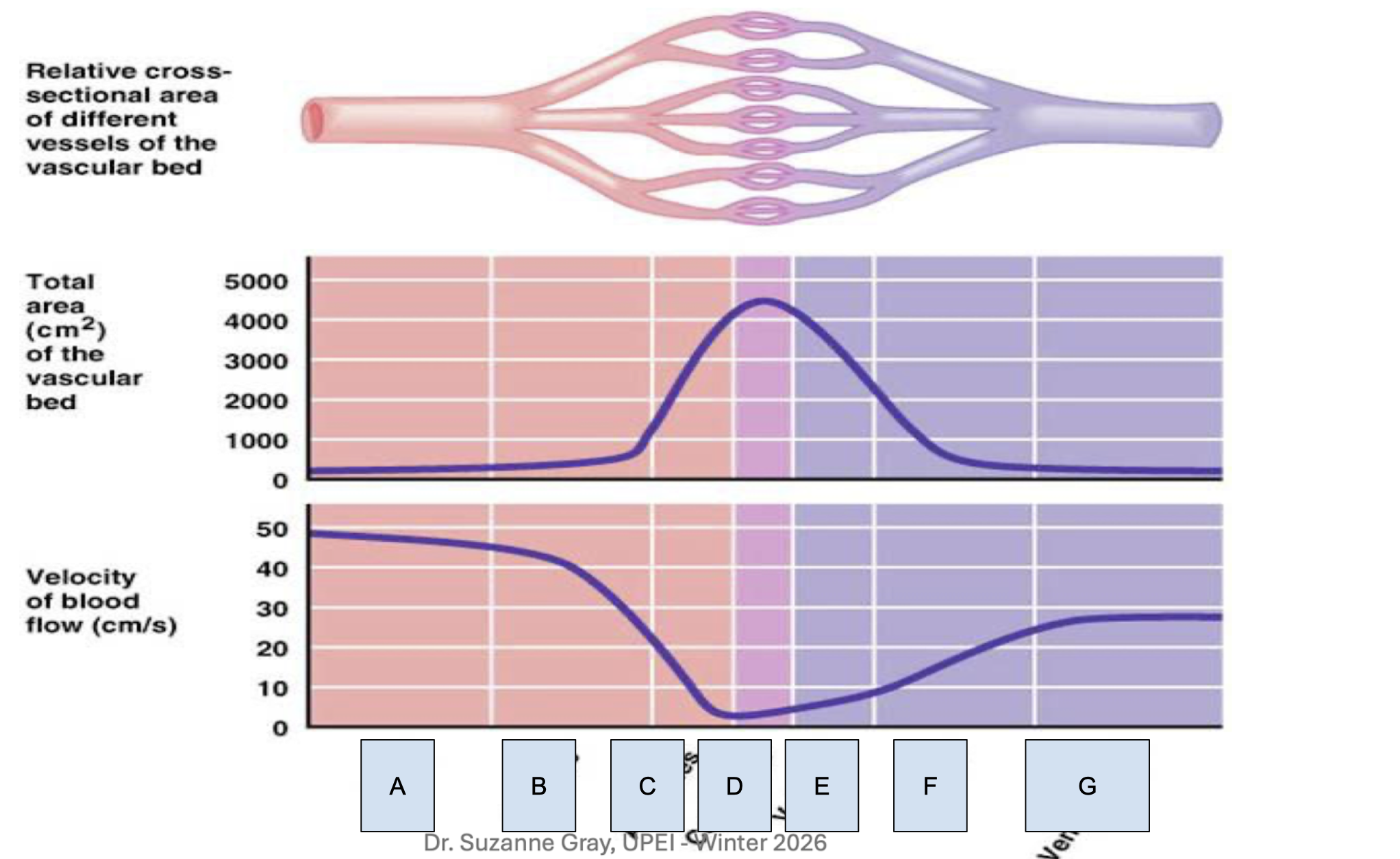
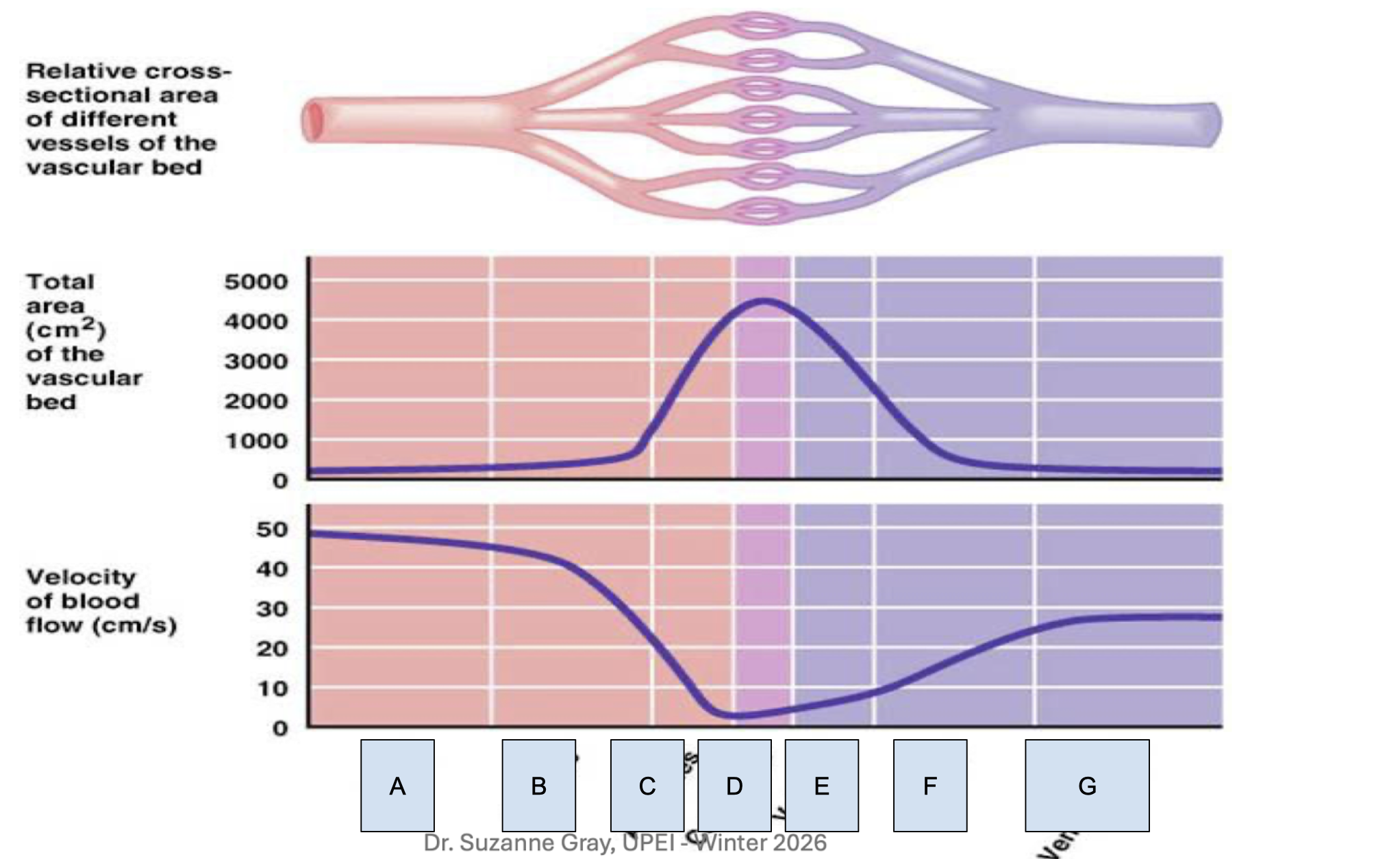
Because of the Pressure, Resistance and total area of the tubes, the speed of blood flow varies in different parts of the _______ _______
Circulatory system
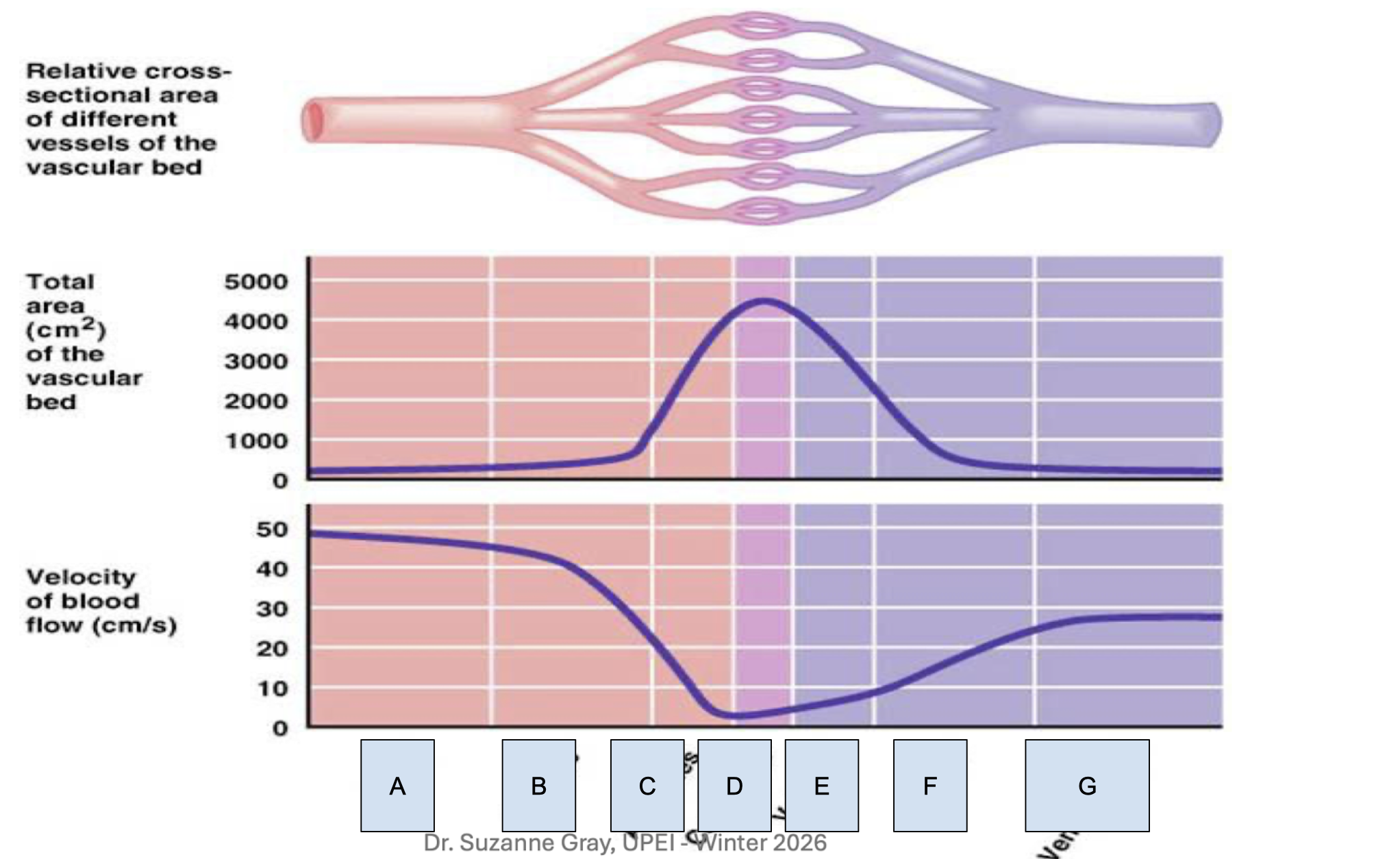
A?
Aorta
B?
Arteries
C?
Arterioles
D?
Capillaries
E?
Venules
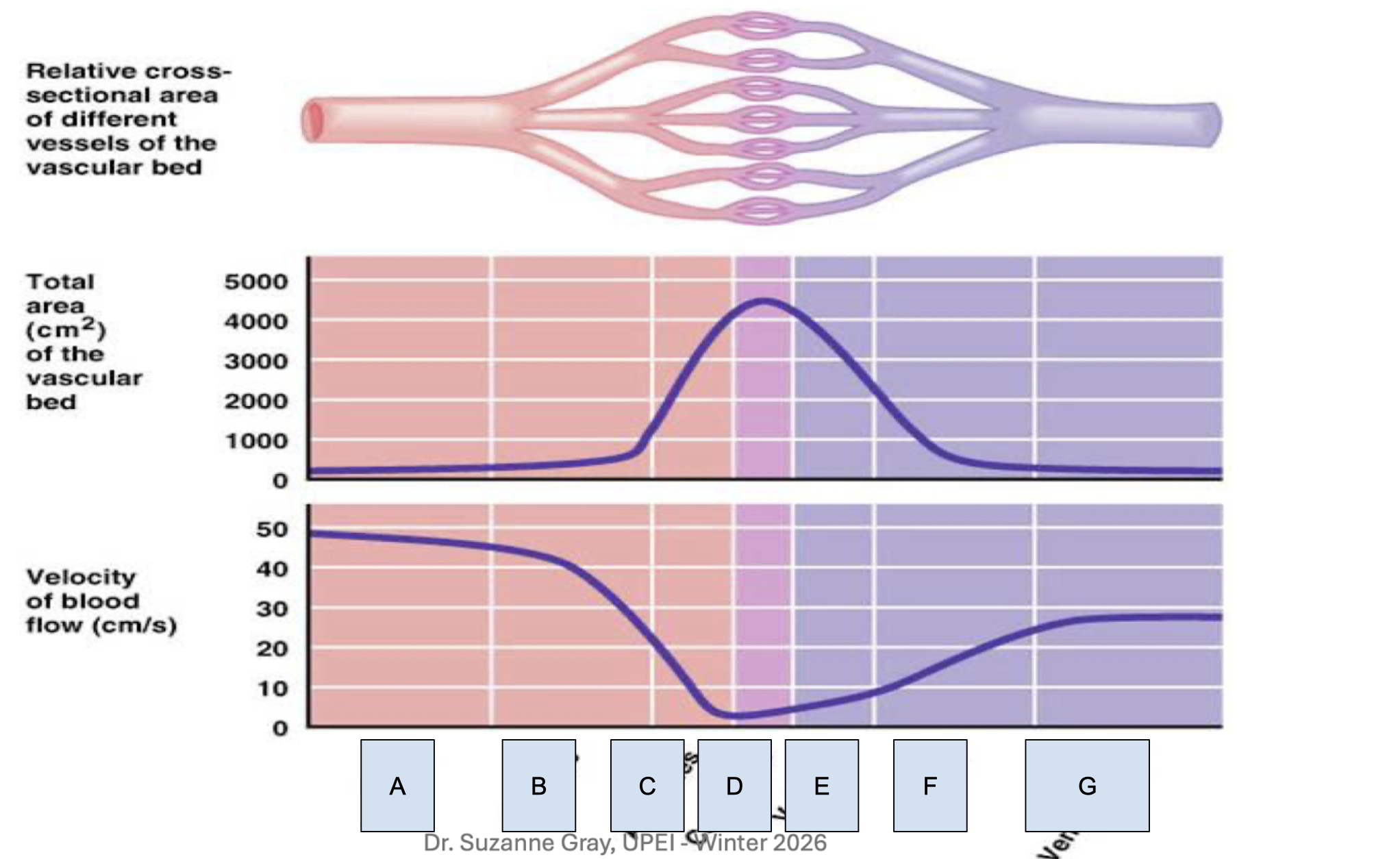
F?
Veins
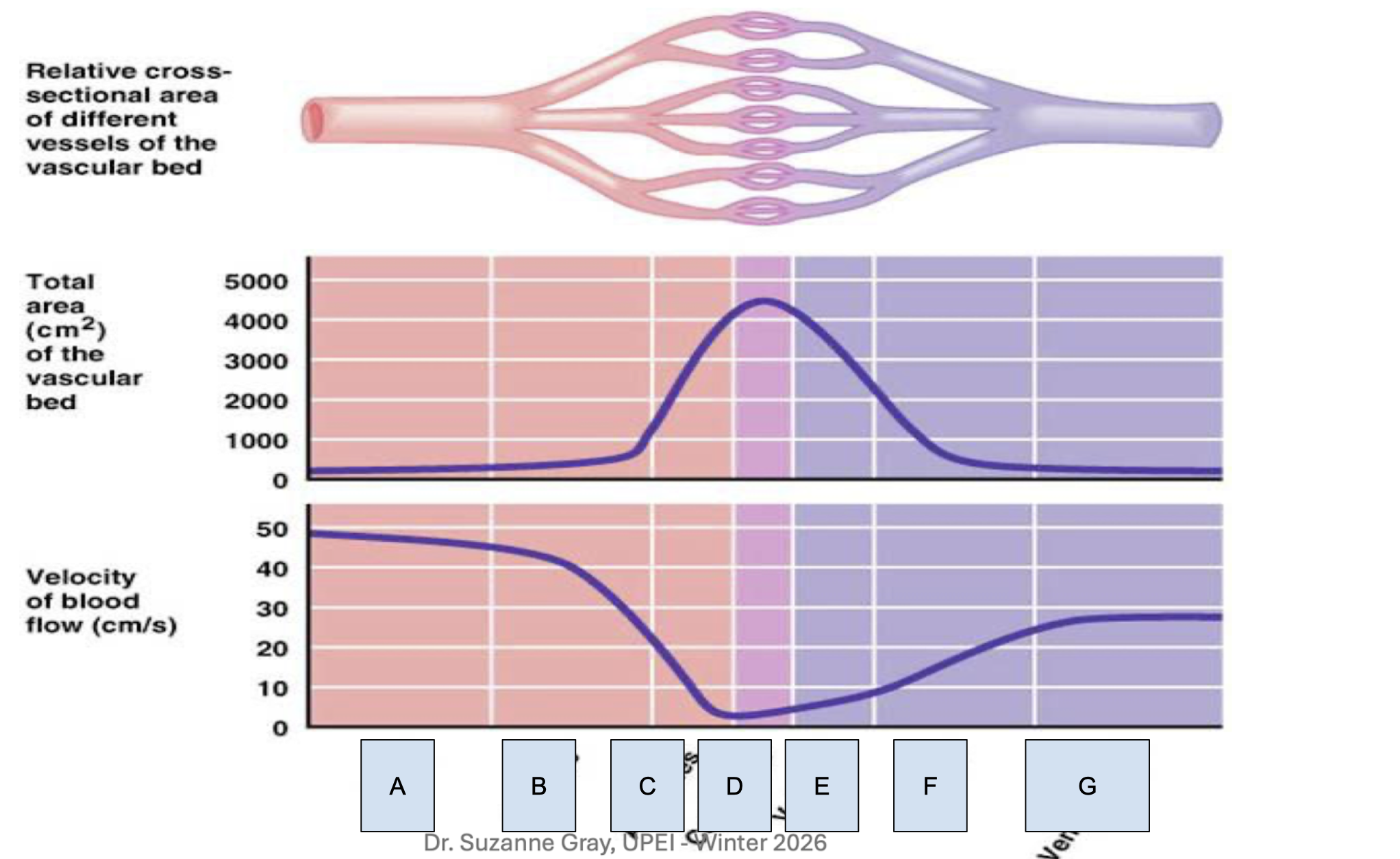
G?
Vena cava
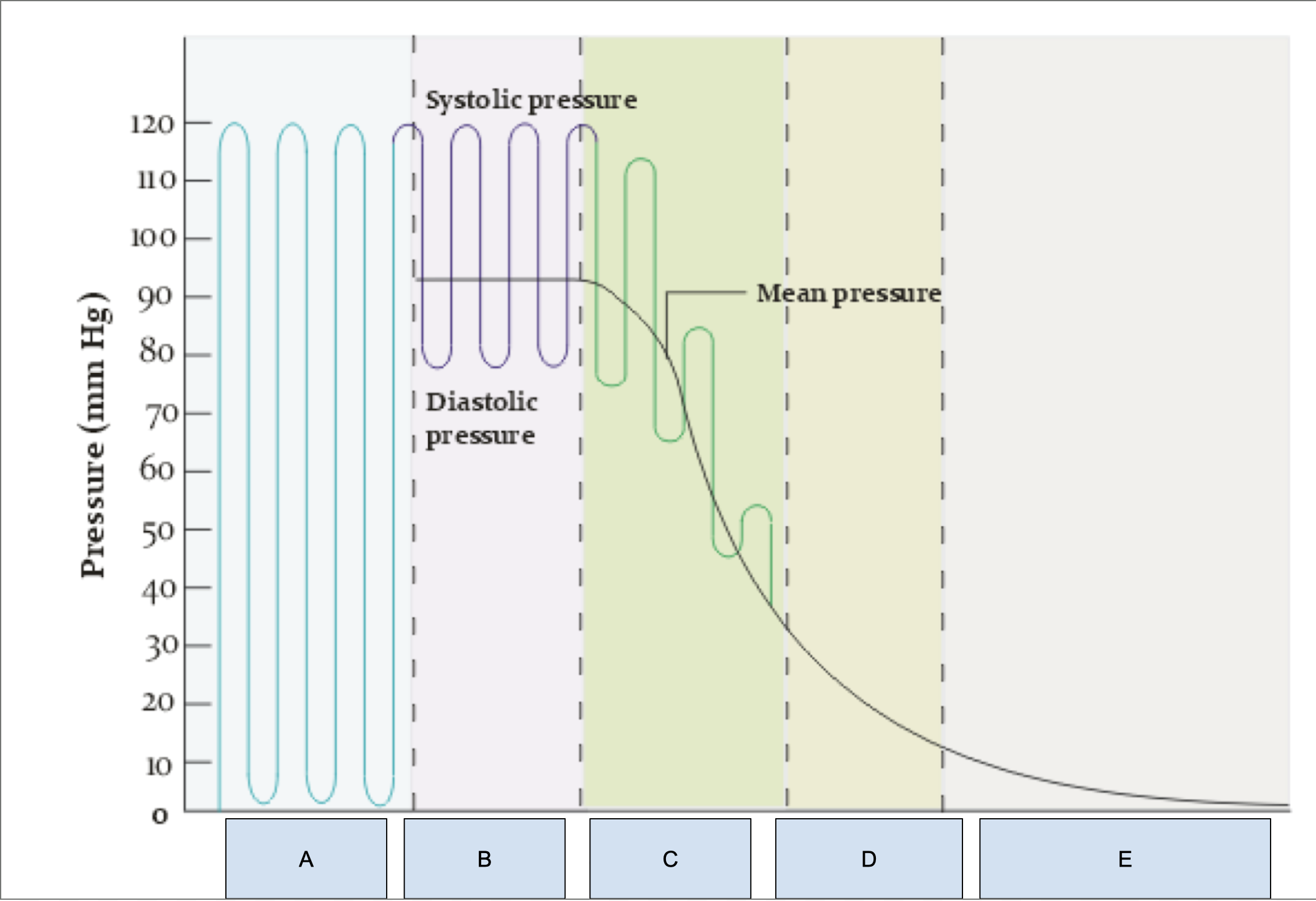
A?
Left ventricle
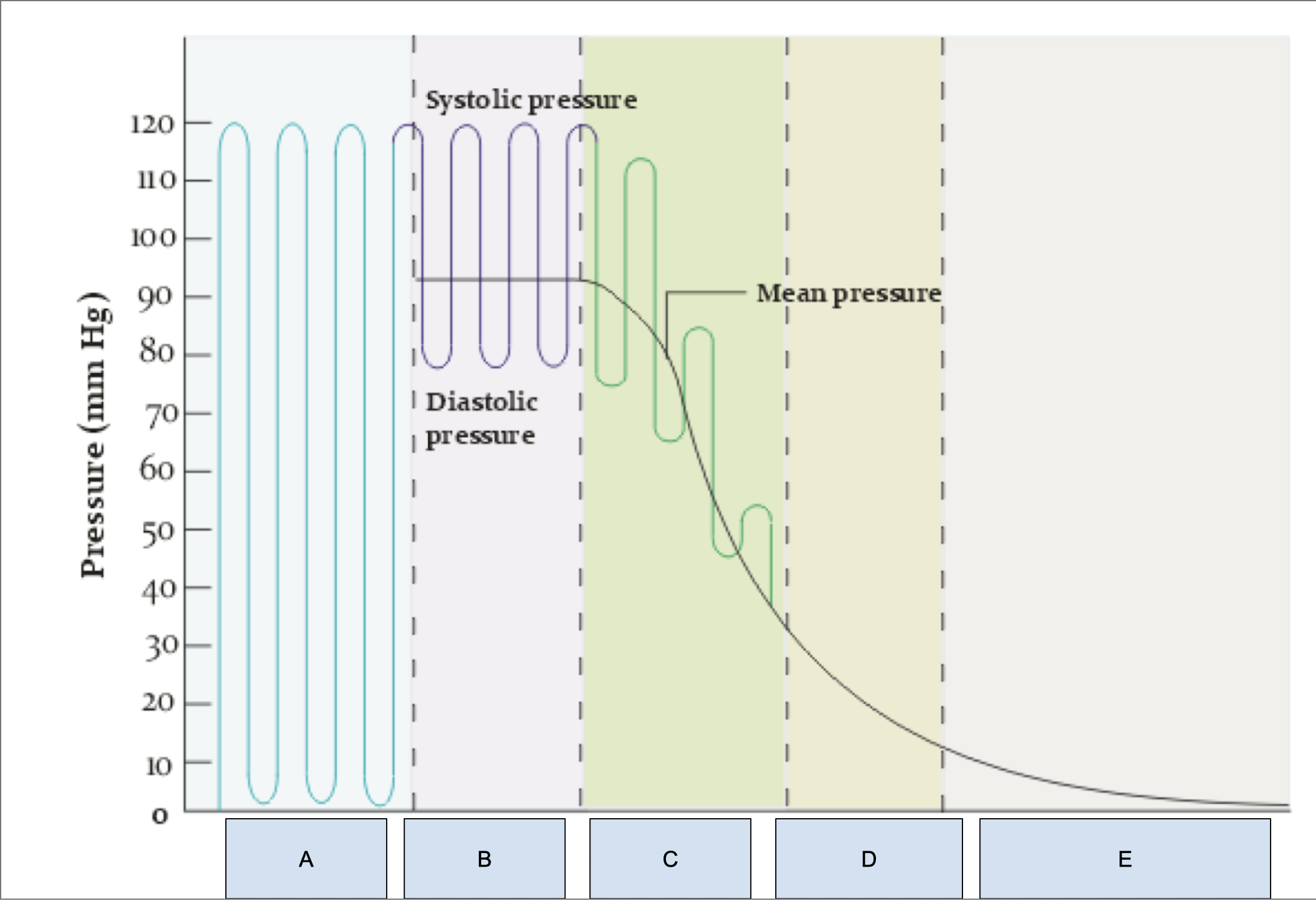
B?
Large arteries
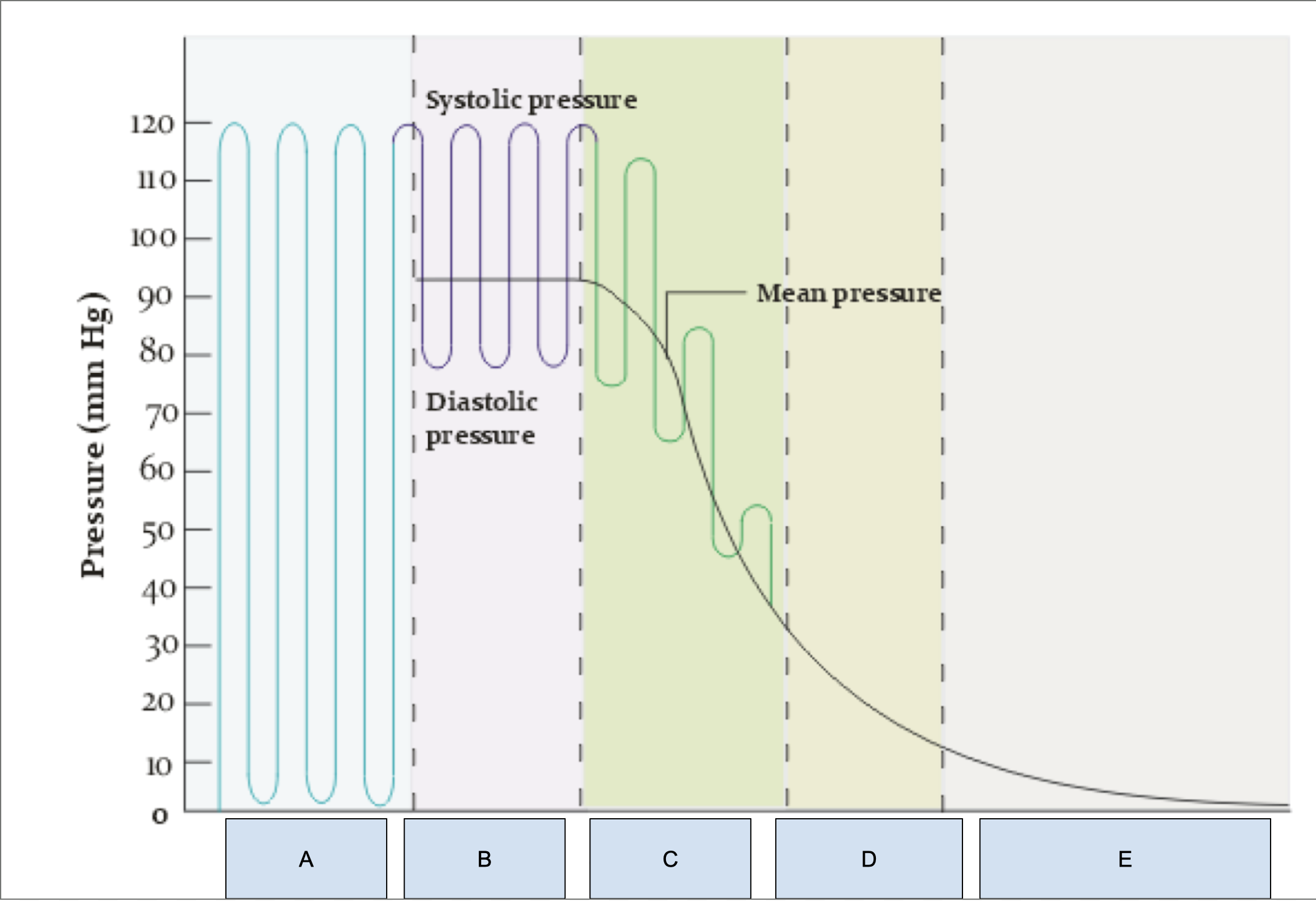
C?
Arterioles
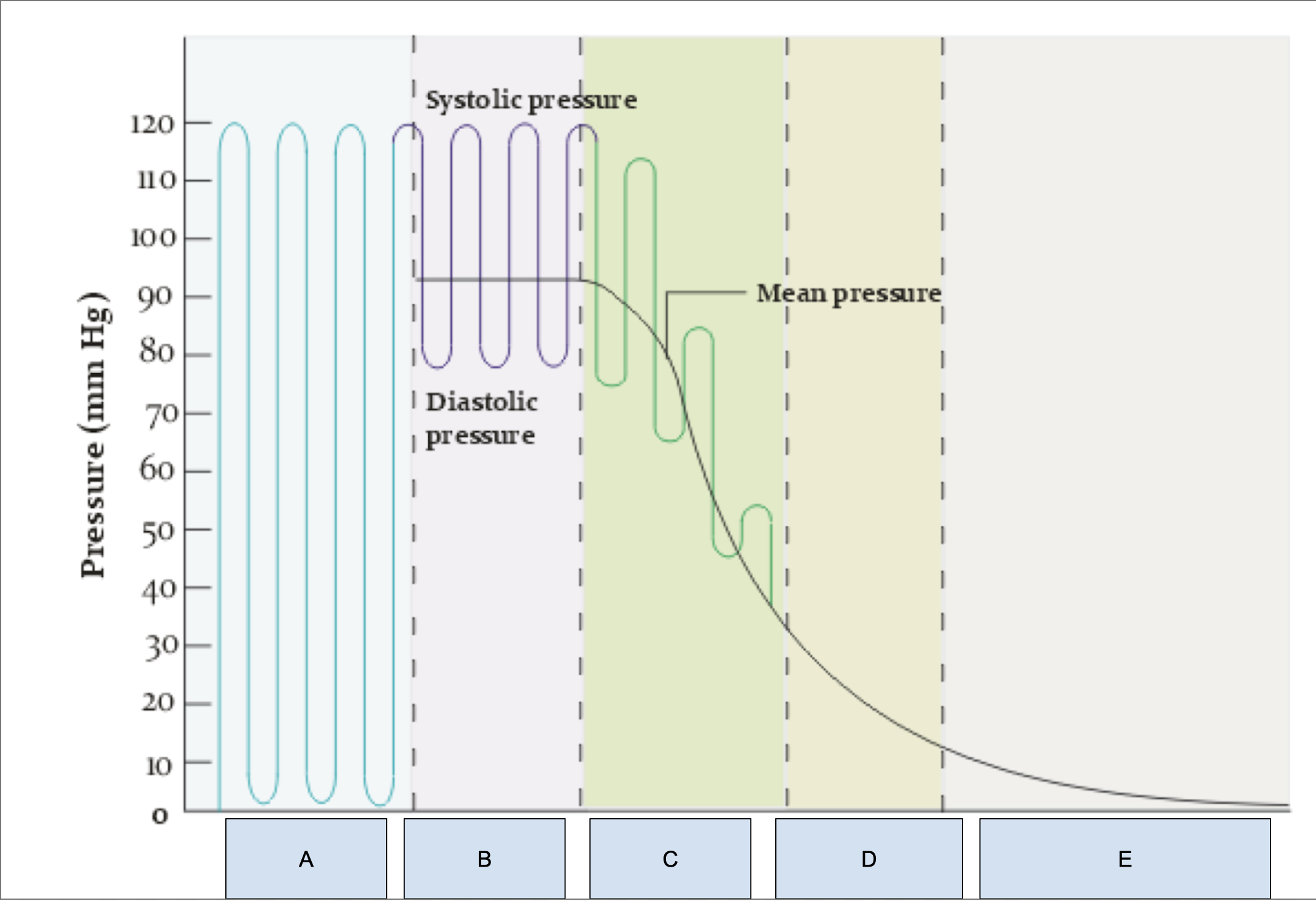
D?
Capillaries
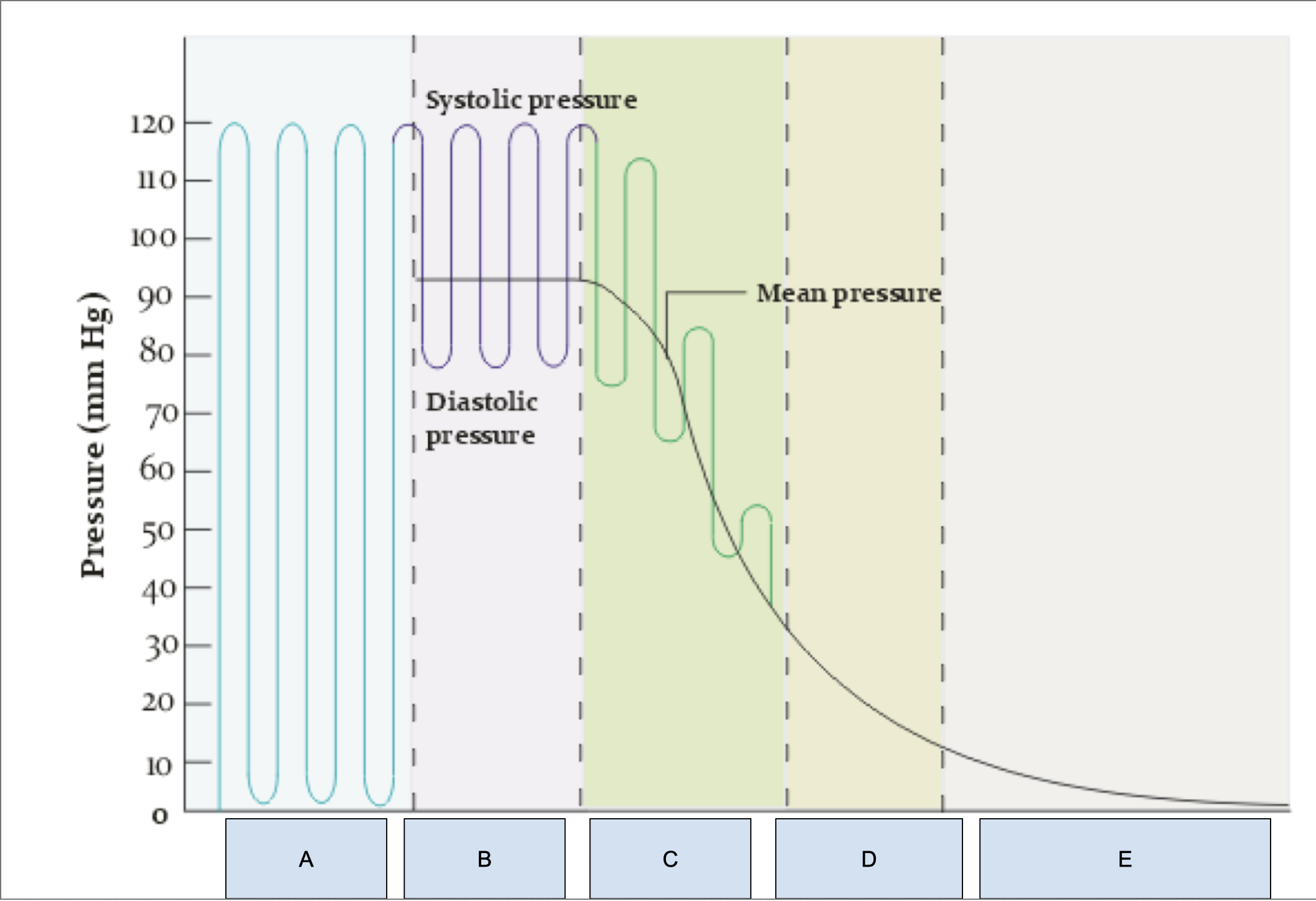
E?
Veins and venues
Volume of blood pumped per minute by each ventricle
Cardiac output
Cardiac rate x stroke volume
Cardiac output
Average resting cardiac rate
70 beats/min
Average stroke volume
78-80 ml per beat
Cardiac output in a resting adult
4-6 L/min
Cardiac output is equivalent to…
Blood volume in the body
To regulate the Cardiac Output you must regulate what additional factors?
Rate and/or the volume
Cardiac rate is regulated by…
Nerves and hormones
Stroke volume is regulated by…
Blood volume and vascular resistance
What regulates stroke volume in the short term?
Vascular resistance
What regulates stroke volume in the long term?
Blood volume
In absence of neural stimulation, heart will beat according to what?
SA node
If SA node was in complete control, would would happen to the heart rate
The heart rate would always be the same
Which two systems modify the heart rate?
Autonomic nervous system and endocrine system
What does the sympathetic nervous system release to increase heart rate?
Norepinephrine
What do the adrenal glands release to increase heart rate?
Epinephrine
What does the parasympathetic nervous system release to lower heart rate?
Acetylcholine
Does norepinephrine increase or decrease heart rate?
Increase
Does epinephrine increase or decrease heart rate?
Increase
Does acetylcholine increase or decrease heart rate?
Decrease
How is the cardiac rate regulated
ANS and hormones
What does nerve does the brain use to increase heart rate?
Sympathetic nerve
Does the sympathetic nerve increase or decrease heart rate?
Increase
What nerve does the brain use to decrease heart rate
Vagus nerve
Does the vagus nerve increase or decrease heart rate?
Decrease
What do the adrenal glands use to increase heart rate?
Adrenaline/epinephrine
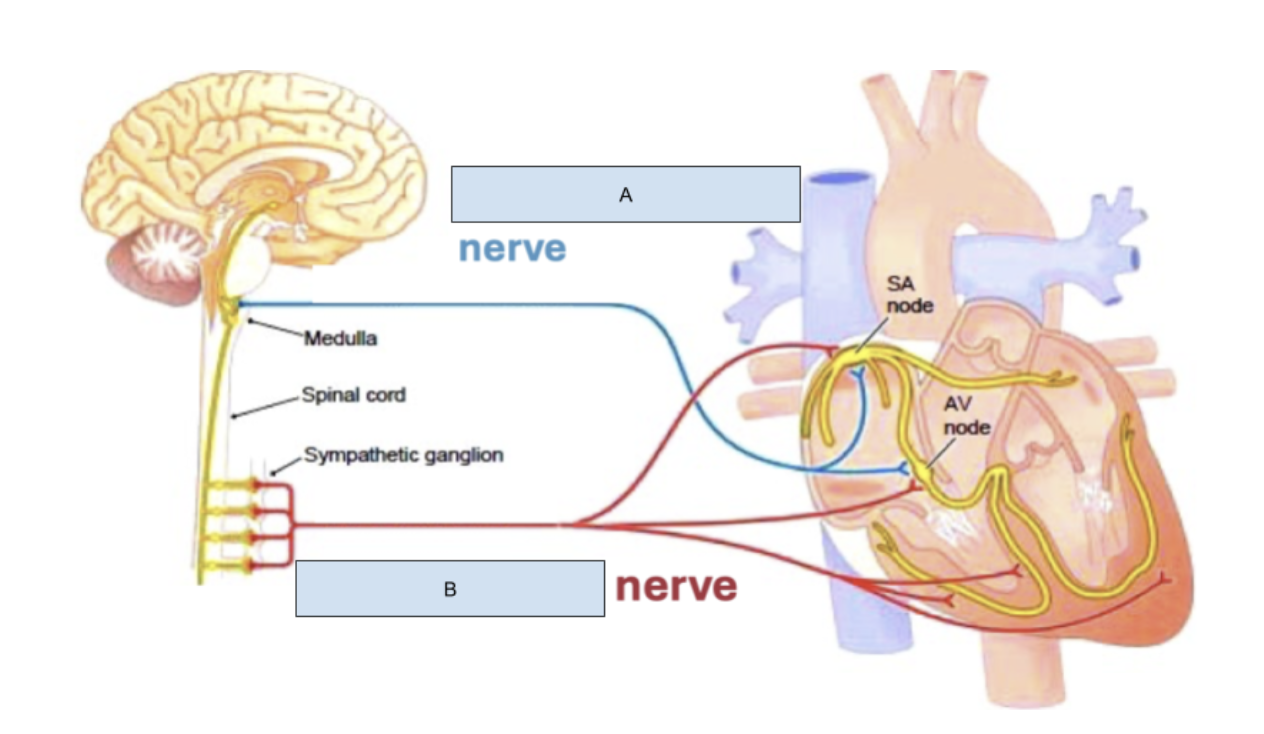
A?
Parasympathetic nerve
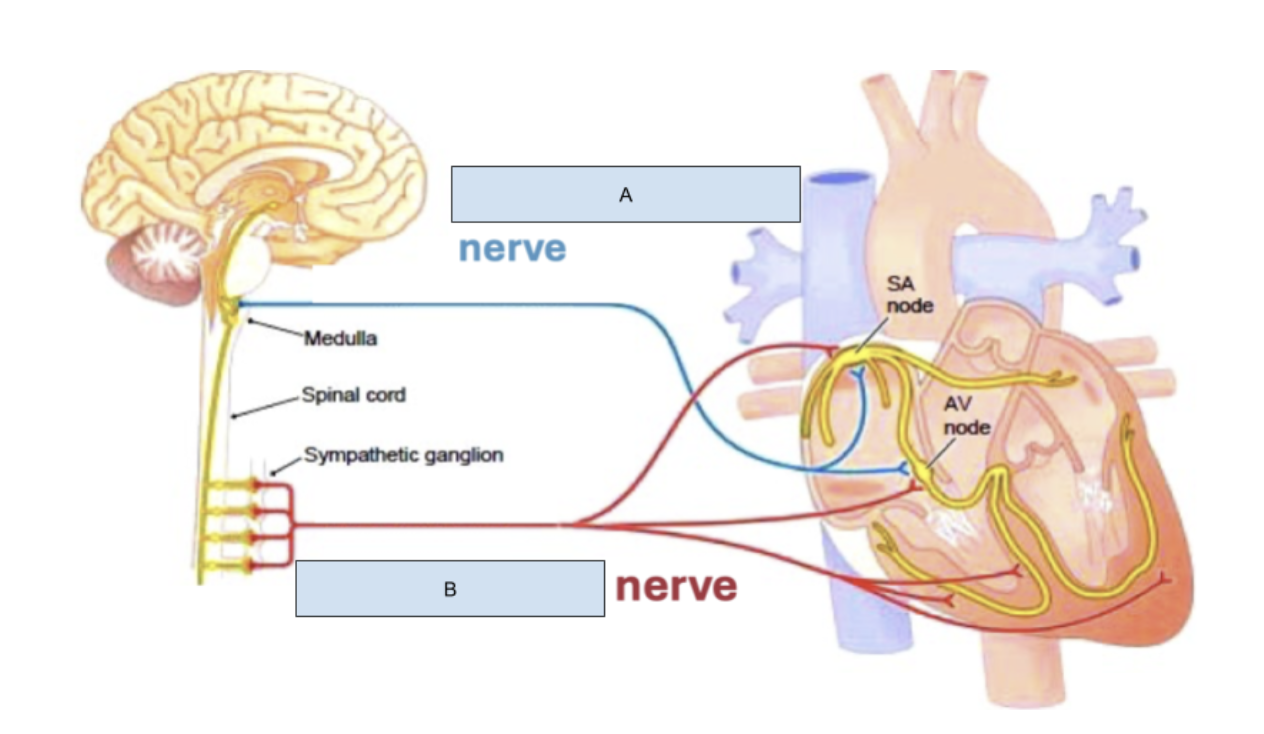
B?
Sympathetic nerve
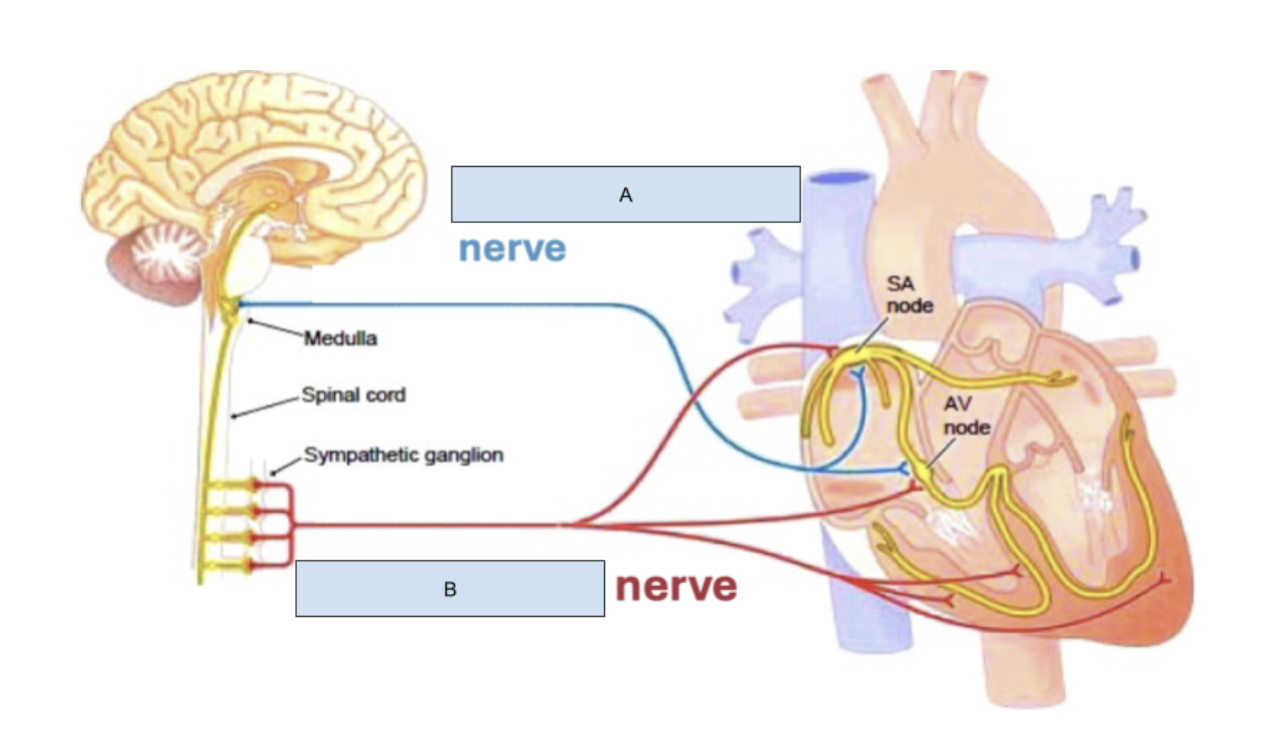
What will nerve “A” cause the heart rate to do?
Slow (parasympathetic)
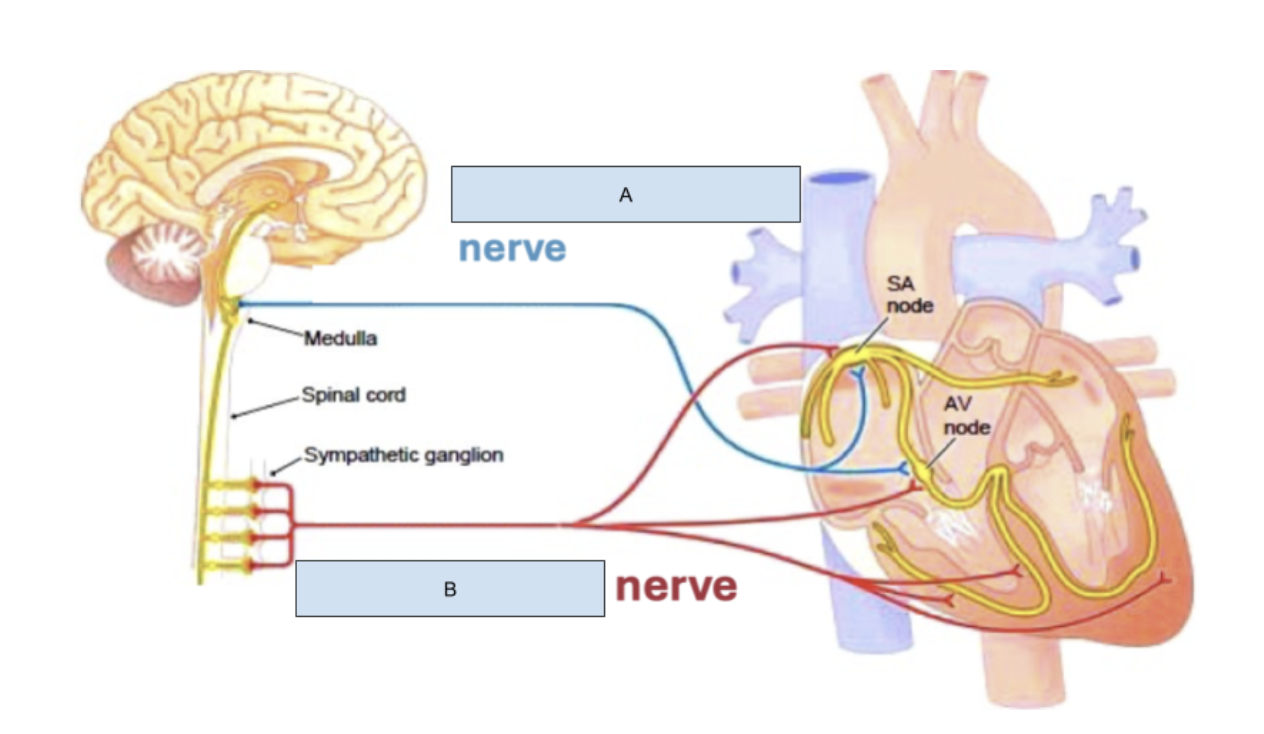
What will nerve “B” cause the heart rate to do?
Increase (sympathetic)
What 3 factors regulate stroke volume?
Contractility, End Diastolic Volume (EDV), Total Peripheral Resistance (TPR)
The strength of ventricular contraction
Contractility
The amount of blood in the ventricles just before they contract (end of diastole)
End Diastolic Volume (EDV)
The pressure the ventricles have to work against (afterload)
Total Peripheral Resistance (TPR)
Any force that causes the ventricles to contract with more force will increase ______ _______
Stroke volume
Any force that causes the ventricles to contract with more force will increase stroke volume; this in turn increases ______ ______
Cardiac output
ANS control of stroke volume regulated almost entirely by which nervous system
Sympathetic
Does epinephrine increase or decrease contraction strength
Increase
A number of hormones increase ventricular contractility, list 3
Insulin, glucagon, thyroid hormone
Force of ventricular contraction varies in response to stretching of what?
Ventricular wall
“When the rate at which blood flows into the heart from the veins (venous return) changes, stretching of the ventricular wall changes, causing the ventricle to contract with greater or lesser strength so that the stroke volume (output) matches the venous return (input).” What law is this?
Starling’s law
According to Starling’s law, if the amount of blood that returns increases, cardiac muscle will
contract ______ to compensate
More
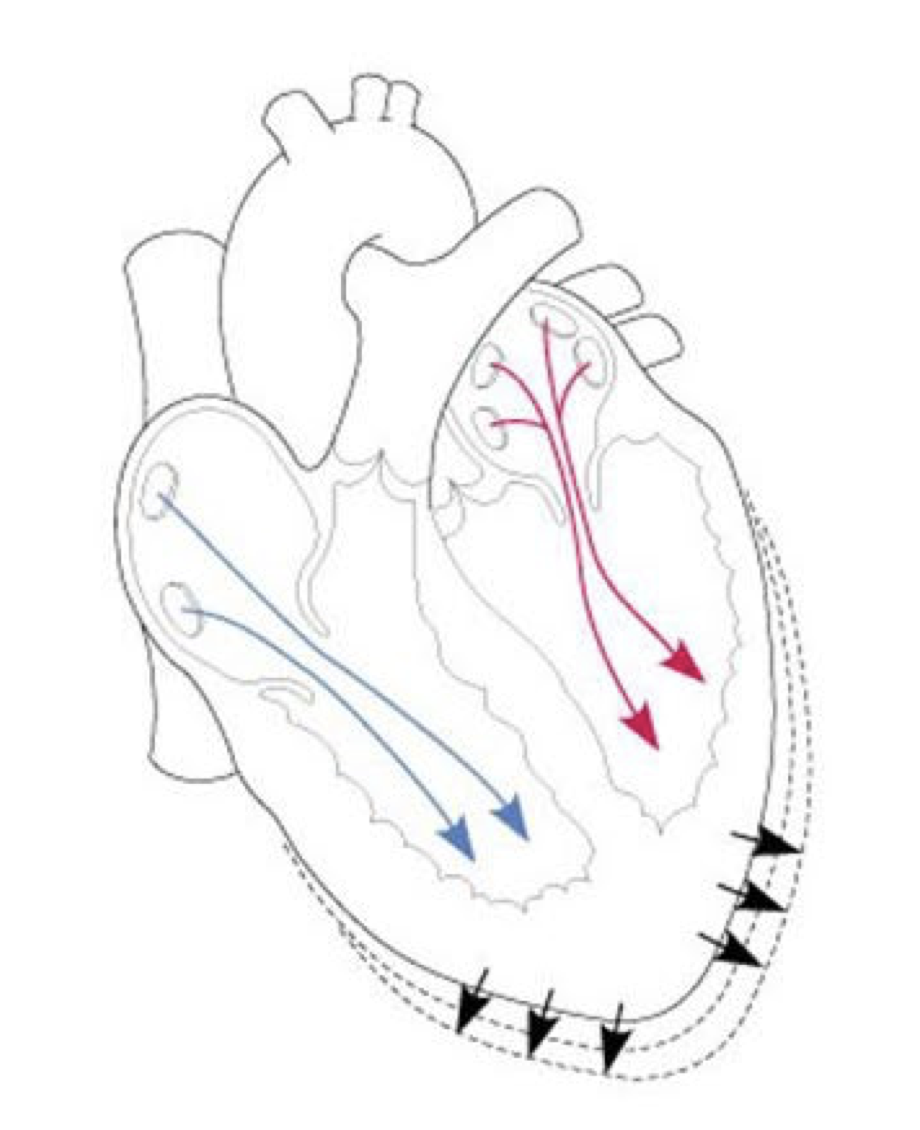
Increased blood volume =
Increased myocardial stretch
Increased myocardial stretch =
Increased force to pump blood out
Starling’s law, in simple terms
The more a heart fills, the stronger the force of contraction
Stroke volume also depends on amount of ____ opposing contraction
Force
Increased arterial pressure causes stroke volume to ______
Decrease
Where is TPR (afterload) determined after contraction starts?
Aorta
Increased resistance=
Increased pressure
Increased pressure=
Increased afterload
Increased afterload =
Decreased stroke volume
What 3 factors regulate blood pressure?
Blood volume, peripheral resistance, cardiac rate
An increase in blood volume, peripheral resistance, cardiac rate, would increase what?
Blood pressure
Blood volume can be regulated by what organ(s)?
Kidneys
What increases total peripheral resistance? (TPR)
Vasoconstriction
Which nervous system increases cardiac output and raises blood pressure?
Sympathetic system
How are changes in blood pressure detected?
Baroreceptors
Stretch receptors located in the aortic arch and the carotid sinuses
Baroreceptors
Where are baroreceptors located?
Aortic arch and carotid sinuses

