Exam 2 BIO LEC Study Guide
 Call Kai
 Learn
Learn Practice Test
 Spaced Repetition
 Match
Match Flashcards
 Knowt Play
1/37

There's no tags or description
Looks like no tags are added yet.
Name | Mastery | Learn | Test | Matching | Spaced | Call with Kai |
|---|
No analytics yet
Send a link to your students to track their progress
38 Terms
List unique characteristics that distinguish the archaea from bacteria
bacteria contain peptoglycan in their walls while archea dont
3 Domanin Systems
Bacteria,Eukarya , Archaea
Distinguish between prokaryotic cells =1 and eukaryotic cells =2
1 : small, simple and lack a nucleus and membrane bound organelles ex: chloroplast, divide by binary fission , unicellular
2: larger, mor complex, has nucleus and membrane bound organelles, divide by mitosis & meiosis, multi & uni cellular
Distinguish among the 3 most common shapes of prokaryotes
Cocci - spherical, Bacilli - rods , Spirrilla - spiral
Structure & staining properties of Gram +
thick peptoglycan layer
No outer membrane
Purple Bluish staining
Structure & staining properties of Gram -
thin peptoglycan layer
Has an outer layer
Pinkish Red staining
Transformation
A cell takes up foreign "naked" DNA directly from its surrounding environment.
Often occurs after a nearby cell dies and lyses (bursts).
Transduction
Genetic material is moved from one bacterium to another by a bacteriophage (a virus that infects bacteria).
Conjugation
Direct transfer of DNA between two temporary joined cells.
Uses a hollow tube called a sex pilus; often involves the transfer of plasmids (e.g., the F factor).
Fredrick Griffith’s Experiment 1928
Living S→ mouse dies
Living R → mouse lives
Smooth Living S ( has been heat killed ) →mouse lives
Heat killed S + Living R → mouse dies
conclusion = A "transforming principle" from the dead S cells had permanently changed the live R cells into deadly S cells.
Avery, MacLeod, & McCarty (1944): Identifying the "Principle"
They treated heat-killed S cell extract with specific enzymes that destroyed different molecules.
Destroyed Proteins (Protease)
Transformation still occurred.
Destroyed RNA (RNase)
Transformation still occurred.
Destroyed DNA (DNase)
Transformation FAILED.’
conclusion = Since transformation only stopped when DNA was destroyed and identified DNA as the transforming agent
Describe the various modes of bacterial nutrition
Autotrophs usuing light to make their own food
Photoautotrophs usuing light to make glucose
Chemoautotrophs use Inorganic compounds to create energy
Distinguish facultative anaerobes and obligate anaerobes compared to Obligate Aerobes
Essential; cannot grow without it.,
Aerobic respiration only.
Top of tube only (highest concentration).
Distinguish between obligate aerobes compared to Facultative Anaerobes
Not required, but they grow better with it.
Switch between aerobic respiration and fermentation.
Throughout tube, but heaviest at the top.
Distinguish between obligate aerobes, facultative anaerobes compared to
Obligate Anaerobes
Toxic; killed by atmospheric oxygen.
Endotoxins
harmful lipopolysaccharides part of the outer membrane of Gram-negative bacteria, released only when the cell dies.
Exotoxins
lipopolysaccharides (LPS) in Gram-negative cell walls released upon death, causing general symptoms like fever.
are soluble proteins secreted by living bacteria (mostly Gram-positive), which are highly potent, heat-labile,
Antibiotics and its function
are a diverse group of medications designed to target and inhibit the growth or kill bacteria. They function through various mechanisms, such as disrupting bacterial cell walls, inhibiting protein synthesis crucial for bacterial survival, or interfering with essential metabolic processes within bacteria.
Key characteristics of a Virus
are microscopic parasites that lack metabolic machinery (ribosomes, organelles), requiring host cellular machinery to replicate. Their structure consists of genetic material—either DNA or RNA—surrounded by a protein coat
How do you classify Viruses?
They are named by Type/Host/Location/Strain/Year
Virus Lytic Cycle
is a fast, active process where the virus immediately replicates, killing the host cell by lysis (bursting) to release new virions.
Virus Lysogenic Cycle
where viral DNA integrates into the host genome (prophage) and reproduces silently along with the host cell without killing it immediately
Protsists
are a diverse group of eukaryotic microorganisms, mostly unicellular, that exhibit three primary modes of nutrition
Protists Mode of Nutrition
photosynthesis (photoautotrophs), ingestion (holozoic/animal-like), and absorption (saprozoic/fungus-like). Many are mixotrophs,
Endosymbiosis
eukaryotic organelles—specifically mitochondria and chloroplasts—originated as independent prokaryotic cells (bacteria) that were engulfed by a larger host cell billions of years ago
Basic Characteristics of a Fungi
Eukaryotic: They have a nucleus and membrane-bound organelles.
Decomposers: Most play the role of breaking down dead organic matter in the ecosystem.
Heterotrophs
Body Structure: Most are multicellular and made of thread-like filaments called hyphae (the mass of hyphae is called mycelium).
Reproduction: They use spores (can be sexual or asexual)
Absorptive Nutrition: They secrete enzymes to digest food outside their bodies, then soak up the nutrients.
Chitin Cell Walls: Their cell walls are made of chitin (not cellulose like plants).
Identify the basic Structure of a Fungi
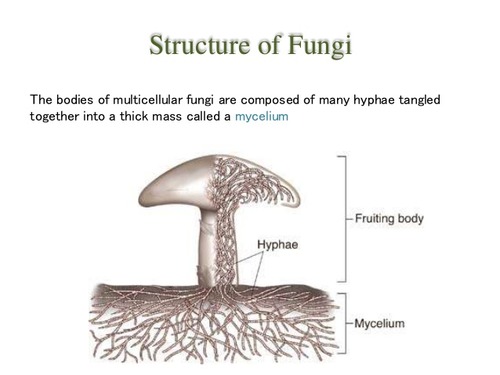
Fruiting Body: The visible, reproductive part of the fungus
Mycelium (plural: mycelia): The dense, underground or internal network of hyphae that digests and absorbs nutrients from the substrate (food source).
Hyphae (singular: hypha): Thin, filament-like tubes that make up the main body of the fungus, often divided by cross-walls called septa.
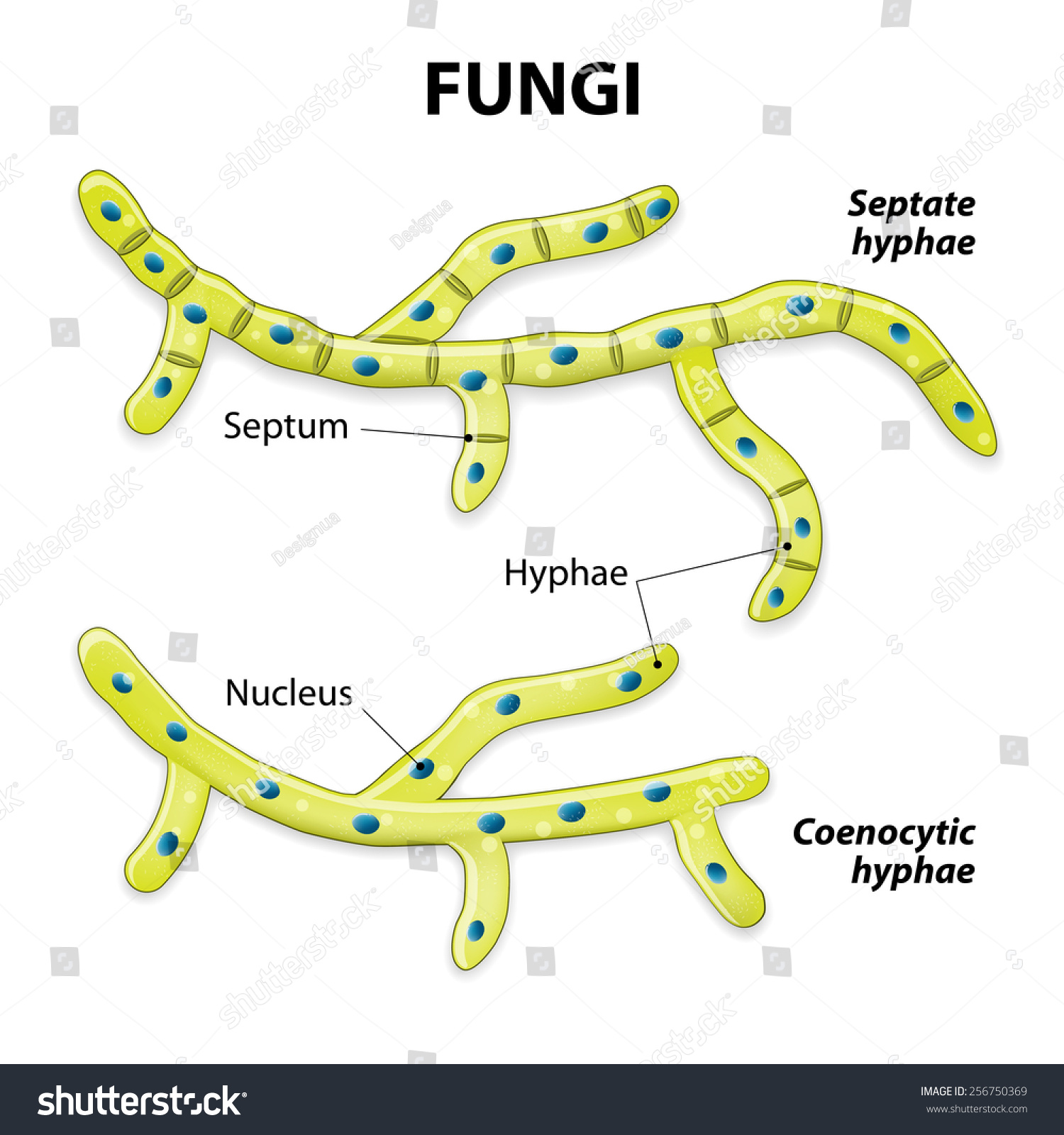
Sepate Hyphae
divided into distinct cellular units by these walls and have pores allowing nutrient flow, while coenocytic hyphae facilitate rapid cytoplasmic streaming
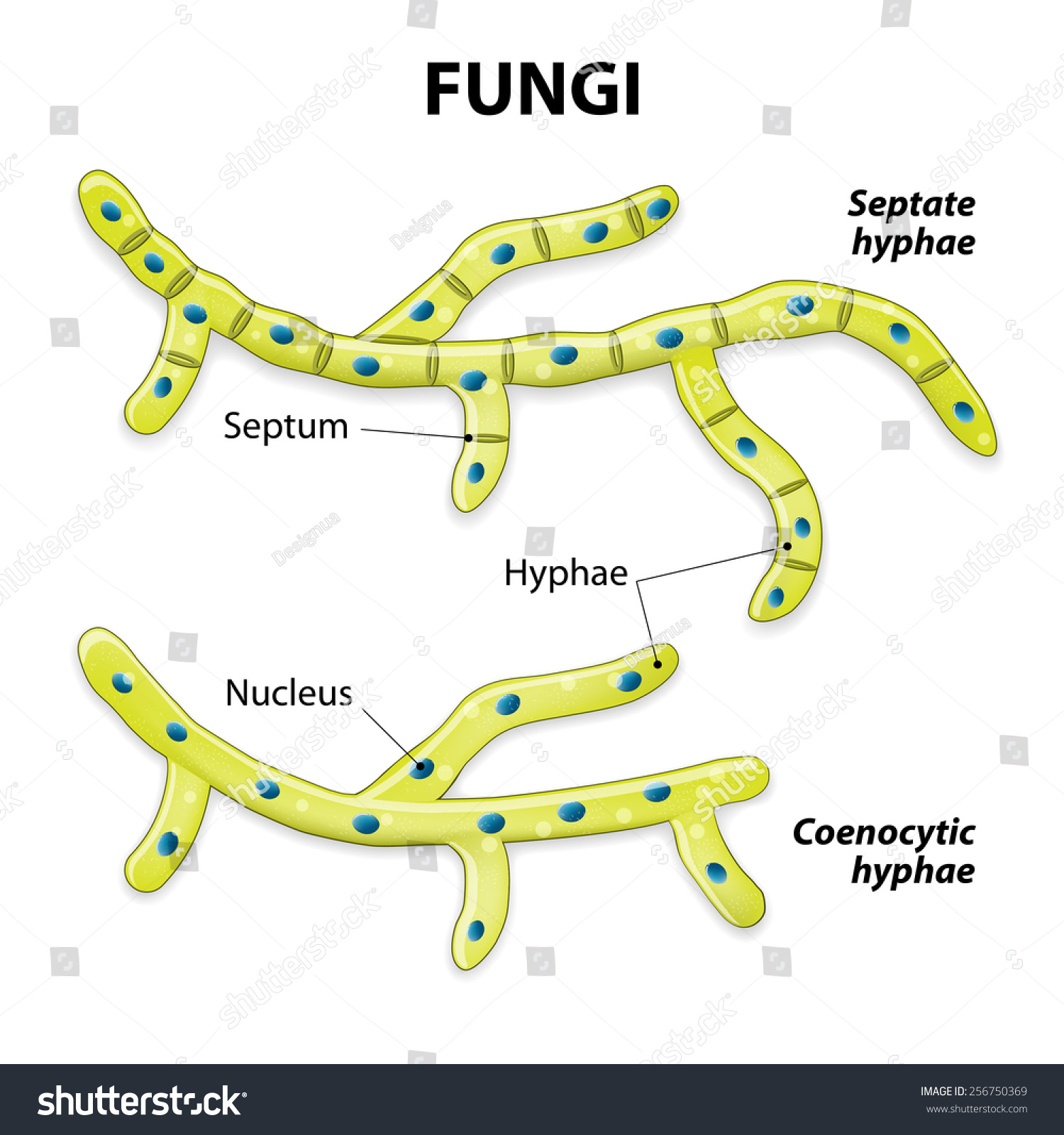
Coenocytic Hyphae
lack these walls, forming a single, continuous, multinucleated cytoplasmic tube.
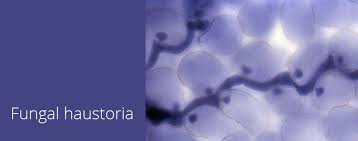
What is the function of haustoria? What types of fungi would have haustoria?
branched hyphal structures that penetrate host plant cell walls—but not the plasma membrane
feeding, metabolic manipulation of the host, and delivering effector proteins to suppress host defenses.
Rust fungi
Powdery mildews
Downy mildews
Other parasitic pathogens
The Fungal Cycle
It begins with haploid spores forming mycelia
then plasmogomy- the fusion of the Hyphae from 2 individuals (+ and -)
then karyogamy - two haploid nuclei fuse creating a diploid nucleus zygote
and meiosis restoring the haploid state and creating spores
Plasmogamy
fusion of the hyphae from 2 individuals ( + and - )
Dikaryon Formation
two haploid nuclei fuse creating a diploid nucleus zygote
Karyogamy
2 haploid nuclei fuse to create a diploid nucleus zygote
Sexual and Asexual spores for each phylum
Zygomycota: Reproduces via sexual zygospores in the zygosporrum
Ascomycota: ascospore in the ascucus in the ascocarp ( fruiting body)
Basidiomycota: basidio spore on basidum as a part of the basidiocarps ( fruiting body)
Most fungi have both sexual and asexual means of reproduction. What is the
advantage of each form?
asexual reproduction allows for rapid colonization in stable environments through efficient, high-volume cloning, while sexual reproduction introduces genetic variation, enabling adaptation to changing, stressful, or harsh environments.
Life cycle of a basidiomycete
life cycle, characterized by a long-lived stage where two distinct nuclei inhabit each cell. It begins with germinating haploid,
basidiospores that form primary mycelia, which merge through plasmogamy to create a dominant, dikaryotic secondary mycelium. This forms a basidiocarp (mushroom).
Lichen – what is it? What kind of relationship does it have and with who? What
is most common form of fungi?
is a composite organism formed from a mutualistic symbiotic relationship between a fungus (the mycobiont) and a photosynthetic partner (the photobiont), usually green algae or cyanobacteria. The fungus provides structure and protection, while the photobiont produces sugar through photosynthesis.
most common form : Ascomycota

