UMHB A&P I Lab Petty Lab #11
 Studied by 0 people
 Call Kai
 Learn
Learn Practice Test
 Spaced Repetition
 Match
Match Flashcards
 Knowt Play
1/34

There's no tags or description
Looks like no tags are added yet.
Name | Mastery | Learn | Test | Matching | Spaced | Call with Kai |
|---|
No analytics yet
Send a link to your students to track their progress
35 Terms
Thermoreceptors
respond to changes in temperature
Mechanoreceptors
Sensory receptors responsible for sensing distortion in body tissues.
Proprioceptors
monitor the position and movement of skeletal muscles and joints
Nociceptors
pain receptors
Chemoreceptors
respond to chemicals
Photoreceptors
respond to light
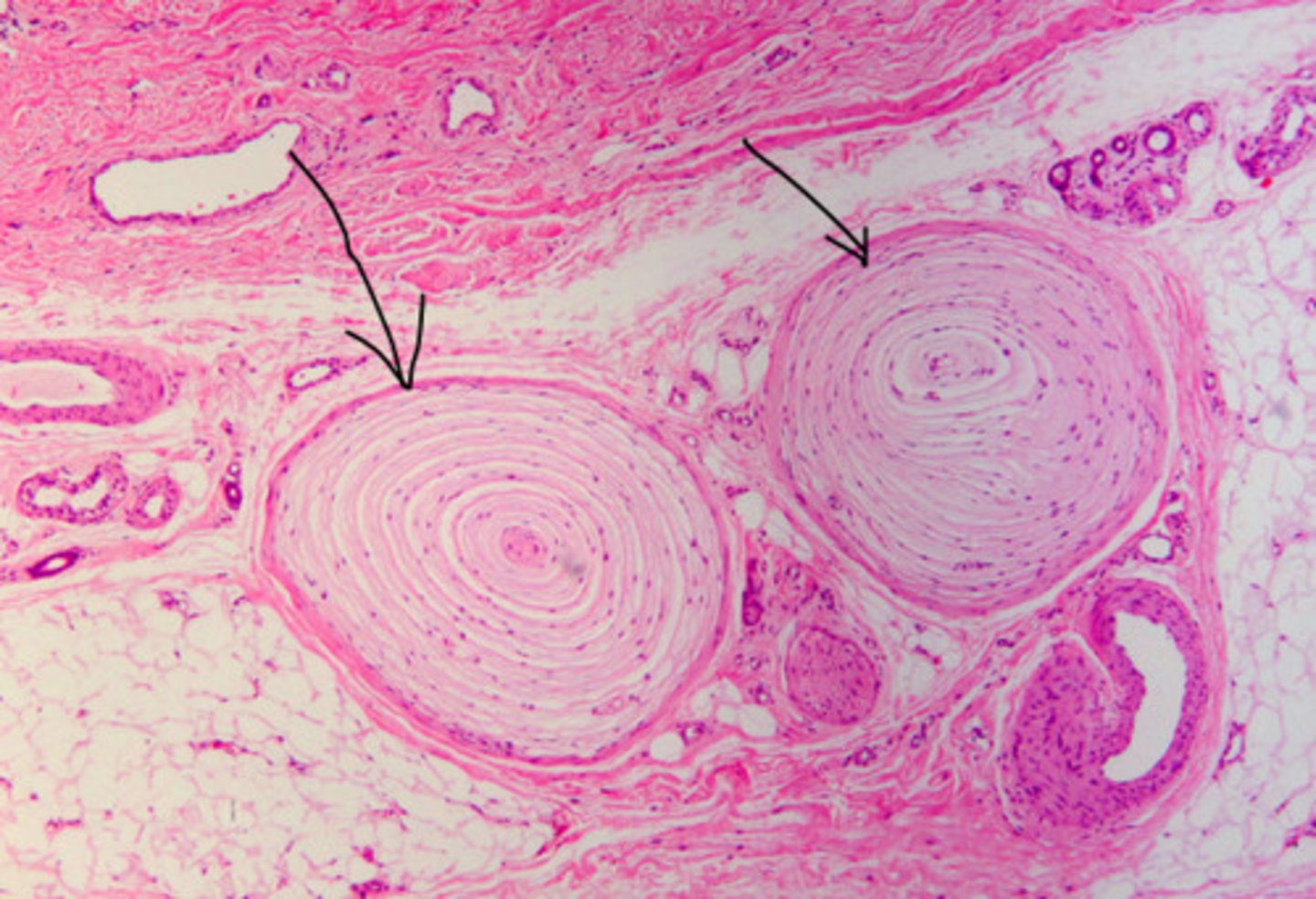
Pacinian corpuscles
Mechanoreceptor
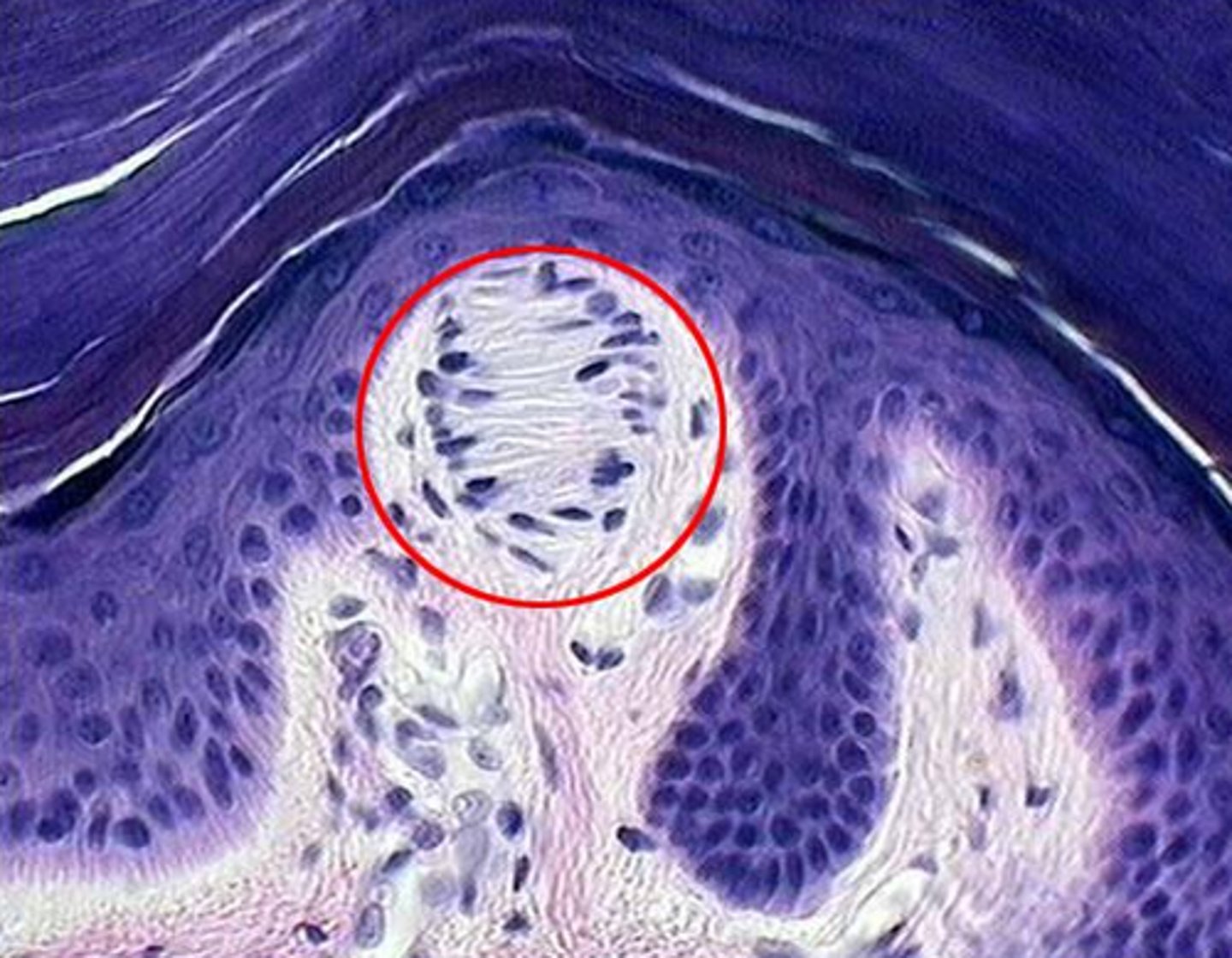
Meissner's corpuscles
Mechanoreceptor
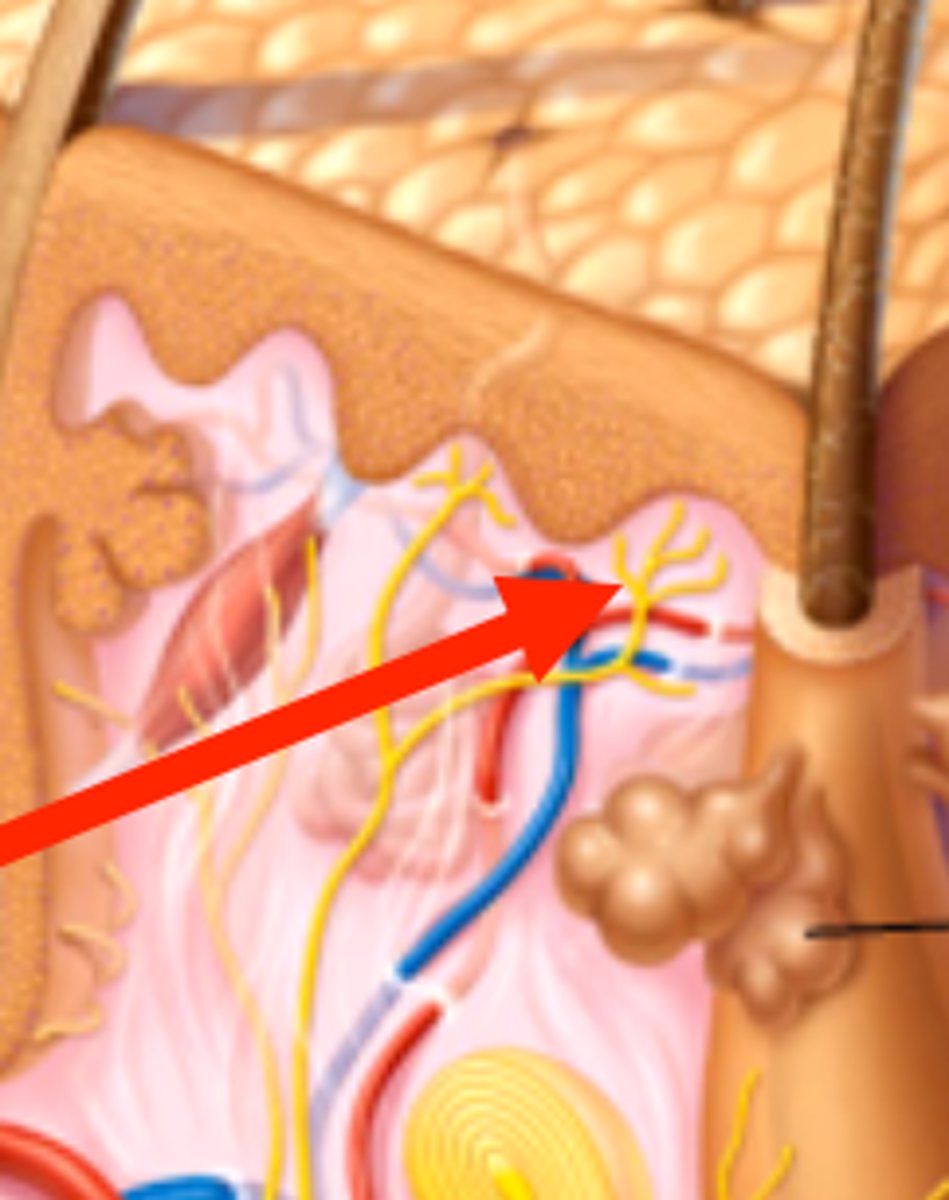
free nerve endings
mechanoreceptors, nociceptors, thermoreceptors
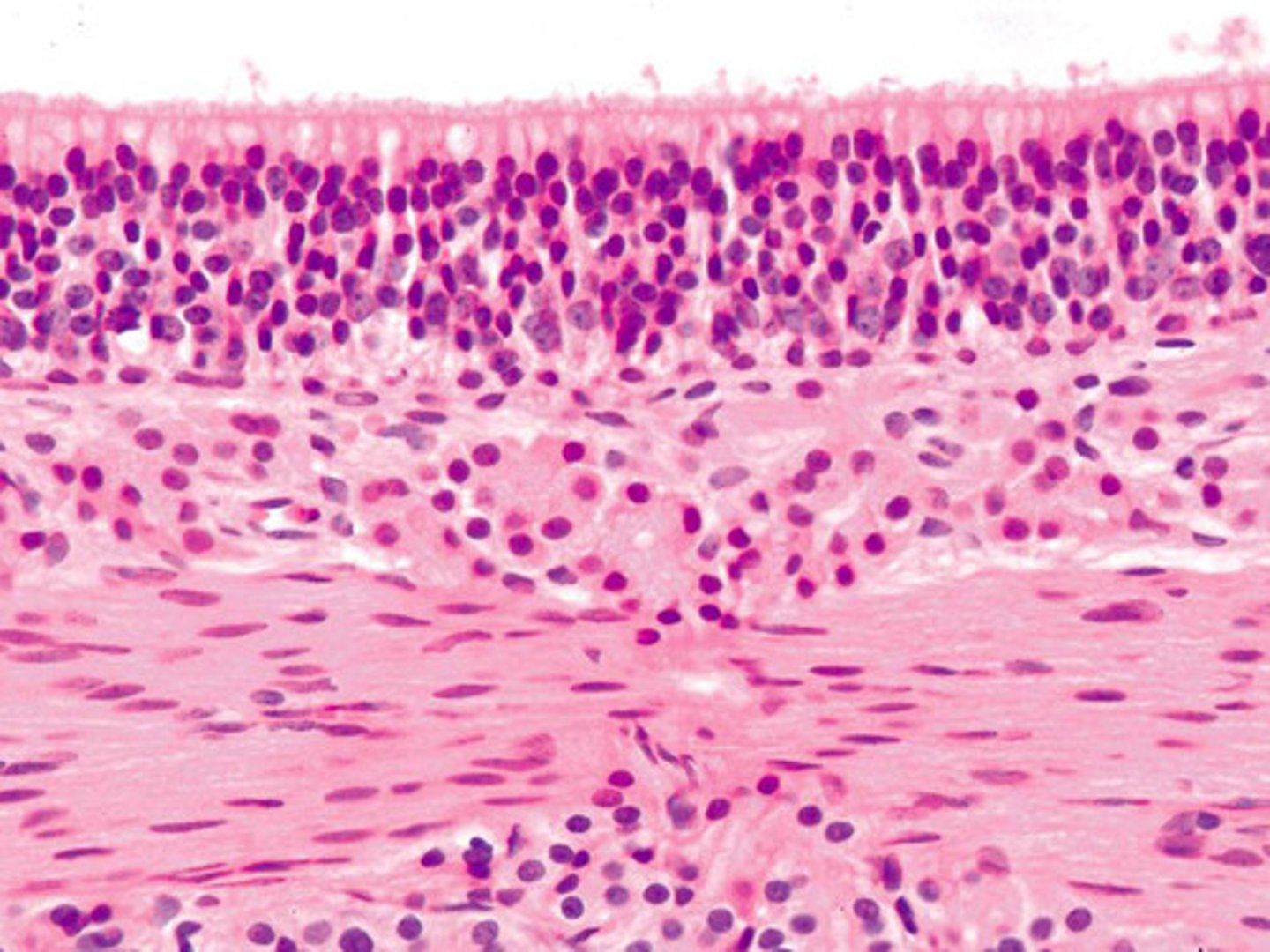
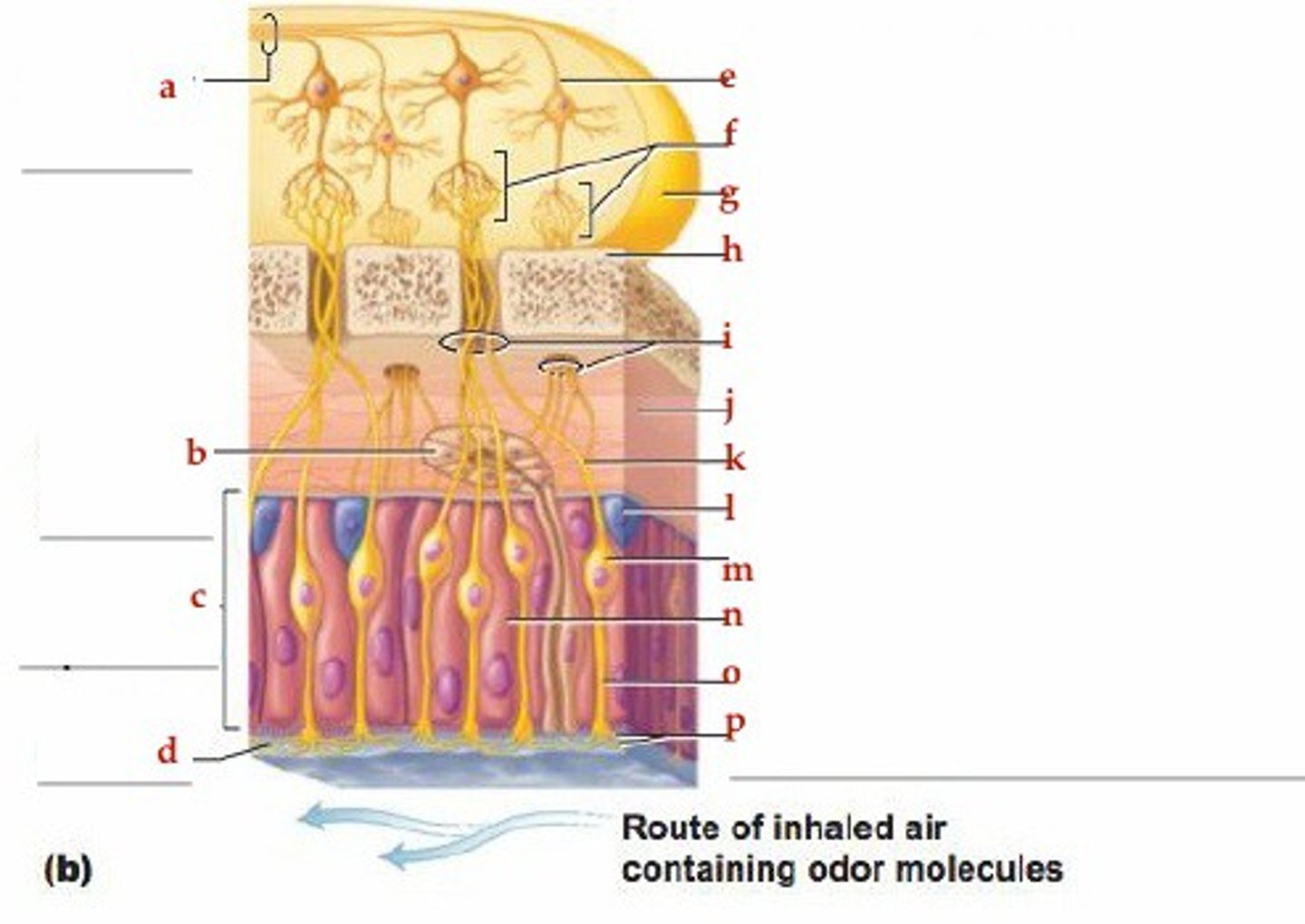
olfactory epithelium
cribiform plate of ethmoid bone
H
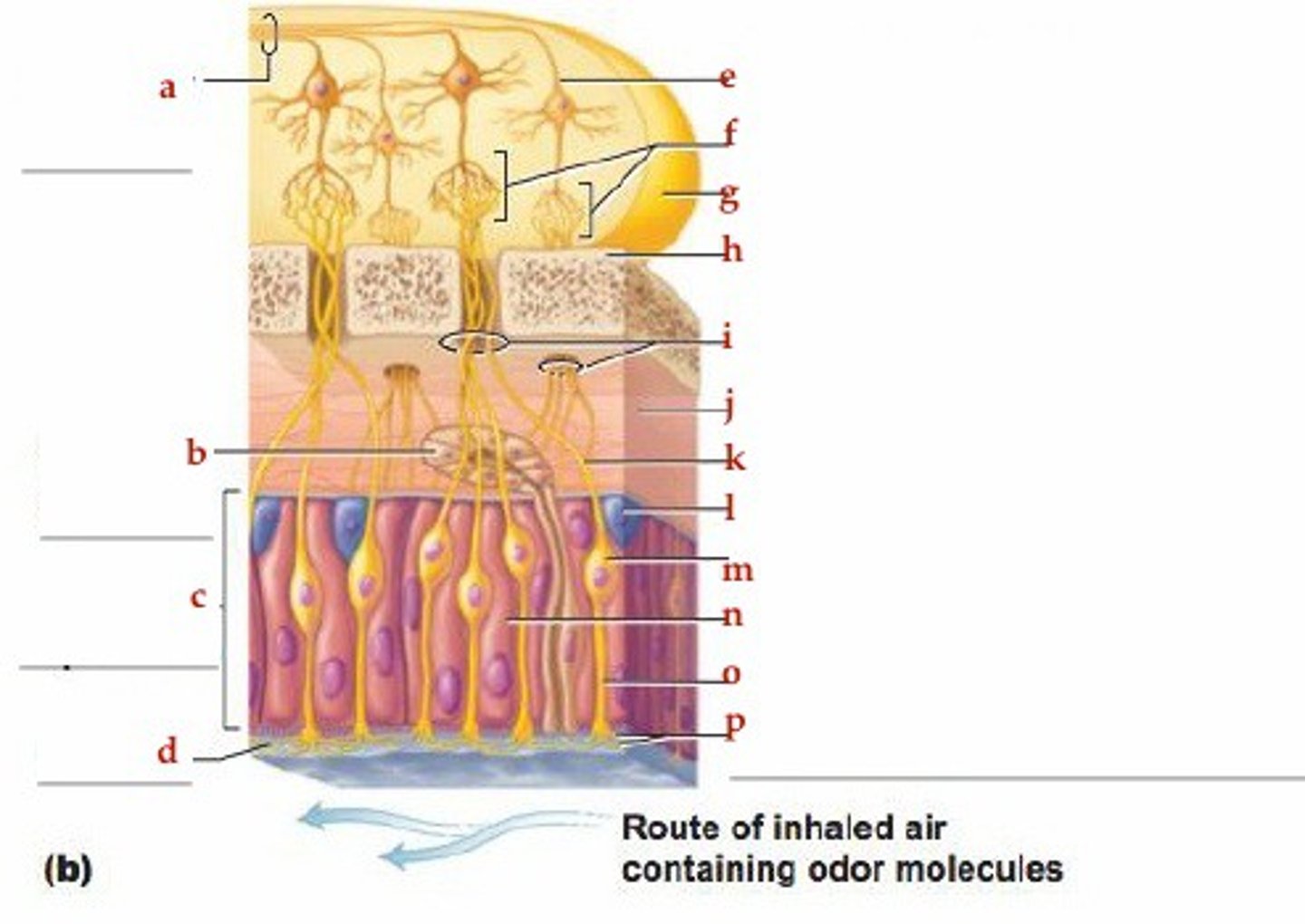
Olfactory nerve fibers
What structure passes through the cribriform plate?
olfactory cilia
hairlike structures located in upper portion of nasal passages, receptors for smell
nonmotile
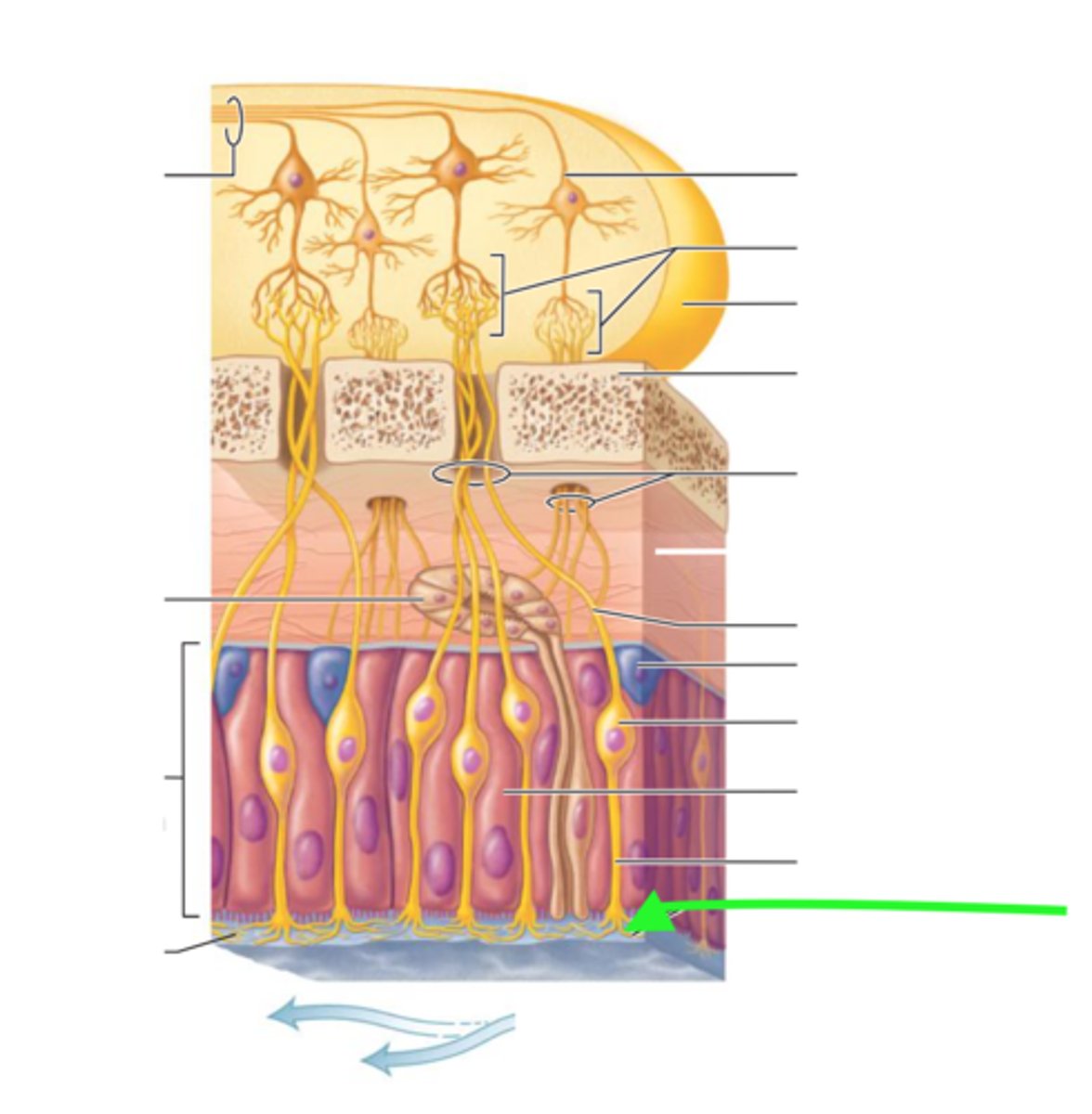
olfactory receptor cell
A type of neuron, found in the olfactory epithelium, which senses airborne odorants via specialized receptor proteins.
Bipolar neuron
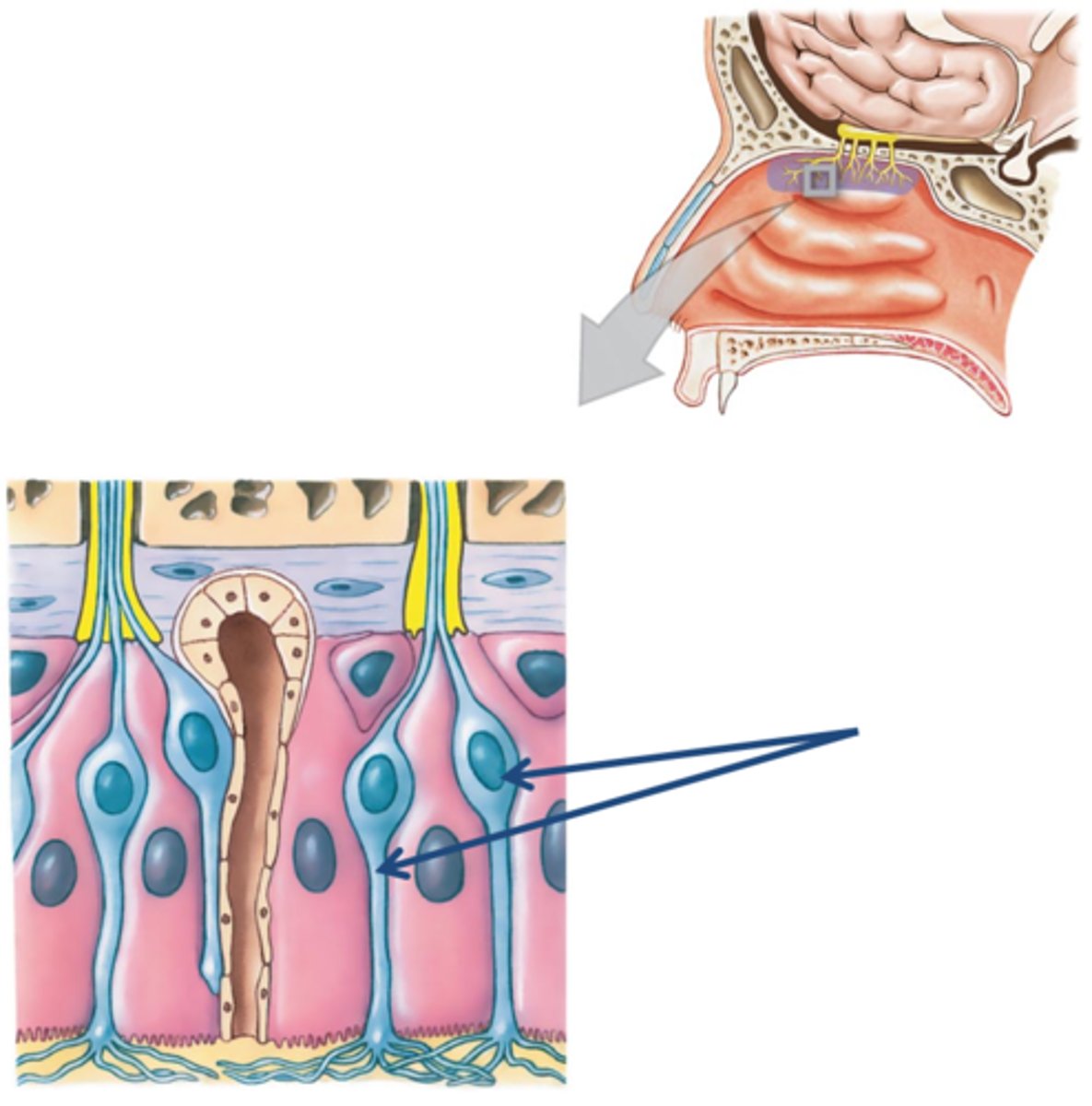
olfactory supporting cells
N
Columnar cells that surround and support the olfactory sensory neurons
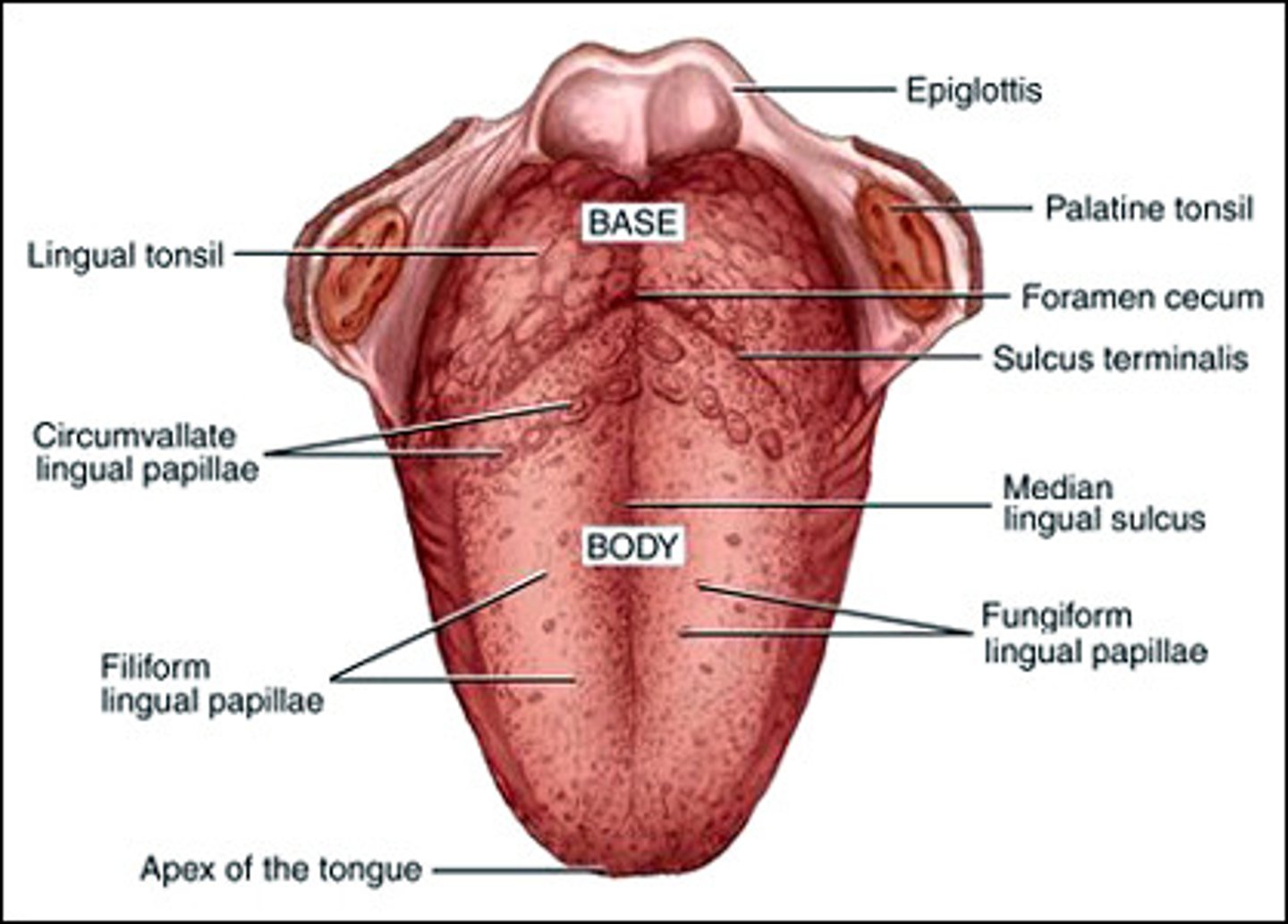
cicumvallate papillae
1
contain 100 taste buds each
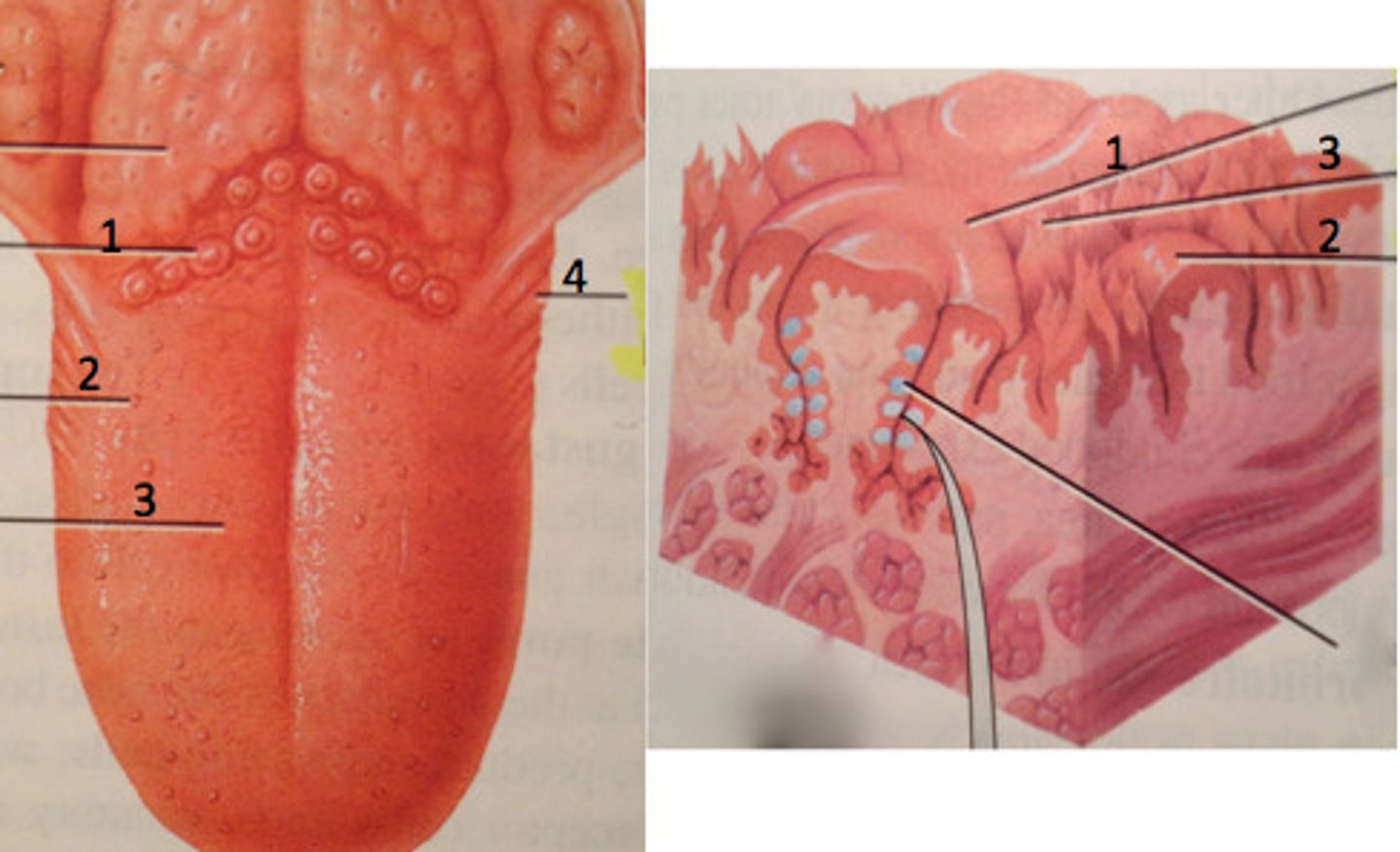
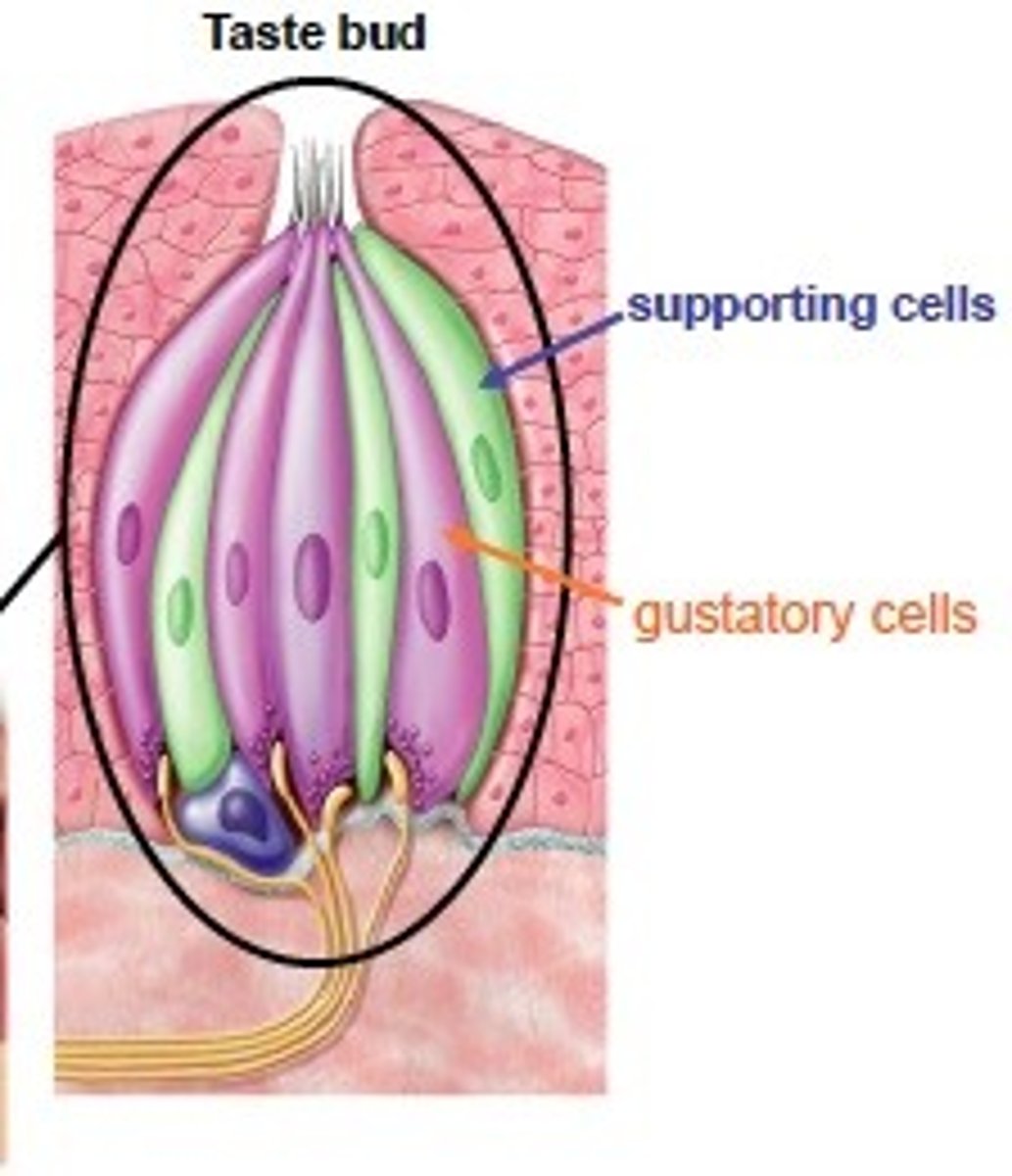
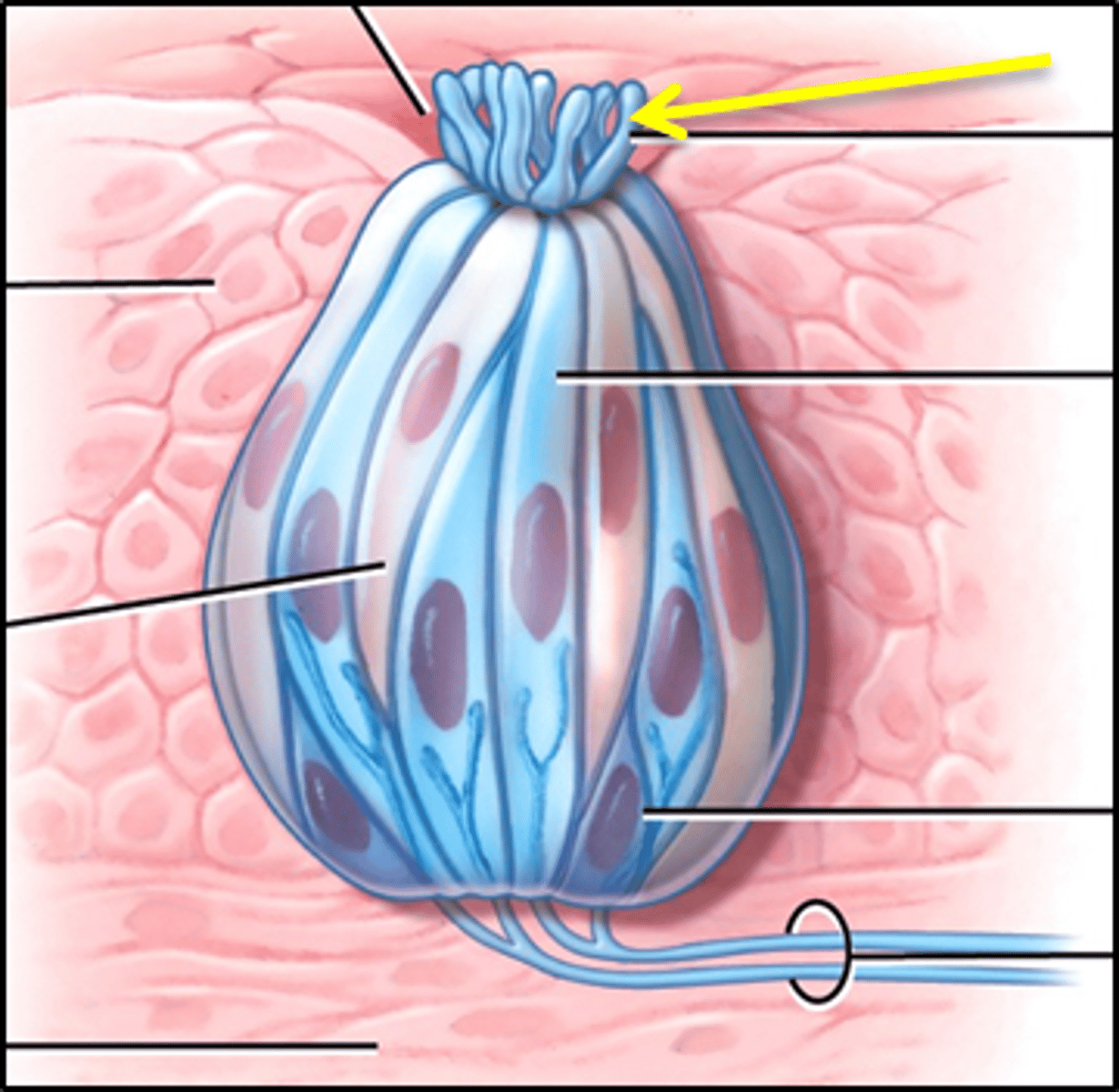
gustatory cell
filiform papillae
Provide friction
Do not contain taste buds
gustatory hairs
fungiform papillae
contain 5 taste buds each
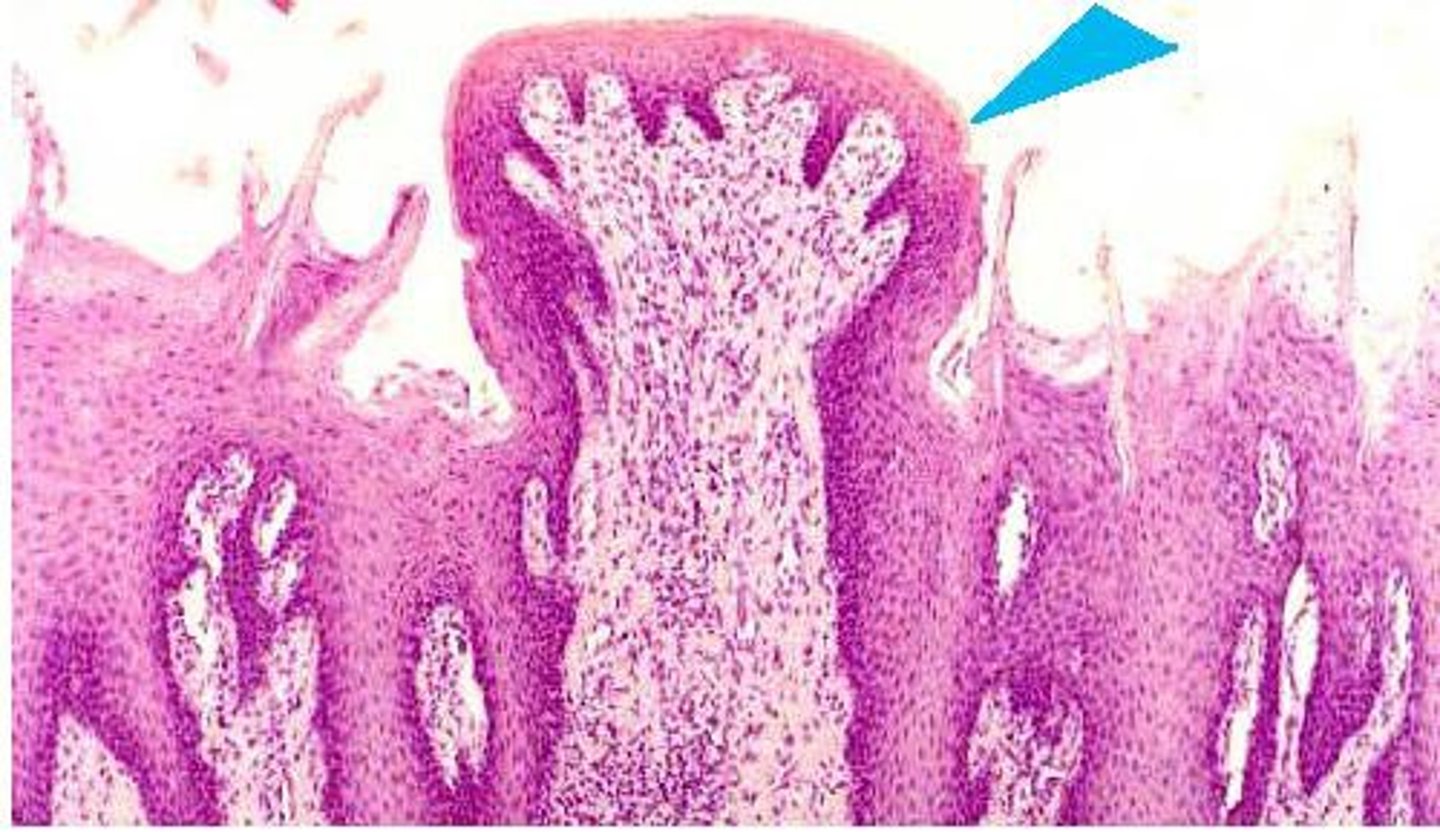
fungiform papillae
contain 5 taste buds each
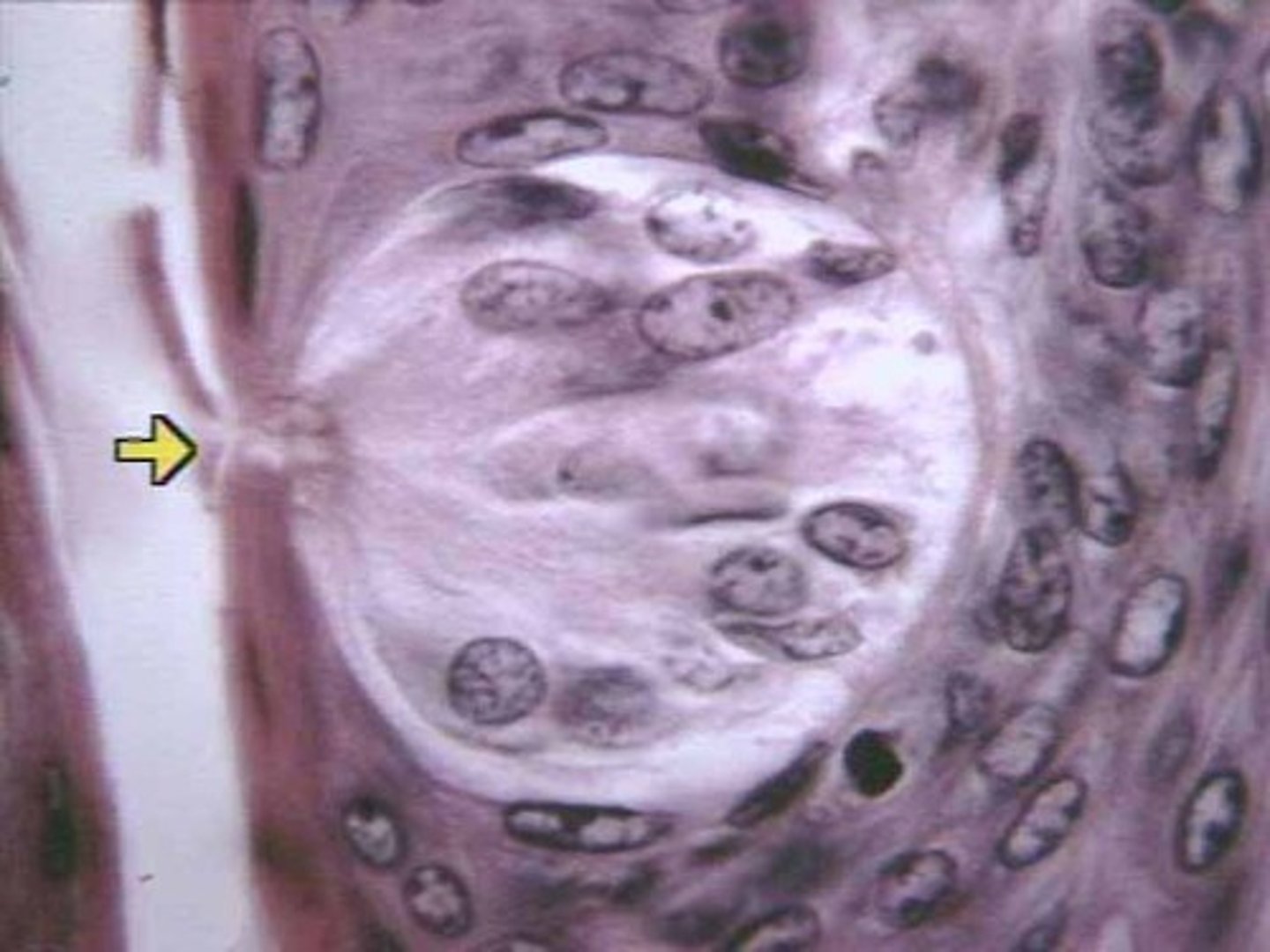
taste pore
taste buds
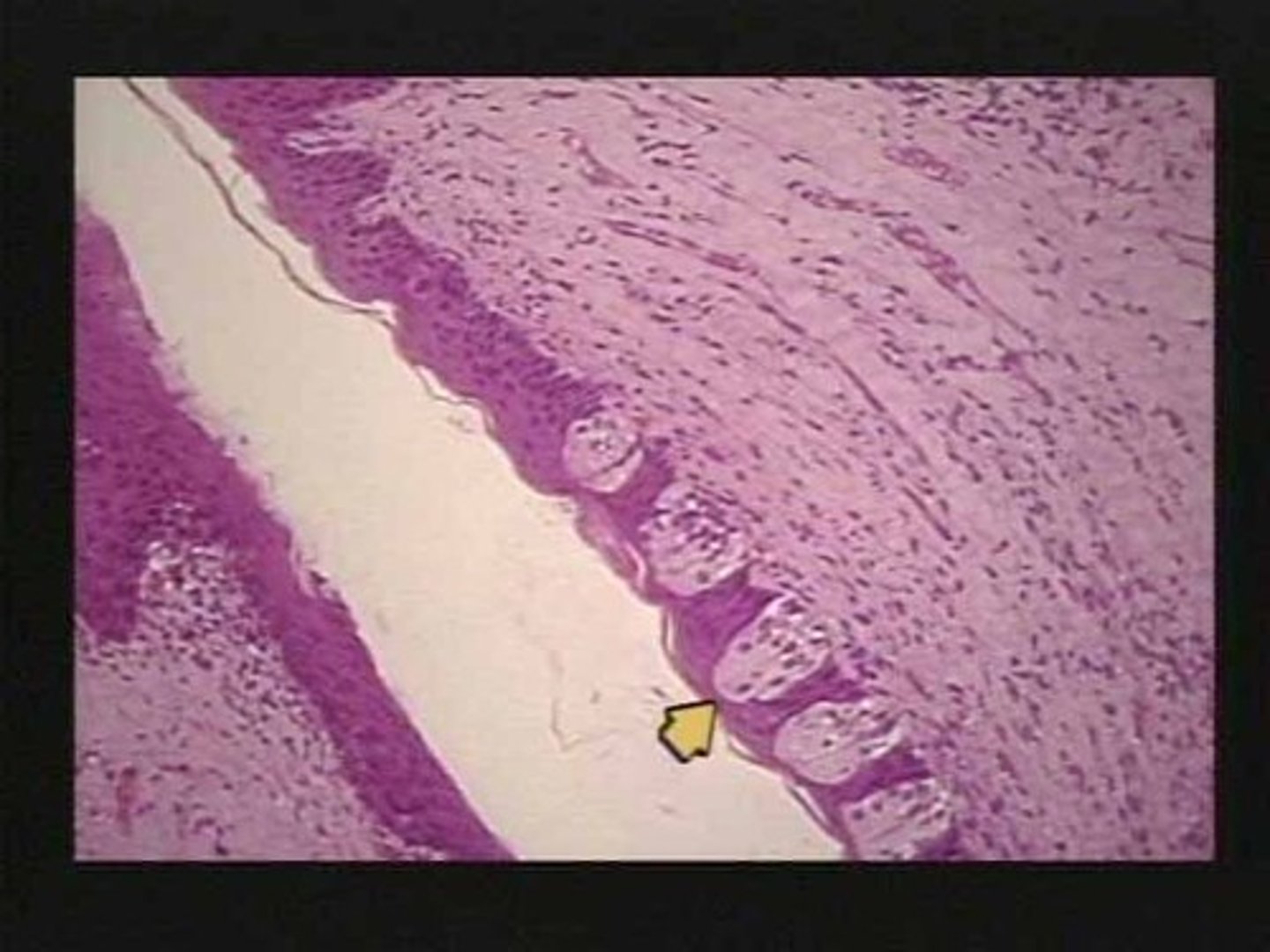
taste bud
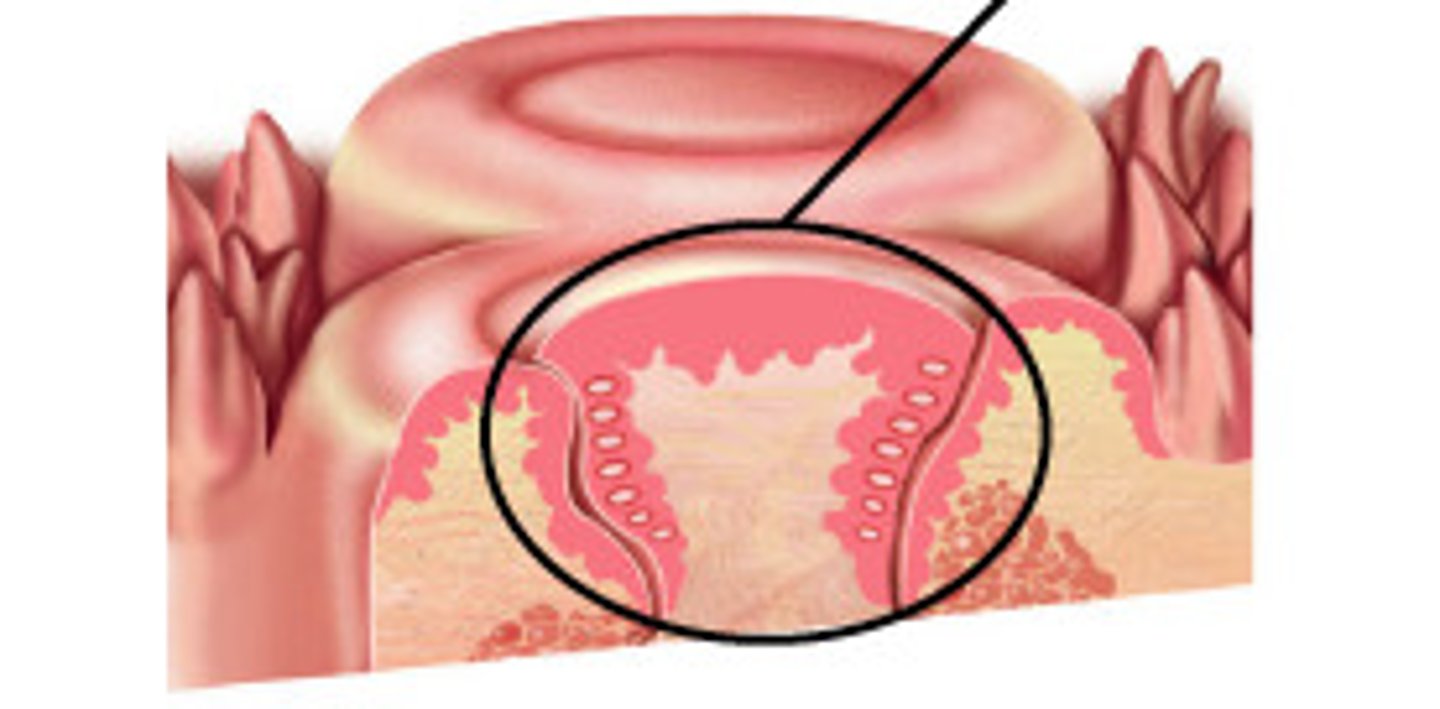
taste buds
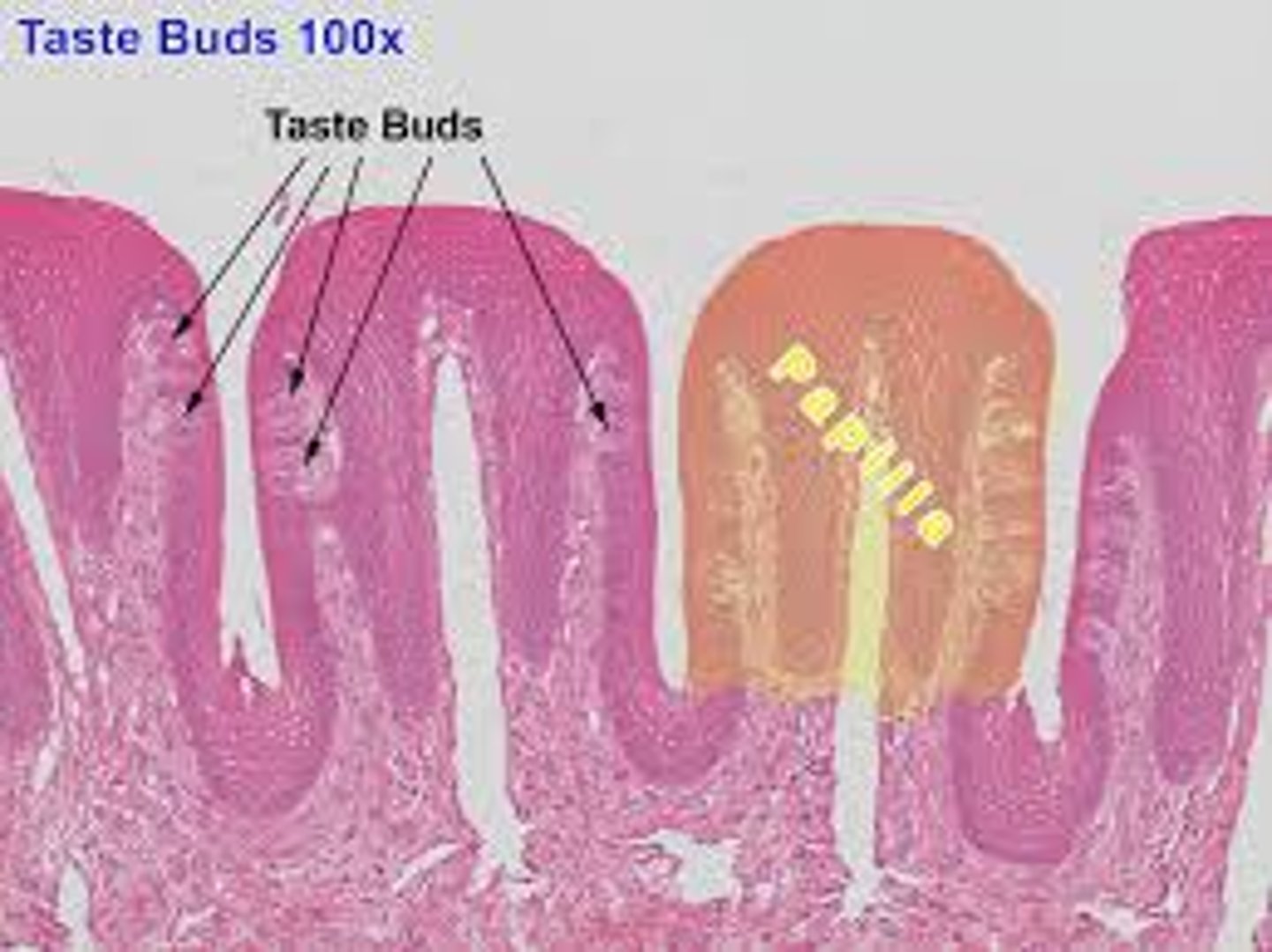
facial, glossopharyngeal, vagus
Three cranial nerves involved in gustation
Facial nerve
anterior 2/3 of tongue
Glossopharyngeal nerve
posterior 1/3 of tongue
Vagus nerve
epiglottis
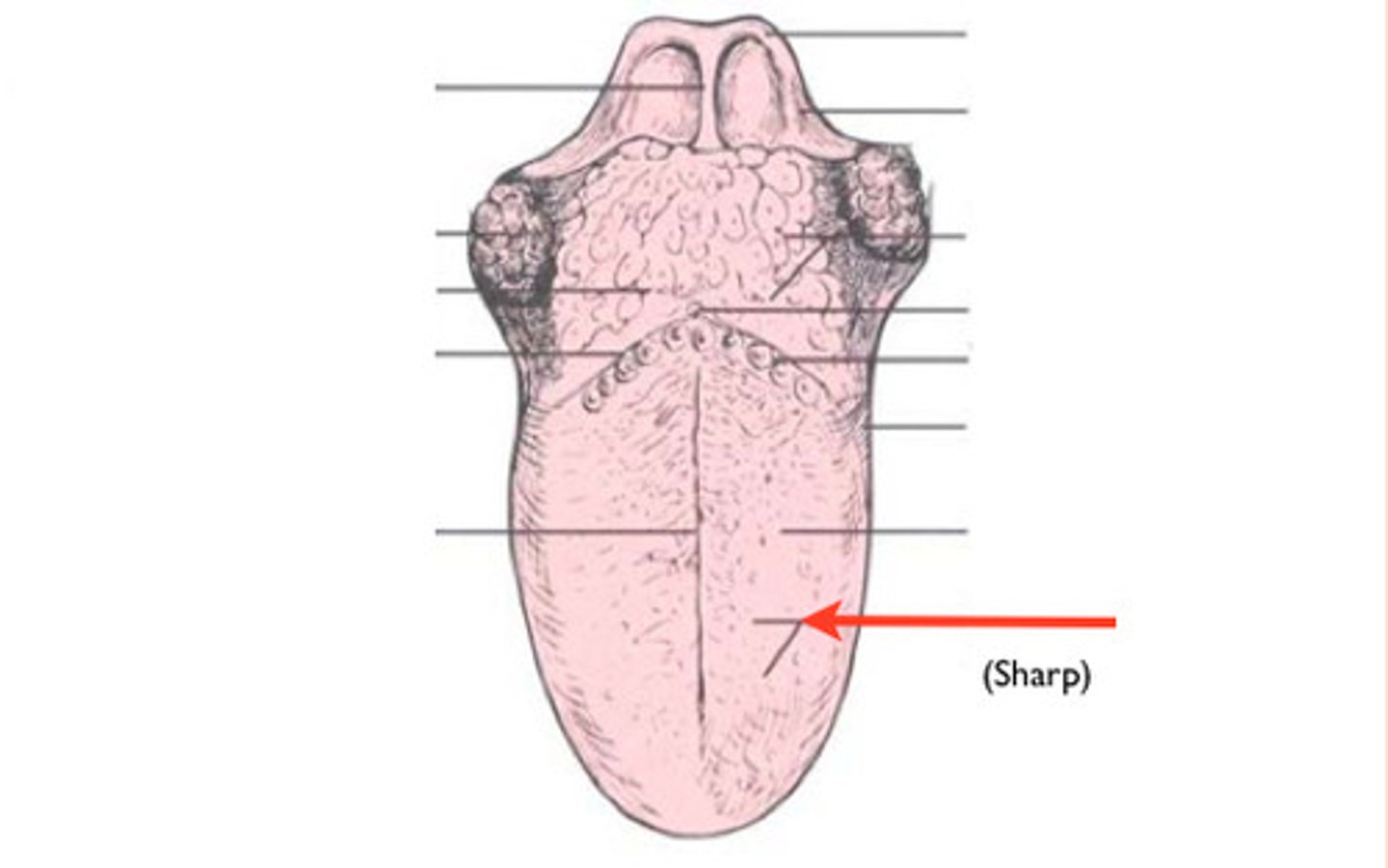
sweet, salty, bitter, sour, umami
5 basic tastes
sweet receptors
sugars, saccharine, some amino acids
sour receptors
respond to H+ ions or acids
salty receptors
respond to metal ions
bitter receptors
respond to alkaloids
umami receptors
respond to the amino acid glutamate and aspartate or the beefy taste of meat
 Note
Note  Flashcards (46)