Methods of Muscular Endurance Testing
 Studied by 0 people
 Call Kai
 Learn
Learn Practice Test
 Spaced Repetition
 Match
Match Flashcards
 Knowt Play
1/7

There's no tags or description
Looks like no tags are added yet.
Name | Mastery | Learn | Test | Matching | Spaced | Call with Kai |
|---|
No analytics yet
Send a link to your students to track their progress
8 Terms
what is muscular endurance/how is it assessed (overview)
-Muscular endurance is assessed as the ability of a muscle group to execute repeated muscle actions over a period of time sufficient to cause muscular fatigue or to maintain a specific percentage of the 1-RM for a prolonged period of time.
-Submaximal Force output (*15-20 reps)
-Common muscular endurance tests: Curl-up Test; Push-up Test; YMCA Bench Press
Curl-Up Test
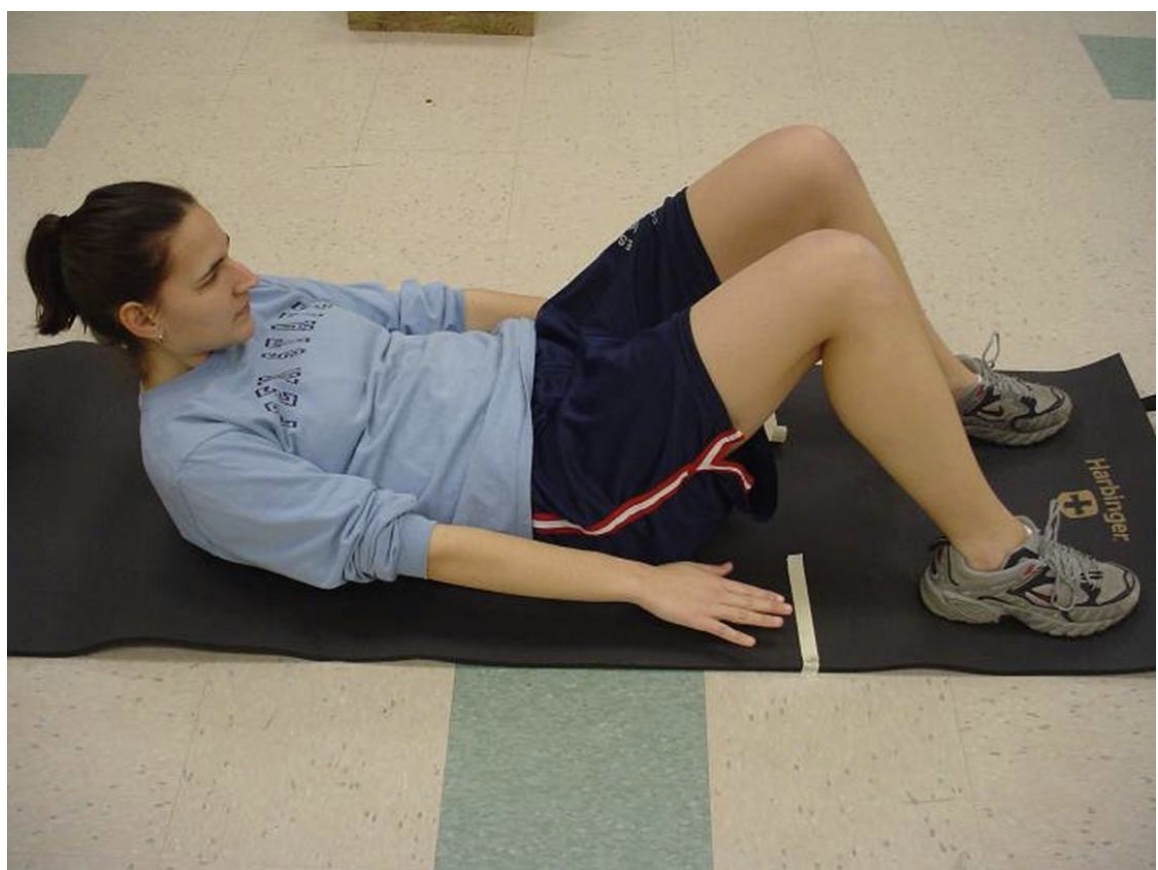
1. Two strips of masking tape are to be placed on a mat on the floor at a distance of 12 cm apart (for clients/patients <45 years) or 8 cm apart (for clients/patients ≥45 years).
2. Participants are to lie in a supine position across the tape, knees bent at 90 degrees with feet on the floor and arms extended to their sides, such that their fingertips touch the nearest strip. This is the bottom position.
3. To reach the top position, participants are to flex their spines to 30 degrees, reaching their hands forward until their fingers touch the second strip of tape.
4. A metronome is to be set at 50 beats/min. At the first beep, the subject begins the curl-up, reaching the top position at the second beep, returning to the starting position at the third, top position at the fourth, etc.
-Repetitions are counted each time the subject reaches the bottom position. (*up and down=1)
-The test is concluded either when the subject reaches 75 curl-ups, or the cadence is broken.
Push-up Test
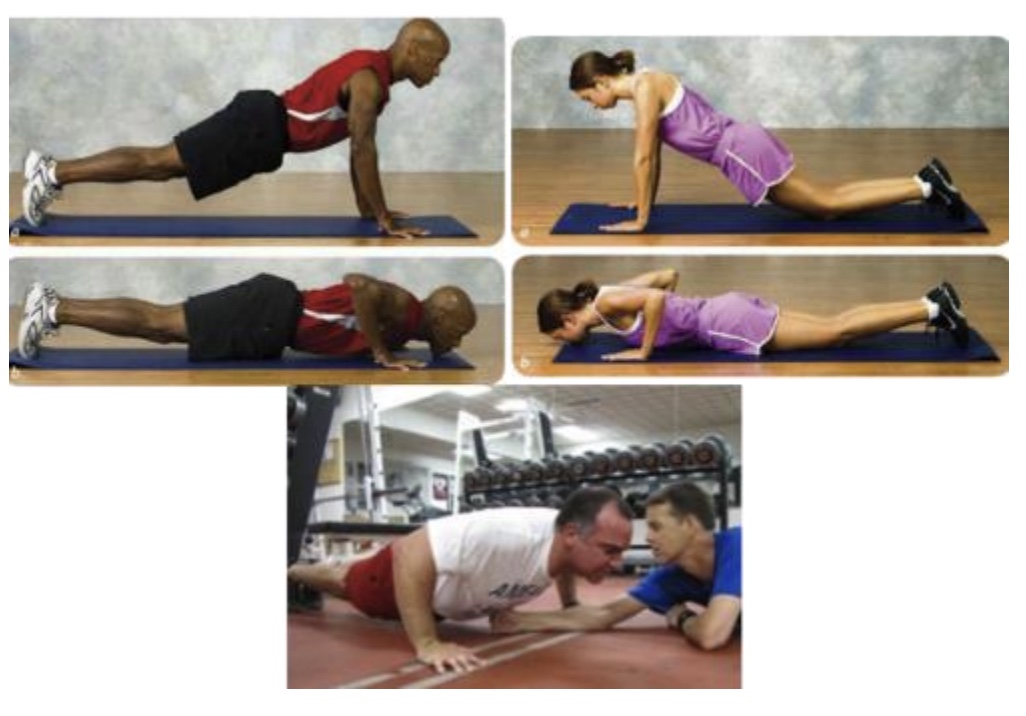
1. The push-up test is administered with men starting in the standard “down” position (hands pointing forward and under the shoulder, back straight, head up, using the toes as the pivotal point) and women in the modified “knee push-up” position (legs together, lower leg in contact with mat with ankles plantar-flexed, back straight, hands shoulder width apart, head up, using the knees as the pivotal point).
2. The client/patient must raise the body by straightening the elbows and return to the “down” position, until the chin (or chest) touches the mat. The stomach should not touch the mat.
3. For both men and women, the subject’s back must be straight at all times and the subject must push up to a straight arm position.
4. The maximal number of push-ups performed consecutively without rest is counted as the score.
5. The test is stopped when the client strains forcibly or unable to maintain the appropriate technique within two repetitions (or volitional fatigue).
-no cadence; do as many as you can; is modifiable if needed (ex: can do on bench; what if someone as lots of visceral adiposity?)
YMCA Bench Press
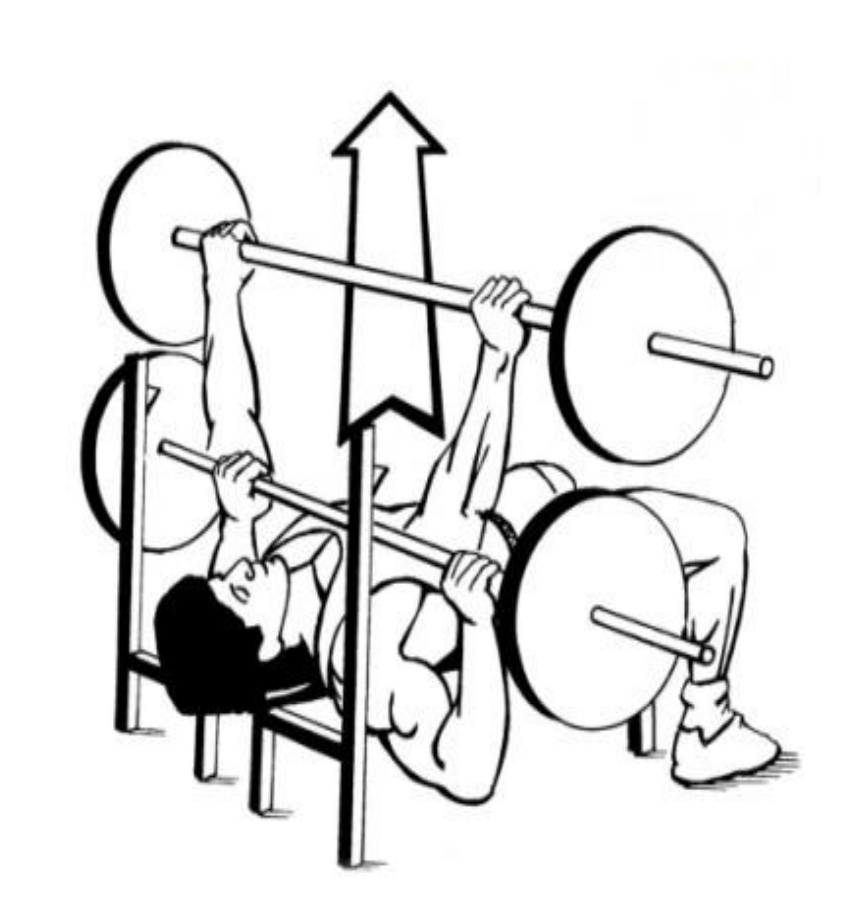
1. Males are evaluated using 80 lb barbell while women are evaluated using 35 lb barbell.
2. Participants are scored by the number of successfully completed reps performed consecutively without rest.
3. Set a metronome to a cadence of 60 beats/minute. The repetition cadence should be 30 reps/min. (*go until can’t or cadence lost)
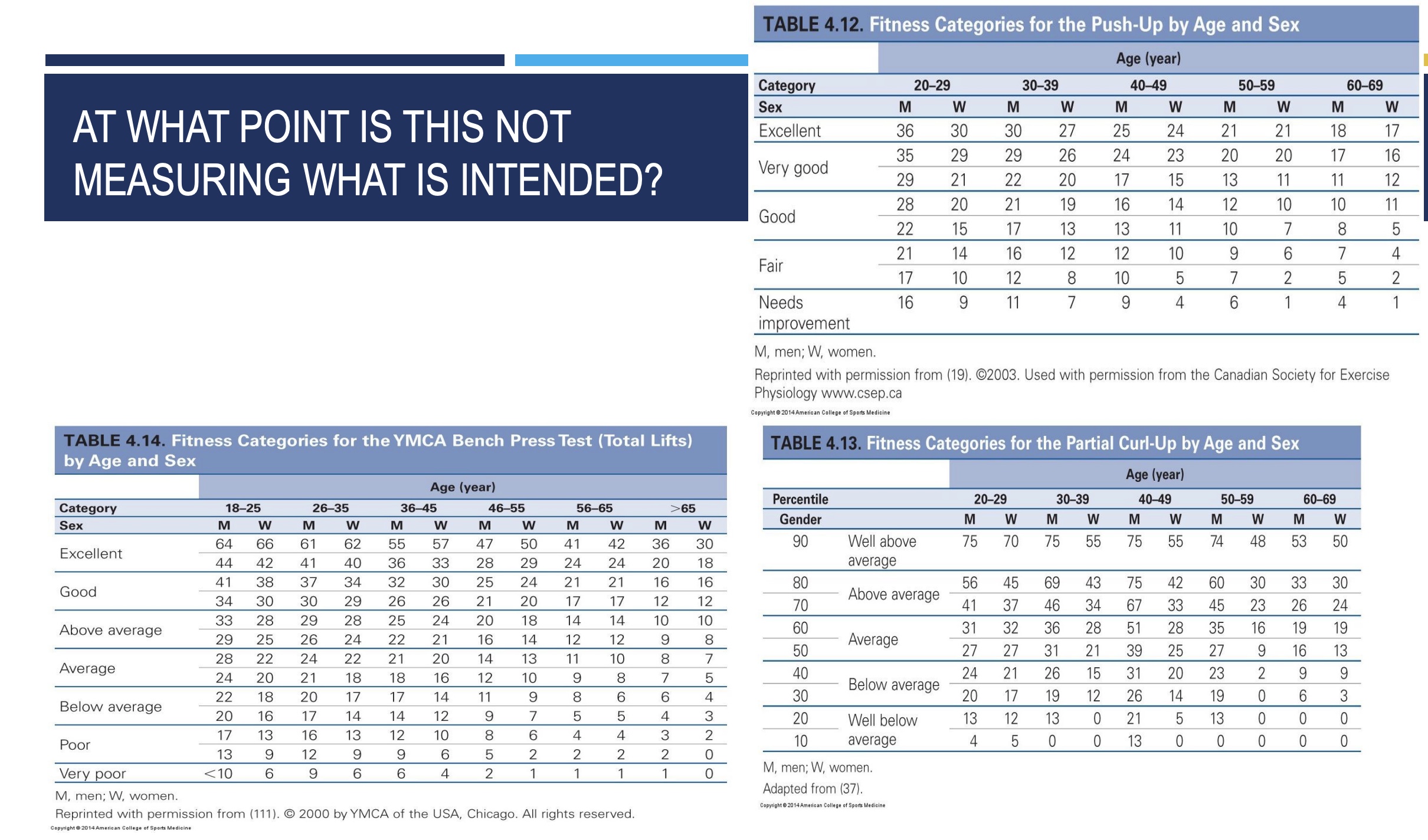
4. Based on gender and number of completed repetitions, fitness category can be determined by referring to Table 4.14 (ACSM Guidelines).
true or false: all these muscular endurance test always measure what they intend
false
-get to a point where no longer measuring what is intended
what is lacking in these test?
lower body!
Dynamometer (procedure + what collect)
-Patient setup: Secure the patient in a seated position on the isokinetic dynamometer. Use stabilizing straps across the chest, hips, and thigh to isolate movement to the knee joint. Align the machine's axis of rotation with the lateral epicondyle of the knee.
-Familiarization and warm-up: Before the test, have the patient perform several submaximal and then a few maximal practice repetitions to minimize learning effects and familiarize them with the equipment and protocol.
-Testing:
Set the dynamometer to the desired velocity.
Instruct the patient to perform 15-20 consecutive, maximal-effort knee extensions.
Provide standardized verbal encouragement (e.g., "Push as hard and as fast as you can") to motivate a maximal effort on every repetition.
-Data collection: The dynamometer records various metrics for each repetition, including:
Peak torque: The maximum force produced during a single repetition.
Total work: The force generated over the entire range of motion, providing a more comprehensive measure of performance.
Power: The rate at which work is performed.
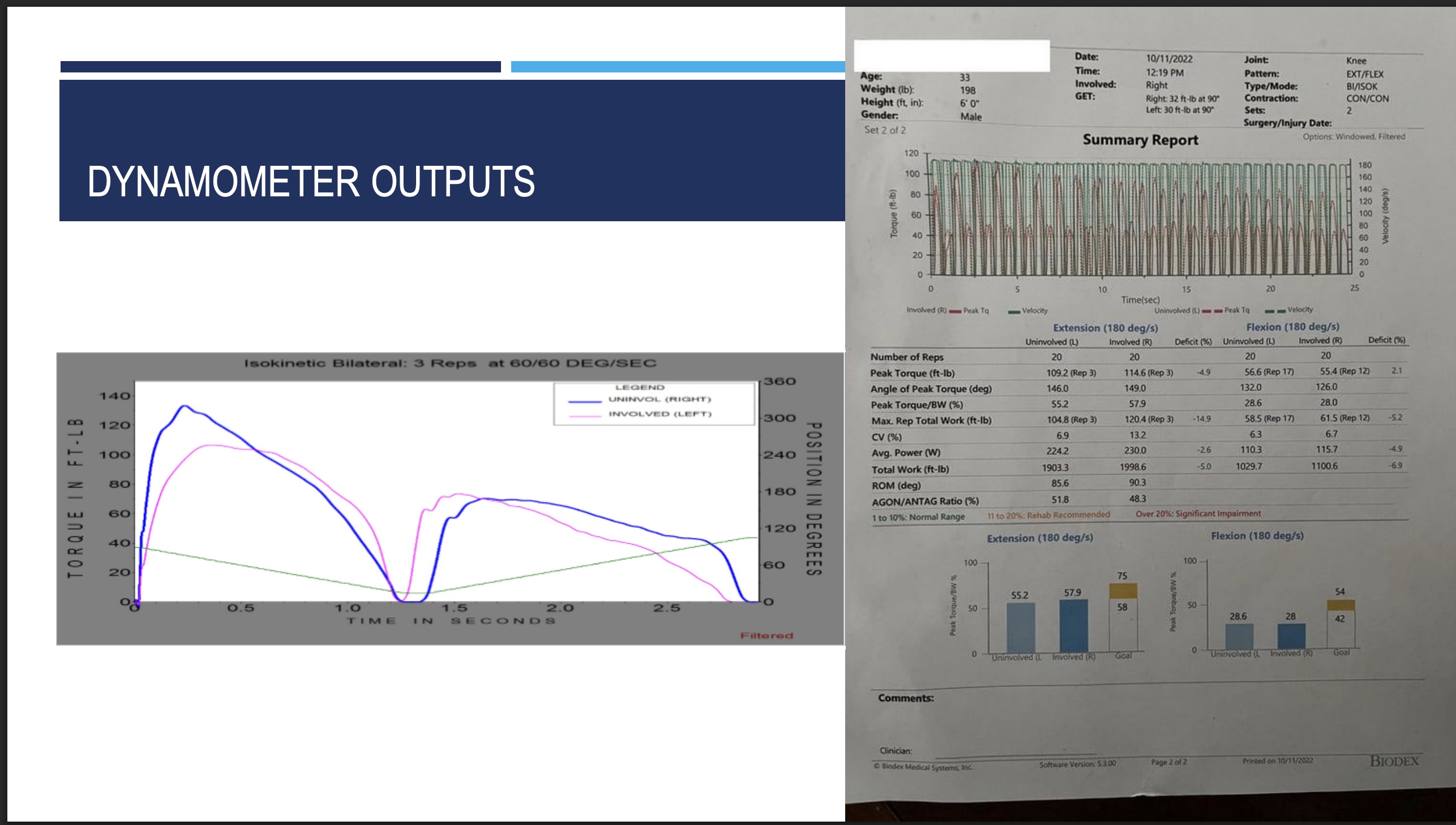
Graph
-loose torque when doing extension
Work Fatgiue
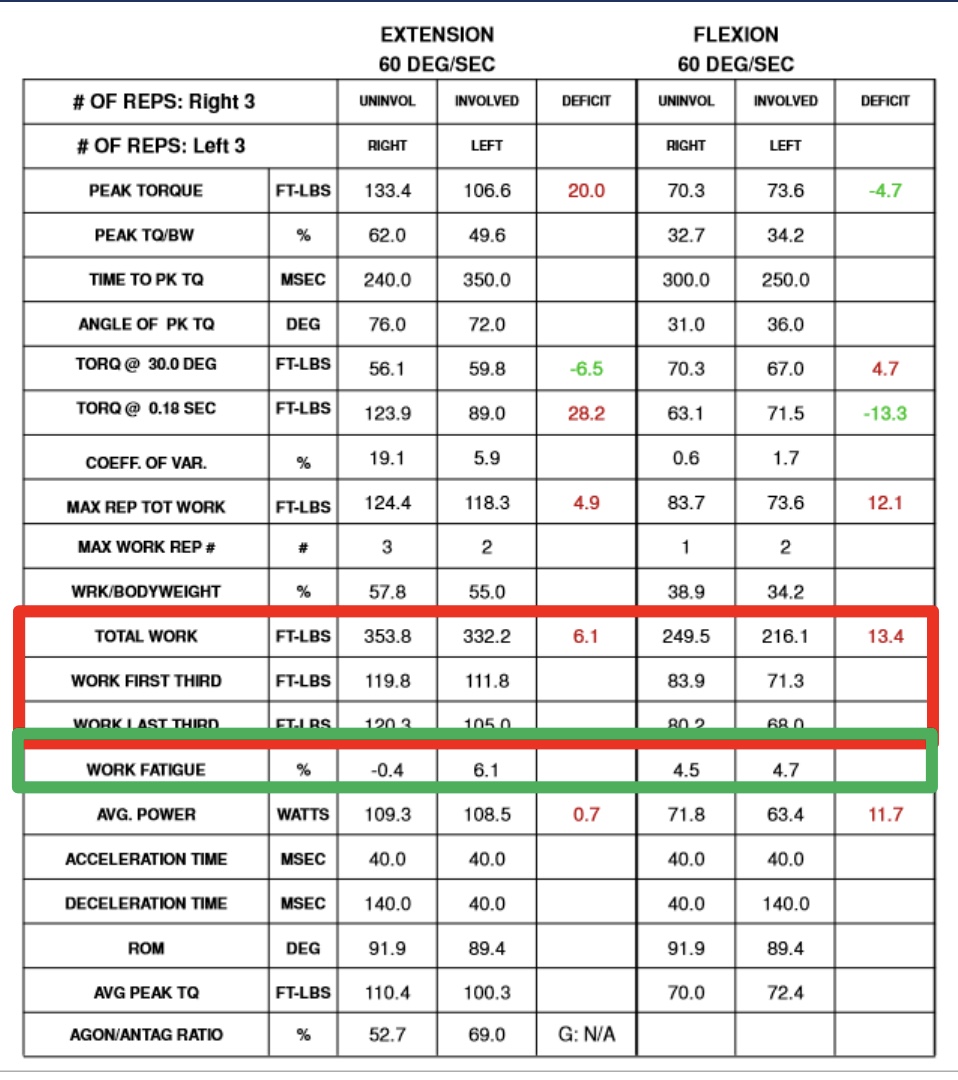
-To quantify fatigue, analysts compare performance metrics from the beginning of the protocol to the end. Several calculations can reveal the effects of fatigue:
-Fatigue index: The most common metric for quantifying fatigue is the fatigue index, which expresses the total work decline as a percentage. It is calculated by dividing the total work in the last third of the repetitions by the total work in the first third.
▪ A fatigue index value of 1.0 indicates no fatigue.
▪ A value of less than 1.0 indicates a decline in performance.
▪ Example: Quads: 120.3/119.8 = 1.004
▪ Hamstrings: 80.2/83.9 = .955
-Work Fatigue: (Work of First Third – Work of Last Third)/Work of First Third; Get a %. negative means improvement, + means Fatigue
*Work= f x d; good fit and endurance= 1:1 ration
 Note
Note  Flashcards (118)