Study Guide 2
 Studied by 5 people
 Call Kai
 Learn
Learn Practice Test
 Spaced Repetition
 Match
Match Flashcards
 Knowt Play
1/264

Earn XP
Description and Tags
For Chapters 6 through 8
Name | Mastery | Learn | Test | Matching | Spaced | Call with Kai |
|---|
No analytics yet
Send a link to your students to track their progress
265 Terms
What is the lack of oxygen called?
Hypoxia
Hypoxia
An insufficiency of oxygen in the body's tissues.
⤷ Lack of oxygen
What is the function of blood?
Transport oxygens, protects against pathogens, and promotes clotting to control bleeding
Blood
Made up of plasma, red and white blood cells, and platelets.
Plasma
A watery, salty fluid; makes up more than half the vol of blood. Red & white blood cells, as well as platelets are carried in the plasma.
⤷ Waste carbon dioxide from the cells also dissolves in plasma to be transported back to the lungs.
Red blood cells
(RBCs, erythrocytes, or red corpuscles)
Primary function; carry oxygen to the tissues.
⤷ Color of blood is red because hemoglobin molecules.
White blood cells
(WBCs, leukocytes, or white corpuscles)
Involved in destroying microorganisms (germs) and producing substances called antibodies, which help the body resist infections.
Platelets
Membrane-closed fragments of specialized cells.
⤷ When these fragments are activated, they release chemical clotting factors needed to form blood clots.
Structures within the respiratory system and its functions
Nasal Cavity, Pharynx, Larynx, Trachea, Bronchial Tubes, Lungs
⤷ Obtains oxygen and removes carbon dioxide from the body.
Structures within the musculoskeletal system and its functions
Bones, Joints, Muscles
⤷ Skeleton supports and protects the body, forms blood cells, and stores minerals. Muscles produce movement.
Structures within the cardiovascular system and its functions
Heart, Arteries, Veins
⤷ Pumps blood throughout the entire body to transport nutrients, oxygen, and wastes.
Structures within blood and its functions
Plasma, Red blood cells, White blood cells, Platelets
⤷ Transports oxygen, protects against pathogens, and promotes clotting to control bleeding.
Structures within the lymphatic system and its function
Tonsils / Adenoids, Thymus Gland, Spleen, Lymph Nodes, Lymphatic vessels
⤷ Helps to maintain the fluid balance of the body and contributes to the body's immune system.
Structures within the nervous system and its functions
Brain, Spinal Cord, Nerves
⤷ Receives sensory information and coordinates the body's response. It also controls the body’s voluntary and involuntary activity.
Structures within the digestive system and its functions
Oral Cavity, Pharynx, Esophagus, Stomach, Small Intestine, Large Intestine (colon), Liver, Gallbladder, Pancreas.
⤷ Ingests, digests, and absorbs nutrients for the body.
Structures within integumentary system and its functions
Skin, Hair, Nails, Sweat Glands.
⤷ Forms protective barrier and aids in temperature regulation.
Structures within endocrine system and its functions
Pituitary Gland, Pineal Gland, Thyroid Gland, Parathyroid Glands, Thymus Gland, Adrenal Glands, Pancreas, Testes, Ovaries.
⤷ Regulates metabolic / hormonal activites of the body.
Structures within renal/urinary system and its functions
Kidneys, Ureters, Urinary Bladder, Urethra.
⤷ Filters waste products out of the blood and removes them from the body.
Structures within male reproductive system and its functions
Testes, Epididymis, Vas Deferens, Penis, Seminal Vesicles, Prostate Gland.
⤷ Produces sperm for reproduction.
Structures within female reproductive system and its functions
Ovaries, Fallopian Tubes (Oviducts), Uterus, Vagina, Vulva, Breasts.
⤷ Produces eggs for reproduction and provides an environment and nutrients for growing baby.
Define Infarction
Tissue death due to inadequate blood supply (lack of O2).
Define Necrosis
Death of a cell or group of cells due to injury or disease.
Define Ischemia
An insufficient supply of oxygenated blood to an area of the body.
⤷ lack of blood flow
Define Hypoxia
An insufficiency of oxygen in the body’s tissues.
Define Pre-load
How much blood is returned to the heart before it contracts; how much the heart is filled.
Define Afterload
Function of SVR; it is how much pressure the heart has to pump against to force blood out into the system.
Define Systolic
Relating to the phase of the heartrate when the heart muscle contracts and pumps blood from the chambers into the arteries.
Define Diastolic
Relating to the phase of the heartrate when the heart muscle relaxes and allows the chambers to fill with blood.
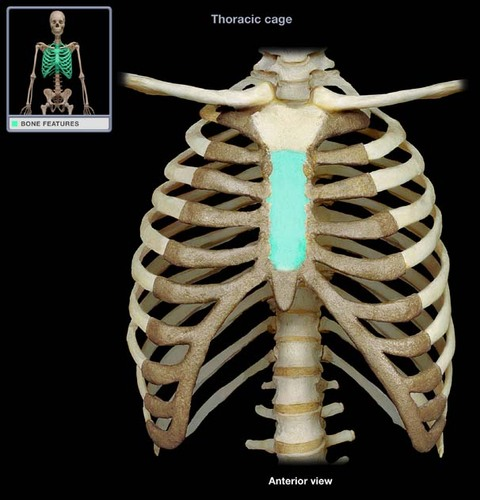
What part of the breastplate is this?
Body of Sternum
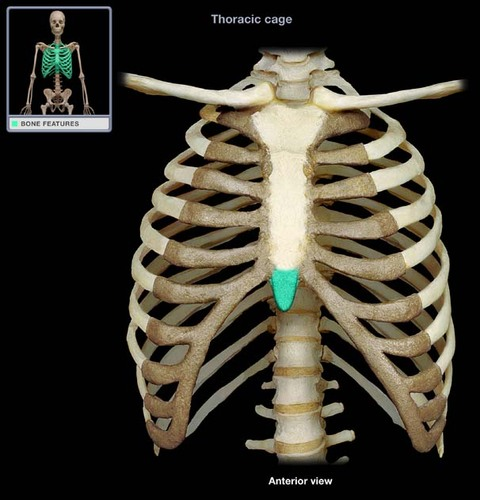
What part of the breastplate is this?
Xiphoid process
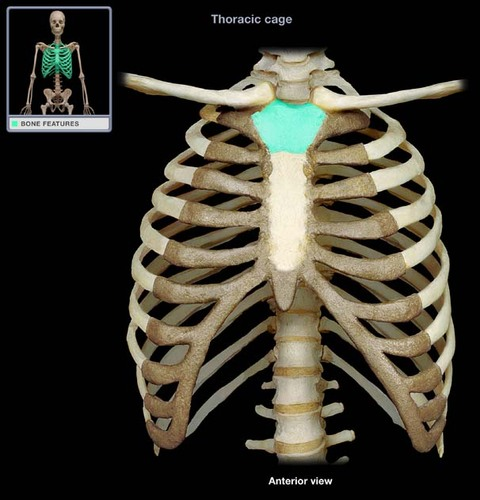
What part of the breastplate is this?
Manubrium
Tendons connect what to what?
Tendons connect muscle to bones
Ligaments connect what to what?
Liagaments connect bone to bone
What are the important arteries to know?
coronary arteries
aorta
pulmonary artery
carotid artery
femoral artery
brachial artery
radial artery
posterior tibial artery
dorsalis pedis artery
Perfusion
the supply of oxygen to and removal of wastes from the cells and tissues of the body as a result of the flow of blood through the capillaries
what do our bodies need?
oxygen, sugar, and water
Hypoperfusion
inability of the body to circulate adequate blood to the body’s cells to supply them with oxygen and nutrients. a life threatening condition. also called shock.
⤷ When perfusion becomes inadequate; could be from super low sugar levels, too low on water, or even too low on oxygen
the nervous system consists of what?
central nervous system (CNS)
brain and spinal cord
peripheral nervous system (PNS)
sensory nerves and motor nerves
autonomic nervous system
involuntary motor functions
sympathetic; ‘gas pedal’ fight or flight & parasympathetic; ‘the break’ when everything is ‘slow’
what consists of the integumentary system?
layers
epidermis
dermis
subcutaneous
epidermis
the outer layer of the skin, composed of dead cells that are continuously replaced
contains pigment granules and living cells in its deeper parts
lack blood vessels and nerves, making it less problematic for minor injuries
dermis
the inner (second) layer of skin, rich in blood vessels, nerves, sweat glands, sebaceous glands, and hair follicles, found beneath the epidermis
contains specialized nerve endings for touch, temperature, and pain
vulnerable to contamination and infection if exposed
subcutaneous
the layers of fat and soft tissues found below the dermis, providing shock absorption and insulation
injury to this layer can lead to contamination, bleeding, and pain
Endocrine system
Produces hormones that regulate many body activities and functions
Adrenal glands
Secretes epinephrine
when does shock occur?
when the cardiopulmonary system fails and cells become hypoperfused
when your blood sugar gets too low, the first thing affected is what?
brain
oxygen gets thinner everytime we are in a higher elevation, does the percent of oxygen change?
no, it does not change. it remains the same percent; 21
homeostasis
A state of balance among all the body systems needed for the body to survive and function correctly.
In homeostasis, body levels of acid, blood pressure, blood sugar, electrolytes, energy, hormones, oxygen, proteins, and temperature are constantly adjusted to respond to changes inside and outside the body, to keep them at a normal level.
Hypertension
high blood pressure; a condition where blood pressure is consistently 130/80 mmHg or higher
hypotension
low blood pressure; a condition where blood pressure is below the normal range, potentially affecting vital organs like the brain and heart — less than 90/60 mmHg
Infancy (birth-1y/o)
Heart Rate H/R | Respiratory Volume R/V | Respiratory Rate R/R | Systolic B/P |
100-170bpm: Newborns
90-160bpm: Infant to 1y/o | 7-8mL/kg at birth,
increasing to 10-15mL/1y/o | 30-60/rpm (0-6mo.)
24-30/rpm (6-12mo.) | 50-70mmHg for Newborns
About 90mmHg up to 1y/o |
Toddler (1y/o - 3y/o)
Heart Rate H/R | Respiratory Rate R/R | Systolic B/P |
80-140/bpm | 24-40/rpm | For ages 1-10y/o: Mean systolic pressure is 90+ (age in years x2)
Ex: Systolic pressure for 2y/o is 92 |
Preschool (3y/o - 5y/o)
Heart Rate R/R | Respiratory Rate R/R | Systolic Blood Pressure B/P |
70-120/bpm | 22-34/rpm | For ages 1 to 10y/o.: Mean systolic pressure is 90+ (age in years x2), so mean systolic pressure for 2y/o is 94BP.
This is an average, and individual blood pressures vary. |
School Age (6y/o - 12y/o)
Heart Rate R/R | Respiratory Rate R/R | Systolic Blood Pressure B/P |
65-120/bpm | 18-30/rpm | For ages 1 to 10y/o: mean systolic pressure is 90+ (age in years x2), so mean systolic pressure for 2y/o is 94. This is an average, and individual blood pressures vary. |
Adolescence (13y/o - 18y/o)
Heart Rate H/R | Respiratory Rate R/R | Systolic Blood Pressure B/P |
60-100/bpm | 12-20/rpm | About 107-117B/P |
Early Adulthood (19y/o - 40y/o)
Heart Rate H/R | Respiratory Rate R/R | Systolic Blood Pressure B/P |
60-100/bpm | 12-20/rpm | Less than 120B/P |
Middle Adulthood (41y/o - 60y/o)
Heart Rate H/R | Respiratory Rate R/R | Systolic Blood Pressure B/P |
No significant change | No significant change | No significant change |
Late Adulthood (61y/o +)
Heart Rate H/R | Respiratory Rate R/R | Systolic Blood Pressure B/P |
Changes depend on health status | Changes depend on health status | Changes depend on health status |
aerobic metabolism
the cellular process in which oxygen is used to metabolize glucose. Energy is produced in an efficient manner, with minimal waste products.
anaerobic metabolism
the cellular process in which glucose is metabolized into energy without oxygen. Energy is produced in an inefficient manner, with many waste products.
homeostasis is regulated where?
in the brain and is maintained through a delicate balance of nervous system feedback and messaging
hypothalamus and the medulla oblongata, receive sensory input and recognize challenges such as increasing carbon dioxide levels, hypoxia, and blood loss.
cardiac output
The amount of blood pumped out of a ventricle in one minute.
compensated shock
Period when the patient is developing shock but the body is still able to maintain perfusion.
⤷ BP & HR are elevated ↑, delayed capillary response, slight mental status; skin signs would be pale, cool, clammy/diaphoretic/sweating
what are the four distinct groupings of shock?
hypovolemic shock
distributive shock
cardiogenic shock
obstructive shock
hypovolemic shock
shock resulting from blood or fluid loss
obstructive shock
a term commonly used to describe the different conditions that block the flow of blood and cause hypoperfusion
cardiogenic shock
shock, or lack of perfusion, brought on not by blood loss but by the heart’s inadequate pumping action. it is often the result of a heart attack (MI) or congestive heart failure
decompensated shock
period when the body can no longer compensate for low blood volume or lack of perfusion; late signs such as decreasing blood pressure becomes evident
⤷ HR, RR, & BP drop ↓, altered mental status
distributive shock
hypoperfusion due to a lack of blood vessel tone. blood vessel dilation leads to decreased pressure within the circulatory system
dead air space
air that occupies the space between the mouth and alveoli but that does not actually reach the area of gas exchange
Pump with average stroke volume of about what (output)?
70 mL per contraction
stroke volume
the amount of blood ejected from the heart in one contraction
cardiac output
the amount of blood ejected from the heart in one minute (heart rate x stroke volume)
stages of shock
compensated
decompensated
irreversible
edema
swelling associated with the movement of water into the interstitial space
CF or cerebrospinal fluid
the fluid that surrounds the brain and spinal cord
shock-absorbing
why is glucose important?
crucial for the body’s energy needs
autonomic nervous system
part of the peripheral nervous system responsible for controlling involuntary motor functions, such as digestion and heart rate
cervical
7 vertebrae (C1-C7); atlas C1 — axis C2, neck region
Thoracic
12 vertebrae (T1-T12); ribs & upper back
Lumbar
5 vertebrae (L1-L5); lower back
Sacral
5 vertebrae (S1-S5); back wall of pelvis (5 fused)
Coccyx
4 vertebrae (3-5 fused); tailbone
function of respiratory system
the system of the nose, mouth, throat, lungs, and muscles that brings oxygen into the body and expels carbon dioxide. also called pulmonary system.
describe the flow of blood through the body
pulmonary veins
blood vessels that transport oxygenated blood from the lungs back to the left atrium of the heart
pulmonary arteries
blood vessels that carry oxygen-poor blood from the right side of your heart to your lungs
flow of blood through the body
blood flow starts on the right side of the heart
right blood = deoxygenated blood (colored blue)
it’s low in oxygen & high in carbon dioxide
goal: get blood to lungs
deoxygenated blood flows into right atrium via inferior & superior vena cava
then blood flows down tricuspid valve
it’s 1 of 2 atrioventricular valves, which connect atria (top chamber) to ventricles (bottom chambers)
blood enters the right ventricle, which then pushes blood up through pulmonic valve
semilunar valves connect great vessels to ventricles (bottom chamber of heart)
blood enters pulmonary artery, which will take deoxygenated blood away from heart & then travel to the lungs
lungs take deoxygenated blood, remove the excessive carbon dioxide (that you exhale out) & replenish it with oxygen
blood leaves lungs & returns to heart via pulmonary veins
it enters the left atrium, flows down the bicuspid valve, & enters left ventricle
left ventricle pushes blood up through the aortic valve
blood travels through aorta and to rest of body
cell
cell membrane
nucleus
mitochondria
endoplasmic reticulum
water and electrolytes
cell membrane
an outer layer that protects the cell and controls what enters and exists, maintaining a balance of water and electrolytes
nucleus
acts as the control center, housing DNA, which is crucial for cell reproduction and function
mitochondria
known as the powerhouse, they convert glucose and nutrients into energy (ATP), which fuels cellular activities
endoplasmic reticulum
involved in synthesizing proteins and lipids, essential for cell maintenance and growth
water and electrolytes
cells need a proper balance of water and electrolytes like sodium and potassium to function properly, enabling processes like nerve transmission and muscle contraction
what side is your ulna located on?
medial (pinky) side
what side is your radius located on?
lateral (thumb) side
What happens when you have pulmonary edema?
Fluid gets into the alveoli. Gas exchange cannot take place because the O2 cannot move through the fluid.
If you have burns on your body, what are we concerned with?
We are concerned with treating for shock, Pt is losing fluids through the interstitial space.
What does insulin allow for glucagon to do? And where is it stored?
Insulin allows Glucagon to concert glucose to glycogen and the glycogen is stored in the liver.
Where is glycogen stored?
Glycogen is stored in the liver.
 Note
Note  Flashcards (86)