6.0 adverse drug reactions
 Studied by 0 people
 Call with Kai
 Learn
Learn Practice Test
 Spaced Repetition
 Match
Match Flashcards
 Knowt Play
1/13

There's no tags or description
Looks like no tags are added yet.
Name | Mastery | Learn | Test | Matching | Spaced | Call with Kai |
|---|
No study sessions yet.
14 Terms
adverse drug reactions
unwanted or harmful reactions which occur after administration of a drugs and is suspected/ known to be due to the drugs
ADRs is a response to a drug that is
noxious,
unintended
and occurs at doses normally used for
prophylaxis,
diagnosis
or treatment
of disease/ modification of physiological function
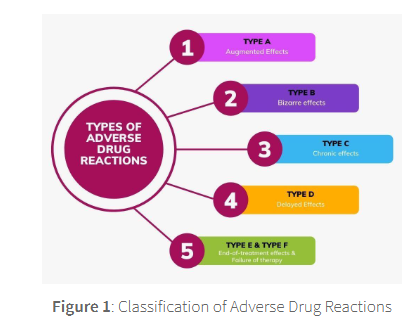
ADR classified into 5 different categories
augmented
bizarre
continuing, chronic
delayed
end of use/failure of therapy
type A reaction = augmented
result from an exaggeration of a drug’s normal pharmacological action when given at the usual therapeutic dose + is normally dose dependent
example augmented reaction is
bleeding due to warfarin
augmenterd reactions include those not directly related to the desired pharmacological action of the drug
for example constipation due to codine
augmented reactions commonly known as
side effects
Type B bizarre reactions
reactions not expected from the known pharmacological action of the drug
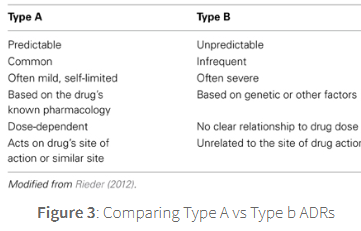
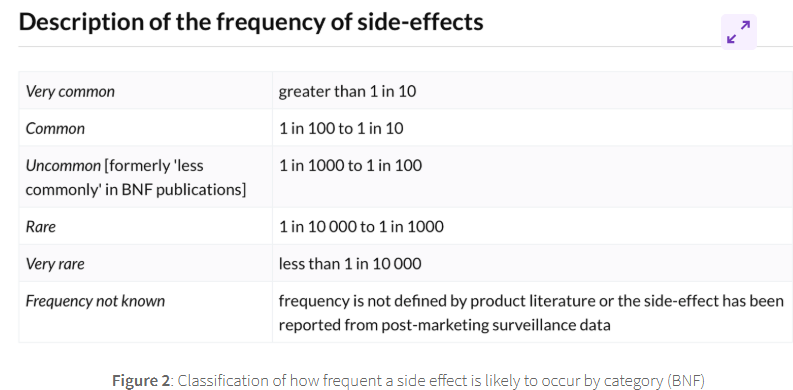
bizarre reactions are less common and so may only be discovered for the first time after a drug as already been made available for general use
example: anaphyaxis with penicilin or skin rashes with antibiotics
type C continuing reaction persist for a relatively long time after the initial reaction
example: osteonecrosis of the jaw in patiens prescribed bisphosphonate drugs for long periods of time 5-10 years
type D delayed reactions
apparent some time after the use of a medicine
the timing off these may make them more difficult to detect
example@ cholestatic jaundice which cna occur up to 6 weeks after a tatient takes flucloxacilin
Type E end of use reactions associated with the withdrawal of a medicine
EXAMPLE: anxiety after withdrawal of tricyclic antidepressants used to treat IBS
 Note
Note  Flashcards (63)