Disability History Final Exam
 Studied by 0 people
 Call Kai
 Learn
Learn Practice Test
 Spaced Repetition
 Match
Match Flashcards
 Knowt Play
1/104

There's no tags or description
Looks like no tags are added yet.
Name | Mastery | Learn | Test | Matching | Spaced | Call with Kai |
|---|
No analytics yet
Send a link to your students to track their progress
105 Terms
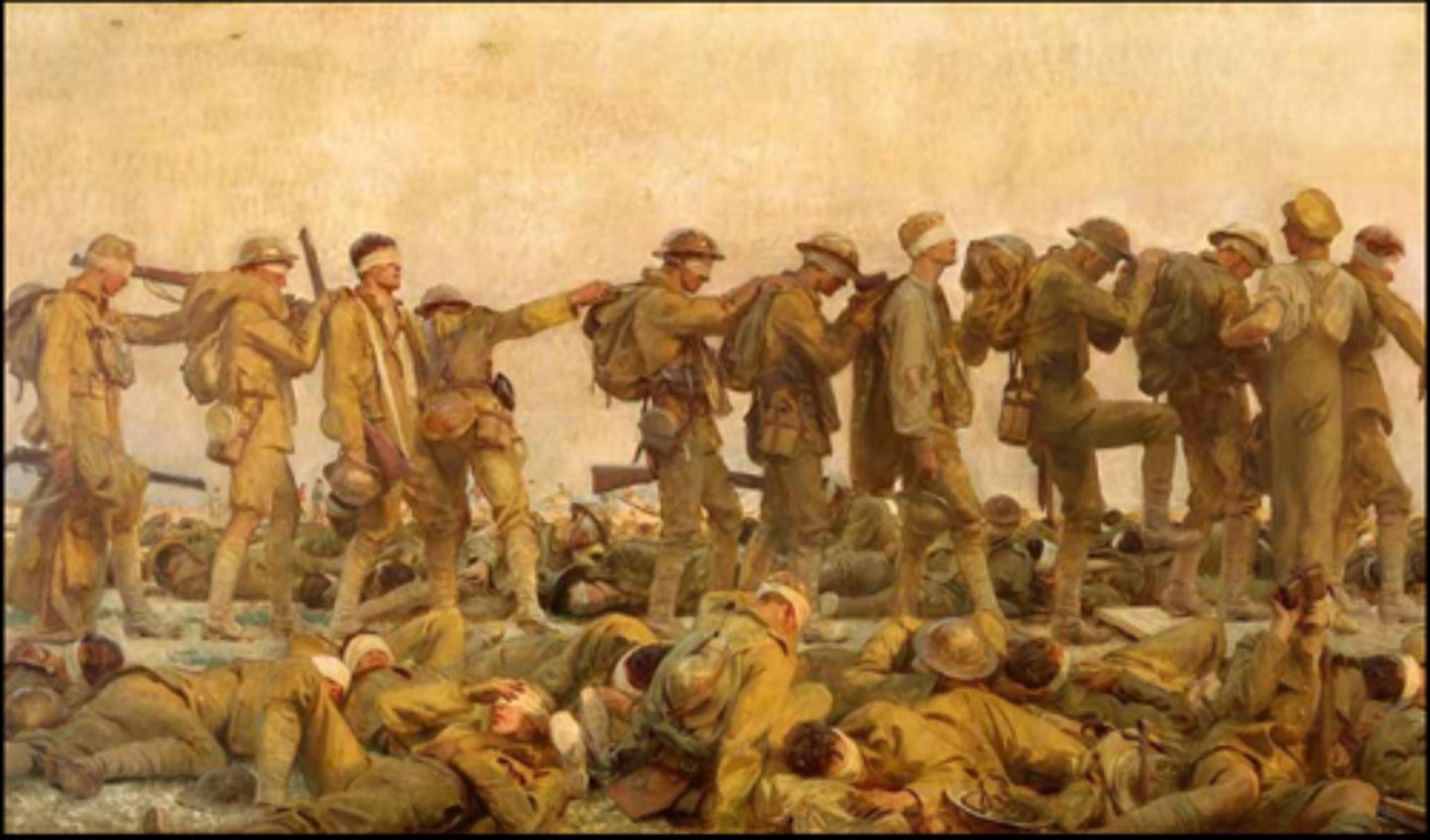
Gassed
A large oil painting by John Singer Sargent, commissioned post-World War I by the British government to memorialize the medical services of war, depicting blinded British soldiers from mustard gas.
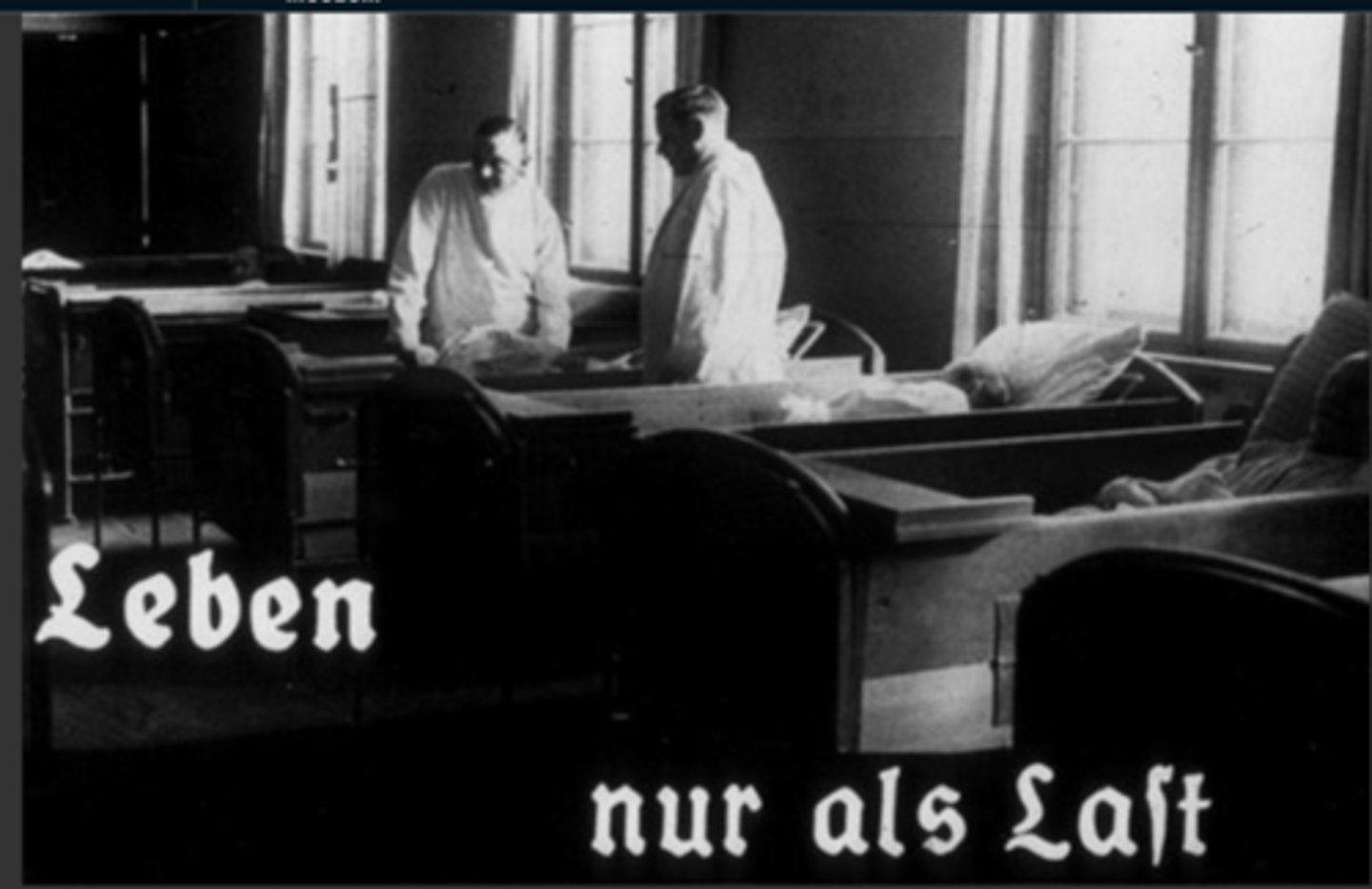
Nazi Eugenics Propaganda
A 1930 image titled 'Leben Nur Als Last' that reinforces the idea of disabled individuals as anonymous burdens, presenting Nazi ideology as a reasonable necessity.
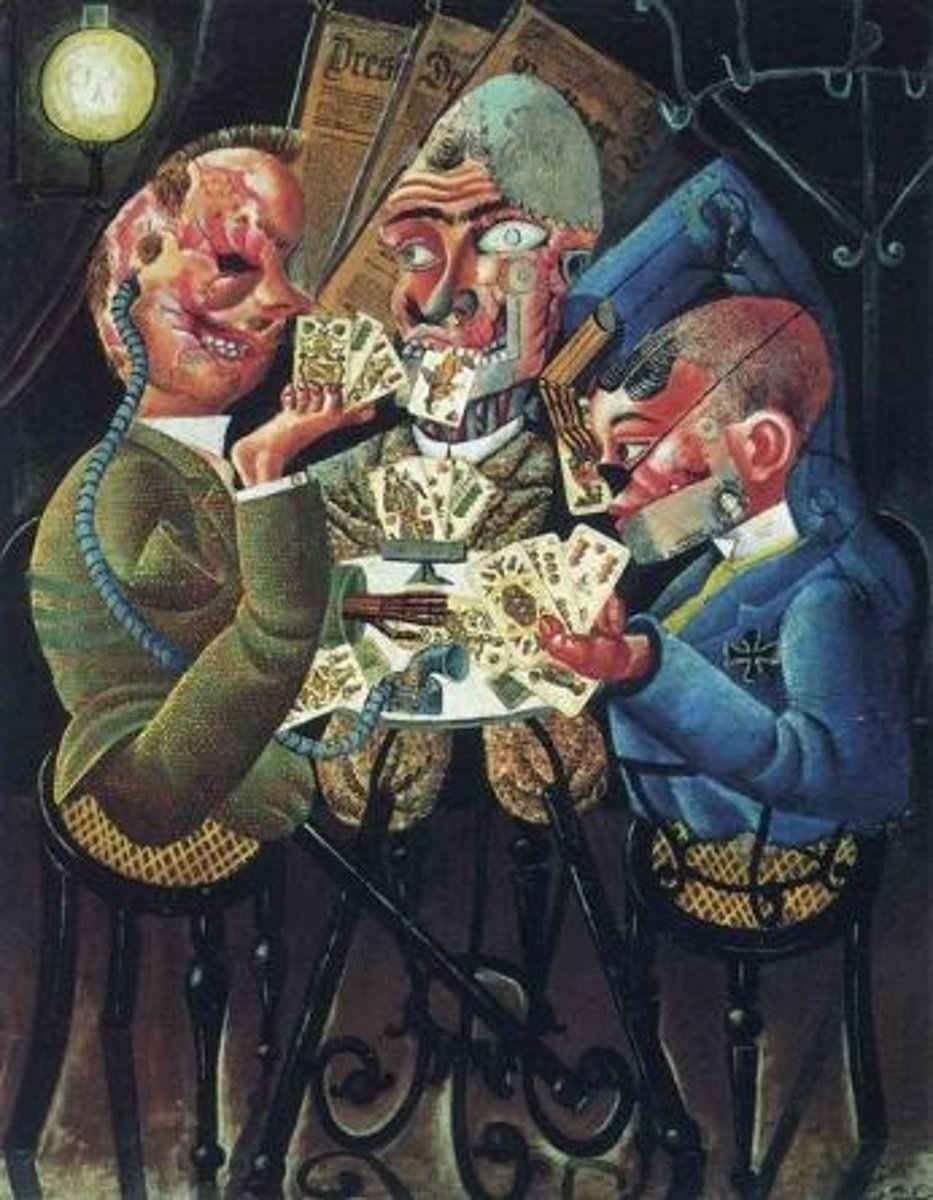
Oil on Canvas
A painting by Otto Dix depicting three mutilated World War I veterans at a café, highlighting how war dehumanizes individuals into broken machines.
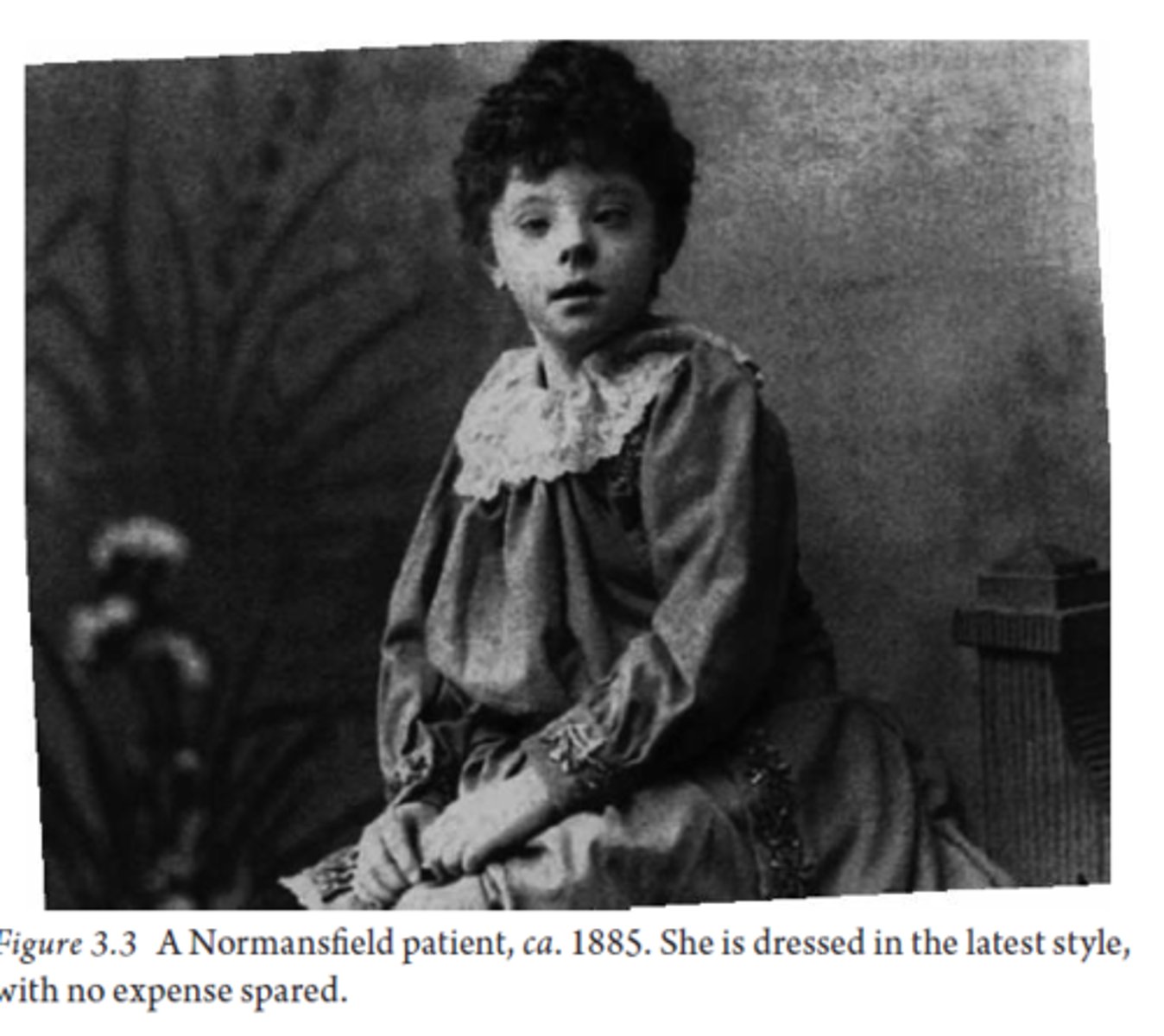
A Normansfield Patient
A portrait of Clementine F. 'Tillie' Eadie, indicating genetic or developmental disability, challenging beliefs about the visibility of disabled children in the 19th century.
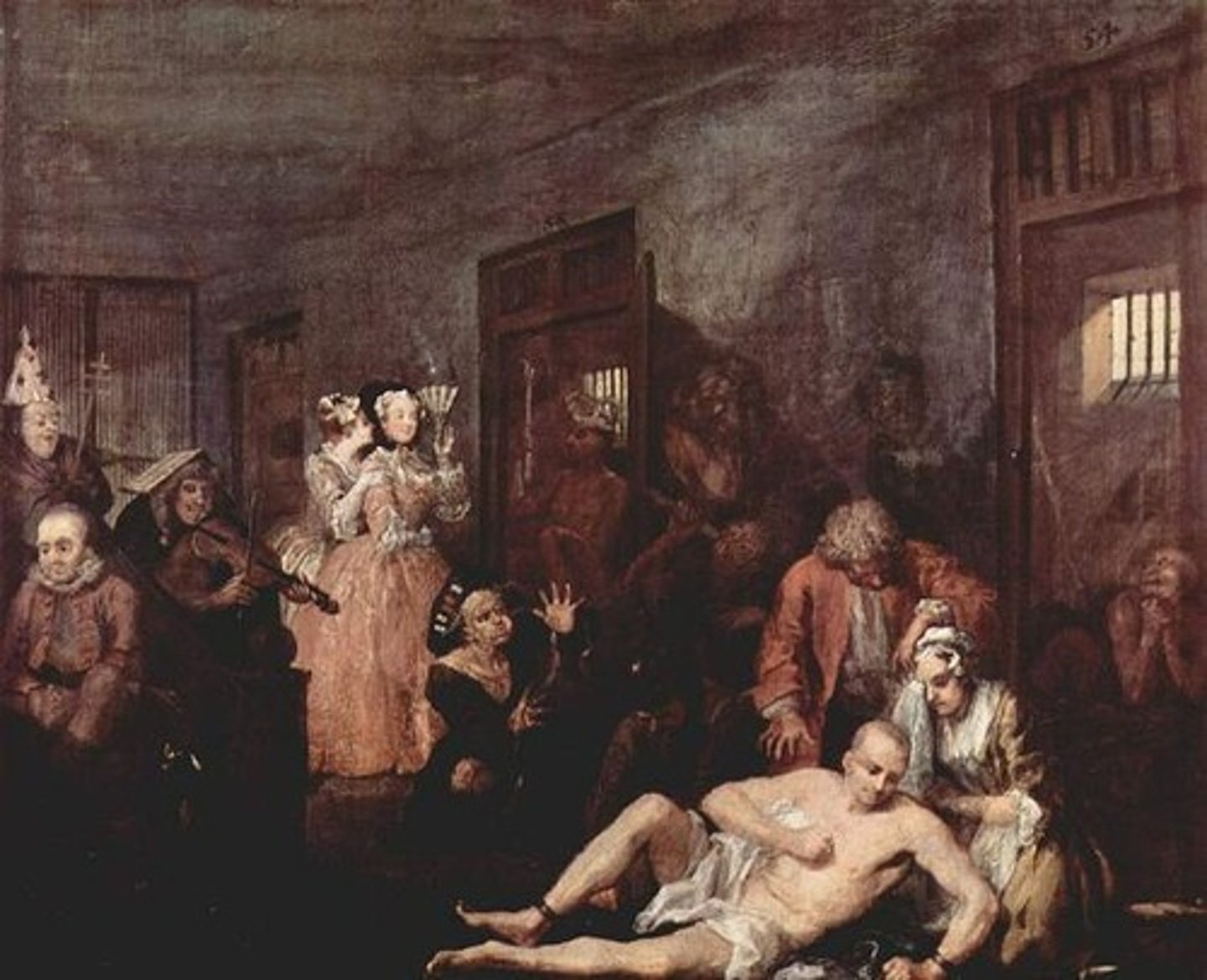
The Madhouse
A depiction of the overcrowded and neglected conditions of early asylums, which were primarily prisons rather than healing places.
Adolph Hitler
Oversaw Aktion T4, a Nazi program to exterminate disabled people deemed 'unworthy of life.'
Alice of Battenberg
A deaf royal who sheltered Jewish families during WWII and had schizophrenia but was functional and compassionate.
Alice Cogwell
Deaf from illness at age 2.
Anne Cooper Hewitt
One of the richest women in America whose mother had her sterilized to increase inheritance.
Bertha Pappenheim
An early feminist and social reformer who documented mental illness under the pseudonym Anna O.
Bishop van Galen
A Catholic bishop who publicly opposed the Nazi euthanasia program.
Carrie Buck
Diagnosed as feeble-minded, she sued to prevent being sterilized and was a traumatic experience survivor.
Chang and Eng Bunker
Conjoined twins who were exhibited in freak shows and later married and had children.
Charles Byrne
Known as the 'Irish Giant,' whose body was displayed against his will, raising ethical issues about bodily autonomy.
Charles Darwin
Widely known for his contributions to evolutionary biology, misused by eugenicists to justify discriminatory practices against disabled people.
Charles Davenport
An American eugenicist who pushed for sterilization laws targeting disabled individuals.
Charles Stratton
(Tom Thumb) Little Person, exhibited by P.T. Barnum, lived a public life that combined empowerment and exploitation.
Dorothea Dix
Advocated for humane treatment of people with mental illness, pushing for the creation of mental asylums.
Elizabeth Scott-Sanderson
A reformer associated with early institutional care and nursing for disabled individuals.
Eunice Kennedy Shriver
Founded the Special Olympics, promoting inclusion and respect for individuals with intellectual disabilities.
Francis Galton
Founder of eugenics.
Franklin Delano Roosevelt
Had polio and used a wheelchair; did not hide it; has a statue of him in a wheelchair.
Hans Asperger
Studied children with autism; his legacy is controversial due to alleged cooperation with Nazi ideology.
Harold Gillies
Reconstructed faces of injured WWI soldiers; considered the father of modern plastic surgery.
Jean-Martin Charcot
Studied hysteria and neurological conditions; mentor to Freud.
John Langdon-Down
Described the condition now known as Down syndrome.
Jonas Salk
Developed the polio vaccine.
Joseph Mengele
Nazi doctor who performed horrific experiments on disabled and marginalized individuals.
Joseph Merrick
Elephant Man; suffered from severe deformities and was both exploited and respected.
Julia Pastrana
"Baboon Lady"; a woman with hypertrichosis was exhibited in freak shows.
Karl Brandt
Nazi physician who led the euthanasia program targeting disabled people.
King Nebuchadnezzar
Biblical figure interpreted by some as having experienced a mental health crisis or disability.
Laurent Clerc
A deaf educator who co-founded the first American school for the deaf.
Louis Agassiz
A scientist whose racial theories were used to justify inequality, influencing early eugenic thoughts.
Lucy Gardener
Likely involved in early psychology or education related to disabilities; less documented.
Madison Grant
An American eugenicist who promoted racial hygiene; his ideas influenced Nazi policies.
Margaret Sanger
Birth control advocate who also supported eugenics in some contexts.
Millie and Christine McKoy
Conjoined twins were formerly enslaved and exhibited.
P.T. Barnum
Promoter of freak shows that exploited disabled individuals for public entertainment.
Peter Singer
Philosopher known for utilitarian views, including controversial opinions on infanticide and disability.
Rabbi Michael Aaronsohn
Provided moral and theological reflections on disability (less mainstream).
Rebecca Lee Crumper
First African American female physician.
Rondo Hatton
Acromegaly distorted the shape of Hatton's head, face, and extremities in a gradual but consistent process.
Rosemary Kennedy
Had intellectual disabilities and was lobotomized by her father, her story spurred later advocacy.
Sigmund Freud
Influenced early theories of mental illness and psychological disability.
Thomas Gallaudet
Co-founder of the first U.S. school for the deaf and foundational in American deaf education.
Thomas Malthus
An economist whose ideas about overpopulation.
Ambiguity
Uncertainty or lack of clarity, often about definitions of disability or normalcy.
Abortion
Termination of pregnancy; historically linked to debates over disability and eugenics.
Aktion T4
Nazi program that systematically murdered disabled people.
Aliens Act, 1905
UK law restricting immigration of 'undesirable' individuals, including the disabled.
Americans with Disabilities Act (ADA)
1990 U.S. law banning discrimination based on disability.
Amputation
Surgical removal of a limb, often due to injury or illness.
Anesthesia
Medicine used to block pain during procedures; crucial in surgical advancement.
Asylums
Institutions for people with mental illness or disabilities; often overcrowded and abusive.
Bedlam Hospital, London
Notorious psychiatric institution symbolizing chaotic and inhumane care.
Buck v Bell
1927 case upholding forced sterilization of Carrie Buck, a young woman labeled 'feeble-minded.'
Camphill Movement
Community-based care for people with intellectual disabilities, emphasizing dignity.
Carne Arm
Early prosthetic arm used by war veterans, symbolizing rehabilitation and technology.
Chemical warfare
Use of chemicals in war (e.g., WWI); caused severe injuries and disabilities.
Cyborg masculinity
Postwar idea of disabled men using prosthetics to reclaim masculinity.
Disabled Veterans of America
Advocacy group for U.S. military veterans with disabilities.
Doctor's Trial
Nuremberg trial of Nazi doctors for crimes including forced euthanasia.
Down Syndrome
Genetic condition causing developmental and physical differences.
Dwarfism
Condition of short stature, often due to genetic mutation.
Eugenics
Movement promoting controlled breeding to 'improve' the human race.
Feeble-mindedness
Outdated term for intellectual disability, often used to justify sterilization.
Freakshows
Public displays of disabled people for entertainment and profit.
"Gaze"
The act of observing others with power imbalance, such as the medical or freakshow gaze.
Gemüt
German term for emotional warmth or empathy; invoked in critiques of Nazi actions.
German Measles (Rubella)
A viral disease that can cause birth defects if contracted during pregnancy.
Hollywood / film
Media portrayals of disability, often through stereotypes or horror.
Holy fools
Religious figures with disabilities seen as spiritually gifted or pure.
Immigration Act, 1882
U.S. law restricting entry of people seen as mentally or physically unfit.
Industrialization and labor
Era that prioritized productivity, often marginalizing disabled workers.
IQ tests
Intelligence tests used to classify and often discriminate against disabled individuals.
L'Arche
Intentional communities where people with and without disabilities live together.
Langenhorn Asylum
German institution involved in Nazi-era euthanasia programs.
Nuremberg Laws
Nazi racial laws that excluded people with disabilities from society.
Martha's Vineyard
Community with high deaf population; widespread use of sign language normalized deafness.
Normansfield Training Institute
British institution for people with intellectual disabilities.
North Carolina School for the Colored Deaf and Blind
Segregated school under Jim Crow laws.
"Nothing About Us Without Us"
Slogan demanding disabled people be involved in decisions about their lives.
Opium
Narcotic used in medicine; associated with historical treatment of pain and addiction.
Physical restraint
Use of force to control disabled individuals in institutions.
Poliovirus
Virus that causes paralysis; major source of childhood disability before vaccines.
Rehabilitation Act
1973 U.S. law banning discrimination in federally funded programs.
Section 504
Key provision prohibiting disability discrimination in federal agencies and recipients.
Scientific racism
Use of pseudoscience to justify racial and ableist hierarchies.
Segregation
Separation of people by ability, often in schools, transportation, and institutions.
Shell Shock
Early term for PTSD in WWI veterans.
"Stab in the back" theory
Nazi myth blaming Germany's WWI defeat on internal enemies, including the disabled.
Sterilization
Preventing reproduction through surgery or chemicals, often without consent.
Syphilis and VD (Venereal Disease)
STDs that can lead to neurological and congenital disabilities.
Thalidomide
1950s drug that caused birth defects when taken during pregnancy.
The Public Charge
U.S. policy excluding immigrants likely to need public assistance, including disabled people.
The Red Cross
Humanitarian organization aiding war victims, including those with disabilities.
Tod Browning's Freaks
1932 film featuring disabled actors; controversial portrayal of disability.
Trans-orbital lobotomy
Brain surgery once used to treat mental illness; often misused.
Trench foot
WWI condition from prolonged exposure to wet, cold conditions, often causing disability.
 Note
Note  Flashcards (56)