L46-Peripheral resistance and blood flow
 Call Kai
 Learn
Learn Practice Test
 Spaced Repetition
 Match
Match Flashcards
 Knowt Play
1/12

There's no tags or description
Looks like no tags are added yet.
Name | Mastery | Learn | Test | Matching | Spaced | Call with Kai |
|---|
No analytics yet
Send a link to your students to track their progress
13 Terms
describe the properties of blood flow through a tube in terms of pressure resistance and flow using poiseuilles law
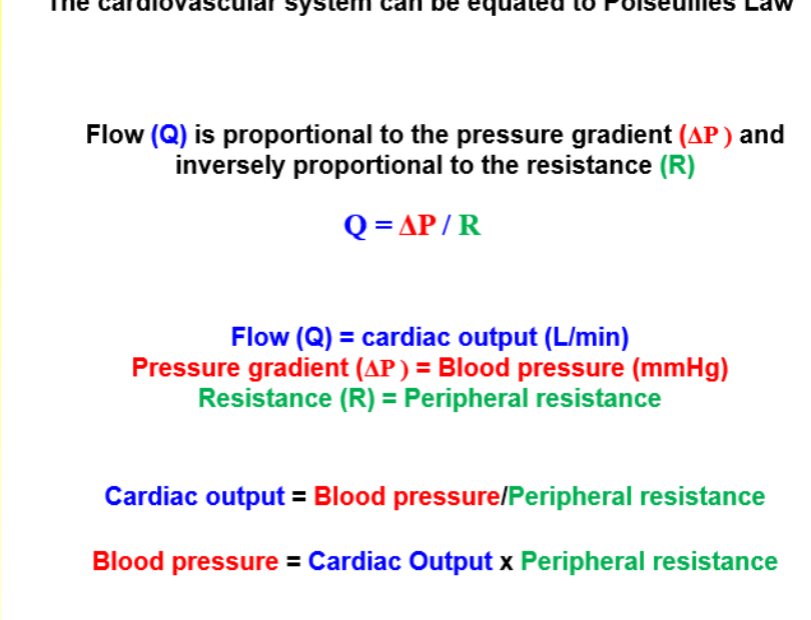
describe the flow of blood in terms of pressure
blood only flows from a region of high blood pressure to a region of low blood pressure
describe the effect of viscosity on blood flow ( how much it resists flow )
the higher the viscosity, the more resistance and the less flow
it stays constant so it doesn’t control blood flow
what is the viscocity of blood determined by
haematocrit ( red blood cells/erythrocytes )
it can change due to dehydration, altitude, erythropoietin
what is the effect of the radius of a blood vessel in determining resistance ( flow )
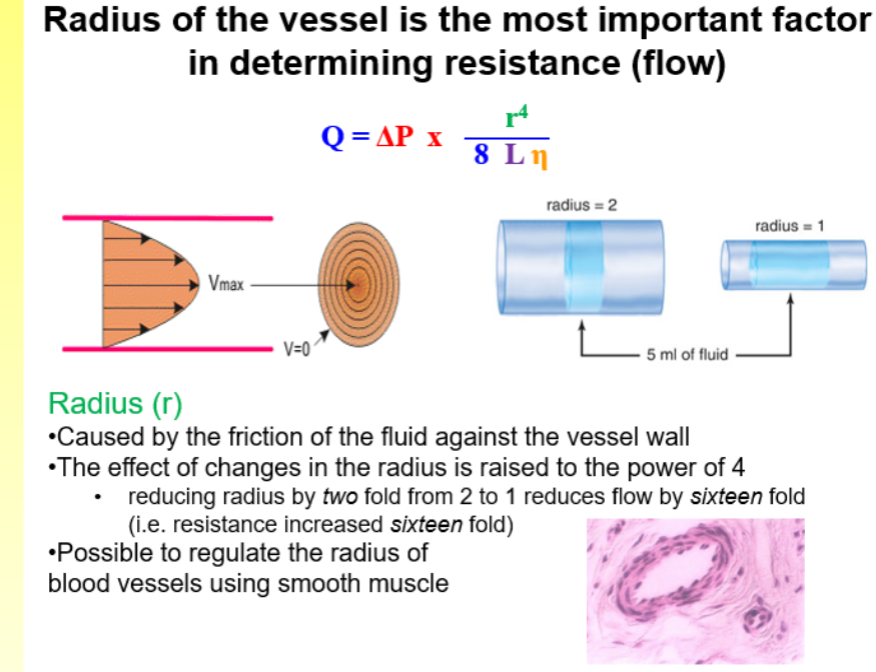
describe the total peripheral resistance
it is the sum of the resistance of all blood vessels and determines blood pressure
it is regulated primarily by the arterioles as this is where there’s the most resistance due to the size of their radius
describe the effect the arterioles have on blood flow to different organs
resistance in the arterioles also determines the blood flow to individual organs
they do this by varying the radius of the arterials which impacts how much blood can flow into the organs
what is systolic and diastolic pressure
it is the maximum pressure after your heart has contracted/ relaxed ( usually around 120-80mm for systolic and diastolic 30-10mm )
systolic pressure is usually measured as its difficult to measure pressure in the lungs
what is pulse
pulse is the vibration of arteries caused by the ejection of the blood from the heart into the systemic circulation
typical rates at rest=70 beats /min
exercise=220beats /min
what is pulse pressure
its the difference between systolic and diastolic pressure ( 120-80=40mmHg)
what is the mean arterial pressure
its the average pressure over the cycle
its the commonly used measurement since diastole is usually twice as long as systole
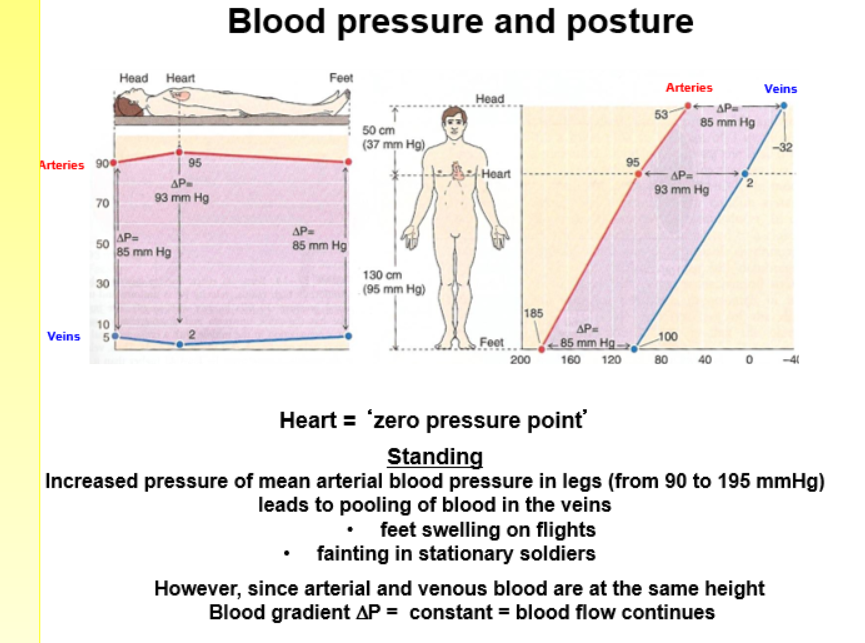
describe the effect of height on blood pressure
blood pressure varies when standing depending on where on the body its measured
but height doesn’t effect blood flow???
what is hypertension
condition caused by high blood pressure
drugs that work against it work by relaxing the blood vessels decreasing the resistance so blood pressure is reduced
or reduce blood volume
its a risk factor to heart failure, kidney failure and strokes

