chapter 25 seedless plants
 Call Kai
 Learn
Learn Practice Test
 Spaced Repetition
 Match
Match Flashcards
 Knowt Play
1/47

There's no tags or description
Looks like no tags are added yet.
Name | Mastery | Learn | Test | Matching | Spaced | Call with Kai |
|---|
No analytics yet
Send a link to your students to track their progress
48 Terms
algal ancestry
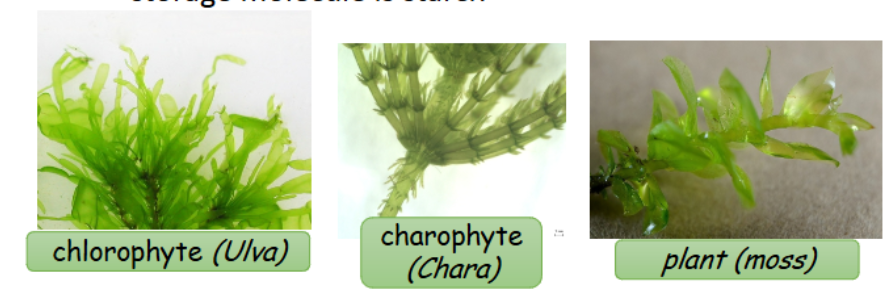
Plants share a common ancestor with charophytes (green algae) in the archaeplastida supergroup of eukaryotes.
Chlorophytes, Charophytes & Plants share:
-multicellularity
-cell walls with cellulose
-chloroplasts with same pigments (chlorophyll a & b)
-storage molecule is starch
from water to land
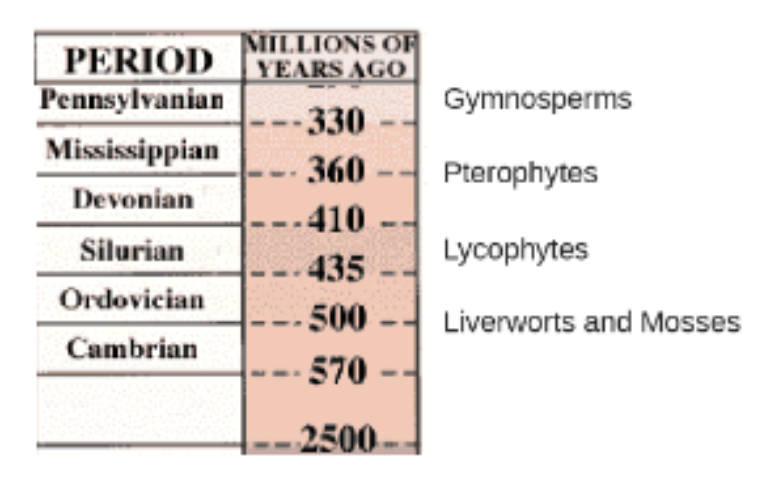
by 470 mya, multicellular green algae expanded from shallow seas into rivers & lakes
green algae along lake shores
• more resources; less competition
• subjected to periodic dehydration
• populations with land adaptations thrive
advantages of land
• [CO2] higher
• light intensity higher
• more minerals
• no “herbivores”
• no competition
desiccation (drying out) dangers
• constant danger for an organism exposed to air
• Both gametes and zygotes must be protected from desiccation
• Plants need to develop structural support in a medium that does not give the same lift as water
• The male gametes must reach the female gametes using new strategies, because swimming is no longer possible
disadvantages of land
-risk ot desiccation (both adult and gametes)
-no “support” in air
derived characteristics of plants
1. Life cycle in all land plants exhibits the
alternation of generations
2. Walled haploid spores
3. Multicellular gametangia
4. Sporophyte embryos grow protected within
female gametophyte
5. An apical meristem tissue in roots and shoots
6. Evolution of a waxy cuticle to resist
desiccation
7. Secondary compounds
8. Mycorrhizae
alternation of generations
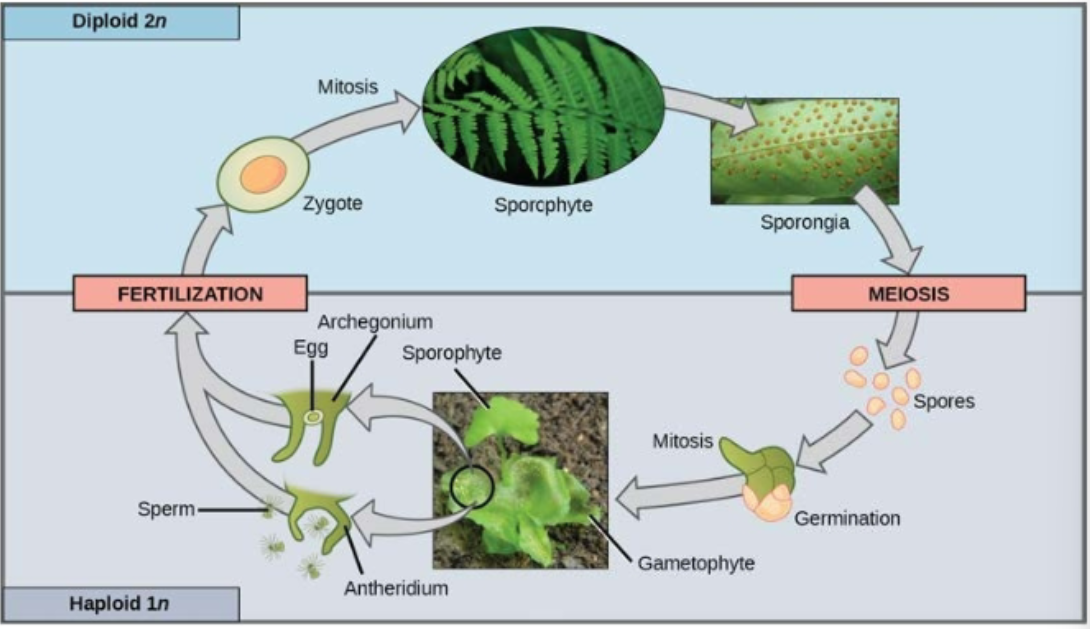
2n and n multicellular forms
Most plants exhibit alternation of generations:
-gametophyte: haploid
-sporophyte: diploid
-haplontic
-diplontic
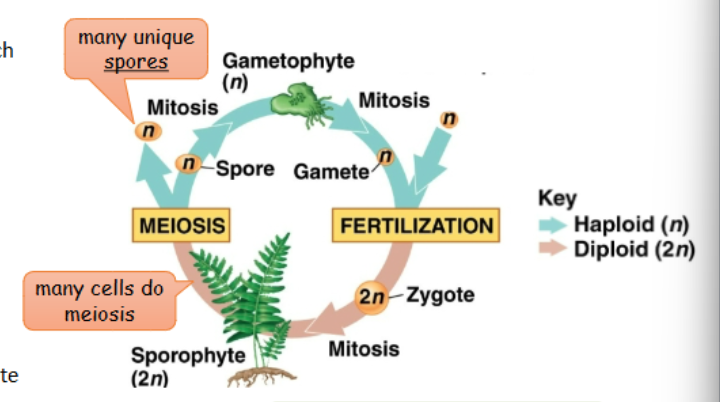
haplontic
refers to life cycle in which there is a dominant haploid stage
diplotnic
-refers to a life cycle in which diploid is a dominant stage
-humans are diplontic
gametophyte generation is dominant in
lower plants
as plants evolved
-gametophyte generation got smaller, sporophyte generation became more dominant
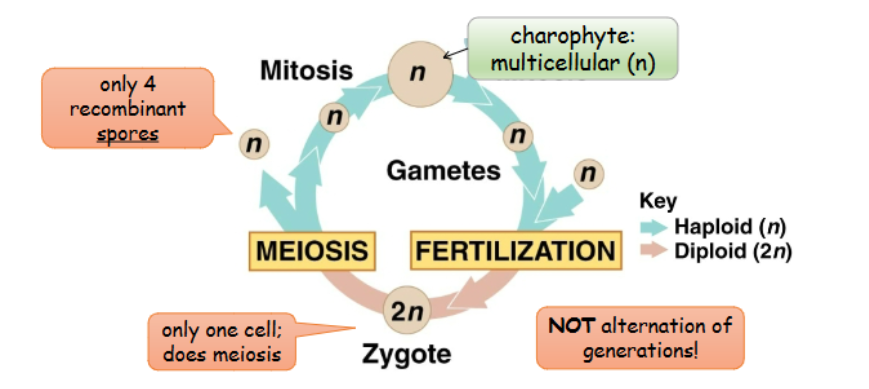
charophyte life cycle
-only multicellular is haploid
-zygote does meiosis to produce only 4 diverse offspring
-NOT alt. of generations
-only one cell does meiosis
-only 4 recombinant spores
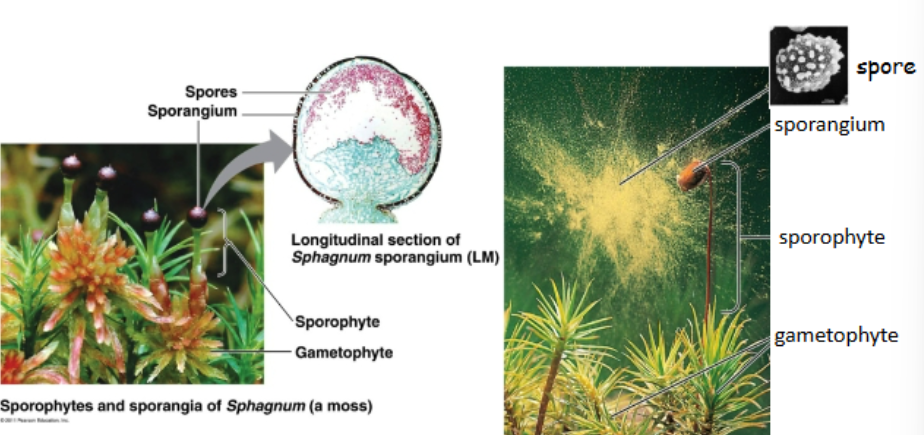
walled haploid spores
-dispersal thru air: sporopollenin protects
-made within multicellular sporangium
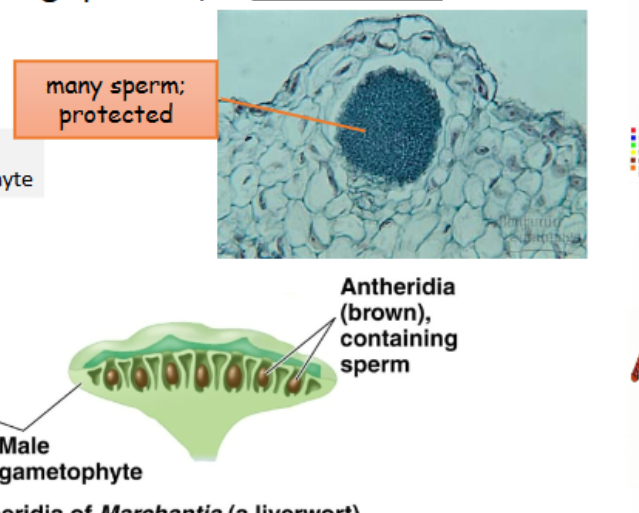
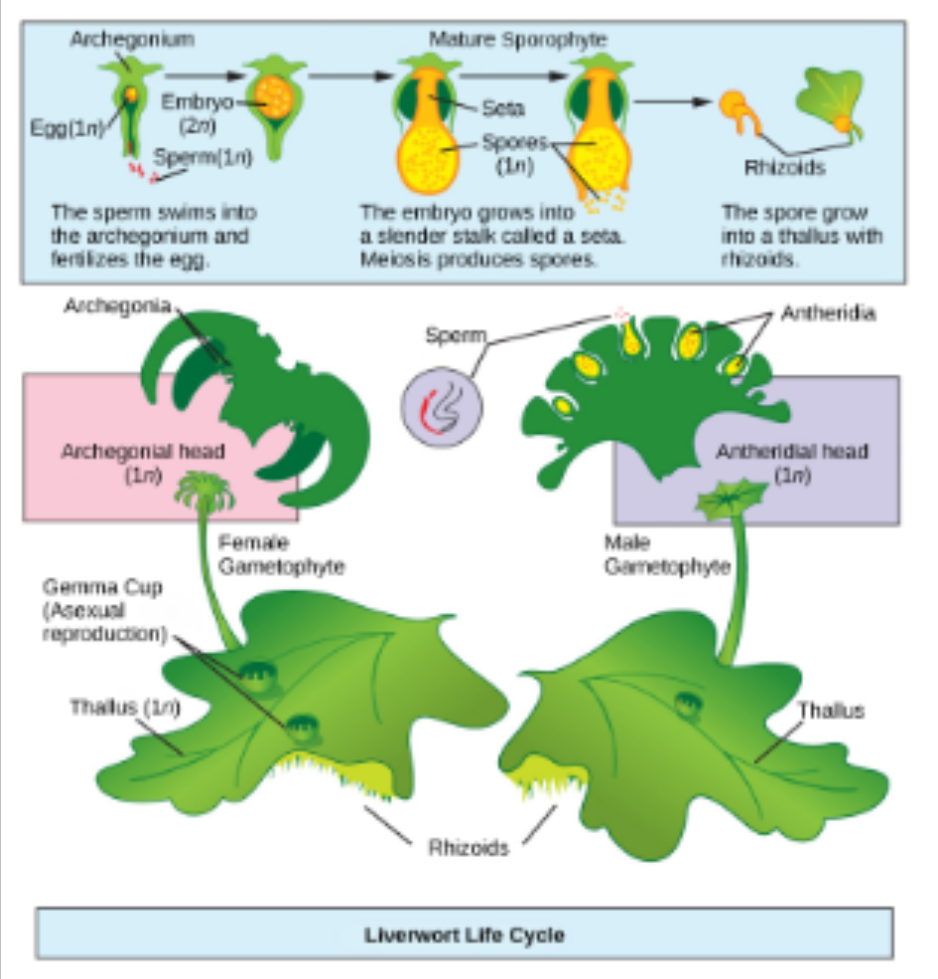
multicellular gametangia
-protecting sperm within antheridium
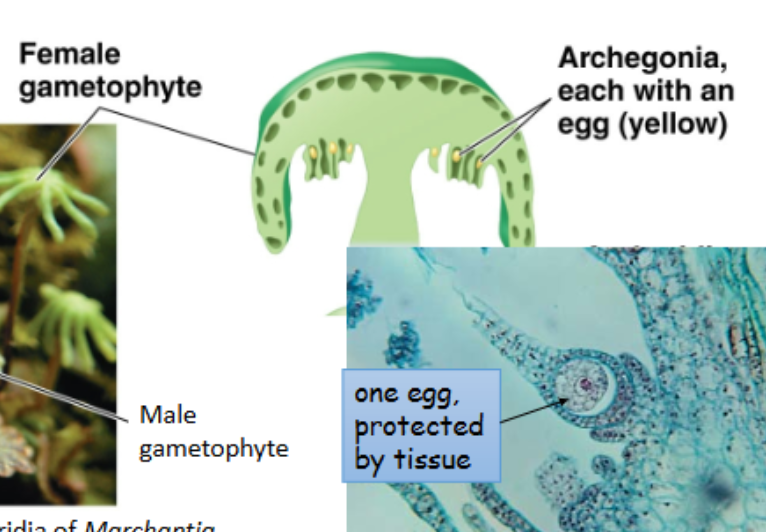
egg protected within archegonium
-fertilization here: forming zygote
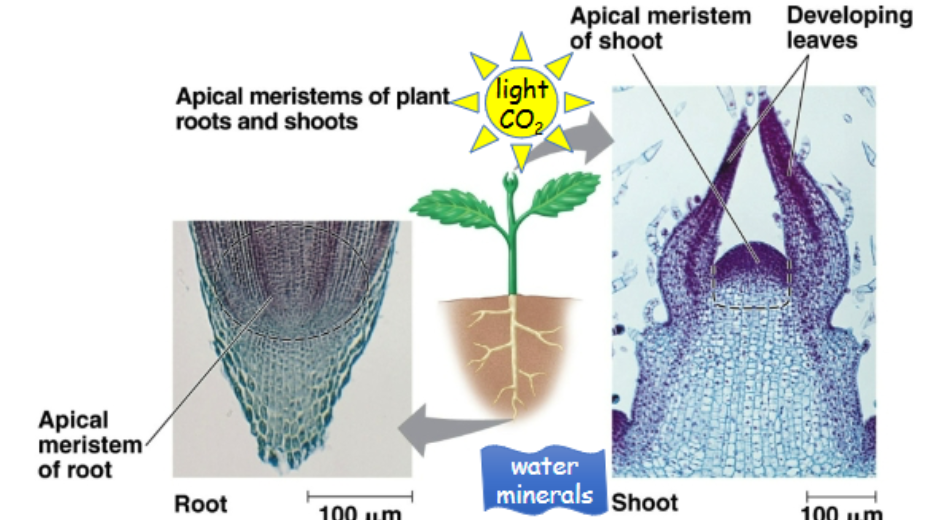
apical meristems
-continuously dividing cells
-roots and shoots grow toward resources
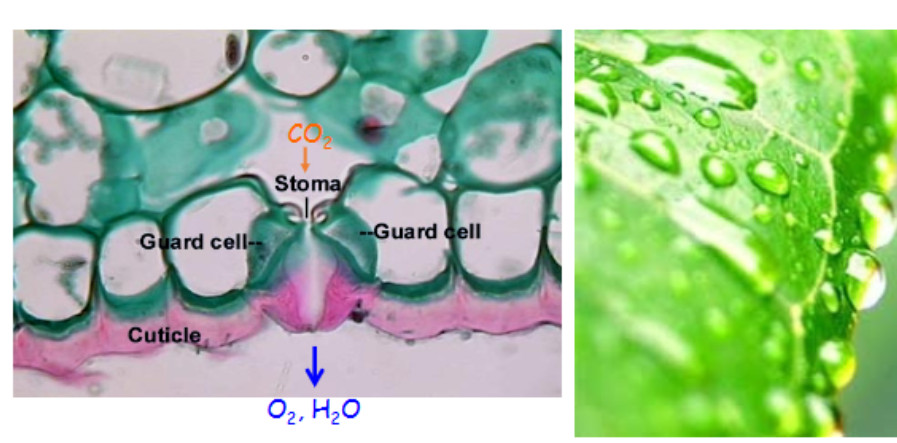
waxy cuticle
-waxy coat stops desiccation
-pores needed to allow CO2/O2 exchange
→controllable stomata in most plants
secondary metabolites
-chemicals that deter, repel or poison competitors, herbivores, and parasites
-ex: caffeine, latex rubber
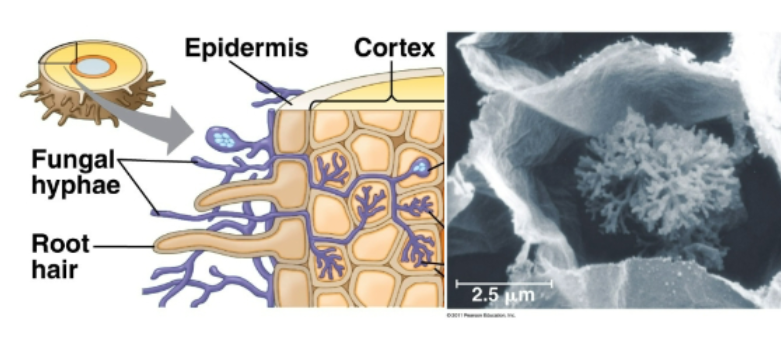
mycorrhizae
-mutualism with fungi; helps water and mineral absorption
-dates back to first land plants (before true roots)
Nonvascular Seedless Plants
-Bryophytes
→liverworts
→hornworts
→mosses
-first plants to exist out of water!
seedless, nonvascular plants
-non-woody, small, ground-covering plants that require water for reproduction
-have rhizoids for attachment (not true roots)
3 phyla of seedless, nonvascular plants
Marchantiophyta (liverworts)
Anthocerotophyta (hornwarts)
bryophyta (mosses)
bryophyte characteristics
Haploid gametophyte is the dominant form:
-dominant = longest lasting or largest
-makes eggs and flagellated sperm
-most are small, low growing, moist areas
Diploid sporophyte depends on gametophyte for food and water:
-grows within archegonium of gametophyte
-sporangium makes haploid spores
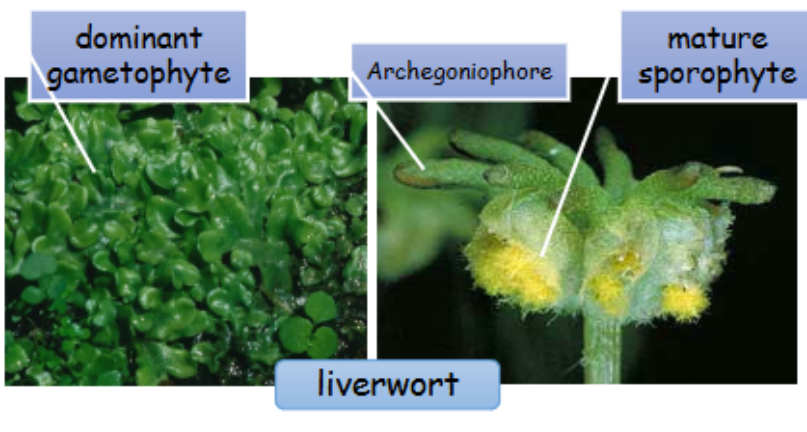
Liverworts (Marchantiophyta)
-most have elevated gametophyte that resemble miniature trees (Marchantia)
→reduced or very small sporophytes; some “thalloid” and others “leafy”
Hornwarts (Antocerotophyta)
-common name refers to horn-like long tapered shape of sporophyte
-good colonizers of moist soils
-symbiotic relationship w/ nitrogen-fixing cyanobacteria
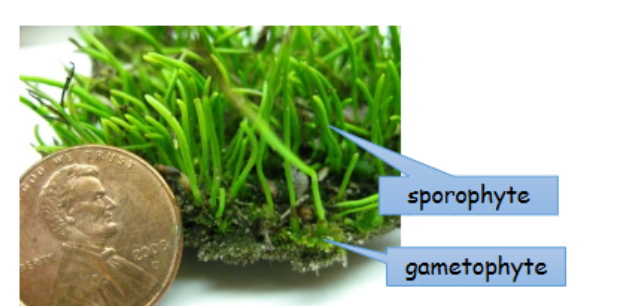
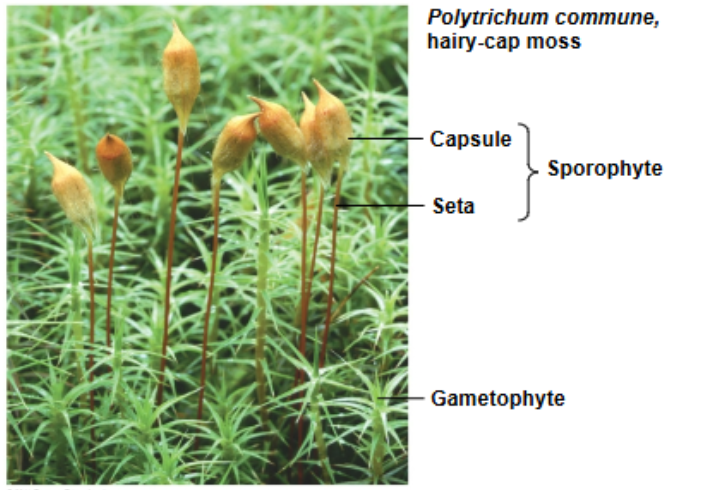
Mosses (Bryophyta)
-the most numerous of the non-vascular plants
-inhabit extreme enviornments as mountaintops, tundra, and deserts
-sporophyte grows up from female gametophyte to gain elevation for spore dispersal
ecological importance of mosses (bryophyta)
-”pioneer” species in nutrient-poor soils
-moss are major primary producers in cold or high-altitude regions
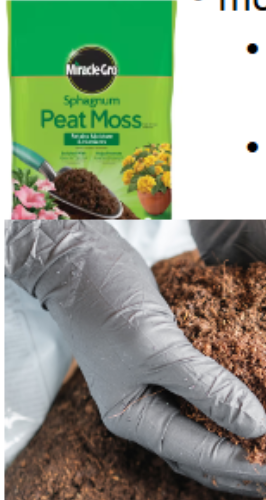
-sphagnum “peat moss” bogs: important wetlands, also harvested for fuel
-some peatlands have preserved corpses for thousands of years
Moss life cycle
Vascular seedless plants
-lycophytes: club mosses, quillworts, spike mosses
-monilophytes: whisk ferns, horsetails, ferns
seedless vascular plants
-until vascular tissue evolved, all land plants were short, ground-cover plants
-oldest seedless vascular plant fossils (~425 MYA)
SVP characteristics
-branched sporophytes that are independent of gametophyte for nutrition
-diploid sporophyte dominates life cycle
-transport in xylem and phloem (vascular system)
-evolution of true roots
-evolution of true leaves
xylem
cells specialized to move water and minerals
phloem
cells specialized to move sugars, amino acids, other organic products
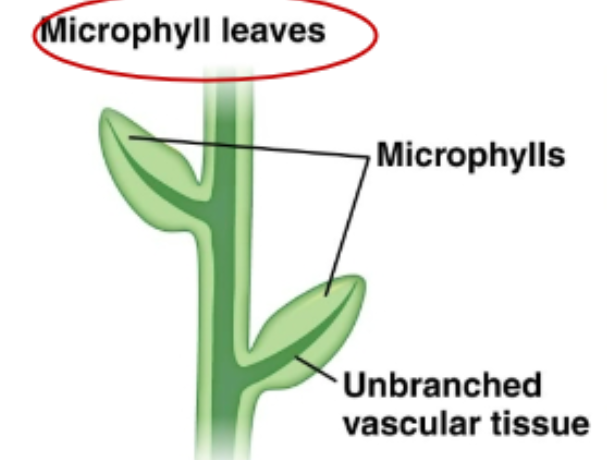
microphyll leaves
-small, spine-shaped leaves supported by a single strand of vascular tissue
-unbranched vascular tissue
-only lycophytes
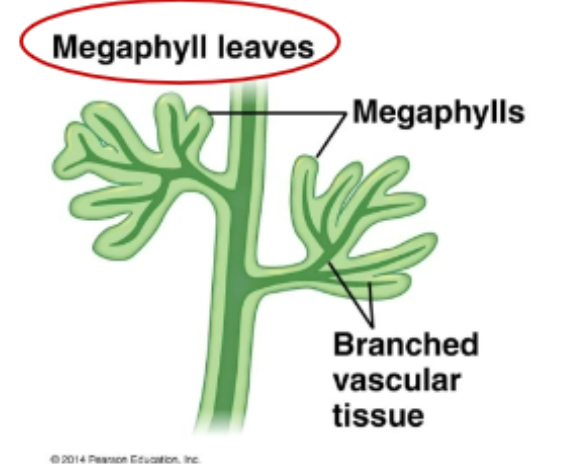
megaphyll leaves
-leaves with a highly branched vascular system
-greater photohynthetic productivity than microphylls
-almost all other vascular plants have megaphylls
sporophylls
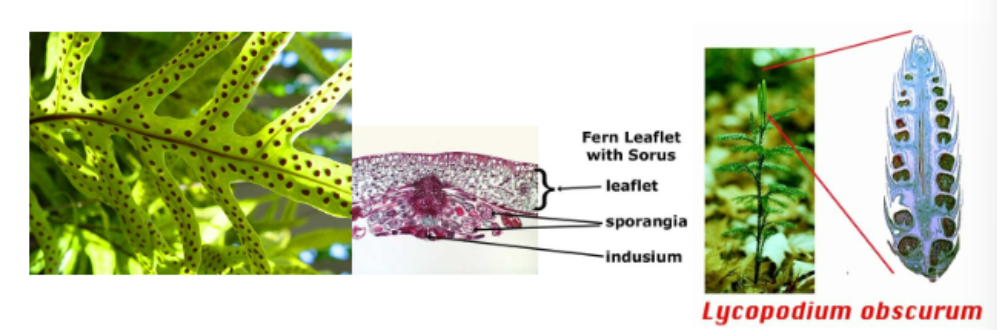
-leaves modified to bear sporangia
-fern sporophylls look like normal leaves but have sori that generate spores on underside
-lycophyte sporophylls modified into a cone-like structure called a strobilus
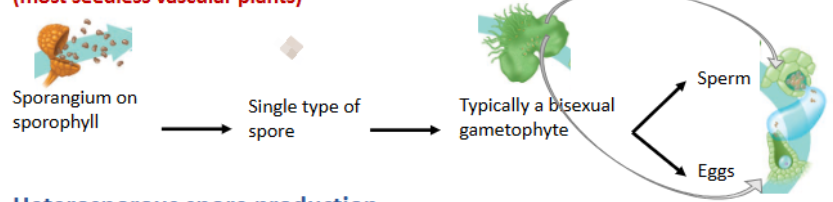
homosporous spore production
-most seedless vascular plants
-sporangium on sporophyll → single type of spore → typically a bisexual gametophyte → sperm or egg
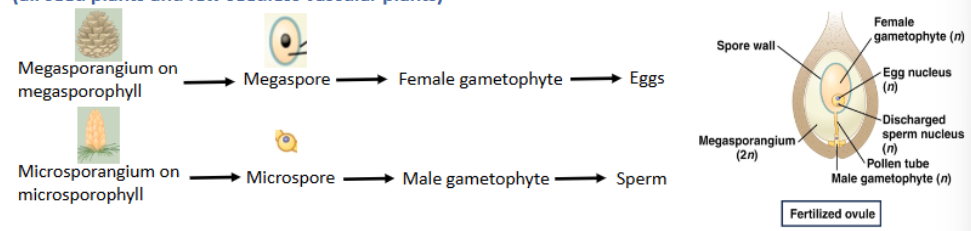
heterosporous spore production
-all seed plants and few seedless vascular plants)
-megasporangium on megasporophyll → megaspore → female gametophyte →eggs
-microsporangium on microsporophyll → microspore → male gametophyte → sperm
lycophytes (club mosses and relatives)
-current species all small (1,200 spp)
-tropical and temperate
-club mosses are homosporous
-spike mosses and quillworts are heterosporous
Monilophytes (ferns and relatives)
-horsetails, whisk ferns, and ferns belong to the phylum monilophyta
whisk ferns (psilotum)
-dichotomous branching
-no true leaves or roots
-homosporous
-photosynthesis occurs in stem
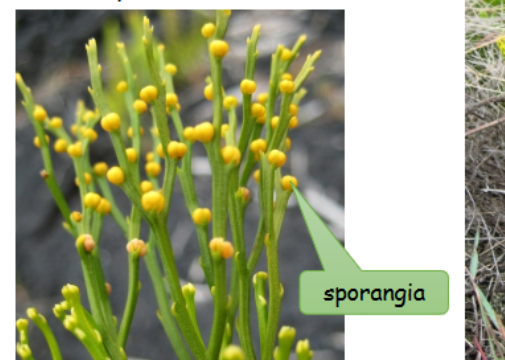
horsetails (equisetum)
-jointed stems with tiny leaves
-strobili
-homosporous
-photosynthesis in stems
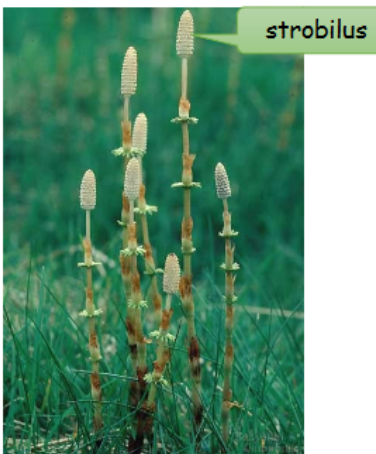
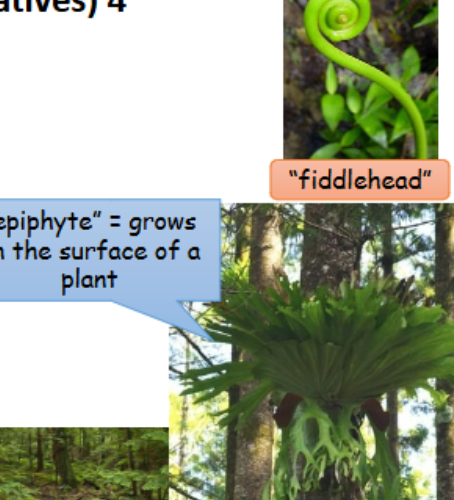
ferns
-most widespread and diverse monilophytes
-homosporous
-large megaphylls
-sori on underside of sporophylls
-mostly in understory or as epiphytes (grows on the surface of a plant)
fern life cycle
importance of seedless plants
-disappearance of mosses: biological indicator of enviornmental pollution
-ferns: used as food, promotes weathering of rocks → accelerates topsoil formation
-peat moss (sphagnum): soil conditioner, used as fuel (renewable resource)
-extinct SVPs: coal →energy source

