Requirements Engineering PPT 2
 Studied by 0 people
 Call Kai
 Learn
Learn Practice Test
 Spaced Repetition
 Match
Match Flashcards
 Knowt Play
1/13

There's no tags or description
Looks like no tags are added yet.
Name | Mastery | Learn | Test | Matching | Spaced | Call with Kai |
|---|
No analytics yet
Send a link to your students to track their progress
14 Terms
RE Process
Takes and input, gives an output
Consists a set of Activities
Garbage process, Garbage product
Basic evolutionary process
Just Know we have Old Reality, Model, Implementation and also New Reality, Model, Implementation
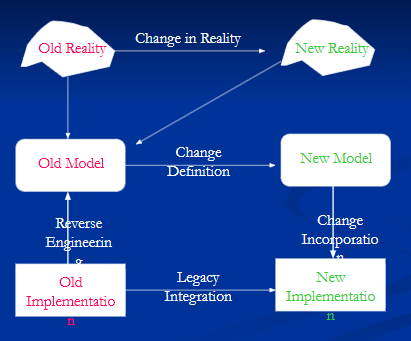
In the Basic Evolutionary Process, How can we ensure the changes in New Model correctly reflect in the New Implementation
Traceability, make sure each requirement matches up with code and vice-versa
Forward Traceability
Each Requirement matches up with some code
Backward Traceability
Each piece of code matches up with a requirement
A Basic Framework
Elicitation → Specification → Validation
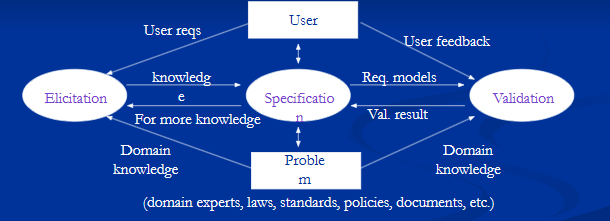
Elication
what, when, where, who, why
Spiral Model
Elicitation → Analysis & Negotiation → Documentation → Validation
How is Spiral Model different from Basic Framework
Spiral is Iterative and adds analysis/negotiation
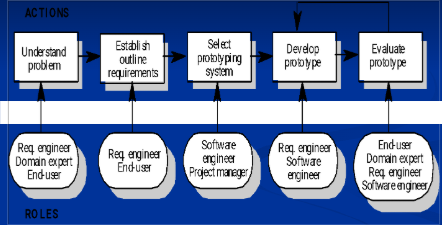
Role Actor Diagram
A special iterative process extending the RE Framework
RE Process Maturity Model
Based on CMM CMMI
5 Levels:
Initial: Ad-hoc Chaos
Repeatable: Standard SED Requirements
Defined: Processes defined for best practice
Managed: Measured and Controlled Quality
Optimized: Continuous process improvement through feedback
IEEE Standard for SRS
Introduction (Purpose, Scope)
Overall Description (Product Perspective, Constraints, Assumptions)
Specific Requirements (Requirements & more constraints)
How is IEEE SRS Standard different from WRS
IEEE describes what the software should do, while WRS shows how it should interact with the world
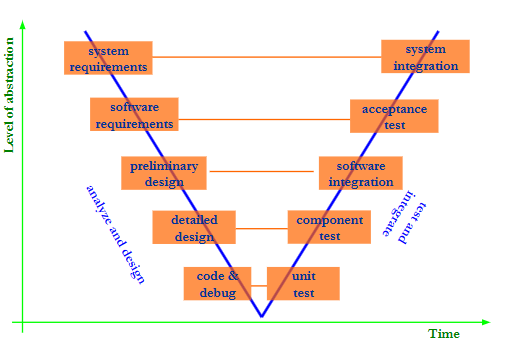
RE V-Model
Every development phase has an equal validation phase making sure each req is met at each level
 Note
Note  Flashcards (47)