sensory differences in autism
 Studied by 0 people
 Call Kai
 Learn
Learn Practice Test
 Spaced Repetition
 Match
Match Flashcards
 Knowt Play
1/49

There's no tags or description
Looks like no tags are added yet.
Name | Mastery | Learn | Test | Matching | Spaced | Call with Kai |
|---|
No analytics yet
Send a link to your students to track their progress
50 Terms
what is hyperreactivity + how is it characterised
also called hypersensitivity —> describes overwhelm at sensory input, leading to strong reactions to senses stimuli e.g. sound, light, touch, taste or smell
may cause autistic people to escape/avoid the stimuli
can occur as well as hyposensitivity in the same individual + can depend on factors e.g. context, mental state/levels of stress, so are not fixed or constant
what is hyporeactivity + how is it characterised
also called hyposensitivity —> describes reduced response to sensory input, leading to potentially not noticing sensations e.g. pain, temperature or sound + desire for more stimulation
can occur as well as hypersensitivity in the same individual + can depend on factors e.g. context, mental state/levels of stress, so are not fixed or constant
why is terminology associated with sensation in autism shifting from ‘sensitivity’ to ‘reactivity’
provides a more precise focus on observable behaviour of the autistic person —> centres how a person actively/passively reacts to input rather than sensitivity level, which is more subjective
also allows for distinction between internal neurological processes + external, observable behaviour
how did the DSM-V autism criteria change from the DSM-IV
before the DSM-V, diagnostic criteria did not include sensory experiences —> DSM-IV’s main 3 criteria were social interaction, communication + repetitive behaviour/restricted interests
DSM-V criteria expanded to include atypical sensory reactivity —> criteria consists of dyad of social communication + repetitive/restrictive behaviours (with sensory reactivity included within this)
are sensory issues a core part of the diagnostic criteria
sensory reactivity is included as a subcategory under restricted + repetitive behaviours as one of 4 criteria
as not all examples listed need to be met for a diagnosis to be made (only 2 required), it can count towards, but is not necessary to, diagnosis
Crane found that 94% of people with ASC have sensory differences, providing evidence that vast majority do
is it just people with ASC that can have sensory differences
no - sensory differences are commonly found in those with ADHD, though this is not part of the diagnostic criteria, and some neurotypical people have also reported sensory differences
what 3 self (or caregiver) report techniques can be used to understand sensory issues in neurodevelopmental conditions
anecdotal
qualitative studies
questionnaires assessing experience + behaviour
what 3 experimental techniques can be used to understand sensory issues in neurodevelopmental conditions
scores on tasks can be measured objectively, e.g.:
psychophysical tests, e.g. measuring thresholds of perception
visuo-cognitive tasks
what utility do qualitative studies have in investigating sensory differences in autism
aim to scientifically analyse the personal, lived experience of those with autism + organise key features into themes
what 4 questions were on the schedule for Robertson + Simmons (2015)’s qualitative research on sensory issues
do you feel more/less sensitive to your environment than other people seem to
do you ever have physical reactions to sensory stimuli
are there particular aspects of stimuli that make it particularly difficult/enjoyable for you
are visual, auditory or olfactory aspects of the environment most problematic + why
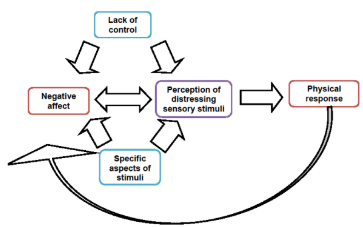
what 4 main themes emerged from Robertson + Simmons’ thematic analysis
importance of particular aspects of stimuli in their perception
importance of having control over stimuli
how emotions/mental states are impacted by sensory stimuli
physical responses to stimuli
lack of control + specific aspects both feed into emotions/mental states associated with the stimuli, leading to physical responses
what were MacLennan et al. (2022)’s findings in terms of nature of sensory reactivity
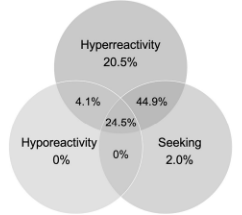
in line with previous research + anecdotal reports, autistic participants identified experiencing hyper-reactivity, hypo-reactivity + sensory seeking
hyper-reactivity was the most commonly experienced (20.5%), followed by sensory-seeking then hypo-reactivity (only found in combination with others)
what were MacLennan et al. (2022)’s findings in terms of reactivity to 6 different senses
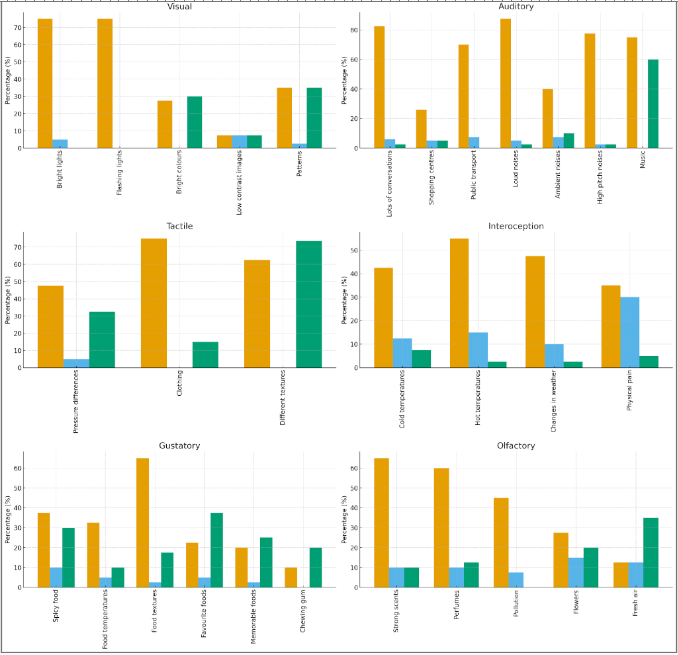
found general differences in perception of different senses e.g. visual, auditory, tactile, interoception, gustatory + olfactory senses
most senses had particular stimuli that most participants were hyper-reactive to (e.g. loud noises) + sensory-seeking to (e.g. bright colours) apart from auditory + interoception
hypo-reactivity most commonly found in response to physical pain (interoception)
what is interoception + how does it differ in autism
sensing + interpreting internal bodily cues e.g. hunger, thirst, pain + emotions
MacLennen et al. found differences in interoception in autism → e.g. hyper-reactivity to temperature + weather change, as well as hypo + hyper-reactivity to physical pain
what are two questionnaires that measure sensory reactivity/behaviours in neurodevelopmental conditions
Glasgow Sensory Questionnaire (Robertson + Simmons, 2009) → adults
Sensory Profile (Brown + Dunn, 2002) → children (parental report) + adults (self report)
what is the typical disparity in scores on the GSQ
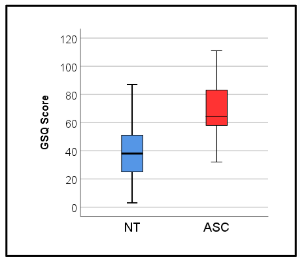
people with ASC tend to score higher on average than neurotypical participants
measures sensory reactiivty to different senses on Likert scales
what are the results of correlating sensory issues with autistic traits
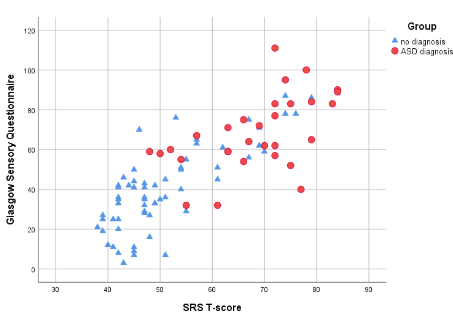
when plotting scores on the GSQ against the social responsiveness scale (scale measuring autistic traits) for neurotypical + ASC-diagnosed participants:
in both groups, there is a positive correlation between sensory issues + autism traits scores
some neurotypical people score higher on the GSQ than autistic people → shows variability in sensory experiences regardless of diagnostic status
r = .808, p< .001
what are the two main subscales on the social responsiveness questionnaire (SRS)
scored on 2 subscales according to DSM-V classification:
social-communication
restrictive + repetitive behaviour, interests (questions about sensory experiences included on this scale)
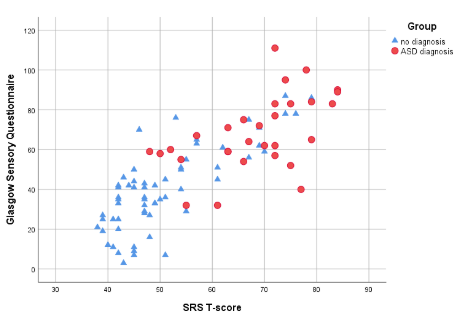
what is found when correlating GSQ + social communication subscale of the SRS
strong positive correlation remains even when SC subscale is used instead of total score, demonstrating that the relationship between sensory issues + autistic traits does not arise as a result of common measurement error
r = .79, p< .001
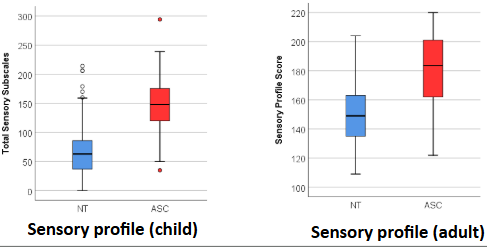
what are 4 features of the Sensory Profile questionnaire
adult sensory profile → 60 items with questions grouped into modalities
child sensory profile → 52 items with similar questions, adapted for parents to answer
measures answers on Likert scale of 6 options (almost always, frequently, half the time etc.)
people with ASC gain significantly higher scores than neurotypicals on both the child + adult versions of the scale
what 4 quadrants is the sensory profile scored on
low registration (hypo-reactivity)
sensation seeking
sensory sensitivity (hyper-reactivity)
sensation avoiding
what was the sensory profile developed for
clinical use → used by occupational + speech/language therapists, clinical + educational psychologists
what do several findings suggest regarding basic sensory functions + autism
research has found no significant difference between autistic + neurotypical participants on visual contrast, odour detection + audition sensitivity
this suggests that basic sensory functions are intact in autism, so differences in sensory experiences are probably not rooted in fundamental differences in sensory organs
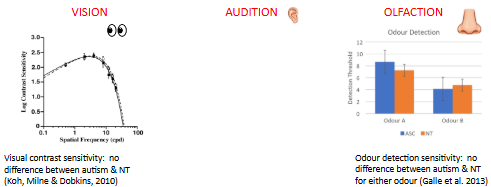
what are contrast sensitivity thresholds + what were findings in regards to autism
task assessing ability to detect difference in colours on scales of contrast + spatial frequency
Koh et al. (2010) found no significant difference in detection ability between autistic + neurotypical participants
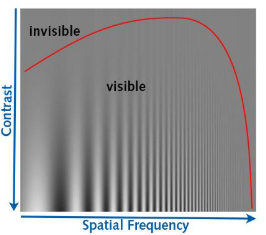
what is a potential explanation for sensory differences in autism
autistic people do not show differences in ability to sense stimuli, but process sensory stimuli in a different way to neurotypical people
this results in different experience + reactivity to stimuli, while low-level sensory function is intact
what are 4 visuo-cognitive tasks that autistic people perform better at than neurotypicals on average
embedded figures task (identifying smaller shapes in larger structures) → superior performance
block design (rearrange blocks to calculate 2D pattern) → identified as relative strength
‘Navon’/hierarchical figures task → more likely to have locally than globally-oriented perception (what NTs usually have)
visual search → faster performance
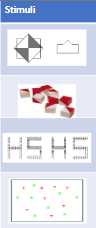
what general conclusions are drawn from superior results on visuo-cognitive tasks + what theory does this support
cognitive tasks that require participants to identify local over global elements in a scene are generally performed more quickly + accurately by autistic people
finding underpins theories of autistic cognition e.g. ‘weak central coherence’ hypothesis (though these are considered a bit simplistic now)
what do findings from other visual tasks generally point to + what are limitations to this conclusion
there is evidence for altered thresholds to different cognitive abilities in autism (both reduced + enhanced)
however these findings have limited replications + have been found in many conditions, so are not unique to autism
most
what 2 cognitive skills have people with autism been found to have heightened thresholds for
reduced discrimination for:
coherent motion
hue
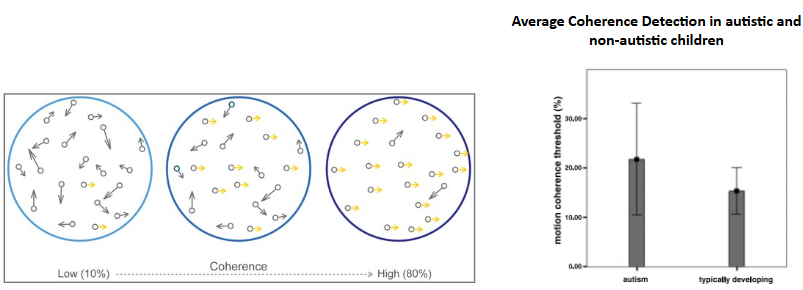
what is the most consistent finding for altered thresholds in autism (Milne et al., 2002)
reduced motion coherence discrimination→ means that more objects need to be moving cohesively for motion coherence to be detected in those with ASC
those with autism have higher threshold for being able to detect it
what 2 cognitive skills have people with autism been found to have reduced thresholds for
enhanced discrimination of:
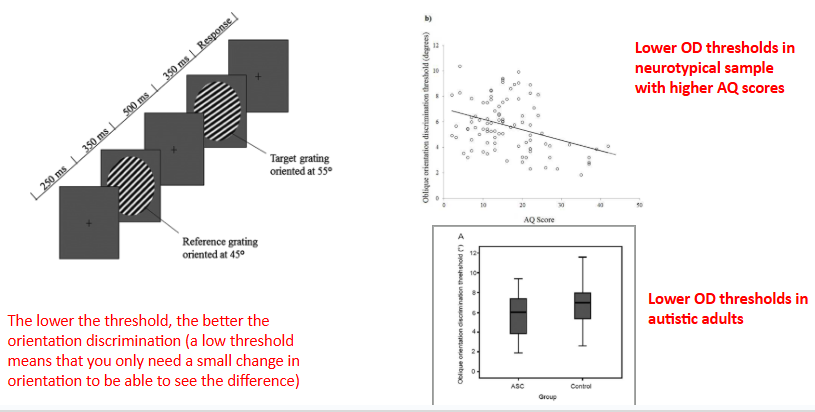
orientation (Bertone et al., 2005)
detection of symmetry (Perrault et al., 2011)
what does having a low threshold for orientation discrimination mean + what does this mean for people with autism
the lower the threshold, the better the orientation discrimination → means the smaller change needed to be able to detect a different angle
studies have found lower thresholds correlated with higher AQ scores
what is the association between performance on visual tasks + sensory experiences
there is no correlation between visual task performance + self-reported sensory experiences → shows no association between these 2 variables
what are 3 possible reasons for the lack of correlation between methods of assessing sensory differences
questionnaires that measure sensory experiences are likely not nuanced enough to provide a very accurate measurement → e.g. rarely take into account impact that stress/control has on sensory experience
there may be different mechanisms underpinning different experiences → e.g. mechanisms that drive orientation discrimination may be different to mechanisms that drive sensory behaviour
the role of attention/focus is generally not considered
what is the potential role of attention in autistic perception + what two consequences does this lead to
people with autism may have a broader attentional spotlight, which may underpin:
superior visual search skills
lead to difficulty filtering out distracting stimuli
what is monotropism
a very focused attentional state, which is often discussed by people with autism
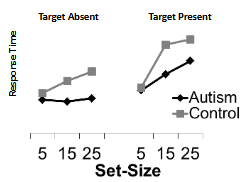
on what 3 aspects of visual search do people with ASC have an advantage on (Plaisted et al., 1998)
faster response time:
when performing conjunctive searches → when target is defined by combination of two or more features
when target is absent
when search task is difficult
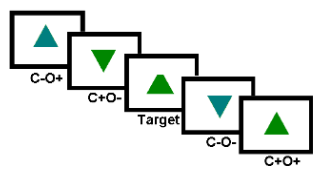
what were the two main aspects of Milne’s study on feature-based selective attention
participants with either high or low scores on the AQ had to:
perform a visual search task with distractors of varying similarity to the target on measures of colour + orientation
be measured via EEG on neural markers for attention allocation
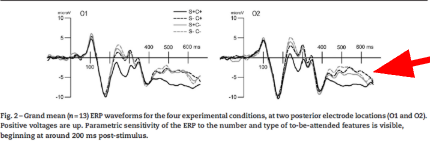
how did the measured ERP vary in Milne’s study
the amplitude of the measured ERP (P3b) varied depending on how similar distractors were to the target → when distractors were more similar, there is a larger amplitude around 400ms after stimulus onset
this implies increased allocation of attention to the distractor
what were Milne’s findings in terms of visual search score + ERP response
participants with higher AQ scores were quicker at the visual search task than those with lower AQ scores
participants with higher AQ scores generated larger P3b amplitudes to distracting stimuli than the low AQ group
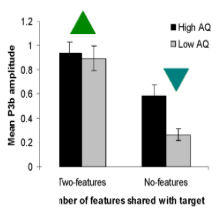
what was the main conclusion from Milne’s study
greater allocation of attention to distractors may be a neural marker for altered attention in autism
what were the 4 (actual???) themes that MacLennan et al. (2022) identified from their thematic analysis
outcomes
control
tolerance + management
the role of other people
what style of research did MacLennan et al. (2022) conduct
a mixed-method design using data collected from online surveys in order to investigate the sensory experiences in adults with autism
49 participants were included in the study, though not all participated in the additional open questions
what are 5 sensory experiences that MacLennan et al. (2022) identified autistic people as being commonly hyperreactive to
loud (87.5%) + high-pitched (77.5%) sounds
bright + flashing lights (75%)
complex sounds e.g. lots of conversation (82.5%) + public transport (70%)
music (75%)
different textures (62.5)
what are 3 sensory experiences that MacLennan et al. (2022) identified autistic people as being hypo-reactive to
physical pain (30%)
hot (15%) + cold (12.5%) temperatures
what are 5 sensory experiences that MacLennan et al. (2022) identified autistic people as commonly seeking
music (60%)
different textures (73.5%)
patterns (35%) + bright colours (30%)
feeling pressure differences (32.5%)
favourite/spicy food flavours (37.5%)
what was found in the ‘outcomes’ theme of MacLennan et al. (2022)’s research
negative impacts on mental health, e.g. causing stress + anxiety, as well as being linked to maladaptive behaviours e.g. self-harm + eating disorders
physical outcomes of hyperreactivity e.g. physical pain + nausea, as well as affecting sleep or nutrition
overwhelm due to sensory input causing people to disengage
what 4 subthemes were found in the ‘tolerance + management’ theme of MacLennan et al. (2022)’s research
avoidance/escaping aversive sensory input as a coping strategy, such as leaving the physical environment or physical blocking behaviours
adaptations to different environments e.g. sunglasses/headphones or sensory reactivity becoming more tolerable overtime
soothing sensory input in order to cope with distress
extent of sensory reactivity = dependent on mood → may not be as bad if more relaxed
what 2 subthemes were found in the ‘control’ theme of MacLennan et al. (2022)’s research
desire for control + predictability → causes difficulty with unpredictable stimuli
difficulty with self-control when it comes to engaging with enjoyable sensory experiences
what 2 subthemes were found in the ‘role of other people’ theme of MacLennan et al. (2022)’s research
understanding → often compare themselves to others who seem to have differences in sensory reactivity to them
support from other people lessened experience of sensory reactivity
 Note
Note  Flashcards (45)