ANTH 186TS Final
 Call Kai
 Learn
Learn Practice Test
 Spaced Repetition
 Match
Match Flashcards
 Knowt Play
1/68

There's no tags or description
Looks like no tags are added yet.
Name | Mastery | Learn | Test | Matching | Spaced | Call with Kai |
|---|
No analytics yet
Send a link to your students to track their progress
69 Terms
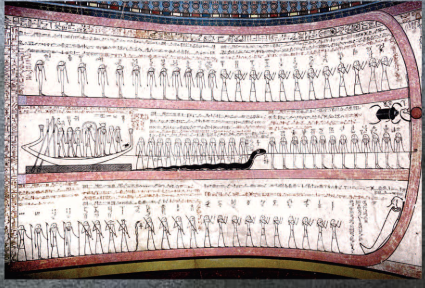
A funerary text, relaying the hours of Re as he journeys through the Duat
“That which is the Netherworld”
Found on the walls of tombs, like the tomb of Thutmose III
The repeat, nightly, journey of the sun (Re), symbolizing rejuvenation and rebirth
Images of individual hours of the journey
Am Duat
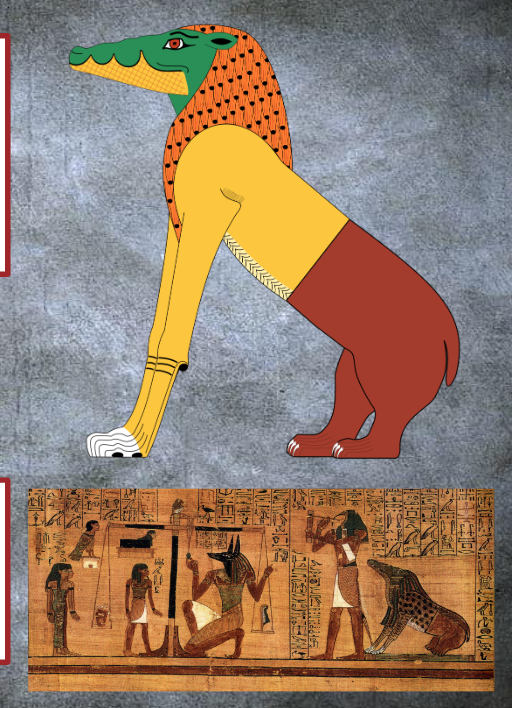
Mythical creature present during the weighing of the heart
Consumes the hearts of those that fail
Found in the book of the dead
Composite creature with head of crocodile, arms of a lion & legs of a hippo
Ammut
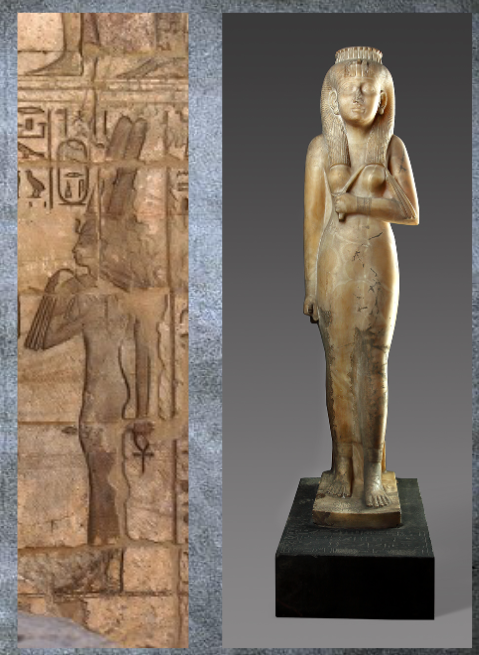
God’s Wife of Amun
Kushite representative in Egypt
Buried at Medinet Habu
Depicted as fully human figure, with arm crossed over chest holding a flail
Amenirdis
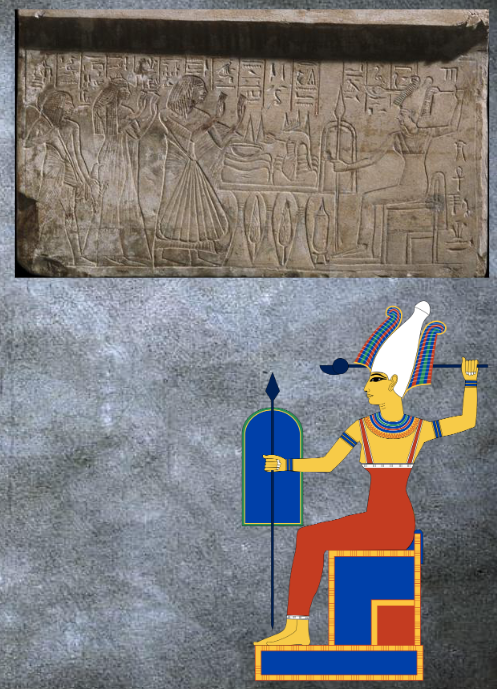
Warrior Goddess
Introduced to Egypt from near east
Patron deity of Ramessid Kings
Sometimes equated to hathor
Depicted w/ shield, spear, and axe
Wears White crown w/ plumes
Anat
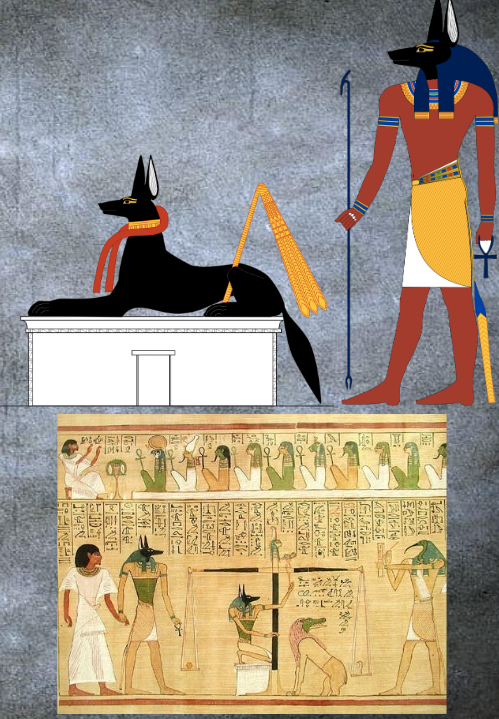
Escort of the dead into the underworld
Jackal headed man or a jackal
God of the dead & mummification
Appears during the weighing of the heart
Anubis
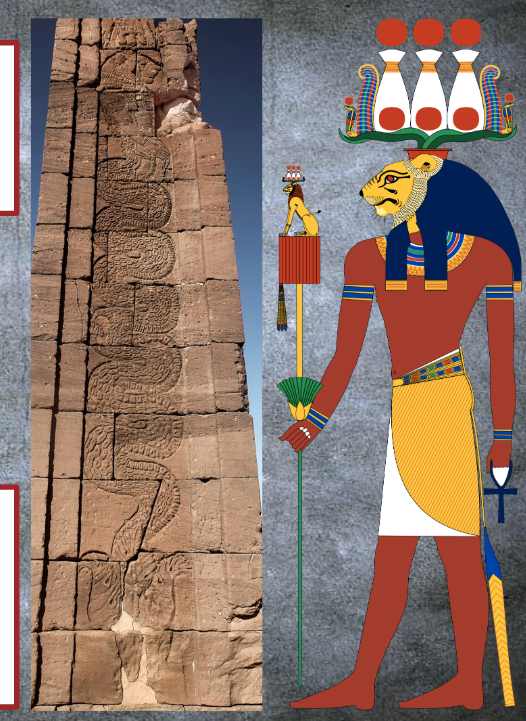
Kushite/Nubian Lion-headed war god
Nubian diety made to look more egyptian
Can be depicted as a lion-headed man
Can appear w/ 3 lion heads or as lion headed snake
Apedemak
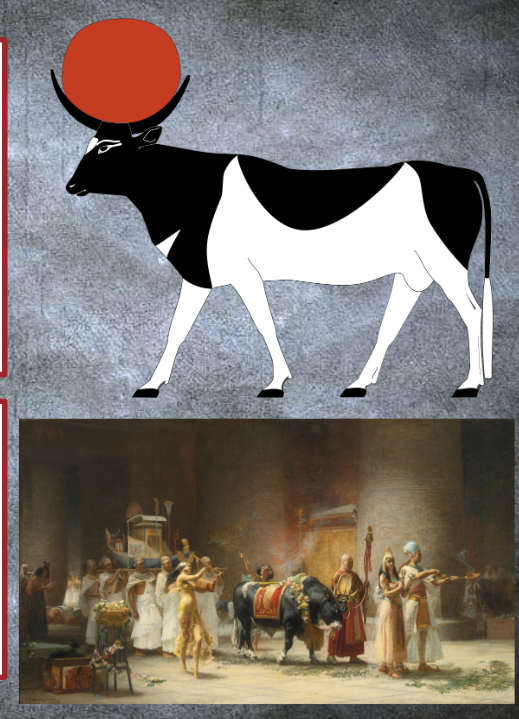
Most important bull deity
Son of Ptah
Worshipped in Memphis
Only one living bull represented Apis at the time and was chosen based on appearance
Quadrupedal standing bull
sometimes w/ the sun disk on his head
Apis
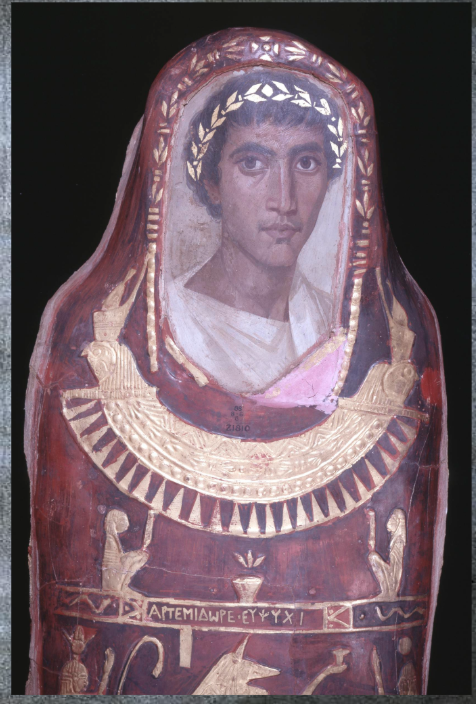
Mummy from Hawara
2nd Century CE
Blends Egyptian and Roman elements
Deceased Roman mans face printed on sarcophagus
Artemidorus
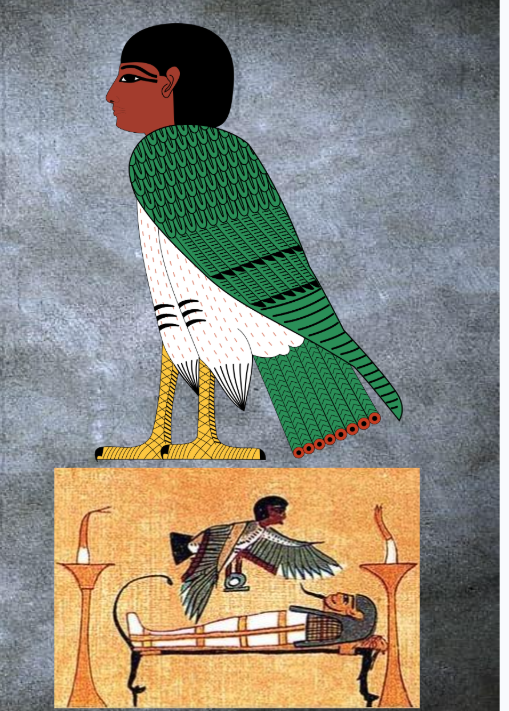
One of the 3 most important aspects of the soul
Allows Soul to travel and leave the tomb
Represents someone’s moral Core
Depicted as a Human Headed Bird
Ba
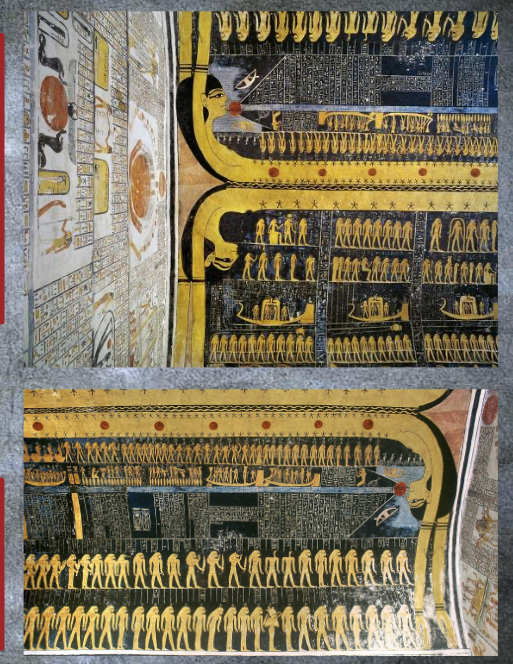
Scene depicting journey of sun through the Body of Nut
Under body are the many deities of the Netherworld
Found in the tomb of Ramses VI
Goddess Nut swallowing & birthing the sun, while arched over many smaller deities
Book of Day & Night
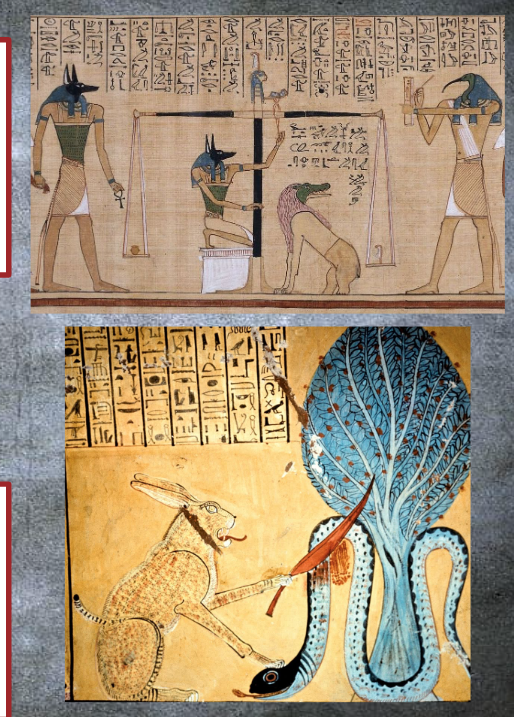
Found in Coffins, tombs, & wrappings of mummies
“Book of going forth by day”
Funerary texts, used to guide deceased into and through the underworld
Weighing of the heart is from the book of the dead
Book of the Dead
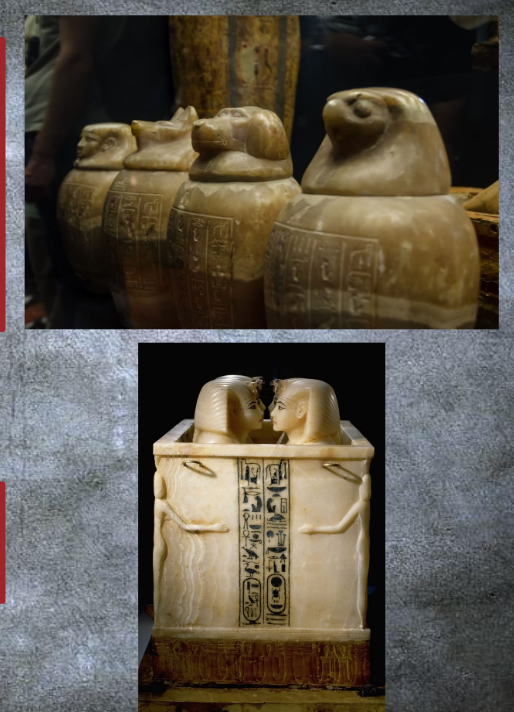
Contained the organs of the deceased
Represented the 4 sons of Horus
Contained liver, lungs, stomach, & intenstines
Housed in a box
Jars w/ head of falcon, ape, jackal, & a man
Canopic Jars
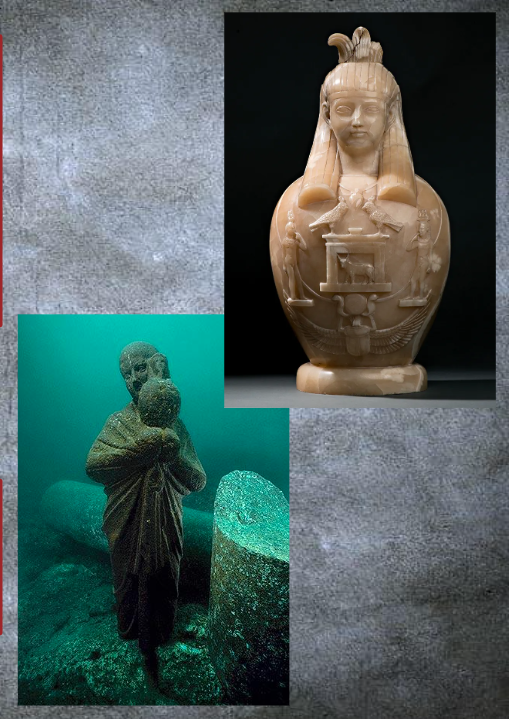
Hellenistic/Roman/Egyptian Osiris in the form of a canopic jar
Depiction found at palace of Cleopatra at Alexandria
Picked up by freemasonry, statues / idols of Osiris as a canopic jar
Canopic jar w/ head of Osiris or Isis holding
Canopis
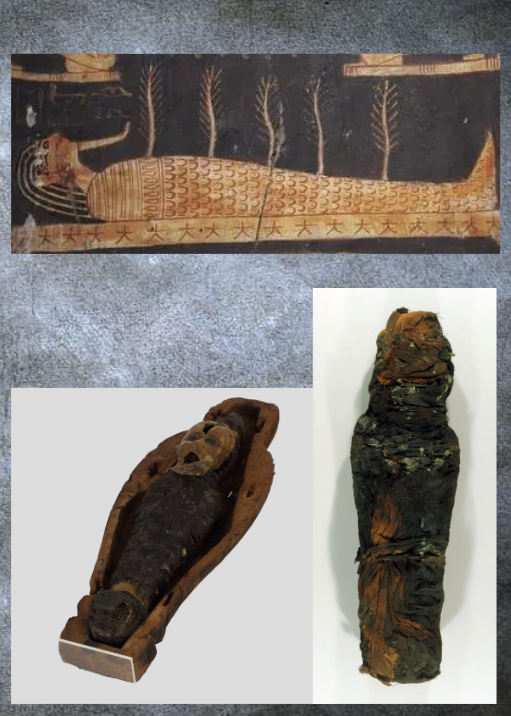
Corn meaning crop or gain
Replicas of a mummified Osiris
Made yearly, to be buried during the festival of Osiris
Small figure made of soil & grain, wrapped like a mummy, and placed in a small coffin
“Corn Mummy”
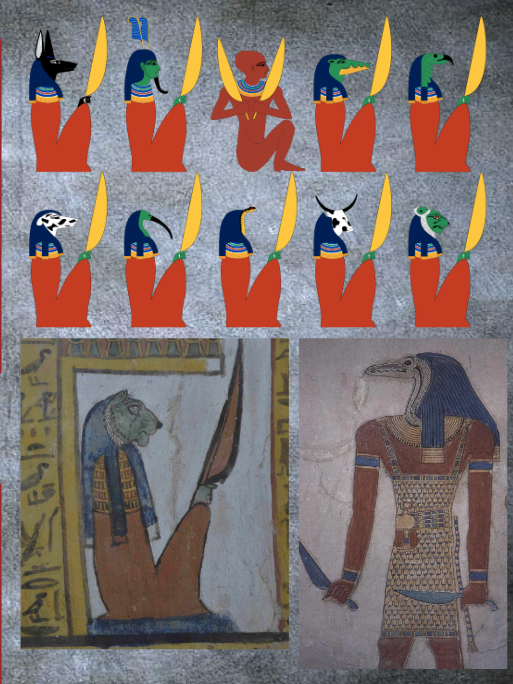
Lesser deities tasked by gods for different purposes
Found in the netherworld & the living world
Gate gods protected gates along the nightly journey of Re
Anthropomorphic figures w/ heads of various animals
Usually holding knives
Demons & Gate Gods
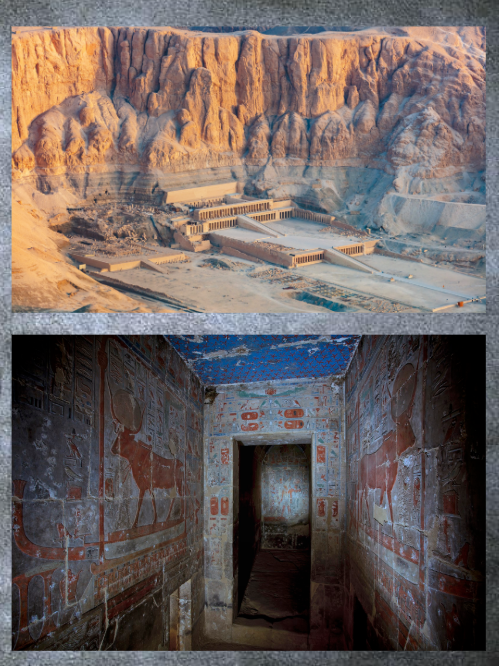
Mortuary temple complex on the west bank of the Nile
Contains the mortuary temple of Hatshepsut
New kingdom Hathor chapel located here
Many votive offerings including phalluses
Large Rock cut temples, walkways & ramps
Cut into the face of the mountains
Deir el Bahari
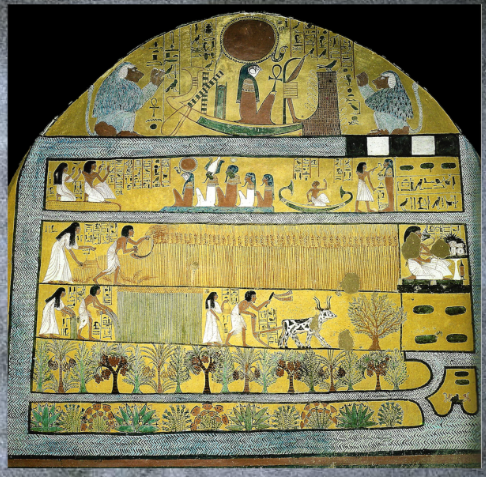
Final Resting place of good souls in the netherworld
Egyptian equivalent of heaven
Hetep means to be at content w/ offerings
Depicted as people living & working in bountiful fields
Field of Iharu & Hetep
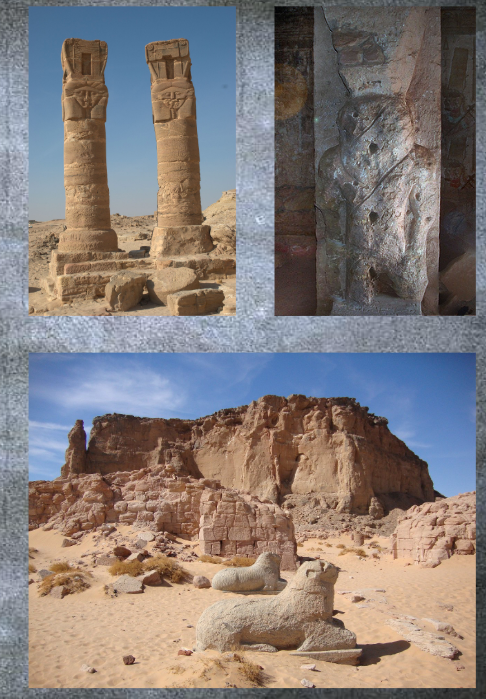
Sacred mountain in the Sudan
Location of a Meroitic royal cemetary & pyramid
Also has a temple to Mut
Monumental sculptures of Bes
Cluster of Nubian pyramids
Gebel Barkal
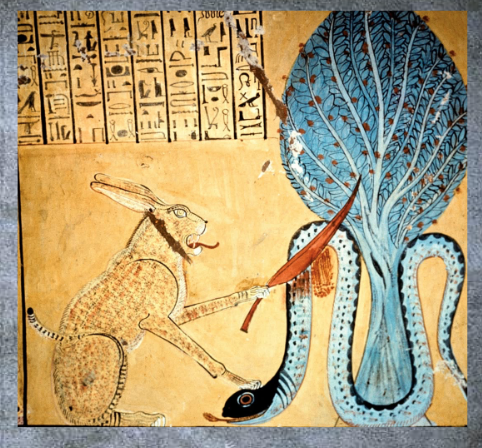
Re manifesting as a cat during one hour of his solar journey
Slays the snake Apophis
Found in chapter 17 of the BoD
Cat wielding knife, decapitating Apophis
Great Cat of Re
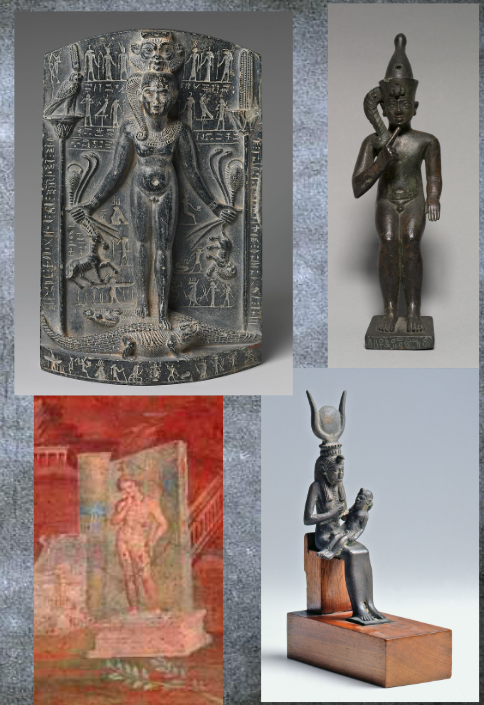
Child form of Horus
Protector from harms like wild creatures
offspring of Isis & Osiris
Egyptian child w/ child pose & hair
Often depicted in the arms of Isis
Harpocrates
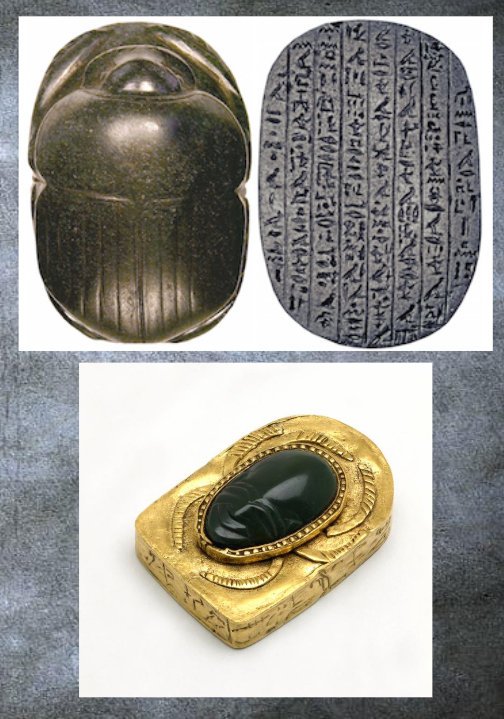
Placed on the heart of the mummy
Stops heart from betraying your during the weighing of the heart
Elite burial good
Small scarab amulet w/ spell on the backside
Heart Scarab
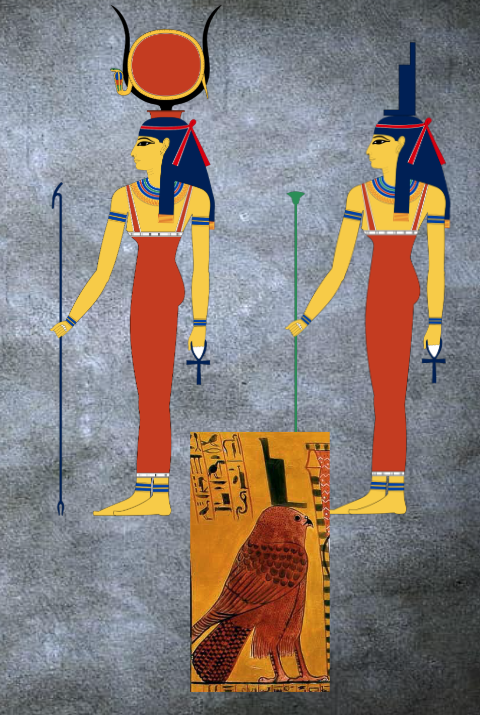
Most prominent Egyptian goddess
Strong /w magic
Wife of Osiris & the Mother of Horus
Usually full human figure in dress w/ throne on head
Isis
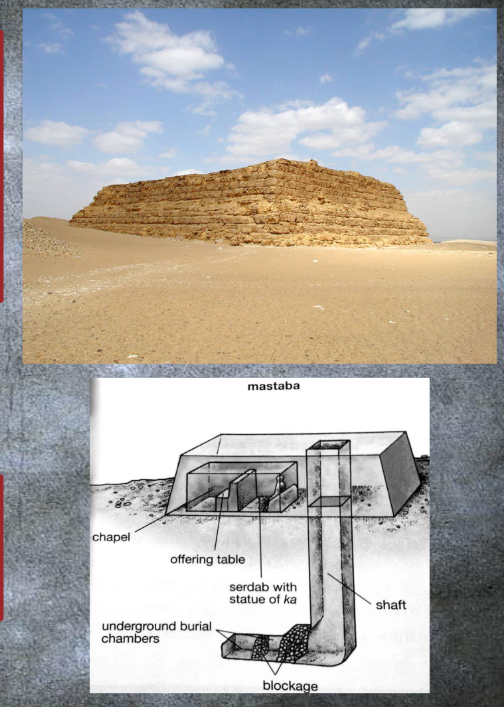
Early dynastic burial structure
Based on the primordial mound
Shaft & tunnel burials underneath
Single flat structure w/ entrance
Mastaba
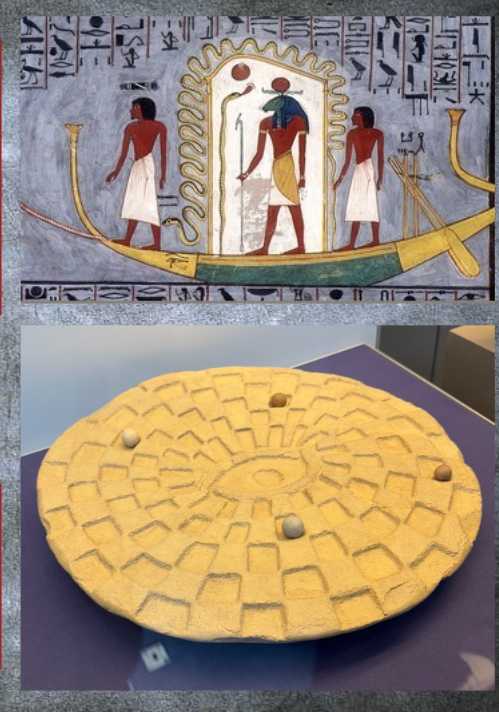
Coiled serpent god that protects Re on nightly journey
First appears in the coffin texts of the middle kingdom
Warden of Criminals
Depicted as serpent covering cabin of Re on Solar Barque
Mehen
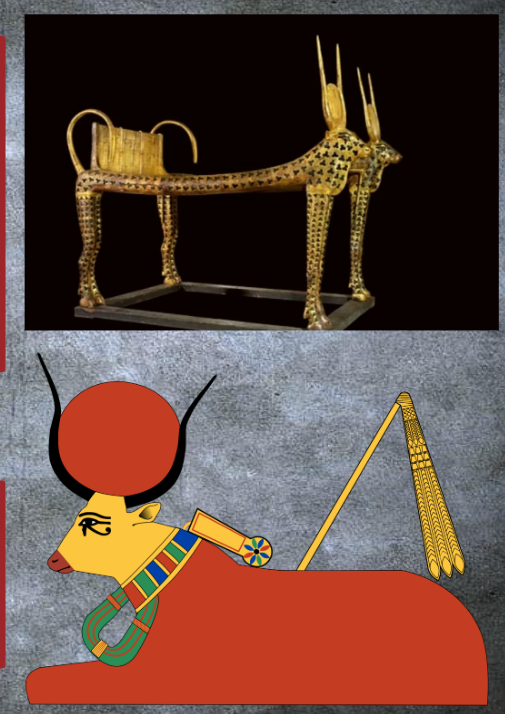
Means “Great Flood”
Gave Birth to Re & placed him as the sun disk on her head
Found in pyramid texts
Cow statue w/ horn sun disk combo
Mehet-Weret
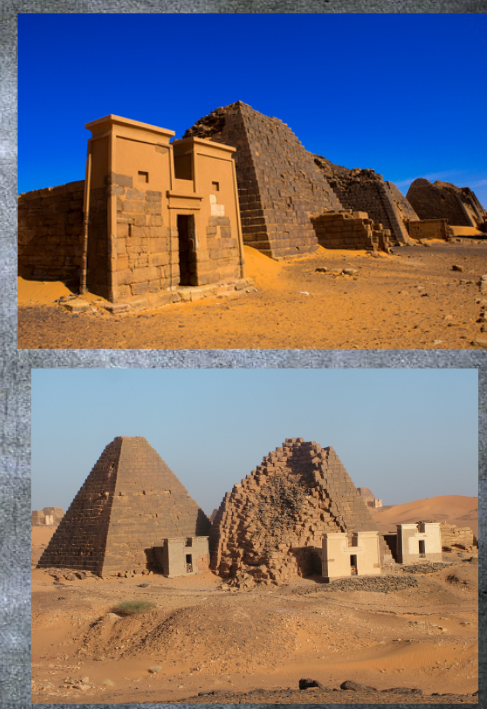
Capital kingdom of Kush
Where Meroitic script comes from
pyramids tombs of Kushite royals
chain of Nubian / kushite pyramids
pointy and steep
Meroe
Abydos
Resting place of the first pharaohs of Egypt
Said to be the resting place of Osiris
One of the first major cities in Egypt
Possible human retainer sacrifice
Akh
One aspect of the Egyptian Soul
Capable of moving between the living world and the netherworld
Egyptian equivalent of a ghost
Magic part of the soul
Ibis hieroglyph
Coffin Texts
Found on the insides of Coffins
List of spells for the deceased
Adapted version of the pyramid texts
Acted as a guide for the deceased
Free Masonry & Rosicrucian’s
Increasing interest in Egypt starting 17th-18th centuries
creation of frats and sororities dedicated to mysteries & secrets
Rosicrucian’s have a museum in San Jose
Influence on film & media like the 1932 mummy
Giza
Houses the Giza Necropolis, w/ the great pyramids & the sphinx
No writing on the walls of temples at Giza
Located on the West bank of the NIle
Part of the sacred landscape of the old kingdom
Hathor
The eye of Re
A cow goddess
Can manifest as Sekhmet
Shares iconography w/ Isis
Often painted w/ Horus
Imhotep
Architect of Djoser
Created the first step pyramids
Deified after death
Depicted as a seated scribe-like figure
Ka
One aspect of the Egyptian Soul
Depicted w/ the hieroglyph of raised hands
Ka Statues found in Serdab of tombs
Remains in tomb to accept offerings
Lector Priest
Wore a leopard print sash
Recited the spells & rituals of the temple
One of the highest ranking priests
Can be found in the triumph of Horus
Litany of Re
The 75 manifestations of Re
Found on papyrus scrolls & walls of tombs
Papyrus of Nanny is a litany of Re
Most depicted as black figures w/ varying heads
Alexandria
Significant city during the Hellenistic period
combined both classical and Egyptian features
Housed one of the 7 wonders of the world “Pharos’ Lighthouse”
Also, home of the temple of Serapis
Aspect & Manifestation
Manifestations are the physical or functional forms a god or person takes
This can include animal, human, or symbolic forms
Aspects are the different qualities or roles of a deity
Often combined through syncretism allowing one god to embody different forces
Beni Hassan
Egyptian cemetery used during the Middle Kingdom
Carved into the side of the mountain
Includes vividly painted, detailed scenes of daily life
Provides insight into Egyptian social structure, art and foreign trade
Byblos
Important port city serving as a key hub for trade
Known for its religious syncretism
Hathor merged with local deity Ba’alat and revered as “Mistress of Byblos”
Temple architecture shows Egyptian influence
Corpus Hermeticum
Classical texts, attributed to Hermes Trsimegistus (Thoth)
Written by Egyptians within a Hellenistic framework
Contain secret wisdom
Significant in the foundation of Freemasonry
Dahshur
Royal necropolis on the west bank of the Nile
Houses the Bent Pyramid, the red pyramid and the black pyramid
Mad of mud brick and is now eroded
Shows the evolution of pyramid building
Dionysus-Osiris
Syncretism btwn Osiris and Dionysis
Popular in Ptolemaic Egypt
Both associated with death resurrection and mystery cults
Greek-looking statue with a scepter in hand
Gebel barkal
Giant Sandstone mountain on Nile’s north bank
“holy Mountain”
cult center for Amun-Re in Nubia
Syncretism between Amun and Local Nubian deity believed to reside in the mountain itself
Lots of ram symbolism
Herems Trismegistus
Hermes merged with Thoth
Wrote the Corpus Hermeticum
Personifying the fusion of Egyptian and Greek intellectual traditions
Syncretism
Horapollo
Author of Hieroglyphica
Interpreted hieroglyphs as depicting ideas rather than sounds or direct words
Cemented that hieroglyphs were symbolic, not phonetic
Delayed the decipherment of hieroglyphs for a long time
Montuemhet
Kushite immigrant
Revived monumental tombs at Thebes and created new massive underground complexes
Kushite official who build his own societal tomb
black statue of a fam from the shoulders up
Mummies
Played a central role in Egyptian funerary beliefs
Evolved from preservation of the body to creating a sacred object and a vessel fro the soul
Available to elite at start and eventually everyone
Many cases animals were mummified as offerings
Naga
Nubian site during the Meroitic period
Includes important temples
Shows interweaving of Kushite, Egyptian and Hellenistic influences
Includes the Apedemak temple
Natron
Naturally occuring white chemical substance used in mummification
body packed with natron and exterior of the body
Dehydrating agent
Also used in glass making
Nut
Goddess of the sky, stars, cosmos, and the heavens above
Also associated with resurrection
Believed to swallow the sun every night and give birth to it every day
Human woman arching over the earth
Opening of the Mouth
Ritual associated with funerary ceremonies
Restored the deceased’s senses (ka) for the afterlife
Performed by a lector priest
Used a variety of tools such as adze
Osiris
Egyptian god of the dead
Father of Horus
Killed by Seth
Fertility, dead king considered to turn into Osiris in the afterlife
Philae
Temple complex on an island in the NIle
Egyptian temple with greek inspirations, and kushite lions
Show the persistence of Egyptian religion under foreign rule
Center for cultural change
Phyle
Teams responsible for the cult of the deceased king
Served in rotation to perform daily duties
Offerings, rituals, guard service
Part-time priests and workers
Ptah-Sokar_Osirirs
Merged deity of Ptah, Sokar and Osiris
Assisted the deceased in the afterlife
Small figurines with a spell inside found in tombs
Reflects the trend of syncretism and democratization of access to powerful divine assistance in the afterlife during the later periods
Pyramid Texts
Exclusive royal roadmaps to immortality
Collection of spells, prayers, hymns, and instructions to guide the king through death
Later democratized
Inscribed inside tombs
Qadeshet
Canaanite deity, linked with Re
Chapels dedicated in Memphis
Egyptian theology was open to incorperating foreign deities
Nude lady with a moon disk on her head, standing on a lion, holding a spear with a snake, and flowers
Reshep
Canaanite deity who was adopted into the Egyptian pantheon
Got of war, storms, and sudden death and healing and protection
Temples in Memphis
Man with white crown with an antelope head at the front
Saqqara
major necropolis and burial sight for Apis bull
Imagery of a cow carrying a deceased
Location of step pyramid of Djoser
Catacombs where apis bull is placed in sarcophagi
Sem Priest
For of priest commonly associated with the use of a leopoard skin cloak
Played a big role in the opening of the mouth
Acted as horus in rituals
Linked to the deceased as a stand-in
Serapis
New deity created by ptolemy to unify greeks and egyptians
Osiris and Apis and zeus, helios, dionysus, ascelpius and hades
Associated with Abundance, resurection, healing, and underworld
Bearded man with a pot on his head
Setna Khamwas
Character in Egyptian Literature
Involved in a quest for magical books
Encounters mummies ghosts, powerful sorcerers and moral dilemmas
Inspired by Ramses II
Snefru
4th Dynasty Pharaoh
build 3 pyramids
layed the ground work for pyramids at Giza
Bent Pyramid, Red Pyramid, Myramid ad Meidum
Sons of Horus
4 dieties that protected the internal organs of teh deceased
Each son responsible for a specific organ
Human head: liver
Baboon: lungs
Jackal: stomach
Falcon: intestines
Taharqa
Kishite king who ruled over Egypt and Nubia
Brought revival of egyptian culture and religion
Involved in Cult of Amun, amun and ram imagery
Depicted wearing a cap crown with 2 ureasu on it
Tanis
Egyptian city located in the northeastern Nile Delta.
Royal Necropolises containing undisturbed tombs
undisturbed tombs of several pharoahs and high officials
Tombs contained a lot of precious metals
Unas
Last Pharaoh of the 5th Dynasty
Known for his pyramid at Saqqara
Having the first pyramid texts
Texts written all ofver the walls in the tomb
Ushabti
Humanoid figurine often found in grave sites and tombs
Act as workers who perform tasks for the deceased.
Made from a variety of materials
Small mummiform figures with arms crossed

