Lecture 2 -- Comparative Abdominal Anatomy
 Studied by 0 people
 Call Kai
 Learn
Learn Practice Test
 Spaced Repetition
 Match
Match Flashcards
 Knowt Play
1/40

There's no tags or description
Looks like no tags are added yet.
Name | Mastery | Learn | Test | Matching | Spaced | Call with Kai |
|---|
No analytics yet
Send a link to your students to track their progress
41 Terms
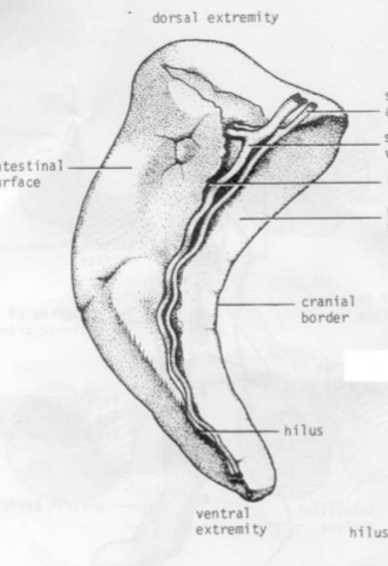
Which species’ spleen is shown in this picture? What are its characteristics?
Horse
Comma-shaped
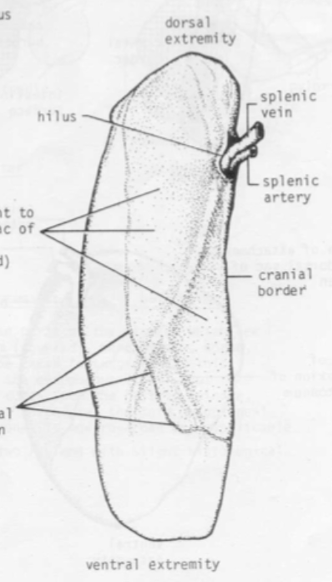
Which species’ spleen is shown in this picture? What are its characteristics?
Cattle
Tongue shaped
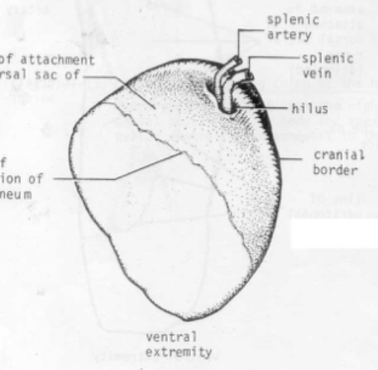
Which species’ spleen is shown in this picture? What are its characteristics?
Sheep
Oval
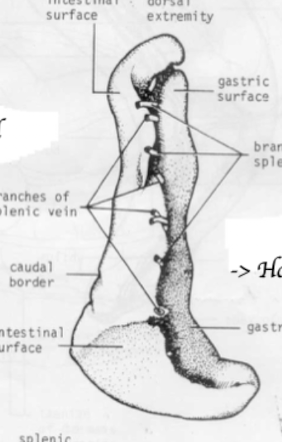
Which species’ spleen is shown in this picture? What are its characteristics?
Dog
Hockey stick shaped
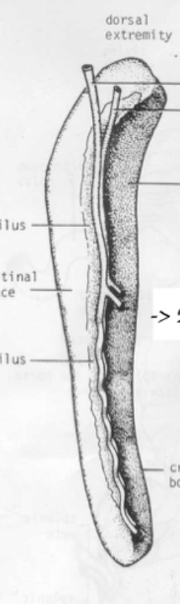
Which species’ spleen is shown in this picture? What are its characteristics?
Pigs
Elongated
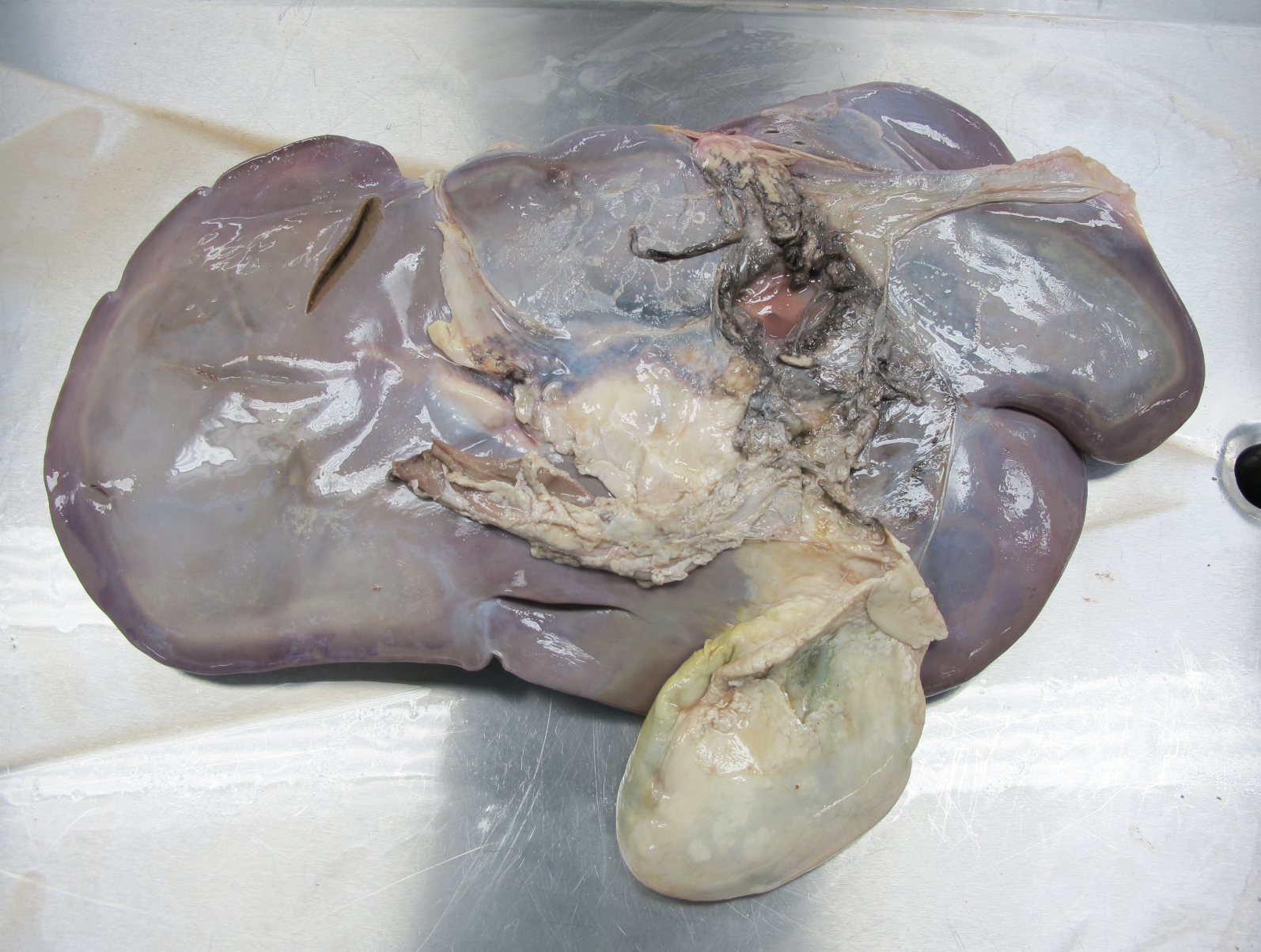
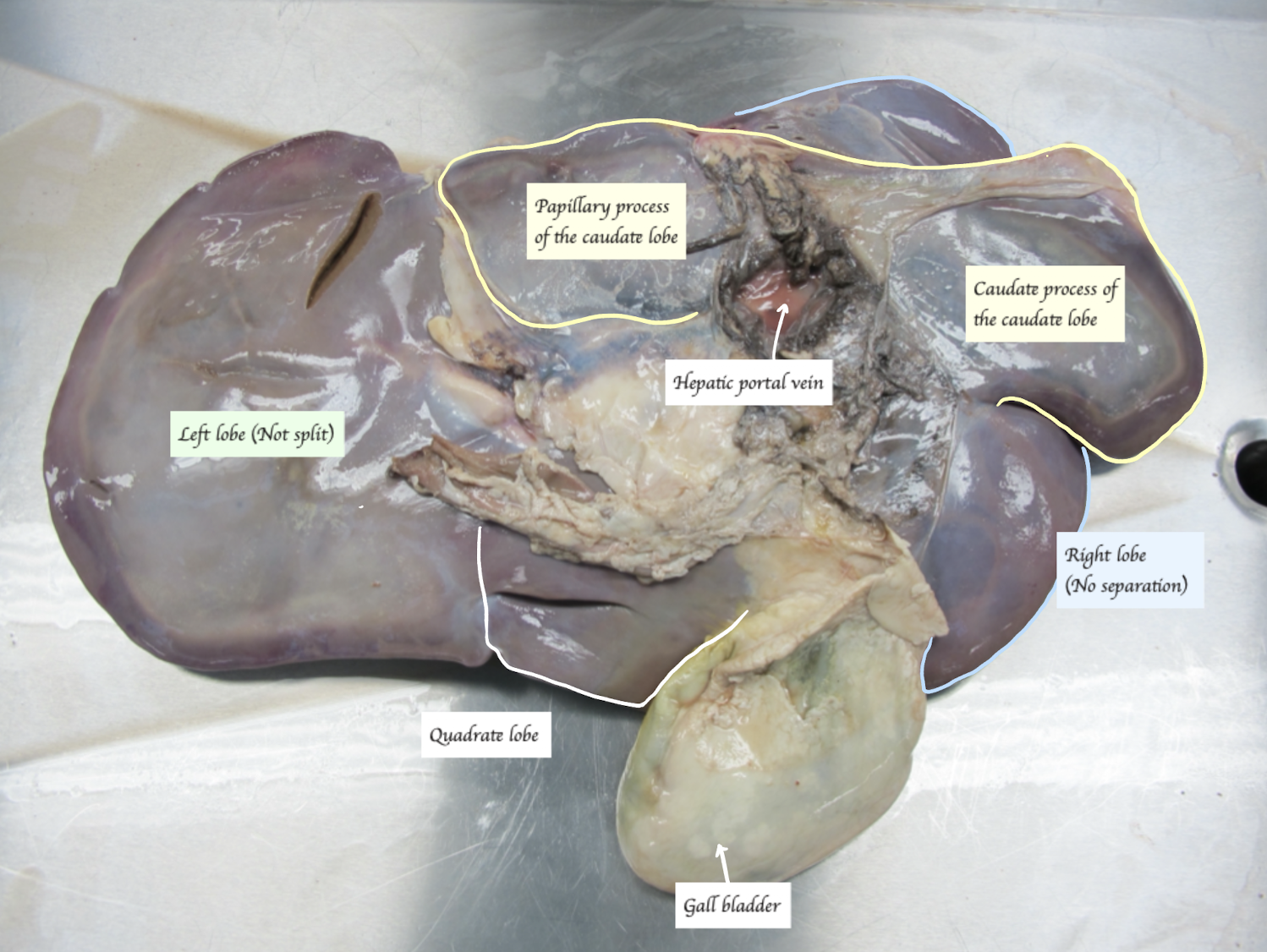
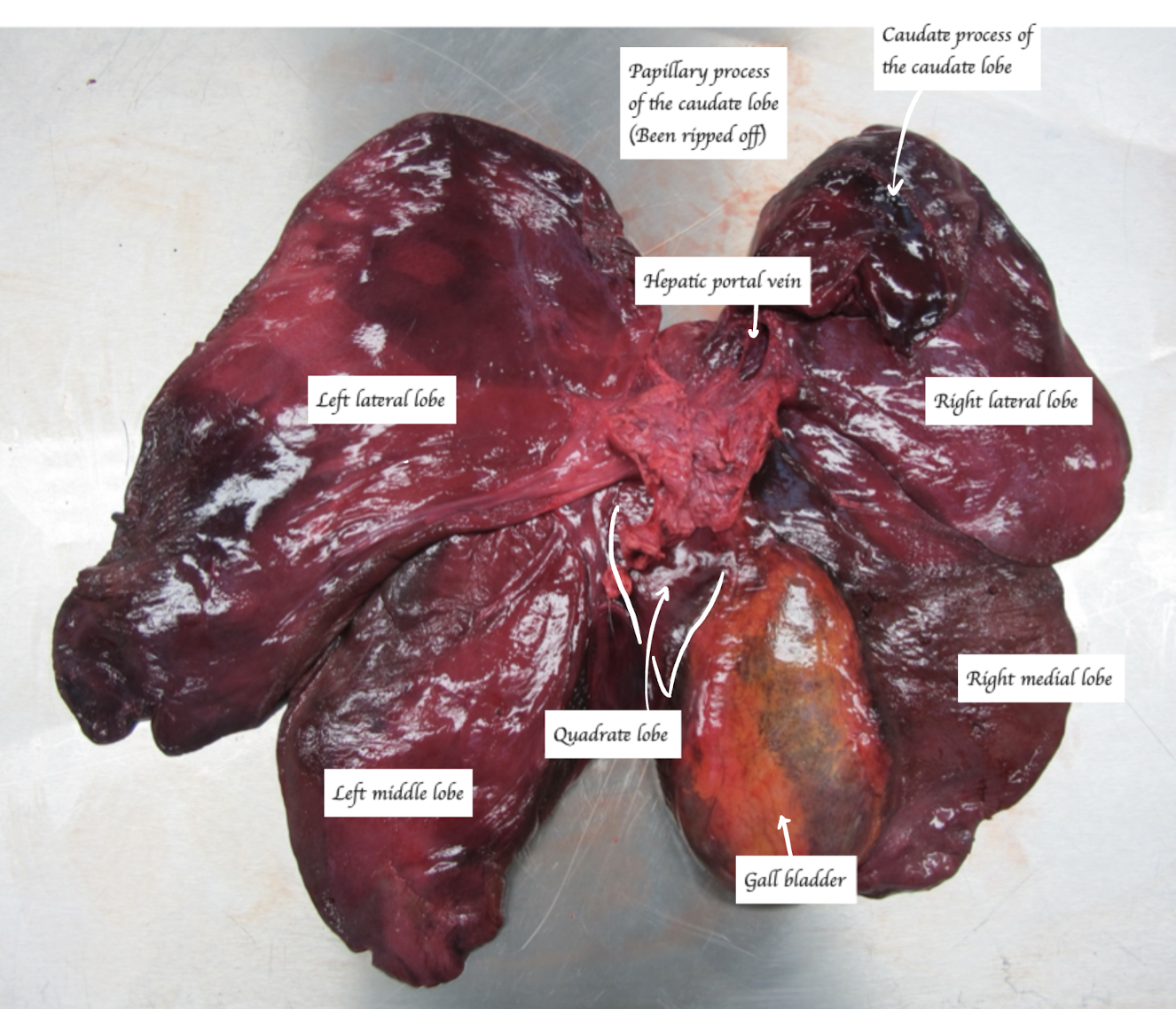
Which species’ liver is shown in this picture? What are its characteristics?
Ruminant
No separation on both left and right lobe of the liver
90 degree displaced → No contact with diaphragm → Breathing is not impinged by the liver
Caudate lobe
Papillary process is larger in sheep
Caudate process is larger in cow
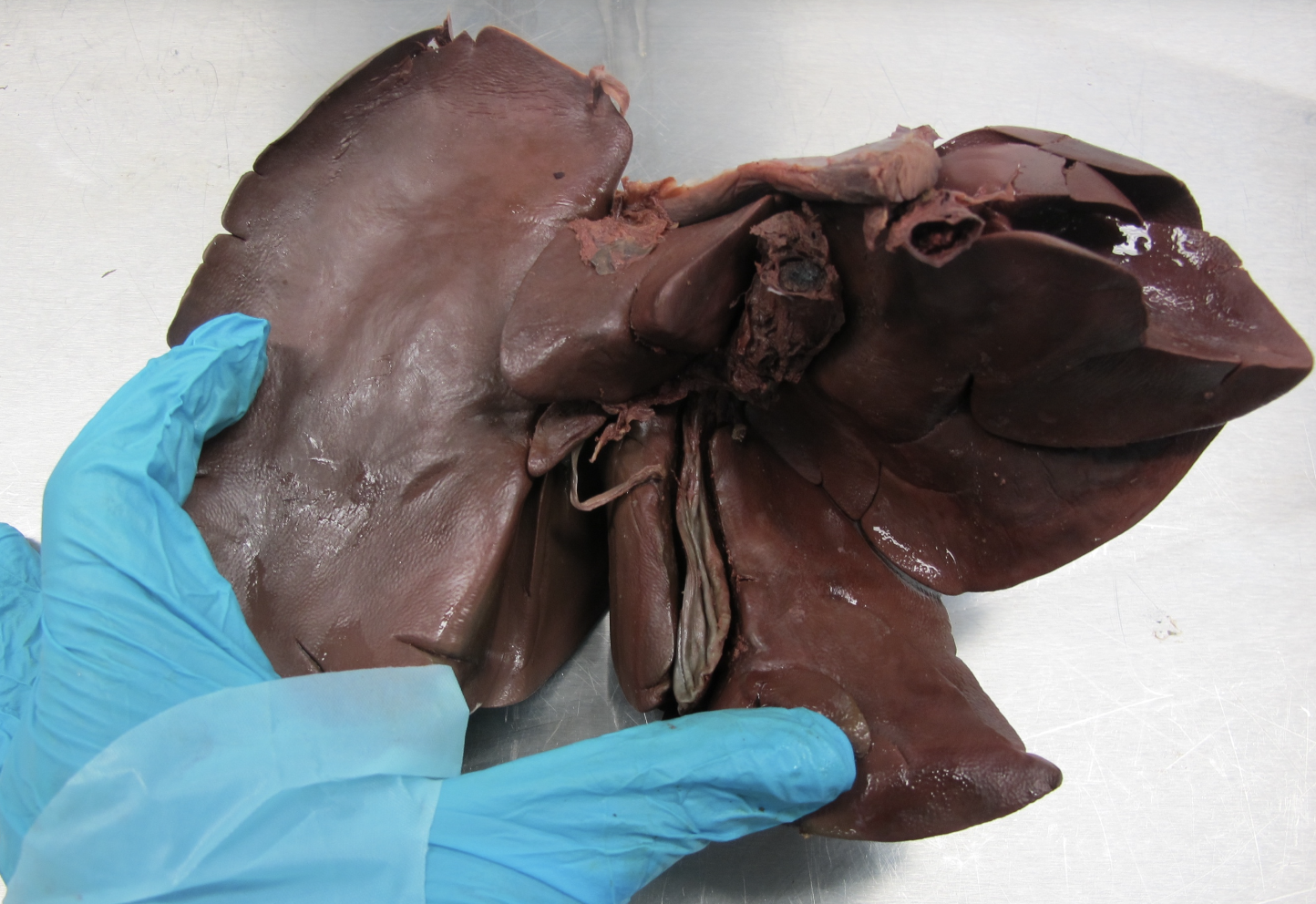
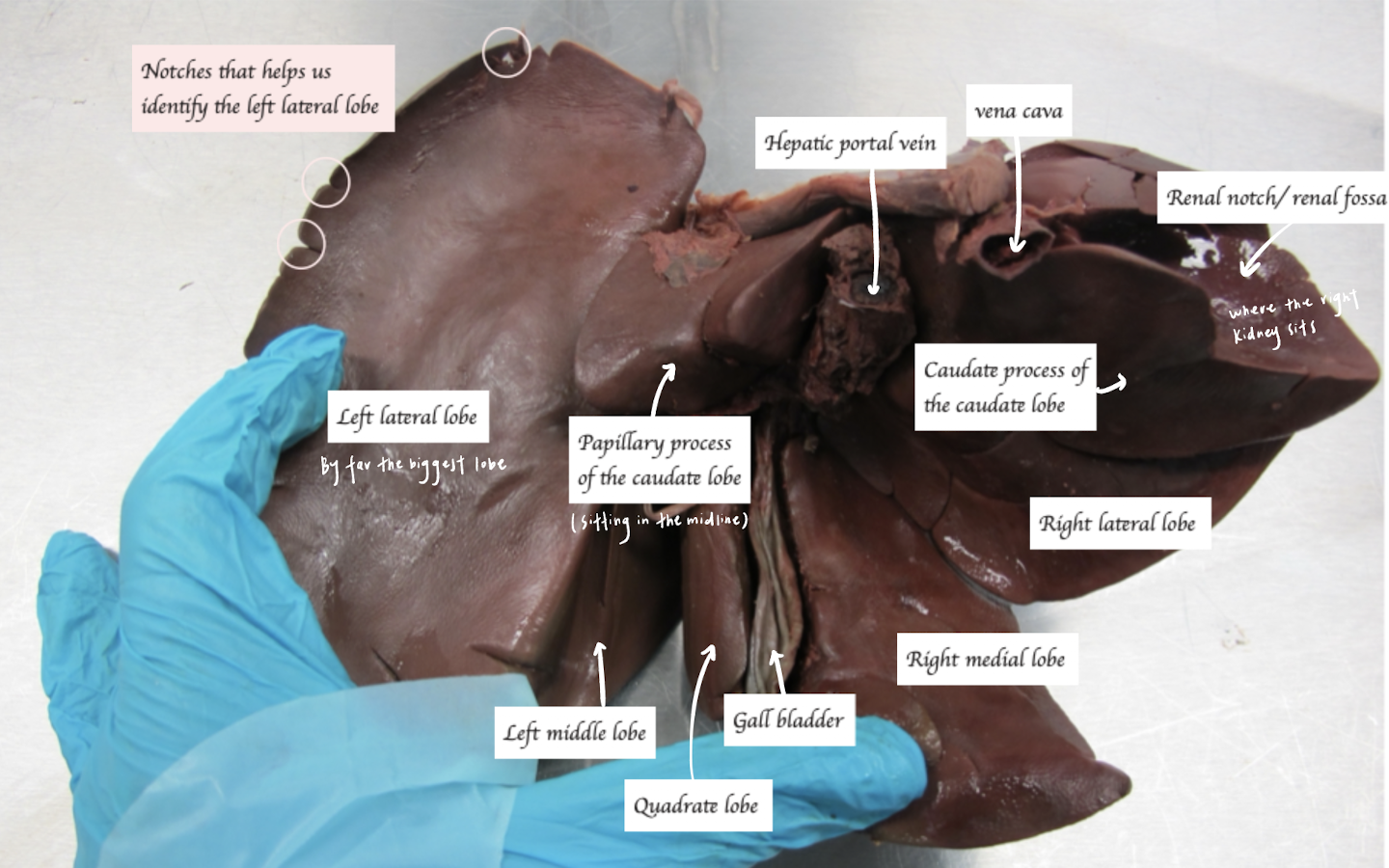
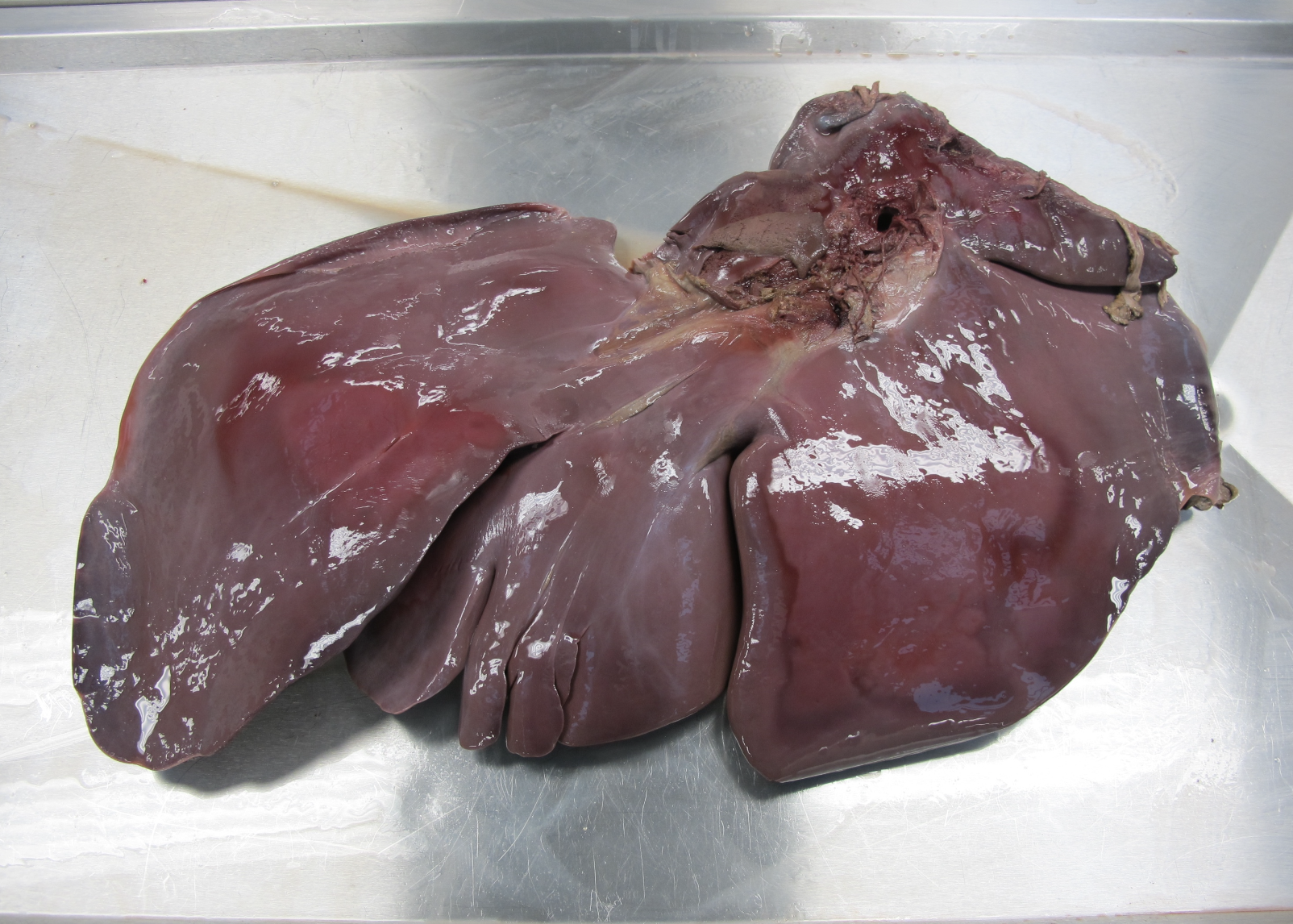
Which species’ liver is shown in this picture? What are its characteristics?
Dog
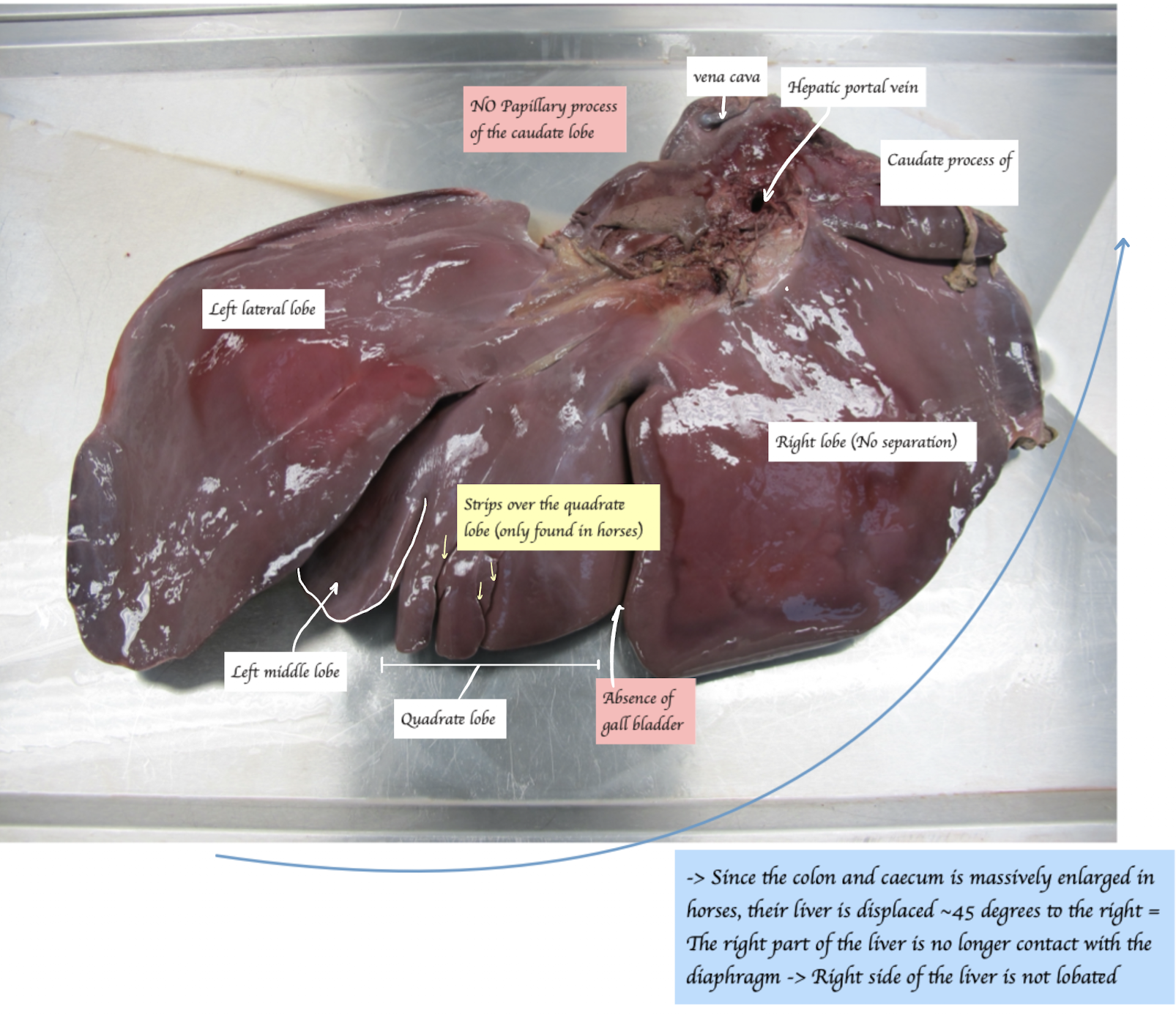
Which species’ liver is shown in this picture? What are its characteristics?
Horses
Only left lobe are separated into medial and lateral lobe
45 degree displaced to the right → Only left lobe comes into contact with the diaphragm
Difficult to identify left medial lobe and quadrate lobe (Left medial + Quadrate lobe are named as sission’s lobe)
Strips in quadrate lobe
No papillary process of the caudate lobe
No gall bladder
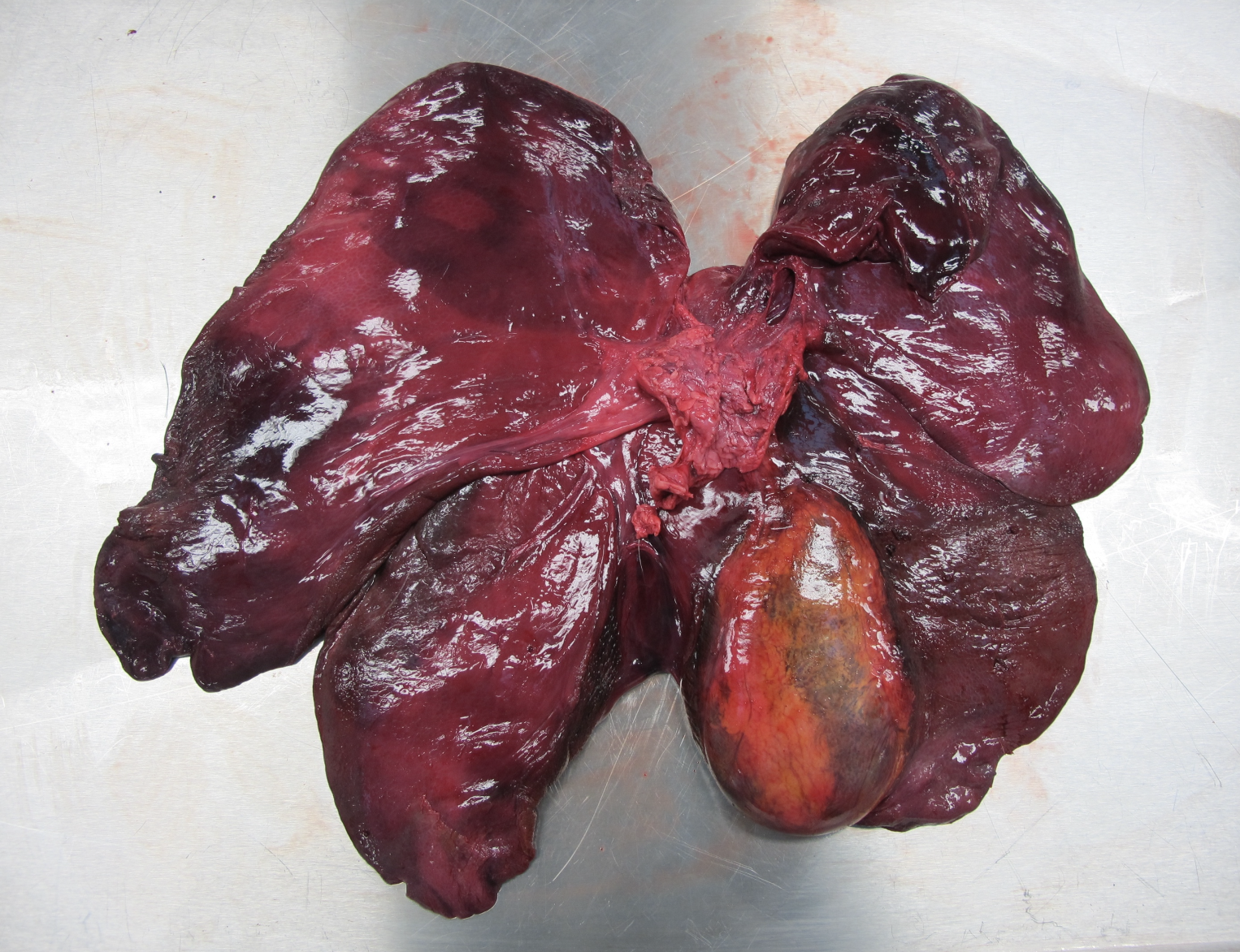
Which species’ liver is shown in this picture? What are its characteristics?
Pig
No renal notch (Since pig is elongated, there is no attachment between the right liver and the kidney)
Why are there two pancreatic ducts? What are they?
Development of pancreas: Two separate lobes and each of them with a duct = Two ducts (Pancreatic duct + accessory duct) → Then it fuses together into one
Which species have both pancreatic duct and accessory pancreatic duct?
Horses + Dogs
Which species have only pancreatic duct?
Sheep
Which species have only accessory pancreatic duct?
Cattle and pigs
Describe the embryological development of the stomach in the dog, pig, horse, and ruminants based on the type of epithelium
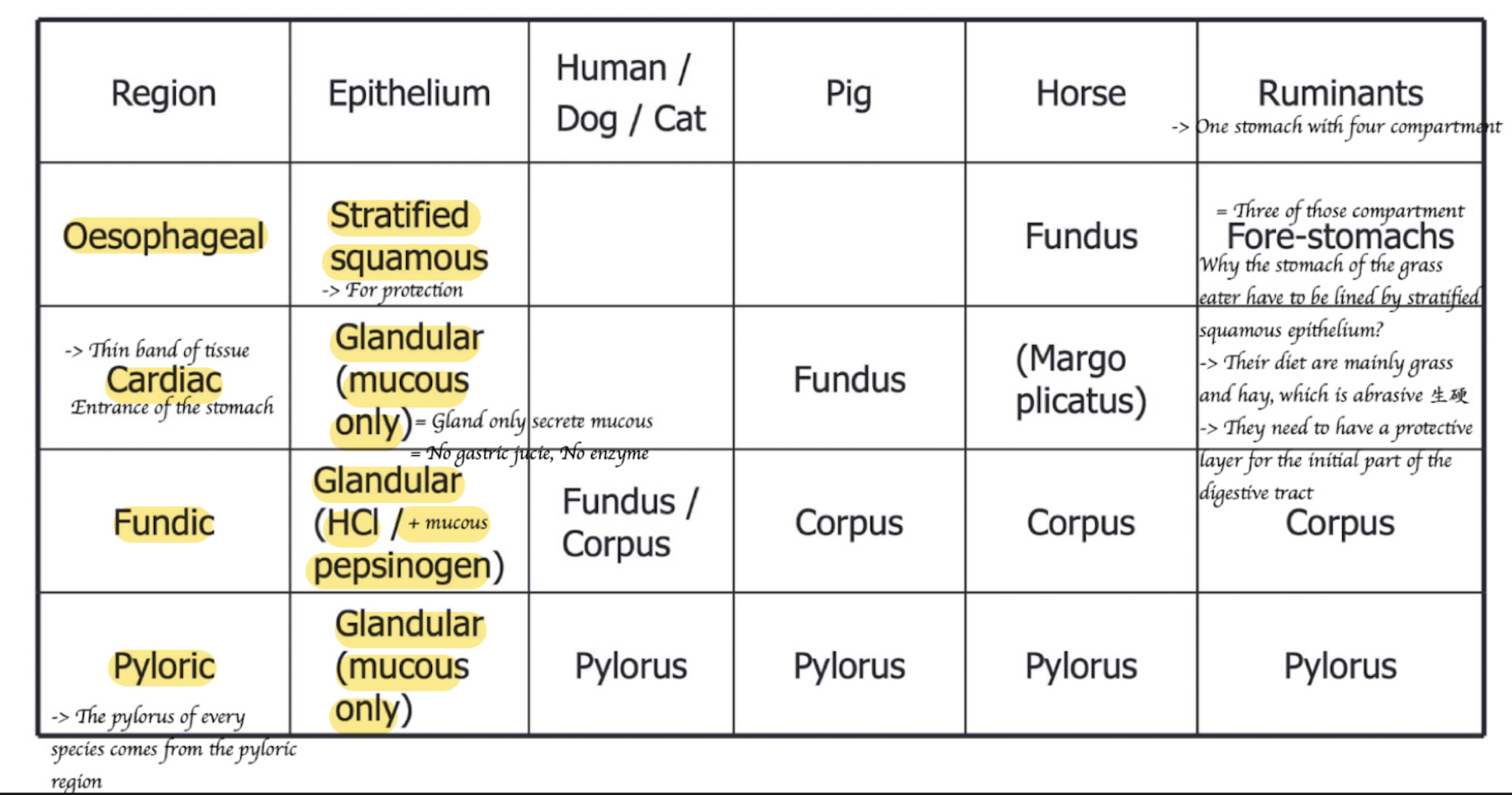
What are the special characteristics in pigs’ stomach?
Gastric diverticulum
A blind-ending extension of the fundus of the stomach
Derived from cardiac region embryologically, which is lined with glandular epithelium = Only secrete mucous → Pigs produce large amounts of salivary amylase
This mucus-secreting region protects salivary amylase from acid and pepsin → Allows continued carbohydrate digestion in the stomach
Torus pyloricus
Thickened muscular ridge at the pylorus that can be palpated
Unknown function
What are the special characteristics in horses’ stomach?
Saccus caecus
Enlargement of fundus
Derived from the oesophageal region embryologically, which is lined with stratified squamous
For protection
Margo plicatus
Derived from cardiac region embryologically
Narrow ridge marking the boundary between non-glandular and glandular stomach
Why can horses not vomit?
Due to the strong cardiac sphincter and the extreme angle of the esophagus as it passes through the diaphragm
What is the main function of the greater omentum?
Provides a large surface area for white blood cell migration → Seals off infection
Which species are highly susceptible to peritonitis?
Horse
They have a poorly developed greater omentum
Why are ruminants resistant to peritonitis?
Due to the massive development of the greater omentum associated with their large stomach
What is the epiploic foramen? How do we identify the epiploic foramen?
Opening that allows entry into the omental bursa
Locate the hepatic portal vein and caudal vena cava → Epiploic foramen is right between the two vessels
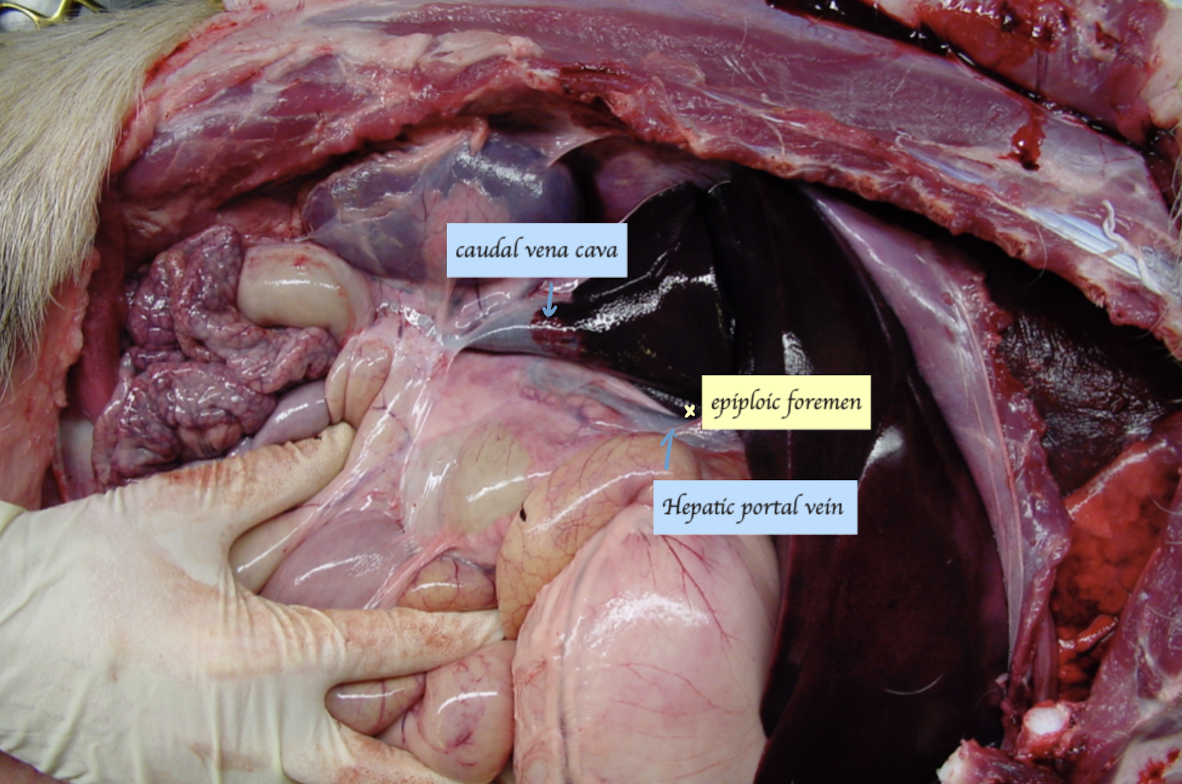
What is the significance of the epiploic foramen in horses?
Small intestine is long and has a same diameter to the epiploic foramen -> Get trapped easily = Epiploic foramen entrapment
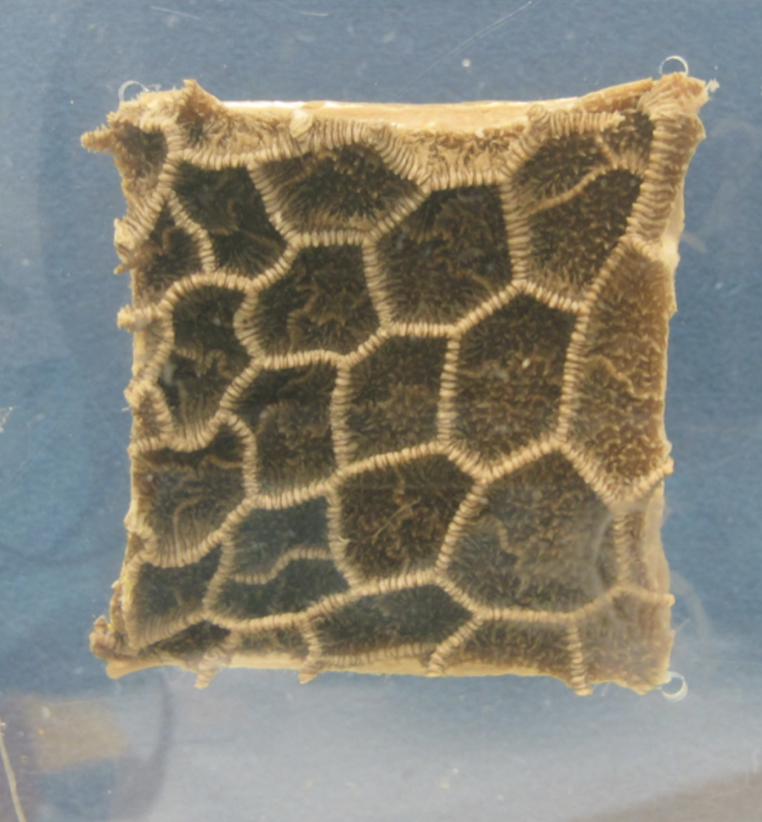
Which part of the ruminant stomach is shown in this picture?
Reticulum
Honeycomb structure
Heavy materials e.g. stones directly enters to the reticulum from the oesophagus → Muscular ridge contracts, preventing those materials from entering other parts of the stomach
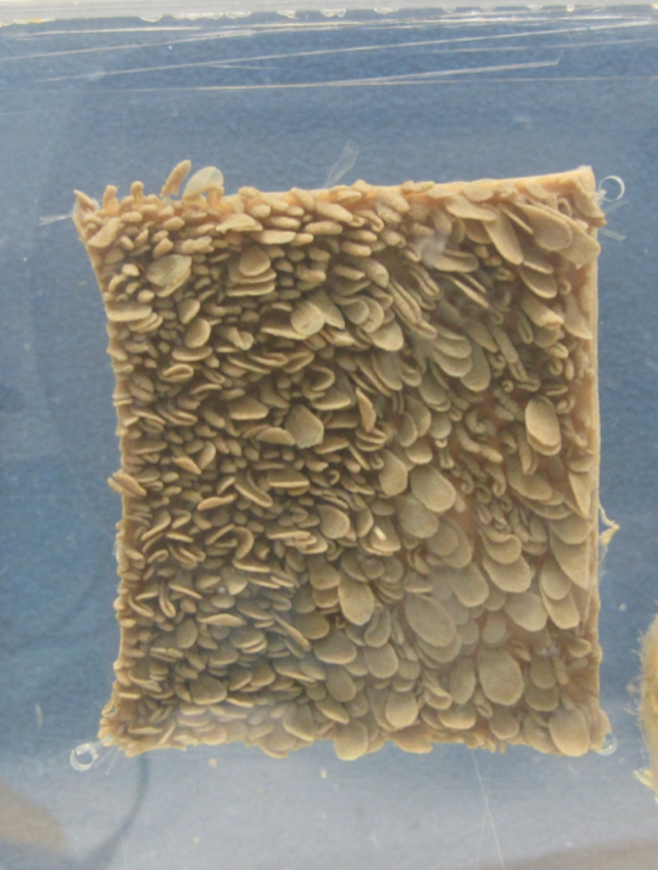
Which part of the ruminant stomach is shown in this picture? What is its function?
Rumen
Largest part of the ruminant stomach
Responsible for fermentation of food
Composed of papillae that increase surface area for absorption of end product of fermentation - Volatile fatty acids
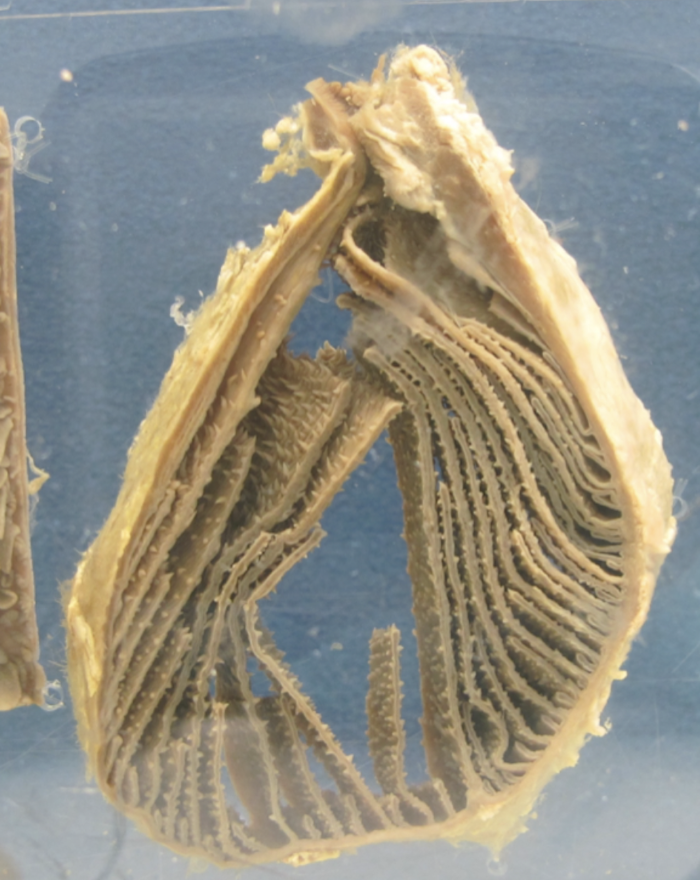
Which part of the ruminant stomach is shown in this picture? What is its function?
Omasum
Leaf-like fold = Omasal laminae
Increase surface area for absorption of water and the remaining fermentation products
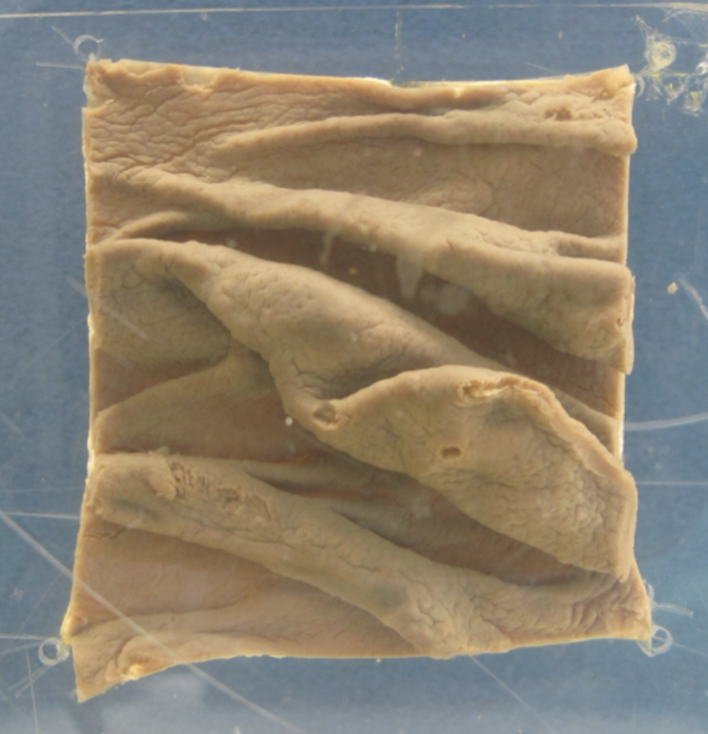
Which part of the ruminant stomach is shown in this picture? What is its function?
Abomasum
Glandular stomach → Secrete pepsinogen and HCl → Digestion of microbes as source of protein
Where is the caecum normally located in different species, and which species are an exception?
Normal location:
Right side
Exception:
Pig
Left side
How is the ascending colon arranged in pigs?
Centripetal coils (Outer part)
Sacculated
Have taenia bands
Centrifugal coils (Inner part)
Smooth
Why is the horse ascending colon highly modified?
Horses are hindgut fermenters → Ascending colon is greatly enlarged and adapted for fermentation
Describe the pathway of the large intestine in horses.
Ascending colon
Right ventral colon → 180degree turn at the sternum = Sternal flexure → Left ventral colon → Another 180 degree return upwards in the pelvis → Pelvic flexure → Left dorsal colon → 180degree turns right by the diaphragm → Diaphragmatic flexure → Right dorsal colon)
Traverse colon
Descending colon (Small colon)
What features of the horse large intestine aid in mixing and propulsion?
Sacculated (haustrated)
Taenial bands (longitudinal muscle bands)
How many taenial bands are present in each segment of the horse large intestine?
Segment | Taeniae |
|---|---|
Caecum | 4 |
Right ventral colon (RVC) | 4 |
Left ventral colon (LVC) | 4 |
Left dorsal colon (LDC) | 1 |
Right dorsal colon (RDC) | 3 |
Transverse colon | 2 |
Small colon | 2 |
Does the horse have an anti-mesenteric ileal artery?
NO
In dogs, the caecum is too small. Therefore, the caecal branch of ileo-colic artery branches off anti-mesenteric artery to supply the ileum
BUT in horses, the caecum is too large that not able to free up the ileo-colic artery
How is the horse caecum supplied?
By lateral and medial caecal arteries
What supplies the ventral colon in horses?
Colic branch of ileocolic artery
What supplies the dorsal colon in horses?
Right colic artery
What are the arterial supplies for the pig ascending colon?
Centripetal (proximal) coils:
Colic branch of ileocolic
Centrifugal (distal) coils:
Right colic
In ruminants, which stomach parts come from the lesser curvature of the embryonic stomach?
Omasum and lesser curvature of abomasum
What are the arterial supplies for the ruminant omasum and lesser curvature of abomasum?
Left and right gastric artery
In ruminants, which stomach parts come from the greater curvature of the embryonic stomach?
Ruminoreticulum and greater curvature of abomasum
What are the arterial supplies for the ruminant ruminoreticulum and greater curvature of abomasum?
left and right gastroepiploic arteries
 Note
Note  Flashcards (45)