Week 10 - aggression
 Studied by 0 people
 Call Kai
 Learn
Learn Practice Test
 Spaced Repetition
 Match
Match Flashcards
 Knowt Play
1/34

There's no tags or description
Looks like no tags are added yet.
Name | Mastery | Learn | Test | Matching | Spaced |
|---|
No study sessions yet.
35 Terms
Aggression:
Aggression: intentional behaviour aimed at causing physical harm or psychological pain to another person
Assertiveness:
having or showing a confident and forceful personality
Instrumental aggression:
intentional harm inflicted as a means to another goal (e.g., footballers tackling each other)
Hostile aggression:
stems from anger and is aimed purely at inflicting pain or injury
Extremism:
the promotion of an ideology based on violence or hatred, which aims to violate the fundamental rights and freedoms of others
Misogynistic extremism:
the promotion of an ideology aimed at reinforcing male superiority and punishing women who don’t conform to patriarchal standards of behaviour.
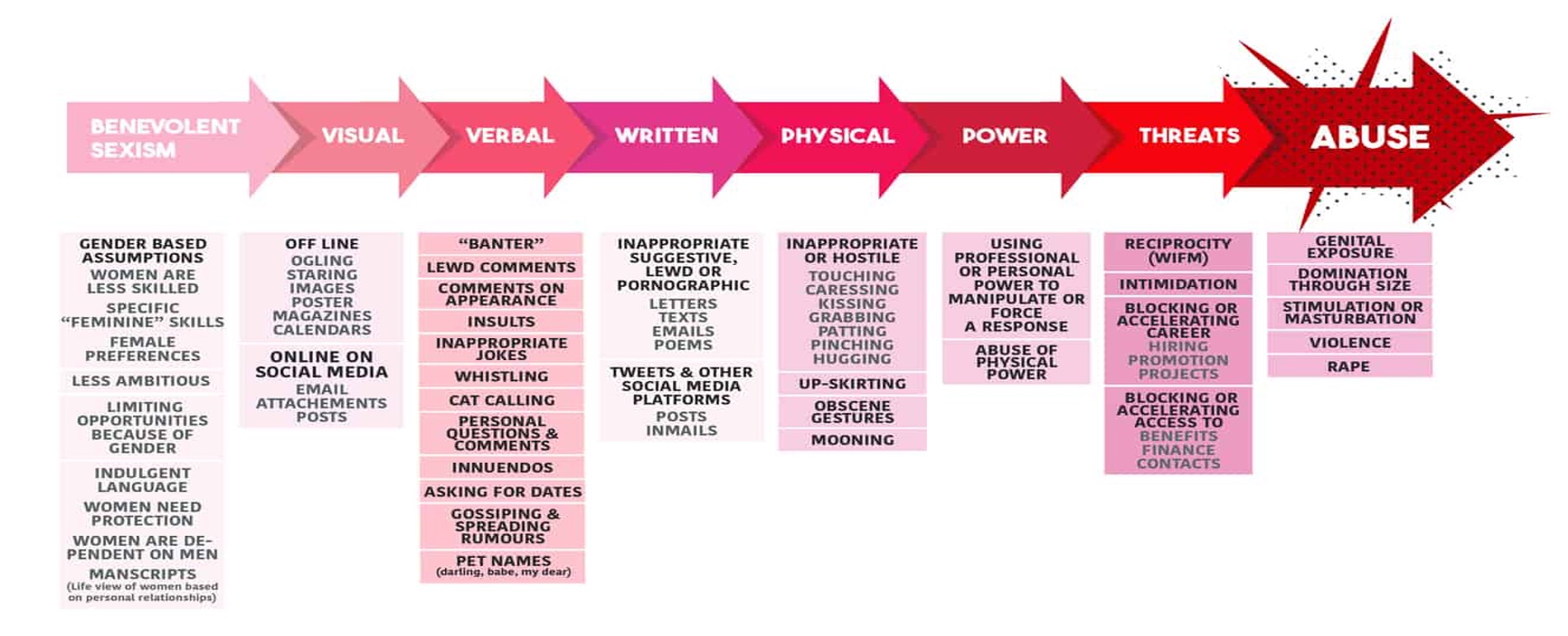
mysogyny is a spectrum
INCELS - overview
•Incels are a recognised extremist group in the UK*
•When talking about aggression, incels are an appropriate example
INVOLUNTARY + CELIBATE
However; not based on that anymore. More self identifying with violence.
Over the last decade - 50 acts of terrorism associated with INCELS
e.g. 2014 - Isla Vista, California. - drove around the city shooting, stabbing or running over people. Killed 6. Injured 14. killed himself after and is now known as ‘Saint Elliot’ when other INCELS discuss him.
Not all incels are terrorists
Around tens of thousands of incels.
•Current definition: "Incels are a primarily online sub-culture community of men who forge a sense of identity around their perceived inability to form sexual or romantic relationships." (Whittaker & Costello, 2024, p. 6)
Believed to not be able to get sex from women and are therefore very angry. Mostly can online culture. rarely meetings - dont meet like other terrorist groups.
Due to having difficulty socialising
Broadly shared beliefs tying incel communities together
We can explain incel ideology as having 3 main components:
1. the belief in an oppressive biosocial hierarchy
2. a rigid us-versus-them mentality
3. an overarching, nihilistic crisis narrative called the blackpill
OPPRESSIVE BIOSOCIAL HIERARCHY
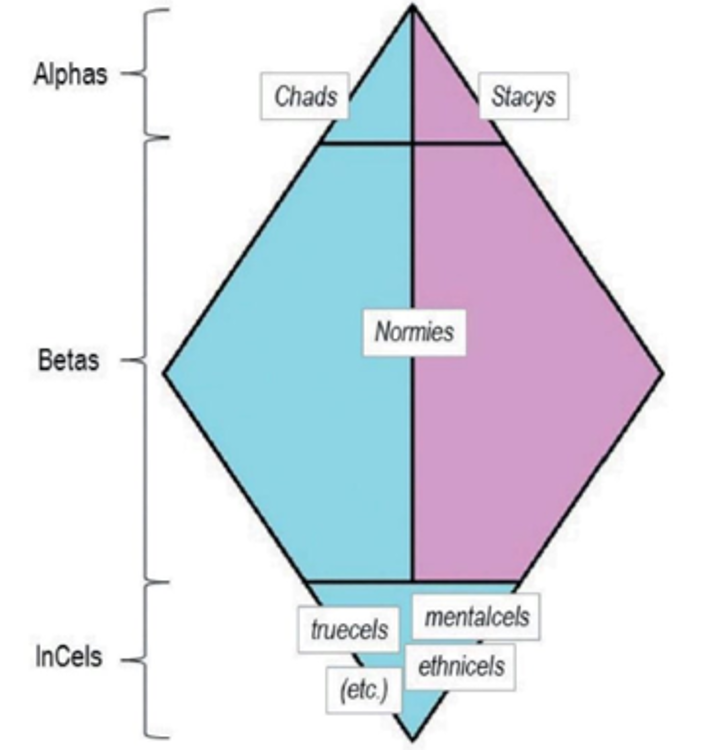
Incels believe in biological hierarchy in human attractiveness that governs sexual and romantic access. This attraction therefore determines social status
Belief top 20% of men are hyper attractive, high social status. Charismatic dudes they call ‘Chads’
Believe these men get sexual access to 80% of women.
Also believe 70% will be average - normies or betas. Get sexual access to only 20% of women.
Bottom of heir achy = where incels lies. Most physically unattractive, weirdest, lowest status, least sociable. No sex available.
No belief that 0 women have no access to sex - all women can get sex. Therefore incels are only men
Causes anger as they believe that they have a biological right to have sex from women but women are unfairly gratekeeping this right from them because they are too unattractive.
Resentment towards women.
RIGID US-VERSUS-THEM MENTALITY incels
• Incels see the social world in binary, oppositional terms:
oIncels = oppressed
oNormies, Chads, and women = privileged outgroups
Incels are socially excluded based on looks.
Conceptualise ingroup members as heroes and saints.
Outgroup = dehumanising. Women = roasties or foids.
Strongly reinforced through incels’ particular lexicon, which conceptualises ingroup members as heroes and saints, and describes outgroup members in dehumanising terms like “foids” or “roasties
NIHILISTIC CRISIS NARRATIVE - the black pill
World view of despair, hopelessness and belief their status of incel is unchangeable. = blackpill
Red pill - woken up to reality where women are the true oppressors as they gatekeeper sexual access and men are victimised and suffering. Also believe there is nothing that can be done to resolve it because you are born ugly - black pill.
Manisphere - area of internet that believe in this.
males vs females - aggression
•Males are more aggressive than females (Hillshafer, 2013)
•Males are more likely than females to…
•get into unprovoked acts of “picking a fight” with a stranger
•join in a flash mob of destruction and looting
•commit crimes of violence (e.g., murder, aggravated assault, rape)
EVOLUTIONARY PERSPECTIVES of aggression
•Males behave aggressively to attain status and offspring: the "Law of Battle" (Buss, 2004)
Female chooses male who offers greatest protection and resources - dominance over other men.
•Males aggress “jealously”
To ensure their paternity
This approach states women’s choosing is what caused aggression in males today.
DOMESTIC VIOLENCE
•According to national data from On Track, 94.1% of the perpetrators of domestic abuse against female partners were men (Women’s Aid Federation of England, 2025)
•Across a larger sample of domestic homicide reviews , 89% of known perpetrators were male. So we see here that a lot of the time, perpetrators of domestic violence are men (ONS, 2024)
Testosterone Fuels Male Aggression (Moyer, 1983; Sapolsky, 1998)
(Moyer, 1983; Sapolsky, 1998)
•Animals whose testosterone was removed became less aggressive
•Animals injected with testosterone became more aggressive
•Higher testosterone levels among prisoners convicted of violent crimes
•These studies, however, are correlational, and causality runs in both directions:
Being in an aggressive, competitive, or sexual situation increases the production of testosterone (Thompson et al., 1990; Mazur & Dabbs, 1992)
Bidirectional - situation where aggression is needed increases testosterone.
Testosterone-aggression link depends on the situation!
Challenge Hypothesis (Buss, 2002)
Testosterone relates to aggression only when there are opportunities for reproduction
Dual Hormone Hypothesis (Mehta & Josephs, 2010)
Testosterone relates to aggression only when the stress hormone, cortisol, is not elevated
AGGRESSION IN cats
Raised a kitten in the same cage with a rat (Zing Yang Kuo, 1961)
Cat refrained from attacking the rat and become close companions
Generalised to other rats - Aggression is learned?
Rats Raised in isolation (Eibl-Eibesfeldt, 1963)
Will attack a fellow rat when one is introduced
Same pattern of attack as experienced rats - Aggression is innate but modified by experience!
•Aggression is nearly universal to species, suggesting that there is at least some innate predisposition to behaving aggressively.
•BUT: Nearly all organisms have evolved inhibitory mechanisms that allow them to suppress aggression when it’s in their best interest to do so.
•Human morality
We have clearly learned that, often, it’s in our best interests to curb aggression in service of a so-called greater good
RELATIONAL AGGRESSION - behaviours like rumour spreading, causing emotional harm, exclusion
•Study by Ostrov et al. (2004)
3–5-year-old children playing in groups of 3
Instructed to use a crayon to colour a picture on a white sheet of paper
Only one was a colour (orange) and the rest were white
Findings:
Boys used psychical aggression to get it
Girls used relational aggression
•Relational aggression as a way to:
•Protect offspring
•Increase reproductive success via social networks
•Protect status, resources, and alliances without the high costs of using direct physical violence
alcohol and aggression
•Link between alcohol and aggression appears even among those who have not been provoked and are not aggressively natured (Bailey & Taylor, 1991; Graham et al., 2006)
•Consuming alcohol in the last 4 hours makes you 3.6 times more likely to engage in physical aggression and 1.36 times more likely to engage in relational aggression (Testa & Derrick, 2014)
•Alcohol reduces anxiety and lowers social inhibitions, making us less cautious (MacDonald et al., 1996)
alochol increases aggression by reducing activity in the orbital frontal cortex - part of the brain that plans and controls behaviour
Think-drink effect
Bègue et al. (2009)
•116 men - one third (non-alcoholic drink), one third(modest amount of alcohol), one third (high amount of alcohol)
•Manipulated drinkers’ expectancies of how much alcohol they were drinking
•DV = Men’s behaviour toward a research confederate who had behaved aggressively toward them
The more alcohol ppts believed they were drinking, the more aggressively they behaved
•Alcohol does have physiological effects on cognition and behaviour; but these interact with what people have learned about alcohol
discomfort and aggression
Pain
Increases aggression (Berkowitz, 1983) - students with arm in cold water were more aggressive to peers than those without arm in cold water.
Discomfort
Increases aggression: Heat, humidity, air pollution, and offensive odours (Stoff & Cairns, 1997)
•Lab experiments allow us to control for confounding variables
•Griffitt & Veitch (1971):
oStudents took the same test under different conditions: Some worked in a room at normal room temperature, while others worked in a room where the temperature reached 90 degrees F
oRESULTS: Students in the hot room not only reported feeling more aggressive, but also expressed more hostility toward a complete stranger whom they were asked to describe and evaluate.
OBSERVATIONAL LEARNING social-Cognitive Learning Theory:
We learn social behaviour by observing others and imitating them
But observational learning in human beings cannot be fully understood without considering the thought processes and perceptions of the learner (Mischel & Shoda, 1995)
•Bandura's Bobo Doll Studies
•Watching violence increases the frequency of aggressive behaviour, angry emotions, and hostile thoughts (Bushman et al., 2015; Greitemery & McLatchie, 2011; Huesmann et al., 2013)
Experiment (Liebert & Baron, 1972)
•Children watched a violent police drama or a nonviolent TV sporting event
•Violent Police Drama condition: children behaved far more aggressively with their playmates than those who watched sporting event
Non consistent results :(
OBSERVATIONAL LEARNING social-Cognitive Learning Theory: Longitudinal Research
•More violence children watch, the more aggressively they behave later (Anderson et al., 2003; Eron, 1987, 2001; Johnson et al., 2002) as teenager and young adults, 700 families tracked over 17 years. Watching violent content correlated to later committing acts of violence or assault - regardless of income, education or neighbourhood violence.
•Consumption of media violence predicted verbal, relational, and physical aggression and less prosocial behaviour (Gentile et al., 2011)
•One explanation for this connection between violent media and subsequent violent behaviour is desensitisation:
Repeated exposure to violence reduces physiological arousal and emotional responsiveness
•Cline et al. (1973):
oYoung men who watched a lot of television in their daily lives showed little physiological evidence of excitement, anxiety, or other arousal when watching a violent boxing match
Those who watched relatively little TV showed major physiological arousal
SOCIAL SITUATIONS AND AGGRESSION - FRUSTRATION. •Barker et al. (1941) - Toy Study
•Half the children had to wait to play with attractive toys
•Half the children were allowed to play immediately
•RESULTS:
•Frustrated group showed aggression
•Control group did not show aggressive behaviours
relative deprivation
Frustration is not the same as absolute deprivation
•Instead, aggression arises from relative deprivation—or the gap between what you expect or believe you deserve and what you actually have
•Relatedness frustration is a prominent risk factor for violent extremism (Waterschoot et al., 2025)
•Many riots occur in times of relative deprivation
•Goal proximity and illegitimacy - •Harris (1974):
Confederates cut ahead in queues in settings such as cinemas, restaurants, and supermarkets. People who were very close to the front reacted much more aggressively than those further back
•The closer the goal, the more intense the frustration when it is blocked.
•Some work has shown that if the frustration is understandable, legitimate, and unintentional, the tendency to aggress will be reduced
•Study: When a confederate “unwittingly” sabotaged his teammates’ effort to solve a problem because his hearing aid had stopped working, the teammates’ resulting frustration did not lead to a measurable degree of aggression.
Displaced aggression:
When people can't express their anger towards the true source of frustration, they displace it onto weaker, more accessible targets.
•E.g., Rises in domestic violence after football teams lose important matches (Kirby et al., 2013)
PROVOCATION: - SOCIAL SITUATIONS AND AGGRESSION
•Provocation is one of the strongest predictors of aggressive behaviour
•Baron (1988): Participants who were harshly criticised on a task were significantly more likely to retaliate when given the chance
•Provocation is so powerful that it can eliminate gender differences in aggression
•BUT: Retaliation depends on interpretation!
Johnson & Rule (1996): Participants insulted by an assistant behaved less aggressively if they were told beforehand that the assistant had just received an unfair grade and was upset. Those who were informed after the insult behaved more aggressively.
Knowing the context beforehand reduced physiological arousal and led to less retaliation.
AGGRESSIVE CUES: - SOCIAL SITUATIONS AND AGGRESSION. The Weapons Effect (Berkowitz & Lepage, 1967):
The increase in aggression that can occur because of the mere presence of a gun or other weapon. ppts who saw a gun instead of a badminton racket administered more shocks to partner

•Klinesmith et al. (2006): the weapons effect
Men who interacted with a gun for 15 minutes showed increased testosterone levels compared to men who played with a children’s toy
THE WEAPONS EFFECT - LIMITATIONS
•Very small sample sizes of mainly male American undergraduates
•Because the weapons were often very salient, participants might guess the hypothesis or feel nudged towards aggression
•Early studies couldn’t disentangle whether the weapon produced aggression, general arousal, threat, anxiety, or simply distraction
LONELINESS: - SOCIAL SITUATIONS AND AGGRESSION
•Chronic social disconnection heightens sensitivity to perceived rejection and threat, increasing likelihood for aggression (Caciopo et al., 2014)
•In young men, loneliness has been linked to greater susceptibility to online radicalisation (Tirkkonen & Tietjen, 2025) and misogynistic ideologies (Langenkamp, 2025)
•Among incels:
Blackpill ideology inherently connected to self-directed and other-directed violence
CULTURAL FACTORS AND AGGRESSION
Humans are a lot less aggressive now than we were 300 years ago - societal factors stopping aggression - culturally unacceptable.
Lack of threats to survival
When men live in cultures that lack internal and external threats to their survival, there is less aggression overall (Gilmore,1990; Kimmel, 2012)
Kim (2025) - economic mobility and sexism in Korea
Men who were told about rising unemployment rates in Korea exhibited much higher support for hostile sexism than men who were not told this information. Aggression occurs when threat is present.
•Social Identity Theory (Tajfel & Turner, 1979)
People derive a sense of self from the groups they belong to
We naturally categorise ourselves into social groups, favour our own group, and compare it against other groups to maintain a positive social identity
This process makes us sensitive to threats to our group’s status, which can lead to aggression toward out-groups
GROUP MORALITY AND AGGRESSION
•Morality plays a central role in shaping how groups define themselves, relate to others, and manage social boundaries (Aquino & Reed, 2002) groups view themselves as morally superior to outgroups. Shared moral believes strengthen group cohesion.
•Ideology is directly underscored by moral values. Thus, exposure to ideological opponents can evoke a sense of threat to the ingroup’s morality (Ellemers & van der Bos, 2012; Haidt et al., 2003)
•This facilitates ingroup members’ endorsement of outgroup-directed aggression and violent extremism (Atran & Ginges, 2012, 2015; Ginges, 2019)
HOW TO DECREASE AGGRESSION
What doesn’t work…
Victim-blaming: Participants who inflicted harm on an innocent person derogated their victims and convinced themselves the victim deserved what they got
This made it easier to do further harm to the victim in the future
Punishment - aggressive punishments models behaviour and increases aggression
If aggressive act is used for punishment:
Punishers model aggressive behaviour --> might induce child to imitate their action
Threat of mild punishment, however:
Powerful enough to get the child to stop the undesired activity
Catharsis - ‘blowing off steam’ / putting aggression elsewhere, makes people more aggressive.
Patterson (1974): Measured hostility in high-school football players before and after the football season. If catharsis worked, hostility should have decreased after months of aggressive play—instead, it increased
Further aggression increases cognitive dissonance so reasons behaviour e.g. they deserved it
What does work …
•Self-awareness
Becoming aware of the anger
Learning to communicate your feelings
Journalling
•Empathy
Interventions to teach children to perspective-take – children were more generous, more empathetic, and less aggressive
HOW TO DECREASE INCEL EXTREMISM
What doesn't work…
Typical counter-extremism strategies targeting group structure or hierarchy, as incels cannot be untangled from societal misogyny (Carian et al., 2024; Daly & Reed, 2022). Incels are too disconnected as across internet therefore typical strategies does not work.
Securitising incels as a 'unique form' of misogynistic violence. INCELS should be identified as an extreme example as broader issues in society.
Seeing extremism as a product of mental illness
Incels have high rates of depression, anxiety, and autism compared to the general population (Ali & Zannettou, 2024; Costello et al., 2025; De Vettor et al., 2025; Fontanesi et al., 2024)
But seeing incel ideology as a result of only mental illness legitimises their violence.
What DOES work…
Addressing stigma
• Compared to a non-incel man, incels are rated by the general public as significantly lower in warmth, competence, and morality
•People also indicate that they’re significantly less likely to want to socially engage with someone who has incel beliefs.
-Therapy
Challenging cultural narratives around masculinity, gender roles, male supremacy
 Note
Note  Flashcards (108)