Ecology Exam 2 낱말 카드 | Quizlet
 Call Kai
 Learn
Learn Practice Test
 Spaced Repetition
 Match
Match Flashcards
 Knowt Play
1/118

There's no tags or description
Looks like no tags are added yet.
Name | Mastery | Learn | Test | Matching | Spaced | Call with Kai |
|---|
No analytics yet
Send a link to your students to track their progress
119 Terms
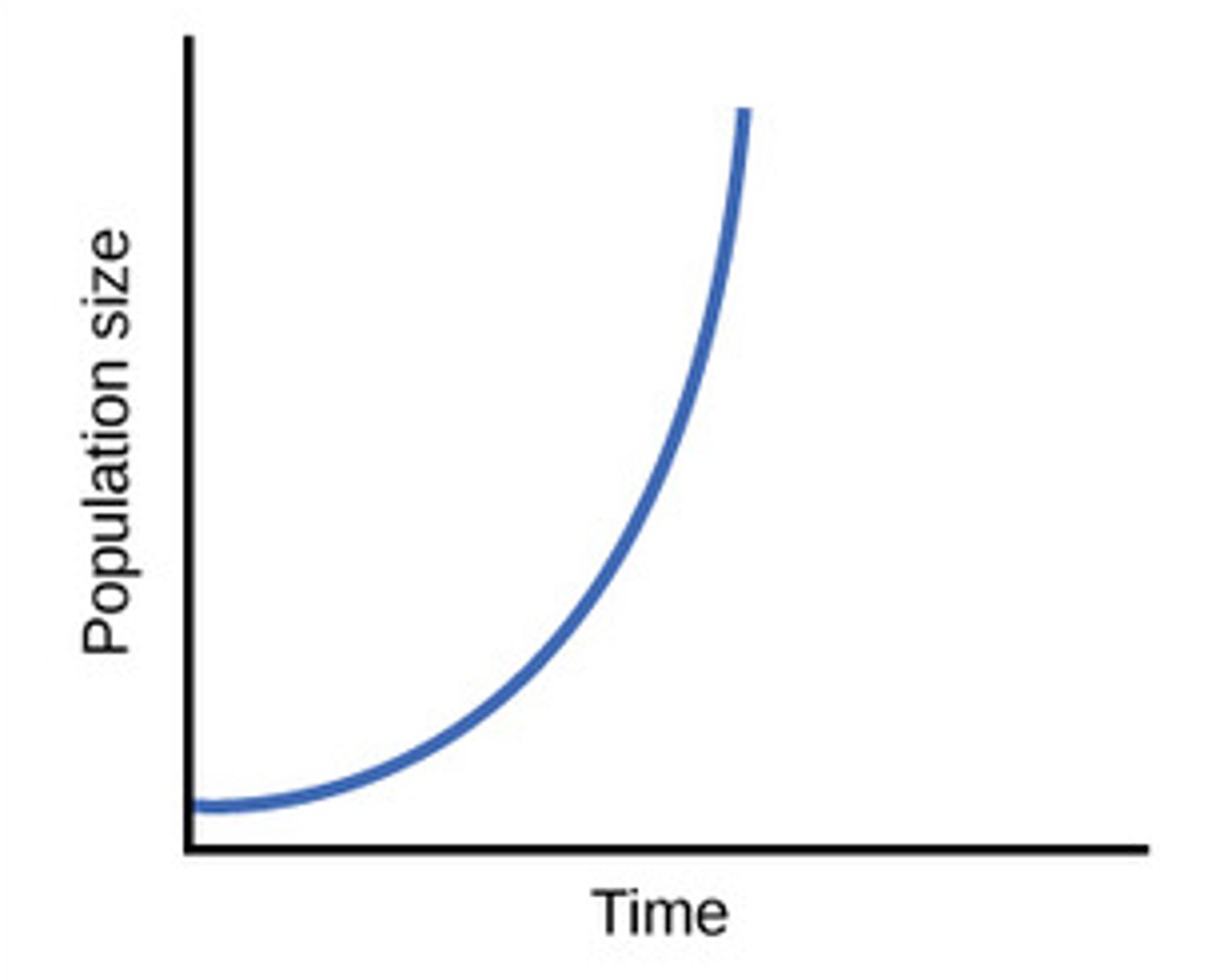
exponential growth
population grows by increasingly faster rate continuously
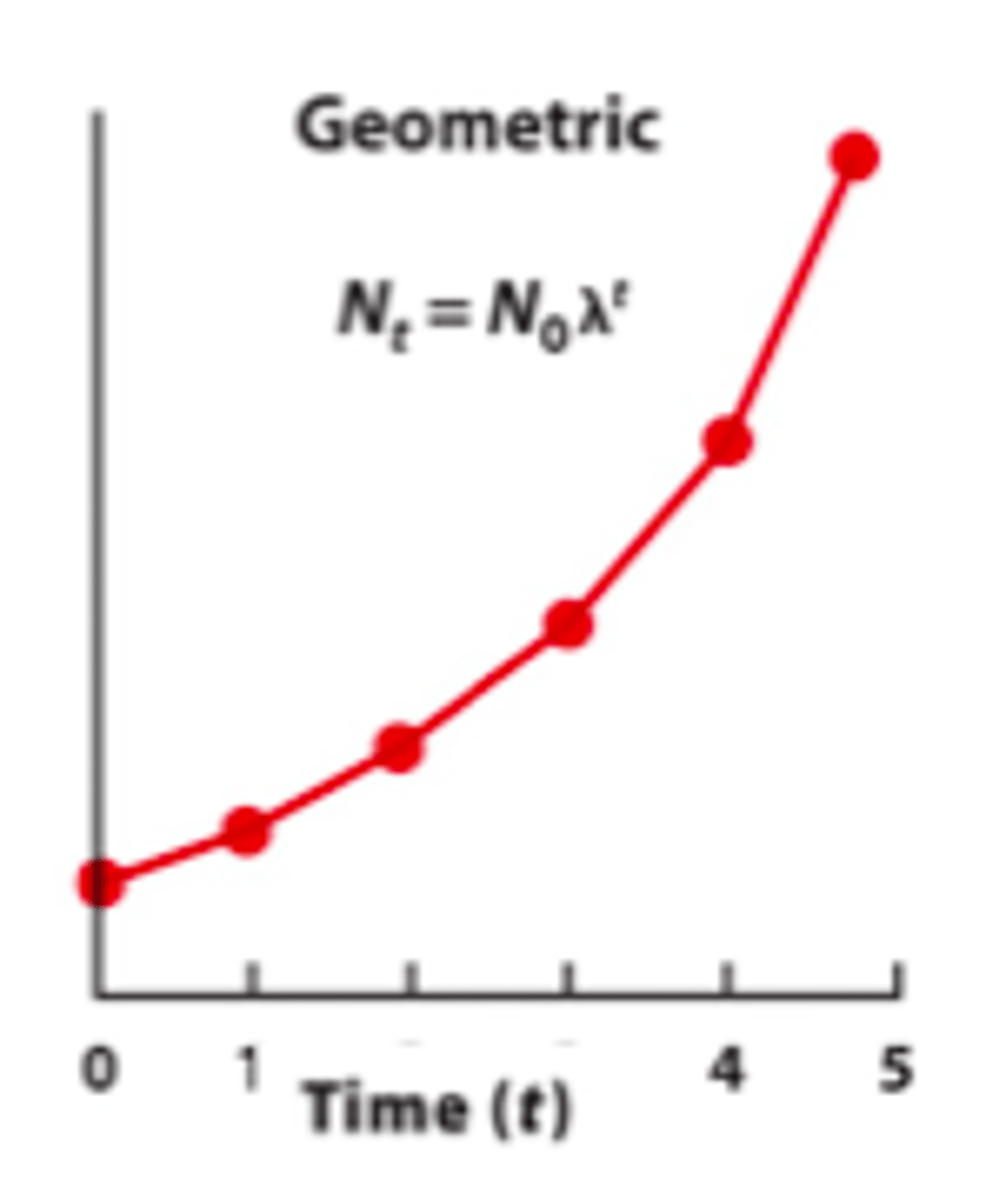
geometric growth
population grows by increasingly faster rate at specific intervals
population
a group of organisms of the same species occupying a particular space at a particular time
biological species
groups of actually or potentially interbreeding natural populations which are reproductively isolated from other such groups
(birth rate) + (immigration) - (mortality) - (emigration)
population change
population density
individuals per area
population dispersion
spatial arrangement of individuals relative to one another
age structure
number of males and females of each age in a population
uniform dispersion
The same all the way through; consistent
random dispersion
irregular
clumped dispersion
individuals are highly concentrated in some regions and more sparse in others
prereproductive
before reproductive age
reproductive
at reproductive age
postreproductive
after the reproductive age
N
population size
dn/dt = rN
exponential population growth equation
dN/dt
instantaneous rate of change in population size
r
instantaneous per capita rate of growth, or intrinsic rate of increase
(Nt) = (N0) e^(rt)
integration of rN
N0
the population size at time 0
Nt
the population size at time t
e
Euler's number
t
time
λ
finite rate of increase from one step to the next
(Nt) = (N0)(λ^t)
Geometric growth equation
x
age in years
nx
number of individuals in x age
lx
proportion surviving at start of age interval x
dx
number dying within age interval (x) to (x + 1)
qx
mortality rate
(lx) = (nx)/(n0)
lx formula
(dx) = (nx)-(nx+1)
dx formula
(qx) = (dx)/(nx)
qx formula
(sx) = 1 - (qx)
sx formula
sx
age specific survival rate
bx
age specific birth rate
(R0) = (lx)(bx)
net reproductive rate formula
type I survivorship curve
survivorship is high in youth but decreases over time dramatically. This is seen in animals with extended parental care.
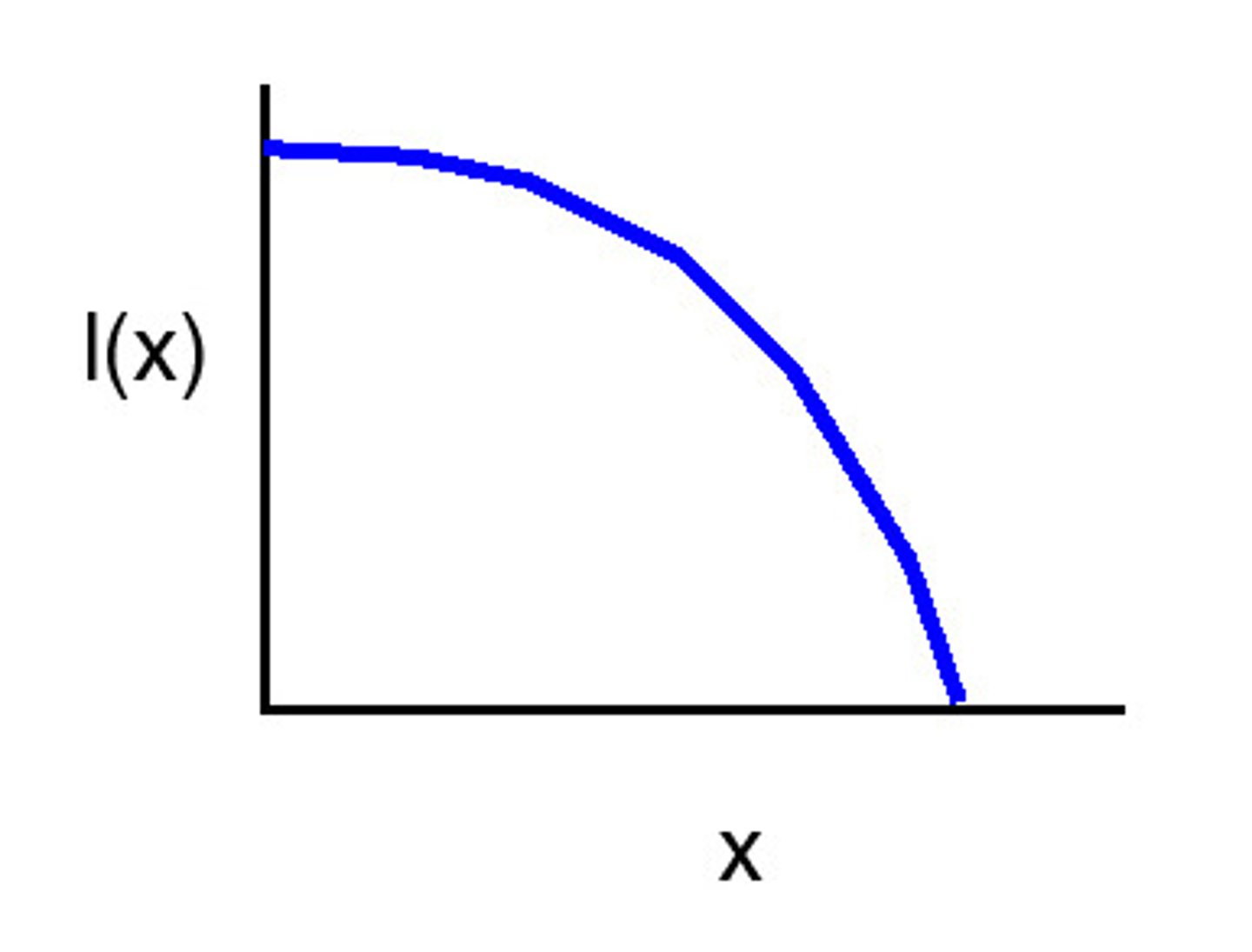
mammals
has type I survivorship curve
type II survivorship curve
survivorship decreases steadily
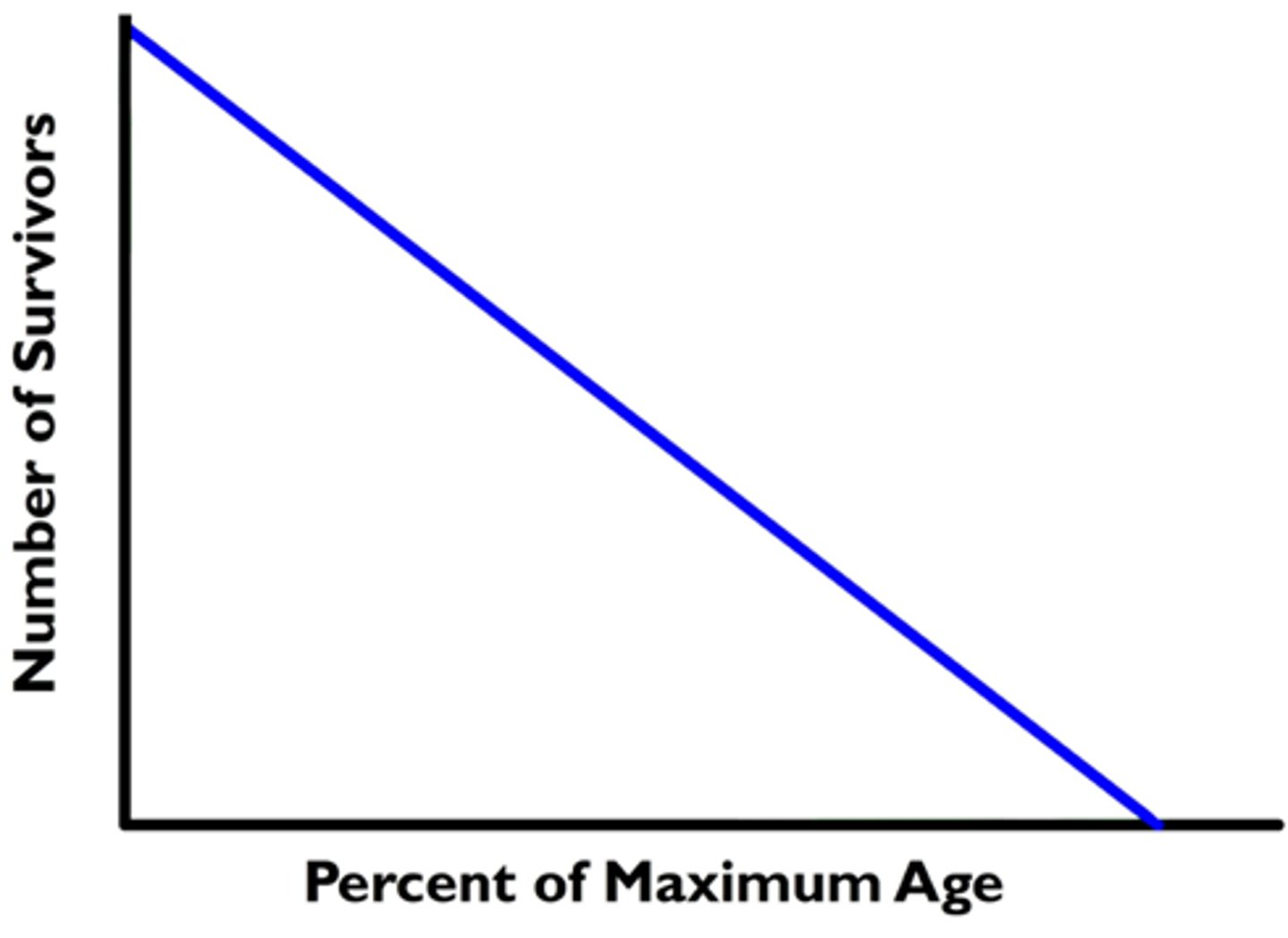
birds, rodents, reptiles, perennial plants
has type II survivorship curve
type III survivorship curve
survivorship plummets early and stays steady throughout the rest of life
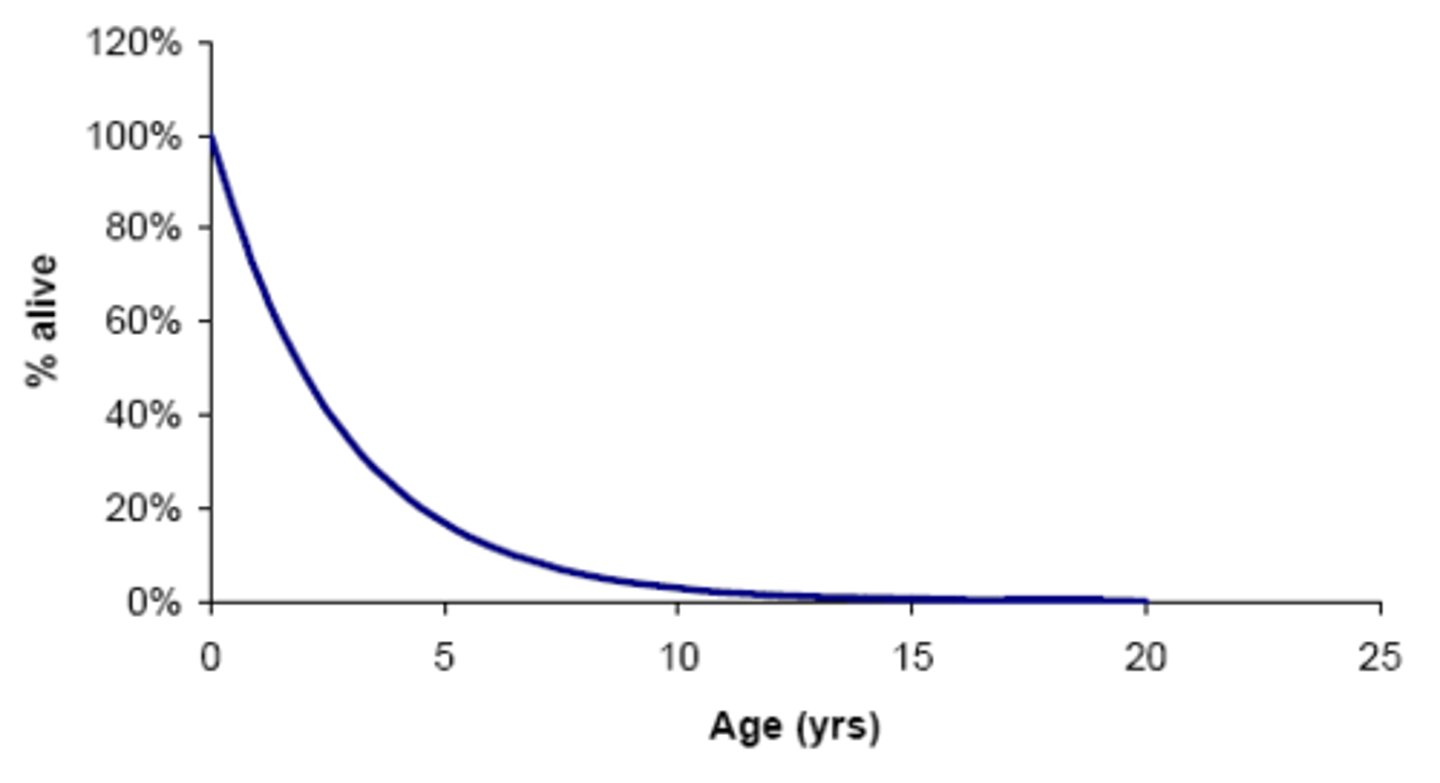
insects, marine invertebrates, fish and forest trees
has type III survivorship curve
population projection
age specific survivorship and birth rates are used to project changes in population size into the future
λ stabilizes over time
what happens to λ over time
λ = (Nt+1)/(Nt)
λ
age distribution stabilizes over time
what happens to age distribution over time
life cycle diagram
An illustration showing all stages of a life cycle.
Pi
the probability than an individual in age class i will survive to age class i + 1
Fi
fertility of each age class i
fertility
the number of young produced per female
Gi
the probability that each stage i will progress to the next stage in a stage-structured model
Leslie matrix
a matrix in which the columns represent age class at time t and the rows represents age class at time t + 1
Lefkovitch matrix
similar to a Leslie matrix but for a stage-structured model
eigen analysis
breaks down a linear matrix into stable lambda, age distribution, and the sensitivity and elasticity of each vital rate in the matrix as well as the reproductive value and damping ratio
sensitivity value
indicate how a small absolute change in Fi or Pi value will affect λ when everything else is held constant
elasticity value
indicate how a proportional change in an Fi and Pi value will effect λ
natural selection favors individuals who maximize lifetime fitness
which life history traits are favored
lifetime fitness
the number of offspring produced that survive to reproduce
life history
the pattern of allocation throughout an organisms life to growth, maintenance and reproduction
trade-off
an inevitable compromise between one trait and another that arises
many small offspring vs few large offspring
size of offspring and number of offspring tradeoff
early maturity and high adult mortality vs late maturity and low adult mortality
age of maturity and adult mortality rate tradeoff
semelparous
reproduce once and die
low growth with many offspring vs high growth with few offspring
growth of adult and egg number tradeoff
low growth and more offspring
offspring number and growth in high risk of mortality environment
high growth and less offspring
offspring number and growth in low risk of mortality environment
often limiting
resource availability in stable environment
rarely limiting
resource availability in ephemeral environment
ephermeral
very variable
high
degree of competition in stable environment
low
degree of competition in ephemeral environment
density-dependent factors
main source of mortality in stable environment
density-independent factors
main source of mortality in ephemeral environment
low
population size in ephemeral environment
high
population size in stable environment
K-strategist
organism in stable environment
r-strategist
organism in ephemeral environment
long lifespan
K-strategist lifespan
slow development
K-strategist development time
large body size
K-strategist body size
low number of offspring
K-strategist number of offspring
late maturity
K-strategist age of maturity
high parental care
K-strategist parental care
short lifespan
r-strategist lifespan
fast development
r-strategist development time
small body size
r-strategist body size
high number of offspring
r-strategist number of offspring
early maturity
r-strategist maturity age
low parental care
r-strategist parental care
population increasing
λ < 1 and r < 0
population decreasing
λ < 1 and r < 0
population staying same size
λ = 1 and r = 0
unlimited resources and constant environment
assumptions of exponential and geometric population growth
logistic growth
growth pattern in which a population's growth rate slows or stops following a period of exponential growth
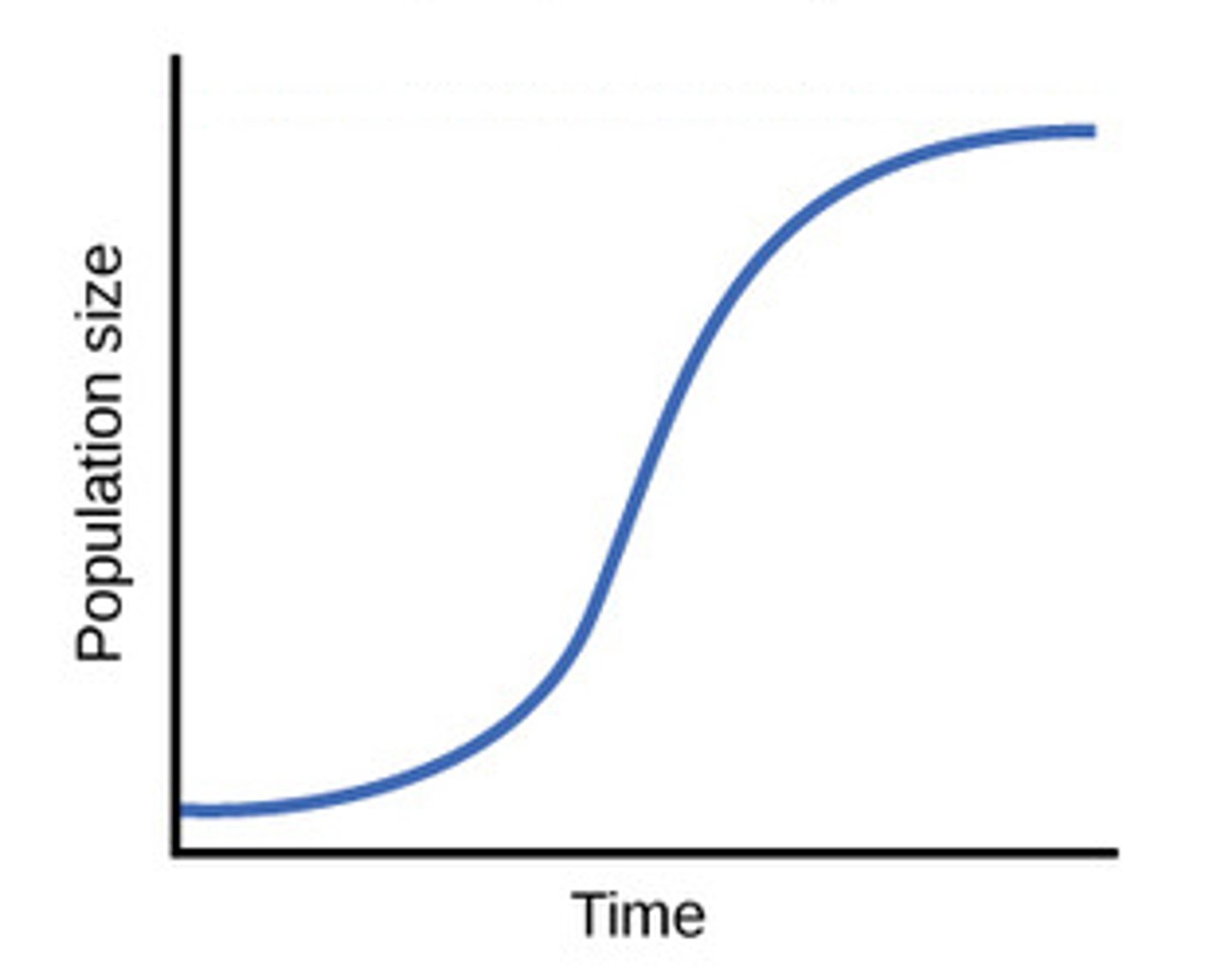
(dN)/(dt) = (rN)(1 - N/K)
logistic population growth formula
K
carrying capacity
K/2
the point in logistic growth when r is at a maximum
dN/dt = rN
when N is small
dN/dt = 0
when N is close to K

