IB Biology HL - Lesson 3: C3.2 Defence Against Disease
 Call Kai
 Learn
Learn Practice Test
 Spaced Repetition
 Match
Match Flashcards
 Knowt Play
1/56

There's no tags or description
Looks like no tags are added yet.
Name | Mastery | Learn | Test | Matching | Spaced | Call with Kai |
|---|
No analytics yet
Send a link to your students to track their progress
57 Terms
pathogens
organisms that cause disease, are the 'starting points' in the chain of infection.
what do pathogens include?
types of bacteria, fungi, protists, viruses and prions.
bacteria as pathogens
as they are prokaryotes, they have a different cell structures different from the eukaryotic organisms they infect. they are classified by their shape and their cell walls.
the type of membrane affects how bacteria responds to antibiotics
viruses
non-living infectious agents, have proteins surrounding RNA.
they infect cells by inserting its RNA into the DNA of a cell, and the infected cell will begin to form more viruses.
all natural viruses are pathogens, and may affect all types of organisms, even bacteria (bacteriophages)
protists as pathogens
eukaryotic organisms that are either single celled or are grouped into small colonies.
only a small percentage of protists are pathogenic, but can cause serious disease (malaria, fx)
pathogenic protists often need a vector to transfer them to their host - they take over a cell, digest the insides and use it as a medium to reproduce
fungi
mainly effect plants. they are eukaryotes, but can be multi/unicellular.
many fungi feed of dead/decaying matter (saprophytes), and typically prevent photosynthesis as they infect plant leaves.
they produce millions of spores that rapidly infect other organisms
prions
infectious proteinaceous substances that are responsible for diseases that cause degeneration of the nervous system in mammals.
(mad cow disease/BSE)
how do pathogens effect organisms?
often damage tissues or produce toxins.
in conjunction with the immune response creates symptoms of an infection
how do bacteria damage tissues?
will produce a toxin which damages the cell of the host organism - by either breaking down the plasma membrane of inactivating enzymes.
non-specific defences
1. surface barriers
2. innate immunity
specific defences
adaptive immunity
surface barriers as a non-specific defence
e.g. skin, skin flora, mucous membranes and lysozymes (enzymes in tears, urine and stomach acid)
the skin as a non-specific defence
covers the entire body and seals the insides.
sebaceous glands on the skin produce oils which keep the skin at a slightly lower pH, preventing growth of bacteria - producing a chemical barrier.
mucous membranes as non-specific defences
they line the body cavities and areas which have access to the outside, like the digestive, urogenital and respiratory tracts, salivary ducts
the mucus produced traps pathogens, and contain an enzyme called lysozyme which attacks the bacterial cell walls.
mechanical actions, like sneezing also flushes away the mucus with trapped pathogens using things like cilia.
commensal bacteria (skin flora) as a non-specific defence
microbes that reside on the surface of the body or in mucous that dont harm human health.
the microbes live in harmony with humans as they prevent the production of other bacteria as they digest it.
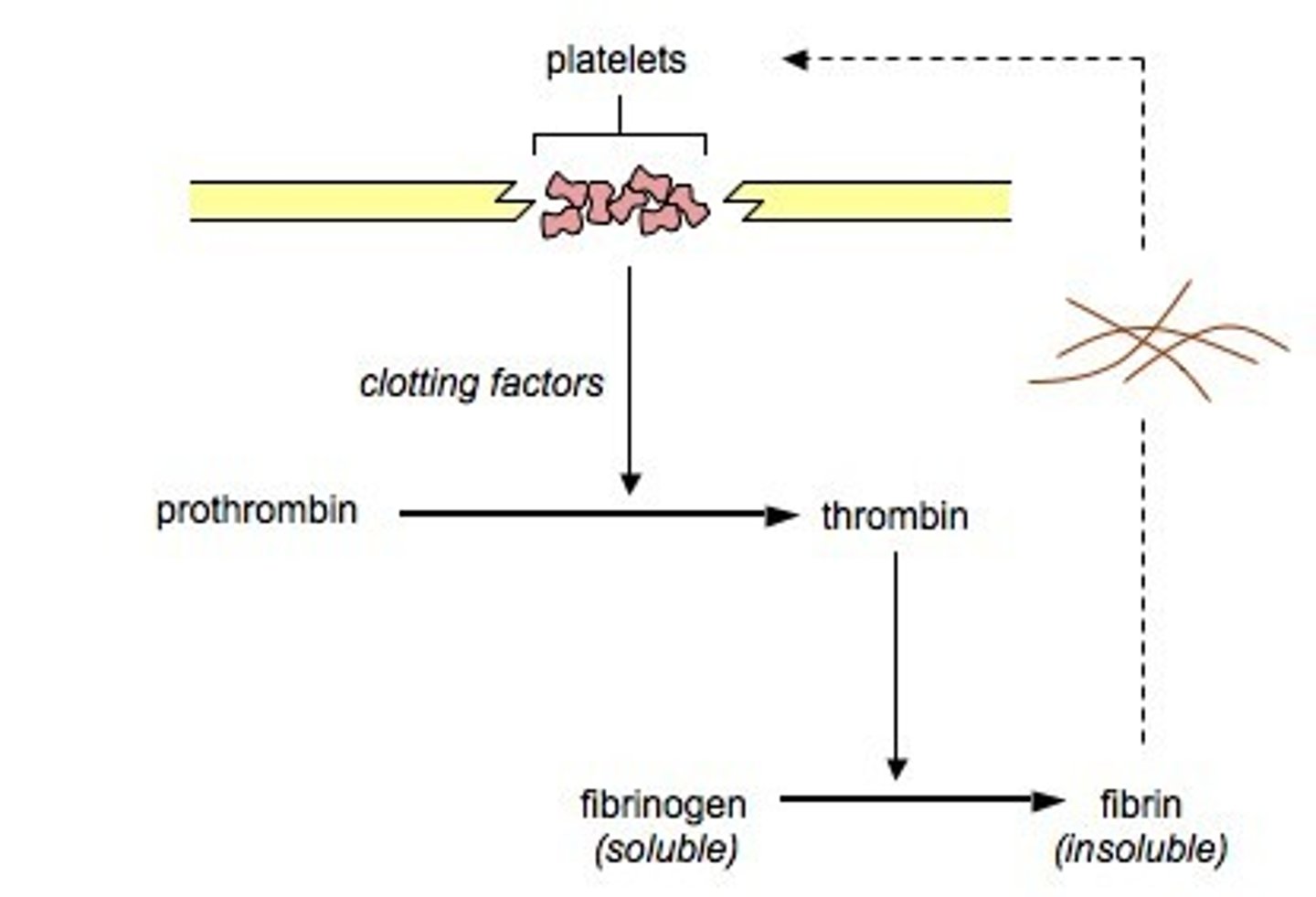
blood clotting process
1. when a cut is formed clotting factors released
2. platelets clot at the site of the cut
3. soluble fibrinogen is made into insoluble fibrin by the prothrombin which is activated into thrombin using the clotting factors.
the fibrin produced from the fibrinogen (using thrombin) clots to form a mesh.
4. the clot develops into a scab, and more layers of skin are formed underneath.
innate immune systems
present from birth and provides rapid, non-specific defences against pathogens and is mediated using phagocytes.
adaptive immune systems
develops throughout life and is slower and specific. mediated by lymphocytes (antibodies)
phagocytes
a type of white blood cell that ingests invading microbes
they come in two main types: neutrophils and macrophages
phagocytosis
1. pathogens produce chemicals which attract phagocytes
2. phagocytes recognise non-human proteins on the pathogen and form a pseudopodia
3. the phagocyte engulfs the pathogen into a phagosome
4. the phagosome combines with a lysosome to form a phagolysosome
5. enzymes in the lysosome digest and destroy the pathogen.
neutrophils end their cycle here
phagosome
intracellular vesicle containing material taken up by phagocytosis.
lymphocytes
The two types of white blood cells that are part of the body's immune system:
B lymphocytes -- mature on the bone marrow
T lymphocytes -- mature in the thymus gland
B lymphocytes
responsible for producing antibodies. they also form plasma cell clones.
mature in the bone marrow and are part of the immune response.
T lymphocytes
they assist in activating B cells while cytotoxic T cells directly attack infected cells and cause cell lysis.
mature in the bone marrow and are part of the immune response.
antigens
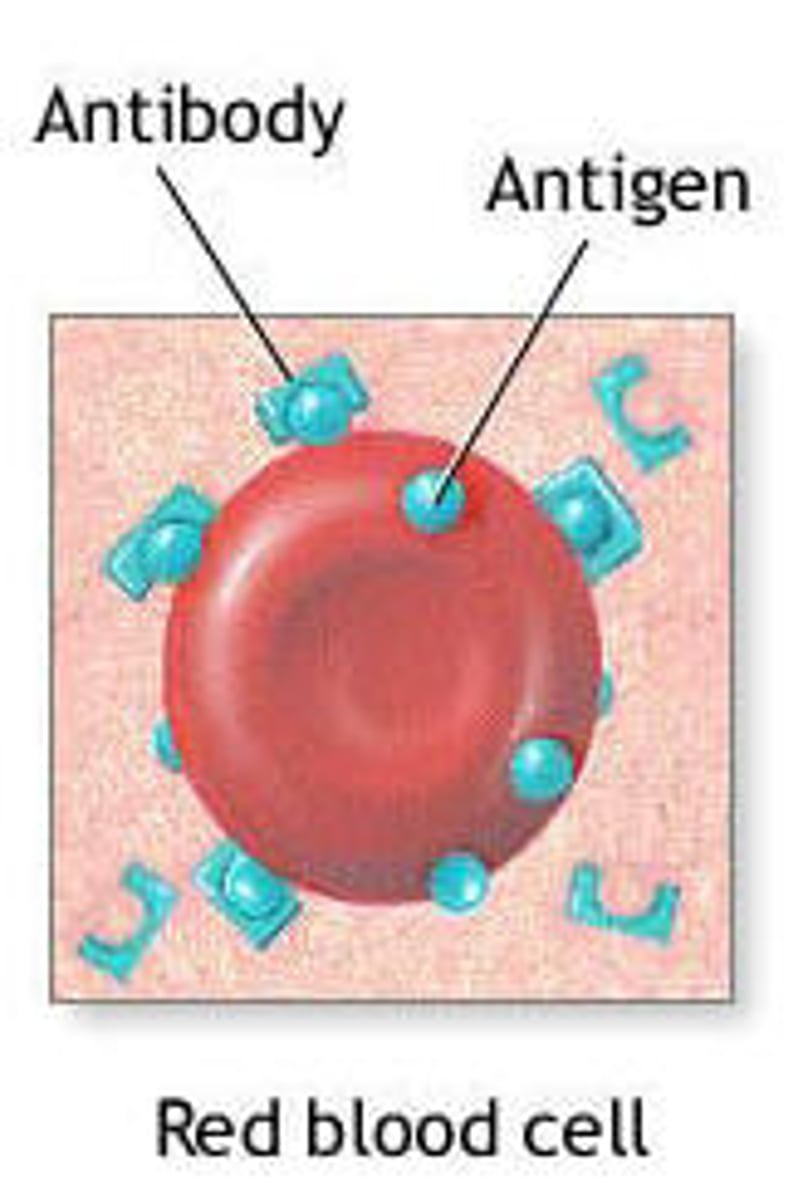
molecules on top of cells which are different between different cells (glycoproteins).
the body can differentiate between self-antigens and non-self antigens on pathogens.
antigens trigger an immune response, which involves the production of antibodies
antibodies
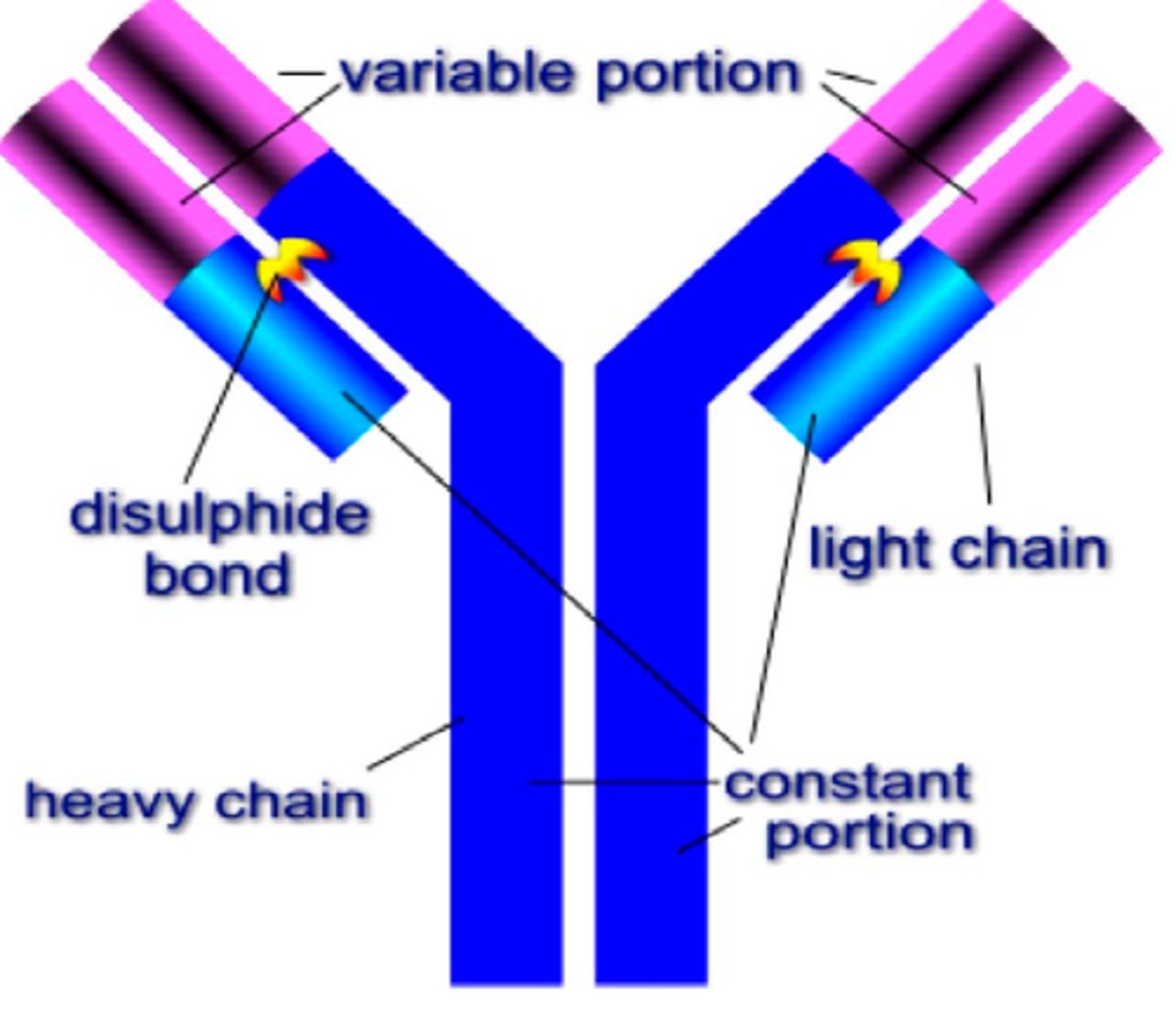
y-shaped proteins called immunoglobulins and bind to a specific antigen that triggers the immune response. they are made up from two identical polypeptide chains which are attached to each other and two short identical light chains by disulphide bridges.
proteins that bind to antigens on pathogens which marks them for destruction through the lock and key mechanism (B cells)
how do antibodies work in an immune response?
a pathogen enters the body with specific antigens.
these antigens are recognised by B cells and the B cells differentiate to plasma cells, producing antibodies. these antibodies are specific to an antigen.
the antibodies bind to the pathogen and go through the process of neutralisation where the pathogen's infectious ability is blocked.
antibodies also can activate the complement system, which leads to the destruction of the pathogen and also enhance the activity of phagocytes
aglutination
glutination
clotting, clumping or coagulation. antibodies agglutinate when they meet an antigen
T killer cells
T lymphocytes that destroy pathogens carrying a specific antigen with perforin.
T memory cells
part of immunological memory
divide rapidly to produce large number of T killer clones when met with the antigen a second time
T regulator cells
regulate the immune system. they stop the immune response once a pathogen has been eliminated and makes sure the body recognises self antigens
T helper cells
have CD4 receptors that bind to the antigens on the antigen presenting cells, producing interleukins (cell signaling molecules)
interleukins
stimulate the activity of B cells (increasing antibody production)
stimulate the production of other T cells
attracts macrophages to ingest pathogens
macrophages
found within the lymph nodes, they are phagocytes that destroy bacteria, cancer cells, and other foreign matter in the lymphatic stream to form APC
plasma cells
produce antibodies and release them into circulation
B effector cells
these are the B lymphocytic cells that can divide to form plasma cell clones
B memory cells
live for a very long time and provide immunological memory
programmed to remember specific antigen and enable rapid response when antigen encountered again
activation of T-lymphocytes by helper T cells
1. helper T-cells bind to the antigen presented on the antigen-presenting cells
2. the helper T-cell recognises the antigens and becomes activated (secretes cytokines) to signal other immune cells
3. activated T-cells also help activate cytotoxic (killer T-cells) by providing cytokine signals
4. helper T-cells require additional signals from co-stimulatory molecules to active the immune response
APC
antigen presenting cell -- has antigens from engulfed pathogens which helper T-cells will identify and prompt an immune response
humoral immunity
specific immunity produced by B cells that produce antibodies that circulate in body fluids
memory cells
differentiate into plasma cells which produce antibodies when an old pathogen is re-introduced which triggers a much quicker immune response
why are people with the AB blood type considered to be universal recipients?
it has both A and B antigens, but no antibodies as it has all the antigens. so no agglutination occurs when all blood types are introduced.
why are type O universal donors?
it has no antigens on the red blood cell, but all the antibodies.
ways HIV is transmitted
bodily fluids, breast milk and urine
features of HIV
envelope around the capsid
two identical strands of RNA within the capsid, contains reverse transcriptase which allows the production of DNA from the RNA code and is referred as a retrovirus as it can make DNA from RNA. Spikes on the surface are made from proteins and carbohydrates
effect of HIV on the immune system
it attacks the helper T-cells, making them reproduce far less - decreasing immunity responses and making the people infected have a higher probability of being immunocompromised
stages of untreated HIV
HIV infects helper T-cells and they continue reproducing until the virus count is higher than the number of T-cells (CD4 cells) and may last several years. when the HIV-infected cells are at a higher count, they have AIDS and are at a risk for diseases
antibiotics
a group of drugs used to treat bacterial infections. they are effective in killing prokaryotic cells (e.g. bacterial infections) but generally leave eukaryotic cells unharmed.
some antibiotics prevent the formation of bacterial peptidoglycan cell walls -> osmotic lysis
bactericidal antibiotics
antibiotics that kill bacteria
bacteriostatic
slow the growth or reproduction of bacteria
antibiotic resistance
in a population with no antibiotic resistance, there is a chance that a bacterium produces a gene for antibiotic resistance.
when an antibiotic is added, the resistant bacteria may still proliferate as they have greater resources to do so, as the non-resistant strain had been eradicated.
therefore, a population with mostly resistant bacteria is formed.
zoonotic diseases
transmission of disease via animals to humans (e.g. rabies, brucellosis, COVID-19)
how do vaccine develop immunity?
1. the pathogen is made safe (e.g. a dead/infected pathogen, RNA/DNA from pathogen)
2. and the pathogen is injected into the body
3. an immune response is provided and the body produces memory cells
herd immunity
when a large proportion of the population becomes resistant to a disease through vaccination, creating a barrier to those who could not get the vaccine

