ANE
 Studied by 3 people
 Call Kai
 Learn
Learn Practice Test
 Spaced Repetition
 Match
Match Flashcards
 Knowt Play
1/202

Earn XP
Description and Tags
Test 1 Prep
Name | Mastery | Learn | Test | Matching | Spaced | Call with Kai |
|---|
No analytics yet
Send a link to your students to track their progress
203 Terms
People of Mesopotamia
Sumerians - Persian Gulf
Akkadians - Babylonians, Assyrians
People of Anatolia
Hittites
Levantine People (Phoenicians, Bible People)
People of Northern Africa
Egyptians
Nubians (South of Egypt)
Sumerian language written on
clay tablets
Sumerian language starts
4th millennium BCE
Sumerian civilization dies
end of 3rd millennium
Sumerian stopped being studied in
500 BCE
Sumerian was / was not an isolated language
was
isolated language
connected with no other known language or language family
Akkadian language was written on
clay tablets
Akkadian (Semitic) was started in
end of 3rd millennium BCE
Akkadian did/did not gradually replace Sumerian
did
Akkadian became lingua franca in ANE by
1450 BCE
lingua franca
international and diplomatic language
dialects of Akkadian
Babylonian and Assyrian
Aramaic (Semitic) was written on
papyrus scrolls
Aramaic began to replace Akkadian in
late 1st millennium BCE
almost no documentation from earliest periods in Aramaic because
written on papyrus - didn’t preserve well like clay tablets
Ancient Egyptian (Afro-Asiatic, related to Semitic) was written on
carved on stone, painted on papyrus
cuneiform was used
all over Mesopotamia and Hittite land
cuneus
wedge
hieroglyphic (in egypt)
hieros - sacred
gluphe - carving
alphabetic (aramaic)
A - B, alpha - beta
ANE made up of
Anatolia, Levant, Mesopotamia
Meso-potamia means
land between rivers (tigris and euphrates)
rivers meant
ease of travel
close contact, economic and cultural cohesion and communication
water for agriculture
flood around harvest time
needed irrigation canals
fertile crescent / cradle of civilization
name for ANE
water - agriculture - settlements
irrigation systems
cities
invention of writing
development of math
invention of wheel
how we learned history of ANE
stories from neighboring countries
classics, bible stories
library of assurbanipal - 7th c BCE
fall of Nineveh 612 BCE
set on fire, preserved clay tablets
tablets discovered primarily in
nineveh
assur
babylon
sippar
uruk
akkad still missing
Pre-History timeline
10 000 BCE - 3 000 BCE
agricultural revolution
ANE History timeline
3 300 BCE - 331 BCE
3 300 BCE - Cuneiform historical documents
331 BCE - Alexander the Great invades Persia
BCE
Before Common Era
BC
Before Christ
Mesopotamian historical unity
~3 000 years history
different people
some common elements
common elements of Mesopotamian history
cuneiform script
continuity of religious practices
cultural continuity
3 main phases of time
City States - 3 000 to 1 600 BCE
Territorial States - 1 700 to 1 000 BCE
Empires - most of 1st millennium BCE
City States were the main political power during
3 000 to 1 600 BCE
Territorial States were the main political power during
1 700 to 1st millennium BCE
Empires were the main political power during
most of 1st millennium BCE
Sumer and Akkad overview
3200 to 2000 BCE
south west
independent cities
sargon the great conquered them ~ 2300 BCE
cuneiform writing was invented
world’s earliest literature
the wheel was invented around
3200 BCE
old babylonian overview
invasion of Semitic language groups
most important lead by Hammurabi
about 1600 to 1300 BCE
assyrian empire ruled around
1300 to 612 BCE
neo-babylonian empire ruled around
612 to 539 BCE
persian empire ruled around
539 to 331 BCE
conquest by alexander the great in 331 BCE
glaciers begin to retreat around
13 000 BCE
gets hotter
water rises
nomadic groups become semi-sedentary
around 11th millennium BCE
Levant to SE Anatolia
abundant wild food
semi-sedentary
storage facilities for food gathering
begin herding
basic cart
possibly some differentiation in social status
semi-sedentary in certain regions
borders between different ecological areas
different resources
abundance of food
population growth
increasingly dependent on area
domestication was a — process
slow
11th - 7th millennium BCE
neolithic period
10 000 - 5 300 BCE
marked by agricultural revolution/semi-sedentary beginnings
began domesticating crops and animals
artificial selection of wheats
Gobelki Tepe was in
SE Anatolia
modern Turkey
Gobelki Tepe is dated to
10 000 BCE
possibly oldest temple
Gobelki Tepe is interesting because
not much other than stone structure
no traces of domesticated plants or animals
little evidence for residential use
people were hunter/gatherers
work still required large groups of people and organization
7th millennium BCE
domestication of plants
herding of animals
continued hunting/gathering
geographically:
S Syrian-Palestinian area
foothills of Zagros Mtns
Anatolia
Mesopotamia (7th - 4th mill. BCE)
most NE societies now sedentary
use fired pots
different material cultures
N Mesopotamia (7th - 4th mill. BCE)
rain fed agriculture
Hassuna - early 6th mill
Samarra - 6th to 5th mill
Halaf - 6th mill
S Mesopotamia (7th - 4th mill. BCE)
hot, very little rain
Ubaid - 5900 to 3700 BCE
near marshes
ecological diversity
difficult environmental conditions
ecological diversity means
diversity of resources
ex: reeds for building
ex: different animals for food
material culture (mostly pottery) allowed for
a relative chronology
difficulties of life in southern mesopotamia
unpredictable flood
flood before harvest in spring
water low in late summer when needed to sow seeds
flat area
sediment deposits raise riverbeds
need to control levees
clean canals to prevent overflows
required sophisticated irrigation system
land was demanding but provided — results
abundant
required planning and organization
meant centralization of power and functions
led to rise of hierarchy
agricultural revolution time
11th - 7th millennium BCE
urban revolution time
mid 4th millennium BCE
Uruk was
the first city, ~3500 BCE
what makes a city
size
rapid growth of settlements in early 4th mill
central babylonia - 3 main centers, 30 - 50 hectares
southern babylonia, 1 center, 70 hectares
Uruk
Uruk growth
early 4th mill - 70 hectares
mid 4th mill - 250 hectares
estimated population growth from 10k to 40 or 50k people
uruk was biggest city
why did Uruk grow
possible attraction of semi-nomadic people from outskirts
a city and its surroundings are
interdependent
resources and services
3 markers of a city
size
interdependence
societal change
beveled-rim bowls
increased demand led to mass production
evidence of standardized weight system and redistributive economy
specialization of labor
evidence of urban society
different areas of production and ecological niches
agriculture near Euphrates
animal husbandry and hunting
fishing in marshes
non-agricultural tasks
arts and crafts
trade and exchange
animal husbandry
breeding and caring for animals
steps of specialization of labor
demand for higher productivity
technology improves (ex: seed plow)
labor becomes more complex
need experts (ex: cylinder seals)
need to exchange and redistribute - who should be in charge?
the god of the city
goods produced were brought to — and redistributed to the community
house of the god
need someone to track goods coming in and out
need administration
creation of hierarchy, social stratification
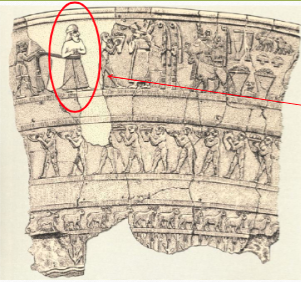
the Uruk vase
bigger man presenting goods to goddess Inanna
priest? leader?
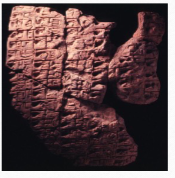
List of professions
late uruk period
in hierarchical order
monumental architecture
evidence of urban society
required large labor force
needed organization and leadership
social differentiation due to development of hierarchy
king/priest/leader
functionary/priest
superintendents
workers
bureaucracy led to
proto-cuneiform writing
idea of a city
originally built as residence of a god
temple (E)
household of the god
central, dominant institution
received and redistributed gifts
bureaucracy needed to keep track of movement of goods
writing
evidence of societal change
bureaucracy needs to keep track of transactions and guarantee their contents
writing initially for administrative purposes
stamp seals
7th mill BCE
worked as officials’ signatures
cylinder seals were more complex
tokens
initially used to guarantee contents
since ~7th mill BCE
everywhere in central Mesopotamia
sort of replaced by bullae in 4th mill BCE
token system
simple and complex tokens
one token represented one of an item
different tokens meant different items
bullae (balls)
4th mill BCE
clay balls containing tokens
cylinder seal impression on outside to guarantee contents
bullae and writing
conceptual jump from physical objects inside to impressions on outside to drawings on outside
earliest cuneiform signs (proto-cuneiform)
drawings like pictograms
proto-cuneiform
~60 signs for numbers
~900 signs for objects
Uruk IV - III
3300 - 3100 BCE
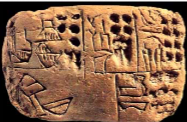
pictograms
drawings of things
phonetism
~2600 - 2500 BCE
1 sign = 1 sound/syllable
signs combined to create new words
everything can be expressed
real writing system
fewer signs
historical texts begin to appear
solves problem that if each thing or idea has its own sign, there are thousands of signs
end of 4th mill - SE Uruk
western Iran
other cities growing (ex: Susa)
similar material cultures
bullae
tablets
beveled-rim bowls
end of 4th mill - Northern Mesopotamia
Syria
some influence of Uruk culture
beveled-rim bowls
end of 4th mill - southern egypt
possibly influenced by Uruk culture
mud-brick houses
stone buildings
same pottery/decorations
cylinder seals
Late Uruk influence - end of 4th mill
SE (W Iran)
N Mesopotamia
S Egypt
End of Uruk Period
3100 - 3000 BCE
collapse of Uruk system
end Uruk period - N Mesopotamia
back to village life
no more writing to record transactions
 Note
Note  Flashcards (130)