TOA 2
0.0(0)
 Studied by 8 people
 Call Kai
 Learn
Learn Practice Test
 Spaced Repetition
 Match
Match Flashcards
 Knowt Play
Card Sorting
1/154

There's no tags or description
Looks like no tags are added yet.
Last updated 2:58 AM on 7/29/23
Name | Mastery | Learn | Test | Matching | Spaced | Call with Kai |
|---|
No analytics yet
Send a link to your students to track their progress
155 Terms
1
New cards
1. Point
2. Line
3. Plane
4. Volume
2. Line
3. Plane
4. Volume
PRIMARY ELEMENTS OF DESIGN
2
New cards
Point
PRIMARY ELEMENTS OF DESIGN
-It marks a position in space. Conceptually, it has no length, width, or depth, and is therefore static, centralized, and directionless.
-can serve to mark:
▪ the two ends of a line;
▪ the intersection of two lines;
▪ meeting of the lines at the corner of a plane or volume; and
▪ the center of a field.
-It marks a position in space. Conceptually, it has no length, width, or depth, and is therefore static, centralized, and directionless.
-can serve to mark:
▪ the two ends of a line;
▪ the intersection of two lines;
▪ meeting of the lines at the corner of a plane or volume; and
▪ the center of a field.
3
New cards
Line
PRIMARY ELEMENTS OF DESIGN
-An extended point. Conceptually, a line has length, but no width or depth. It is capable of visually expressing direction, movement, and growth.
-can serve to:
▪ join, support, surround, or intersect other visual elements;
▪ describe the edges of and give shape to planes; and
▪ articulate the surfaces of planes.
-An extended point. Conceptually, a line has length, but no width or depth. It is capable of visually expressing direction, movement, and growth.
-can serve to:
▪ join, support, surround, or intersect other visual elements;
▪ describe the edges of and give shape to planes; and
▪ articulate the surfaces of planes.
4
New cards
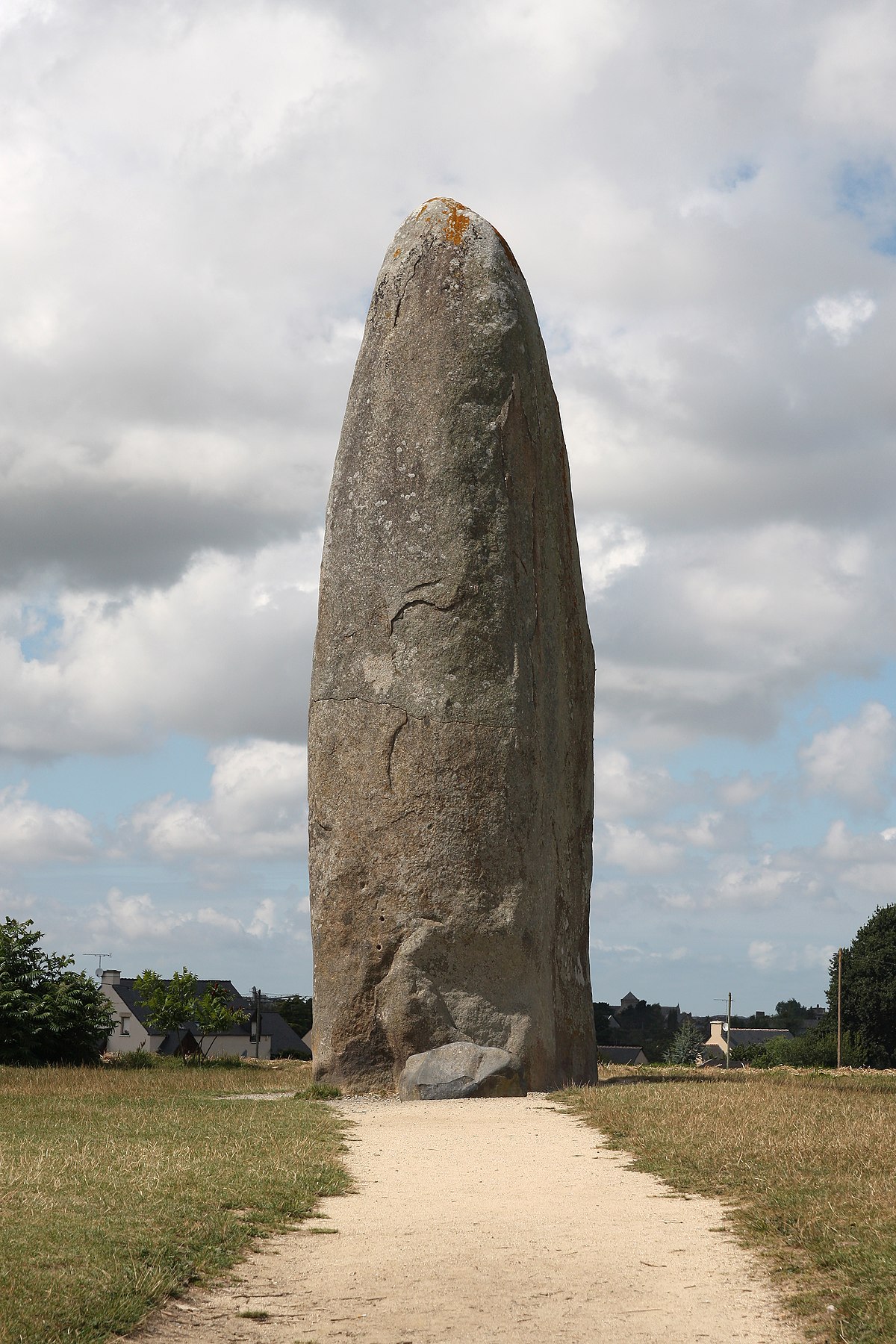
Menhir
A prehistoric monument consisting of an upright megalith, usually standing alone but sometimes aligned with others.
5
New cards
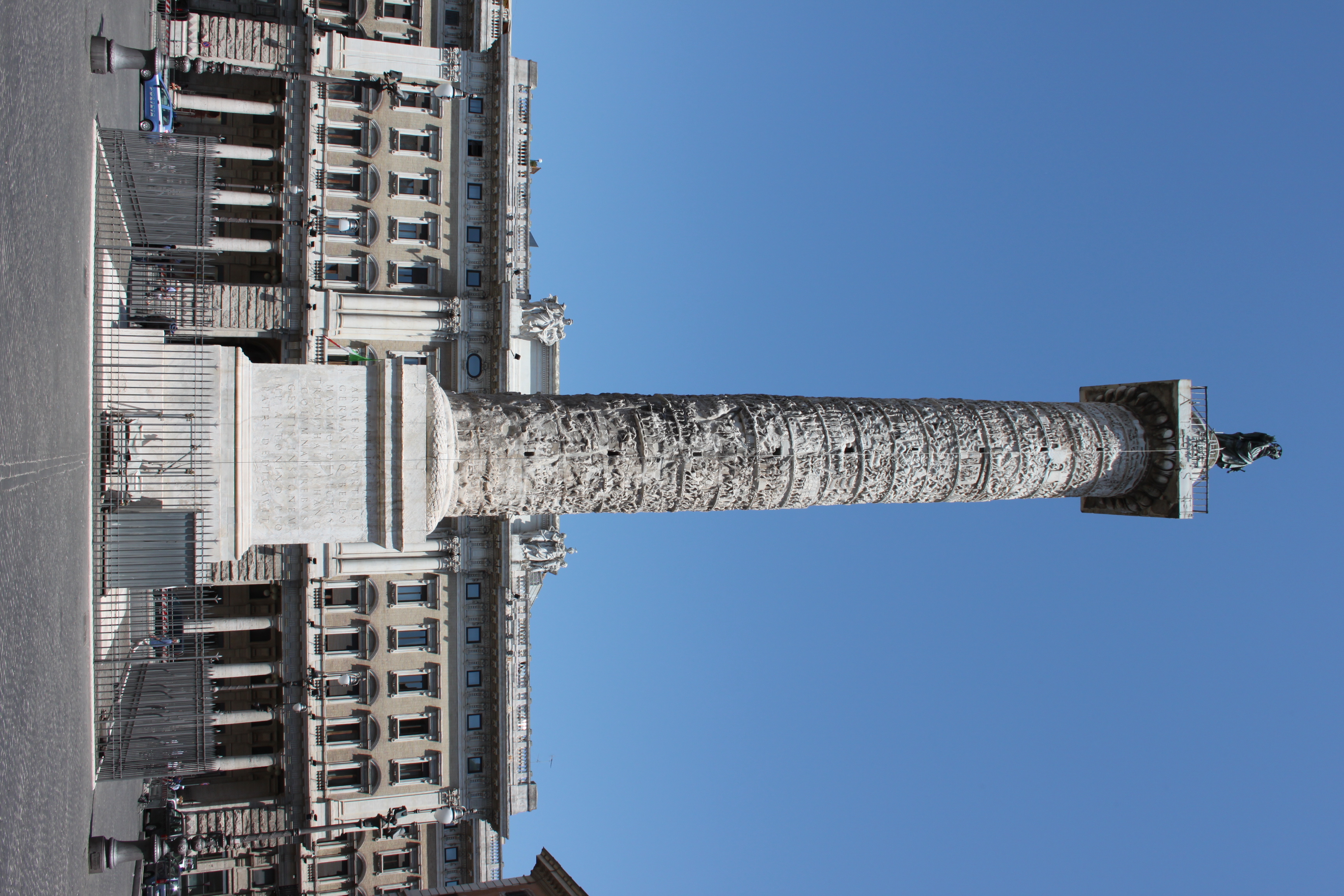
Column of Marcus Aurelius
Piazza Colonna, Rome
Piazza Colonna, Rome
The cylindrical shaft commemorates the emperor's victory over Germanic tribes north of the Danube.
6
New cards
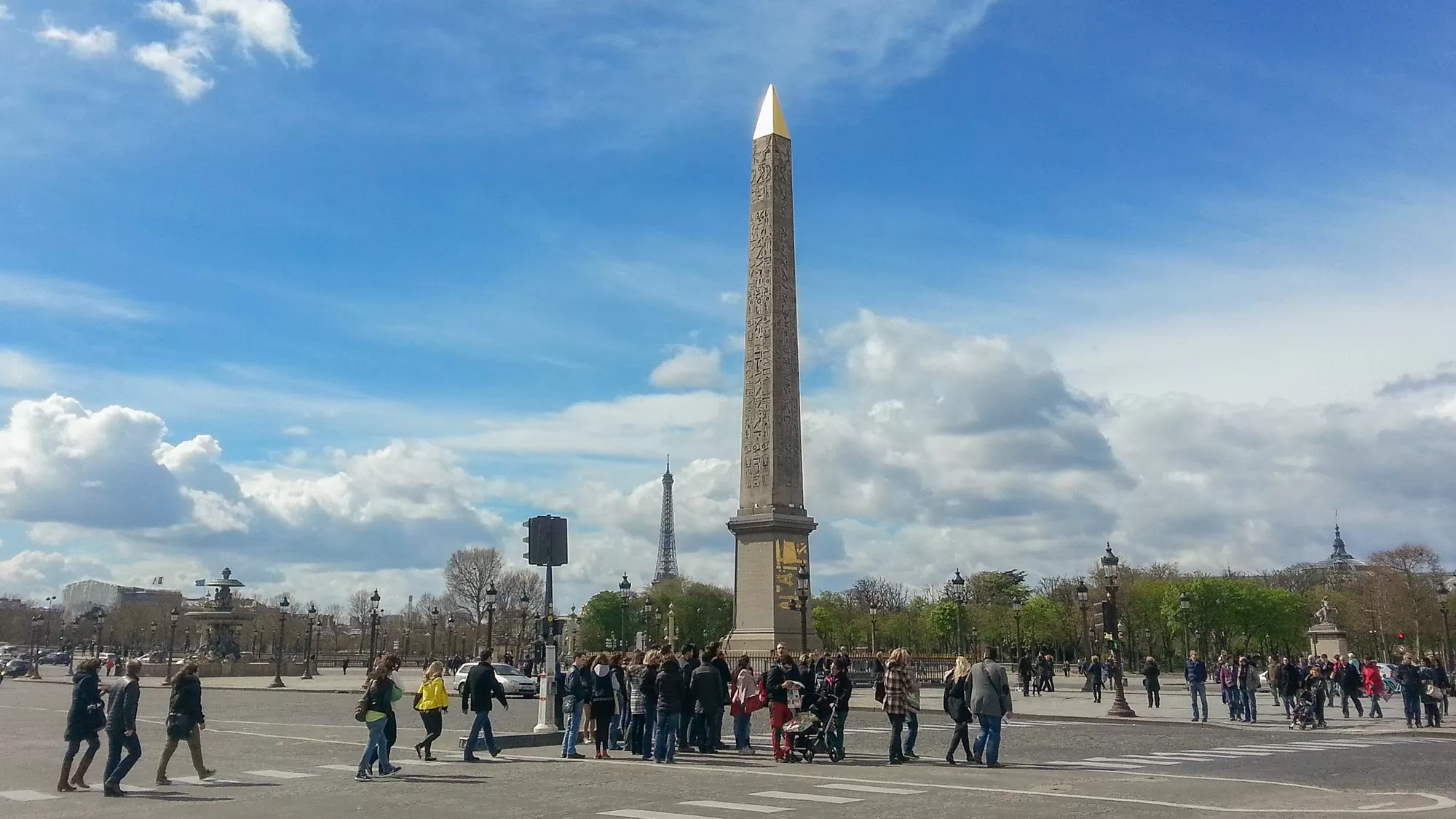
Obelisk of Luxor
Place de la Concorde, Paris
Place de la Concorde, Paris
The obelisk, which marked the entrance to the Amon Temple at Luxor, was given by the viceroy of Egypt, Mohamed Ali, to Louis Phillipe and was installed in 1836.
7
New cards
Plane
PRIMARY ELEMENTS OF DESIGN
-An extended line in a direction other than its intrinsic direction. Conceptually, a plane has length and width, but no depth.
-An extended line in a direction other than its intrinsic direction. Conceptually, a plane has length and width, but no depth.
8
New cards
Shape
is the preliminary identifying characteristic of a plane. It is determined by the contour of the line forming the edges of a plane.
9
New cards
1. Surface
2. Color
3. Pattern
4. Texture
2. Color
3. Pattern
4. Texture
Supplementary properties of a plane, affect its visual weight and stability
10
New cards
1. Overhead plane (roof or ceiling plane)
2. Wall plane
3. Base plane (ground or floor plane)
2. Wall plane
3. Base plane (ground or floor plane)
3 generic types of planes in architectural design
11
New cards
Volume
PRIMARY ELEMENTS OF DESIGN
A plane extended in a direction other than its intrinsic direction.
A plane extended in a direction other than its intrinsic direction.
12
New cards
1. Length
2. Width
3. Depth
2. Width
3. Depth
Three dimensions of volume
13
New cards
Form
is the primary identifying characteristic of a volume. It is established by shapes and interrelationships of the planes that describe the boundaries of the volume.
14
New cards
cortile
principal courtyard of an Italian palazzo
15
New cards
Form
The formal structure of a work—the manner of arranging and coordinating the elements and parts of a composition so as to produce a coherent image.
16
New cards
Articulation
A method or manner of jointing that makes the united parts clear, distinct, and precise in relation to each other.
17
New cards
1. Shape
2. Size
3. Texture
4. Color
2. Size
3. Texture
4. Color
Visual Properties of Form
18
New cards
SHAPE
VISUAL PROPERTIES OF FORM
The characteristic outline or surface configuration of a particular form.
The characteristic outline or surface configuration of a particular form.
19
New cards
SIZE
VISUAL PROPERTIES OF FORM
The physical dimensions of length, width, and depth of a form. While these dimensions determine the proportions of a form, its scale is determined by its size relative to other forms in its context.
The physical dimensions of length, width, and depth of a form. While these dimensions determine the proportions of a form, its scale is determined by its size relative to other forms in its context.
20
New cards
TEXTURE
VISUAL PROPERTIES OF FORM
The visual and especially tactile quality given to a surface by the size, shape, arrangement, and proportions of the parts. Texture also determines the degree to which the surfaces of a form reflect or absorb incident light.
The visual and especially tactile quality given to a surface by the size, shape, arrangement, and proportions of the parts. Texture also determines the degree to which the surfaces of a form reflect or absorb incident light.
21
New cards
COLOR
VISUAL PROPERTIES OF FORM
-A phenomenon of light and visual perception that may be described in terms of an individual's perception of hue, saturation, and tonal value.
-is the attribute that most clearly distinguishes a form from its environment. It also affects the visual weight of a form.
-A phenomenon of light and visual perception that may be described in terms of an individual's perception of hue, saturation, and tonal value.
-is the attribute that most clearly distinguishes a form from its environment. It also affects the visual weight of a form.
22
New cards
1. Hue
2. Value
3. Temperature
4. Intensity
2. Value
3. Temperature
4. Intensity
PARTS OF COLOR
23
New cards
Hue
PARTS OF COLOR
another word for color
another word for color
24
New cards
Value
PARTS OF COLOR
describes how light or dark the color is
describes how light or dark the color is
25
New cards
Temperature
PARTS OF COLOR
relates to the feeling of warmth or coolness the color evokes
relates to the feeling of warmth or coolness the color evokes
26
New cards
Intensity
PARTS OF COLOR
measures the range of a color from dull to vivid. Also called chroma and saturation.
measures the range of a color from dull to vivid. Also called chroma and saturation.
27
New cards
1. Red
2. Blue
3. Yellow
2. Blue
3. Yellow
COLOR WHEEL
Primary colors
Primary colors
28
New cards
1. Violet
2. Green
3. Orange
2. Green
3. Orange
COLOR WHEEL
Secondary colors
Secondary colors
29
New cards
1. Red-violet
2. Blue-violet
3. Yellow-green
4. Blue-green
5. Red-orange
6. Yellow-orange
2. Blue-violet
3. Yellow-green
4. Blue-green
5. Red-orange
6. Yellow-orange
COLOR WHEEL
Tertiary colors
Tertiary colors
30
New cards
1. Warm colors
2. Cool colors
2. Cool colors
COLOR WHEEL
Colors used to convey emotions
Colors used to convey emotions
31
New cards
Warm colors
COLOR WHEEL
exhibit energy and joy (best for personal messages). They have a tendency to appear larger.
exhibit energy and joy (best for personal messages). They have a tendency to appear larger.
32
New cards
Cool colors
COLOR WHEEL
convey calmness and peace (best for office use). They have a tendency to appear smaller next to a warm color. They often work well as a background color.
convey calmness and peace (best for office use). They have a tendency to appear smaller next to a warm color. They often work well as a background color.
33
New cards
1. Compelementary
2. Analogous
3. Triadic
4. Split Complementary
5. Tetradic or Double complementary
2. Analogous
3. Triadic
4. Split Complementary
5. Tetradic or Double complementary
BASIC COLOR SCHEMES
34
New cards
Compelementary
BASIC COLOR SCHEMES
Any two colors opposite each other on the wheel. For example, blue and orange, or red and green.
Any two colors opposite each other on the wheel. For example, blue and orange, or red and green.
35
New cards
Analogous
BASIC COLOR SCHEMES
Any three colors next to each other on the wheel. For example, orange, yellow-orange,
and yellow.
Any three colors next to each other on the wheel. For example, orange, yellow-orange,
and yellow.
36
New cards
Triadic
BASIC COLOR SCHEMES
Any three colors that are equally apart on the color wheel. For example, red, yellow and blue.
Any three colors that are equally apart on the color wheel. For example, red, yellow and blue.
37
New cards
Split Complementary
BASIC COLOR SCHEMES
Use three colors. The scheme takes one color and matches it with the two colors adjacent to its complementary color. For example, blue, yellow-orange and red-orange.
Use three colors. The scheme takes one color and matches it with the two colors adjacent to its complementary color. For example, blue, yellow-orange and red-orange.
38
New cards
Tetradic or Double complementary
BASIC COLOR SCHEMES
Uses four colors together, in the form of two sets of complementary colors. For example, blue and orange is paired with yellow and violet.
Uses four colors together, in the form of two sets of complementary colors. For example, blue and orange is paired with yellow and violet.
39
New cards
1. Tints
2. Shades
3. Tones
4. Achromatic
2. Shades
3. Tones
4. Achromatic
Basic color schemes
40
New cards
Tints
BASIC COLOR SCHEMES
come from adding white to hues
come from adding white to hues
41
New cards
Shades
BASIC COLOR SCHEMES
come from adding black to hues
come from adding black to hues
42
New cards
Tones
BASIC COLOR SCHEMES
mixing the hue with grey
mixing the hue with grey
43
New cards
Achromatic
BASIC COLOR SCHEMES
use no color, just shades of grey, black and white. Also known as greyscale
use no color, just shades of grey, black and white. Also known as greyscale
44
New cards
1. Position
2. Orientation
3. Visual Inertia
2. Orientation
3. Visual Inertia
RELATIONAL PROPERTIES OF FORM
45
New cards
Position
RELATIONAL PROPERTIES OF FORM
The location of a form relative to its environment or the visual field within which it is seen.
The location of a form relative to its environment or the visual field within which it is seen.
46
New cards
Orientation
RELATIONAL PROPERTIES OF FORM
The direction of a form relative to the ground plane, the compass points, other forms, or to the person viewing the form.
The direction of a form relative to the ground plane, the compass points, other forms, or to the person viewing the form.
47
New cards
Visual Inertia
RELATIONAL PROPERTIES OF FORM
The degree of concentration and stability of a form. The visual inertia of a form depends on its geometry as well as its orientation relative to the ground plane, the pull of gravity, and our line of sight.
The degree of concentration and stability of a form. The visual inertia of a form depends on its geometry as well as its orientation relative to the ground plane, the pull of gravity, and our line of sight.
48
New cards
Milwaukee Art Museum
Milwaukee, Wisconsin
Santiago Calatrava
Milwaukee, Wisconsin
Santiago Calatrava
Identify
49
New cards
Kazakhstan National Library (Proposal)
Astana, Kazakhstan
Bjarke Ingels Group/BIG
Astana, Kazakhstan
Bjarke Ingels Group/BIG
Identify
50
New cards
Ningbo Museum/Yinzhou Museum
Zhejiang Province, China
Wang Shu
Zhejiang Province, China
Wang Shu
Identify
51
New cards
Hoffman House
East Hampton, New York
Richard Meier
East Hampton, New York
Richard Meier
Identify
52
New cards
Palazzo Medici/Palazzo Medici Riccardi
Florence, Italy
Michelozzo di Bartolomeo Michelozzi
Florence, Italy
Michelozzo di Bartolomeo Michelozzi
Identify
53
New cards
John Deere & Company Building/John Deere World Headquarters
Moline, Illinois
Eero Saarinen
Moline, Illinois
Eero Saarinen
Identify
54
New cards
CBS Building/Black Rock
New York City
Eero Saarinen
New York City
Eero Saarinen
Identify
55
New cards
IBM Research Center/IBM La Gaude
La Guade, Var, France
Marcel Breuer
La Guade, Var, France
Marcel Breuer
Identify
56
New cards
First Unitarian Church
Rochester, New York
Louis Kahn
Rochester, New York
Louis Kahn
Identify
57
New cards
Everson Museum/Everson Museum of Art
Syracuse, New York
I. M. Pei
Syracuse, New York
I. M. Pei
Identify
58
New cards
Einstein Tower
Potsdam, Germany
Erich Mendelsohn
Potsdam, Germany
Erich Mendelsohn
Identify
59
New cards
Johnson Wax Research Tower/Johnson Wax Headquarters
Racine, Wisconsin
Frank Lloyd Wright.
Racine, Wisconsin
Frank Lloyd Wright.
Identify
60
New cards
Kaufmann Desert House
Palm Springs, California
Richard Neutra
Palm Springs, California
Richard Neutra
Identify
61
New cards
Circulation
The passage of persons or things from one place to another or through an area.
62
New cards
1. Approach
2. Entrance
3. Configuration of the path
4. Path-space relationships
2. Entrance
3. Configuration of the path
4. Path-space relationships
CIRCULATION ELEMENTS
63
New cards
Approach
CIRCULATION ELEMENTS
This is the first phase of the circulation system, during which we are prepared to see, experience, and use the spaces within a building.
This is the first phase of the circulation system, during which we are prepared to see, experience, and use the spaces within a building.
64
New cards
1. Frontal
2. Oblique
3. Spiral
2. Oblique
3. Spiral
KINDS OF APPROACH
65
New cards
FRONTAL
KINDS OF APPROACH
Leads directly to the entrance of a building along a straight, axial path. The visual goal that terminates the approach is clear.
Leads directly to the entrance of a building along a straight, axial path. The visual goal that terminates the approach is clear.
66
New cards
Villa Barbaro/Villa di Maser
Maser, Italy
Andrea Palladio
Maser, Italy
Andrea Palladio
Identify
67
New cards
Qian Men/Zhengyangmen (Front gate)
Beijing, China
Beijing, China
Link between the Forbidden City to the north and the Outer City to the South.
68
New cards
Portals and gateways
have traditionally served as means of orienting us to the path beyond and welcoming or guarding against our entry.
69
New cards
OBLIQUE
KINDS OF APPROACH
Enhances the effect of perspective on the front facade and form of a building
Enhances the effect of perspective on the front facade and form of a building
70
New cards
SPIRAL
KINDS OF APPROACH
Prolongs the sequence of the approach and emphasizes the three-dimensional form of a building as we move around its perimeter.
Prolongs the sequence of the approach and emphasizes the three-dimensional form of a building as we move around its perimeter.
71
New cards
Entrance
▪ From outside to inside.
▪ Entering a building, a room within a building, or a defined field of exterior space, involves the act of penetrating a vertical plane that distinguishes one space from another and separates "here" from "there."
▪ Entering a building, a room within a building, or a defined field of exterior space, involves the act of penetrating a vertical plane that distinguishes one space from another and separates "here" from "there."
72
New cards
1. Flush
2. Projected
3. Recessed
2. Projected
3. Recessed
CATEGORIES OF ENTRANCES
73
New cards
FLUSH
CATEGORIES OF ENTRANCES
Maintains the continuity of the surface of a wall and can be deliberately obscured.
Maintains the continuity of the surface of a wall and can be deliberately obscured.
74
New cards
PROJECTED
CATEGORIES OF ENTRANCES
Forms a transitional space, announces its function to the approach, and provides overhead shelter.
Forms a transitional space, announces its function to the approach, and provides overhead shelter.
75
New cards
RECESSED
CATEGORIES OF ENTRANCES
Also provides shelter and receives a portion of exterior space into the realm of the building.
Also provides shelter and receives a portion of exterior space into the realm of the building.
76
New cards
Dr. Currutchet's House/Curutchet House
La Plata, Argentina
Le Corbusier
La Plata, Argentina
Le Corbusier
Identify
77
New cards
Piazza San Marco/St Mark's Square
Venice, Italy
Venice, Italy
View of the sea framed by the Doge's Palace on the left and Scamozzi's Library on the right. The entrance to the piazza from the sea is marked by two granite columns, the Lion's Column and the Column of St. Theodore.
78
New cards
Configuration of path
The sequence of spaces
79
New cards
1. Linear
2. Radial
3. Spiral
4. Grid
5. Network
6. Composite
2. Radial
3. Spiral
4. Grid
5. Network
6. Composite
CONFIGURATION OF PATH
Kinds of configuration
Kinds of configuration
80
New cards
LINEAR
KINDS OF CONFIGURATION OF PATH
All paths are linear. A straight path, however, can be the primary organizing element for a series of spaces. In addition, it can be curvilinear or segmented, intersect other paths, have branches, or form a loop.
All paths are linear. A straight path, however, can be the primary organizing element for a series of spaces. In addition, it can be curvilinear or segmented, intersect other paths, have branches, or form a loop.
81
New cards
RADIAL
KINDS OF CONFIGURATION OF PATH
A radial configuration has linear paths extending from r terminating at a central, common point.
A radial configuration has linear paths extending from r terminating at a central, common point.
82
New cards
SPIRAL
KINDS OF CONFIGURATION OF PATH
A spiral configuration is a single, continuous path that originates from a central point, revolves around it, and becomes increasingly distant from it.
A spiral configuration is a single, continuous path that originates from a central point, revolves around it, and becomes increasingly distant from it.
83
New cards
Borobudur
Java, Indonesia
Java, Indonesia
A Buddhist stupa monument.
In circumambulating the monument, pilgrims passed walls ornamented with reliefs illustrating the life of buddha and the principles of his teaching.
In circumambulating the monument, pilgrims passed walls ornamented with reliefs illustrating the life of buddha and the principles of his teaching.
84
New cards
GRID
KINDS OF CONFIGURATION OF PATH
consists of two sets of parallel paths that intersect at regular intervals and create square or rectangular fields of space.
consists of two sets of parallel paths that intersect at regular intervals and create square or rectangular fields of space.
85
New cards
cuadricula
a system of streets and blocks laid out in gridiron form. This method was efficient in maximizing space and in the supervision of colonial subjects.
86
New cards
NETWORK
KINDS OF CONFIGURATION OF PATH
A network configuration consists of paths that connect established points in space.
A network configuration consists of paths that connect established points in space.
87
New cards
COMPOSITE
KINDS OF CONFIGURATION OF PATH
Employing a combination of the preceding patterns.
To avoid the creation of a disorienting maze, a hierarchical order among the paths and nodes of a building should be established by differentiating their scale, form, length, and placement.
Employing a combination of the preceding patterns.
To avoid the creation of a disorienting maze, a hierarchical order among the paths and nodes of a building should be established by differentiating their scale, form, length, and placement.
88
New cards
1. Pass by Spaces
2. Pass through Spaces
3. Terminate in a Space
2. Pass through Spaces
3. Terminate in a Space
Path-space relationships
Paths may be related to the spaces they link in the following ways:
Paths may be related to the spaces they link in the following ways:
89
New cards
Pass by Spaces
PATH-SPACE RELATIONSHIPS
▪ The integrity of each space is
maintained;
▪ The configuration of the path is
flexible;
▪ The mediating spaces can be used
to link the path with the spaces.
▪ The integrity of each space is
maintained;
▪ The configuration of the path is
flexible;
▪ The mediating spaces can be used
to link the path with the spaces.
90
New cards
Pass through Spaces
PATH-SPACE RELATIONSHIPS
▪ The path may pass through a space axially, obliquely, or along its edge;
▪ In cutting through a space, the path creates patterns of rest and movement within it.
▪ The path may pass through a space axially, obliquely, or along its edge;
▪ In cutting through a space, the path creates patterns of rest and movement within it.
91
New cards
Terminate in a Space
PATH-SPACE RELATIONSHIPS
▪ The location of the space establishes the path;
▪ This path-space relationhip is used to approach and enter functionally or symbolically important spaces.
▪ The location of the space establishes the path;
▪ This path-space relationhip is used to approach and enter functionally or symbolically important spaces.
92
New cards
1. Enclosed;
2. Open on One Side; or
3. Open on Both Sides.
2. Open on One Side; or
3. Open on Both Sides.
FORM OF THE CIRCULATION SPACE
A circulation space may be:
A circulation space may be:
93
New cards
Enclosed
FORM OF THE CIRCULATION SPACE
Forming a public galleria or private corridor that relates to the spaces it links through entrances in a wall plane.
Forming a public galleria or private corridor that relates to the spaces it links through entrances in a wall plane.
94
New cards
Open on One Side
FORM OF THE CIRCULATION SPACE
Forming a balcony or gallery that provides visual and spatial continuity with the spaces it links.
Forming a balcony or gallery that provides visual and spatial continuity with the spaces it links.
95
New cards
Open on both sides
FORM OF THE CIRCULATION SPACE
Forming a colonnaded passageway that becomes a physical extension of the space it passes through.
Forming a colonnaded passageway that becomes a physical extension of the space it passes through.
96
New cards
Design
is the creation and organization of formal elements in a work of art.
97
New cards
Design principle
is a fundamental and comprehensive concept of visual perception for structuring and aesthetic composition.
98
New cards
1. Proportion and Scale
2. Contrast
3. Balance
4. Hierarchy
5. Rhythm
2. Contrast
3. Balance
4. Hierarchy
5. Rhythm
PRINCIPLES OF DESIGN
99
New cards
Proportion
PRINCIPLES OF DESIGN
The proper harmonious relation of one part to another or to the whole.
The proper harmonious relation of one part to another or to the whole.
100
New cards
1. Golden Section
2. Regulating Lines
3. Classical Orders
4. Renaissance Theories
5. Modulor
6. Ken
7. Anthropometry
2. Regulating Lines
3. Classical Orders
4. Renaissance Theories
5. Modulor
6. Ken
7. Anthropometry
PROPORTIONING SYSTEMS
 Note
Note  Flashcards (130)