ORGS 2200 - Final Assessment/Exam
 Call Kai
 Learn
Learn Practice Test
 Spaced Repetition
 Match
Match Flashcards
 Knowt Play
1/94

There's no tags or description
Looks like no tags are added yet.
Name | Mastery | Learn | Test | Matching | Spaced | Call with Kai | Chat |
|---|
No analytics yet
Send a link to your students to track their progress
95 Terms
Features of Bureaucracy
Clearly organized specialized individual positions and jobs with detailed qualifications, responsibilities and assignment of resources needed
Formal hierarchy of positions and clear lines of authority (chain of command)
Formal rules, procedures, etc.
Standardized training, training requirements, career paths, reward systems, etc.
Scientific Management
Developed by Frederick Winslow Taylor
Focuses on an objective method to improve efficiency and productivity (time motion studies, systematic training, etc.)
Steps:
Scientific study of tasks
Standardization of work
Selection and training of workers
Strict division of labor
Incentive systems
Led to monotonous and dehumanizing work environments
Pros and Cons of Bureaucracy
Pro: improved efficiency and objectivity
Con: sometimes too much emphasis on following the rules hinders flexibility, make adjustments, etc. to accomplish ultimate org. goals
Human Relations Movement
Emerged in 1920-30's due to limitations of Scientific Management
Emphasizes human factors in a workplace
Employee satisfaction, motivation, social dynamics
Largely credited to the Hawthorne Studies by Elton Mayo
Highlights the dysfunctional aspects of classical management
Employee alienation, limited innovation and adaptation, resistance to change, minimum acceptable level of performance, employees losing sight of overall organization goals
Strategic Design Lens (overview)
Focuses on the structure, design, layout of organizations and sees information as the key resource
Views organizations as an input-throughput-output system, views the environment as a resource base and competitive market
Strategic Design (key concepts/processes)
Key Concepts: interdependence, activities, resources
Key Processes/Structures: linking (integration), aligning, grouping (differentiation)
Types of Strategic Grouping Structures
Grouping by expertise/function (ie. departments such as finance, marketing, etc.)
Grouping by output/product (ie. team iPad vs. iPhone)
Grouping by market; geography or customer (ie. Toronto vs Vancouver, Asia vs Europe, etc.)
Hybrid Structures
key assumption: coordination and communication is easier and denser within a unit rather than across a unit
Linking
Designing structures and processes to connect and coordinate organizational units and subunits whose tasks are interdependent but were separated by strategic grouping decisions; facilitates coordination and communication among different organizational units to make information and resource sharing easier
Types of Linking
"Dotted Line" Relationships --> formal, direct reporting structure where lower level provides information for upper level
Liaison Roles --> responsibility of coordinating across groups; no authority but help with improving synchronization
Integrator Role --> general management perspective and swifter resolution of issues compared to liaison roles
Cross-unit Groups -->
Permanent cross-unit groups - bring together representatives of different task or work groups with a formal mandate to pool expertise and coordinate efforts of their respective groups
Temporary cross-unit groups - are problem-focused and only exist unit the problem is solved or task is accomplished
Other linkings: Project Teams, Information Technology Systems, Co-location
Alignment
Ensuring units and individuals assigned certain tasks and activities by the grouping and linking patterns have the resources and the motivation to carry them out; ensuring structure and resources are aligned and support the strategic objectives
Lack of Organizational Congruence
Misaligned supporting systems and processes
Key Elements of Organizational Design
Task (unit of activity) - the most basic element of organizational design; smallest unit of activities that need to be performed for organization to meet strategic goals
Complexity - tasks vary in complexity
Task Routinization - tasks vary in level of routinization where some can be simple and routine and some are complex (sometimes complex tasks can be routinized too)
Task Interdependence - the varying levels of how independent or interdependent tasks are on each other
pooled, sequential, reciprocal
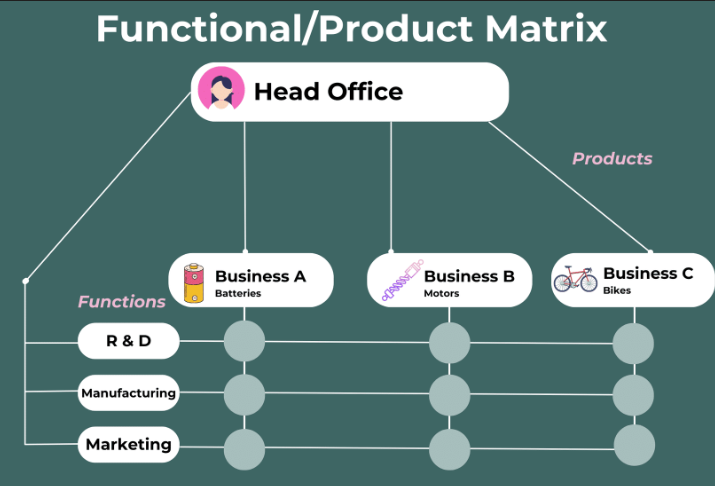
Hybrid Structures - The Matrix Structure
Strategic grouping that combines functional and divisional approaches with both methods being given equal weight (functional department, product/project department; two bosses)
Pros: allows balancing of functional and product groups (reap benefits of both)
Cons: more complicated and expensive than single-dimension structure, conflicts of what to prioritize may arise from balancing two bosses or two teams
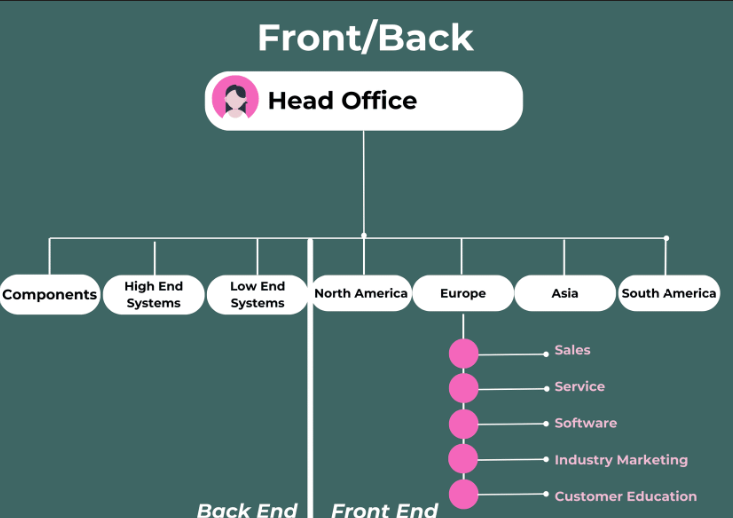
Hybrid Structures - Front/Back Structure
Strategic grouping structure that divides customer facing vs non-customer facing business units
Front End - customer-facing and organized by market (ie. geography, customer segment) such as marketing, sales, customer service, etc.
Back End - organized by product and forms business units (ie. production, accounting, logistics, etc.)
Pros: build close customer relationships in the front end while also developing deep technical expertise in the back end, less complex than matrix structure
Cons: fragmentation of technical expertise, poor integration between market needs and technology development, hard to ensure synergy and integration between front and back
Hybrid Structures - Modular/Network Structures
adaptable and fluid system meant ideally for the digital age
decentralized, less hierarchical, open communication, collaborative (teams and external partners work together)
easier to respond to fast-paced markets
Characteristics: strong employee motivation, flexibility, outsourcing and partnerships, decentralized decision-making/empowerment, coordination, dynamic teams, specialization, collaboration, innovation, resilient, etc.
Political Lens (overview)
Views organizations as an arena for conflict with the environment as external stakeholders; focuses on the pov where everyone has their own stake and interests and are only looking to serve themselves
Political Lens (key concepts and processes)
Key Concepts: power, influence, interests
Key Processes: conflict, negotiating, coalition-building, networking, competing
Variants of Power
Influence (informality), Coercion (domination), Authority (legitimate/organizational power)
Sources of Power
Personal characteristics, past performance/track record, scarce/valued expertise, formal position as a source of power, informal network position as a source of power, informal network (quality of network), complexity and evolution of social networks, strength of weak ties
4 Ways to Identify Power (according to Pfeffer)
Reputation
Representational Factors
Observation of Consequences
Symbols of Power
Interests
Political lens acknowledges the importance of individual interests but scope goes beyond what can be calculated in terms of dollar or NPV amount; includes things such as recognition, autonomy, status, and more that cannot easily be translated to monetary value; identifies that people have their own driving factors and motivators that can include money but is not limited to money
Collective Interests & Types of Collective Interests
Shared by others who belong to the same group or category and the center on the welfare and maintenance of the group
Types of collective interest groups:
Formal structure groups, Groups defined by position, (ie. Full time, part time, salaried, contract, hourly, white collar, blue collar, managers, etc.), Demographic groups and geographical groups, Groups defined profession (ie. Engineers, MBAs, PhD, accountants, etc.)
Note: individual interests often overlap with collective interests and vice versa
Power (Pfeffer Definition)
"the potential ability to influence behavior, to change the course of events, to overcome resistance, and to get people to do things that they otherwise would not do"
getting things done in an organization needs power; more power = more things get done
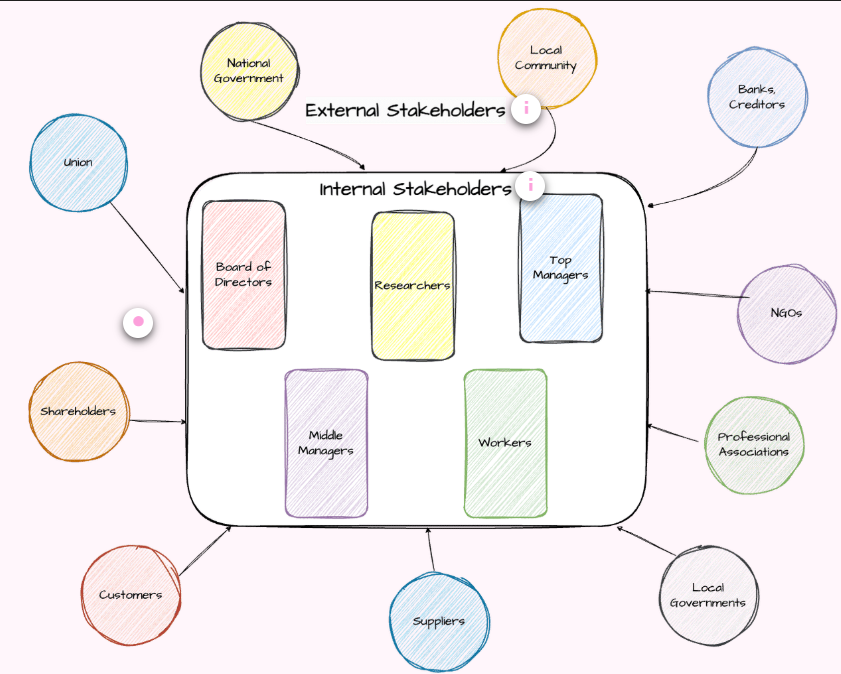
Stakeholders (internal and external)
Internal Stakeholders: employees, management, BOD
External Stakeholders: investors, suppliers, customers/general public, government, regulators, etc.
individuals or groups who have a stake in the business even if they are external to it; business choices impact them
interests are dynamic and can evolve and change depending on one’s situation and they can be latent and people may not even realize they have an interest until evoked
—> ie. someone who didn’t care about new benefits being changed at work starts caring once they are ill and need medical insurance
Mapping Interests and Power (Jeffery Pfeffer)
Jeffery Pfeffer set out 4 key questions to map out the political lens
Supporters --> what cooperation do you need to carry out your action? Whose support will be necessary to get appropriate decisions made and implemented?
Blockers --> whose opposition will delay or derail your plan?
Potential Stakeholders --> who will be impacted by what you intend to do?
Existing Coalition --> who are friends and allies of the potential supporters and blockers that were identified and what interests are at stake for them?
Tools to use for mapping out: commitment chart, stakeholder chart
Getting Buy-In
getting people to commit themselves to support/participate in a course of action started by someone else
methods/tactics:
persuade someone
escalation of commitment - once people commit some time, attention or other resources they are likely to continue committing
perceptions of influence - make them believe their input is valuable and they are active participants, etc.
Building Networks (directions, “currencies”)
3 directions: upward, horizontal/adjacent, downward
effective networks should have an emphasis on reciprocity and trust in exchange perspective on power and social networks
“currencies” used in exchanges across a network:
rewards-related (salary, bonus, etc.)
task-related (assistance, information, etc.)
relationship-related (acceptance, inclusion, etc.)
status-related (recognition, “perks”, etc.)
Allies and Building Coalitions (challenges, general coalition, etc.)
Challenge in building coalition - identifying allies whose interests align, making them aware of your initiative and how it benefits them
General coalitions - based on long-standing patterns of reciprocity (exchange of information, resources, mutual willingness to do favors, etc.)
balanced reciprocity - giving and getting equally
generalized reciprocity - giving freely with no expectations of specific returns; mutual respect
negative reciprocity - least equitable; giving minimally and receiving more in return
Negotiation Skills
need to understand the interest and influences of the unit being negotiated with
tips include: focus on interests, separate people from problem, use objective criteria, BATNA
Cultural Lens (overview)
Views organizations as a social construct (what we view/think of an organization as) and the environment as a social and cultural network where the leader is meant to articulate the vision, symbolize the culture and understand and leverage the culture
Composed of artifacts/symbols, espoused values and basic underlying assumptions (Edgar Schein’s Model of Culture)
Cultural Lens (key concepts and key processes)
Key Concepts: identity, symbols, values, basic assumptions
Key Processes: meaning and interpretation, legitimating
of all 3 lenses, cultural lens is the hardest to see/identify
Socialization and Culture
Learning what is important and what does or doesn't matter, how to behave, how to think, etc.
Learning is formal (training, mentoring) and informal (social cues, observations) --> process of socialization
Culture is experienced as external and "given" to new members of an organizations --> continuously recreated and reproduced by members of an organization and it shapes identity of members who work at an organization; organizational identity (“we vs. them”)
Edgar Schein’s Model of Culture (iceberg)
Tip of the Iceberg (above water) --> Artifacts and Symbols
Top level; most accessible and easily identified, perceived with senses
Ie. Buildings, internet presence, work spaces, uniforms, Zoom backgrounds, branding, stories, logos, company jargon etc.
Shallow Water --> Espoused Values
Next level/middle level; what the organization says and publicly recognizes as its values
Articulates what the company aspires to be or how they want the public to view them
Ie. Mission statements, formal statements, etc.
Deep Underwater --> Basic Underlying Assumptions
Lowest/deepest Level; seen as the most significant level of culture, "cultural DNA"
Taken for granted, implicit, unspoken rather than publicly proclaimed; often grounded in the experience and values of the organization's founders and leaders; often difficult to isolate and identify
Ie. An organization based on creativity and empowerment may have the basic underlying value of creativity, door open policies, etc.
Anxiety Reduction
One of the functions of organizational culture as seen by Schein; common assumptions lead to automatic patterns and ways of thinking/behaving which provide meaning, stability and comfort
Subcultures (from formal grouping structures and hierarchial levels)
Most organizations have identifiable subcultures
Related to formal grouping structures (ie. Different teams and departments may have their own subcultures and ways of operating)
Boundary on interdependent activities --> cultural boundary; different groups develop a shared understanding of their work and roles, develop different symbols and artifacts, different methods of communications, etc.
Organizational subcultures can emerge between hierarchical levels
Ie. Management vs. associates vs. labourers, white collar vs. blue collar, mergers and acquisitions, etc.
3 Processes that make Culture more Explicit/Identifiable
Socialization (learning the culture)
Process through how culture is absorbed by newcomers to an organization
Begins with recruitment; hiring team/recruiter determines if the recruit is a "good fit"
Formal and informal processes (training, orientation, hazing, etc.)
Cultural investigations --> newcomers to an organization as useful informants
Living the culture --> senior people in an organization
Dealing with deviance (culture maintenance)
Members who "do not fit" the culture and who (intentionally or unintentionally) deviate and act in resistance to the expected behaviors and basic assumptions
Some people learn and understand an organizational culture by accidentally violating it and being treated differently
Ways of signaling unacceptability of behavior:
Co-workers or management making remarks, criticism, feedback
Judging, subtle isolation
Informal sanctions
Most organizations have areas of "acceptable deviance" --> occasions where normal codes are relaxed (ie. Office parties are "acceptable deviance" with more relaxed expectations)
Changing the culture
Organizational culture develops over time and is deeply embedded in behavior and thinking of an organization --> can change and many aspire to change it
Strategic Design vs. Cultural Lens view on Cultures
From a strategic design lens --> culture is the process of linking, aligning
From a cultural lens --> developing a shared set of habits, routines, shared assumptions, shared experiences; organizational identity
Strategic Design Questions
What is the strategy of the organization as a whole?
How well is it understood and implemented by the members of the organization at various levels?
What is the basis for the formal grouping structure?
Are the roles and responsibilities clearly defined and understood?
On what activities does the structure focus attention?
What are important interdependencies across the formal units represented by the "boxes" in the organization design?
Are adequate linking mechanisms in place? What are they, how well are they working?
How is the performance of the organization and its members measured?
What is the incentive system?
Are there "perverse incentives" that are rewarding dysfunctional behaviour?
Do people in the organization have the resources and the motivation they need in order to carry out the tasks assigned to them?
If not, why? What are barriers getting in the way?
Political Lens Questions
Who has power and status in the organization?
What is the basis of their influence?
Is power concentrated or are there multiple power centers?
What are the key arenas of conflict?
Who are the key actors in this conflict - groups, subgroups, individuals - and what are the basic causes of the disagreements? Interests of the key actors?
What - if any - mechanisms of conflict resolution exist and how effectively are they working?
If they are not working effectively, why not?
Who benefits the most from the current patterns in the organization, and why?
Who gets credit when things go well? Who gets blamed when things go wrong?
Do those that get blamed have the power to make changes that will improve performance?
How well does information about problems/requests for help move up the chain of command?
How open are those in positions of formal authority to suggestions/initiatives from below?
Cultural Lens Questions
Artifacts, stories, symbols, observed behaviours?
How much uniformity or variety is there?
Espoused values of the organization and how are they transmitted?
How widely shared?
Any inconsistencies between the behaviour observed and the espoused values?
What do basic assumptions reveal?
What other assumption can be uncovered in the language and stories repeated by people?
Does top of the organization have same view and perception of the organization as those at the bottom?
Do different units or groups share these, or are these significant differences?
What messages are those at the top of the organization hearing from people in positions of authority?
How is it being interpreted? Are they hearing the messages as it was intended?
What individuals are held up as exemplars?
Who is seen as a good manager or worker? What does this reveal about basic cultural assumptions?
What is the emotional atmosphere in the organization?
Porters Strategies for Differentiation
Cost Leadership
Differentiation
Focus
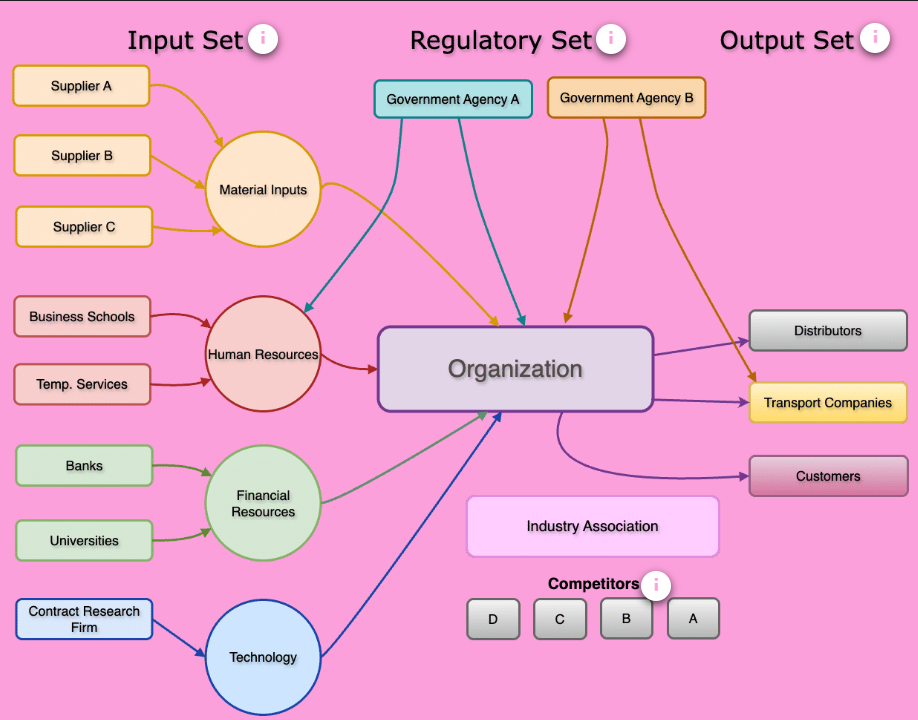
Organization-Set Model
Focuses on resources flows
input-throughput-output model
Input-set, Output-set, Regulatory-set, Competitor-set
Stakeholders Model
Focuses on interests, influence/power, etc.
Highlights and maps out internal and external social actors (stakeholders)
draws attention to how external stakeholders can be mobilized to influence internal decision-making
Many internal and external stakeholders have multiple identities
Institutional Field Model
A more extensive map of the environment with many different social actors including those who do not have direct transactions with the organization or direct stake but still have an influence
Developed to analyze interactions between organizations and their environments with a focus on shared beliefs, mindsets, values, etc.
can help explain how the environment/society shapes organizations
includes suppliers, regulators, customers, unions, professional associations, etc.
Includes a “social reference group” - social actors who act as a reference set for an individual (ie. organizations comparing themselves against other organizations)
Mann Gulch Disaster (Karl Weick Study)
Focuses on sensemaking under crisis
Analyzed 1949 Mann Gulch fire in Montana where 13 smokejumpers lost their life when a wildfire escalated
Key Insights:
Breakdown of Sensemaking
Firefighters misinterpreted the fire leading to delays and confusion
Leadership & Communication Failures
Foreman's orders were questioned leading to a lack of clear leadership and disorganization
Role of Improvisation
Foreman Wagner Dodge survived by improvising and inventing a fire escape but his crew didn't follow --> shows the difficulty of adopting unconventional methods during high-stress situations
Collapse of Structure
Team lost its identity as an organized unit --> crises can dissolve established roles and coordination
Lessons for Organization
Weick argued that organizations must foster and embrace adaptability, shared understanding, and trust to function in volatile conditions
Sensemaking
Making sense and making structure of the unknown; creating a shared understanding or sense over the unknown (ie. Culture, new technology, politics, etc.)
Turns thought into action; tool to tackle issues
Develop this skill by creating a map using data, conversations, anecdotes, etc. --> there is no "right" map but rather the importance is in everyone in a team referring to the same map
Note: the map will likely change and evolve with time
Flight Crews on Different Airlines (Richard Hackman Study)
Focused on team effectiveness, coordination, and performance in high-stake environments
Key Insights:
Stable teams preform better
Crews that consistently worked together developed better synergy, communication and coordination
Clear roles & structure matter
Effective teams --> well-defined roles, shared mental models --> reduced errors in critical situations
Autonomy & decision making
Crews performed best when given autonomy to solve problems rather than following strict protocols to a T
Training & feedback improve performance
Continuous learning, debriefing, feedback loops
Big Takeaway: team dynamics (not just individual skills) determine overall success in teams --> use 3 lenses to look beyond individual behavior when analyzing teams
Strategic Design Perspective on Team Structures/Procceses
Team tasks, grouping, linking, aligning to determine the construction of the team work plan
Grouping
What activities need to be performed to accomplish the task?
What is the nature of the interdependence among them (pooled, sequential, reciprocal)? What does that tell team members about how those activities will be clustered?
Who will take the responsibility for these activities (individuals or sub-groups)?
Linking:
How will team members communicate, and how often? What is the plan for communicating about unanticipated problems?
Will some team members play liaison or integrator roles in the coordination of the team’s activities?
Aligning:
What metrics will the team use to monitor its progress and check how well it is accomplishing its task?
What resources will team members need to undertake their assigned activities, and how does the team ensure that these are available?
Are the incentives and rewards for team members aligned with the group tasks, or misaligned? What steps will the team take if they are misaligned?
Political Lens Perspective on Team Structures/Processes
Influence, interests, conflicts, decision-making
Influence Structure
What is the influence structure on the team? Which members of the team have more influence and why?
Does the influence structure change depending on the issues, or is it fairly stable?
Does this influence structure mean that some members feel that they cannot influence the team and therefore result in their contributing less?
Is the influence structure helping the team perform its tasks, or are there some ways in which it is hindering the team?
Interests
What are the interests of the team members?
How are differing interests likely to affect the team?
How does the team resolve or make trade-offs to deal with different interests?
Conflict
How often does the team experience conflict?
What issues give rise to conflict?
How does the team deal with conflict?
Decision-Making
How will the team make decisions and resolve disagreements?
For example, will the team abide by a majority decision, or seek consensus, or allow the team leader to decide?
Cultural Lens Perspective on Team Structure/Processes
Identity, values/norms/habits, subcultures
Identity
Does the team have processes and activities for developing a shared team identity?
Values, Norms, Habits
What behaviours are typical of team meetings and interactions?
What norms have developed (e.g. do members continue to use phones or text during meetings? Do members interrupt each other?)
Do some members of the team play “maintenance” or “relationship” roles – that is, acting to ensure that norms are followed and team members feel included?
Subcultures
Are there subgroups on the teams that are developing distinctive patterns of interaction and a shared mental model (i.e. subcultures), and if so, on what are they based?
How effectively is the team working across the subcultures?
Does the team have “translators” who understand and work across the subcultures?
What are the mental models and basic assumptions of the subcultures?
Can they work together effectively?
Improving Team’s Internal Processes with the 3 Lenses
First, use strategic design
Develop a realistic work plan, improving communications, agreeing on clear metrics to measure progress
Strategic design and culture can interact to set agreed rules --> become norms over time (ie. No texting during meetings, regular check-ins, etc.)
Strategic design can interact with political system if marginalized team members approach others with their problems and work together
Types of Interdependence
the nature of tasks and structuring of interdependence —> relates to strategic design lens and view (type of interdependence helps determine the type of linking needed)
Pooled Interdependence - when tasks are completed at the same time but separately and final results are put together/pooled
Sequential Interdependence - when one task is done and then handed off for the next stage
Reciprocal Interdependence - when tasks are completed through repeated interaction with each other; focus on collaboration and dense interaction
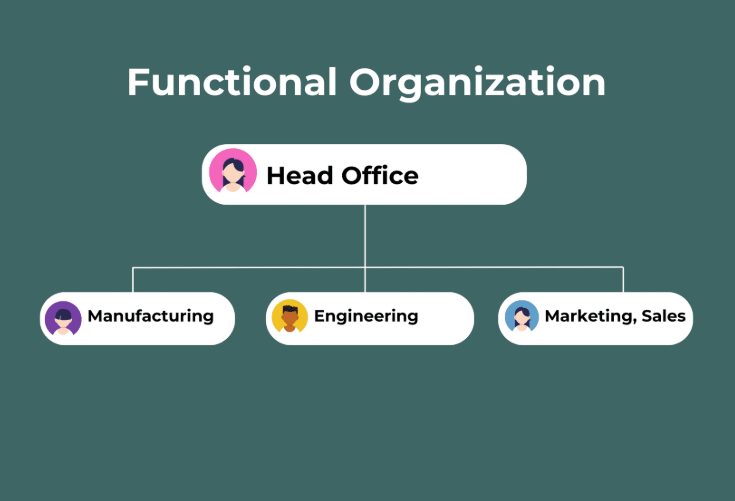
Grouping by Function (pros vs. cons)
Pros:
people develop deep functional expertise; specialization —> orgs. can be extremely innovative in specific functions/technologies
“economies of scope” —> easy to transfer resources across activities within functions
allows each separate alignment systems (ie. performance evaluation, incentives, training, etc.)
Cons:
assumes sequential interdependence from upstream to downstream (R&D to marketing); “backward” flow of information can be difficult (Marketing to Engineering) —> makes org. less responsive to changes in markets/customers
higher degree of specialization = narrower mindset
levels of management expand overtime with career ladders staying within each function —> tall hierarchy leads to slow and less effective information flow
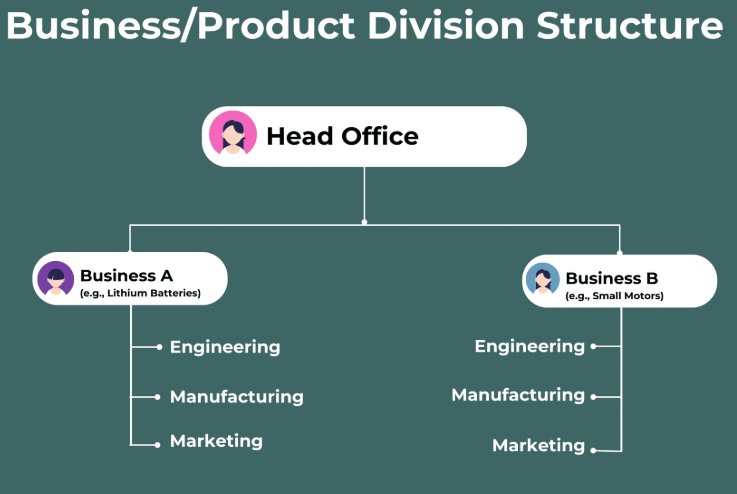
Grouping by Output/Product (pros vs. cons)
associated with strategies that emphasize efficiency where information on cost/profitability is important
Pros:
transparency of performance —> costs and profits of each business is clear
clear strategic focus —> each business division head is responsible for only the profitability and growth of a complete “value chain”
Cons:
each business being responsible for their own profits —> less sharing of resources across units; more duplication of efforts (ie. each unit has individual accounting staff)
less new business creation —> units focus on expanding their own existing businesses
less cross-boundary synergy and collaboration; each unit acts independent of each other
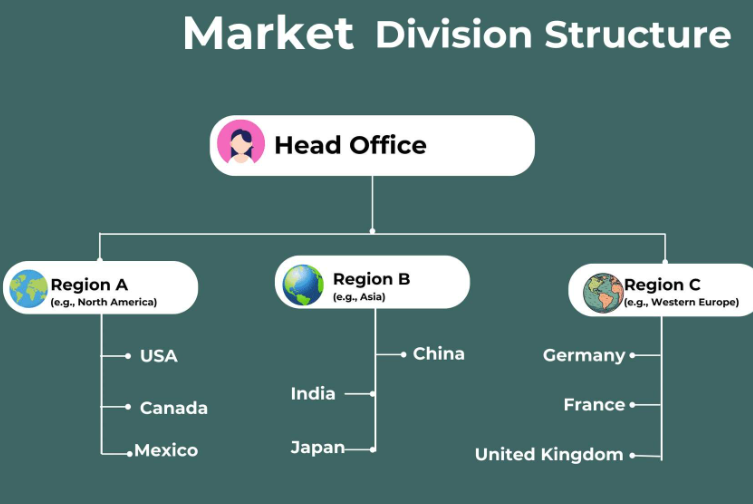
Grouping by Market (pros vs. cons)
adopted by organizations that are customer-focused or large organizations that span many locations such as multinational companies or also often by service industries
Pros:
develop deep customer knowledge and close customer relationships
tailoring of products and services to adapt to customer needs
Cons:
duplication of activities and resources
erosion of deep technical expertise
missed learning/synergy opportunities
Support Functions: Line and Staff
“Line” - direct “value chain” providing products and services and support activities (ie. Finance, admin services, etc.)
“Staff” - support activities grouped by expertise (Finance, Legal, PR, IT, etc.)
Types of Alignment
Performance Measurement Systems
Reward Recognition and Incentive Systems
Resource Allocation
Human Resource Development
Reason Blackberry/RIM Rose and Fell
Rapid rise, revolutionary —> opened up a new market by creating phones and marketing them as a necessary gadget for business professionals
Fell by clinging to their physical keyboard feature for too long, didn’t assess iPhones as a threat soon enough —> slow to change, loss of innovative edge, complacency, etc.
Input-Set
Part of the Organizational Set Model; includes organizations that provide required inputs
materials, human resources, technology, knowledge, funding, etc.
Output-Set
Part of the Organizational Set Model; includes customers, distributors, retailers, service organizations, transport, etc.
any infrastructure required for getting the output to the customer, in addition to the actual customer
Regulatory-Set
Part of the Organizational Set Model; includes organizations with formal authority to regulate the organization’s internal processes
financial reporting standards, workplace health and safety
also includes organizations that impact the size of output and input sets
operating license agencies
and organizations that impact the kind of relationships that can be built
anti-trust agencies, fair trade agencies
Competitors
In the Organizational Set Model, competitors and potential competitors that interact with a company are assessed though they are often overlooked by the strategic design lens
Temporary Boundary Spanning Groups
A specialized unit; a type of linking mechanism; especially beneficial for managing external actors
Practice of importing knowledge from experts outside of a community (temporarily) which come from other organizations
ie. joint task force of suppliers to implement a new quality program
Permanent Boundary Spanning Groups
A specialized unit; a type of linking mechanism; especially beneficial for managing external actors
Practice of importing knowledge from experts outside of a community (those who are required) which come from other organizations
ie. Suppliers Association by Toyota or Nissan (all suppliers meet together)
Isomorphism (3 types)
Organizational patterns/actions in an institutional field have similarities in the same field
Coercive isomorphism - powerful organization demands organizations adopt prevailing action (ie. gov. regulations)
Normative isomorphism - professional/interest groups insist on a “right” way to do things (ie. doctors shaping hospital management)
Mimetic isomorphism - most common type; organizations use other organizations as a model/comparison point and “imitate”
Marshmallow Challenge
Young children vs. accomplished business professionals in a timed exercise to build a structure
young children won —> collaborated, communicated, etc.
business professionals lost —> vying for power, not willing to give up control, etc.
Key Areas of Change & Transformation in Managing Teams
Technology & digital transformation
changes in automation, training, growth of AI, governance, etc.
Regulatory changes & compliance
key changes in security, government regulations, data privacy, AI policies, etc.
Environmental sustainability & climate action
advancements in recycling, emission reduction, corporate sustainability commitments, carbon taxes, etc.
Talent retention & workforce dynamics
evolving workforce trends —> compensation, remote work flexibility, work life balance, burnout prevention, etc.
Cultural & organizational evolution
major changes center around areas of leadership approaches, trust-building, navigating M&A, workplace dynamics, etc.
Success of change initiatives is low —> 60-70% fail
organizations don’t assess why programs fail on a systematic level and often just replace them with another
Change Management
Minimize disruptions that come with organizational changes and successfully navigate the transitions; organized approach to creating, controlling and adapting to change
Two key factors
clear process of implementing the change from beginning to end
a plan to support people through the change process
Process and Competency and the Steps (change management)
“Change management” = process of change & competency of change
Change management as a process - includes steps necessary to guide an organization through each process of change
steps include: recognizing change, proposing change, assessing readiness for change, planning and implementing and monitoring change
Change management as a competency - how leadership manages change; “people side” of change
includes: helping people engage with change through communication, training, etc.
Benefits of Change Management
Increases chance of success
clarifies transformation steps; proactive instead of reactive against common pitfalls
Prevents stagnation
being prepared change = better position to take advantage of opportunities; openness and agility
Improves morale
being prepared and having the tools for change = easier to adapt, empowering, etc.
Organizational Inertia
An inherent resistance to change, slow adaption to changing markets, inefficient, etc. because organizations are comfortable/stable how they are —> impact flexibility and innovation of an organization
Why Change Management/Change is Hard
Organizational inertia
Stability being inherent to organizations and actively maintained by systems and cultures and interests of social actors (“keep things as they are”)
Unanticipated consequences organizational design changes have on other parts of the design, political and cultural systems
better to identify unanticipated consequences early and develop solutions; be proactive
Note: regardless of preparations, every change initiative will have unanticipated consequences
Organizational Change as Design (+ barriers and drivers of change)
Organizational change equates to change in design
ie. change in grouping or linking or alignment, streamlining operations by moving away from geographic structure to global product/service lines, etc.
Drivers of Change —> change in environment (ie. technology) and therefore strategy; internal lack of fit across design
Barriers to Change —> inadequate understanding/communication; faulty analysis
Organizational Change and the Political Lens (+ barriers and drivers of change)
Organizational changes are interrelated to changes in the power structure
if you view an organization from a political lens:
organizational change = change in decision-making authority, individuals and groups that have influence, which interests are served by the organization
Drivers of Change —> shifts in power of stakeholders (internal, external)
Barriers to Change —> “entrenched interests”
Organizational Change and the Cultural Lens (+ barriers and drivers of change)
Organizational change has direct impacts on culture as well
from the cultural lens perspective:
organizational change = change in norms, values, mental models, shared assumptions about the organization, the environment, the operations, their roles, etc.
Drivers of Change —> challenges to basic assumptions (organizational or subunit level)
Barriers to Change —> embedded assumptions, identities
Change Management Model
Road map for change management; a framework for driving and understanding organizational change to make the transition easier using a proven, dependable model
helps prepare, improves buy-in, saves time, teaches best practices, aligns organization, helps changes stick
various models such as Lewin’s model, McKinsey 7-s model, etc.
Lewin’s 3 Step Change Management Model + When to Use It
Change management model developed by Kurt Lewin
3 stages —> unfreeze, change, refreeze
Unfreeze —> company must unfreeze status quo and current conditions, be amendable to change and pause daily routines and prepare employees for new transitions; an ice cube melting
Change —> company reshapes itself and enters a “liquid” state; ice melts being poured into a new mold
Refreeze —> company returns to stability and solidifies the change as a part of the routine; ice water refreezing
this model is idea for breaking down large, companywide changes or for targeting specific processes and people to get them comfortable with the transition —> best for communicating plan, implementing change and making the change stick
Senge’s Model + When to Use It
Change management model where rather than “refreezing” and solidifying the new change, this model focuses on building the capacity for continuous change and learning —> continuous flexibility
Initiating change effort, sustaining it and re-designing the larger system so that learning is diffused throughout
Emphasis that there is no “one size fits all” —> challenges with implementing changes faced may be similar but solution is different; creative, context-specific solutions
The McKinsey 7-S Model + When to Use It
Change management model developed by McKinsey & Company that analyzes organizational design
7 organizational elements that companies must align when planning/implementing change:
strategy (business plan) - Hard S
structure (organizational structure) - Hard S
systems (procedures for tasks) - Hard S
shared values (what matters) - Soft S
drives the other elements
style (how things are done) - Soft S
staff (company workforce) - Soft S
skills (employee skills and talents) - Soft S
Hard S - concrete and easy to identify
Soft S - subjective, harder to alter
Use this model for deciding what needs to change and aligning the organization during a change (ensures alignment before, during and after a change; doesn’t help with implementation)
Kotter’s 8-Step Model + When to Use It
Change management model by Harvard professor John Kotter after surveying 100+ companies undergoing changes
People focused approach, best chance of success = when people support the change
8 steps to encourage acceptance and buy-in by employees:
1. create a sense of urgency (motivate + engage to emphasize need)
2. build a core coalition (group of company members to drive the change; best to have a diverse group)
3. form a strategic vision
4. communicate the vision (refer to the vision, gather feedback, open communication)
5. remove barriers (ie. eliminating ineffective processes)
6. generate short-term wins (small, easy to accomplish targets and a reward system)
7. sustain acceleration (feedback + adjust)
8. institute the change (include it during onboarding, reward contributing members, etc.)
Use this model when getting resistant employees to embrace change and to create a sense of urgency about the need for a change
The Kubler-Ross Model
Change management model by Elisabeth Kubler-Ross —> aka “grief curve” (5 stages of grief)
People-focused model; Details how people emotionally process loss through 5 nonlinear stages
Denial
Anger
Bargaining
Depression
Acceptance
Note: may not occur in this order and steps can be revisited more than once; nonlinear
Use this model when empathizing with employees and to help anticipate and manage employee reactions
4 Dimensions of Change
Scope
radical - fundamental changes (system-wide) and impact strategic design or political or cultural systems (usually caused by big strategy shift or major crisis)
experts say that radical change is so demanding that it needs a consolidation period and stability before any other change
incremental - local changes; modify existing systems
Pacing
punctuated change - change that has a clear beginning and end (ie. Lewin’s 3 step model)
continuous change - proceeds over time and one change leads to another
Source
top-down vs. bottom-up
Process
planned changes
emergent changes
Top-Down Changes Pros vs. Cons
Pros:
Speed, leadership, focus, control (less unanticipated surprises)
Cons:
More likely to provoke resistance, lack of ownership/choice/autonomy, threat of rigidity, fast speed is out of speed with culture and politics (culture develops slowly and politics and relationships take time to build), tight focus = less innovation, less learning, no tolerance to experiments/innovation
Bottom-Up Pros vs. Cons
Pros:
Fosters buy-in and commitment, sharing and participation in information gathering = less uncertainty + more sense of urgency for change, autonomy and employees have a voice, slower speed aligns more with the speed of culture and politics
Cons:
May be too slow to respond to changes, may signal lack of upper management leadership/commitment to change, potentially more costly, emergent nature = loss of resources and focus
Steps of a Good Action Step (for change)
expand repertoire of actions
avoiding mistakes
working with temporal sequencing
becoming sophisticated consumer of advice on change
Stanford Prison Experiment Summary
Experiment where students were given roles and costumes to roleplay as prisoners vs. guards —> with time, they started truly believing they were these roles and playing into them even though they had opportunities to leave the experiment —> power of social situations
There was little to no regulation as the scientist himself lost objectivity
The “prisoners” were being harassed, abused and humiliated by the “guards” and there was little to no resistance (even those who did resist were ostracized)
There were prisoner rebellions by the second day
Prisoner 416 (joined later) but absorbed the identity quickly and went on a hunger strike as an act of defiance
Kristen Peters
Kristen worked as a teacher and was looking to pivot —> by babysitting with a specific family, she networked and received the chance to do a finance internship
Unlike other interns, she could skip recruitment process and had already pre-determined the specific office she would shift to after her first few weeks of training —> only networked and built relationships at that office
Focused on networking, events, etc. and not the classroom portion of the training —> she seemed lazy, unengaged in classroom training (HR had bad impression of her)
She treated her relationships as transactional, didn’t bond with other interns or HR, etc.—> promotions were based on connections/politics and she focused solely on merit
Halfway through, she was shocked to receive poor feedback and had to pivot her approach to mend relationships and show her interest and hard work
Overall, lack of political awareness and understanding how to balance appearances and impressions set her back
X-Teams
New, external oriented, adaptive, cross-functional teams that are formed to solve an issue or tackle an initiative
a collaboration with individuals from diverse backgrounds (ie. engineering, marketing, R&D, stakeholders, external experts, etc.) —> gives a more comprehensive view and diverse perspectives with open information sharing
opposite of faultline subgroups
Faultlines + What Leaders Can Do
Sub-groups or coalitions that form naturally within a diverse formal team; usually based on surface-level demographic characteristics at first but with time, deeper level faultline can develop —> almost like a clique
Creates division, limits collaboration across subgroups (faultline subgroups don’t collaborate with each other and limit their information sharing to within the subgroups)
Leaders can address faultlines that form by:
task orientation - focus on the task at hand
relationship orientation - focus on building a trusting, collaborative environment where everyone is comfortable
task orientation and then switching to relationship orientation - start with task orientation and then pushing members to collaborate
relationship orientation and then switching to task orientation - focus on building relationship and then pushing task completion
Barbie Case Key Issue (2010 controversy)
Barbie often faces controversy for their impact on impressionable young girls. They are often accused of objectifying girls, reinforcing gender stereotypes (ie. Barbie saying she “loves shopping” and “math is hard”), reinforcing unrealistic beauty standards, being outdated in their implicit messaging, etc.
Stanford Prison Experiment (Structural Design Lens)
Design of the experiment; creating roles, layout of the prison, etc.
Impacts how the players of the experiment “got into character” through costumes, solitary confinement, etc.
Allowed them to psychologically absorb their assigned roles
Stanford Prison Experiment (Political Lens)
Assigning roles and granting the guards complete authority reinforced a power imbalance between the two groups
Participants of the experiment morphed into their own understanding and interpretations of their roles (ie. one of the prison guards was inspired by a movie he saw which further inspired his cruelty towards prisoners)
The interests of the prison guards was to be as cruel, domineering, etc. as possible // interests of the prisoners was to defy and regain their own power through rebellion
Purpose of using dark rooms, shaded glasses, solitary rooms, uniforms, prisoner outfits → create a power imbalance between “guards” and “prisoners” and force students to mentally embrace their roles
Stanford Prison Experiment (Cultural Lens)
Artifacts:
Sunglasses and costumes → dominance, power imbalance, dehumanization, etc.
Espoused Values:
Being told by the scientist that this was a job, not a real prison, etc.
Basic Underlying Assumptions:
Prison guards hold all power and authority with free reign over the prisoners → this assumption stemmed from prison guards facing no restrictions, instructions, repercussions, etc.
Barbie Case Organization Set (inputs, outputs, regulatory-sets), Stakeholders, Institutional Field
Organization set
Input set: suppliers, manufacturers, distributors, doll designers, etc.
Regulatory set: government, regulators, Mattel
Output set: consumers (young girls specifically)
Stakeholders
General public, employees, retailers, shareholders
Institutional field
Toys industry
Barbie Case; Influence of Barbie and Mattel’s Repositioning Efforts
Influence: Strong impression on their young demographic, specifically young girls. Became an iconic doll, easily recognizable, prestigious, etc.
“Good”: Barbie is meant to be “safe experimentation” for young girls to imagine themselves and their future
“Bad”: unrealistic beauty standards
Mattel Repositioning: To adapt, Barbie has shifted to focus on empowerment with diverse dolls of all backgrounds, a wide variety of careers featured in the dolls, etc.