PGC, EINC, APGAR
 Studied by 0 people
 Call with Kai
 Learn
Learn Practice Test
 Spaced Repetition
 Match
Match Flashcards
 Knowt Play
1/21

There's no tags or description
Looks like no tags are added yet.
Name | Mastery | Learn | Test | Matching | Spaced | Call with Kai |
|---|
No study sessions yet.
22 Terms
Personal hygiene
— Is the self-care by which individuals attend to such functions as bathing, toileting, general body hygiene, and grooming
Hygiene
— Is a highly personal matter determined by individual and cultural values and practices
— It involves care of the skin, feet, nails, oral and nasal cavities, teeth, hair, eyes, ears, and perineal-genital areas
Skin
— Largest organ of the body
— Protects underlying tissues from injury by preventing the passage of microorganisms
— Regulates the body temperature
Abrasions
— Superficial layers of the skin are scraped or rubbed away
— Area is reddened and may have localized bleeding or serous weeping
Excess drying
— Skin can appear flaky and rough
Ammonia dermatitis (Diaper Rash)
— Caused by skin bacteria reacting with urea in the urine
— The skin becomes reddened and is sore
Erythema
— Redness associated with a variety of conditions, such as rashes, exposure to sun, elevated body temperature
Essential intrapartum newborn care
— Reduce under five morality rate from 80 to 26.7/1000 livebirths
The response of DOH
— Issued administrative order 2009-2005 on Dec 1, 2009
— Adopting ne policies and protocol on ENC
— Launched on Dec 7,2009
1st 90 minutes
— Immediate Newborn care
90 minutes to 6 hours old
— Essential Newborn Care
Time Band: 1-3 minutes
— Delay cord clamping
— Remove first set of gloves before cord clamping
— Do not milk the cord
— After cord clamping, give 10 IU Oxytocin IM to the mother
Care of the cord
— Dry cord care is recommended
— Do not apply any substance onto the cord
— Do not use a binder or "bigkis”
—
Time band: Within 90 min of age
— Provide support for initiation of breastfeeding
— Remove the first set of gloves immediately prior to cord clamping
— Leave the newborn on mother’s chest in skin to skin contact
— Observe the newborn for feeding cues
Cradle hold
— Is the most basic position, and the one most often used
— To put the aby to the left breast, she should be nestled in the mother’s left arm so that her neck rests in the crook of the elbow, her body is along the forearm, and her bottom is in the mother’s hand.
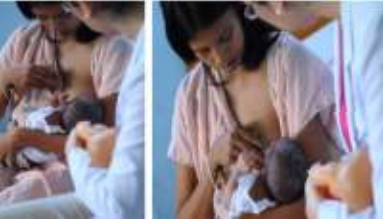
Cross cradle hold
— Is a good position if the baby is small, or if he’s having having trouble latching on

Underarm hold
— Football hold
— Baby is held like a clutch bag
— Nose further away from the breast
— Baby’s trunk is secure beside mother’s trunk
— Popular hold for women who’ve had a cesarean section
Side-lying position
— The mother has now repositioned the baby such that both of them are lying down facing each oher
vitamin k
— 0.1 mL; IM
Hepa B
— 0.5 mL; IM
BCG
—0.05 mL; ID
After 90 minutes of age, but prior to discharge
— Keep the baby in the room with the mother (rooming-in)
— Keep the baby skin to skin contact with the mother
 Note
Note  Flashcards (84)