lecture 11 - spermatogenesis
 Call Kai
 Learn
Learn Practice Test
 Spaced Repetition
 Match
Match Flashcards
 Knowt Play
1/12

There's no tags or description
Looks like no tags are added yet.
Name | Mastery | Learn | Test | Matching | Spaced | Call with Kai |
|---|
No analytics yet
Send a link to your students to track their progress
13 Terms
all structures sperm pass through
seminiferous tubules → straight → rete → efferent ductules → epididymis → vas deferense → ej. duct → urethra (3 parts) → exit
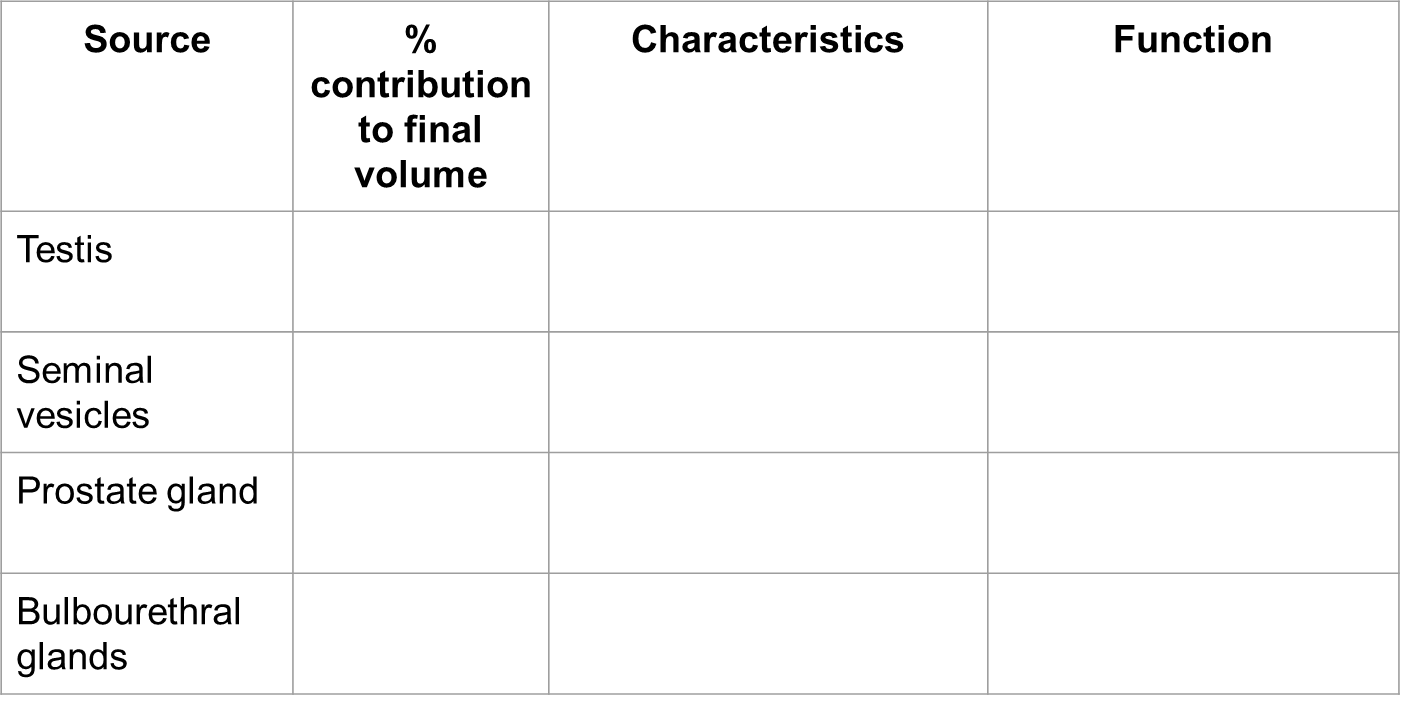
semen/purpose of semen?
normal volume = ~2-3+ milliliters
20 million + sperm/ml
established norms for pH, viscosity, sperm characteristics, etc
nutrients
protection
combat female reproduction tract → acidic, viscosity
transport
components of semen
correct order of hormones from hypothalamus to testes?
GnRH → LH/FSH → testosterone
spermatogenesis vs spermiogenesis
spermatogenesis = formation of sperm cells
spermiogenesis = maturation of sperm
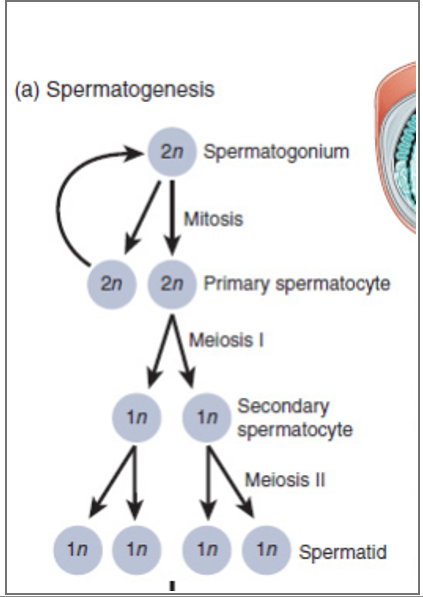
spermatogenesis
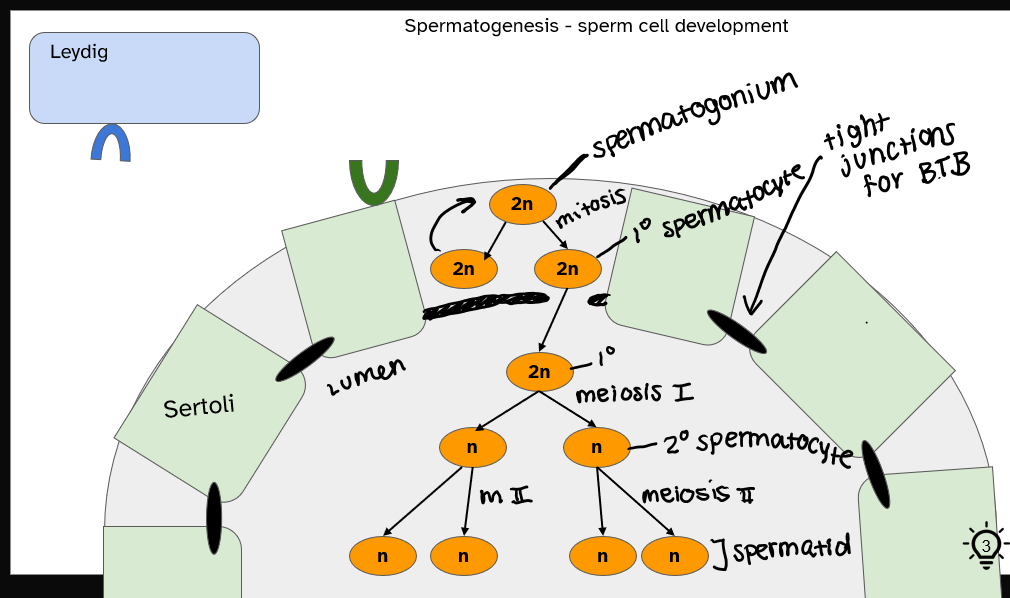
formation of spermatids
takes place in the seminiferous tubules
begins at puberty and doesn’t stop (unlike ovulation)
sperm count declines with age/lifestyle choices
one production cycle = ~64 days
a new cycle begins every ~16 days
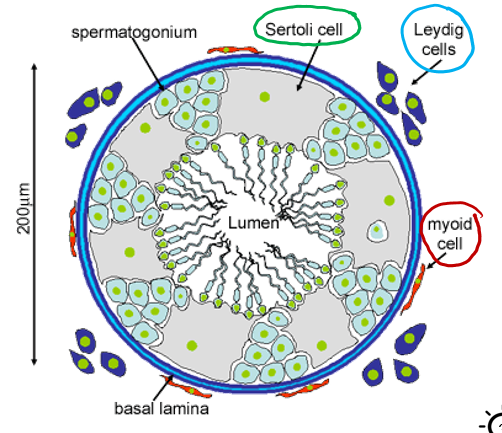
spermatogenesis — IMP components of seminiferous tubules
germ cells → least mature cells
singular = spermatogonium, plural = spermatogonia
the stem cells of the testes
myoid cells → smooth muscle
sertoli cells
leydig cells
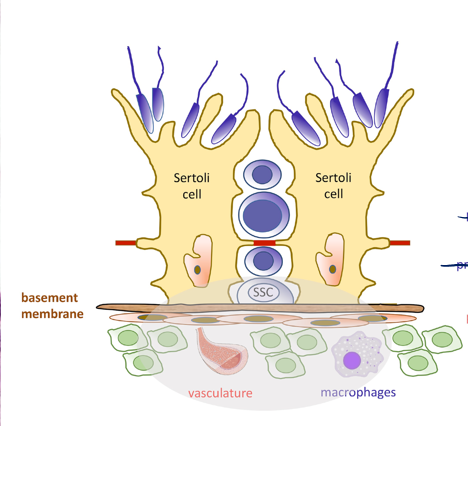
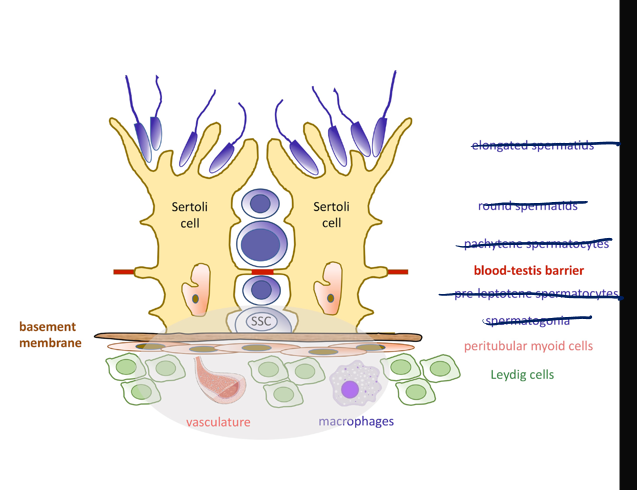
sertoli cells
AKA sustentacular or nurse cells
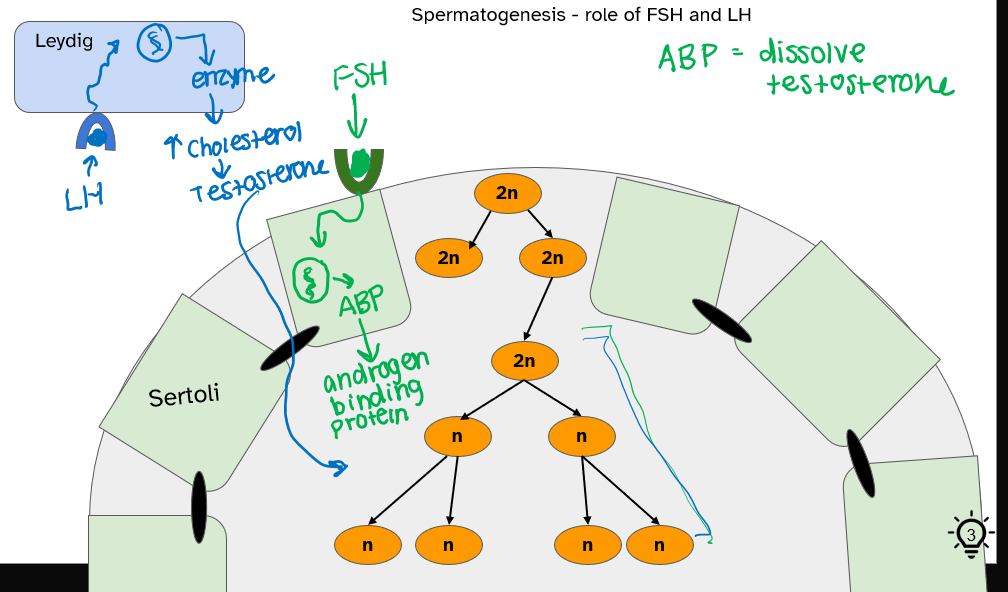
promote sperm production — stimulated by FSH
form blood-testis barrier
prevent interaction with bloodborne substances
immunological privilege
tightly control environment
Leydig cells
AKA teticular interstitial cells
located between the seminiferous tubules
help maintain spermatogenesis via testosterone production —- stimulated by LH
mostly active during puberty onward
spermatogenesis — process outline
spermatogenesis — sperm cell development
spermatogenesis — role of FSH and LH