CTST 200 Study Flashcards
 Studied by 5 people
 Call Kai
 Learn
Learn Practice Test
 Spaced Repetition
 Match
Match Flashcards
 Knowt Play
1/62

There's no tags or description
Looks like no tags are added yet.
Name | Mastery | Learn | Test | Matching | Spaced | Call with Kai |
|---|
No analytics yet
Send a link to your students to track their progress
63 Terms
Lifetime of Jesus (4BCE to CE 33) → “facts”
jewish rabbi, leader of reform movement (religion and political)
historians agree that he existed, was teacher & leader was crucified
Lifetime of Jesus (4BCE to CE 33) → Christian understanding
Christians belived be was the divinely conceived Son of God and that he performed miracles and rose again, ascended into heaven
The Early Church: Pentecost
Acts 2:1-4, RSVCE
they were filled with the Holy Spirit and began to speak in tongues
so they could continue what Jesus started
Septuagint
….
Apocrypha
Means of doubtful origin (deutero-canonica)
2nd coming
valuable, but not written with Gods influence
The Early Church: Worship & Life
for the 1st decade or two, Christians continued to attend worship at the Jewish temple
Christians also shared mush of daily life together (including, we read in Acts, their possessions)
Attitude was one of joy & celebration (not sorrow/sin focus)
House churches development in the early years (earliest church building predates 256, appears…
The Early Church: Participants
Jews
Gentile converts (later)
some powwerful women
urban centers—immagrants
Galations 3:28 RSVCE
encourage participants from Jesus
The Early Church: Missions
Diaspora Judaism (Septuagint)
fall from Jerusalem
Peter, John, Paul
Urban, travel of slaves, merchants, exiles
The Early Church: Leadership?
Egalitarian vs. hierachy
Acts of Paul and Thecla
1st c.
The story says Thecla leaves her family and life behind to avoid getting married, baptizes herself, and followed Paul on his holy travels
didn’t actually happen, just a popular story
women traveling and being part of the church was believable at this time
The Early Church: Key Debates & Teachers
Controversy → Counsils → Doctrines/Distinctions
Key Teachers in the Early Church
Apostolic Fathers (c.50-150 c.)
Clemet of Rome (Bishop of Rome 92-122,one of the earliest after Peter
Polycarp
69-155
Bishop of Symyrna (Modern Turkey)
diciple of John
burned at the stake
Ignnatius of Antioch
Bishop of Antioch
Justin Martyr
(c. 100-165): brought Christianity into conversations with Greek philosophy
Irenaus
(early 160-225 c.): first great Christian Latin writer coined Latin word for trinity (trinitas)
Origen
(184/85-253/54): incredible biblical scholar; amplified Justin Martyr’s projects, presenting a Platonic Christianity
Key Debates in the Early Church
Council of Jeruslem (48)
Acts 15: Gentiles not obligated to keep all of Mosaic law (esp. circumcision)
Marcion (150) rejects Hebrew Bible (OT)
Tertullion wrote against him
leadership
gnosticism (spirit escaping evil flesh)
Montanist movement begins (172)
estatic prophecy, asceticism, challenging
Persecution in the Early Church
35: Stephen Martyred
62: James martyred
64: Fire in Rome, Nero blames Christians, beginning a period of imperial persecution
persecutions continued on and off for 250 years (e.g., Christians who wouldn’t sacrifice/burn incense to Roman gods = “impious”).
202: Perpetua and Felicitas martyred
303: the great persecution begins under Diocletian.
Art in the Early Christian Church
Catacombs, tombs
Obscure, symbolic (Ichthys, peacock, lamb of God, OT figures, good sheperd)
Following the events of the early church, who brought on a major shift?
Constantine (313)
Church-State Relationships Dramatic Shift
313: Edict of Milan
321: Constantine gifts the church public property, begins church, property rights, and builds the first St. Peter's Basilica.
380: Christianity declared official religion of the Roman Empire
390: Decree outlaw most pagan practices in Rome
452: Pope Leo I convinces Attila the Hun not to sack Rome (though Rome is sacked by vandals in 455)
496: Clovis I, French pagan King converts
756: Popes granted indapendant rule of Rome (Donation of Pepin)
800: King Charlemagne crowned Holy Roman Emperor by Pope Leo III in St. Peter’s Basilica
First Council of Nicene (325)
Emperor Constantine
Question of Jesus’ status in relation to the Godhead: was Jesus fully God, fully equal with the Father?
Arius of Alexandria: Jesus subordinate to God; Athanasius: Christ had to be truly God in order to bring about salvation
Roman Empire’s view vs. The Church’s
Empire = Kingdom of God the Father
Church = King of God the Son
Nicene Creed (325)
the Apostles' Creed
Popes that behaved well vs. badly
Leo I (Leo the Great) (440-461) → convinced Attila the Hun not to invade Italy
Gregory I (Gregory the Great) (590-604) → Gregorian chant
Gregory VII (1073-1085) → Gregorian Reforms (lots of incest and other bad things that made this reform nessacary)
Significance of Emperor Leo III
He said not to worship idols/icons
Politition!!!
The Great Schism
Divides east and west
1054
Divided so language, culture, and religion is different
Filioque
Filioque
means from the son
West beliefs: Father + Son = Spirit
East beliefs: Father = Son & Spirit
still debated today
Mission Movement spread the Faith
342-988
Augustine’s Confession
born 354 in North Africa
was with a concubine who he had a son with
Mocked christianity (though it was primitive)
Was part of other religions prior
his mom convinces him to listen to Bishop Ambros
Starts to feel more and more compelled to Christianity.
doesn’t want to give up sex
he fully converts (after the death of his mother) and later becomes a bishop.
Fourth Lateran Council (1215)
called by innocent III
Transubstantiation
Papal authority
Every cathedral is a school open to the poor
Jews and Muslims in Christian lands must wear distinctive clothing
Unam sanctam (1302)
Importance of this word = places like france have kings trying to assert their power while the pope was trying to do the same (church is in charge over politics).
Western Schism (1378)
1309—The pope lived in Avignon (French King pressured him to)
1377—The rest of the world views that as corrupt so the pope moves back
to try and solve this, a second pope is put in power
the two popes are seen as “invalid”
a 3rd pope is elected as the “real” pope
this mess lasts until 1417
Inter caetera (1493)
If Christians didn’t own the land, they could take it
Dum Diversas
allowed the ownership of any non-christian slaves
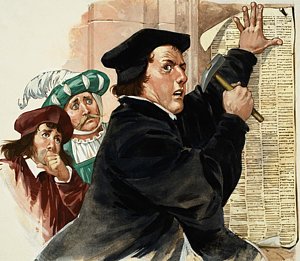
Martin Luther’s 95 Theses (1517)
he didnt agree with the modern church
he wanted to return to faith, grace, and scripture (scripture > traditions)
English Act of Supremacy (1534)
renders church sepret from Roman Catholic church
henery the 8th
no other churches churches before this
now the anglican church
Council of Trent (1545-63)
condemned Protestantism
regulated the clergy and indulgence
ordered founding of seminaries
promoted study of Thomas Aquinas
granted authority to Uulgate (Latin translation of the Bible)
named traditions as equal to scripture in authority
confirmed seven sacraments
gave shape to the mass for centuries to come
Thirty Years’ War (1618-48)
Holy Roman Empire
less religious freedom given by Ferdinand
wars emerged across Europe.
politically in charge would choose the religion of the land
after there was a bit more religious acceptance
Galileo’s trial (1633)
he says the sun is the centre of our universe (against currents beliefs)
French Revolution (1793)
tension between church and state
leading to other tensions
Pope Pius IX (pope 1846-1878)
Longest-reigning elected pope
defined dogma of the immaculate conception of the Virgin Mary (1854)
wrote the syllabus of Errors (1864)
convened first Vatican Council (1869-1870)
last pope to rule Papal States (fell to Italian nationalists in 1870)
The Debate over Papal Authority
Gallicanism & Liberalism
Ultramontanism
The Syllabus of Errors (1864)
listed 80 errors including rationalism, naturalism, socialism, liberalism, etc
Catholic religion should be treated as the only religion
seige mentality
First Vatican Council (1869-1870)
most against
about 20% liberal
Rerum Novarum (1891)
an encyclical of Leo XIII (pope 1878-1903) in response to the injustices of the Industrial Revolution
founding documents of social Catholicism
move away from seige mentality
Crisis over Modernism
Neo-Scholastic movement
Supported by Pope Leo XIII (1878-1903) with his encyclical Aeterni Patris exalting St. Thomas Aquinas
Begins with dogma
Emphasis on obedience and faith
Modernists
Historical and critical methods of biblical/theological scholarship
Belief in intellectual freedom
Led to questioning of biblical inerrancy, for example
Expansion: Missionary and Immigrant
C19 missionary societies and orders (among Protestants and Catholics)
Asia
Africa
(trouble of colonial message)
Growth of American church
Irish, then German immigrants
Network of parish schools, hospitals, colleges
Vatican II (1962-1965)
produced 16 documents
style of dialogue, collegiality, love
lasting effects
change in liturgy
move from church as pyramid to church as people of God
ecumenism
acknowledgment of history, change, past mistakes
call for dialogue with modern secular world
Later 20th Century
pope Paul VI Humanae Vitae
Conscience
ongoing negotiations
Opere Operato
sacrament is only powerful because of God, not a priest
person has to be engaged to receive fruits of communion
priest could be a bad person but Gods power overshadows that
Grace conveyed through God’s grace, not humankind.
Sacraments of Christian Initiation
Baptism (the beginning of new life)
confirmation (it’s strengthening)
the Eucharist (which nourishes the disciple with Christ’s Body and Blood for his or her transformation in Christ)
Sacraments at the Service of Communion: Holy Orders
The whole church is a priestly people
Ministerial priesthood differs in essence from the common priesthood because it confers a sacred power for the service
bishops, presbyters, and deacons
Sacraments at the Service of Communion: Marriage
signifies the union of Christ and the Church
gives spouses the grace to love other with the love that Christ loves his church
perfects the human love of the spouses and strengthens their unity
helps each other reach eternal life
Sacraments of Healing: Reconciliation
"The sacrament of Penance is a whole consisting in three actions of the penitent and the priest's absolution. The penitent's acts are repentance, confession or disclosure of sins to the priest, and the intention to make reparation and do works of reparation."
Sacraments of Healing: Anointing of the Sick
"The sacrament of Anointing of the Sick has as its purpose the conferral of a special grace on the Christian experiencing the difficulties inherent in the condition of grave illness or old age."
Indelible Seals
"The three sacraments of Baptism, Confirmation, and Holy Orders confer, in addition to grace, a sacramental character or 'seal by which the Christian shares in Christ's priesthood and is made a member of the Church according to different states and functions. This configuration to Christ and to the Church, brought about by the Spirit, is indelible; it remains for ever in the Christian as a positive disposition for grace, a promise and guarantee of divine protection, and as a vocation to divine worship and to the service of the Church. Therefore these sacraments can never be repeated."
(Catechism of the Catholic Church
Scripture and Tradition
the church doesn’t draw its certainty about all revealed truths from Holy Scriptures alone
Scripture
Tradition
Reason
Experience
Ecumenism and Vatican II: Three Drafts
First draft: "there is only one true Church of Jesus Christ...[which Christ] entrusted to Saint Peter and his successors, the Roman pontiffs, to be governed; therefore only the Catholic Roman has a right to be called the church."
Later draft: the church of Christ "is (est) the Catholic
church.""This church, constituted and organized as a society in the present world, subsists in (subsist in) the Catholic Church, which is governed by the successor of Peter and by the bishops in communion with him. Nevertheless, many elements of sanctification and of truth are found outside its visible confines."
." (Lumen Gentium 8)
Sacraments of Christian Initiation
Baptism ("the beginning of new life")
Confirmation ("its strengthening")
The Eucharist ("which nourishes the disciple with Christ's Body and Blood for his or her transformation in Christ")
Distinctions of the Roman Catholic Church
Pope
Celibacy
Communion as sacrifice
popular devotions
real presence of Christ
transubstantiation
infant baptism
saints
Mary
Tradition and Scripture
Mary Reichardt’s Between Human and Divine: The Catholic Vision in Contemporary Literature
Historical traditions, culture, theology, and/or spirituality of Catholicism
involves Catholic subject matter isn’t a requirement of a catholic novel, neither is having a Catholic author
must involve some understanding of the Catholic faith, Catholic life, or Catholic tradition
According to Mary Reichart…
Post-Vatican II Catholic literature is often less distinguished by subject matter than by a shared vision that is:
Incarnational
Sacramental
Fascinated by the “mystery of the cross”
Characterized by “intense encounters with suffering and evil”
open to the existence of another world beyond the senses.”
sometimes marked by hope
How is The Power and the Glory “Catholic Literature”?
From Mark Bosco, SJ, in Graham Greene's Catholic Imagination
Characteristics of French Catholic novel (per David Lodge), which influenced Greene:
the idea of the sinner "being at the heart of Christianity"
The idea of "mystical substitution"
The implied critique of materialism
The tireless pursuit of the erring soul by God, the "Hound of Heaven" in Francis Thompson's famous metaphor
"Conflict between the corrupt flesh and the transcendent spirit"
Graham Greene (1904-1991)
Oxford educated; journalist;
novelist
Big "Catholic novels": Brighton
Rock, The Power and the Glory, The Heart of the Matter, The End of the AffairConverted in 1926 under the influence of future wife Vivien
Didn't like to be called a "Catholic novelist": preferred to be called a novelist who happened to be
Catholic
Mexican context
1500s→ Spanish colonization
brings Roman Catholic religion
religious enculturation > Mexican
Catholicism1810-1821 war of Mexican independence
period of struggles
includes Mexican-American War (1846-
1848) and internal struggles
1910-1920 Mexican revolution
leads to anti-clerical constitutions (church associated with ruling elite)
1940 pro-Roman Catholic president
changes, but not to constitution
1992 constitutional reform
1500s→ Spanish colonization
brings Roman Catholic religion
religious enculturation > Mexican
Catholicism1810-1821 war of Mexican independence
period of struggles
includes Mexican-American War (1846-
1848) and internal struggles
1910-1920 Mexican revolution
leads to anti-clerical constitutions (church associated with ruling elite)
1940 pro-Roman Catholic president
changes, but not to constitution
1992 constitutional reform
 Note
Note  Flashcards (26)