MCAT Kaplan Biology Chapter 12
 Call Kai
 Learn
Learn Practice Test
 Spaced Repetition
 Match
Match Flashcards
 Knowt Play
1/77

There's no tags or description
Looks like no tags are added yet.
Name | Mastery | Learn | Test | Matching | Spaced | Call with Kai |
|---|
No analytics yet
Send a link to your students to track their progress
78 Terms
hemizygous
only one allele is present for a given gene
complete dominant:
one dom allele and one recessive allele, the dominant will completely mask
penetrance
-proportion of individuals in a population that actually expresses the phenotype
expressivity
defined as varying phenotypes despite identical genotypes
-if expressivity is constant, then all organisms with same phenotype would have same genotype
-but, if expressivity is variable, individuals with same genotype could have varying phenoty[es
mendel's 1st law: law of segregation
-4 tenets of 1st law:
1. genes exist in alternative forms in the form of alleles
2. an organism has 2 alleles for each gene, one from each parent
3. 2 alleles segregate during meiosis, so gametes carry only 1 allele
4. if 2 alleles of an organism are different, one will be expressed (dominant), the other will be silent
wild type
-basically alleles that are considered "normal"/"natural", aka ubiquitous
-the less common allele is called "mutant"
nucleotide level mutations
Point mutations
Frameshift mutations:
chromosomal mutations
Large Deletion mutations
• Duplication mutations
• Inversion mutations
• Insertion mutations
• Translocation mutations
genetic drift
-defined as changes to composition of gene pool due to change
-more pronounced in small populations
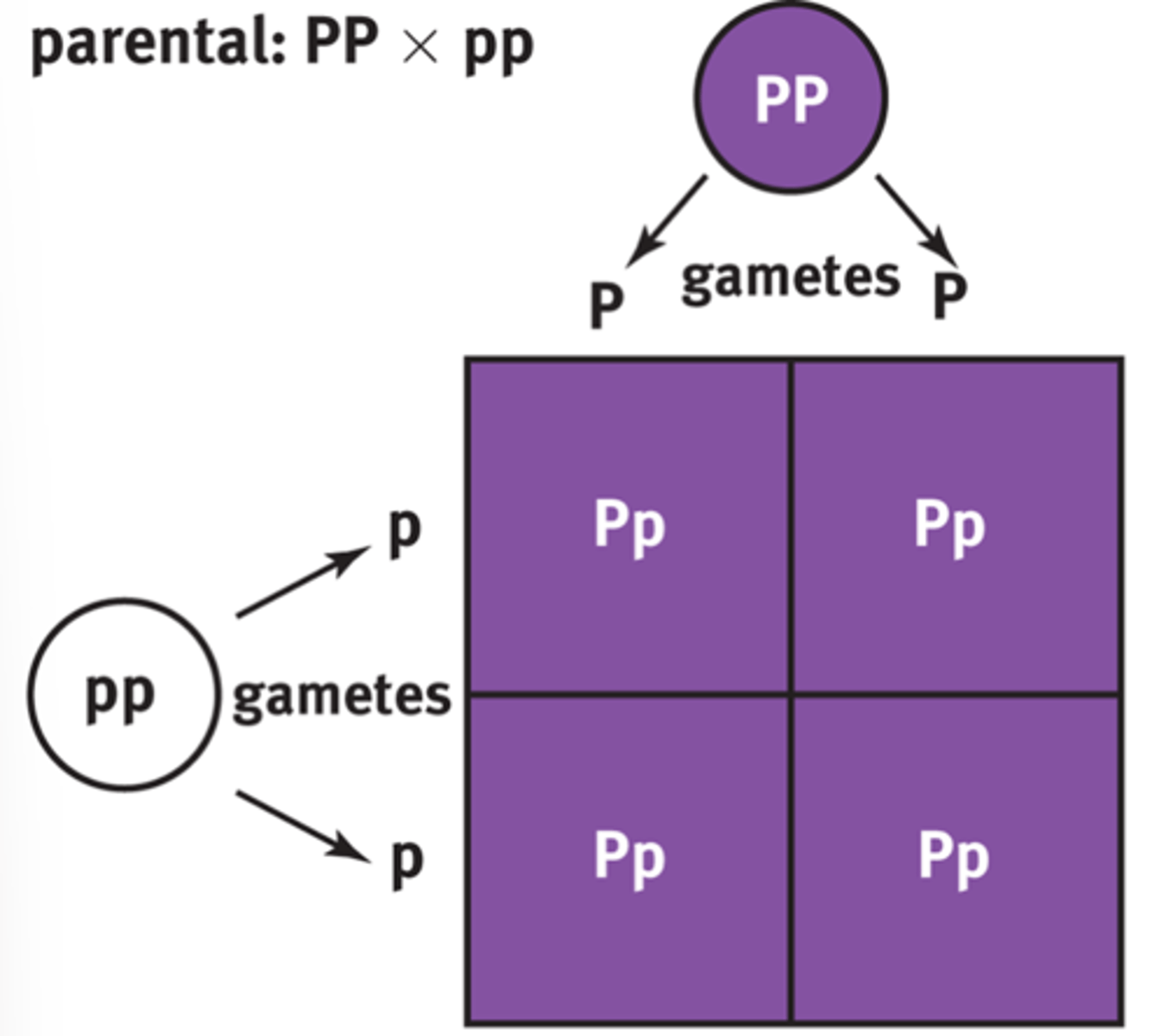
monohybrid cross
-a cross when only one strait is studied is called monohybrid
-parents are the P generation
-filial (children) are the F generation
Grandparents are P, parents are F1, you are F2
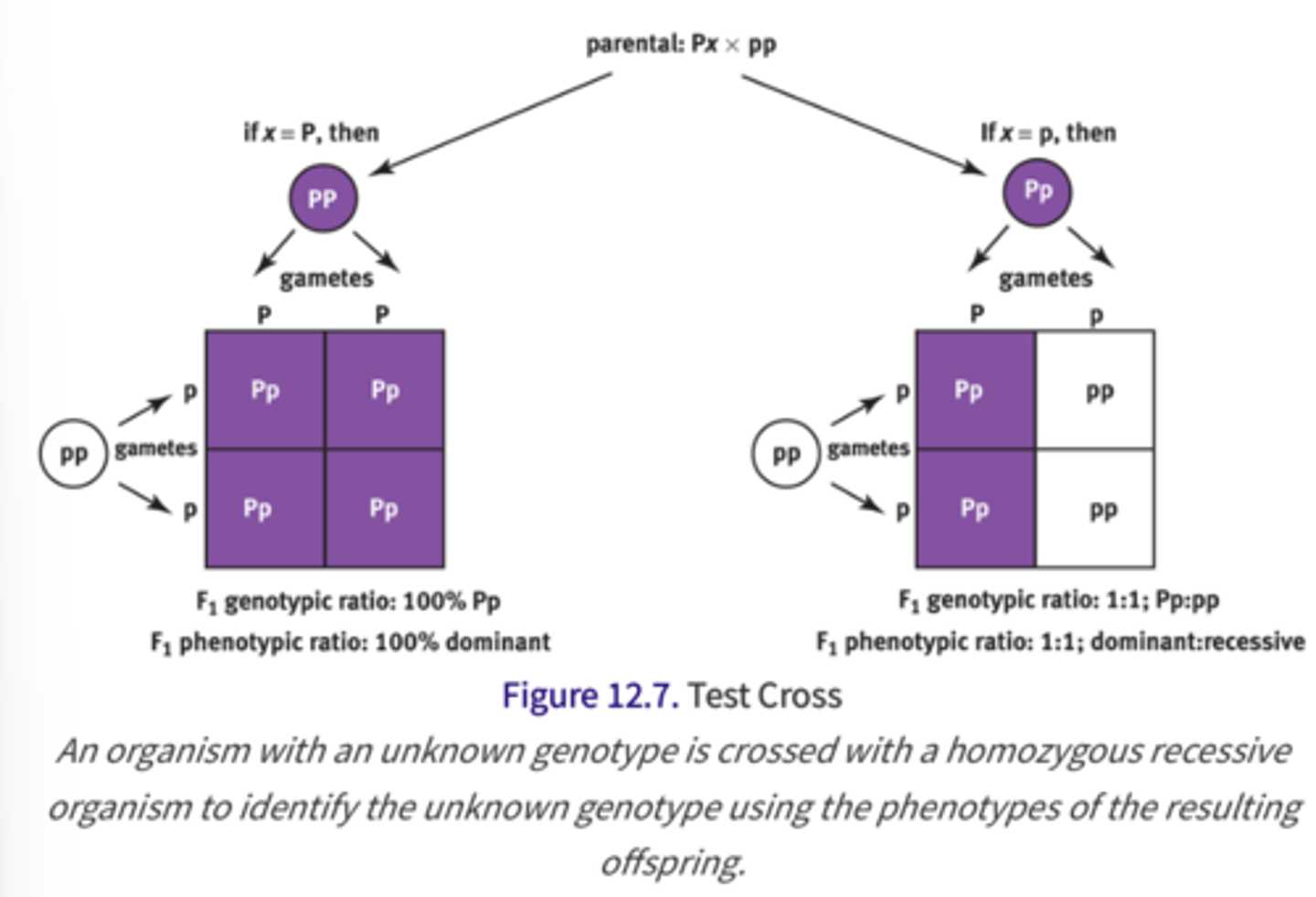
test cross
-used to determine unknown phenotype
-basically, you cross an unknown genotype with a homozygous recessive
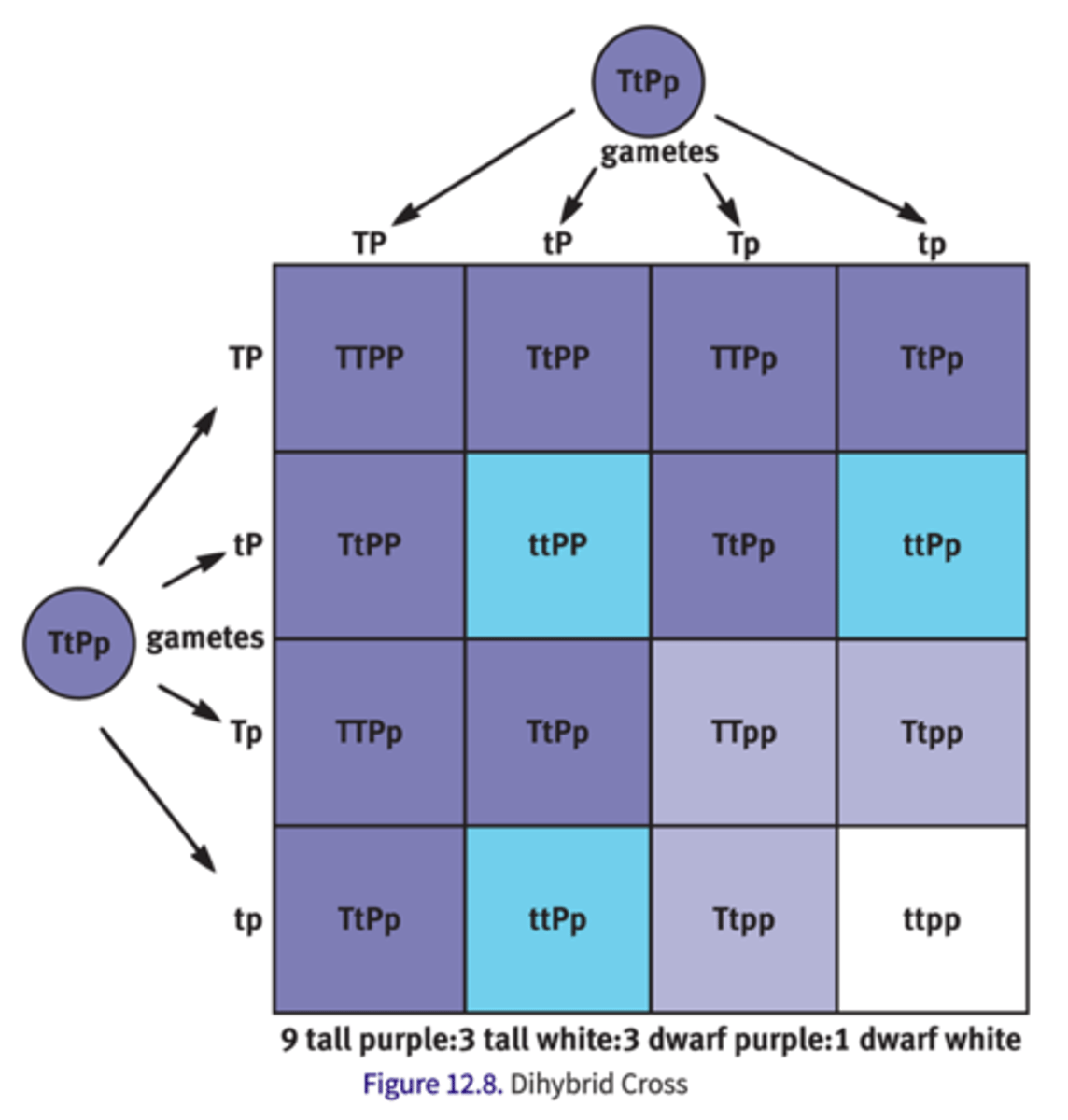
dihybrid cross
cross of 2 different genes
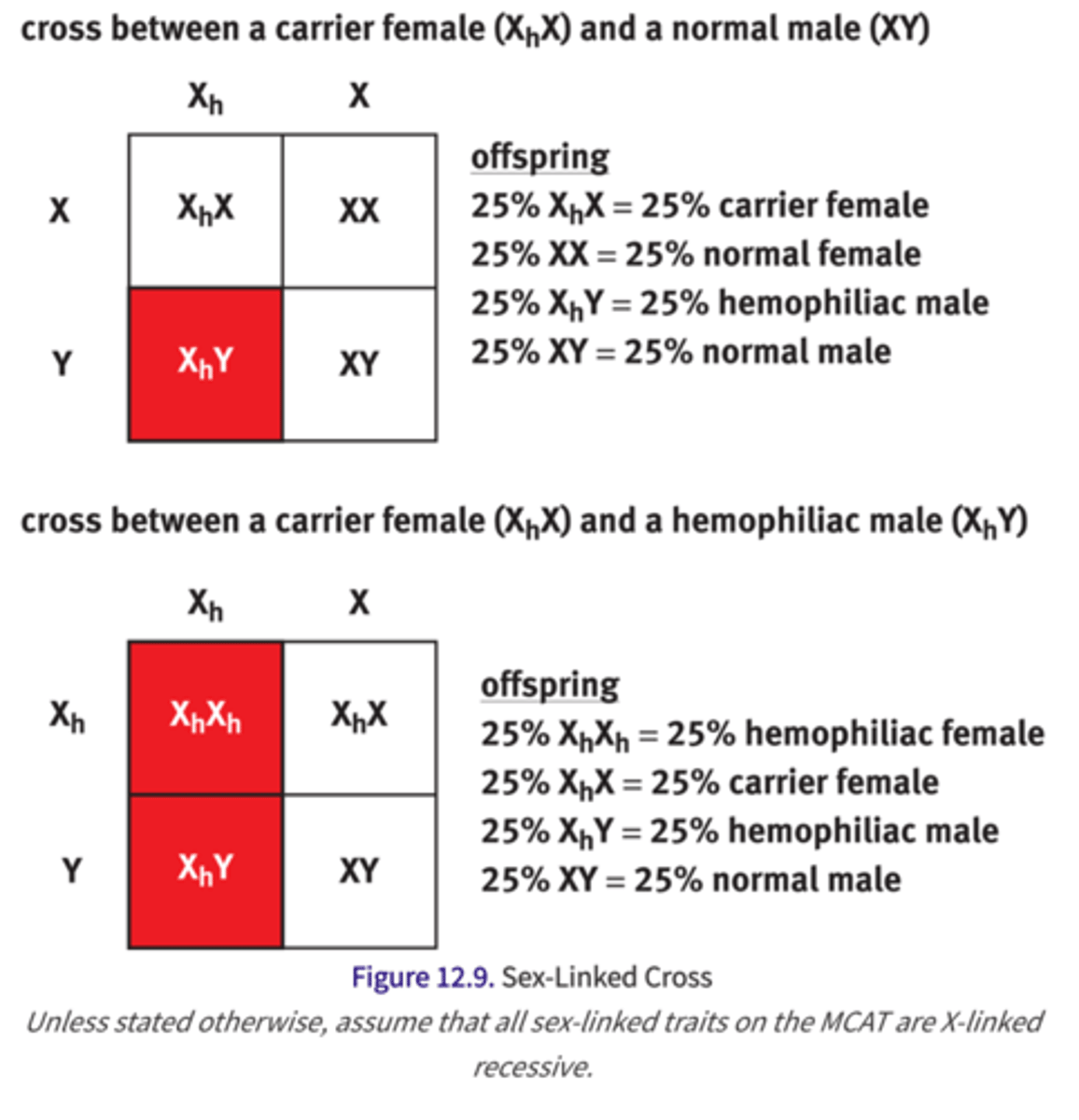
sex-linked crosses
gene mapping
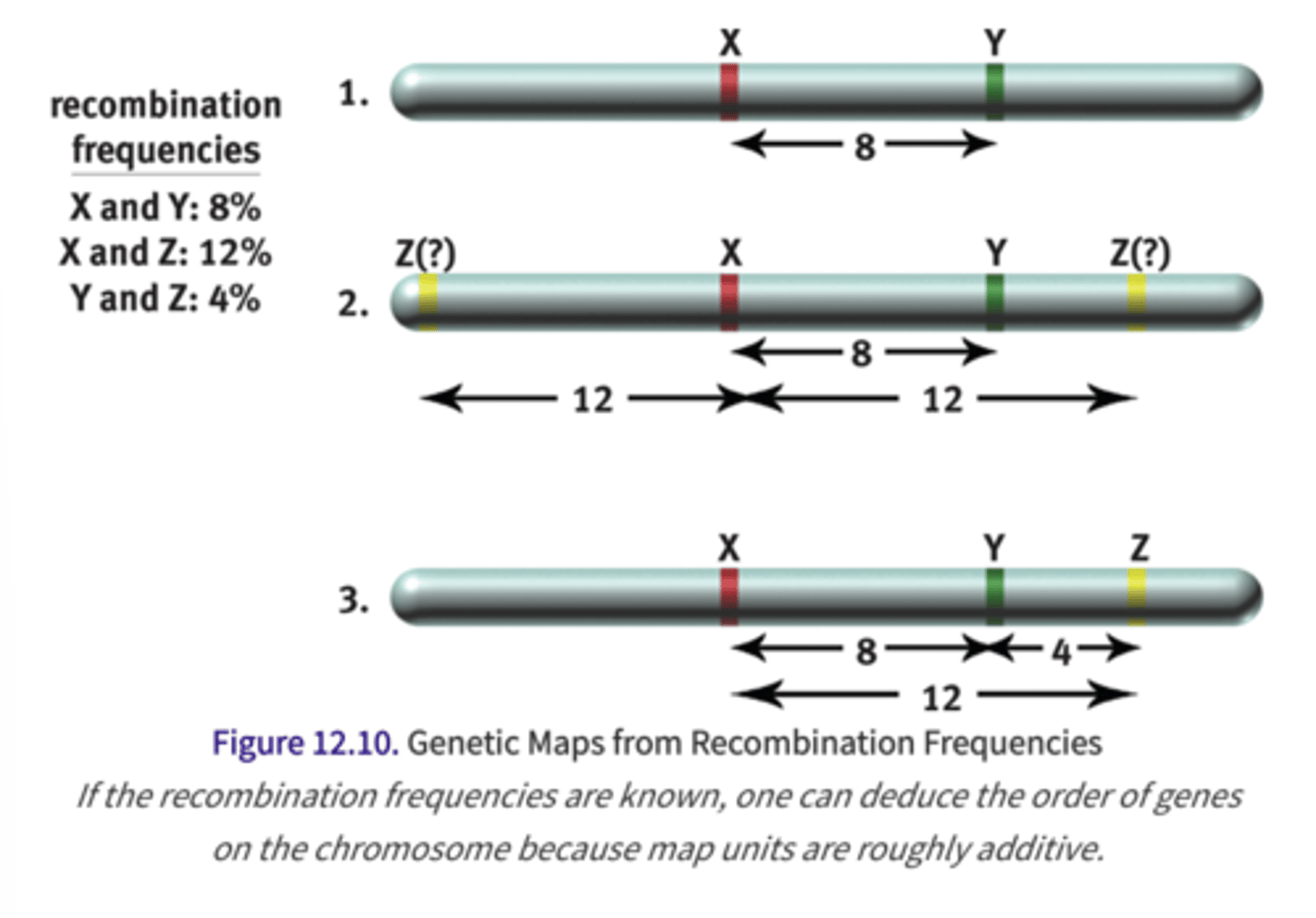
-we can analyze recombination frequency to get a map representing relative distance between genes on a chromosome
-tighly linked genes have recombination frequencies close to 0, while weakly linked genes approach 50%
-one map unit or centimorgan is a 1 percent change of recombination, so 25 centimorgans apart means 25% of gametes show recombination between two genes
hardy weinberg equilibrium
when a population is:
1. very large (no genetic drift)
2. no mutations that affect gene pool
3. mating between individuals is random
4. no migration of indiviuduals
5. genes are all equally successful at reproducing
than the allele frequencies will remain constant.
modern synthesis model tenets
sometimes called neo-Darwinism, accounts for mutation and recombination as mechanisms of variation and considers differential reproduction to be the mechanism for reproductive success.
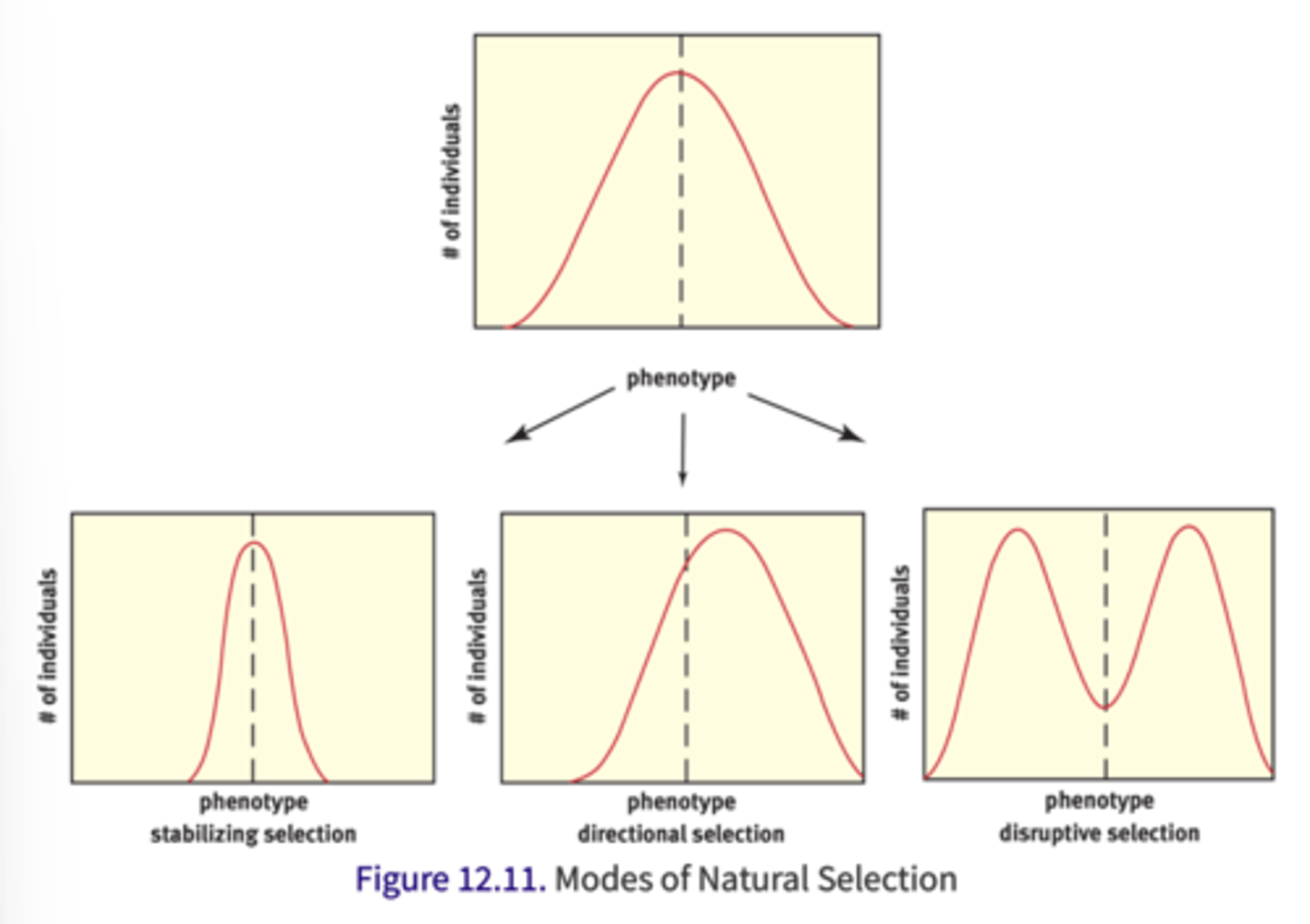
modes of natural selection
speciation
-defined as largest group of organisms capable of breeding to form fertile offspring
-formation of new species is called speciation
-after enough time where species are geographically separated, changes lead to isolation and species can no longer interbeed
reproductive isolation mechanisms
prezygotic mechanisms
postzygotic mechanisms
patterns of evolution
divergent evolution
convergent evolution
parallel evolution
measuring evolutionary time
degree of genomic similarity with amount of time species split off
-known as the molecular clock model
codominance
if there are 2 dom alleles at same time, both are expressed, like AB blood
Incomplete dominance
heterozygote expresses phenotype intermediate between homozygous genotypes. basically neither allele is dominant, mix of both
Hemizygous example
male sex chromosome
Incomplete dominance example
red flower + white flower = pink flower
Complete dominance example
A pea plant with all purple flowers and a pea plant with all white flowers produce a pea plant with all purple flowers
Penetrance example
Huntington's disease, those with the huntingtin gene that have 40 sequence repeats have full penetrance (100% show symptoms of huntington's disease), those with fewer sequence show high penetrance, and those with even fewer have low penetrance or nonpenetrance
expressivity example
A person may have a gene for familial hypercholesterolemia but can have a mild or severe form of the disease.
Mendel's Second Law of independent assortment
-the inheritance of one gene does not affect the inheritance of another
-exception are linked genes
-independent assortment increases genetic diversity of gametes
What phase of meiosis does Mendel's 1st law occur in?
During anaphase
What phase of meiosis does Mendel's 2nd law occur in?
Prophase I
Point Mutations
occur when one nucleotide in DNA (A, C, T, or G) is swapped for another. These can be subcategorized as silent, missense, or nonsense mutations.
Silent mutations
occur when the change in nucleotide has no effect on the final
protein synthesized from the gene. This most commonly occurs when the changed
nucleotide is transcribed to be the third nucleotide in a codon because there is
degeneracy (wobble) in the genetic code.
Missense mutations
occur when the change in nucleotide results in substituting
one amino acid for another in the final protein.
Nonsense mutations
occur when the change in nucleotide results in substituting a
stop codon for an amino acid in the final protein
Frameshift Mutations
moving of the 3-letter transcriptional reading frame.
2 Types
Insertions and deletions
Insertions
occur when a segment of DNA is moved from one
chromosome to another. Small insertion mutations (including those where the inserted DNA is not from another chromosome) are considered frameshift
mutations, as described previously.
Deletions
occur when a large segment of DNA is lost from a
chromosome. Small deletion mutations are considered frameshift mutations, as described previously.
Genetic leakage
a flow of genes between species through hybrid offspring.
Why would genetic leakage increase within the last century?
In the 20th century, advances were made in the understanding and technology to utilize genetics, thus scientists were able to create fertile hybrids.
founder effect
small group gets reproductively isolated, causing inbreeding and amplifies characters of smaller population
What causes inbreeding depression?
The species becomes too large for the resource base. Populations have low genetic diversity. Genetically similar parents mate and produce superior offspring. The number and variety of species increase.
Translocation mutations
occur when a segment of DNA from one chromosome is
swapped with a segment of DNA from another chromosome
Inversion mutations
occur when a segment of DNA is reversed within the
chromosome.
Duplication mutations
occur when a segment of DNA is copied multiple times in
the genome.
Recombination frequency
likelihood of 2 alleles being separated during crossing over in meiosis.
Chiasma
genes very close together are less likely to be separated
Hardy-Weinberg Equation
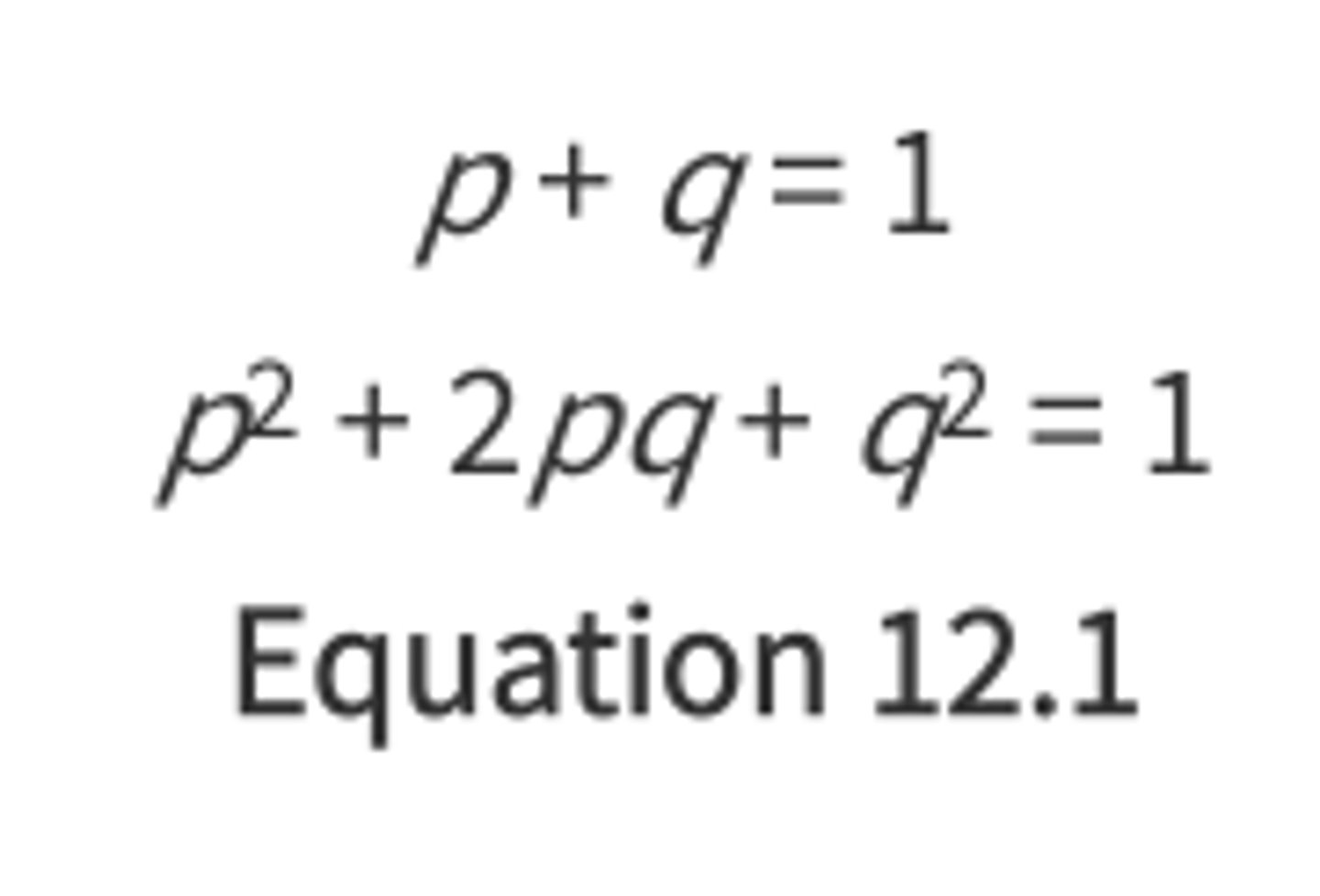
p+q=1
or
p^2 + 2pq + q^2 = 1
What does p^2 represent in the Hardy-Weinburg Principle?
dominant genotypes and phenotypes in a population
What does 2pq represent in the Hardy-Weinburg Principle
heterozygous genotypes and phenotypes in population
What does q^2 represent in the Hardy-Weinburg Principle?
recessive genotypes and phenotypes in a population
What does the p+q=1 version of the Hardy-Weinberg equation represent?
tells you about the frequency of alleles in the population
What does the p^2+2pq + q^2 version of the Hardy-Weinberg equation represent?
tells us about the frequency of genotypes and phenotypes in the population.
punctuated equilibrium
changes in some species occur rapidly in bursts due to changing environment, instead of evenly over time
Inclusive Fitness
refers to the idea that an organism's success is based on the number of offspring, success in supporting offspring, and the ability of the offspring to then support others; survival of offspring or relatives ensures appearance of genes in subsequent generations.
Natural Selection
states that chance variations exist between individuals and that advantageous variations afford the most opportunities for reproductive success/survival.
Differential Reproduction
when mutation results in favorable organism reproductive success, that will more likely pass to next generation
stabilizing selection
keeps phenotypes within specific range by selecting against extremes
-i.e. fetus weight. fetuses too light are unhealthy, fetuses too heavy can cause trauma during delivery
directional selection
adaptive pressures, causing emergence of initially extreme phenotype
disruptive selection
-two extreme phenotypes are selected over the norm
-i.e. finches in the Galapagos island, either had small or large beaks, no in ebtween
What makes disruptive selection possible?
polymorphisms, or naturally occurring differences between members of the same population
What is an example of divergent evolution?
adaptive radiation: idea that there is rapid rise of many species from a common ancestor
divergent evolution
when two or more species sharing a common ancestor become more different over time
Parallel evolution
occurs when 2 species sharing a common ancestor evolve in similar ways due to analogus selection.
Convergent evolution
occurs when 2 species not sharing a recent ancestor evolve to become more similar due to analogus selection pressures.
Species
largest group of organisms capable of breeding to form fertile offspring
prezygotic mechanisms
prevent formation of zygote completely
-includes:
1. temporal isolation
2. ecological isolation
3. behavioral isolation
4. gametic isolation
temporal isolation
breed at different times
ecological isolation
live in different niches within same territory
behavioral isolation
lack of attraction
gametic isolation
intercourse can occur, but no fertilization
postzygotic mechanisms
gamete fusion but yield nonviable or sterile offspring
-includes:
1. hybrid inviability
2. hybrid sterility
3. hybrid breakdown
hybrid inviability
forming zygote that cannot develop to term
hybrid sterility
offspring cannot reproduce
hybrid breakdown
first generation offspring can reproduce, second generation cannot
Why are sex-linked disorders more common in males than in females?
males only have 1 X chromosome, and are hemizygous for genes on X chromosome, thus a recessive allele is sufficient for a recessive phenotype
transposons
can insert and remove themselves from genome

