ID ch 4-9 microbes: all others
 Call Kai
 Learn
Learn Practice Test
 Spaced Repetition
 Match
Match Flashcards
 Knowt Play
1/33

Earn XP
Description and Tags
20th feb class, all done notes and slides from class and socrative quiz, not all detail included cause seems like we dont need it
Name | Mastery | Learn | Test | Matching | Spaced | Call with Kai |
|---|
No analytics yet
Send a link to your students to track their progress
34 Terms
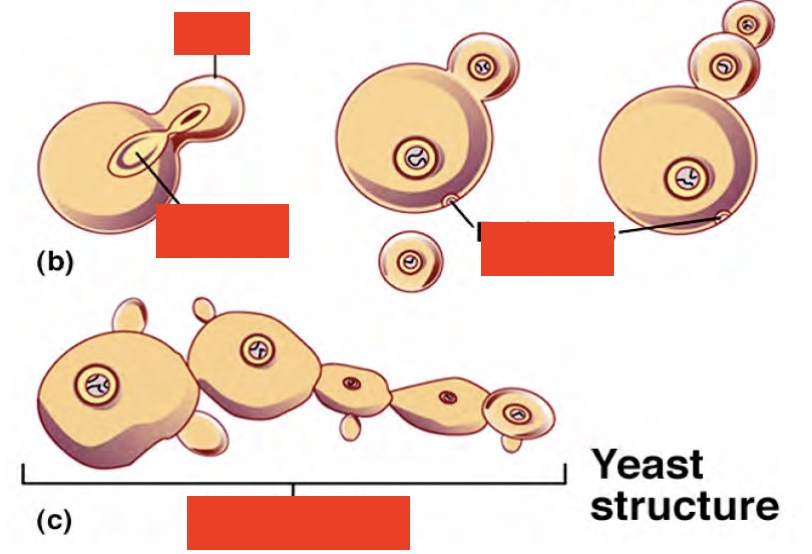
top to bottom label
bud, nucleus, bud scars, pseudohypha
hypha descr.
branching tubular filament that makes up the mycelium—the main vegetative body—of a fungus
what is the growth in yeast
spore-hyphae-mycelium
how are fungis cells connected? How can they communicate?
connected with septa but its punctured so they can communicate, can also dissolve the septa
how do fungi reproduce
by means of spores
what are mushrooms
molds with a visible fruiting body
what are all visible molds
filaments
what is the fungi modus operandi
extracellular digestion (of dead material often) by enzyme secretion, recycles molecules for new life to start
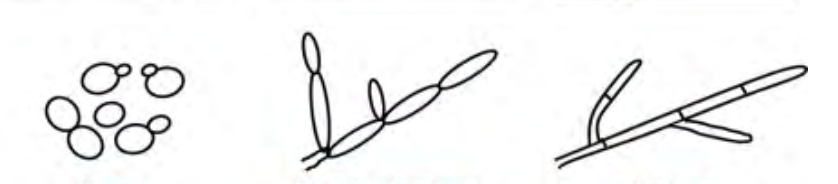
label
yeast, pseudohyphae, hyphae
what is the yeast-hyphal transition
from yeast to pseudohyphae (daughter cells do not dissociate), to hyphae formation (virulent)
pathogenic fungi descr. where, example
recyle the living, use digesting enzymes to dissolve enzymes, can be superficia, cutaneous, subcutaneous or systemic (agreesive), opportunistic; eg candida albican which make a mycelium (white on tongue)- sign of loss of immune competense
mycosis def
fungal infection
fungi by growth form
filamentous: growing as multinucleate branching hyphae, forming a mycelium
yeasts: growing as ovoid or spherical single cells, multiply by budding and division
protozoa descr. + egs
single-celled eukaryotic organisms, eg malaria, can be in most parts of the body, can be spread by mosquitos (vectors)
protozoa: cyst descr, oocyst descr
dormant stage of the parasite
oocyst: critical stage in life cycle of the parasite - transmission vehicles
helminths types
nematodes (roundworms), plathyhelminths (phylum) which can become cestodes (tapeworms) and trematodes (flukes, flatworms)
4 transmission routes of helminths
via intermediate host: accidental ingestion of larvae in tissue of another host
faecal-oral route: accidental ingestion of larvae or eggs from faeces of infected host
active skin penetration: larval stages invade through skin
injection by blood-sucking insect: larval stages develop to infectivity in insect intermediate host
example of a nematode
enterbius vermicularis, aquired by ingestion of eggs, in large intestine, incredibly common in <18s in europe
pinworm/threadworm descr. life cycle (5)
eggs on perianal folds (diagnostic stage - via scotch tape which is examined under a microscope), embryonated eggs injested by human (infective stage), larvae hatch in small intestine, adults in lumen of cecum, gravid female migrates to perianal region at night to lay eggs
cestodes example, basic transmission, treatment
T. solium- pig reservoir, attach in intestine and then get excreted and faeces get passed into the environment, treatment: praziquantel
arthropods desrc.
pathogen parasites or vectors
ectoparasite def + egs
arthropod that lands on/climbs on a human and starts eating from the human, on the outside, can have a permanent dwelling in eg hair, eg mosquitos, ticks, flees, etc.
vector arthropod
give you bacteria or virus, eg lyme disease from ticks
prions descr.
misfolded proteins - alpha helixes turn into beta sheet, primary sequence inchanged, resistant to protein digestion, faciliates conversion of healthy protein to diseased, sticks together, eg spongiform encephalopathy - makes holes in your brain to make it look sponge-like
how do yeasts typically gain entry
through small wounds or abrasions in the skin surface
primary mechanism that protozoa evade immune response
alternation of surface proteins to avoid detection
What is a key method by which helminths cause disease in their hosts?
physically obstructing organs or ducts within the host
In what way do arthropods affect the epidemiology of the diseases they transmit?
Through seasonal population fluctuations that affect transmission rates
Pathogenic fungi exhibit a range of morphological foms duing their lifecycle. Which fom is directly associated with the ability to invade host tissues?
Hyphae with the capability to penetrate physical barriers
What role do cysts play in the life cycle of some protozoan pathogens?
Serve as a mechanism for surviving harsh environmental conditions
How do arthropods primarily serve as vectors in the transmission of diseases to humans?
Through the injection of saliva containing pathogens during blood-feeding.
In helminth infections, how is host tissue damage most commonly induced?
Via the immune response of the host to the presence of the helminth
How do pathogenic fungi primaily invade host tissue?
Through the production of hydrolytic enzymes that break down host cells.
In terms of pathogenesis, how do protozoans typically damage their host?
Through the direct destruction of host cells for nutrients.

