UNIT 5 REVIEW 1 & 4(COMBINED) - AP MODERN HISTORY
 Studied by 4 people
 Call with Kai
 Learn
Learn Practice Test
 Spaced Repetition
 Match
Match Flashcards
 Knowt Play
1/49

Earn XP
Description and Tags
Review 1 + Review 4 (From AP Classroom)
Name | Mastery | Learn | Test | Matching | Spaced | Call with Kai |
|---|
No study sessions yet.
50 Terms
When we discussed the French Revolution and read related primary sources what one thing did all three people write about with growing frequency?
Hunger
The fact that perceived problems within Capitalism gave rise to ideas like Utilitarianism and Communism while industrialization changed the ways in which families and governments worked is an example of:
The ways in which the development of economic systems, ideologies, and institutions contribute to change between 1750 and 1900.
When it comes to comparing the Industrial Revolution in places like Britain, Russia and the USA, all of them were alike in that they all had abundant _____.
Natural resources & Technology
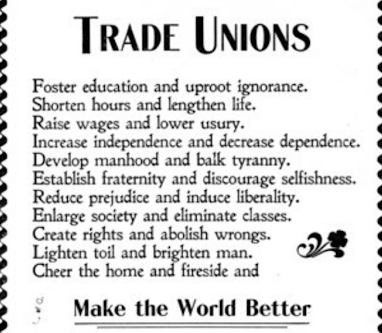
What best describes the context of this poster?
Industrial Revolution Era Unions' attempts to appeal to workers' desire for a better life
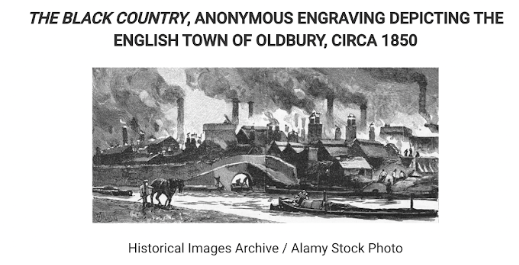
Which of following best explains a likely reason for the title of the image?
The soot pollution, which resulted from the coal industry in the region
What factors contributed to and characterized
industrialization in the period from 1750 to 1900? (T3)
Agricultural Revolution, population growth, technology, & the factory system
How did technology shape economic production
during the period from 1750 to 1900? (T5)
Improved communication/travel and Mass production in industrialized nations decreased the global market shares of countries that were less industrialized
During the Industrial Revolution what one nation's actions are evidence of an effort to balance continuity and change?
Japan
This is Emmeline Pankhurst and she said:
"Men make the moral code and they expect women to accept it. They have decided that it is entirely right and proper for men to fight for their liberties and their rights, but that it is not right and proper for women to fight for theirs.”
What was she being arrested for and did she accept the Cult of Domesticity?
Suffrage / No
___ represented continuity and ___ represented change during the Age of Revolution
Divine Right / The Social Contract
In his book, "The Jungle", Upton Sinclair uses a fictional character to expose the gruesome facts of the meat packing industry and experiences of immigrants.
Which one of these would NOT be a cause or effect of this novel's publication?
Increasing middle class standard of living
Which one represents causation when it comes to the Industrial Revolution?
Plenty of raw resources, unskilled labor and technology
Joint stock companies, multinational corporations, plantation agriculture, Laissez-faire, Columbian Exchange, & coerced labor systems are examples of:
Economic strategies (as well as their causes and effects) adopted by different states and empires adopt
How did the Industrial Revolution demonstrate continuity?
Like the Age of Revolution, reform was spurred by socio-economic conditions
Women's suffrage, child labor laws, labor union related reforms are all examples of
The effects of the efforts to create change in industrial societies
How did the Enlightenment shape the intellectual and
ideological thinking that affected reform and revolution
after 1750? (T1)
Evolving ideas like liberalism, feminism & the social contract reshaped the relationship people had with their governments
___ thought represented continuity and ___ thought represented change during the Enlightenment.
Conservative / Empirical
When it comes to drawing comparisons among revolutions from 1750 - 1900 which arose among the enslaved population resulting in that nations independence?
Haiti
When it comes to drawing comparisons among revolutions from 1750 - 1900 which arose among a nation's population resulting in reform that included empowerment of the lower classes?
France and Russia
When it comes to drawing comparisons in the Industrial Revolution, the USA's might was in part contributed to by massive ______.
Immigration
___ represented continuity and ___ represented change in terms of how products were made during the Industrial Revolution
Artisan Craftsmanship / The factory system and mass production
Bad city planning, dangerous work environments, Cholera, smog were all examples of:
Conditions led to calls for change in industrial societies
When it comes to drawing comparisons among revolutions from 1750 - 1900 which resulted in the creation of new nations in South America?
Gran Columbia
How did different types and locations of production develop and change over time? (T 3 - 5)
Movement from iron to steel, ability to have factories with no access to water due to steam and combustion engines, urbanization
When it comes to drawing comparisons among revolutions from 1750 - 1900 which arose among the colonists resulting in that nations independence?
The USA
The Seneca Falls Convention, the labor movement, the middle class, diminished family time, and public leisure activities are all evidence of:
The ways in which industrialization caused change in existing social hierarchies and standards of living
Which one represents causation when it comes to the Age of Revolution?
Enlightenment thought
___ represented continuity and ___ represented change in terms of attitudes towards technology during the Industrial Revolution.
The Luddites / Morse and Watt
Which one represents causation when it comes to the Enlightenment?
Increased literacy, reactions against oppression, deism
What were the effects of the various revolutions in the period from 1750 to 1900, including influences of the Enlightenment and emerging nationalism? (T2)
American & Haitian independence limited monarchies and republics
What were the causes of the various revolutions in the period from 1750 to 1900, including influences of the Enlightenment and emerging nationalism? (T2)
Enlightenment ideals in reaction to former government systems seen as oppressive
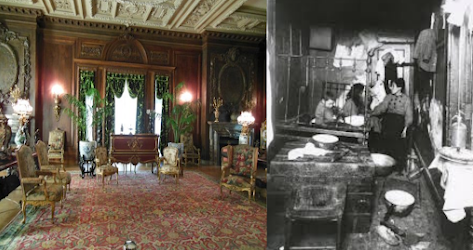
These two photographs demonstrate which trait that helped give the Industrial Era the nick name the Gilded Age?
The Wealth Gap
The Industrial Revolution demonstrated change in all of these way except
decreased standard of living and less leisure time
When it comes to drawing comparisons in the Industrial Revolution, Russia and the USA were alike in that they were huge nations that focused on _____ to tie them together and further their industry and trade.
Railroads
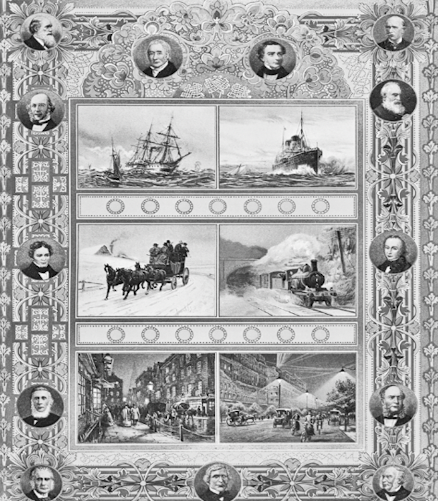
In the period circa 1750–1900, the historical process illustrated by the image led directly to all of the following major global transformations EXCEPT
the outbreak of the Atlantic revolutions and the emergence of new states in the Americas
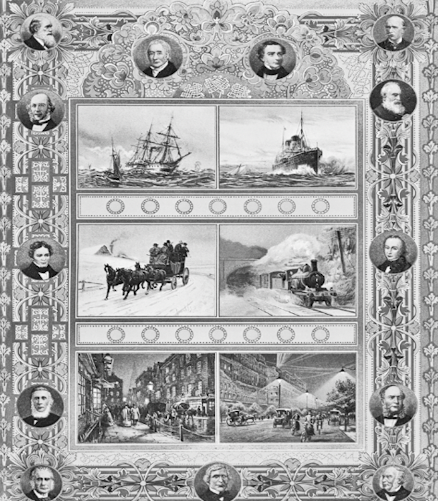
Unlike the four scenes in the top two rows of the lithograph, the inclusion of the two scenes in the bottom row is best explained by
the technological innovations of the second industrial revolution
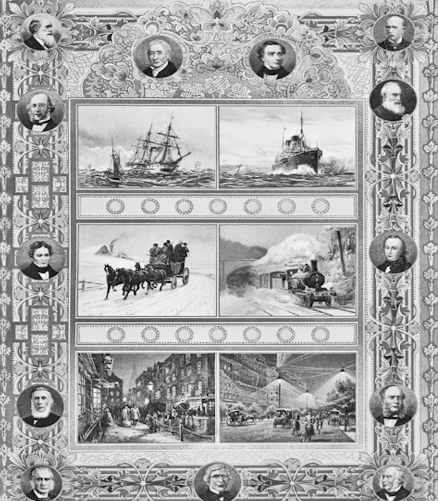
Which of the following contributed directly to Great Britain’s ability to consolidate or expand its colonial control of interior regions of Asia and Africa in the late nineteenth century?
The changes illustrated in the top two rows of the image
Which of the following most directly explains the importance of improved agricultural productivity to the industrialization of economic production in western Europe in the period 1750–1900 ?
Because less labor was needed on farms, more people moved to urban areas to work in factories.
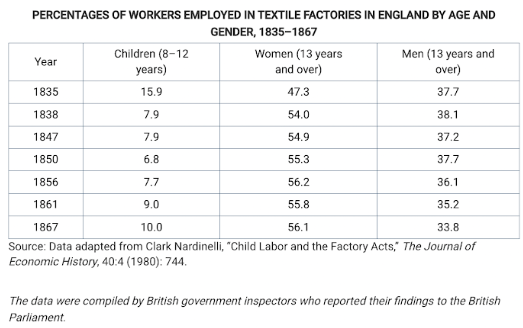
The high proportion of women and children among the workers reflected in the table is best seen in the context of the
low wages of workers in industrial societies
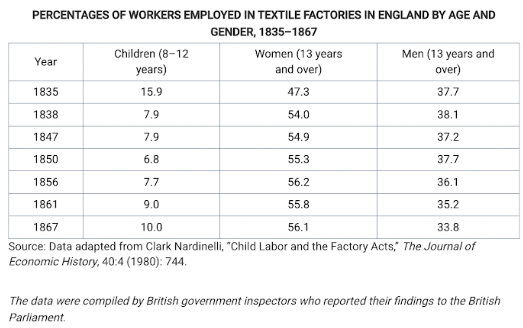
The data in the table best provide historical context to understand which of the following developments in mid-nineteenth-century Great Britain?
The emergence of social reform movements
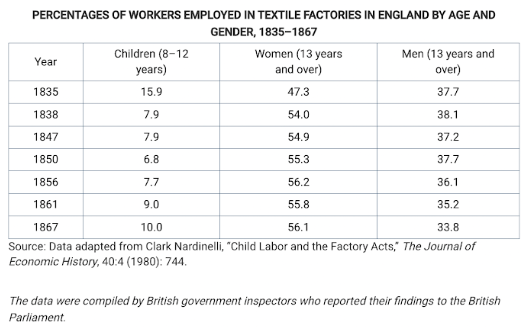
The labor patterns shown in the table are most directly relevant in understanding which broader process in nineteenth-century Europe?
the development of new class identities
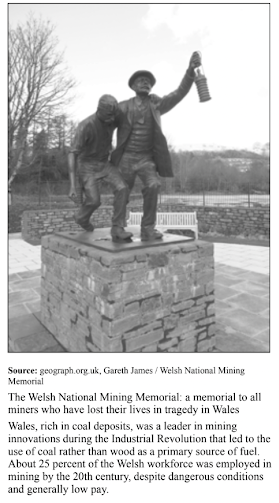
How many in Wales were involved in the mining industry?
25%
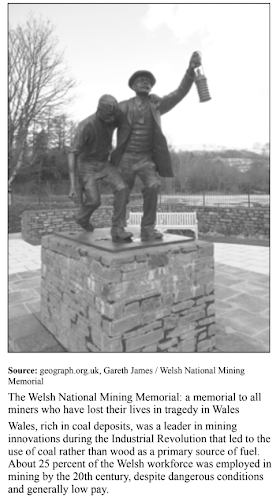
True / False: Miners were paid well because it was such dangerous work
False
All of these things represented continuity during the Industrial Revolution EXCEPT:
child labor laws
All of these things represented change during the Industrial Revolution EXCEPT:
International rivalries over raw resources and markets
At what soci-economic class were most reform movements aimed at?
expressing the values of a growing middle class
True / False: Nations that developed a larger middle class were more likely to move toward democracy than those were the middle class was smaller
True
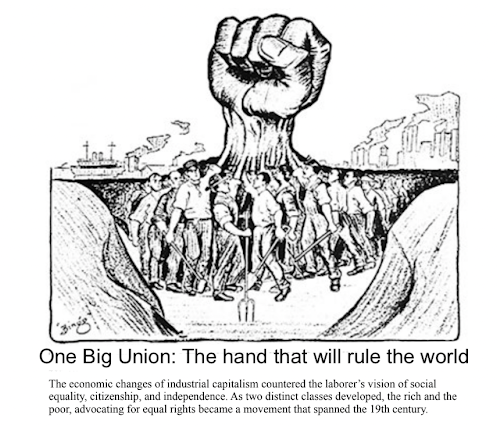
In this political cartoon who is portrayed as having the strength in numbers?
the workers (laborers)
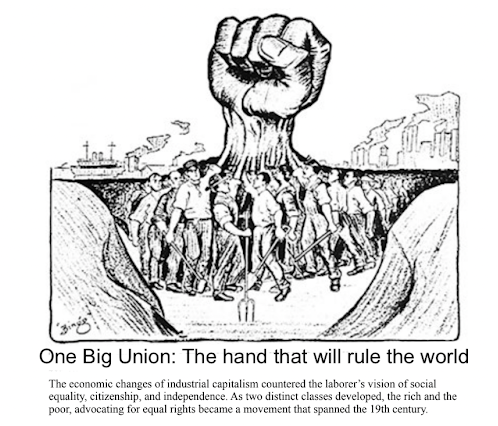
What mainly contributed to the ways in which 19th century equal rights movements developed?
The wealth Gap
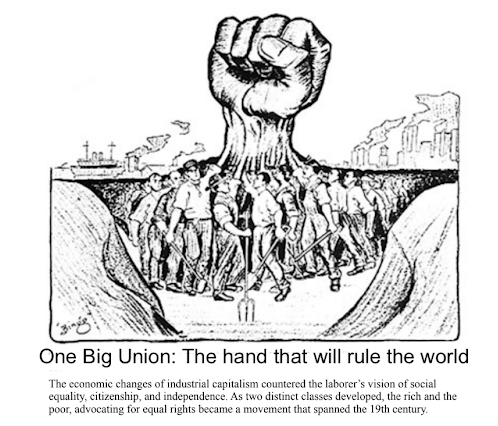
True / False: The goals of capitalism (large industrialists) and those of equal rights or union activists often came into conflict
True
 Note
Note  Flashcards (51)