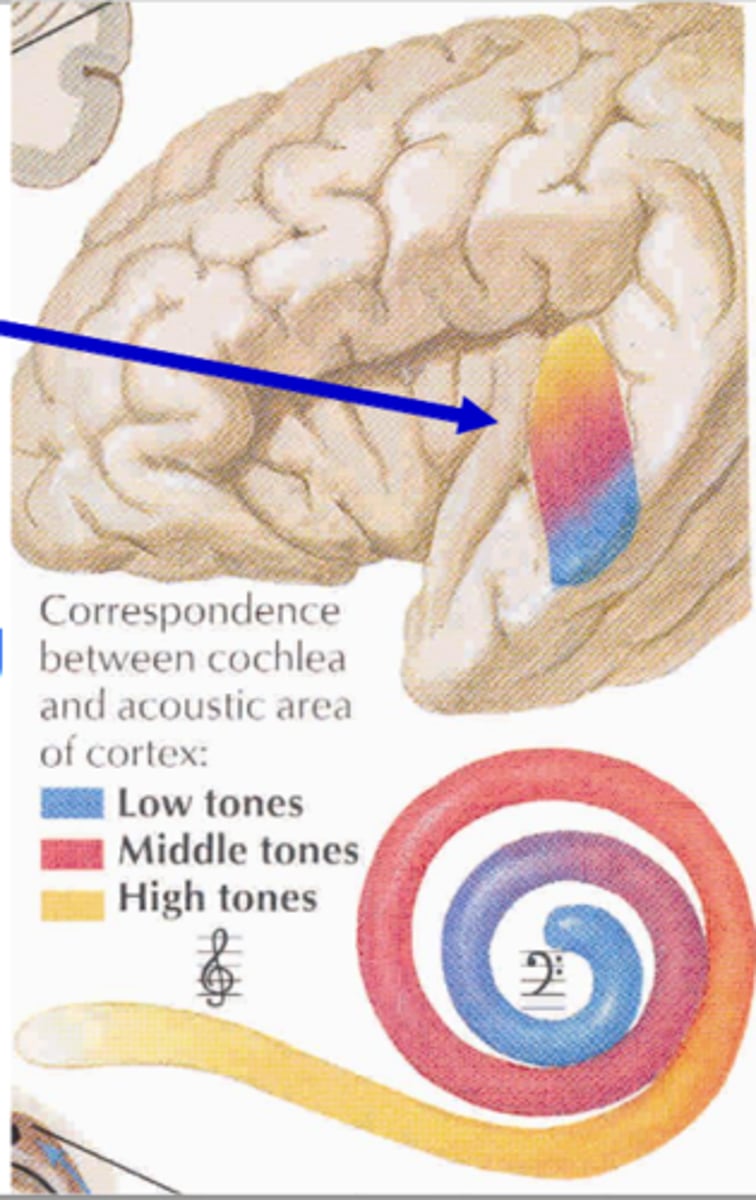
Neuro Anatomy -- Lab 17 Ear and Vestibular System
 Call Kai
 Learn
Learn Practice Test
 Spaced Repetition
 Match
Match Flashcards
 Knowt Play
1/50

There's no tags or description
Looks like no tags are added yet.
Name | Mastery | Learn | Test | Matching | Spaced | Call with Kai |
|---|
No analytics yet
Send a link to your students to track their progress
51 Terms
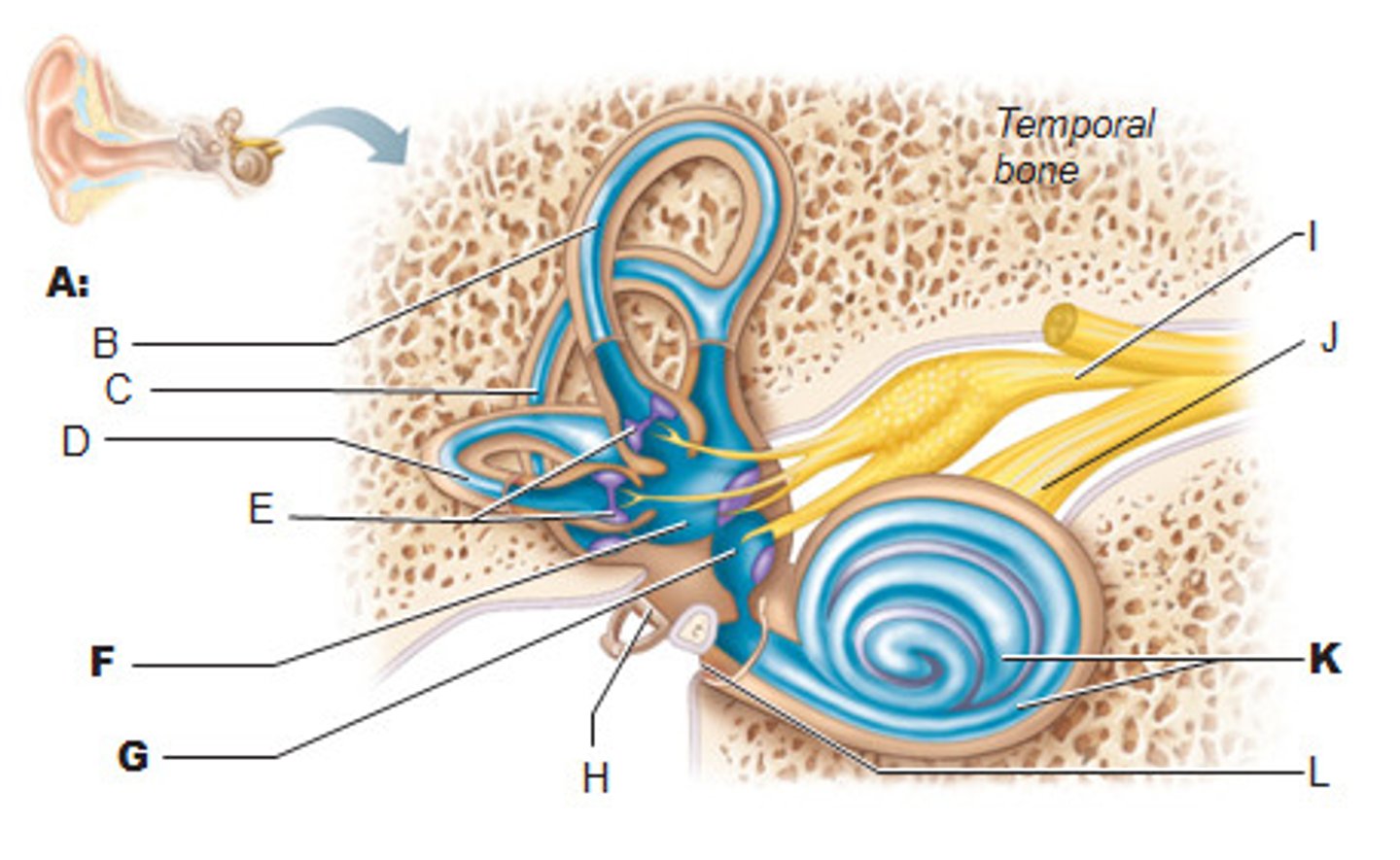
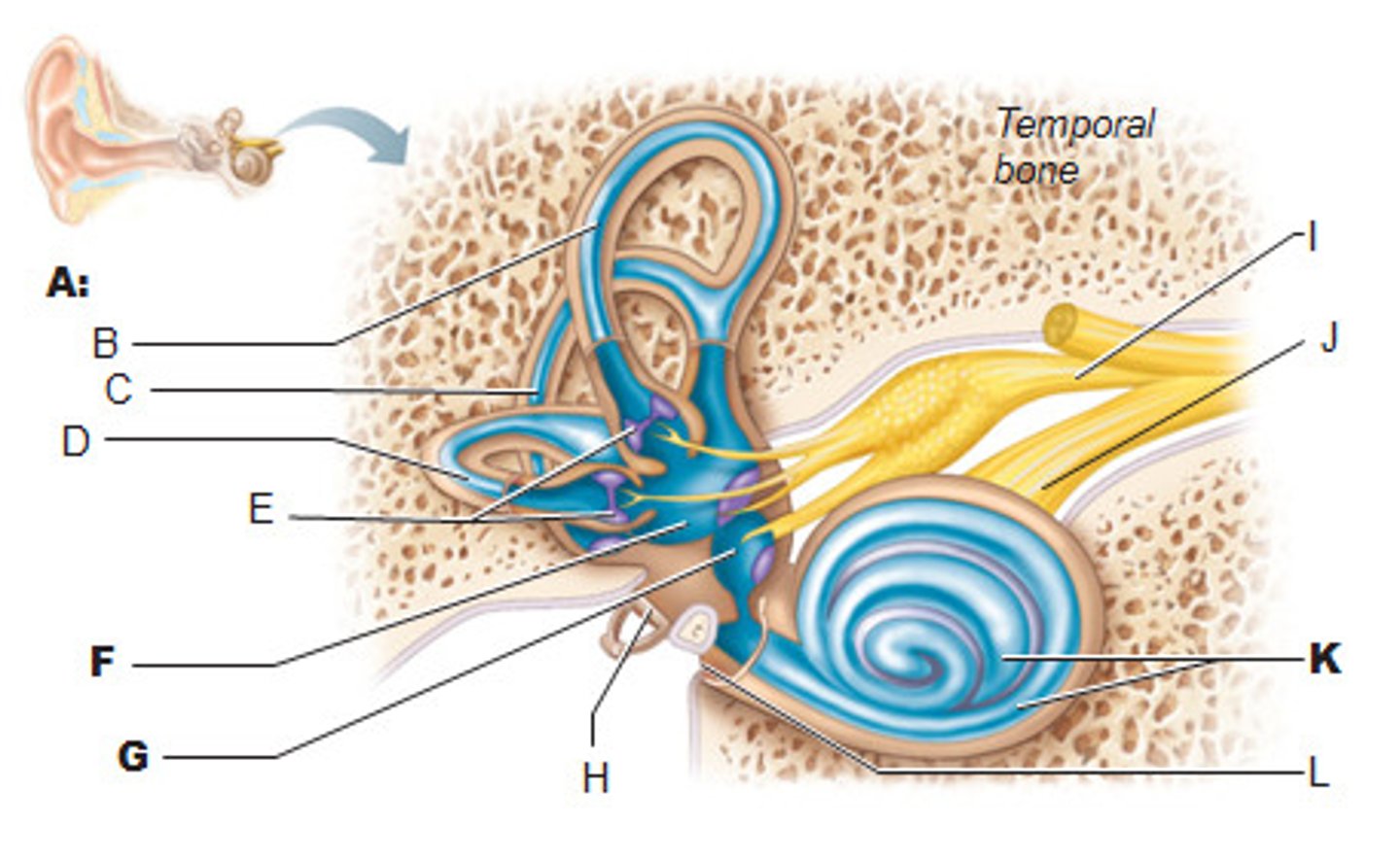
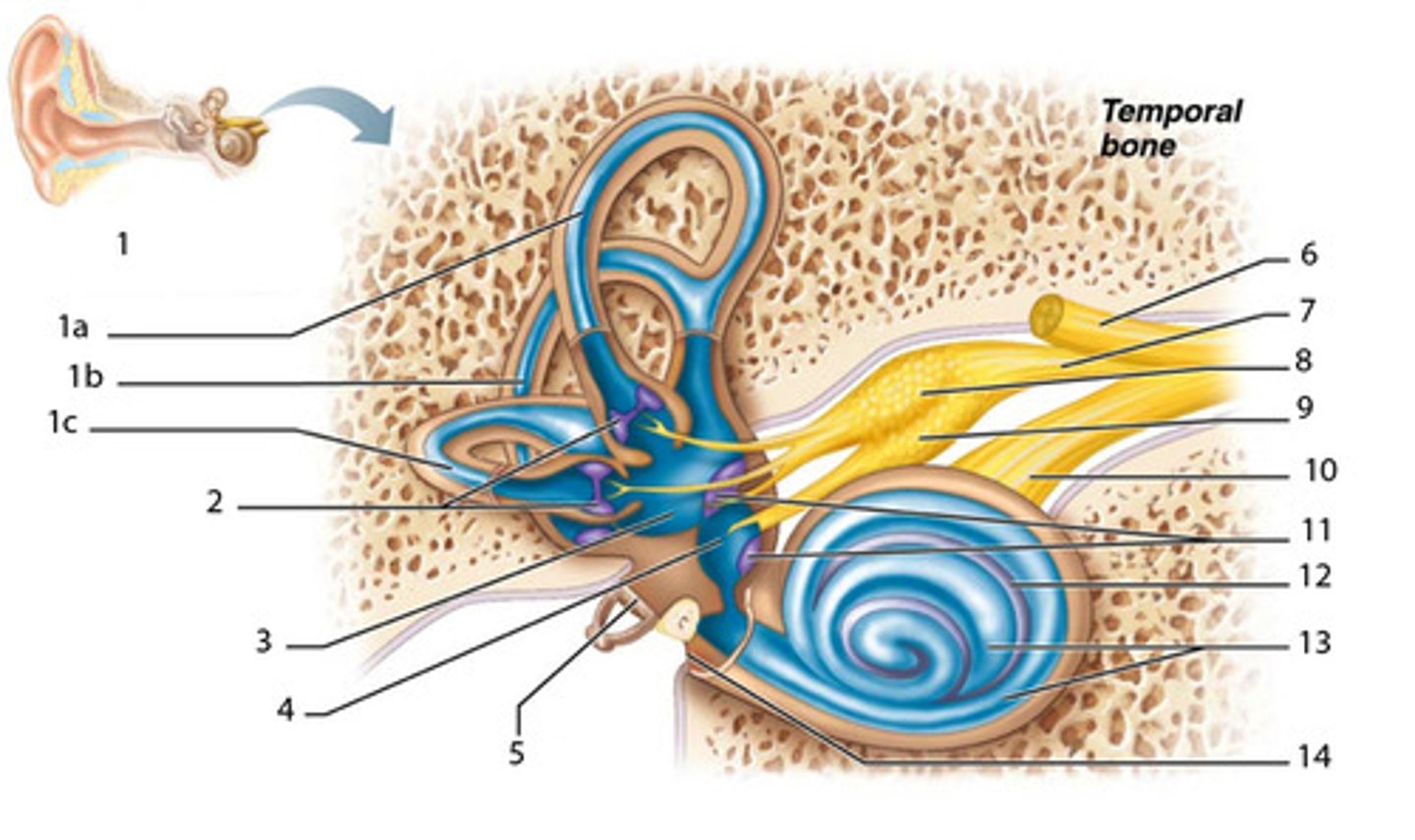
Utricle
F
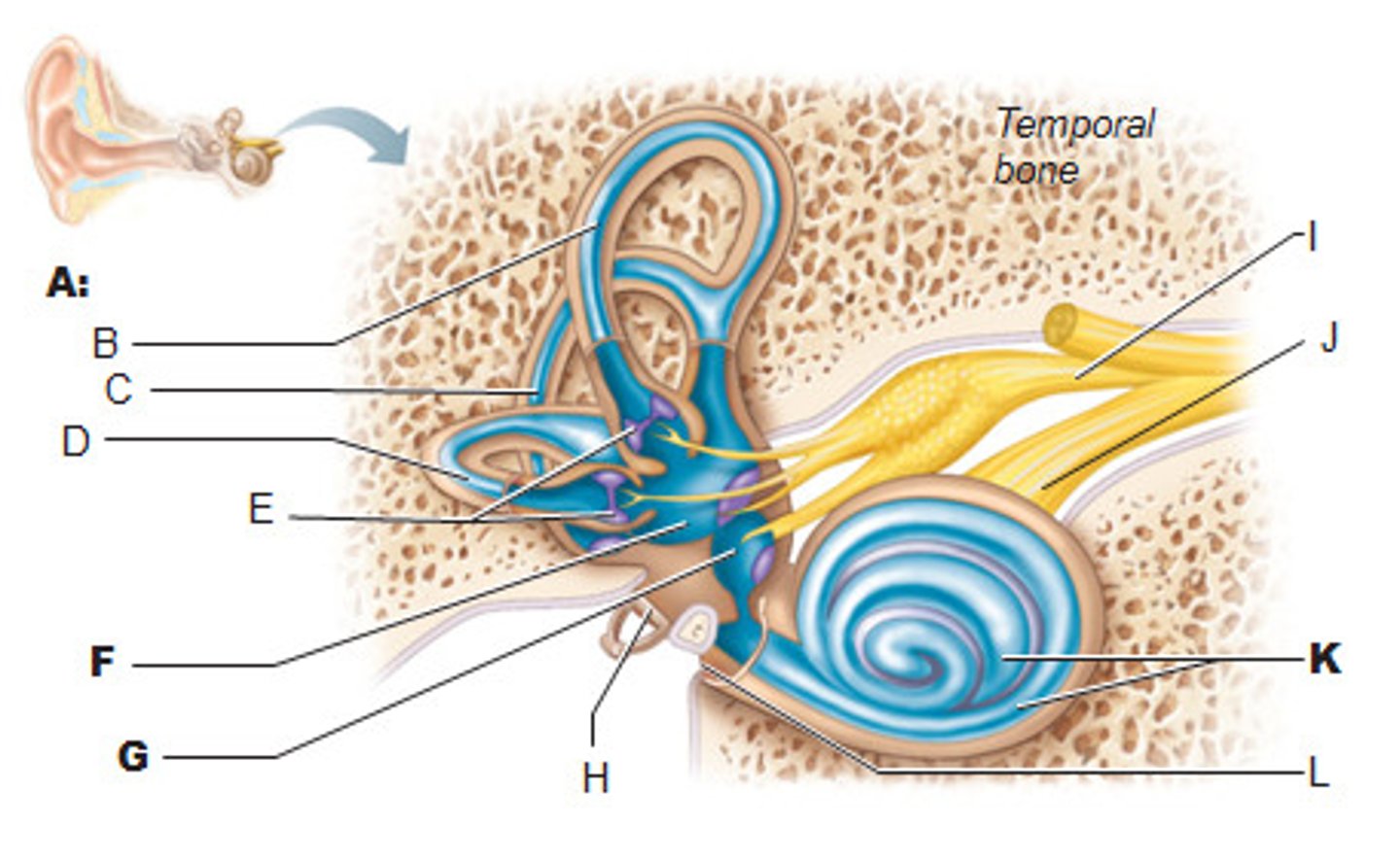
Saccule
G
Endolymph
fluid within the scala media & the vestibular apparatus
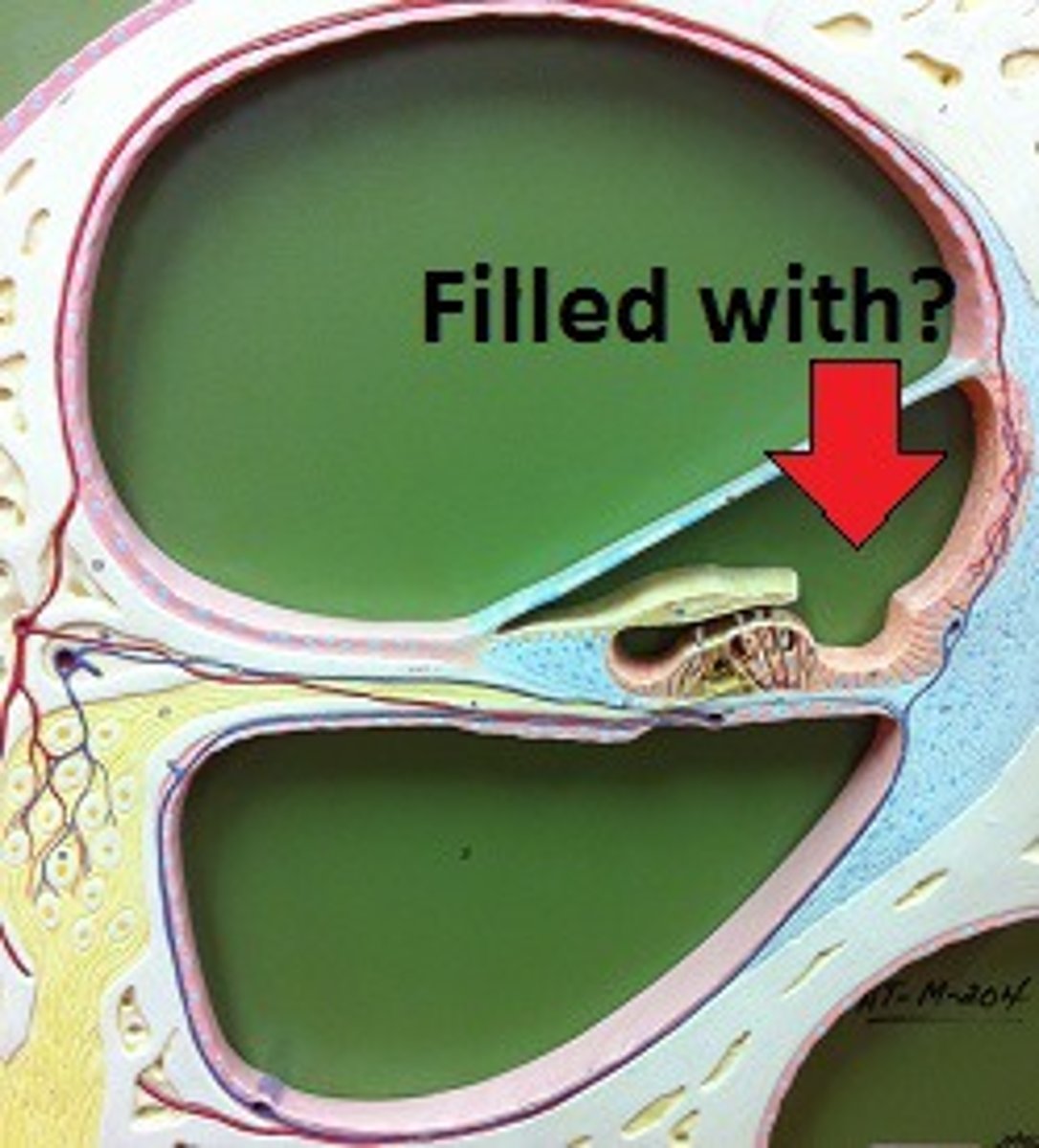
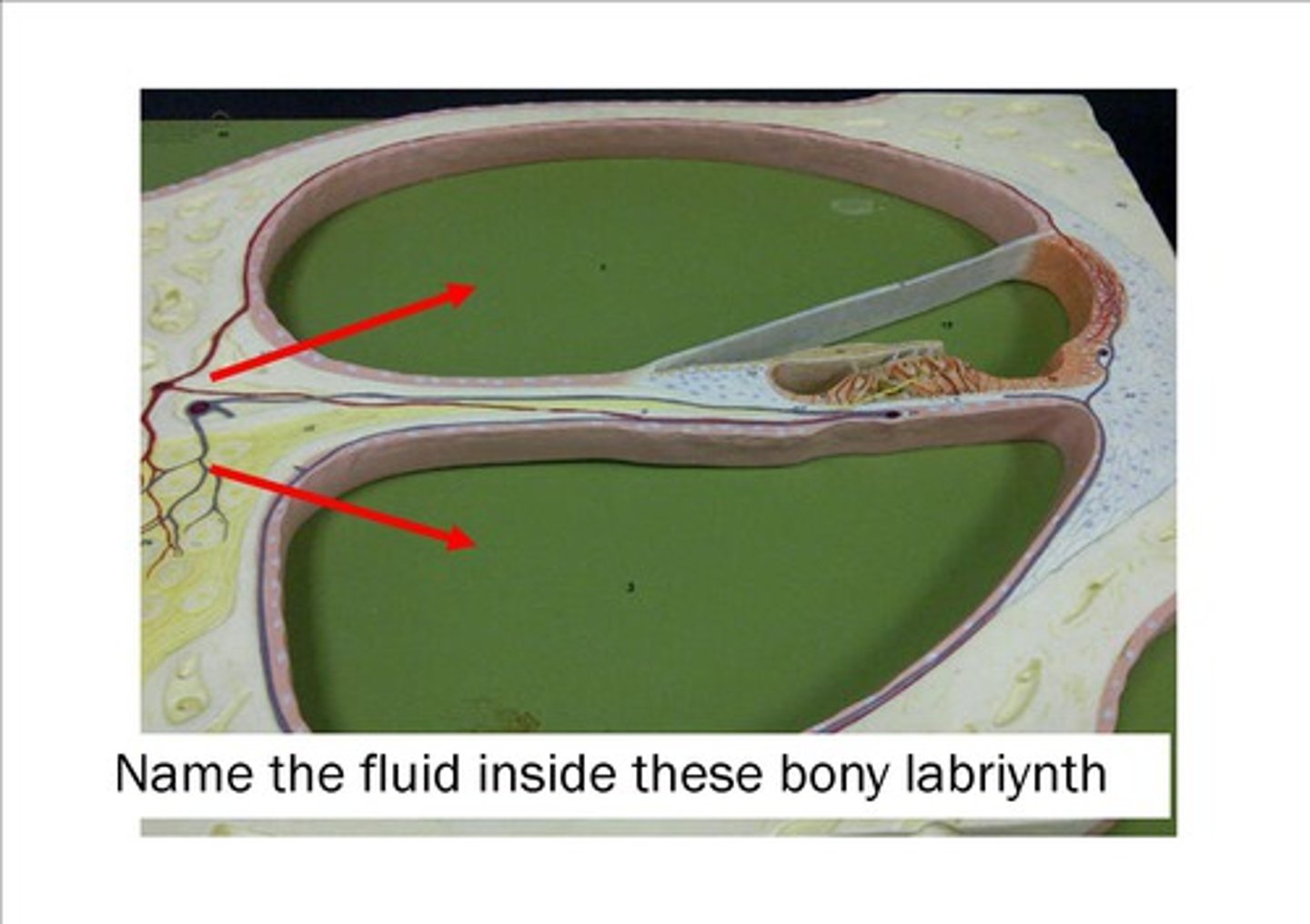
Perilymph
fluid within the scala vestibuli & scala tympani
Semicircular canals
A
• Horizontal Canal
• Anterior Canal
• Posterior Canal
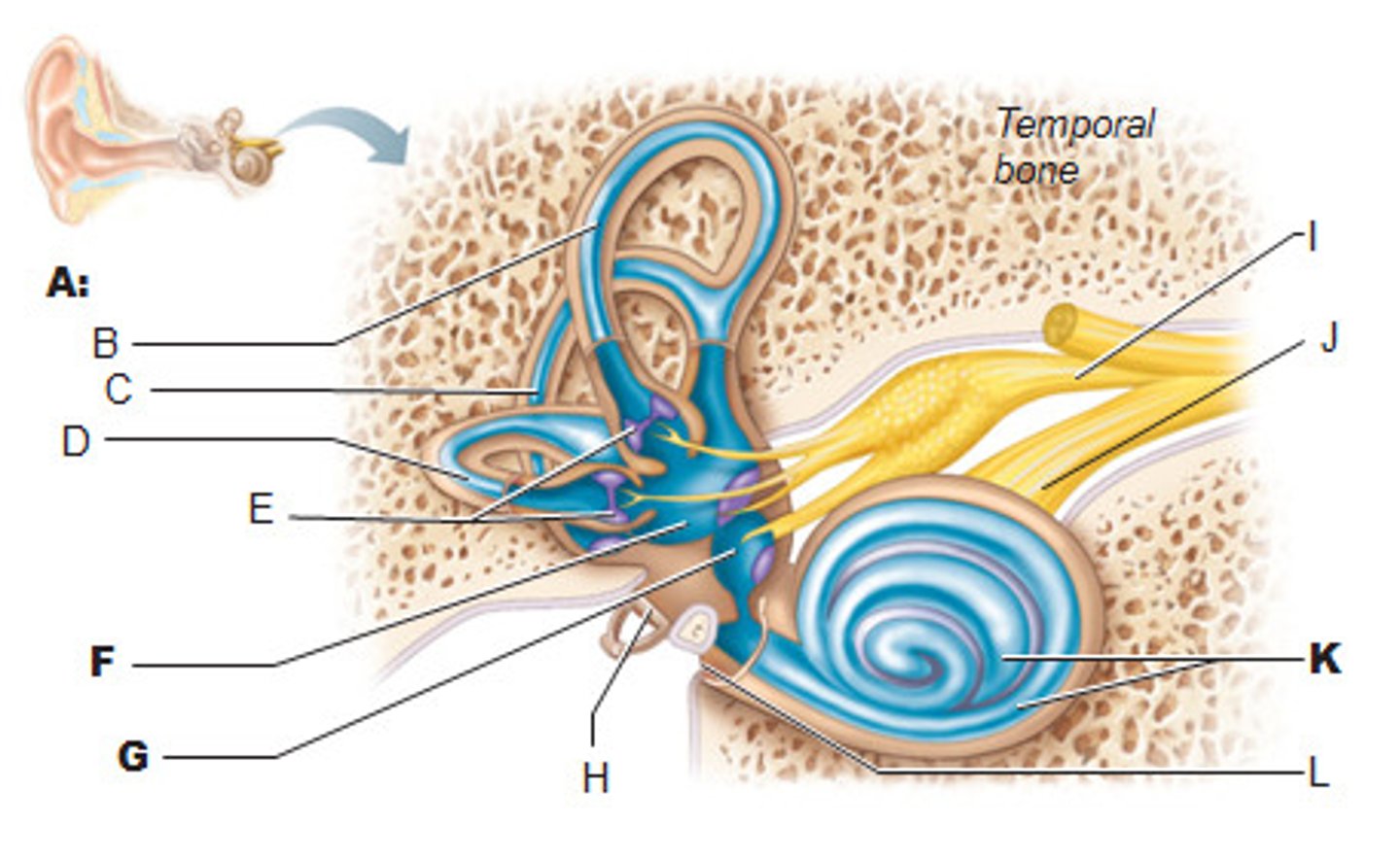
Horizontal canal
D
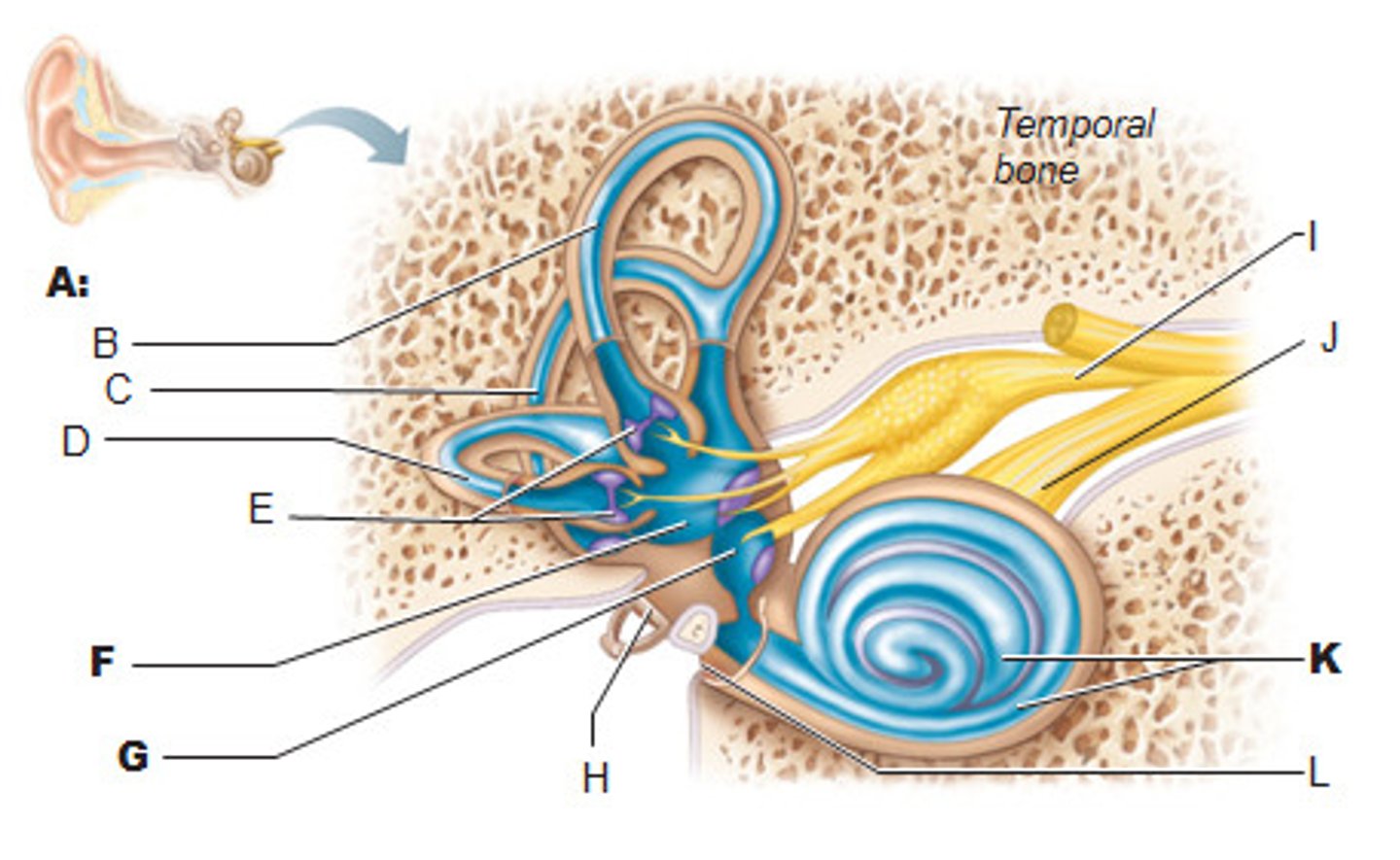
Anterior canal
B
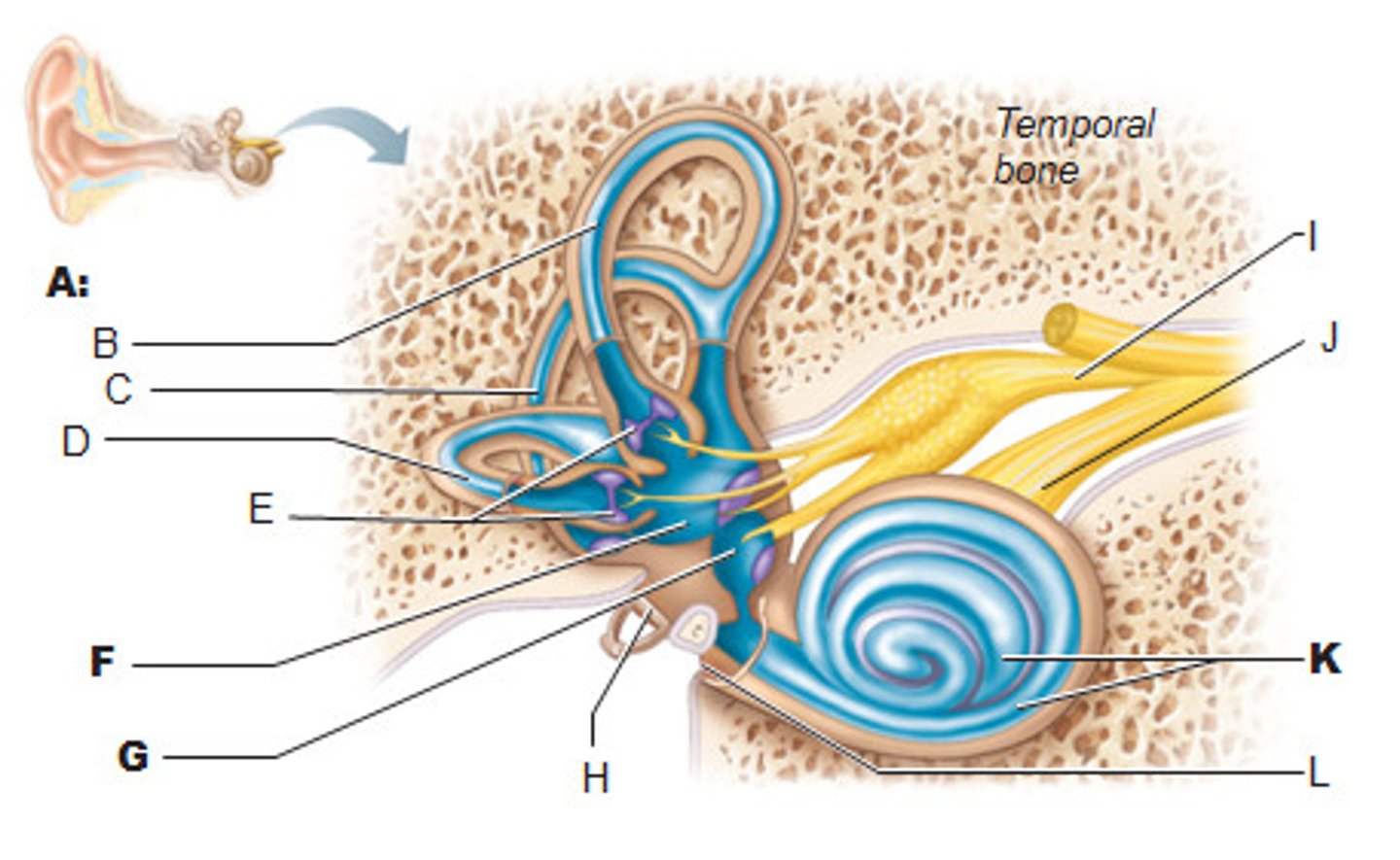
Posterior canal
C
Most common canal for otoliths to be displaced in with BPPV
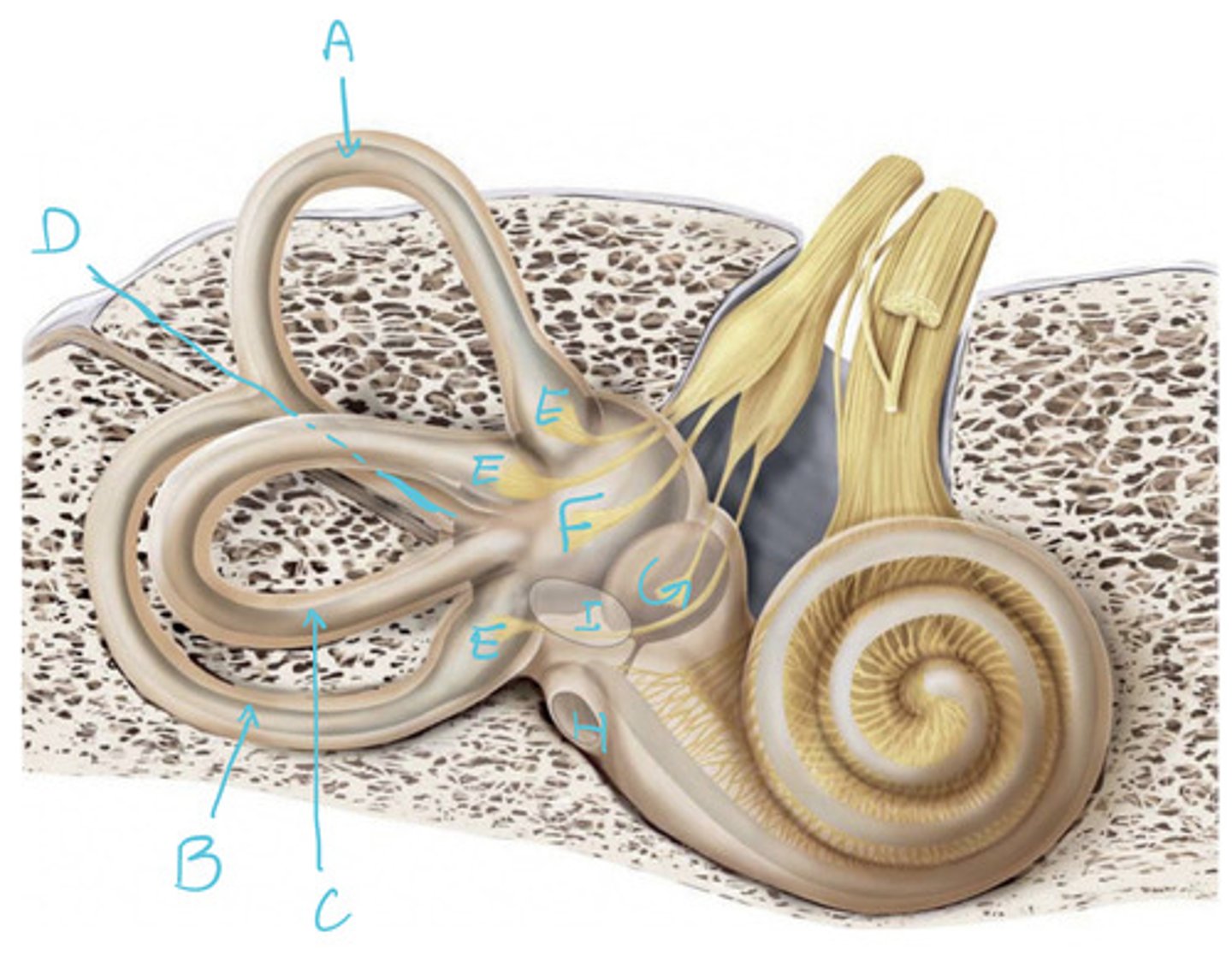
Common crus
D
Most common route for otoliths to enter the canals in BPPV
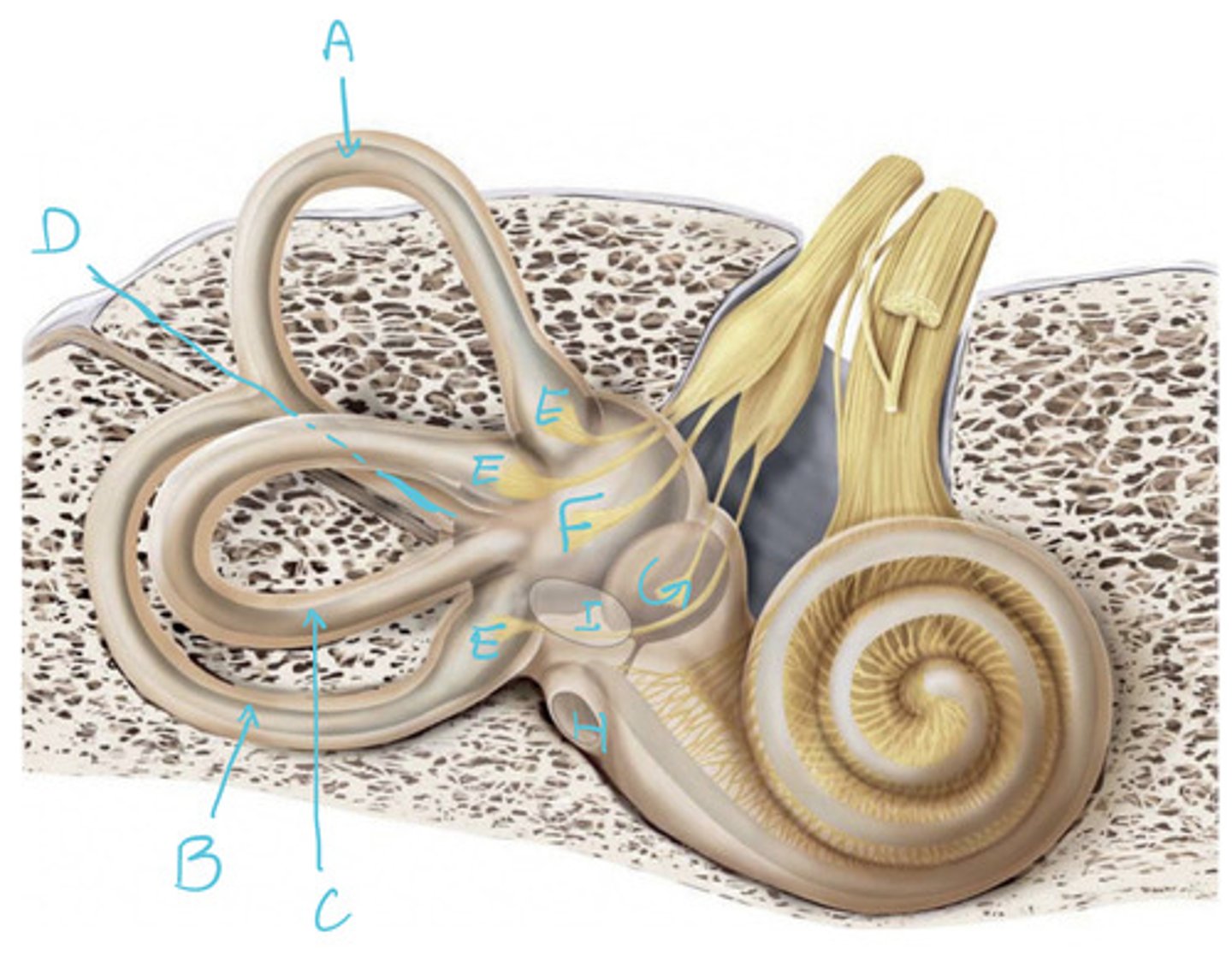
Ampulla
E
expanded region on one end of each semi-circular canal
Contains cristae ampullaris organs
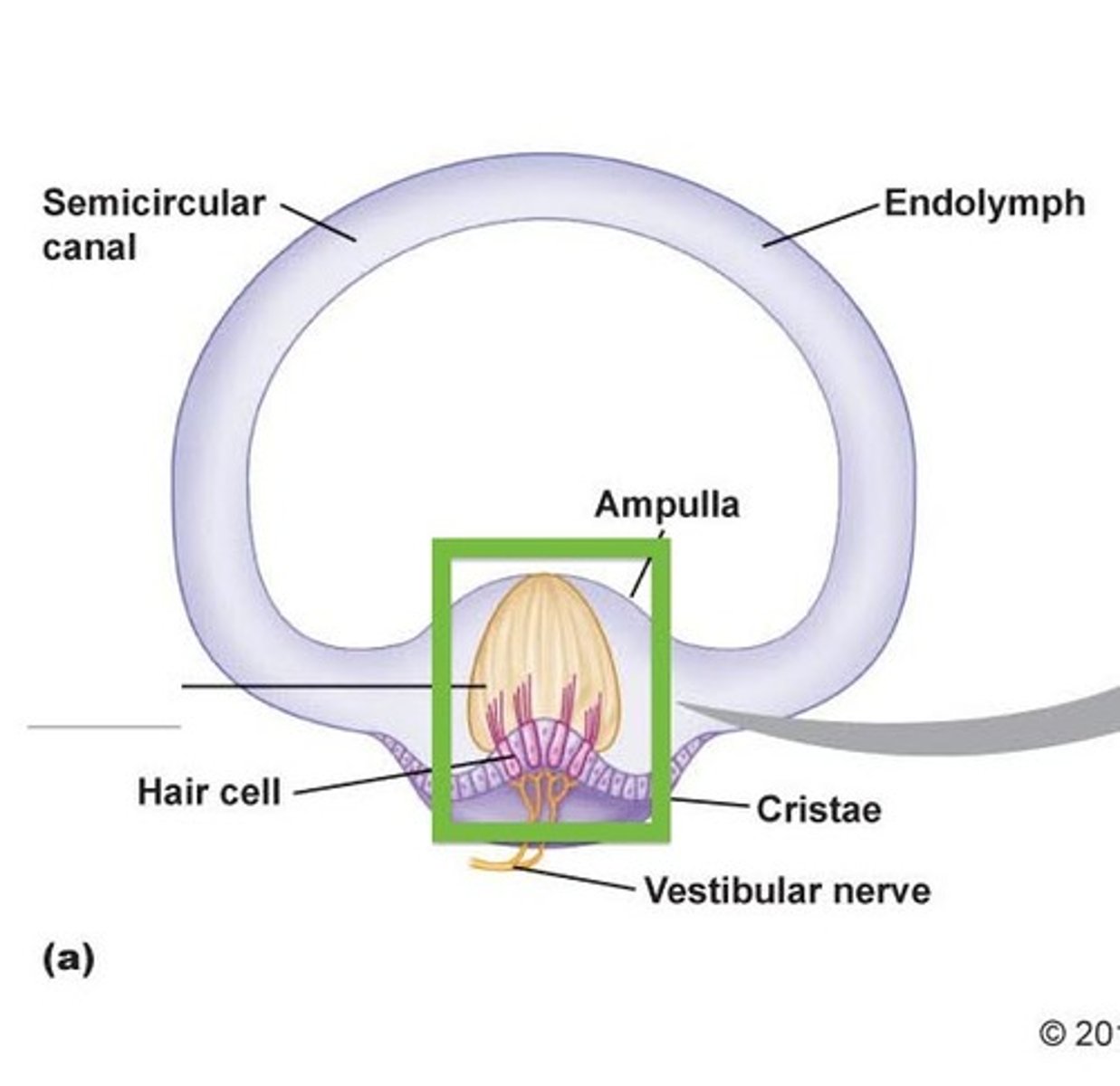
Cupula
A
gelatinous mass within the cristae ampullaris
Same density as endolymph, making rotational acceleration non-gravity sensitive
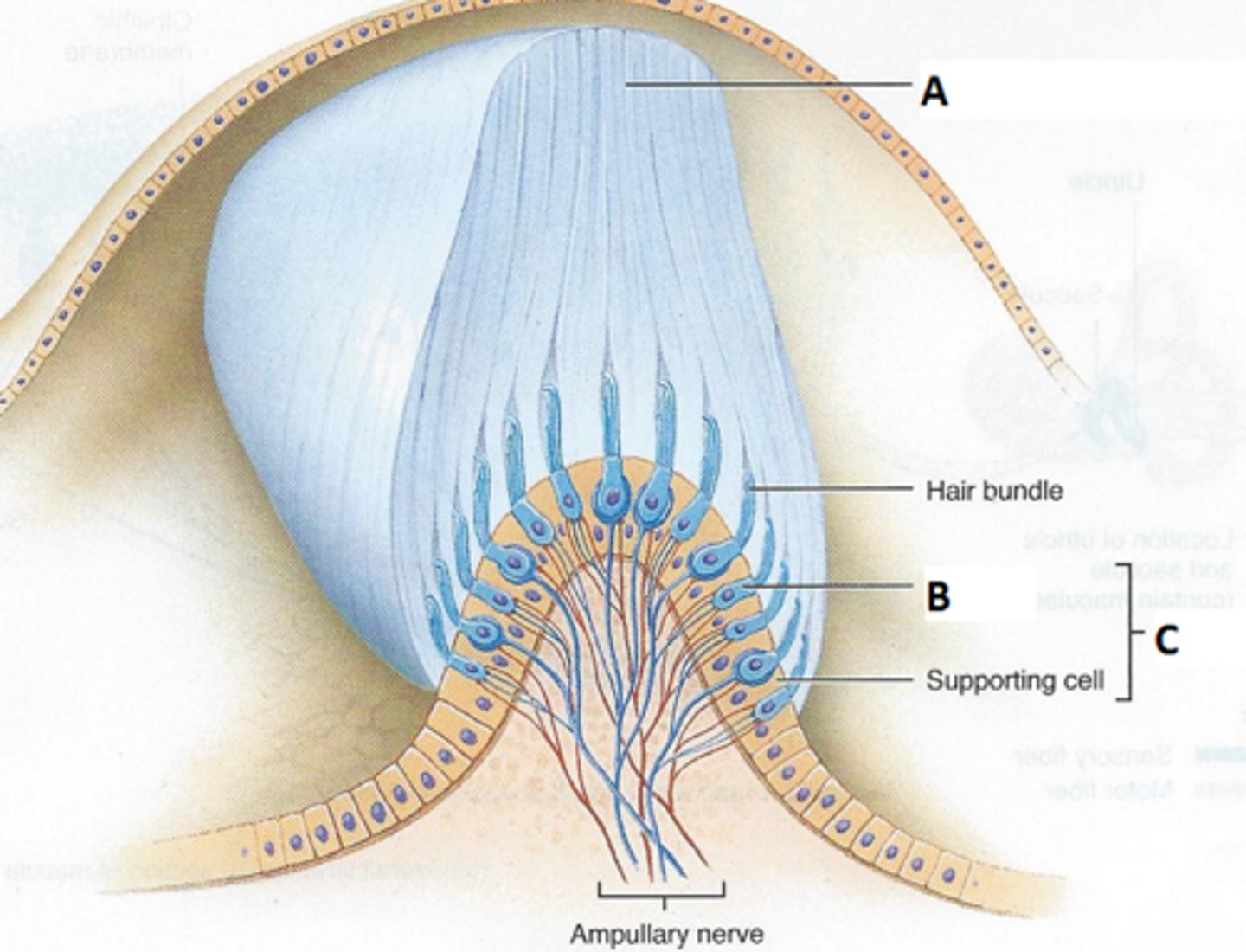
Cristae Ampullaris
C
Sensory organs contained within the ampulla of the semi-circular canals
Sensitive to rotational/angular movements
non-gravity dependent
Otolithic membrane
D
Gelatinous mass of the macula
otoliths make the macula gravity sensitive
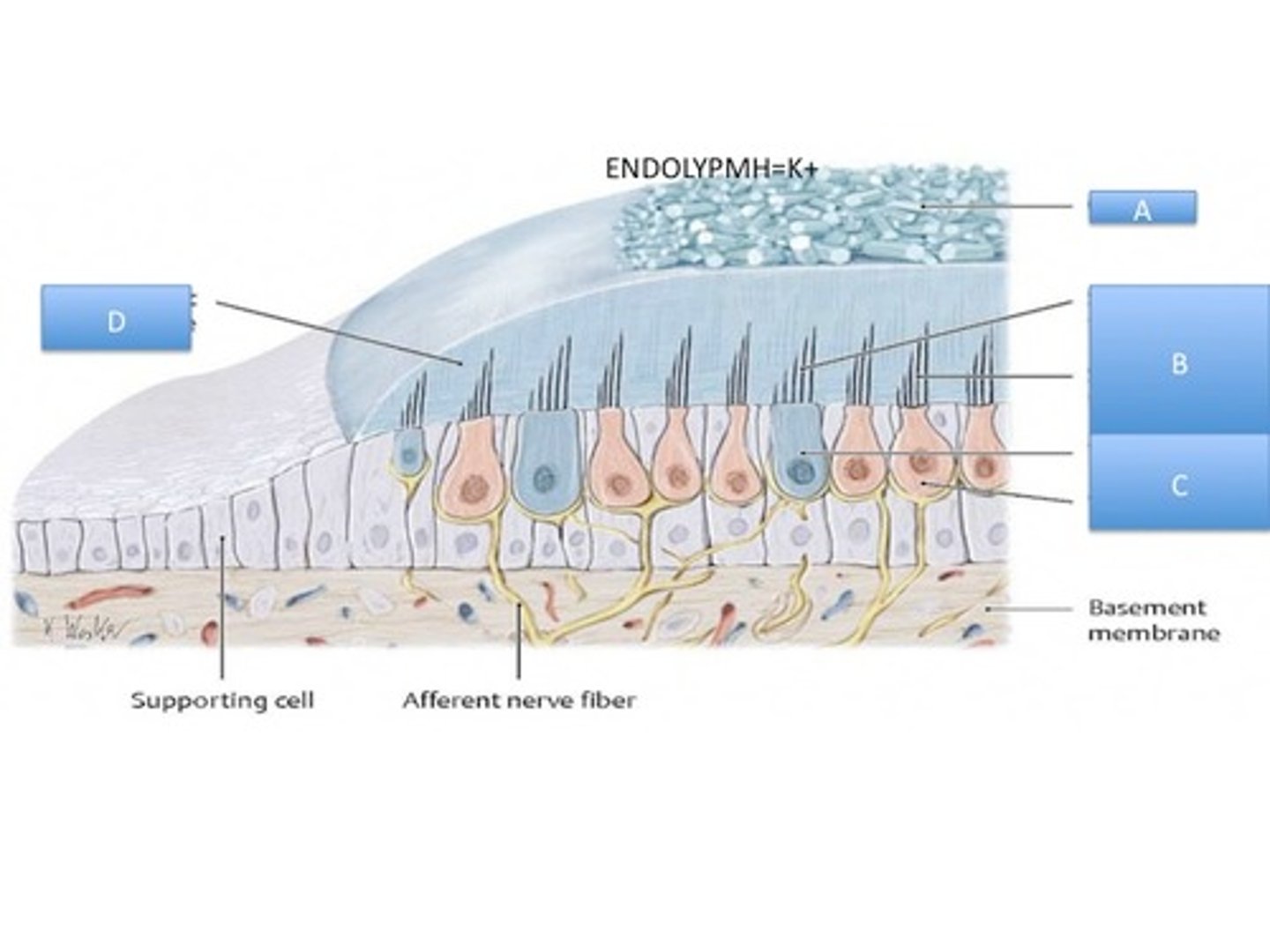
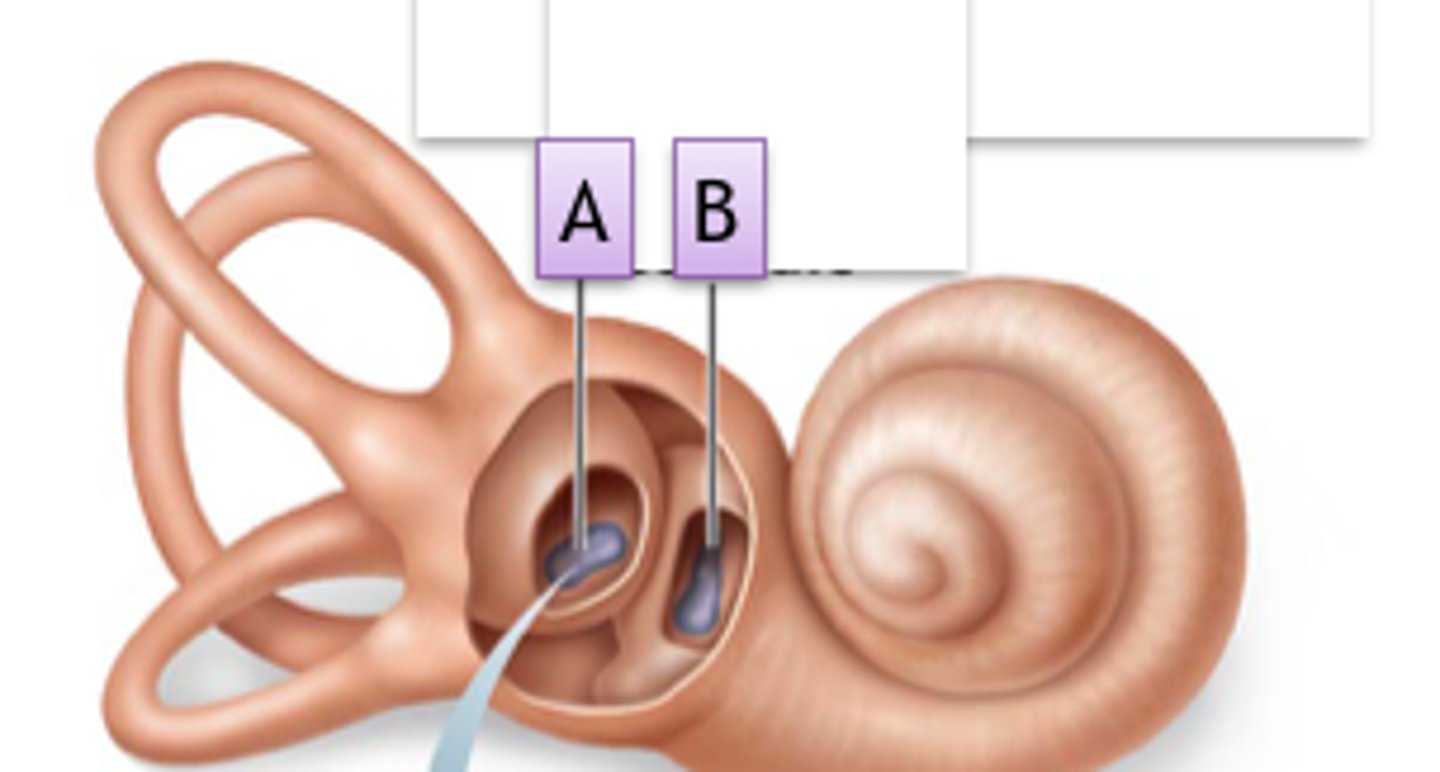
Macula
Sensory Organs contained in the utricle and saccule
Sensitive to linear acceleration
A - utricle -- horizontal
B - Saccule -- vertical
Gravity dependent
Vestibular ganglion
8 & 9
Collection of 1st order sensory neuron cell bodies coming from the vestibular apparatus
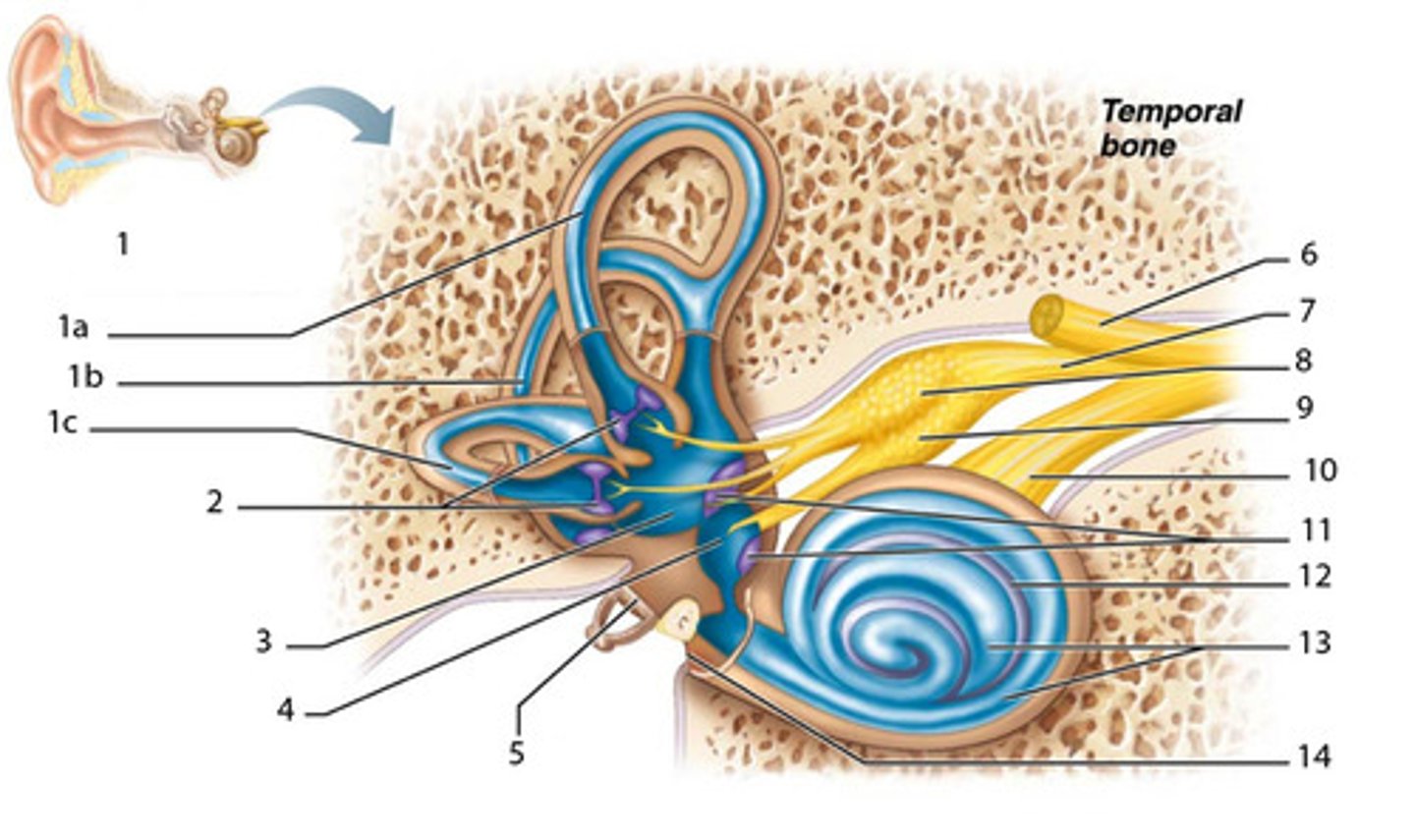
CN VIII (vestibulocochlear n.)
7 & 10
Combined sensory nerve coming from the vestibule and cochlia
Carrying efferent sensory information of hearing and balance
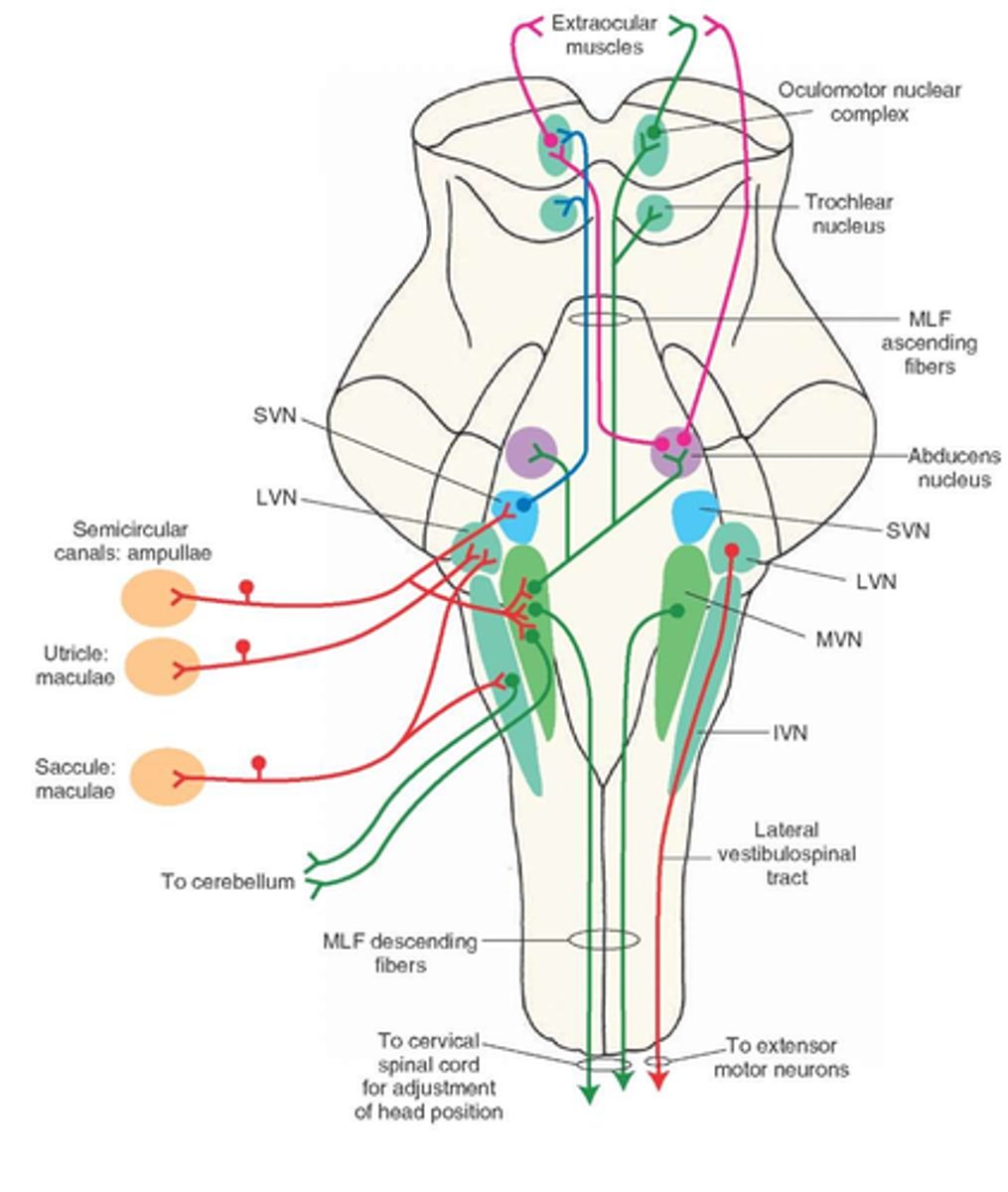
Vestibular nuclei complex
Blue and green nuclei
Deep to vestibular area
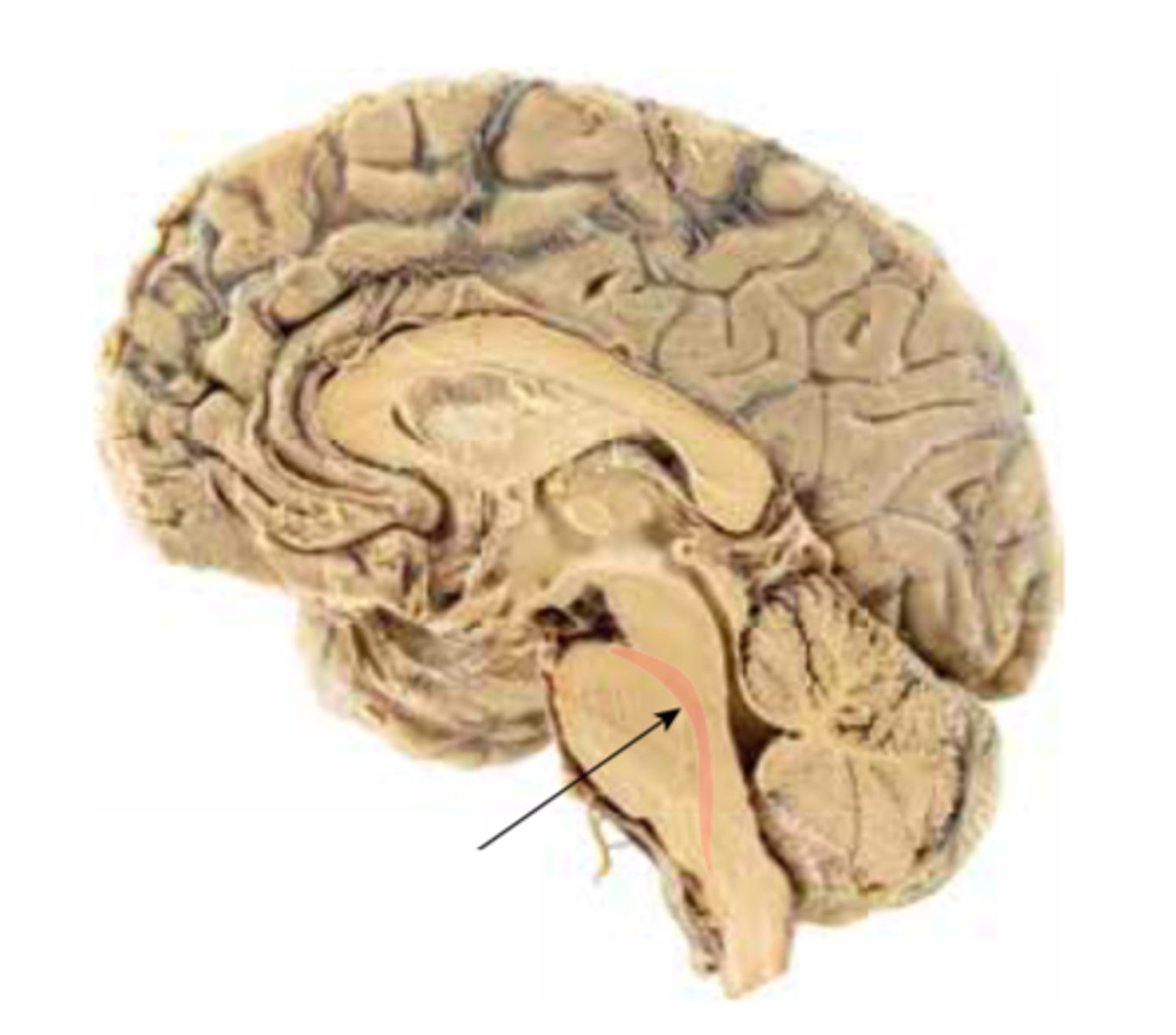
Reticular formation
in tegmentum of midbrain, pons, and medulla
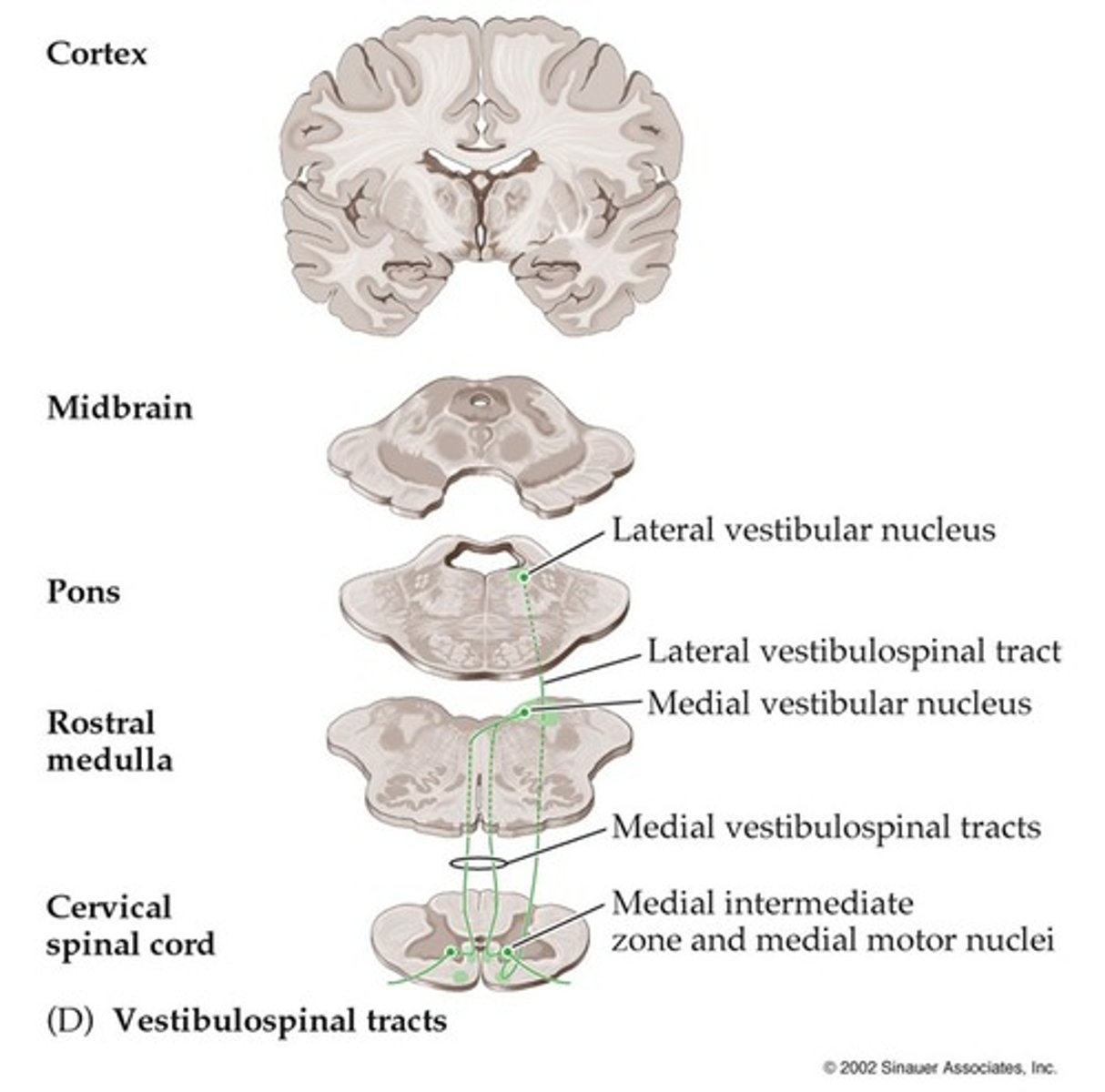
Vestibulospinal tract
Involuntary
Proximal > Distal
Posture > Muscle Tone
Medial VST: head on body
Lateral VST: body vs gravity
Pathway:
• Cell body in Vestibular Nuclei Complex (pons & medulla)
• Bilateral projections
• Anterior funiculus
• interneuron in spinal cord
• medial / anterior aspects of ventral horn
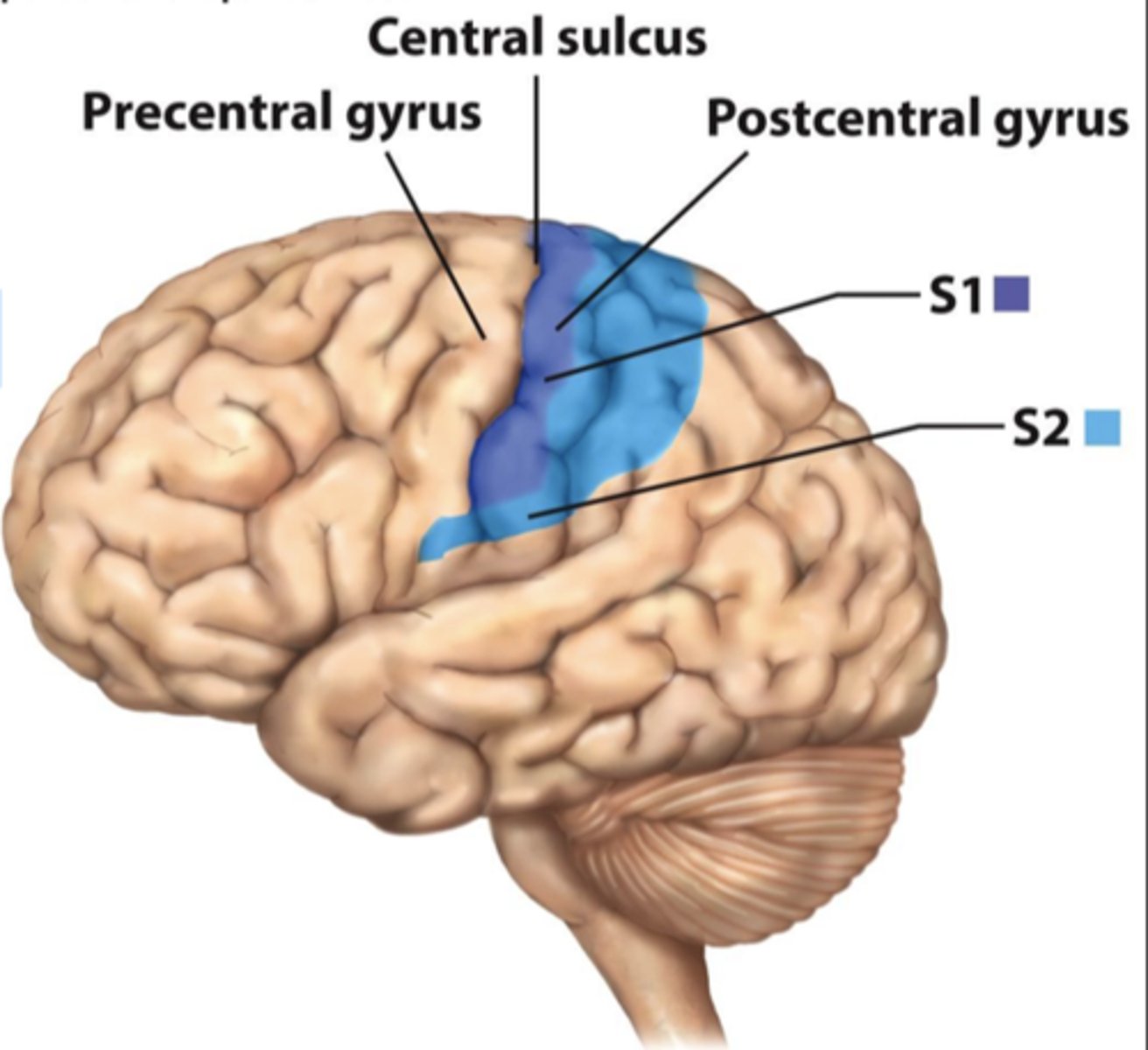
Secondary somatosensory cortex
S2
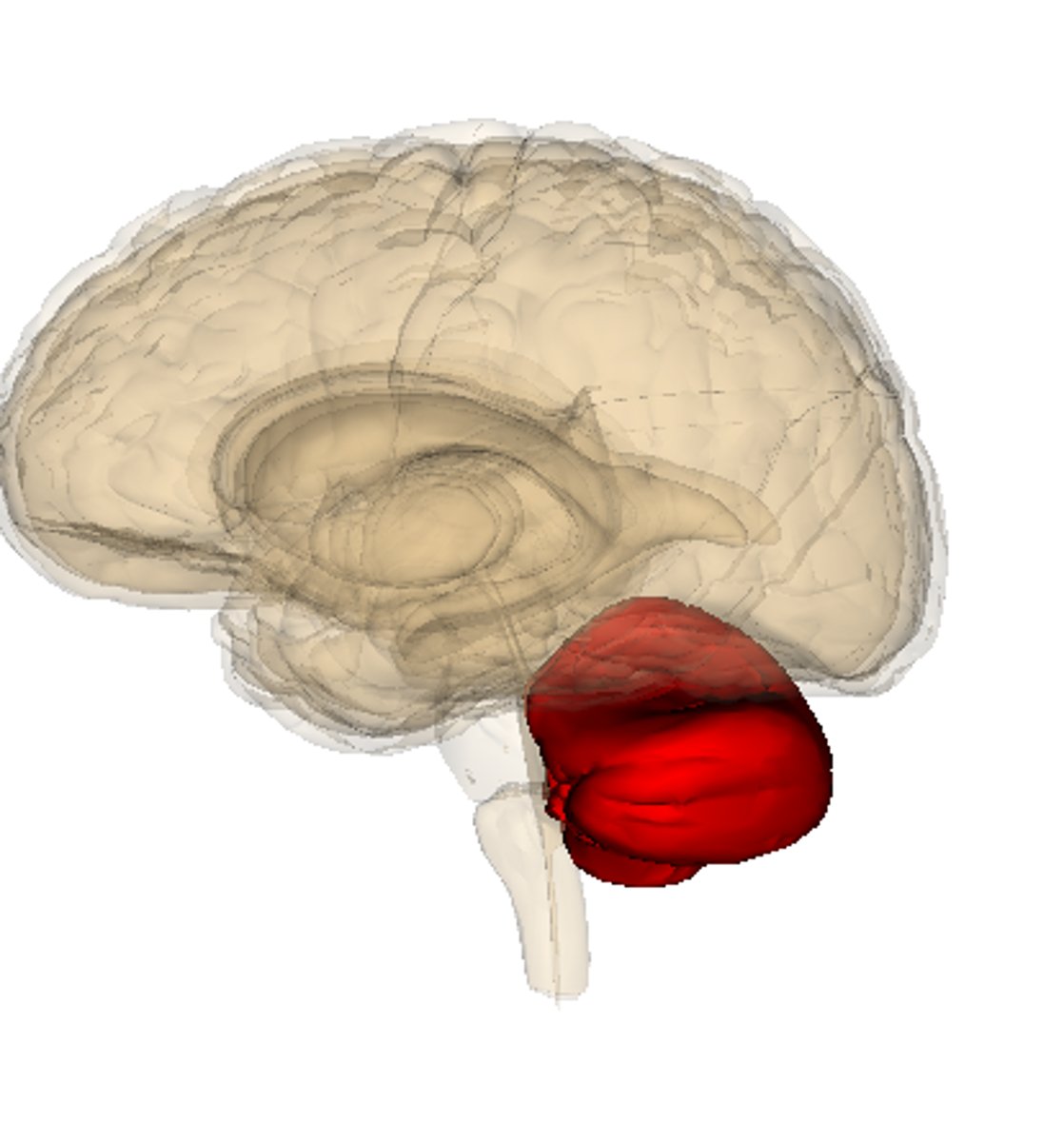
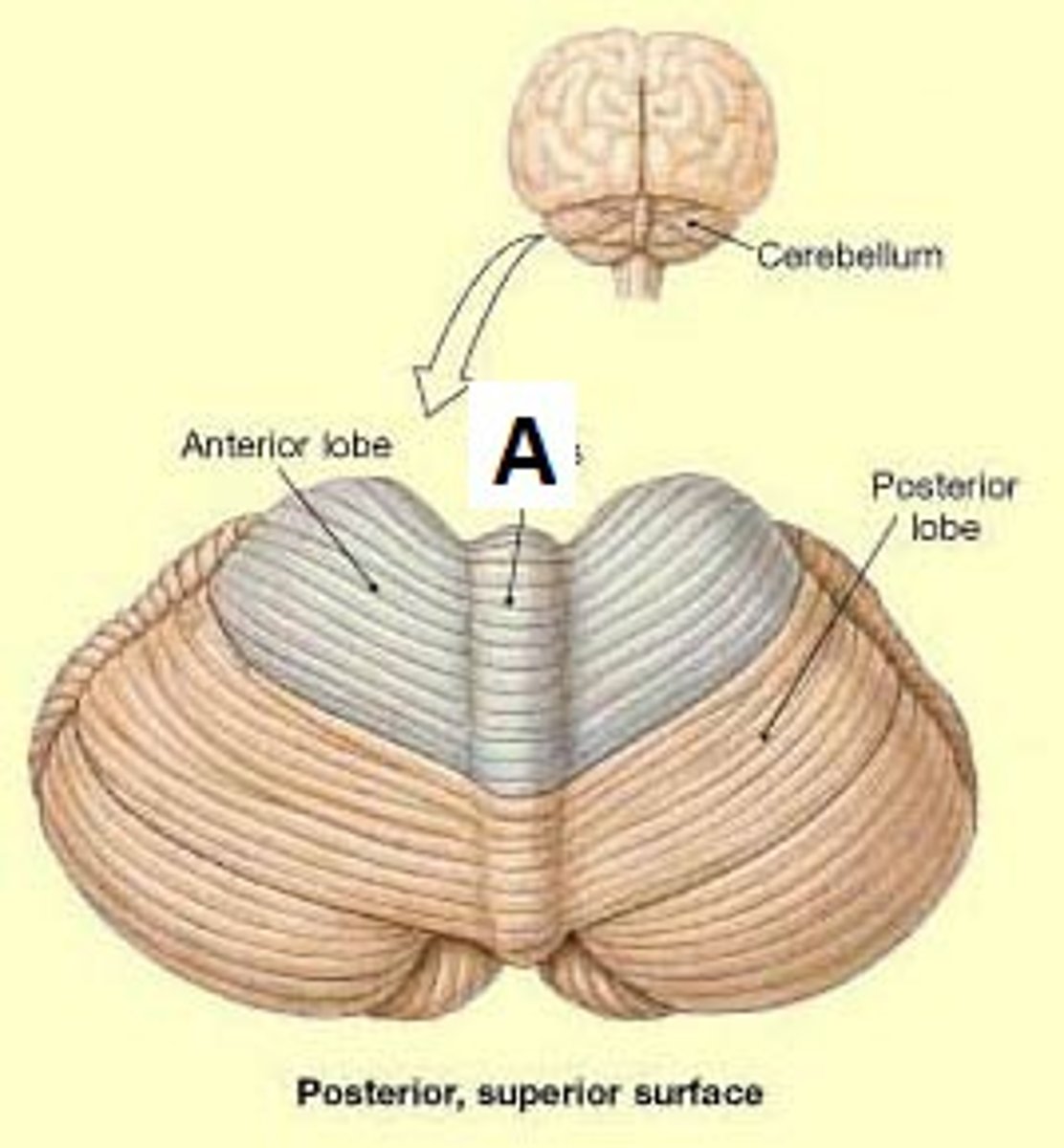
Cerebellum
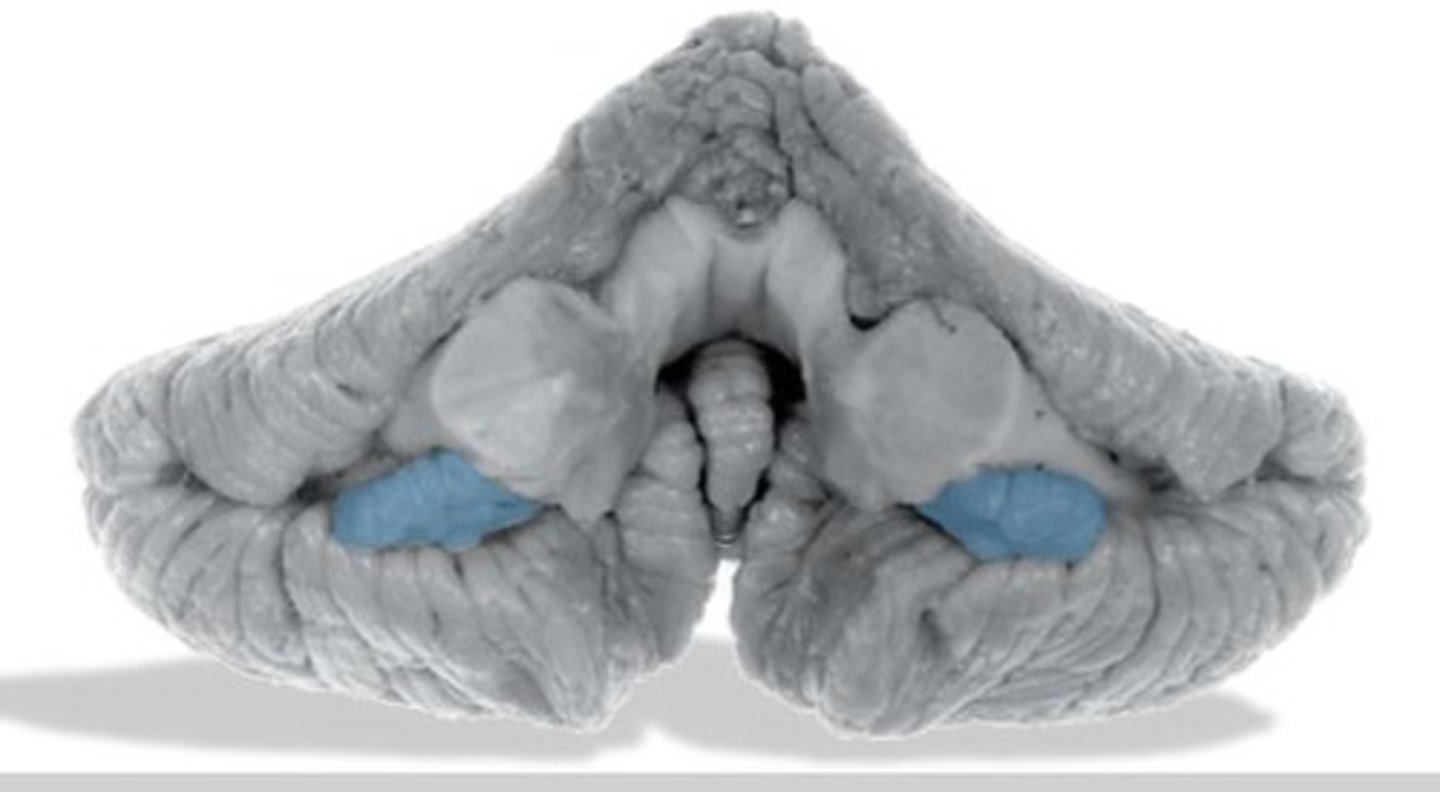
Flocculus
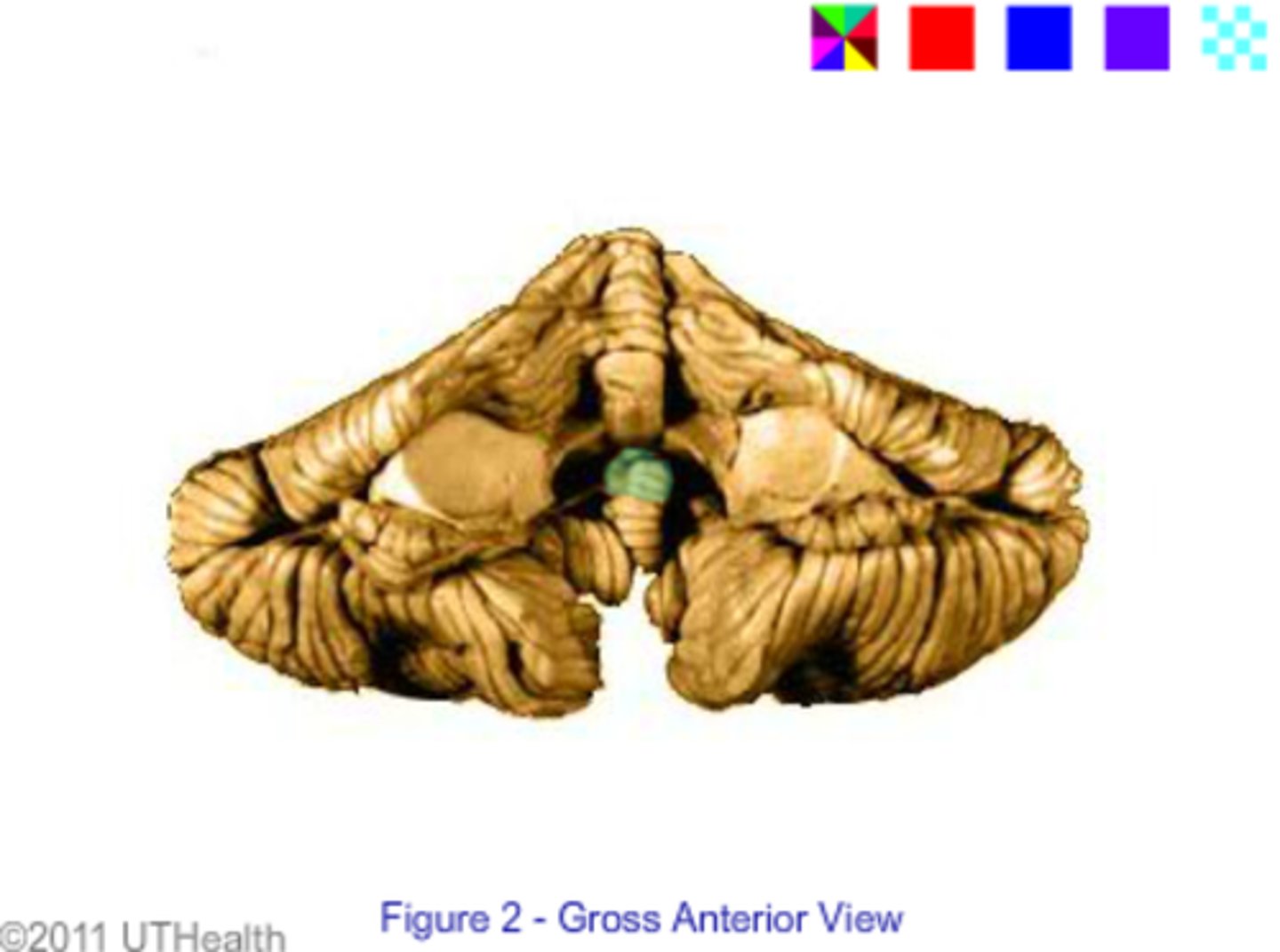
Nodulus
Flocculonodular lobe
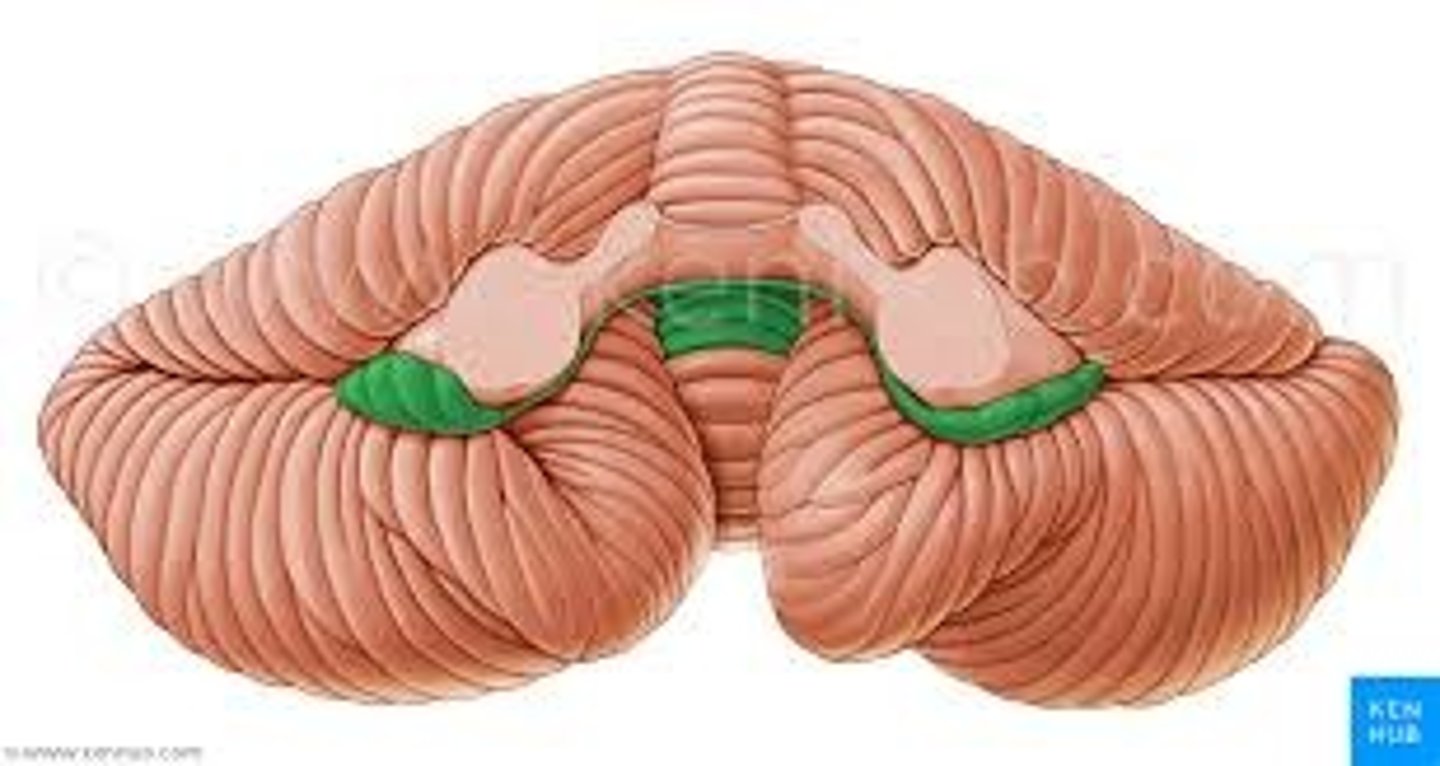
Vermis
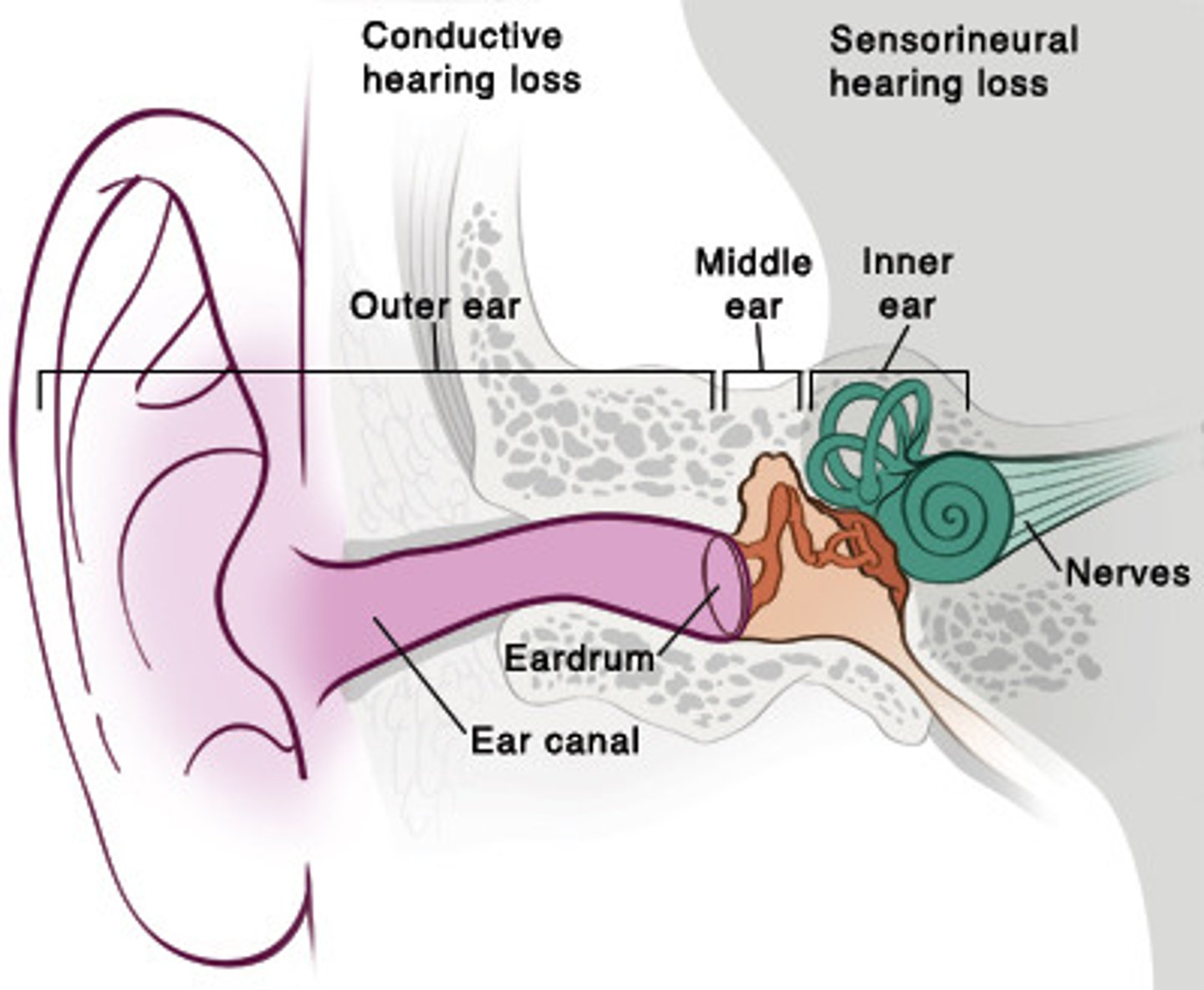
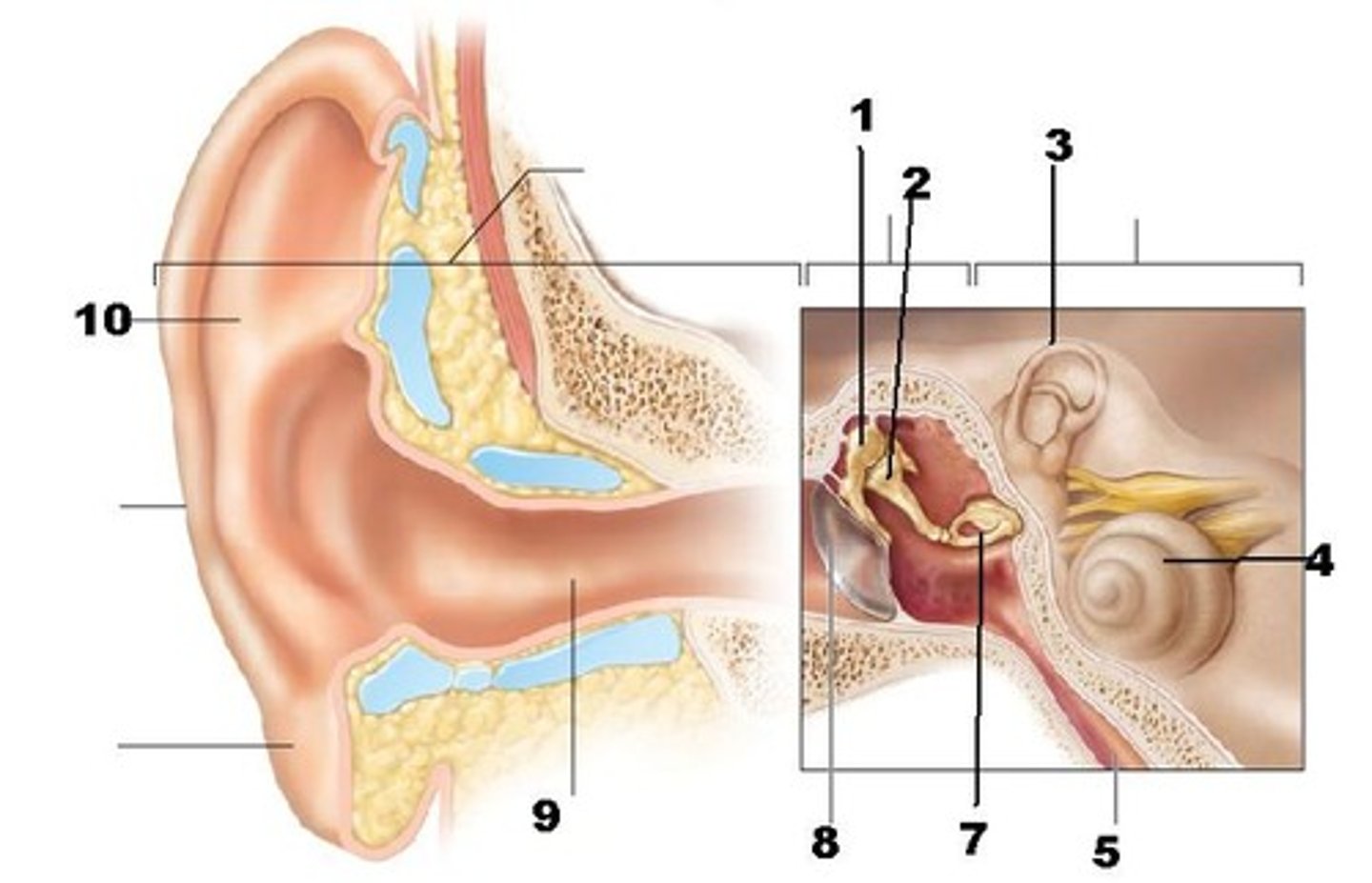
Outer Ear
• Auricle
• External acoustic meatus
• Tympanic membrane
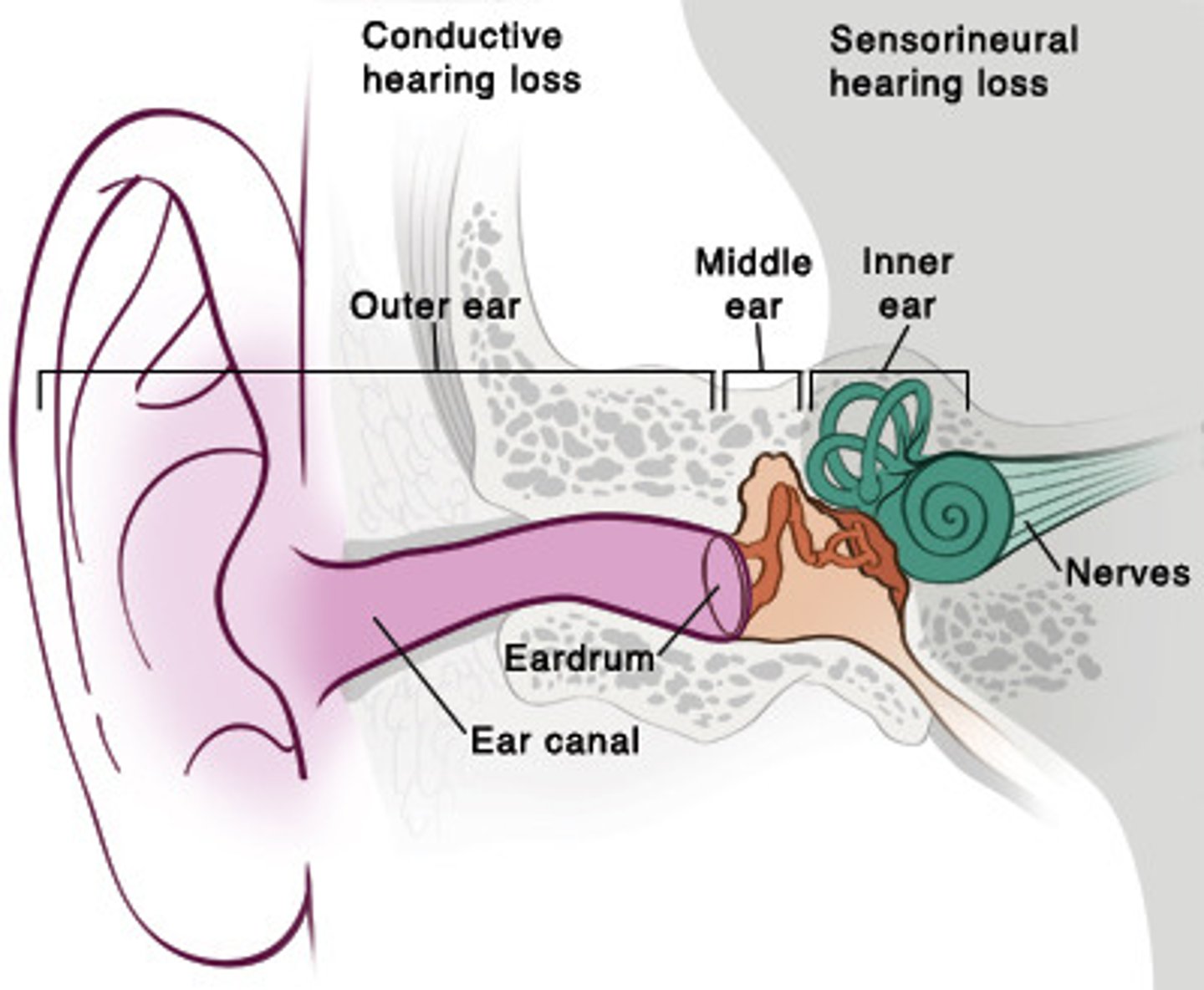
Auricle
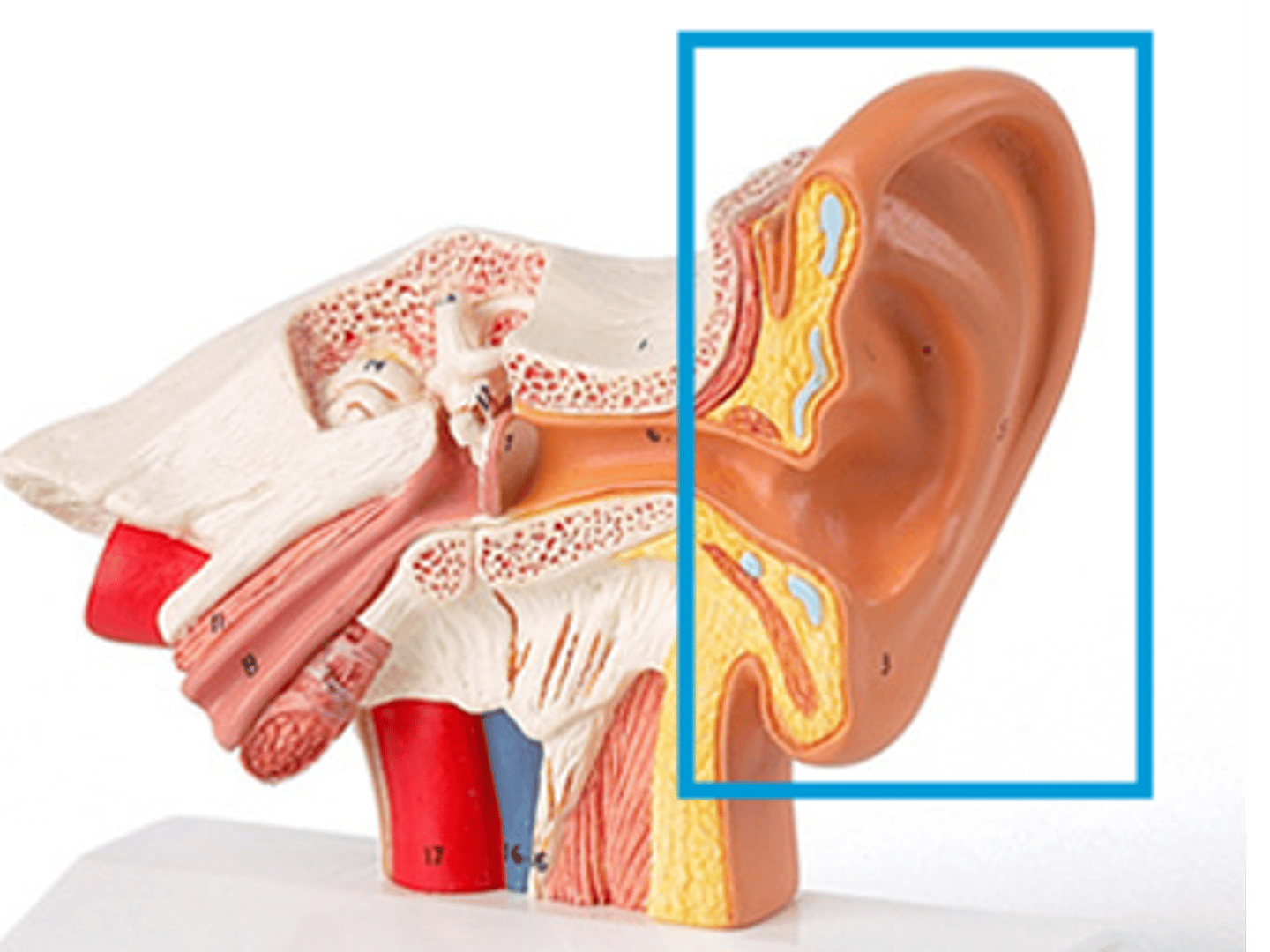
External auditory meatus
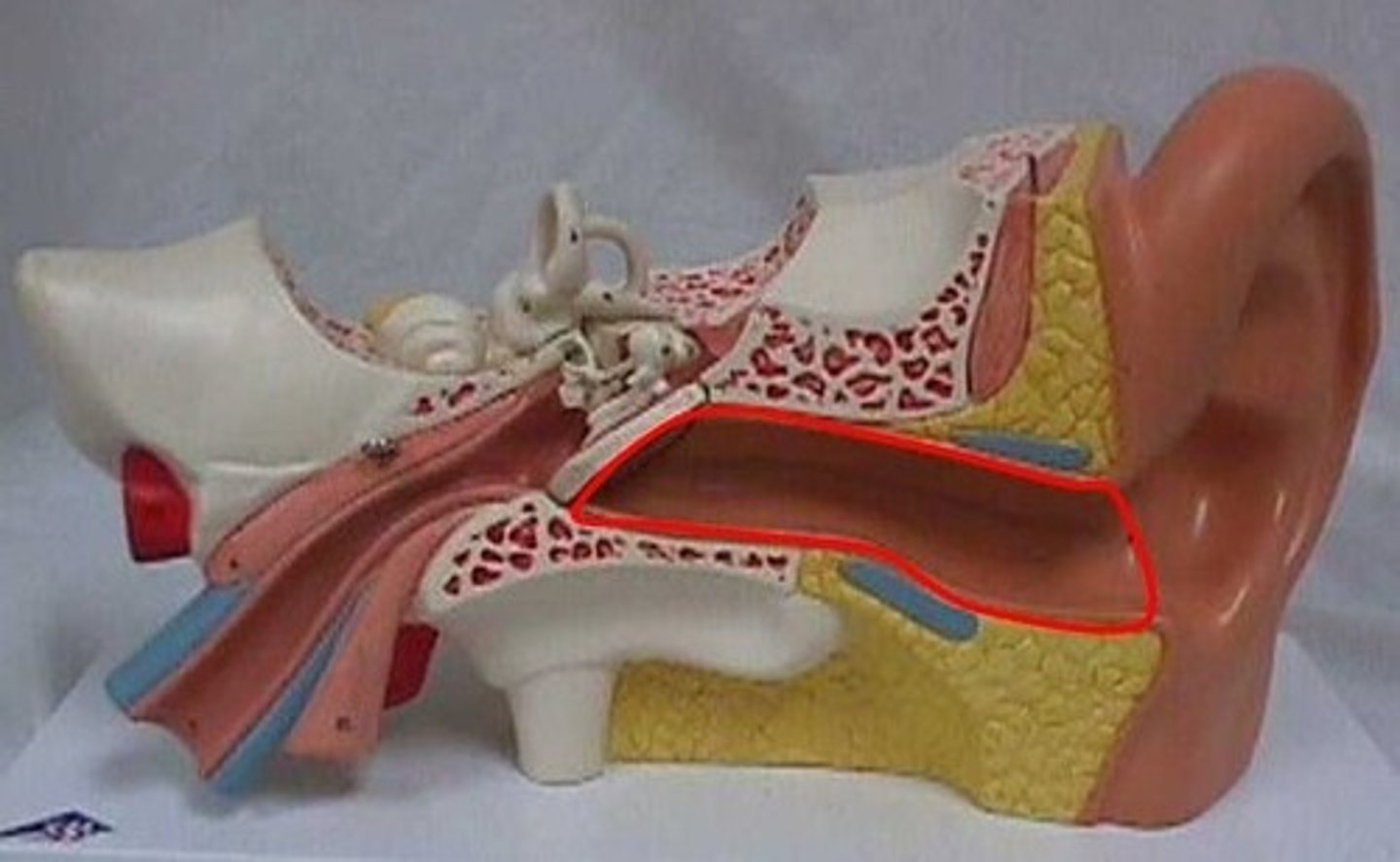
Tympanic membrane
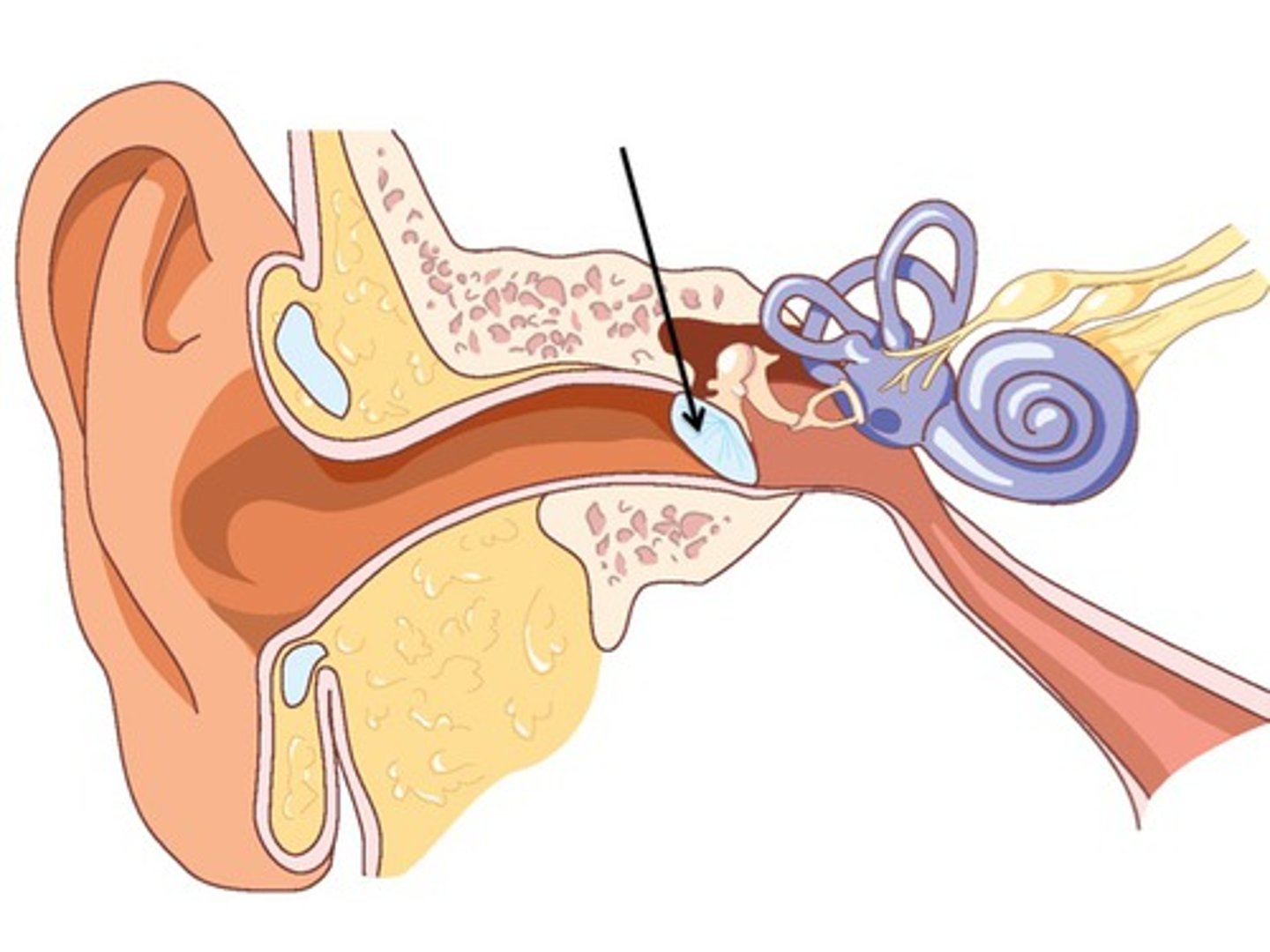
Middle Ear
• Pharyngotympanic (Eustachian) tube
• Ossicles
- Malleus
- Incus
- Stapes
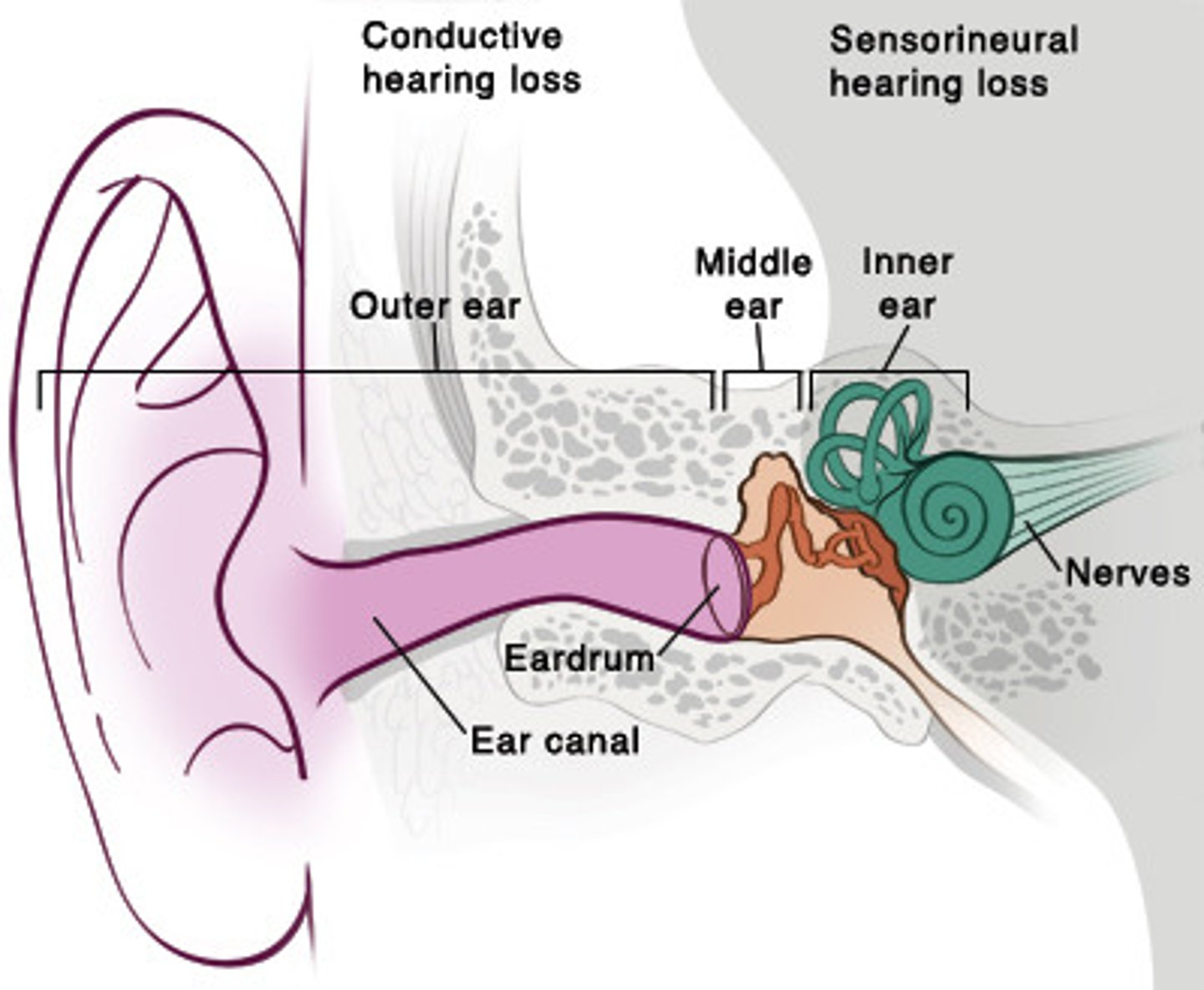
Pharyngotympanic (Eustachian) tube
C
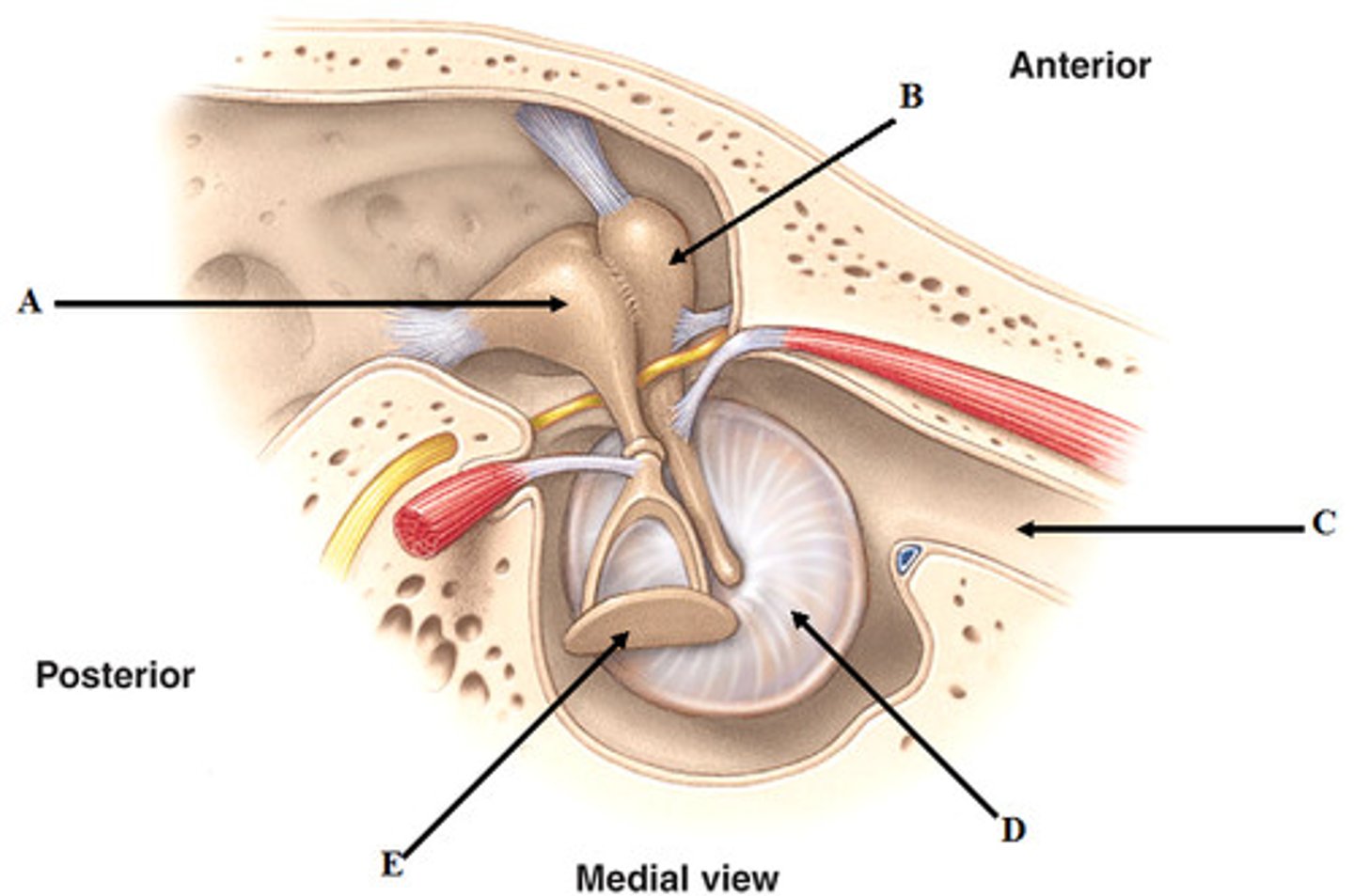
Malleus
B
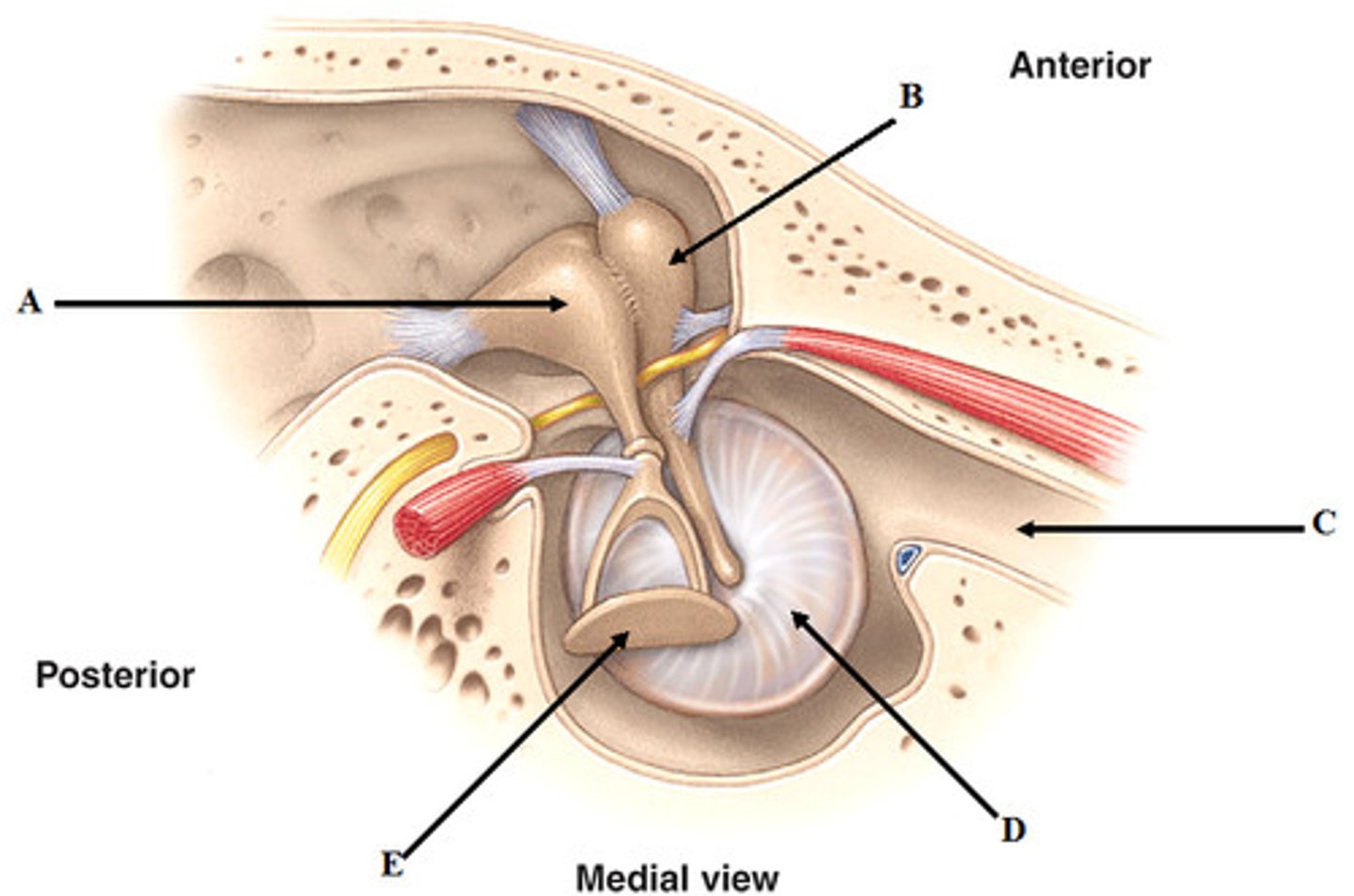
Incus
A
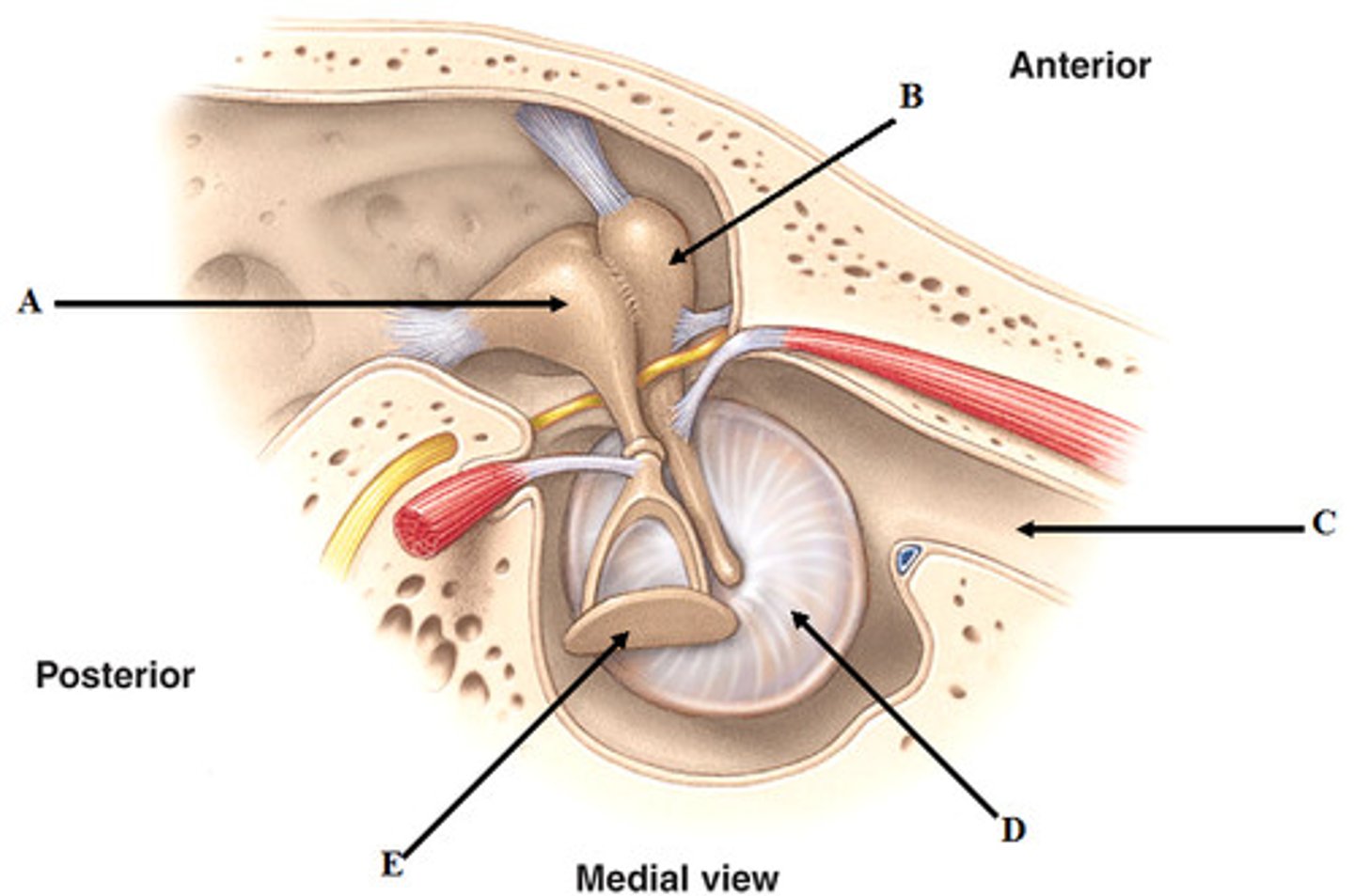
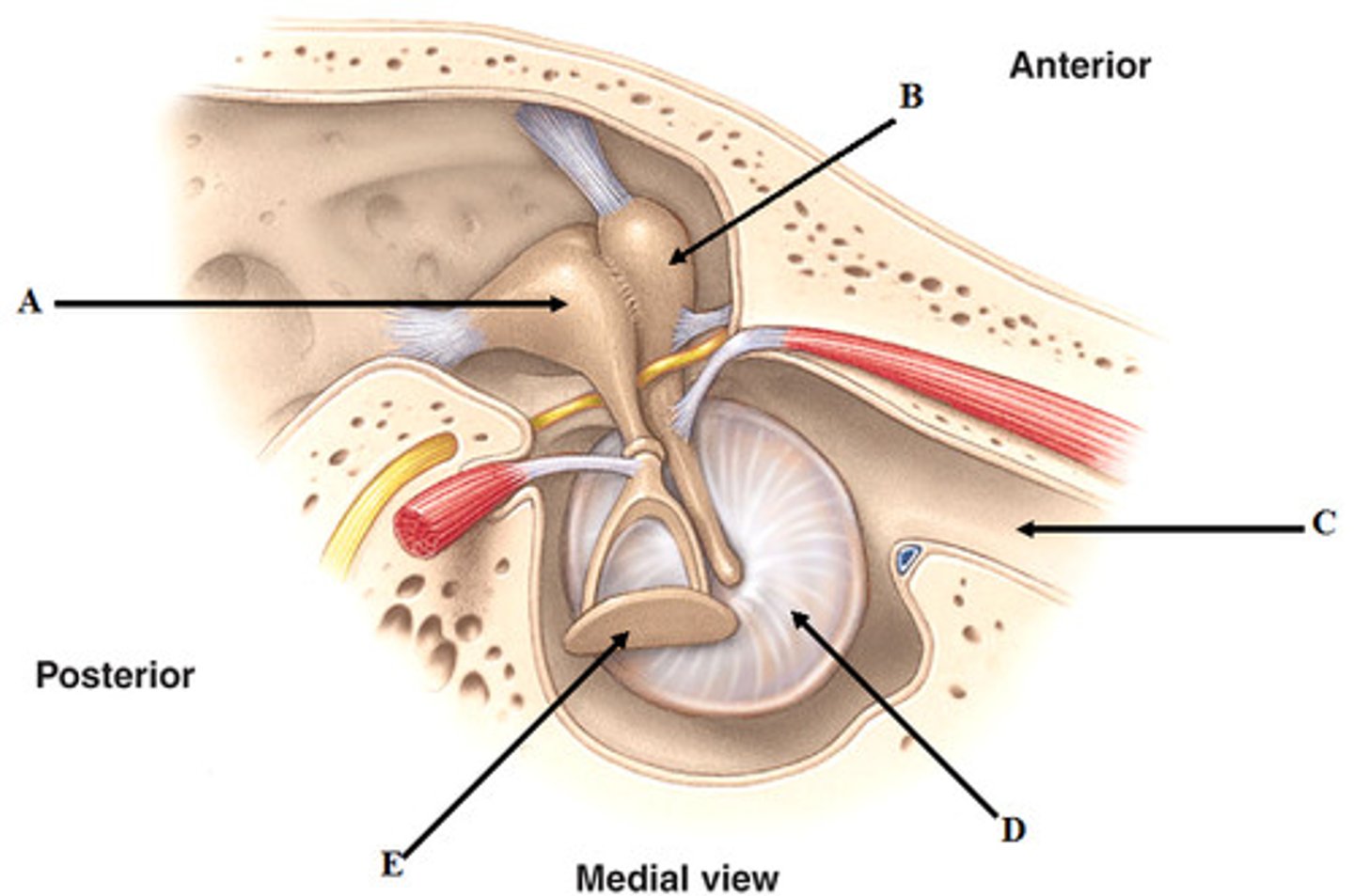
Stapes
E
Sits in the oval window
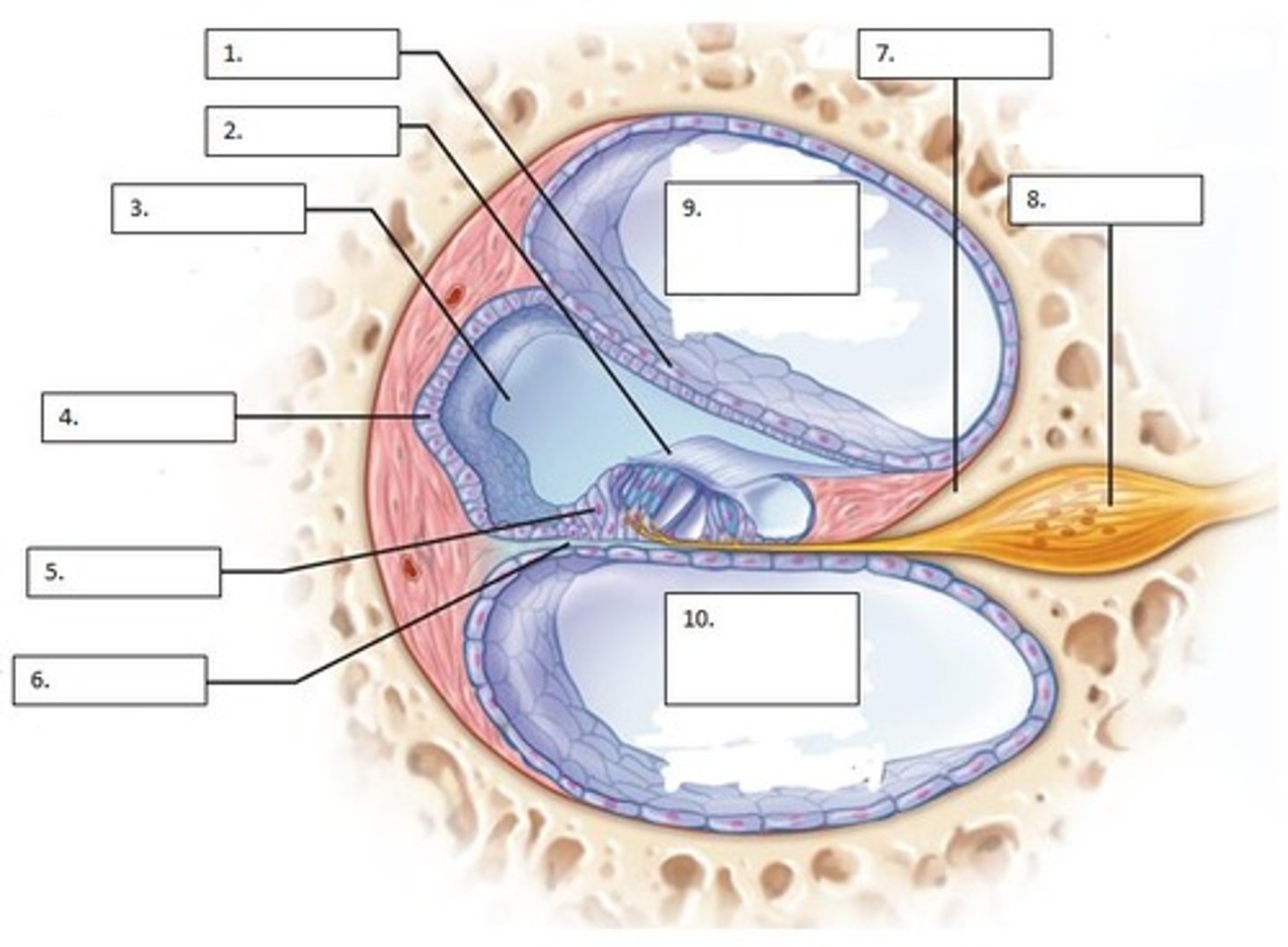
Inner Ear (Auditory portion)
• Cochlea
• Scala Vestibuli
• Scala Media
• Scala Tympani
• Basilar membrane
• Vestibular membrane
• Organ of Corti
• Tectorial membrane
• Hair cells
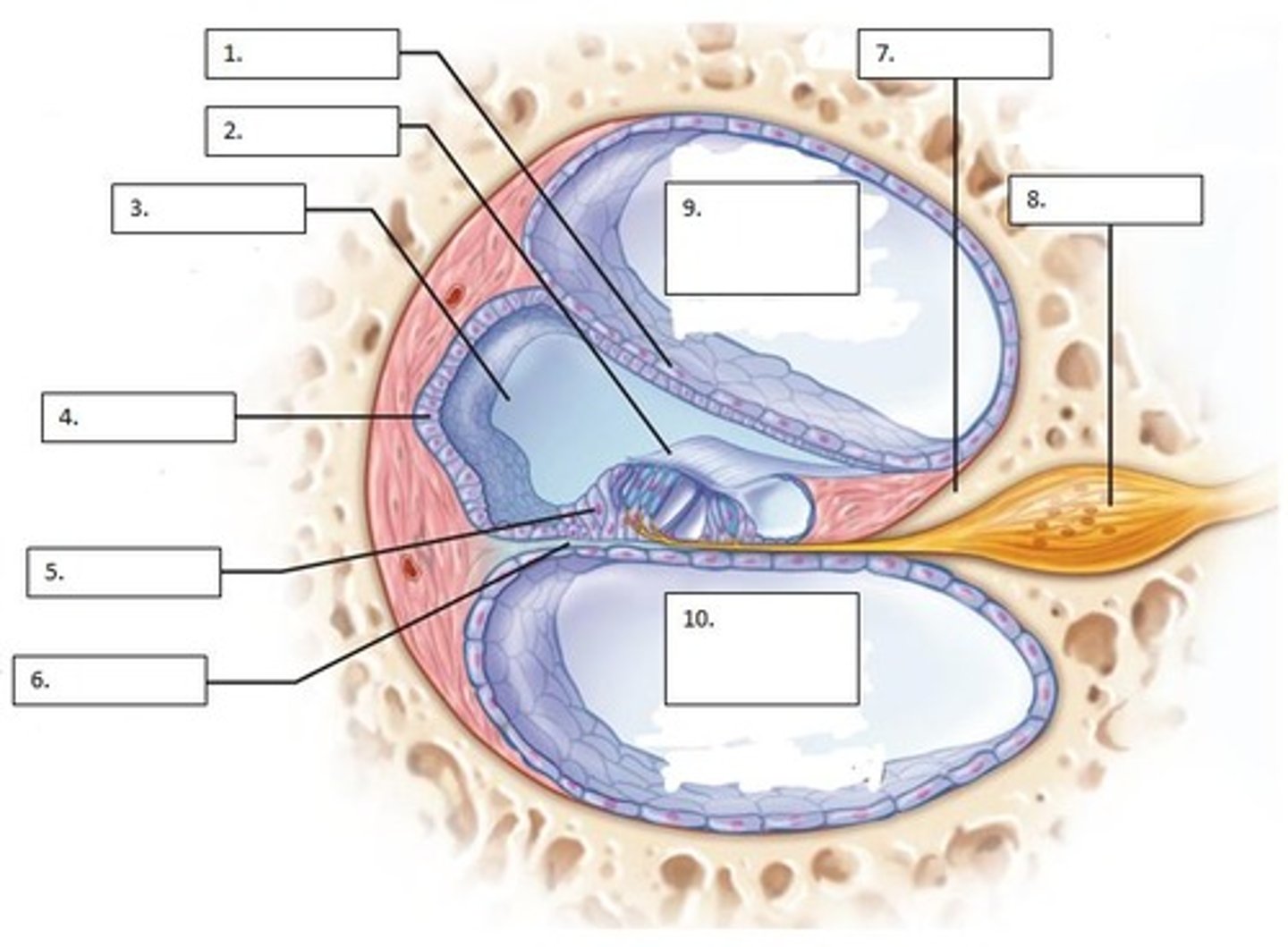
Cochlea
4
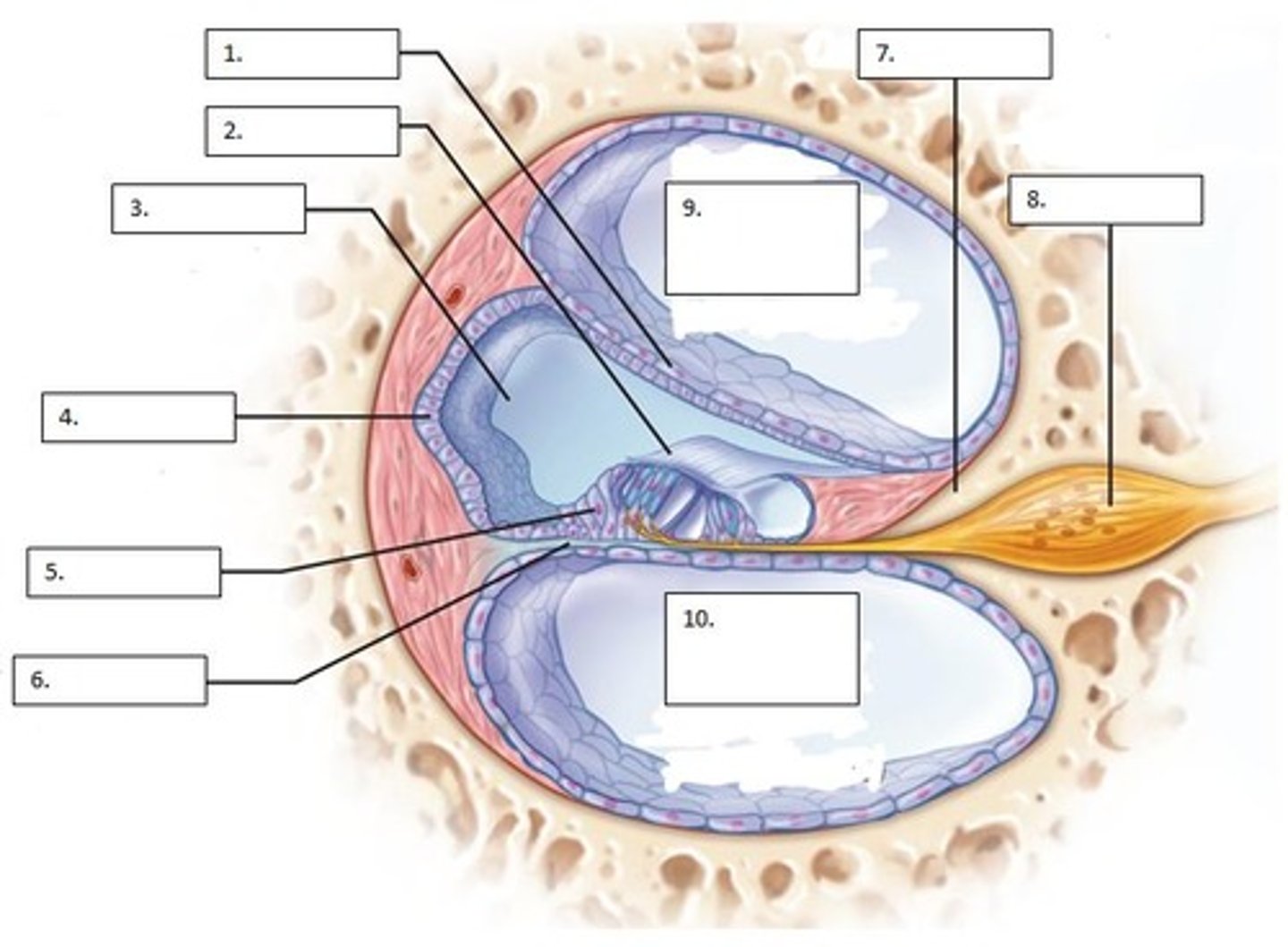
Scala Vestibuli
9
Connected to oval window
where sound waves travel first in the cochlea
contains perilymph
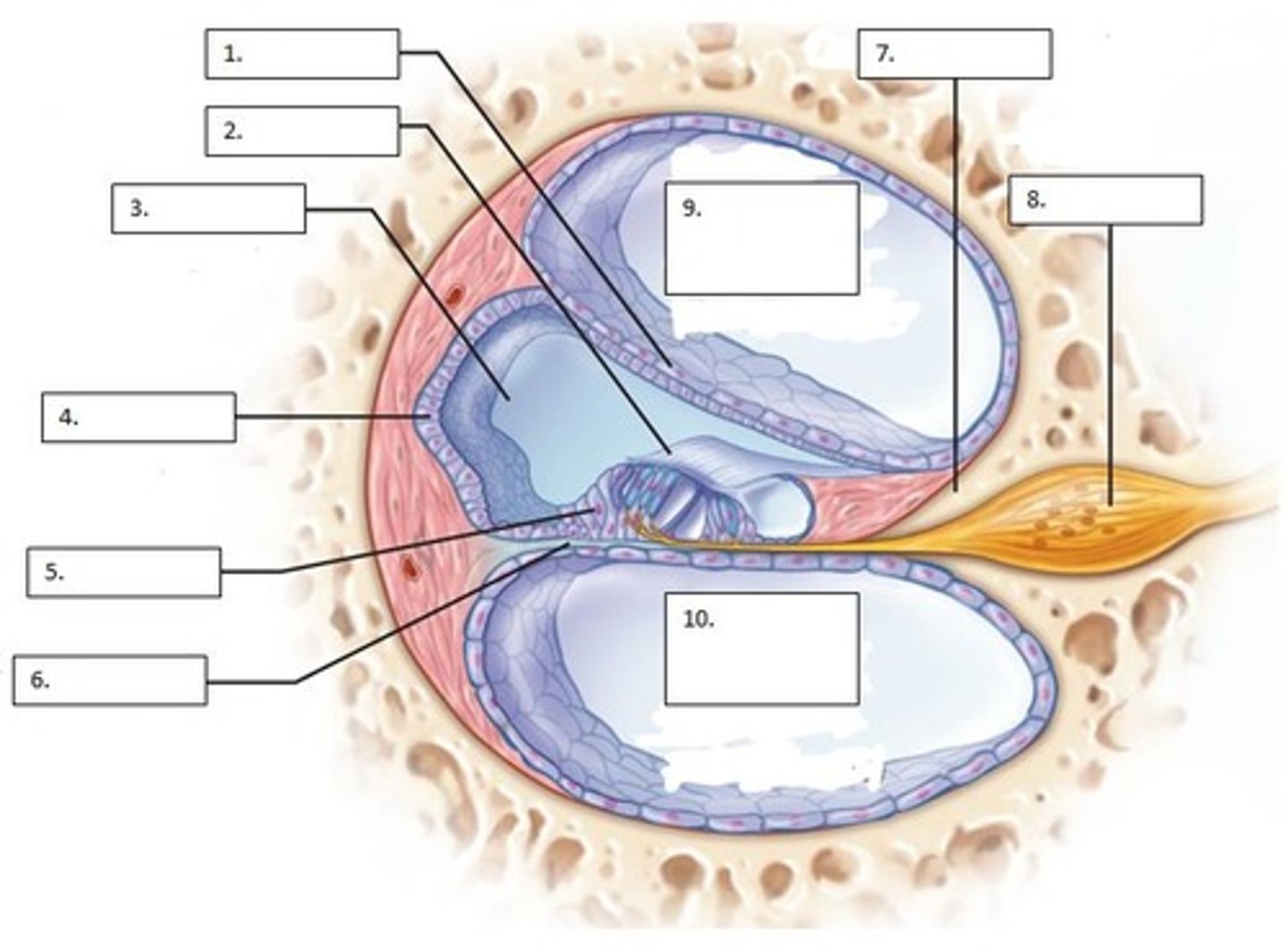
Scala Media
3
where the organ of corti resides
contains endolymph
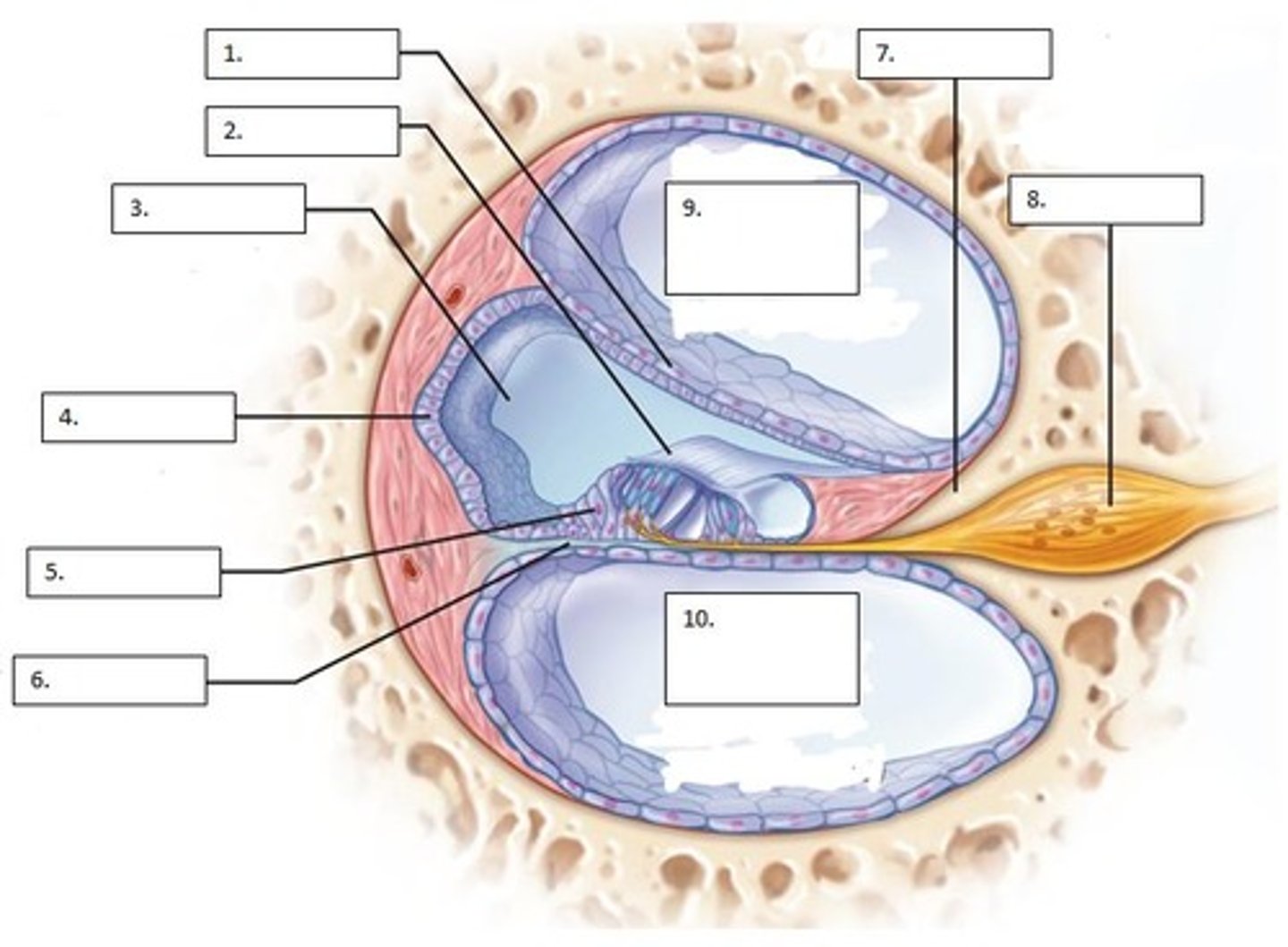
Scala Tympani
10
connected to round window
where sound waves travel second in the cochlea
contains perilymph
Basilar membrane
6
b/w scala media and scala tympany
directly connected to the organ of corti
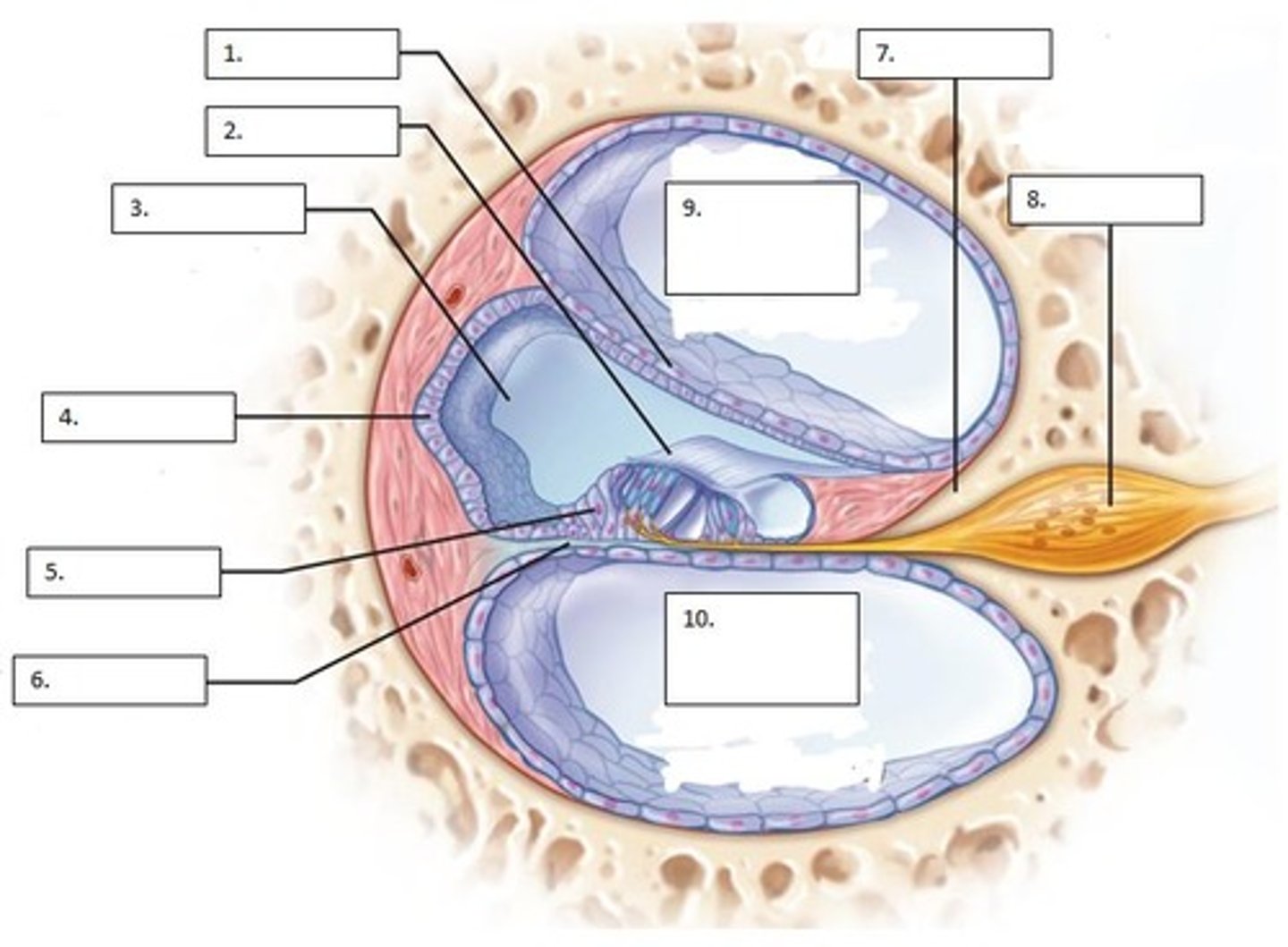
Vestibular membrane (Reissner's Membrane)
1
b/w the scala vestibuli and the scala media
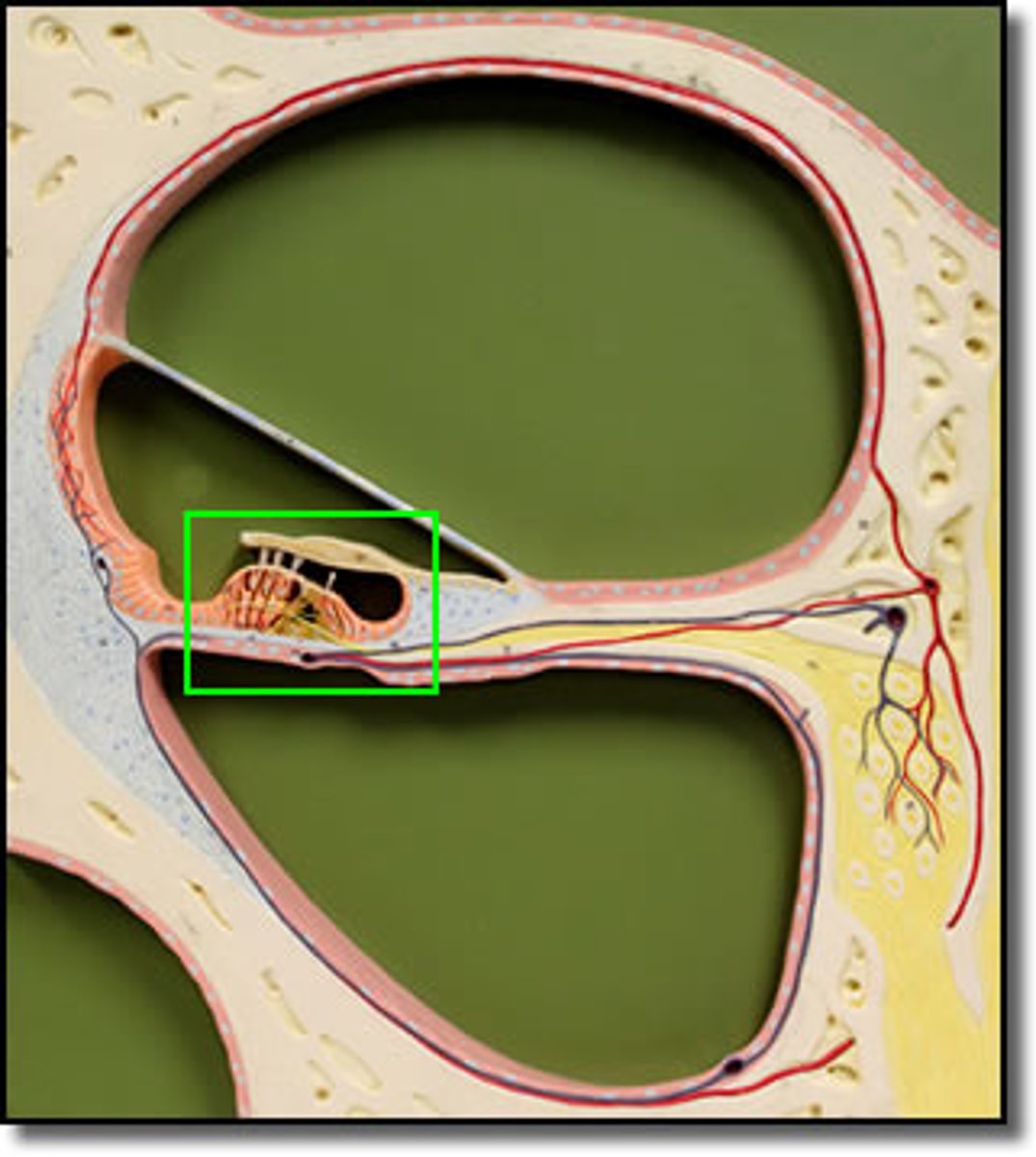
Organ of Corti (spiral organ)
Sensitive to sound waves
Tectorial membrane
2
gelatinous mass of in the organ of corti
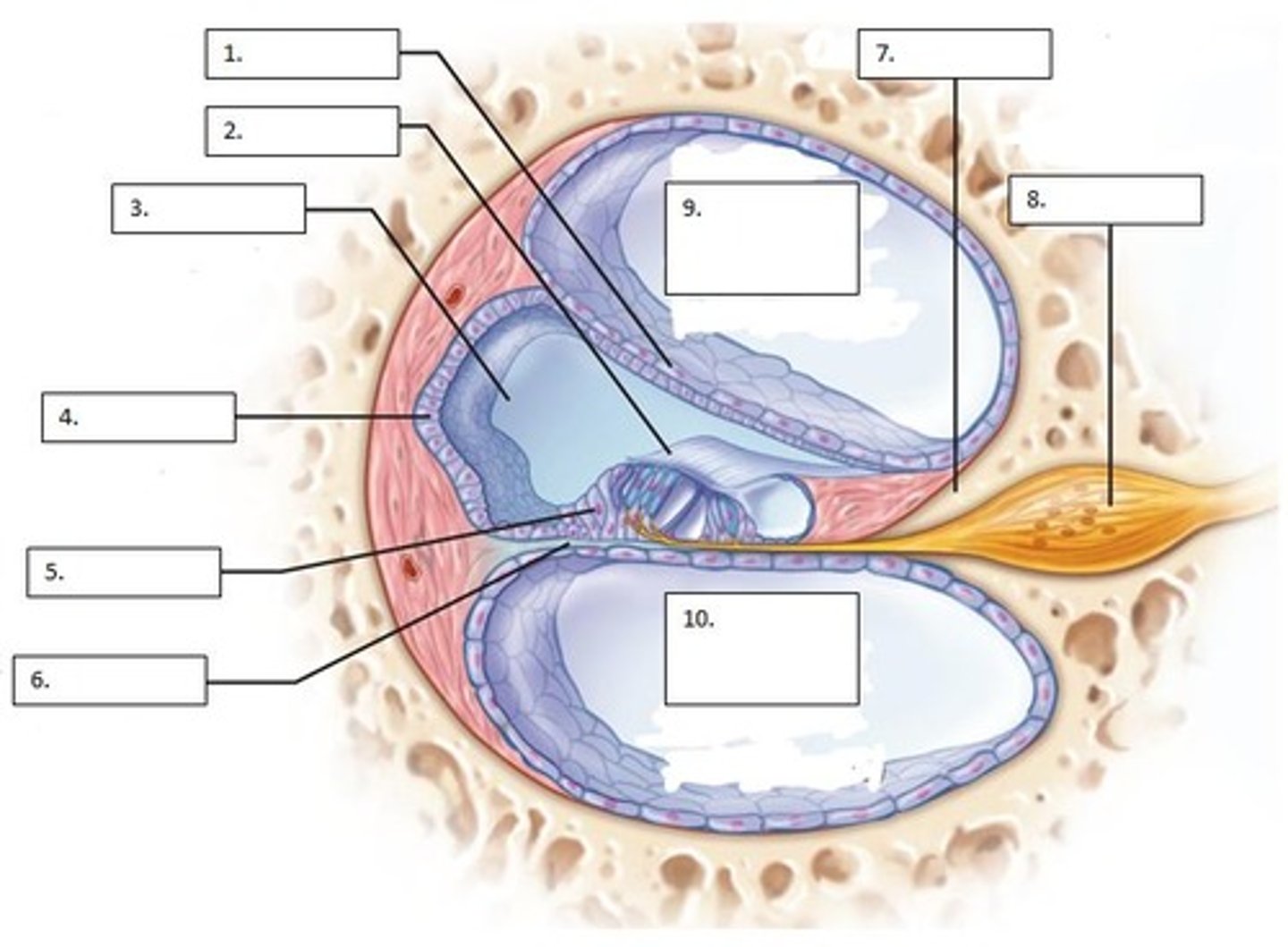
Spiral ganglion
8
cell bodies of the cochlear nerve located throughout the cochlea near the organ of corti
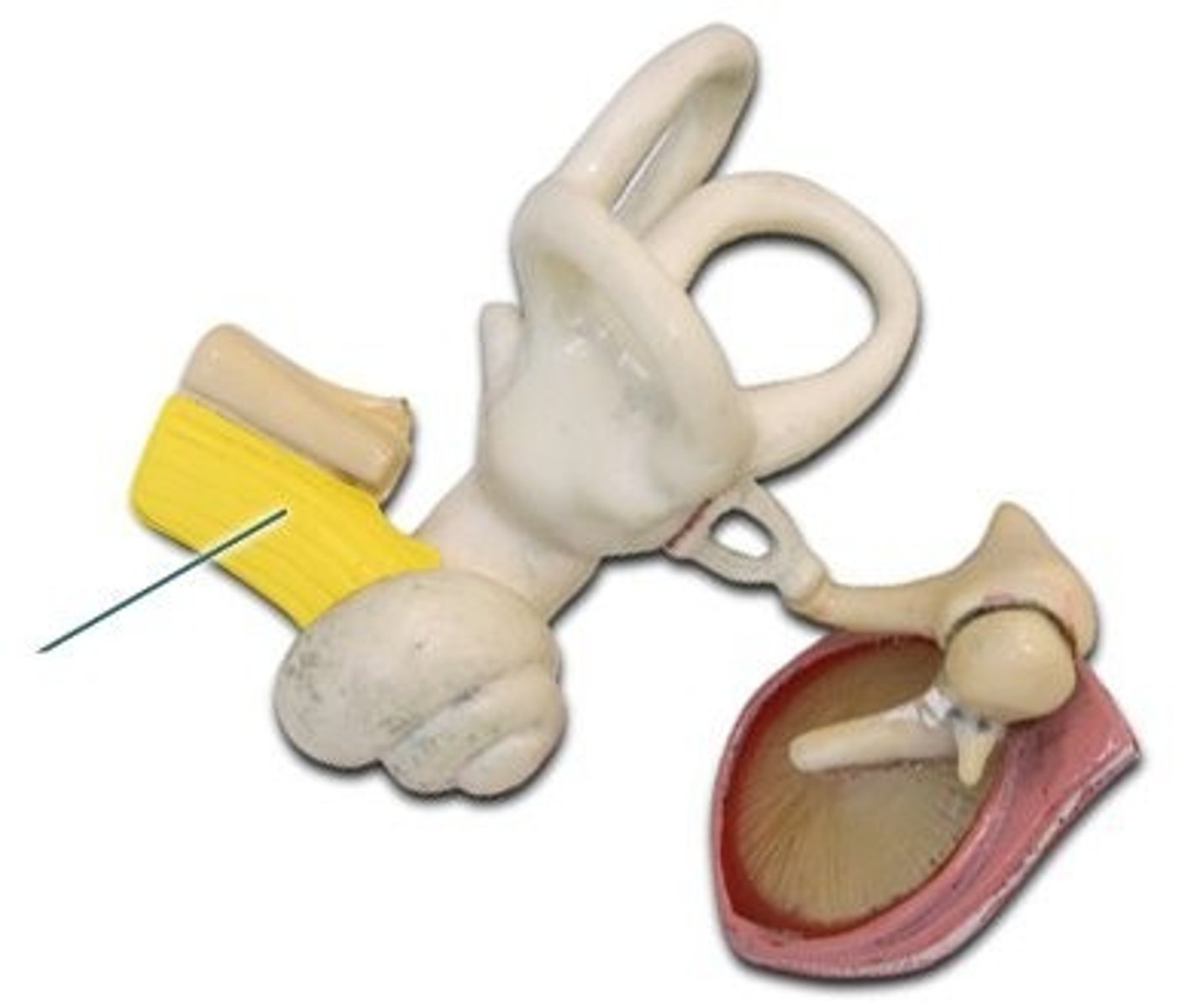
Cochlear Nerve
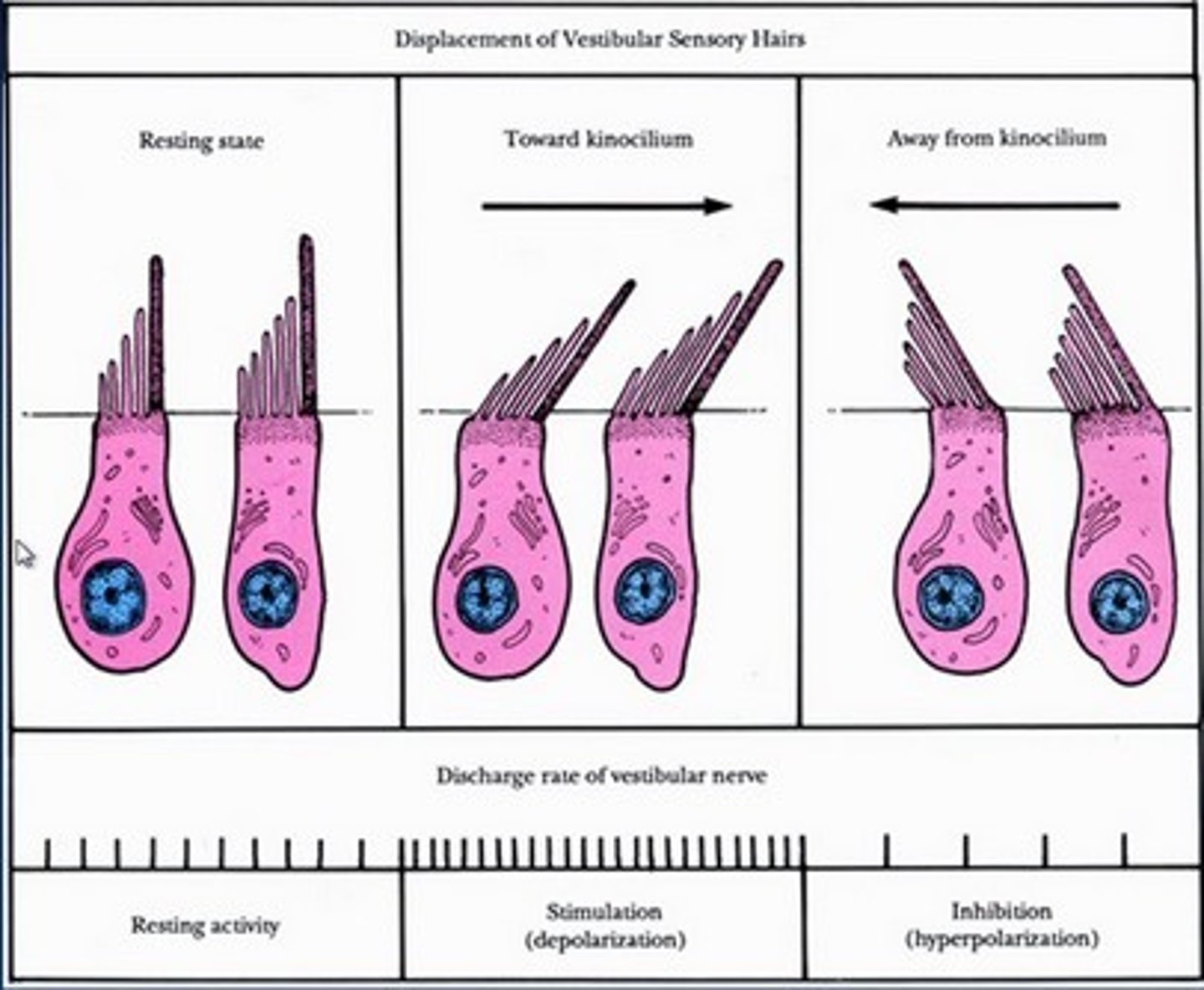
Hair cells
sensory receptors located in the:
• organ of corti
• cristae apullaris
• macula
Types:
• Stereocilia
• Kinocilia
Stereocilia
located in the:
• organ of corti
• cristae apullaris
• macula
Kinocilia
located in the:
• cristae apullaris
• macula
Stereocilia toward kinocilia => excitatory
Stereocilia away from kinocilia => inhibitory
Inferior colliculus
5
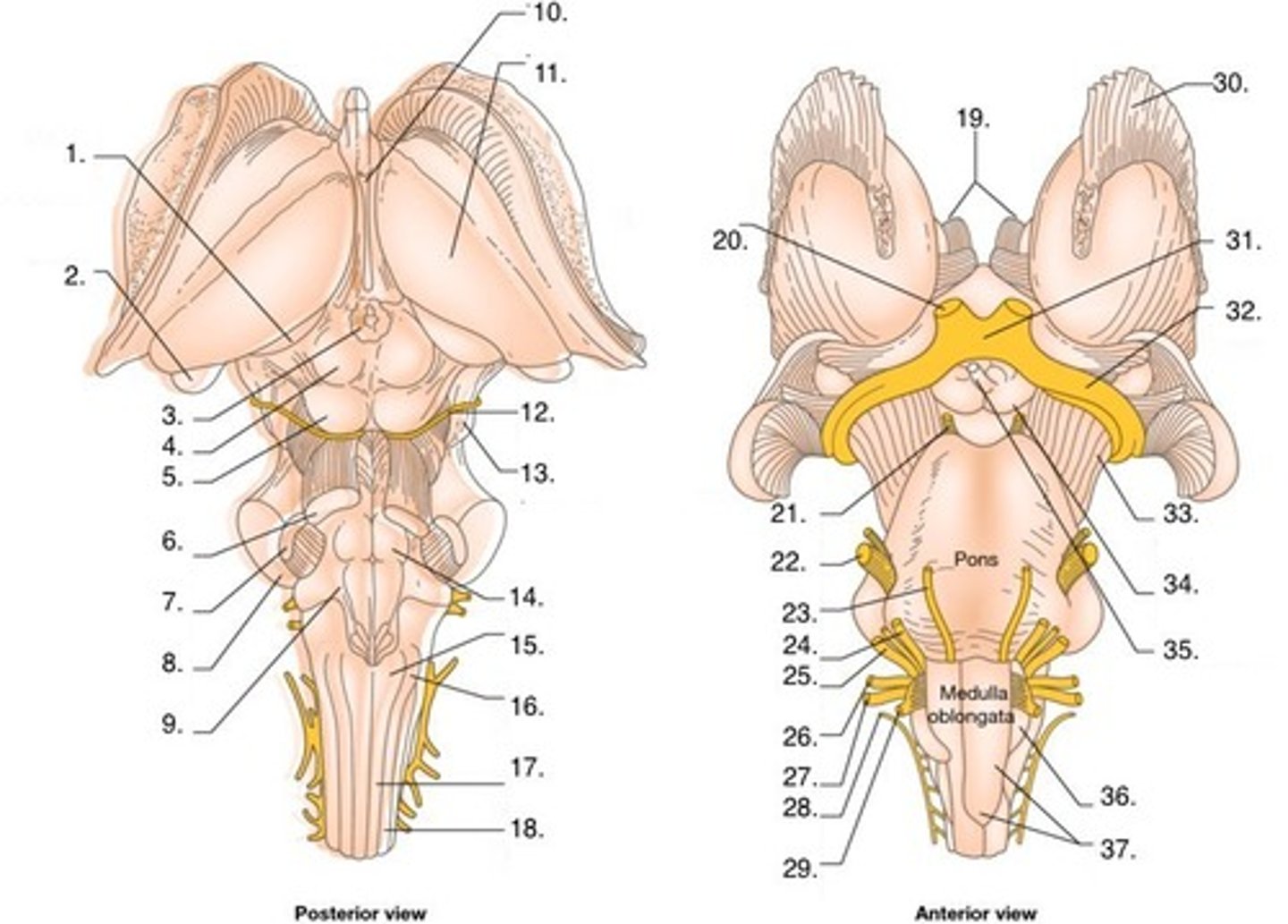
Medial geniculate body
1
Primary auditory cortex
Transverse temporal gyrus