3.4.2 Perfect competition
 Call Kai
 Learn
Learn Practice Test
 Spaced Repetition
 Match
Match Flashcards
 Knowt Play
1/7

There's no tags or description
Looks like no tags are added yet.
Name | Mastery | Learn | Test | Matching | Spaced | Call with Kai |
|---|
No analytics yet
Send a link to your students to track their progress
8 Terms
Characteristics of perfect competition (perfect competition is the idealised market model to compare but impossible to happen in real life lol)
Many small firms in market
homogenous product (sell same product, same place, no branding, EXACTLY - perfect substitutes)
Perfect knowledge for both consumer & producer (everyone knows everything equally about the market)
Freedom of entry & exit in market since no regulation, low sunk costs as no advertisement needed
price taker (this is because all firms sell the exact same good, no competition - so can’t determine price of good)
Profit maximisation
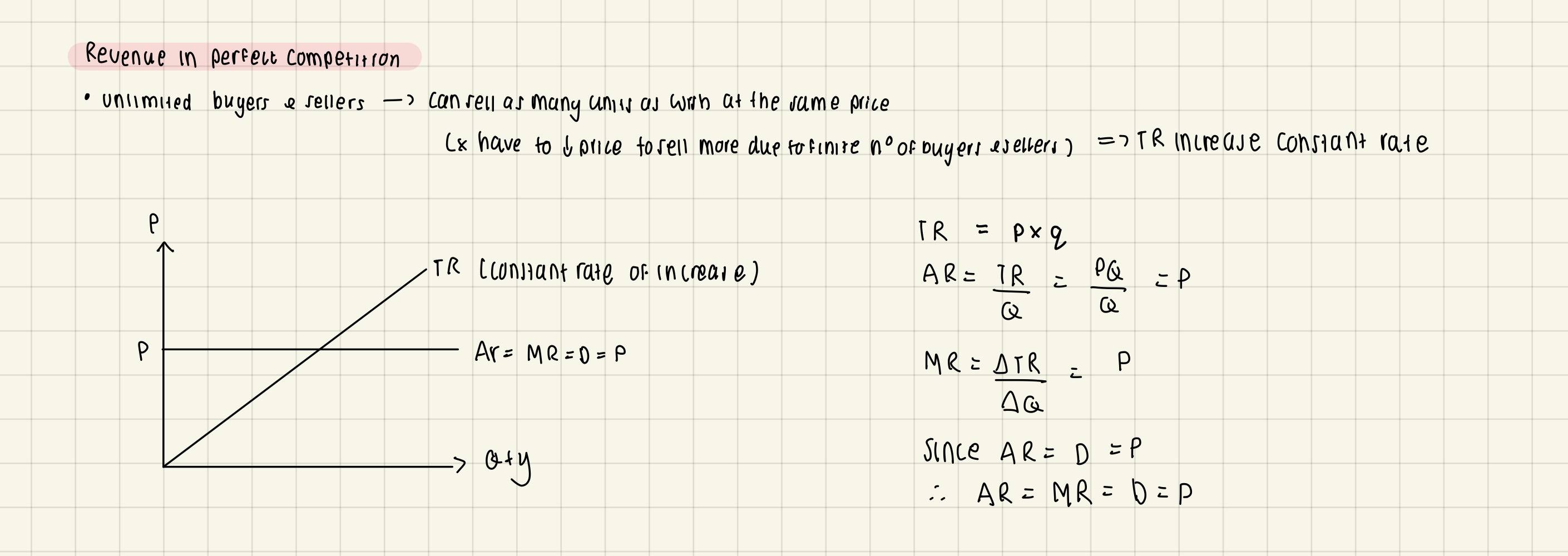
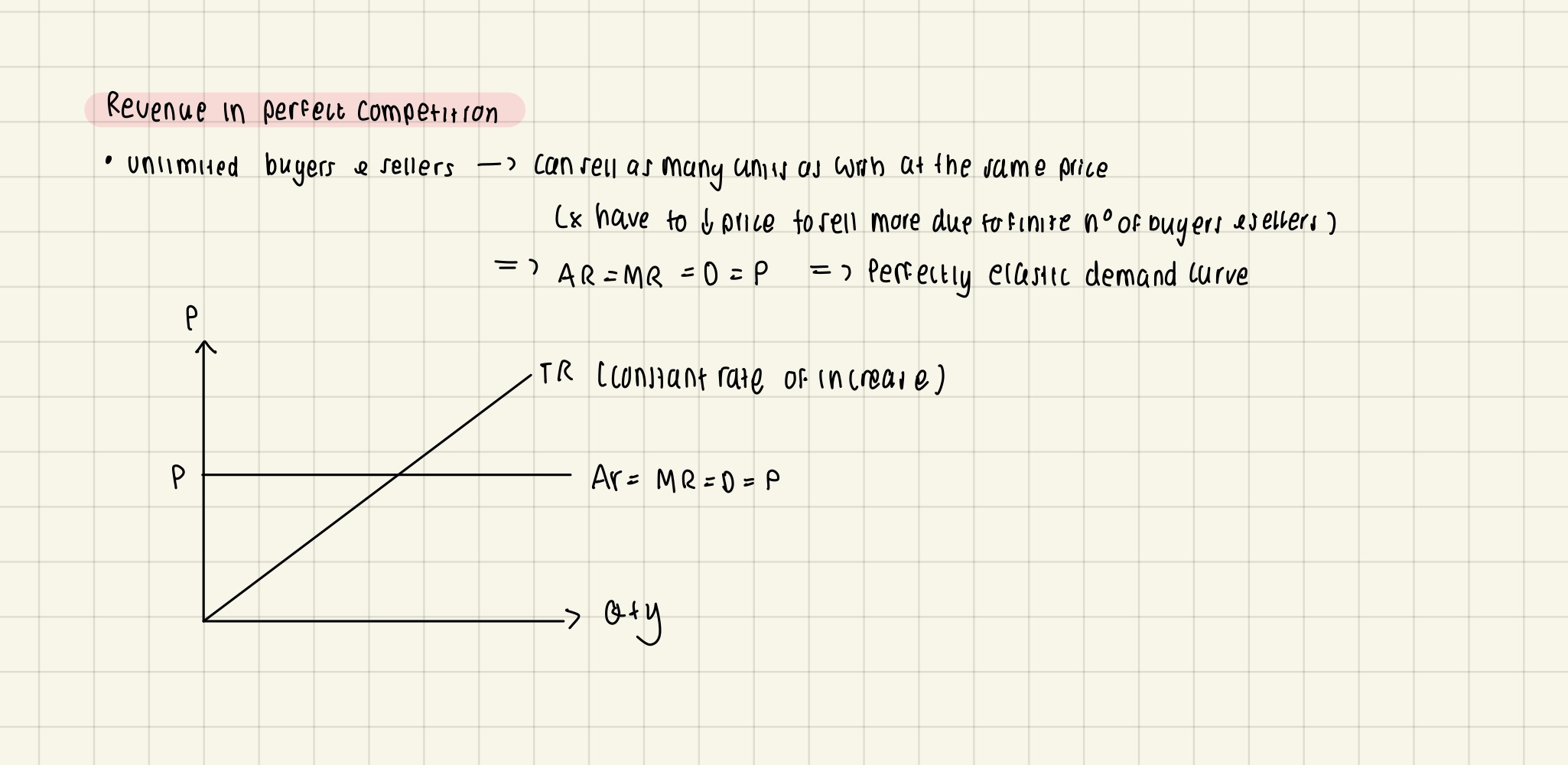
Revenue in perfect competition
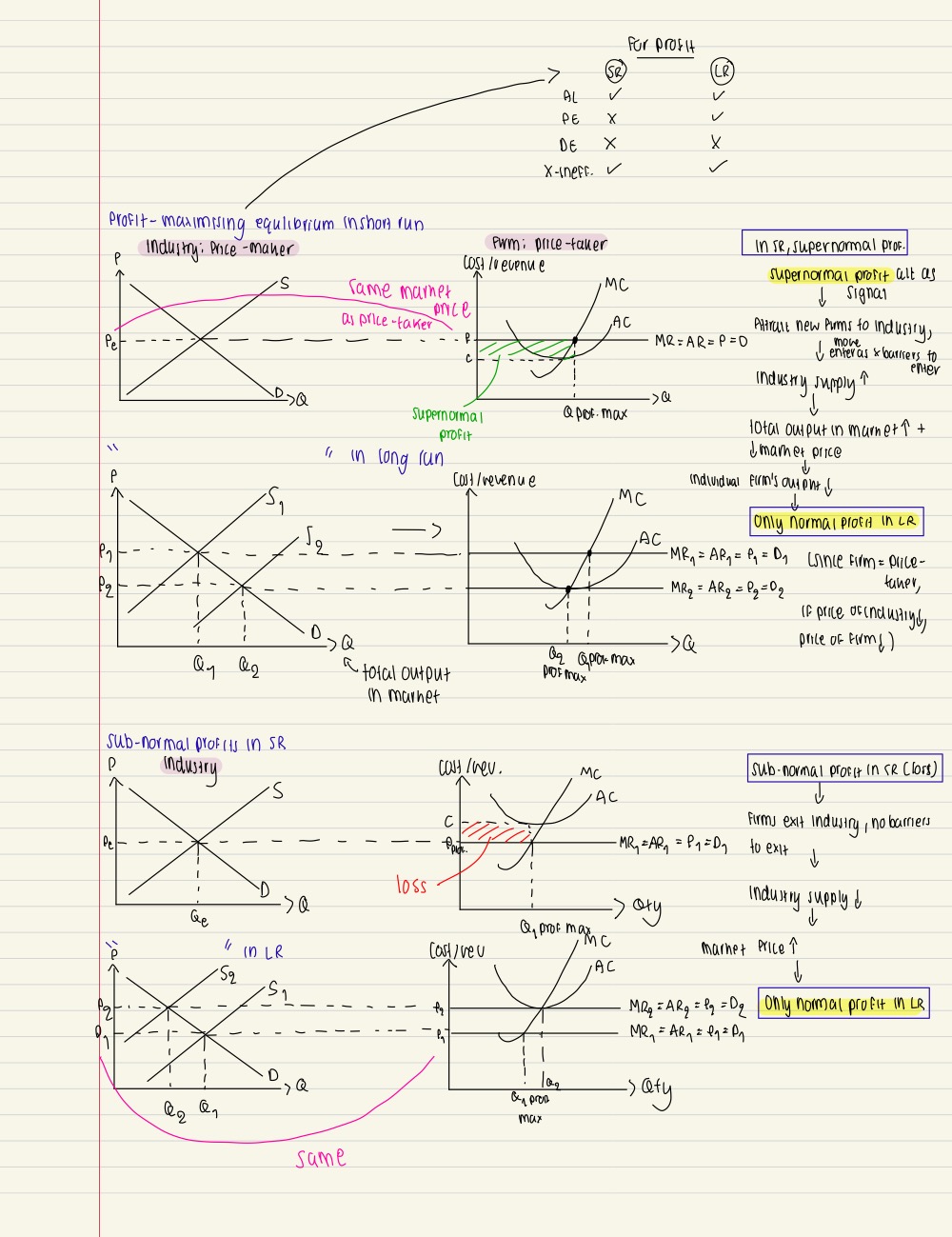
Supernormal profits in short run & long run for perfect competition
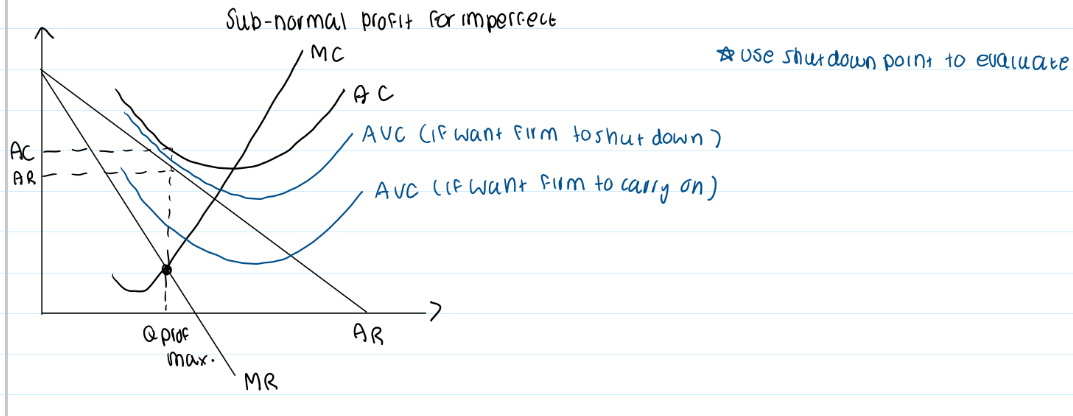
How to calculate (profit) loss per unit from the graph
Profit = Revenue - Cost
Profit loss per unit = Revenue per unit - cost per unit
1) Revenue = p x q
2) Therefore, revenue per unit = price
3) Cost per unit = TC/Q = AC
Therefore, profit loss per unit = AC - P
How to calculate profit per unit from the graph
P - AC
Shutdown point - see tutoring notes
Long run shutdown condition:
AR less then AC
Short run
AR less than AVC → shutdown
AR more than AVC (but less than AC) → carry on
Advantages of perfect competition
high competition → lower price for consumers → consumer surplus increases
supernormal profit in short run
AE in both SR & LR
productive efficiency in LR
Perfect competition have competition → achieve X-inefficiency
Low sunk cost → decrease waste of money → X-efficiency
Disadvantages of perfect competition
productive efficiency in SR only
No supernormal profit in LR - no dynamic
No economies of scale due to small firms

