A-Level Biology Paper 1: General Exam Flashcards
 Call Kai
 Learn
Learn Practice Test
 Spaced Repetition
 Match
Match Flashcards
 Knowt Play
1/124

There's no tags or description
Looks like no tags are added yet.
Name | Mastery | Learn | Test | Matching | Spaced | Call with Kai |
|---|
No analytics yet
Send a link to your students to track their progress
125 Terms
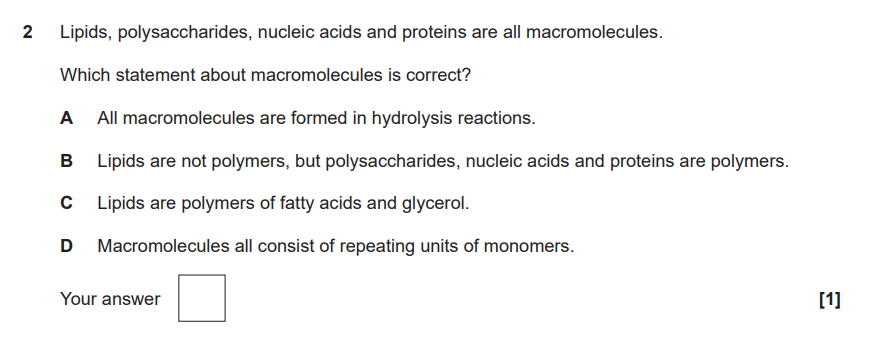
B. This is because it cannot be:
A, as macromolecules formed via condensation reactions
C, as lipids don’t form polymers
D, as lipids are macromolecules but aren’t composed of repeating units.
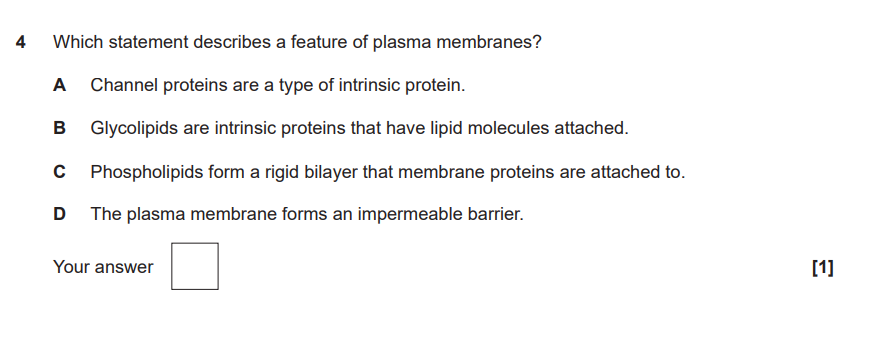
A. This is because extrinsic proteins are embedded within the bilayer. it cannot be:
B, as glycolipids are not proteins
C, as the bilayer is fluid, not rigid.
D, as the bilayer is semi-permeable.
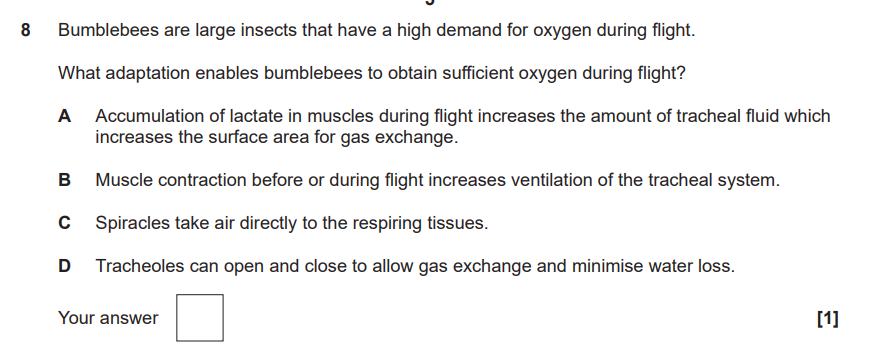
B. This is because invertebrates undergo mechanical ventilation, as muscular contractions of the abdomen allow for air to be forced in and out of the tracheal system, maintains a steep concentration gradient. it cannot be:
A, which decreases volume of tracheal fluid
C, as spiracles lead to tracheae then tracheoles
D, as spiracles are capable of opening and closing, not tracheoles
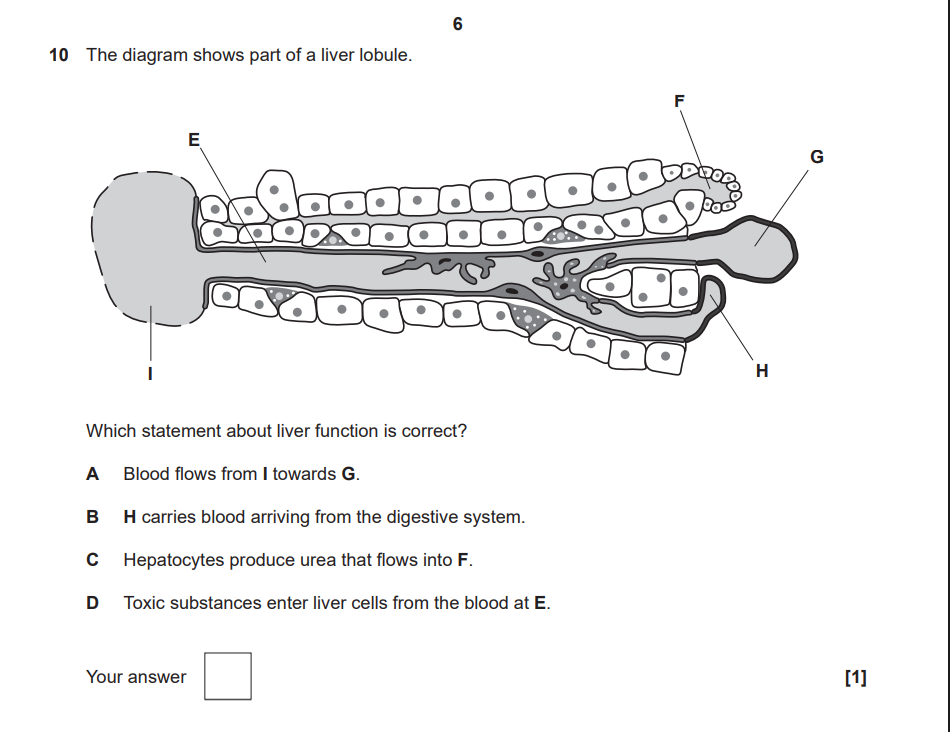
D. This is because E represents the sinusoid, in which blood containing substances absorbed from the digestive system flow through it, and the hepatocytes lining the cell absorb these toxic substances. It cannot be:
A, as blood flows through the periphery to the central vein, the statement implies otherwise
B, as the hepatic portal vein carries blood arriving from the digestive system. H is the branch of the hepatic artery
C, as F represents the bile duct, and hepatocytes produce bile, which is released into the blood to be carried to the kidney.
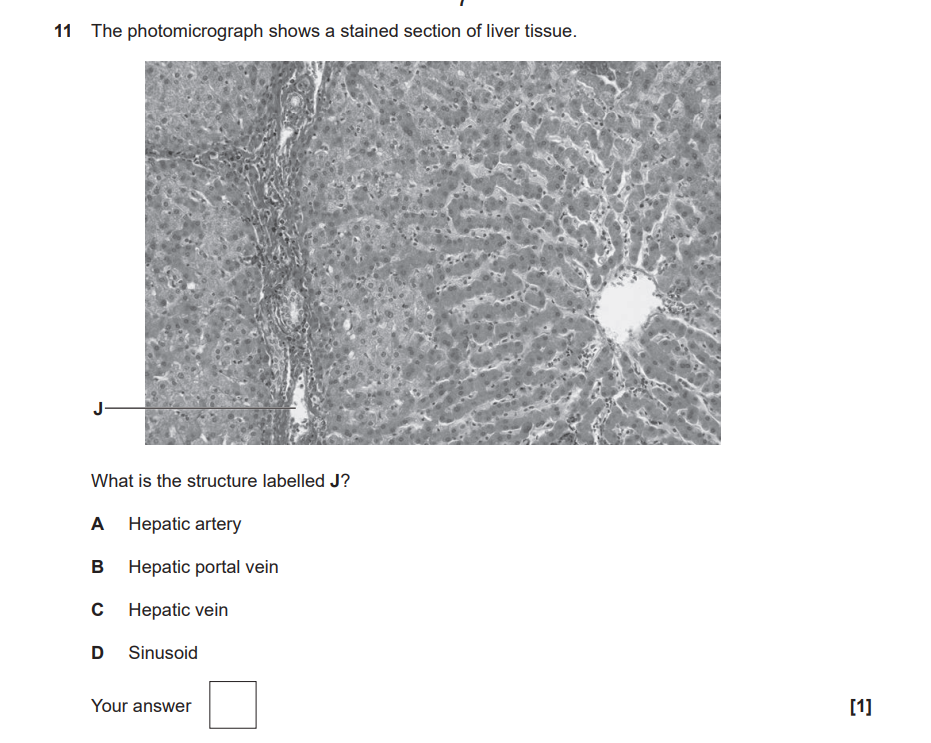
B. The large circular white space on the right side of the image is a Central Vein (center of a lobule).
The structure labelled J is located in the connective tissue between lobules (the portal tract/triad).
The vessel at J has a large, irregular lumen and a thin wall, which distinguishes it as a vein rather than an artery (which would be smaller with a thick muscular wall).
Therefore, J is a branch of the Hepatic portal vein.
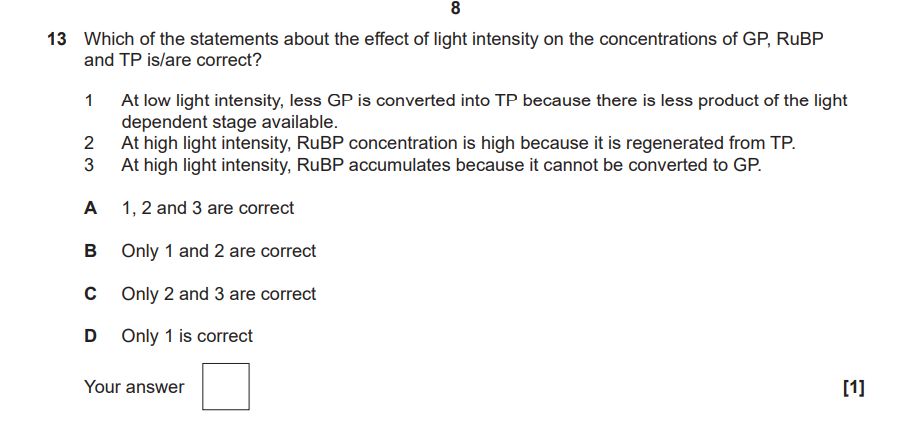
A. This is accounted for by: Statement 1 → Low light intensity leads to the LDR slowing down, so less ATP, less NAPDH
Statement 2 → High light intensity, LDR produces more ATP + NAPDH, regeneration of RuBP from TP requiring ATP.
Statement 3 → High light intensity, light not the limiting factor; changes to CO₂ or temperature, if CO₂, slows rate of RuBP conversion to GP, and RuBP regenerated faster than it is accumulated.
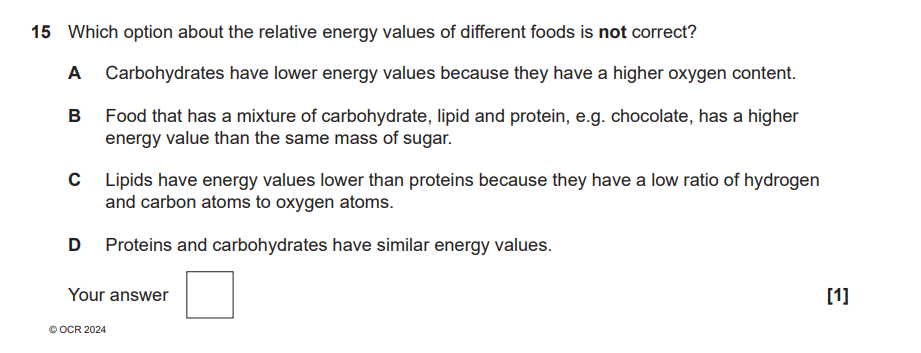
C. This is because lipids have significantly higher energy values than proteins. it cannot be:
A, as it has less C-H due to the presence of the OH’s
B, as due to the lipid content, chocolate has a higher energy value
D, as carbohydrates have higher energy value.
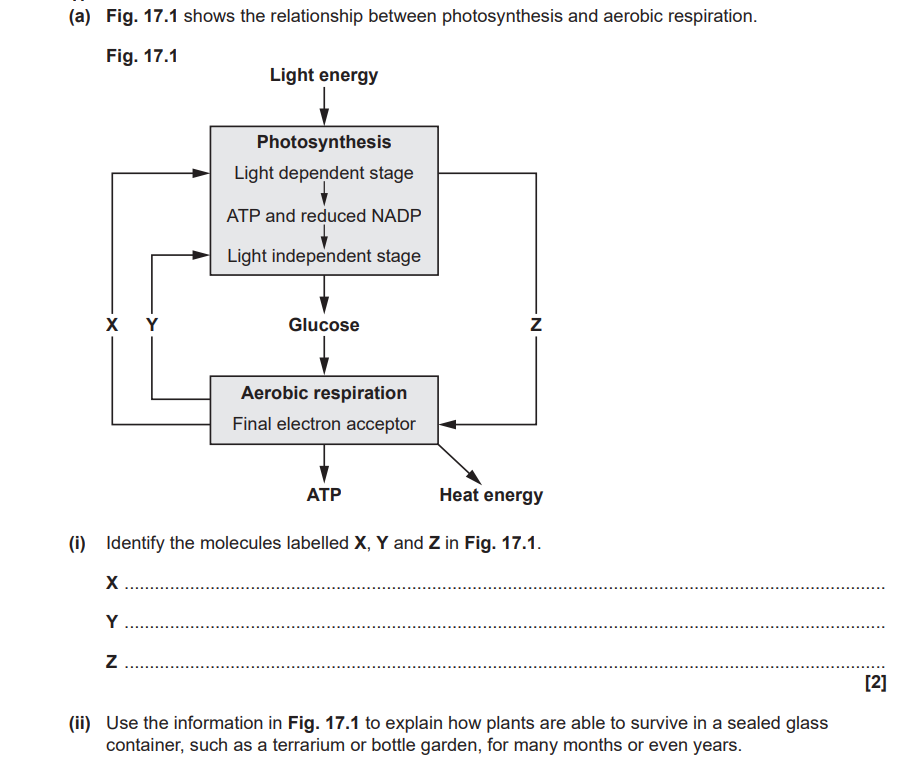
a) Water
Carbon Dioxide
Oxygen
b) Respiration provides water and carbon dioxide, which is used as reactants for photosynthesis
Photosynthesis provides glucose and oxygen which is needed for respiration
Water used for photolysis
CO₂ used for the Calvin Cycle
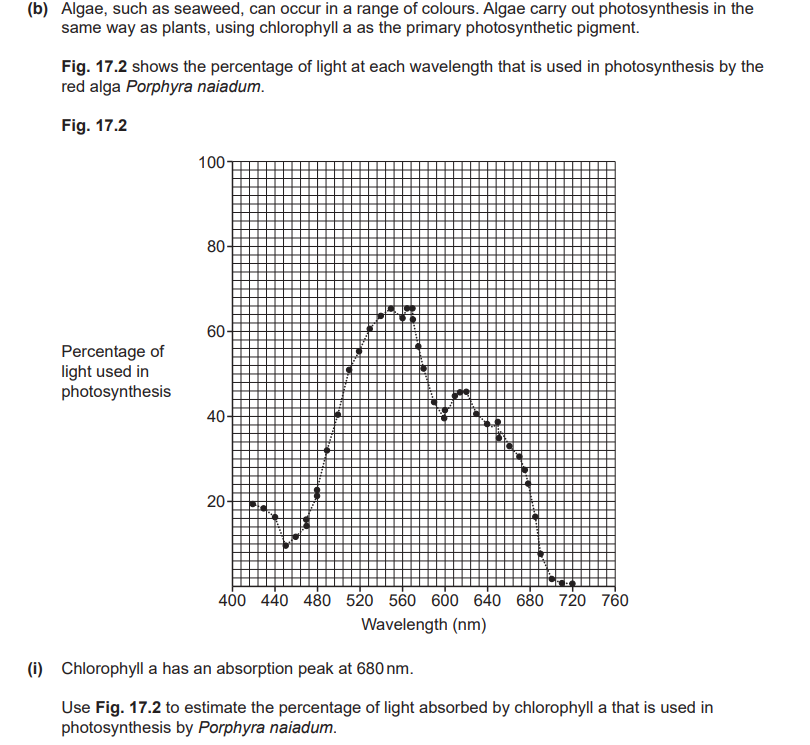
ii) Explain why the percentage of light used in photosynthesis is higher than your answer to part (i) at wavelengths other than 680 nm.
iii) Porphyra naiadum grows in deep water. Use the data in Fig. 17.2 to suggest how it is able to survive in conditions where other types of algae or plant cannot.
i) 24%
ii) Due to the presence of accessory pigments, which absorb different wavelengths of light for use in the LDR.
iii) Algae have pigments that can absorb shorter wavelengths of light, and these wavelengths can penetrate water at greater depths.
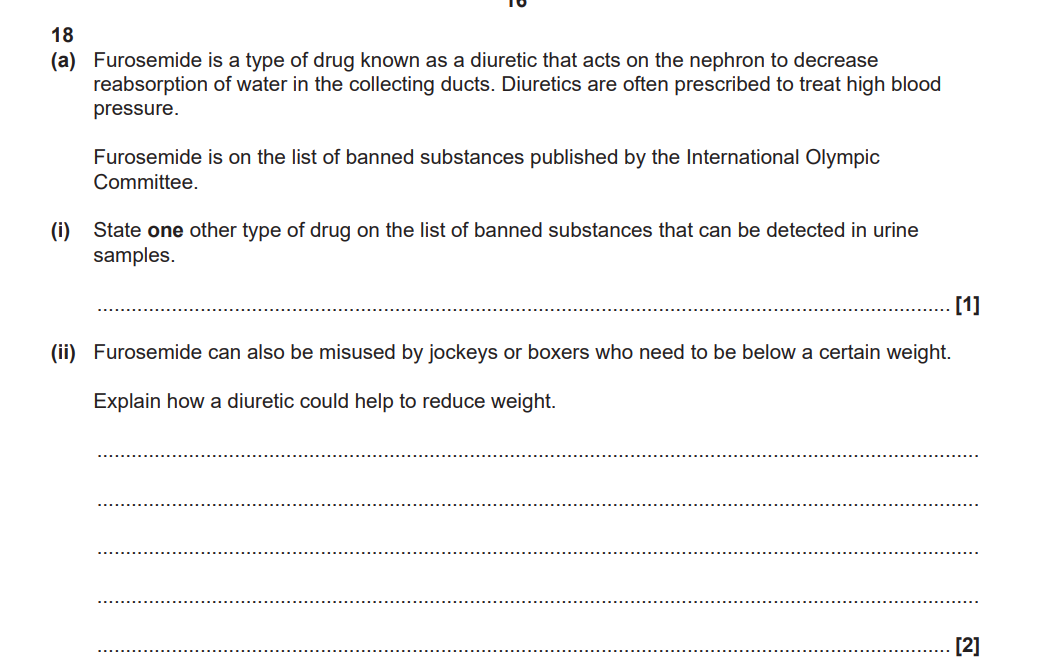
iii) Furosemide is a banned substance because it can be used as a masking agent, to hide the use of performance enhancing drugs. Suggest how furosemide could act as a masking agent.
i) Cannabis
ii) Causes rapid water loss, causing a larger volume of urine to be produced.
iii) By increasing urine volume, it dilutes the concentration of other banned substances in the urine.
What is the formula for net pressure?
Formula: Net Pressure = (Net Hydrostatic Pressure) + (Net Oncotic Pressure)
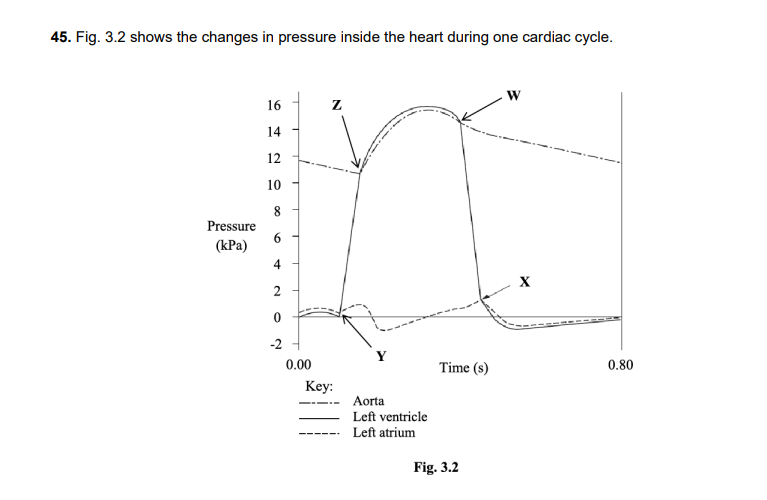
Describe the events taking place at the points marked W, X, Y and Z and explain how these events are related to the changes in pressure shown in the diagram.
Which part of the adrenal gland produces steroid hormones?
The Adrenal Cortex (the outer region).
Which part of the adrenal gland produces adrenaline?
The Adrenal Medulla (the inner region).
What is the primary function of Mineralocorticoids (e.g., Aldosterone)?
They help regulate the balance of salt (K+ and Na+) and water concentrations in the blood.
What is the primary function of Glucocorticoids (e.g., Cortisol)?
They regulate the metabolism of carbohydrates, proteins, and fats (often raising blood glucose during stress).
Why can hormones from the adrenal cortex pass directly through the cell membrane?
Because they are steroid hormones (lipid-based/derived from cholesterol), allowing them to diffuse through the phospholipid bilayer.
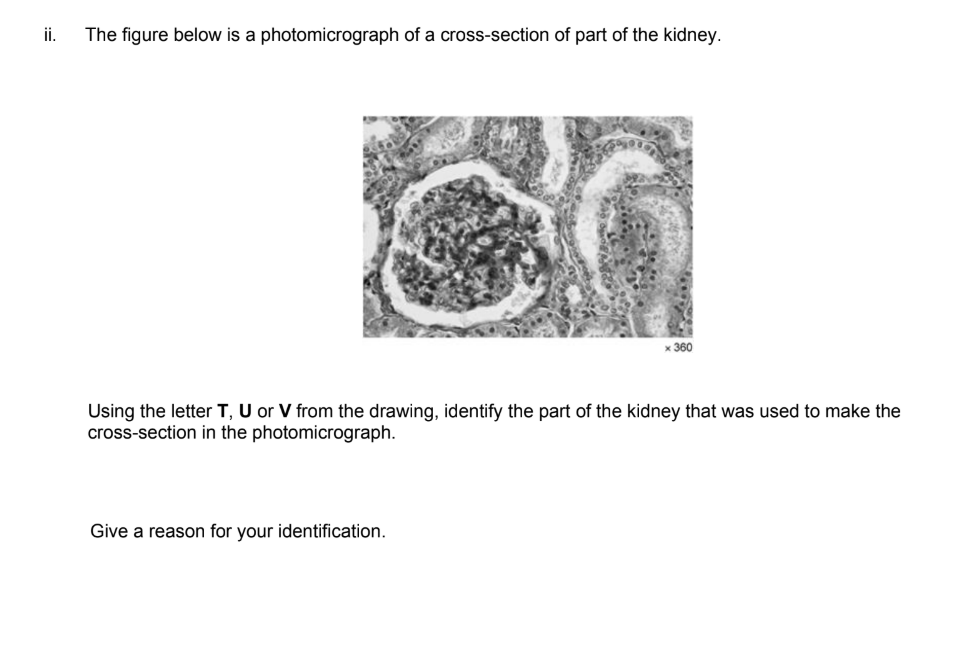
U(Cortex).
Contains the glomerulus and Bowman’s Capsule
Describe the cAMP Second Messenger model for Adrenaline. (4 marks)
Adrenaline (1st messenger) binds to a specific receptor on the cell surface.
This activates the enzyme adenylyl cyclase.
Adenylyl cyclase converts ATP into cyclic AMP (cAMP).
cAMP (2nd messenger) activates enzymes (kinases) in the cytoplasm to trigger a response (e.g., glycogenolysis).
Aldosterone is a mineralocorticoid produced by the cortex. Explain specifically how it acts on the cells of the distal convoluted tubule (DCT) and collecting duct to raise blood pressure. (4 marks)
It makes cells in the distal convoluted tubule and collecting duct more permeable to Na+.
More Na+ is reabsorbed into the blood.
Water follows by osmosis down the water potential gradient.
Blood volume increases → Blood pressure increases.
Compare the receptor location and action of Steroid vs. Protein hormones. (2 marks)
Steroid Hormones: Lipid-soluble. Diffuse through the membrane. Bind to receptors in the cytoplasm or nucleus. Act as transcription factors to control protein synthesis.
Protein Hormones: Lipid-insoluble. Bind to receptors on the cell surface membrane. Trigger a second messenger cascade inside the cell.
Which region of the kidney contains the Glomerulus and Bowman's Capsule?
The Cortex (the outer region).
Which region of the kidney contains the Loop of Henle and Collecting Duct?
The Medulla (the inner region).
In a kidney photomicrograph, what does a Glomerulus look like?
A dense, knot-like cluster of capillaries (cells) surrounded by a clear white space (Bowman's space).
The inner layer of the Bowman's capsule is made of specialized cells. Name these cells and explain how their "feet" (pedicels) assist in filtration.
Cell Name: Podocytes.
Function: They have finger-like projections called pedicels (or major and minor processes) that wrap around the capillaries.
These pedicels form gaps called filtration slits. These slits ensure that large proteins and blood cells cannot pass through, while allowing the glomerular filtrate to pass freely.
List the three layers the filtrate must pass through to get from the blood plasma into the Bowman's capsule. (3 marks)
The Capillary Endothelium: This has pores (fenestrations) to allow plasma through.
The Basement Membrane: A mesh of collagen and glycoproteins that acts as the main filter (molecular sieve), stopping large proteins (molecular mass > 69,000).
The Podocyte Epithelium: The filtration slits formed by the pedicels.
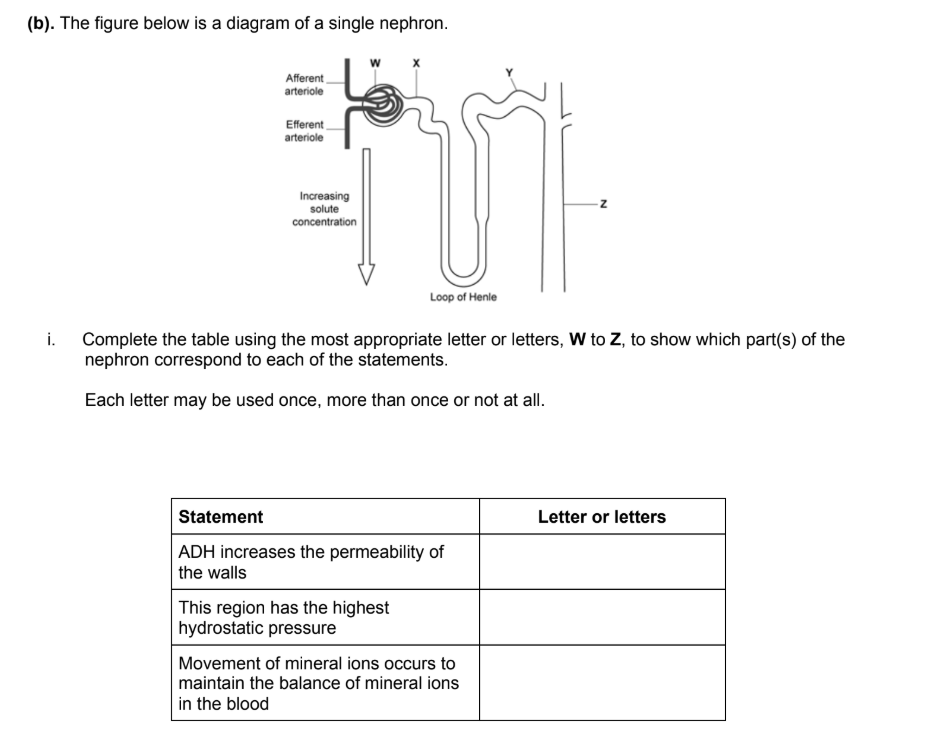
"ADH increases the permeability of the walls"
Correct Letter(s): Y and Z (or just Z)
"This region has the highest hydrostatic pressure"
Correct Letter: W
"Movement of mineral ions occurs to maintain the balance of mineral ions in the blood"
Correct Letter: Y (Distal Convoluted Tubule)
Don’t mix with X as fine-tuning and balancing happens in Y
Outline the processes in the loop of Henle that cause the solute concentration to increase (as shown by the arrow going down into the medulla). (3 marks)
Sodium (Na+) and Chloride (Cl-) ions are actively transported out of the ascending limb.
The ascending limb is impermeable to water, so water stays inside. This raises the solute concentration (lowers water potential) in the surrounding interstitial fluid (medulla tissue fluid).
The descending limb is permeable to water but impermeable to ions.
Water moves out of the descending limb by osmosis into the concentrated interstitial fluid.
As water is lost, the filtrate inside the descending limb becomes increasingly concentrated as it moves down the loop.
(any 3 points)
When ADH binds to receptors on the collecting duct cells (Z), what specific intracellular change occurs to increase permeability? (3 marks)
Binding: ADH acts as a cell-signaling molecule (first messenger) and binds to specific receptors on the cell surface membrane of the collecting duct cells.
Second Messenger: This binding activates an enzyme cascade (involving G-proteins) that leads to the production of cyclic AMP (cAMP) inside the cell.
Vesicle Movement: cAMP triggers a signaling pathway that causes vesicles containing aquaporins (water channel proteins) to move toward and fuse with the luminal membrane (the membrane facing the filtrate).
Increased Permeability: The insertion of these aquaporins increases the permeability of the membrane to water, allowing water to leave the collecting duct by osmosis down a water potential gradient.
Scenario: A drug is discovered that inhibits the enzyme adenylyl cyclase within the cells of the collecting duct.
Task: Predict and explain the effect this drug would have on the volume and concentration of a person’s urine, even if their ADH levels were high. (4 marks)
The Disconnection: ADH (the first messenger) will still bind to the receptors on the cell surface. However, because adenylyl cyclase is inhibited, it cannot convert ATP to cyclic AMP (cAMP).
The Broken Pathway: Without cAMP (the second messenger), the enzyme cascade that normally moves vesicles is never triggered.
The Result: Vesicles containing aquaporins remain in the cytoplasm and do not fuse with the luminal membrane. The collecting duct remains impermeable to water.
Urine Outcome: Water cannot leave the filtrate by osmosis. The patient produces a large volume of dilute urine.
Why is tumor formation a major risk in ANY stem cell therapy?
Because stem cells are defined by their ability to divide indefinitely. If this division is not controlled after transplant, it leads to a mass of cells (cancer/teratoma).
What is the difference between Totipotent and Pluripotent?
Totipotent cells can differentiate into ANY cell type including the placenta/umbilical cord. Pluripotent cells can differentiate into all body cell types except extra-embryonic tissues.
In a graph, what does it mean if the error bars (Standard Deviation) of two groups overlap?
It indicates that there is no significant difference between the means of the two groups.
What is an endocrine gland?
(a group of cells that) secretes / releases /
produces, hormones ✓
(directly) into the blood (stream) ✓
The pancreas contains endocrine glands such as the Islets of Langerhans. It also contains cells that produce digestive enzymes.
Suggest why the cells that produce digestive enzymes are described as exocrine rather than endocrine.
(because digestive enzymes) are released
into ducts ✓
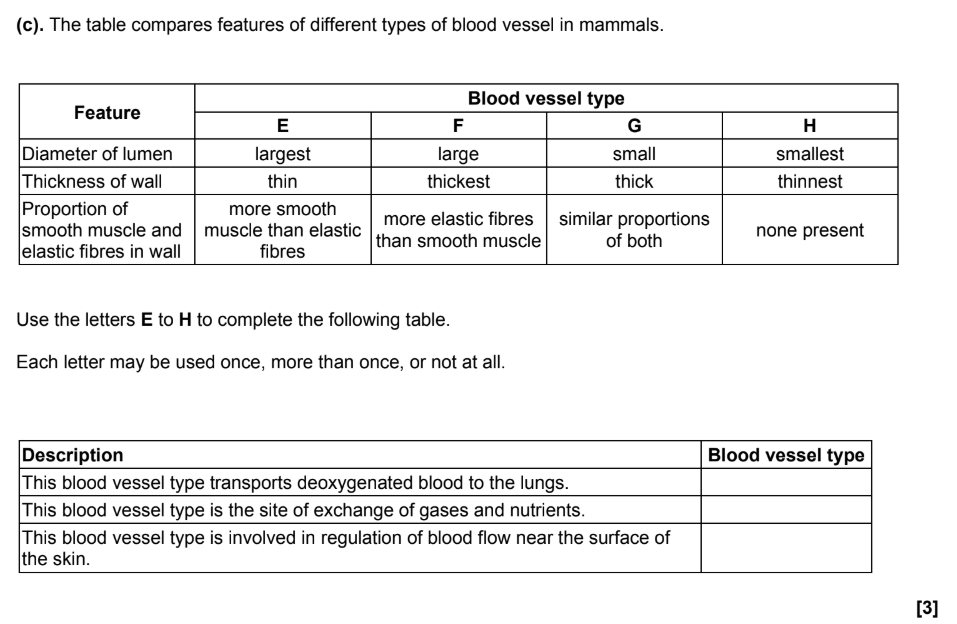
F
H
G, features Arterioles, which are in charge of regulating pressure as well as withstanding, which is done via vasodilation and vasoconstriction.
Vessel H (Capillary) is where tissue fluid is formed. Explain how the Hydrostatic Pressure at the arterial end of vessel H causes fluid to leave the blood, and why large proteins remain inside.
Hydrostatic Pressure: At the arterial end of the capillary, the blood is under high hydrostatic pressure (due to contraction of the heart/narrowing of vessels).
The Gradient: This hydrostatic pressure is higher than the oncotic pressure (osmotic pressure) pulling water back in.
Net Flow: This creates a net pressure gradient that forces fluid (water and small dissolved solutes like glucose/ions) out of the capillary and into the spaces between cells.
The Barrier: Large plasma proteins (like albumin) and blood cells are too large to pass through the gaps (fenestrations) in the capillary wall (endothelium), so they remain in the blood.
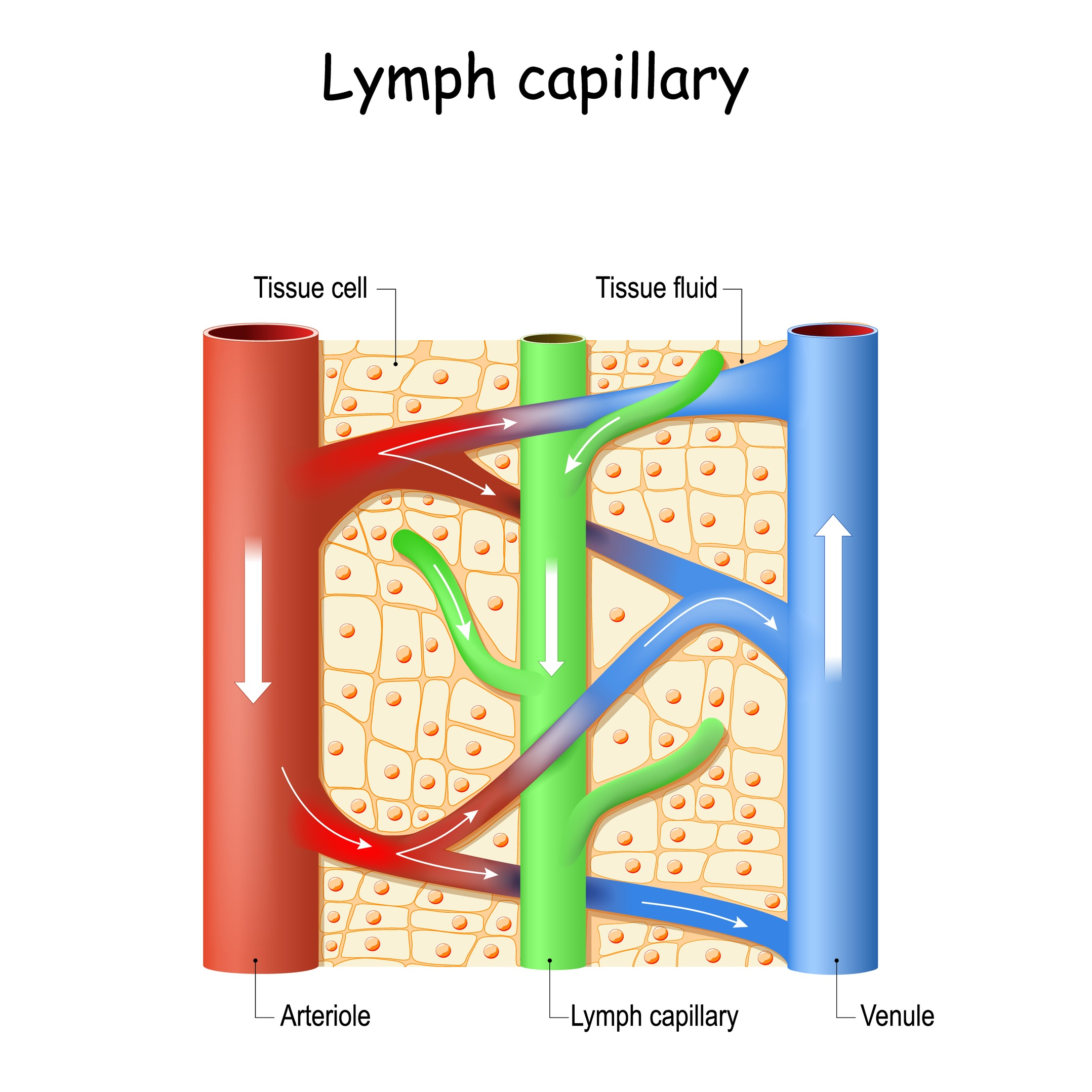
When the body gets too hot, vessel G (Arteriole) near the skin surface dilates. Name this process and explain how it cools the body. (4 marks)
Name of Process: Vasodilation.
The Mechanism:
The smooth muscle in the walls of the arterioles relaxes.
This causes the arteriole lumen to widen (dilate).
More blood flows through the capillaries closer to the skin surface.
Cooling Effect: Heat is lost from the blood to the surroundings by radiation (and convection/conduction).
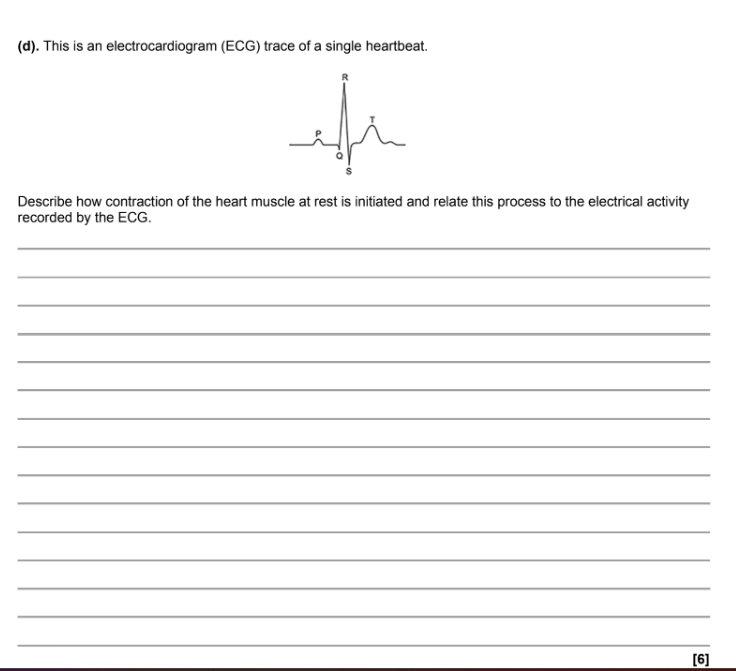
Myogenic Initiation: The heart muscle is myogenic (initiates its own contraction), with the Sino-atrial Node (SAN) acting as the pacemaker.
Atrial Excitation: The SAN releases a wave of excitation (depolarisation) that spreads rapidly across the atrial walls.
P-Wave Link: This depolarisation causes atrial systole (contraction), which generates the P wave on the ECG.
The AVN Delay: The signal reaches the Atrio-ventricular Node (AVN) where there is a short delay. (This ensures the atria fully empty their blood into the ventricles before the ventricles contract).
Transmission: The wave of excitation travels down the Bundle of His (in the septum) and spreads into the Purkyne fibres.
Ventricular Contraction: The Purkyne fibres conduct the impulse to the apex (bottom) of the heart, causing the ventricles to contract from the bottom upwards.
QRS Link: This ventricular depolarisation (contraction) generates the QRS complex on the ECG.
Recovery/T-Wave Link: The ventricles then relax (repolarisation or diastole), which generates the T wave on the ECG.
What specific electrical event does the P wave represent?
Atrial Depolarisation (which leads to Atrial Systole).
Why is the delay at the AVN physiologically important?
It prevents the ventricles from contracting at the same time as the atria, allowing them to fill completely with blood first.
What electrical event does the QRS complex represent?
Ventricular Depolarisation (leading to Ventricular Systole).
If you were to start running, the sympathetic nervous system would activate. Explain how the accelerator nerve increases heart rate at the molecular level (refer to the SAN). (6 marks)
Neurotransmitter Release: The accelerator nerve (sympathetic nerve) releases the neurotransmitter Noradrenaline (Norepinephrine) at the synapse with the Sino-atrial Node (SAN).
Receptor Binding: Noradrenaline binds to specific receptors on the cell surface membrane of the SAN cells.
The Molecular Cascade: This triggers the Second Messenger system (similar to adrenaline's action elsewhere):
It activates the enzyme adenylyl cyclase.
This converts ATP into cyclic AMP (cAMP).
The Effect on the SAN:
cAMP leads to the opening of more Sodium (Na⁺) or Calcium (Ca2+) ion channels.
The membrane depolarises to the threshold potential more quickly (the resting potential drifts up faster).
The Result: The SAN generates waves of excitation (action potentials) at an increased frequency.
22(a). Describe the role of plant hormones in the control of seed germination. (4 marks)
Water is absorbed by the seed.
This stimulates the embryo to produce Gibberellins.
Gibberellins stimulates the synthesis for Amylase.
Amylase breaks down the starch deposits in the endosperm into maltose/glucose.
Which is used in respiration for ATP.
(any four points)
How do you calculate degrees of freedom for an unpaired t-test?
(n1 + n2) - 2 (where n is the sample size of each group).
If the calculated t-value is GREATER than the critical value, what do you conclude?
The difference is significant. Reject the null hypothesis. (p < 0.05).
If the calculated t-value is LOWER than the critical value, what do you conclude?
The difference is not significant. Accept the null hypothesis. The difference is likely due to chance.
What specifically does Gibberellin cause to happen in the stem?
Stem elongation (specifically elongation of the internodes).
What is ALWAYS the Null Hypothesis for a t-test?
"There is no significant difference between the means of [Group A] and [Group B]."
How does inhibiting gibberellin affect plant structure?
It prevents stem elongation (specifically internode elongation), resulting in dwarf (short) plants.
What is the metabolic benefit of keeping crop plants short (dwarf varieties)?
Energy and assimilates are diverted away from vertical growth and towards reproductive growth (seeds/fruits), increasing yield.
Describe the flow of blood through the left side of the heart during the cardiac cycle and explain the role of valves and pressure differences throughout this process.
Atrial Diastole: Oxygenated blood enters the left atrium via the pulmonary vein.
Atrial Systole: The left atrium contracts, increasing atrial pressure above ventricular pressure. This forces the bicuspid (AV) valve open, and blood flows into the left ventricle.
Ventricular Systole (Isovolumetric): The left ventricle begins to contract. Ventricular pressure rises above atrial pressure, forcing the bicuspid valve closed to prevent backflow.
Ventricular Ejection: As contraction continues, ventricular pressure rises above the pressure in the Aorta. This forces the aortic semilunar valve open.
Blood Flow: Blood is ejected into the aorta to be transported to the rest of the body.
Ventricular Diastole: The ventricle relaxes. Pressure in the aorta becomes higher than in the ventricle, forcing the semilunar valve closed to prevent backflow into the heart.
What causes the bicuspid (left AV) valve to close?
Ventricular pressure rising higher than atrial pressure during ventricular systole.
During which phase of the cardiac cycle do the semilunar valves open?
Ventricular systole (specifically when ventricular pressure exceeds aortic pressure).
Why must seedling experiments investigating IAA be kept in the dark?
To prevent phototropism and ensure light is a controlled variable, so that any observed growth is solely due to the IAA concentration.
What is the purpose of placing Petri dishes vertically in tropism investigations?
To allow geotropism to act uniformly on all seedlings, ensuring roots grow down and shoots grow up for consistent measurement.
Define "Negative Geotropism" in the context of mustard seedlings.
The growth of the shoot upwards, away from the force of gravity, regulated by the distribution of IAA (auxin).
What is the formula for calculating Cardiac Output (CO)?
CO=Heart Rate×Stroke Volume
cm3 min−1
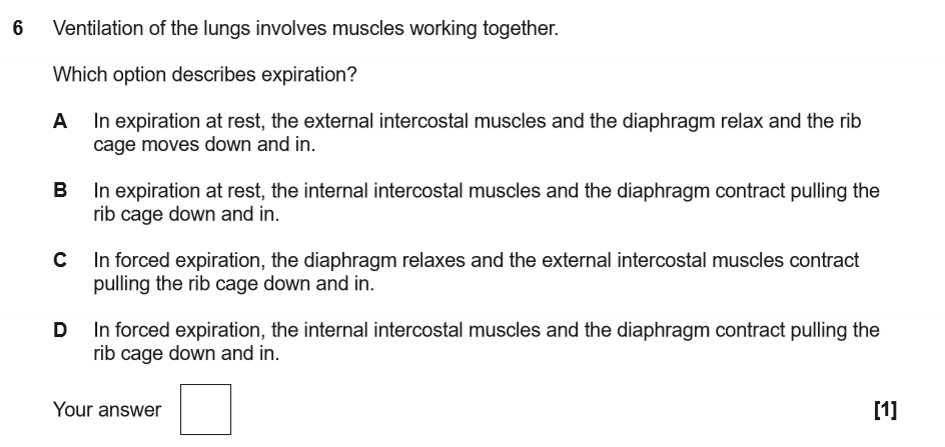
A
Describe the mechanism of expiration.
In expiration at rest, the external intercostal muscles and the diaphragm relax. This causes the rib cage to move down and in, increasing thoracic pressure to force air out.
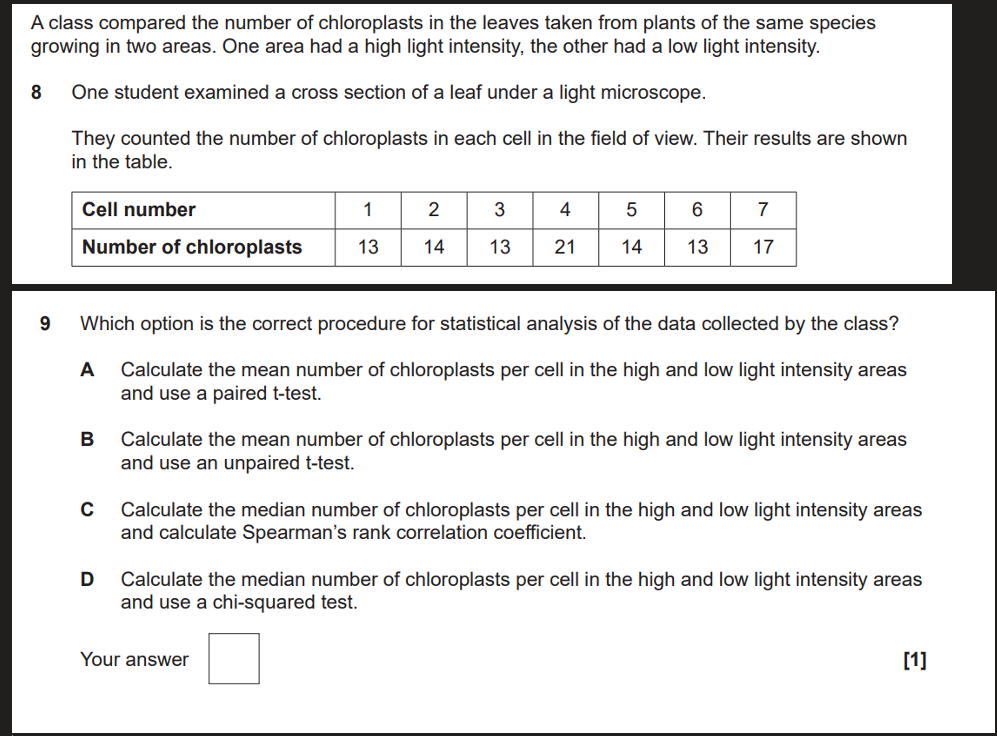
B. This is because the means of two independent groups(high light vs low light) are being compared.
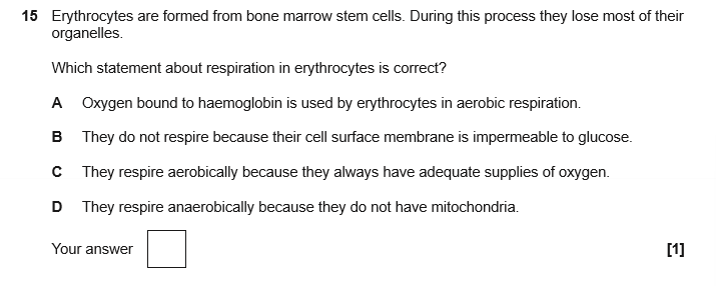
D. This is because all living cells must respire to create energy, and as erythrocytes lack a nucleus and other organelles, they can only do this anaerobically.
What are the two primary transport tissues in dicotyledonous plants and what do they carry?
1. Xylem: Transports water and inorganic ions/minerals from roots to leaves.
2. Phloem: Transports assimilates (e.g., sucrose and amino acids) from sources to sinks via translocation.
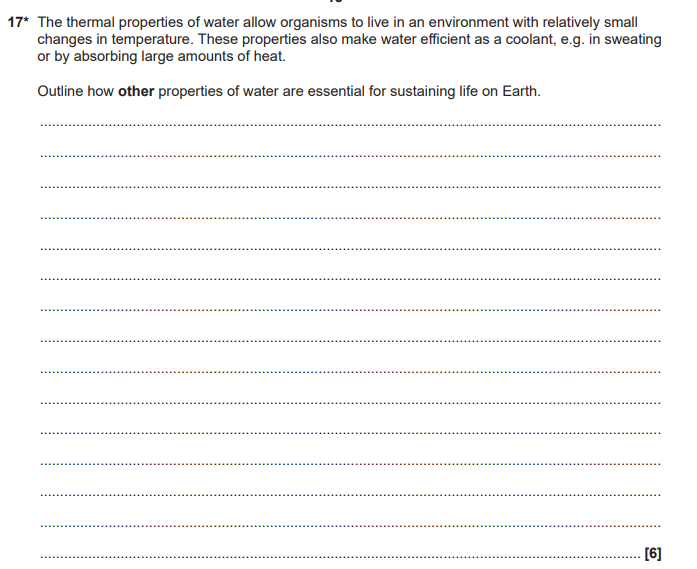
Chemical Properties
Water is polar and has an unequal sharing of electrons, leading to a dipole being created.
Also has hydrogen bonding between molecules, which are collectively strong at a large amount.
Physical Properties + Life sustainability
Ice is less dense than water so ice floats, which creates an insulating layer. → Acts as a habitat for polar bears
Water has both cohesion and adhesion → Acts as a solvent such as in the transpiration stream, or glucose in the bloodstream.
What are variables to be controlled in the potato tuber experiment and why?
Temperature → affects rate of osmosis
Type of potato → Different potatoes have different water potentials
Enough solution to fully immerse potato cylinders → Osmosis occurs across the whole cylinder surface
Describe the "Creatine Phosphate" system as a source of ATP.
Source: ATP is formed from creatine phosphate (or phosphocreatine) in the sarcoplasm.
Duration: It is a very fast source but runs out quickly (within a few seconds).
Requirement: Does not require oxygen (anaerobic).
Compare Aerobic and Anaerobic respiration as sources of ATP during strenuous exercise.
Aerobic: Requires oxygen; involves oxidative phosphorylation; provides a large yield of ATP; limited because oxygen delivery cannot meet demand.
Anaerobic: Occurs in the absence of oxygen; involves only glycolysis; provides a smaller/lower yield (net 2 ATP) via substrate-level phosphorylation.
Why can anaerobic respiration not continue indefinitely?
It leads to the build-up of lactic acid, which causes muscle fatigue and lowers pH.
It relies on the regeneration of NAD so that glycolysis can continue.
Define substrate-level phosphorylation.
The formation of ATP from ADP by the direct transfer of a phosphate group from a metabolic intermediate.
It occurs in the cytoplasm or the mitochondrial matrix.
It does not require oxygen or the electron transport chain.
Give two specific examples of where substrate-level phosphorylation occurs in respiration.
Glycolysis: During the breakdown of triose phosphate into pyruvate in the cytoplasm.
The Krebs Cycle: During the conversion of intermediate compounds in the mitochondrial matrix.
Compare the ATP yield of substrate-level phosphorylation vs. oxidative phosphorylation. Back:
Substrate-level: Provides a small/lower yield of ATP (e.g., net 2 ATP in anaerobic respiration).
Oxidative: Provides a much greater yield of ATP per glucose molecule.
List two specific modifications to a respirometer to investigate the effect of temperature.
* Addition of a heater/water bath: To alter and maintain the temperature of the water.
Addition of a thermometer/temperature probe: To monitor and ensure the temperature remains constant throughout the measurement.
Why must the temperature be controlled when measuring oxygen uptake in fish?
* Respiration is an enzyme-controlled reaction.
Temperature changes affect the kinetic energy of molecules and the Q10 coefficient, which would change the rate of respiration independently of other factors.
Why is it essential to maintain a constant flow of water in a fish respirometer?
Oxygen supply: Ensures a constant supply of dissolved oxygen so the fish can continue to respire aerobically.
Waste removal: Prevents the accumulation of CO2 or nitrogenous waste (ammonia), which could affect the health of the fish and the rate of respiration.
Identify a precaution (other than temperature) to ensure valid results in a fish respiration study.
Identify a precaution (other than temperature) to ensure valid results in a fish respiration study.
Precaution: Maintain a constant pH using a buffer.
Reason: Changes in pH can affect enzyme activity (e.g., in respiration or gas exchange), which would prevent a valid investigation into the effect of temperature alone.
Why is a "Control" (0% inhibitor) necessary in this specific catalase experiment?
To provide a baseline rate of oxygen production.
To prove that the reduction in oxygen production in other trials is due to Inhibitor X and not other factors (like enzyme denaturation or substrate depletion).
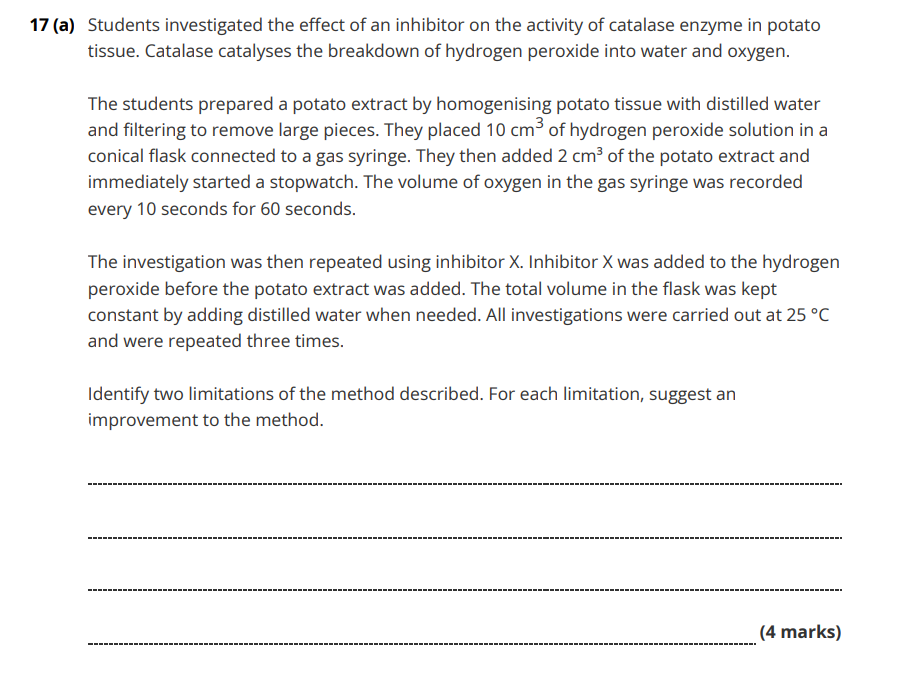
a) No mention of specifically controlling the temperature, which means it can fluctuate.
b) Use a water bath which is thermostatically controlled, ensuring a temperature of 25°C.
2a) The reaction that is undergone may change the pH of the solution.
2b) Use a buffer solution to ensure the pH is constant.
[Synoptic - Respiration]: In Module 5, you learn that cyanide inhibits an enzyme in the electron transport chain. How would you modify the experiment above to prove if cyanide is a competitive or non-competitive inhibitor? [3 marks]
Setup: Set up several trials with increasing substrate (e.g., pyruvate or succinate) concentration while keeping the concentration of cyanide constant.
Data Analysis: Plot a graph of Rate of Reaction against Substrate Concentration for both a control (no cyanide) and the cyanide-treated group.
Identification: * If the inhibitor is competitive, the rate will eventually reach the same Vmax as the control at very high substrate concentrations.
If the inhibitor is non-competitive (like cyanide), the Vmax will be significantly lower than the control regardless of how much substrate is added, because the inhibitor has permanently altered the tertiary structure of the active sites.
[Linking 2.1.2 & 2.1.4]: Catalase is a globular protein. Describe the chemical bonds that maintain the shape of its active site and explain why the addition of an acid (HCI) during the "Improvement" phase would stop the reaction. [3 marks]
Bonding in Active Site: The tertiary structure and the specific shape of the active site are maintained by hydrogen bonds and ionic bonds between the R-groups of amino acids.
Effect of pH Drop (Acidity): Adding an acid increases the concentration of hydrogen ions (H+).
Mechanism of Denaturation: These H+ ions interact with and cluster around the negatively charged R-groups, disrupting the hydrogen and ionic bonds. This causes the enzyme to denature, changing the shape of the active site so it is no longer complementary to the substrate.
Identify one similarity and one difference between the structures of chloroplasts and the structures of mitochondria.
Both have circular DNA
Chloroplasts have photosystems
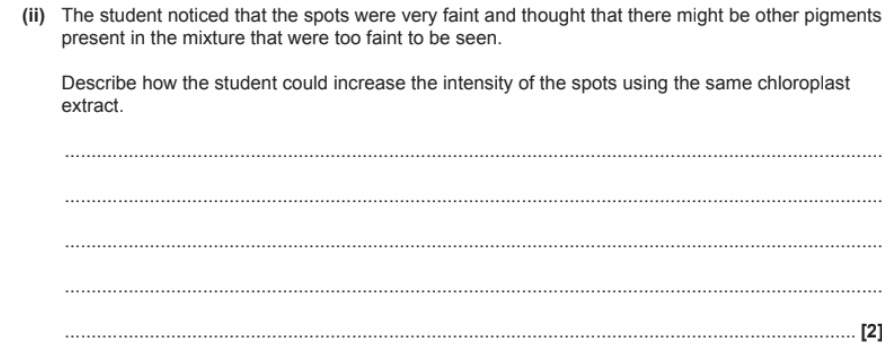
Mark 1: Apply the extract to the origin multiple times.
Mark 2: Allow the spot to dry between each application to prevent the spot from becoming too wide/spreading.
Why must the "origin" line be drawn in pencil rather than ink?
Pencil is insoluble in the solvent, whereas ink would dissolve and separate, interfering with the results.
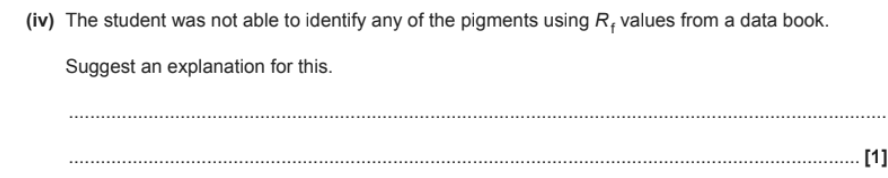
The Mark: The Rf values in the data book were determined using a different solvent, stationary phase (TLC plate material), or temperature.
Harsh Critique: Saying "the student made a mistake" or "the measurements were wrong" is 0 marks. You must explicitly state that the conditions of the experiment do not match those used to generate the data book values.
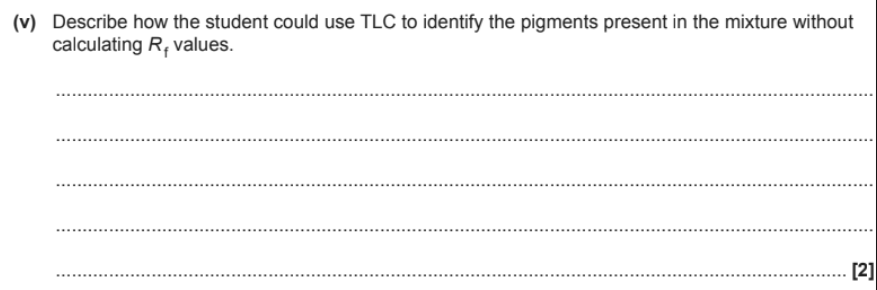
Mark 1: Run known pigments (standard samples) on the same TLC plate alongside the chloroplast extract.
Mark 2: Compare the positions or colors of the unknown spots to the positions/colors of the known standards.
Harsh Critique: You must specify that they are on the same plate (or run under identical conditions). If you just say "look at the colors," you might only get 1 mark. The core of a chromatography "identification" without math is direct comparison to a reference.
Why can Rf values for the same pigment vary between different experiments?
Rf values are affected by the type of solvent used, the material of the TLC plate (stationary phase), and environmental factors like temperature.
Besides distance traveled, what qualitative feature of a spot can help identify a photosynthetic pigment?
The specific color of the spot (e.g., chlorophyll a is blue-green, chlorophyll b is yellow-green).
In TLC, what is the "stationary phase"?
The thin layer of adsorbent material (e.g., silica gel) coated onto the glass or plastic plate.
Respiration of glucose involves a series of oxidation reactions. Explain how oxidation occurs in glycolysis.(2)
Dehydrogenation
H goes to NAD.
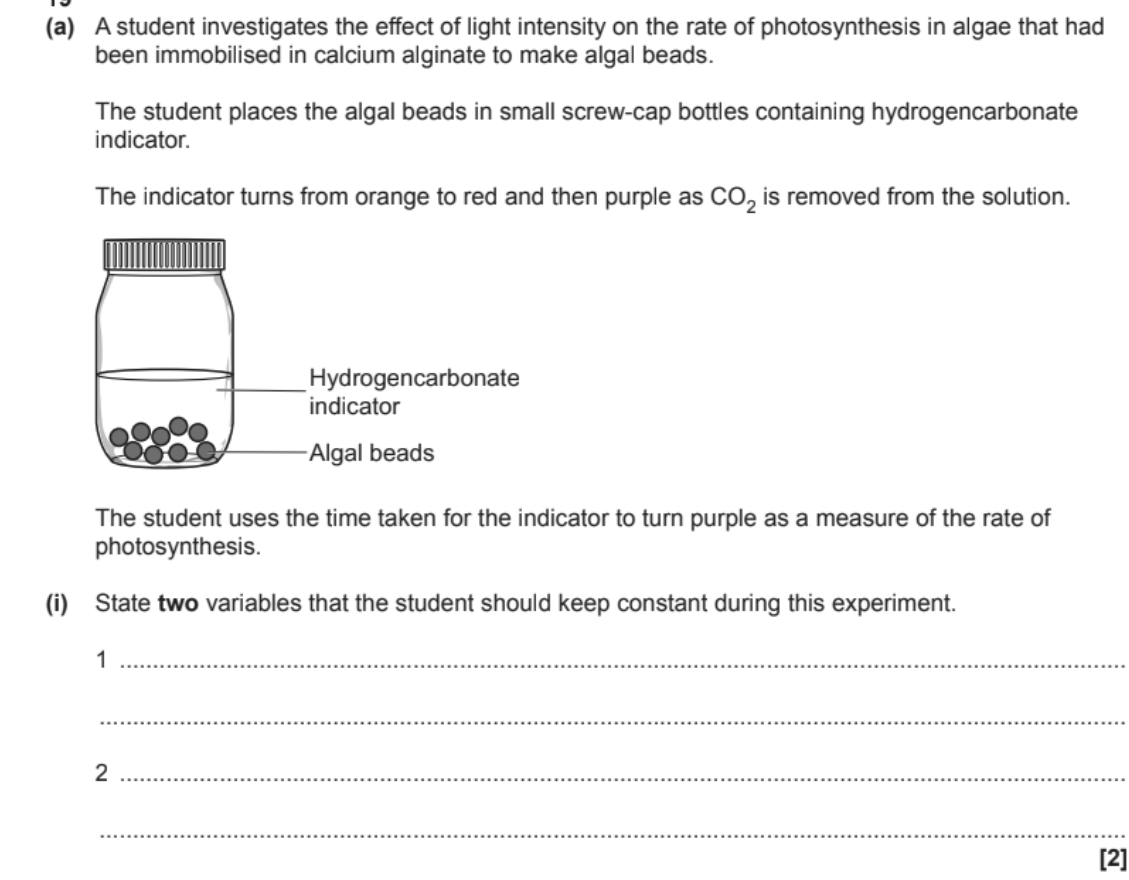
number/size of beads
species of algae
wavelength of light
temperature
Key word being accurate
Use a colorimeter and measure the time taken to reach an absorbance.
Explanation: This provides a quantitative measurement of the color change, removing the subjective error of judging by eye exactly when the indicator has "turned purple".
Why should a colorimeter be used instead of visual inspection for pH-based rate experiments?
Visual inspection is subjective and qualitative; a colorimeter provides quantitative data, reducing human error and increasing the accuracy of determining the endpoint.
How do you handle an anomaly when calculating a mean in biology?
Identify the anomaly (a result far outside the range of others), exclude it from the calculation, and repeat that specific part of the investigation if possible.
What is the difference between "Reliability" and "Accuracy" in a photosynthesis practical?
Reliability is improved by repeats and means to reduce the effect of anomalies. Accuracy is improved by using better equipment (like a colorimeter) to get closer to the true value.
Why is measuring the volume of O2 produced sometimes an underestimate of the actual rate of photosynthesis?
Some oxygen produced is immediately used by the plant/algae for aerobic respiration.
Measure O2 production, and record the gas collected in a set time being rate.
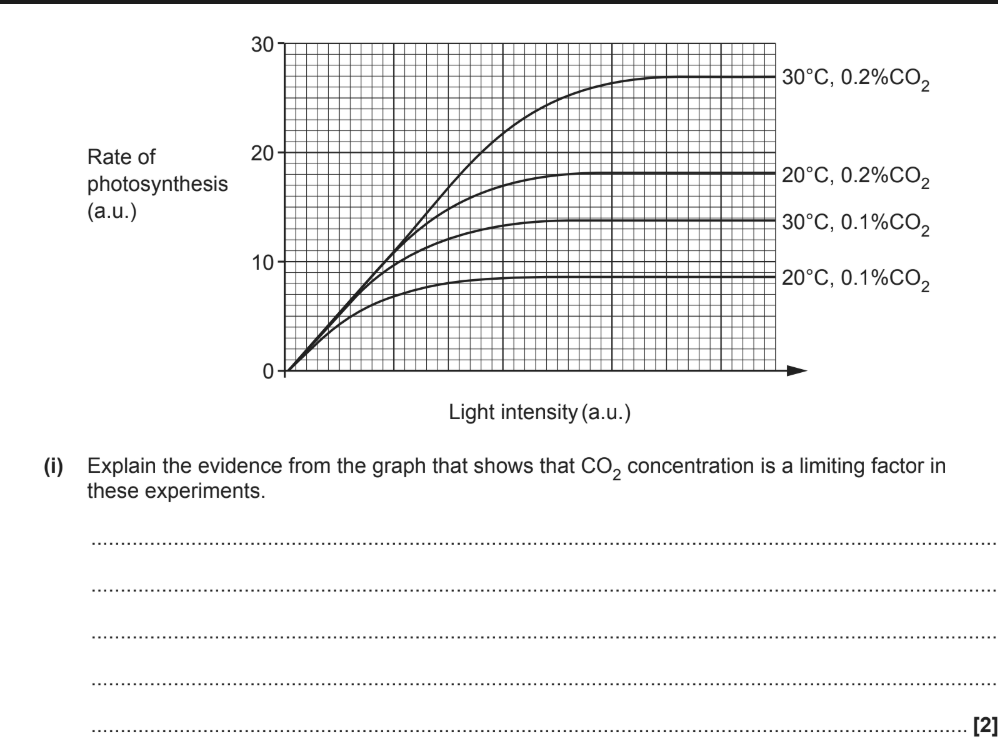
Plateau showing light intensity is no longer limiting
Higher rate with increasing CO2
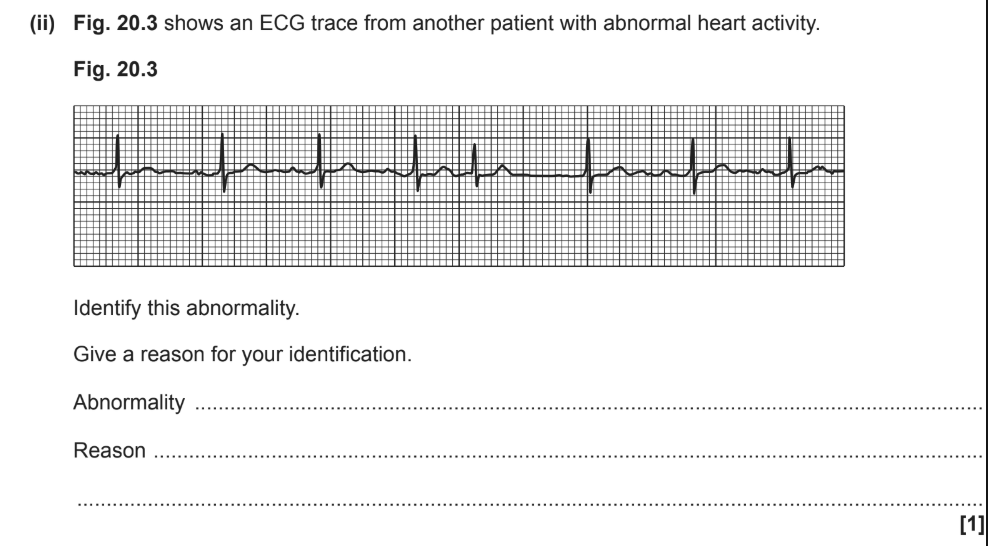
Fibriilation
No distinct P wave.
Mark 1: In insects, the tracheal system (tracheae and tracheoles) delivers oxygen directly to the tissues/cells.
Mark 2: Therefore, the circulatory system/haemolymph is not involved in the transport of oxygen or carbon dioxide.
Mark 3: Because gas exchange is independent of the blood, the low pressure and slow flow typical of an open system are sufficient for transporting nutrients/waste only.