Microscope Anatomy
 Call Kai
 Learn
Learn Practice Test
 Spaced Repetition
 Match
Match Flashcards
 Knowt Play
1/13

There's no tags or description
Looks like no tags are added yet.
Name | Mastery | Learn | Test | Matching | Spaced | Call with Kai |
|---|
No analytics yet
Send a link to your students to track their progress
14 Terms
Eyepiece/Ocular
This is where you look into the microscope to see the image of the thing that you you are looking for
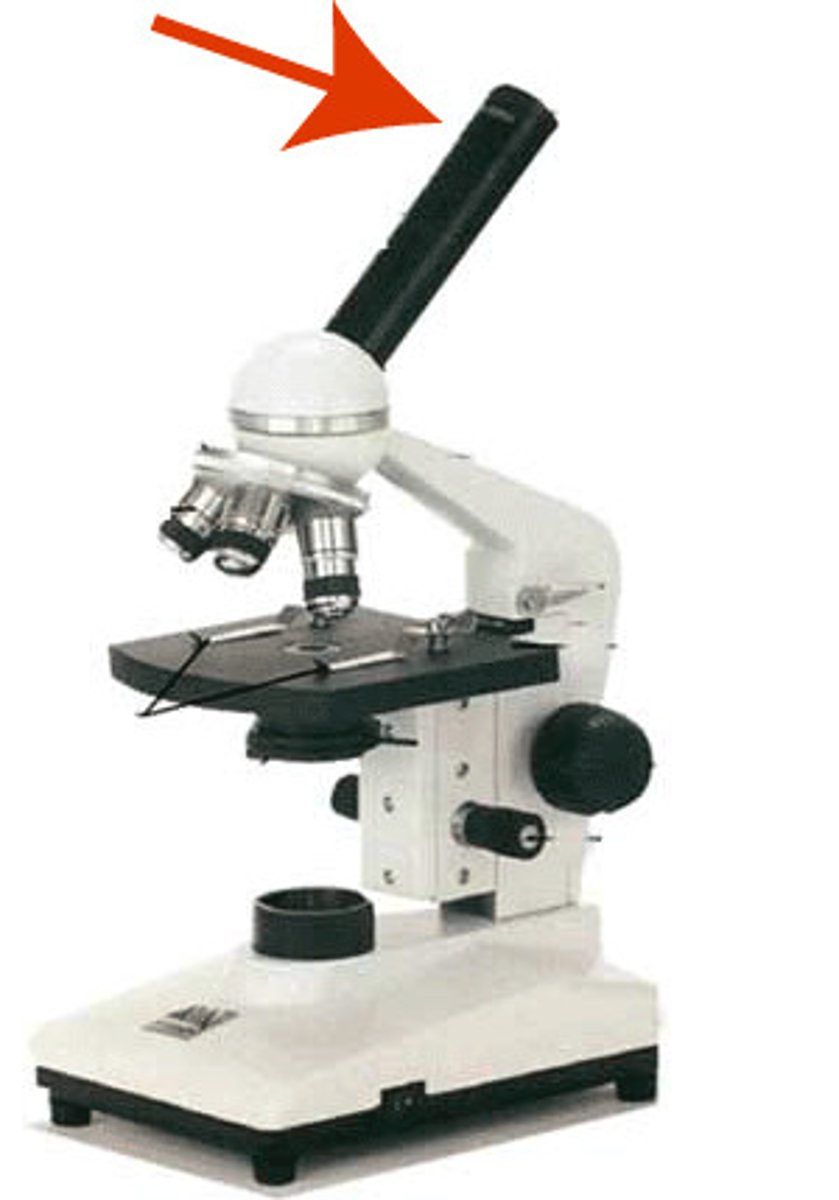
Body Tube
a long, skinny tube that holds the eyepiece up above the microscope. It allows the light to travel from the objective lenses to the eyepiece.
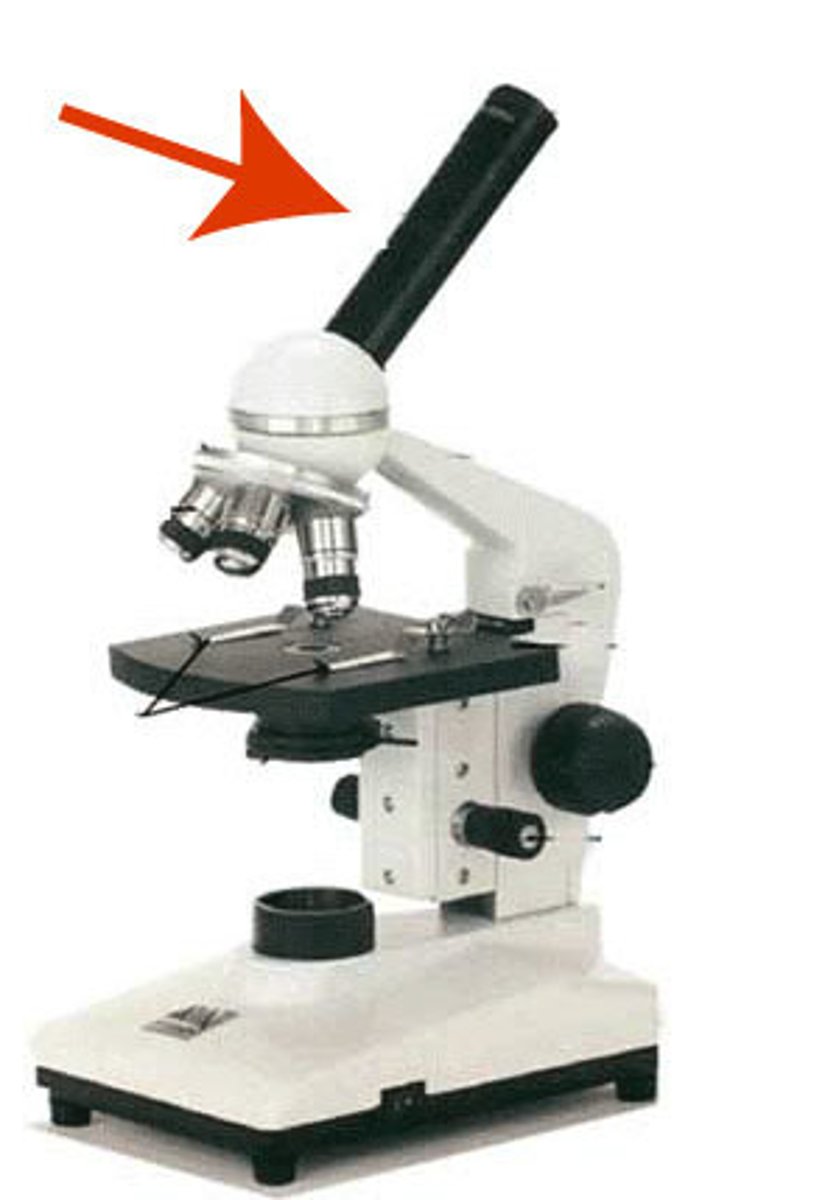
Nosepiece
This holds the objective lenses. It rotates around in a circle, allowing you to choose which objective lens you want to use
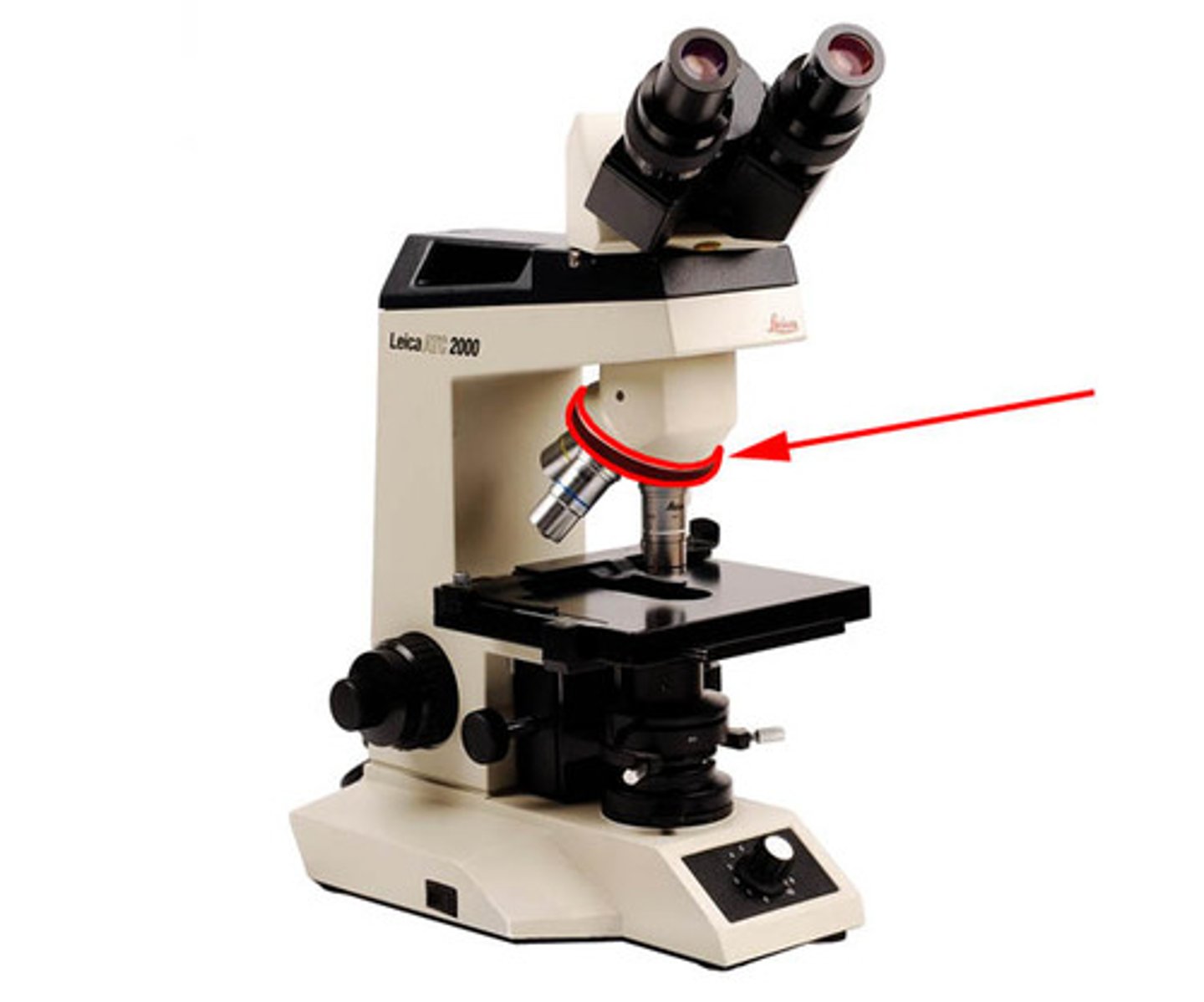
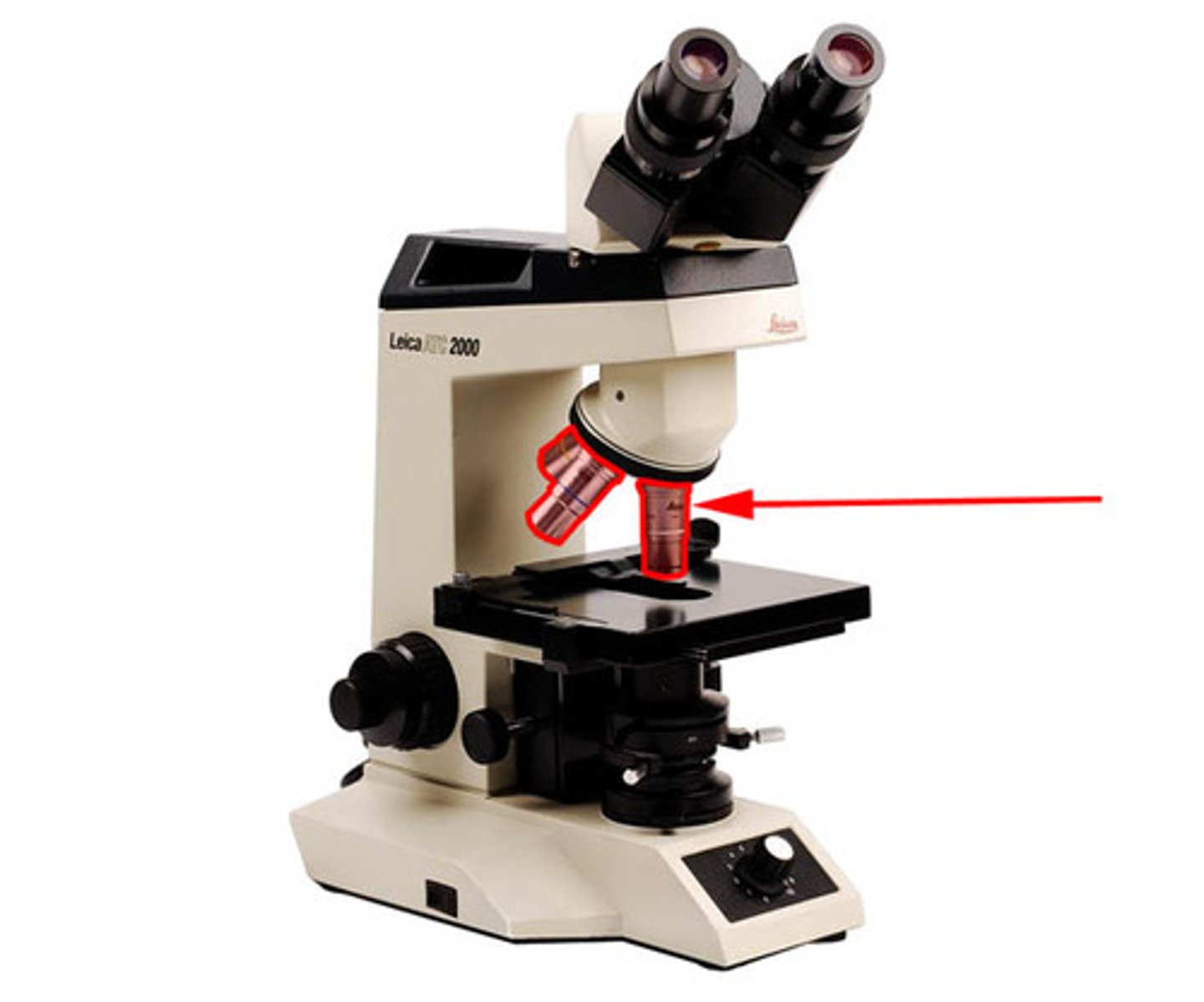
Objective Lenses
are attached to the nosepiece and vary in their ability to magnify an image
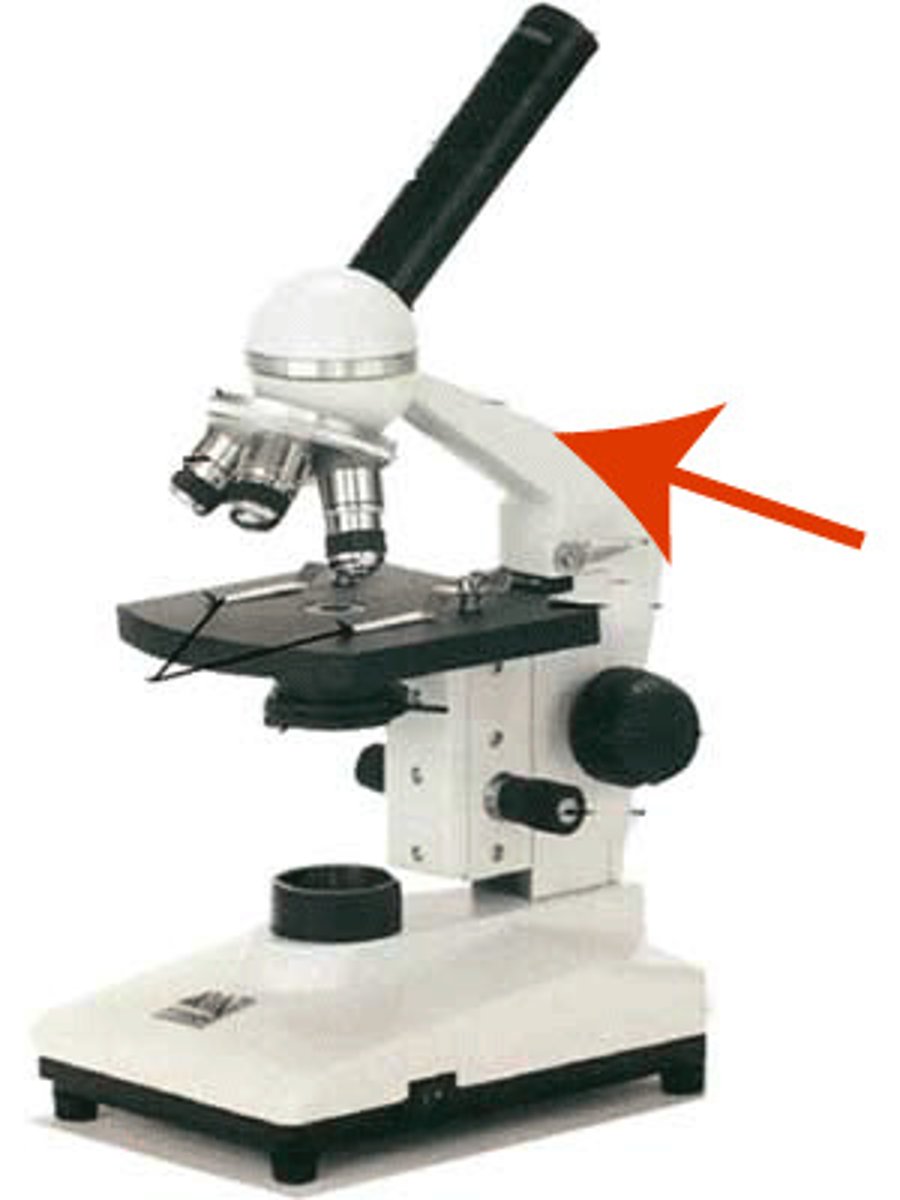
Arm
holds the upper portion of microscope above the stage. This is also where you grab the microscope when you need to move it.
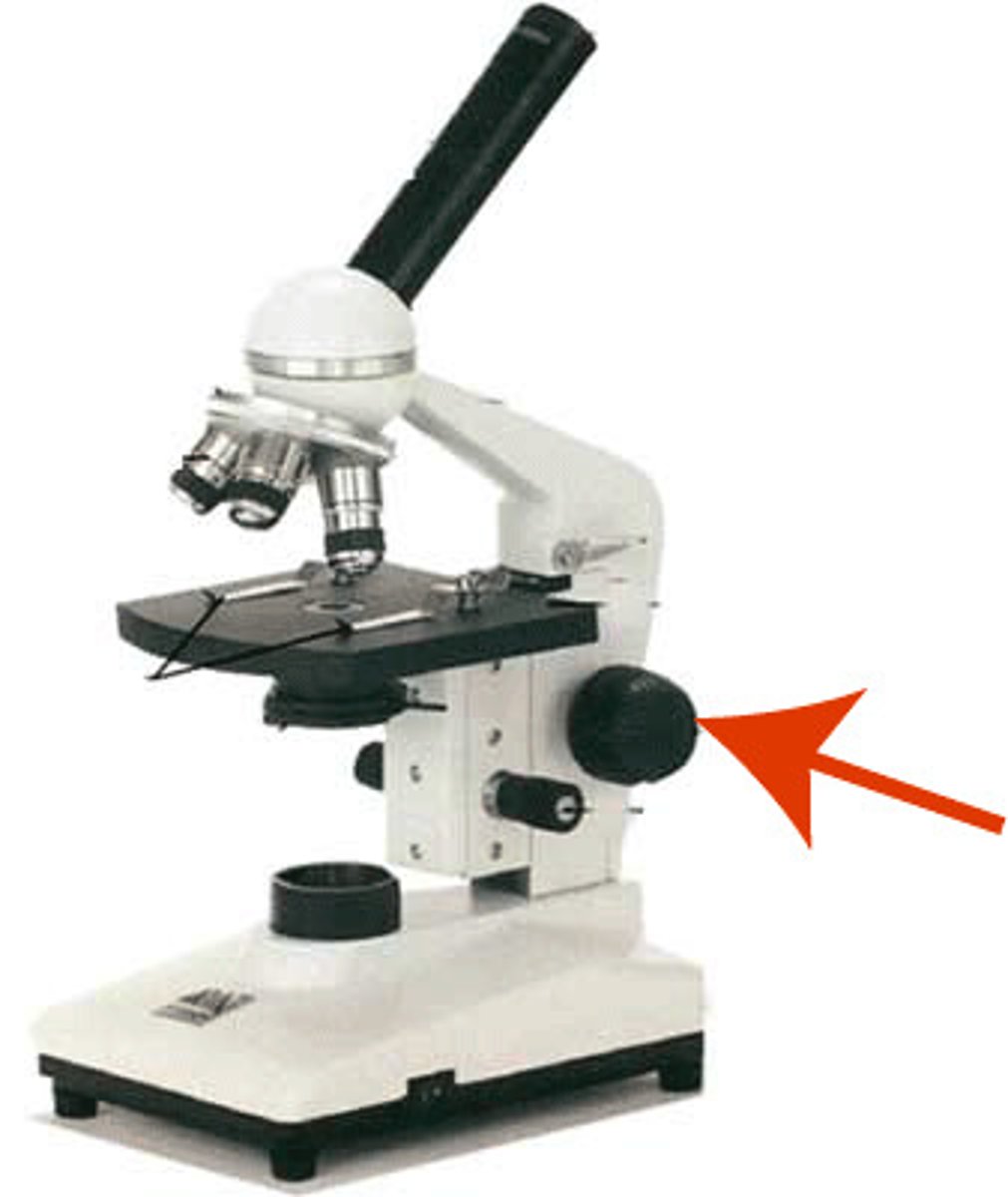
Coarse Adjustment Knob
allows you to move the upper portion of the microscope up and down so that you can focus on the slide
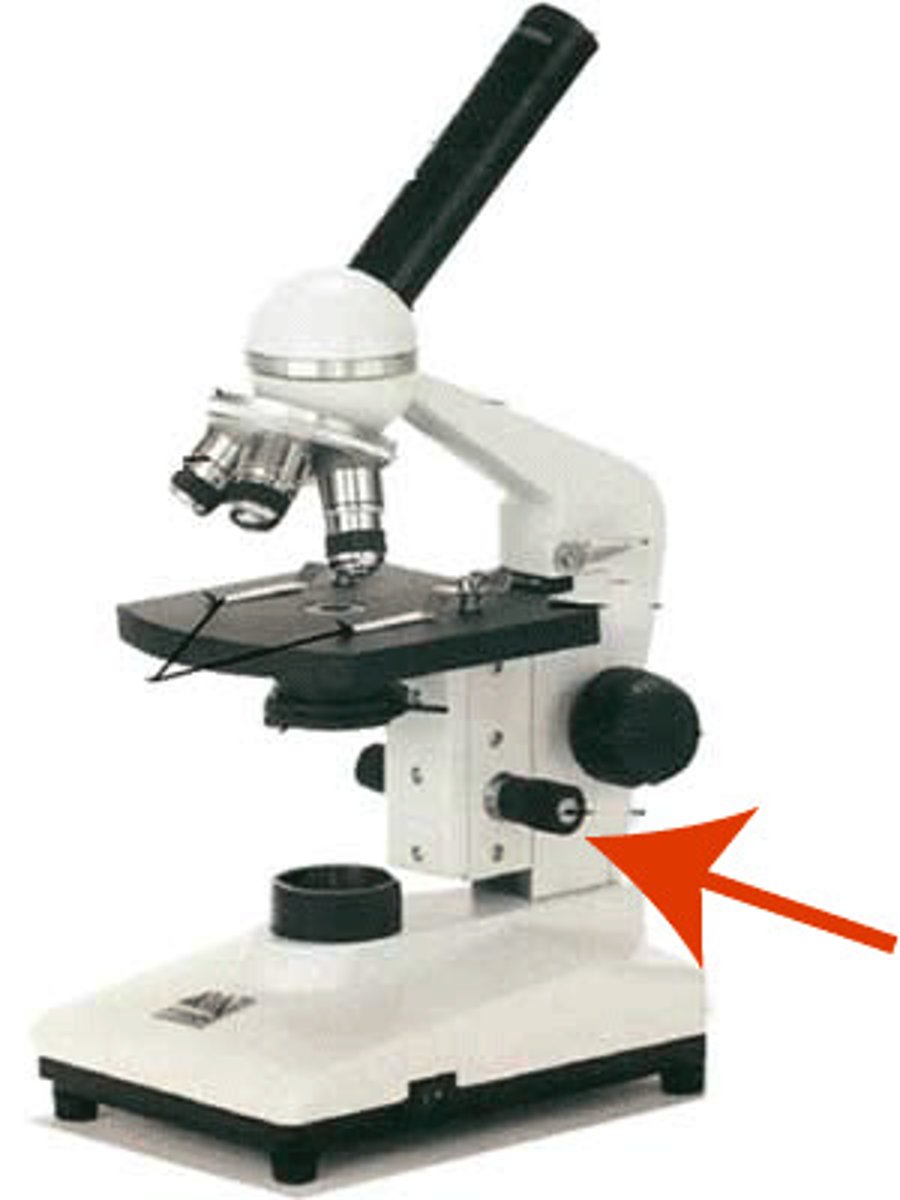
Fine adjustment knob
allows the viewer to "fine tune" the image and bring it into sharper focus
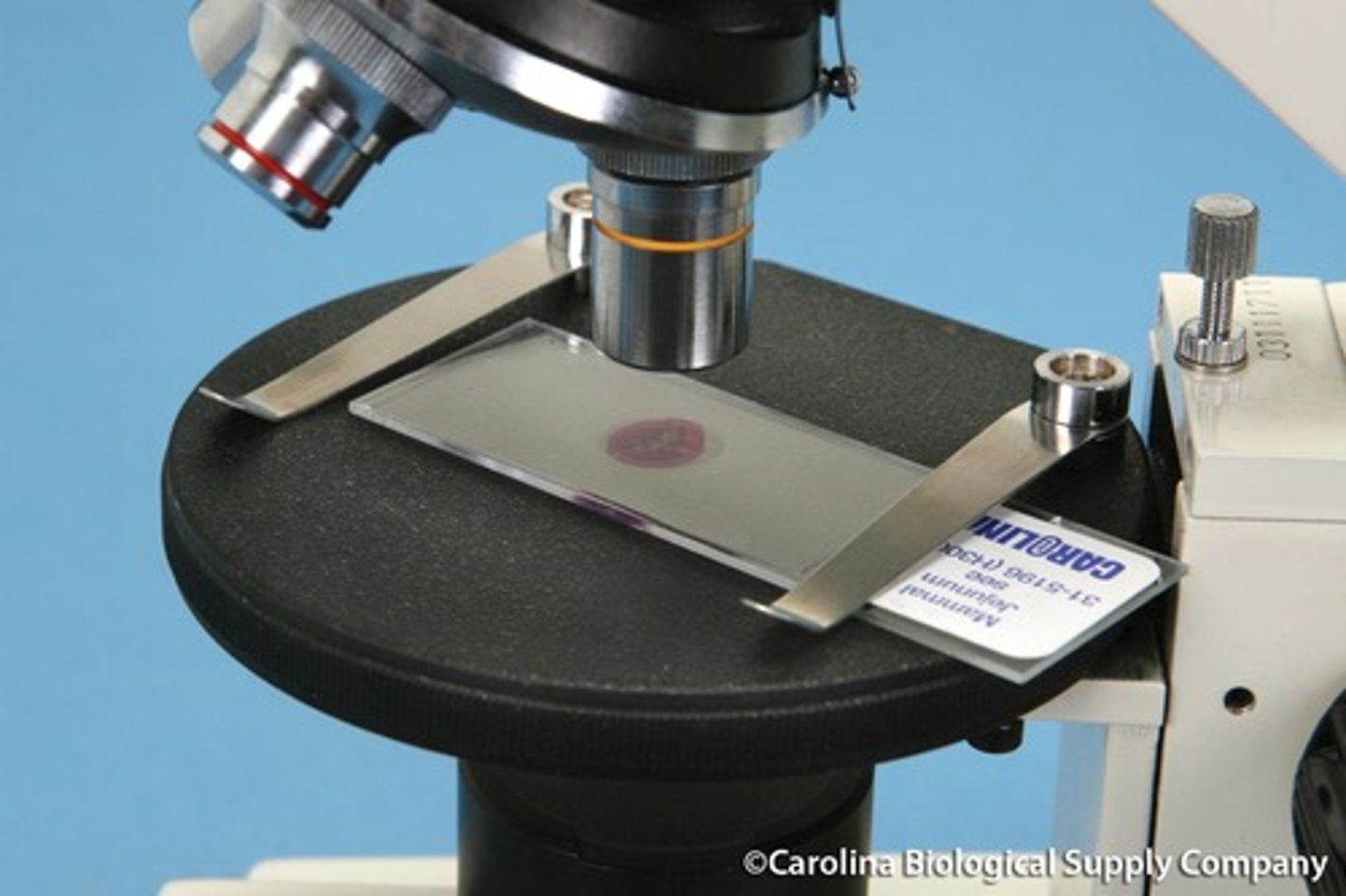
Slide
thin piece of glass that you place directly over the opening in the stage and is held in place with stage clips. This is where all of your specimens are mounted
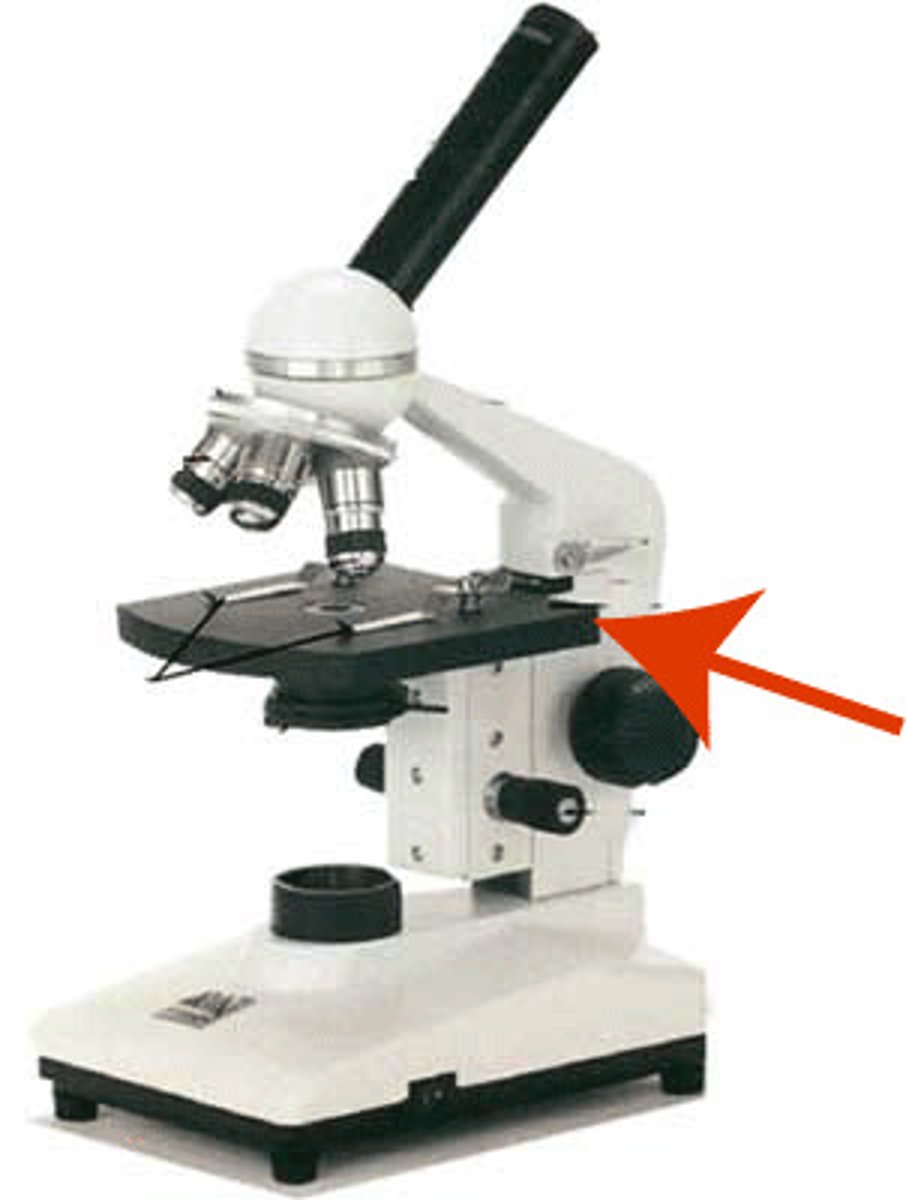
Stage
large flat area under the objective lenses that has a hole in the middle. This is where specimens/slides are placed
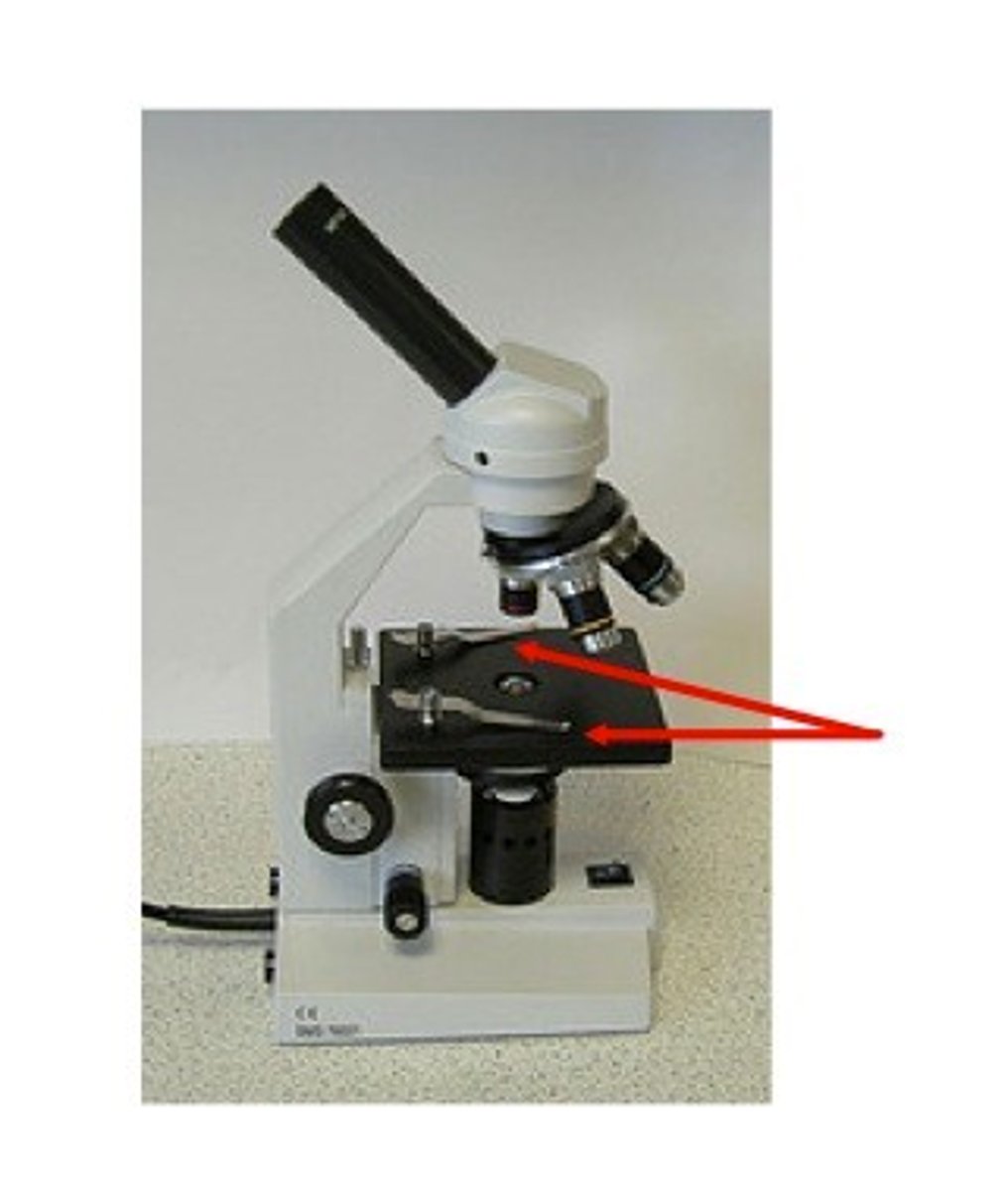
Stageclips
shiny clips on top of the stage. They hold the slide in place
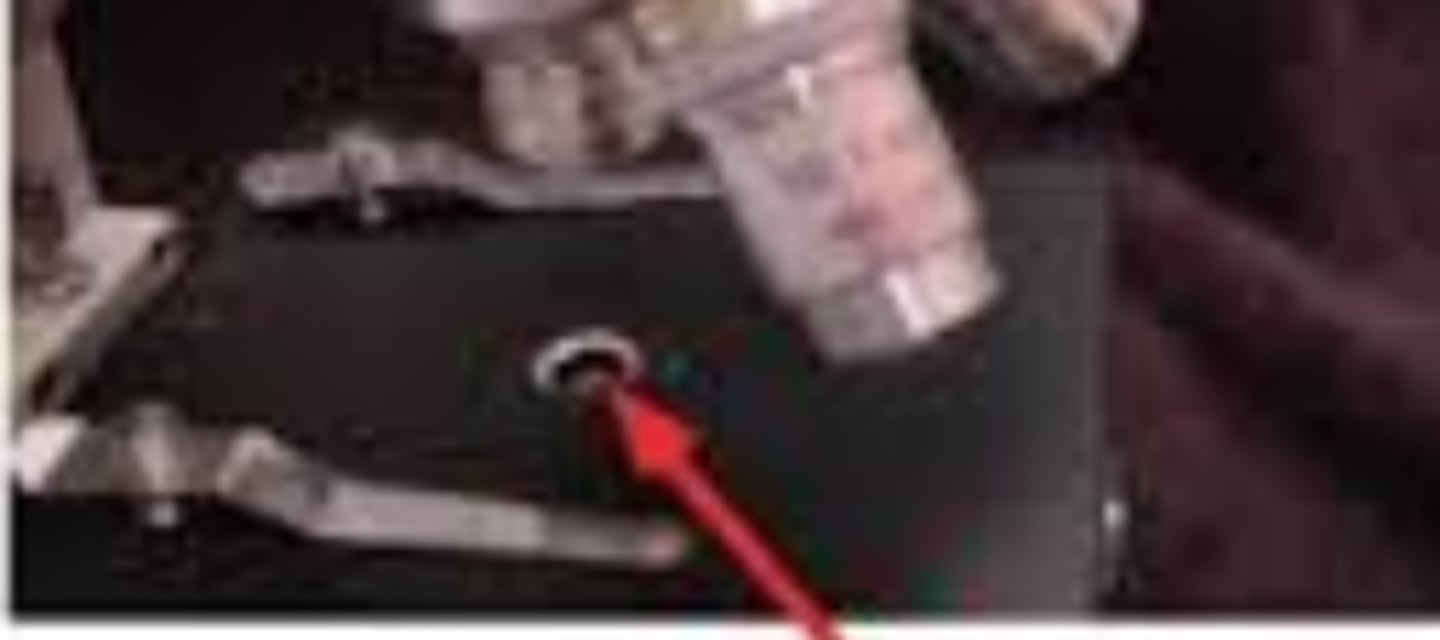
aperture
hole in the middle of the stage that allows light to reach the specimen/slide
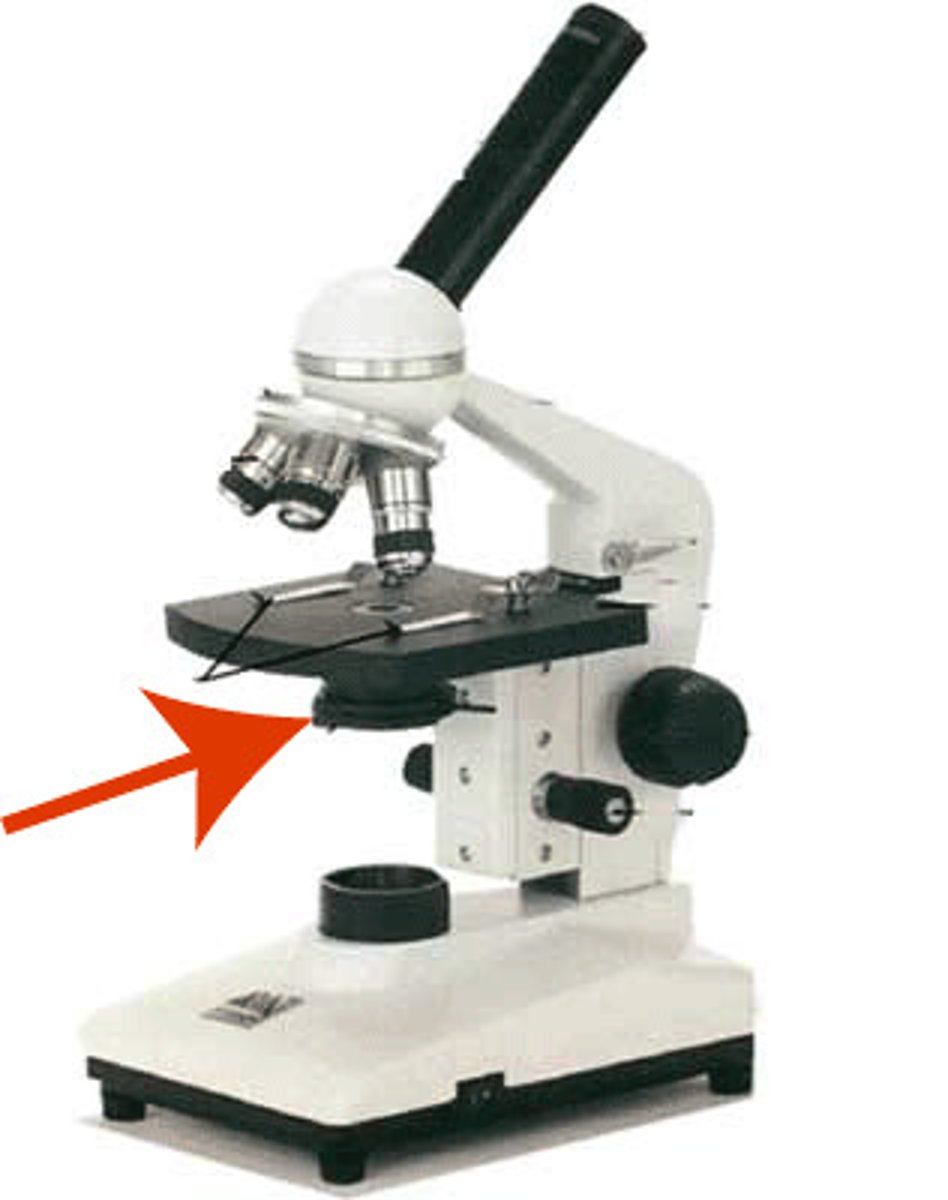
diaphragm
disk under the stage that allows the scientist to change the amount of light that comes up through aperture
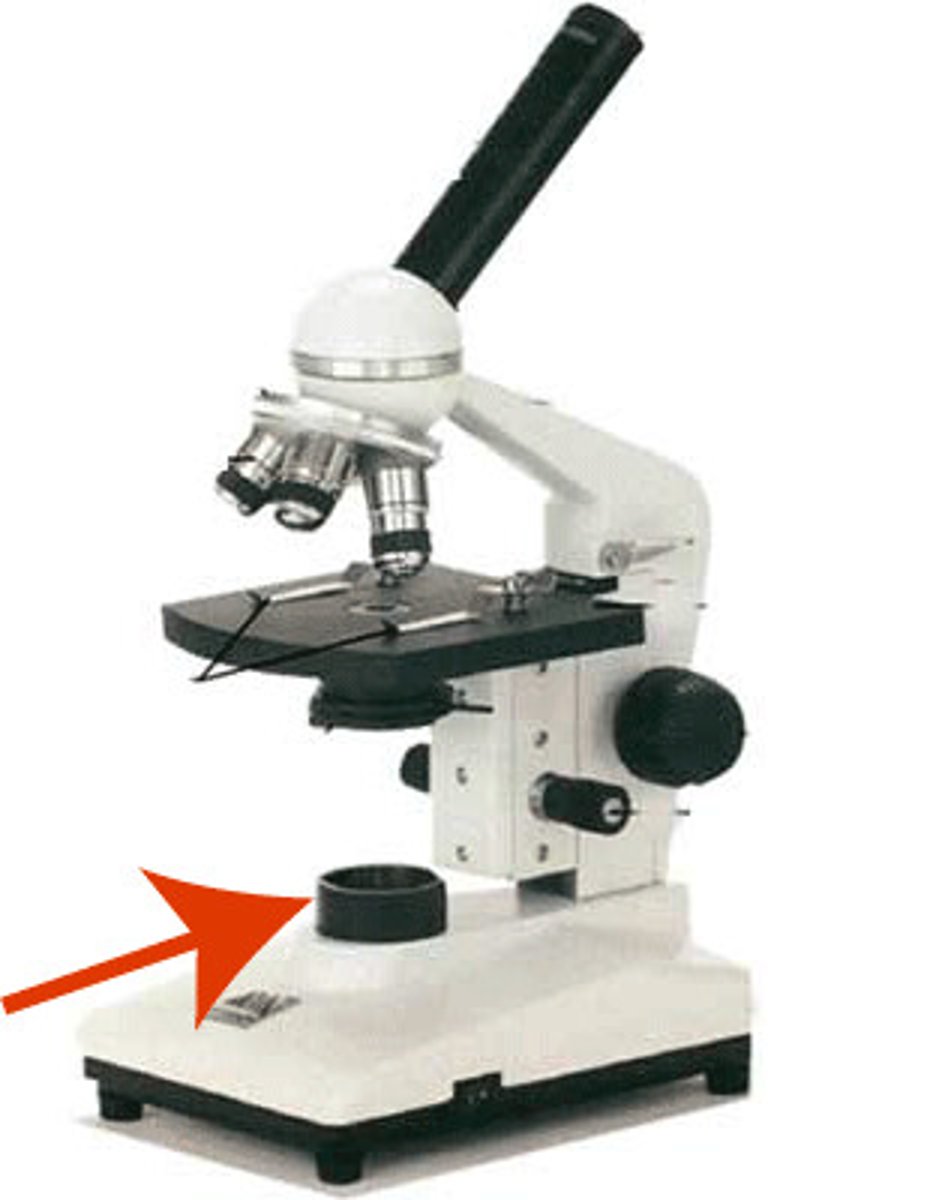
mirror/lamp
located under the aperture. shines/reflects light up through the aperture and makes it easier to see the specimen on the slide
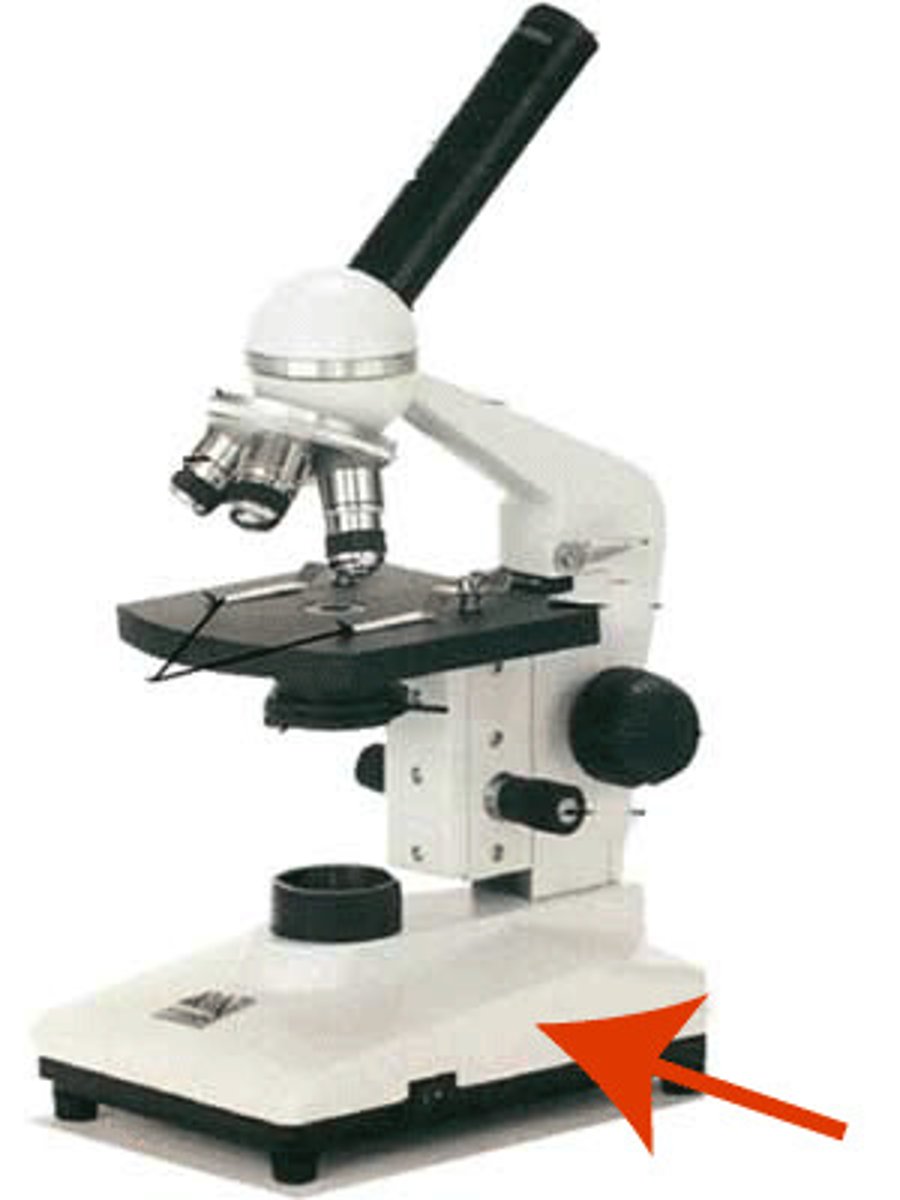
base
holds the whole microscope up. usually has 2 legs that are attached to the bottom of the arm