Lab 6: Digestive System, Respiratory System, & Pelvic Vessels
 Call Kai
 Learn
Learn Practice Test
 Spaced Repetition
 Match
Match Flashcards
 Knowt Play
1/443

There's no tags or description
Looks like no tags are added yet.
Name | Mastery | Learn | Test | Matching | Spaced | Call with Kai |
|---|
No analytics yet
Send a link to your students to track their progress
444 Terms
Human Digestive System
the digestive system can be broken up into two main groups: the alimentary canal and the accessory digestive organs
the alimentary canal (or gastrointestinal tract or GI tract) is one long muscular, hollow tube that extends from the mouth to the anus (included mouth, oropharynx, esophagus, stomach, and small and large intestines)
along this path, food is digested and broken down into smaller pieces that can be absorbed through the lining
the accessory digestive organs are the teeth, tongue, gallbladder, salivary glands, liver, and pancreas
Human Digestive System 2
the five main processes of digestion are ingestion, propulsion, mechanical and enzymatic digestion, absorption, and elimination
both mechanical and enzymatic digestion begins in the mouth
the salivary glands produce the carbohydrate metabolizing enzyme amylase and salivary lipase in addition to saliva to aid in digestion of food particles
Figure 1. Illustration of human mouth
What is number 2?
soft palate
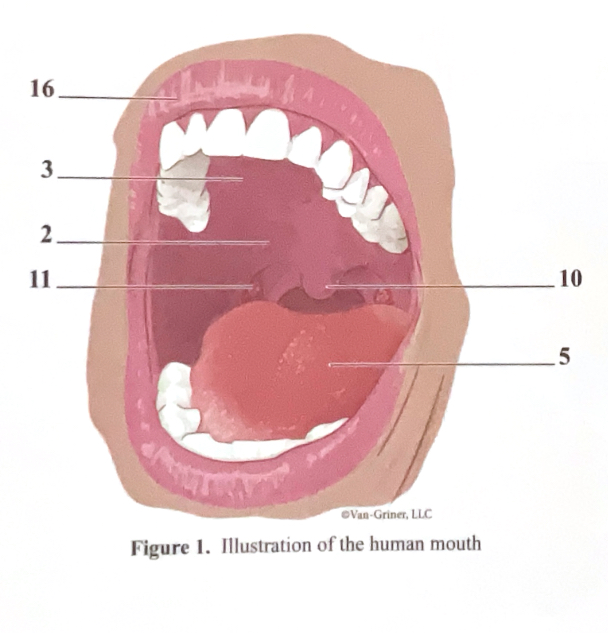
what is number 3?
hard palate
what is number 5?
tongue
what is number 10?
uvula
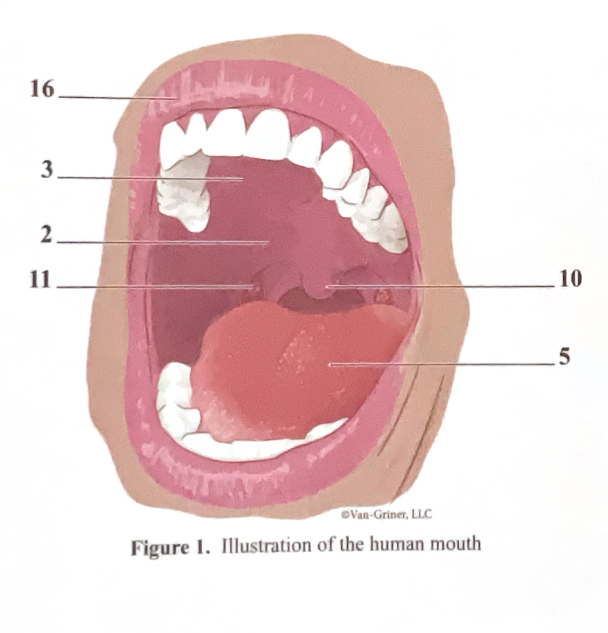
what is number 11?
palatine tonsil
what is number 16?
upper lip
Figure 2. illustration of human oral cavity
what is number 1?
nasal cavity
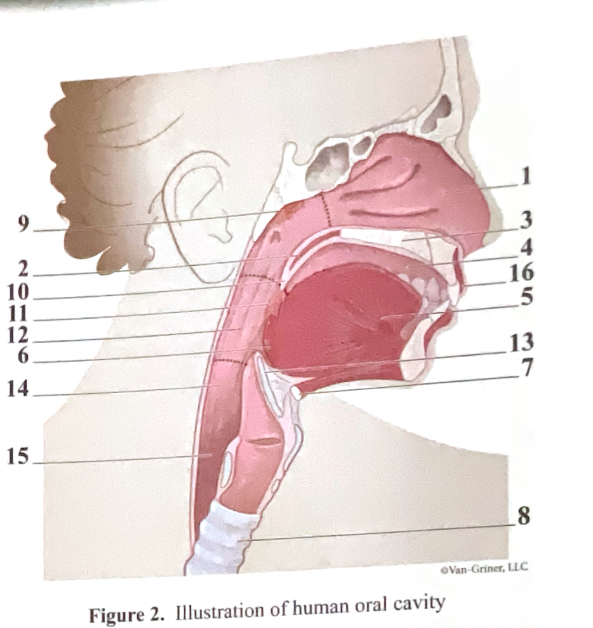
what is number 2?
soft palate
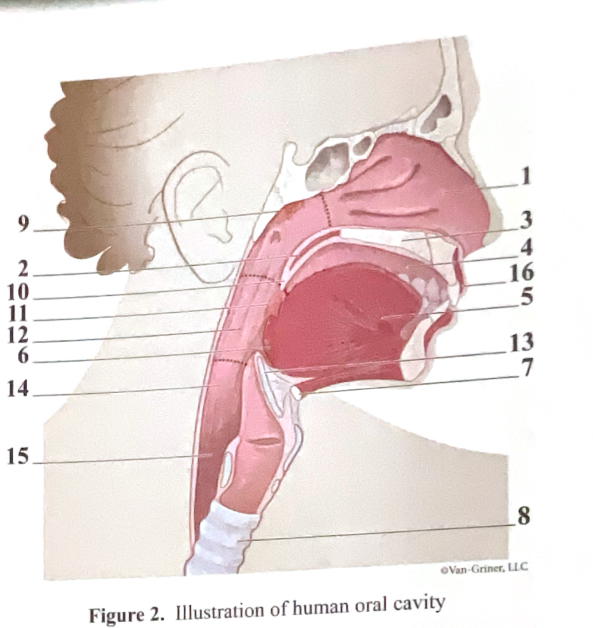
what is number 3?
hard palate
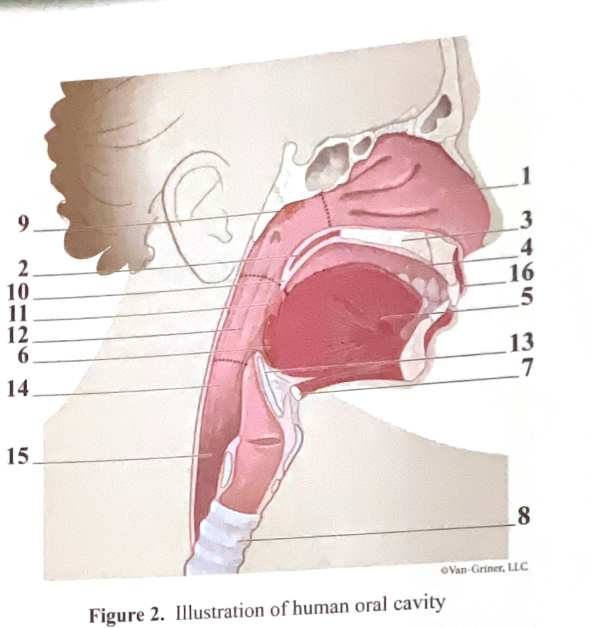
what is number 4?
oral cavity
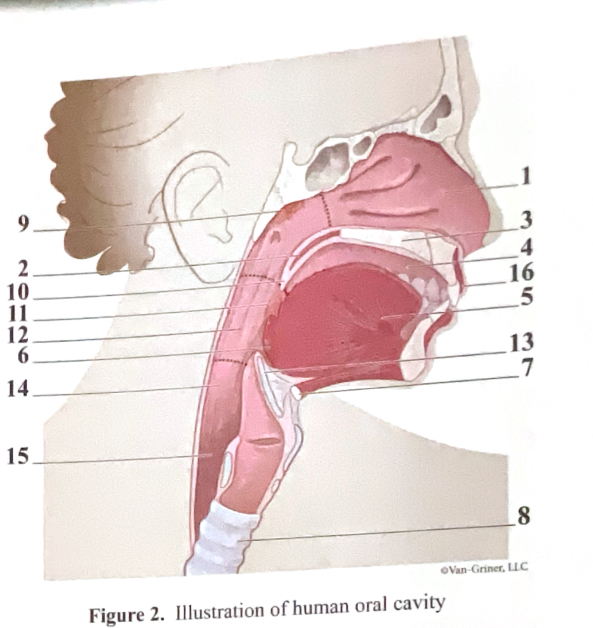
what is number 5?
tongue
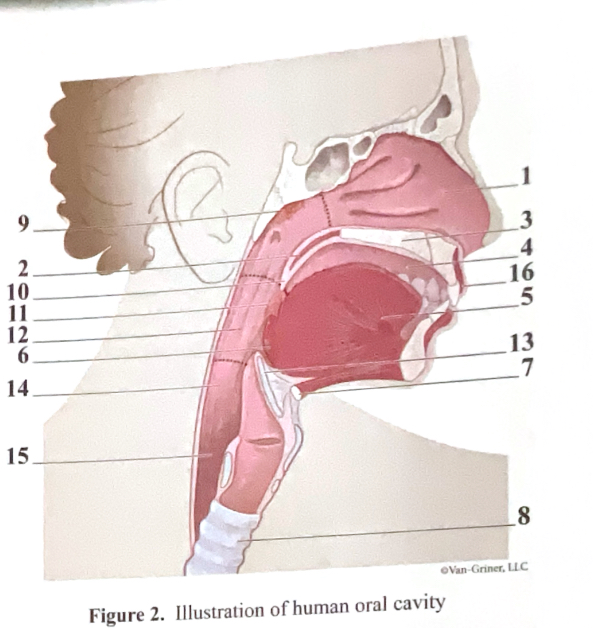
what is number 6?
lingual tonsil
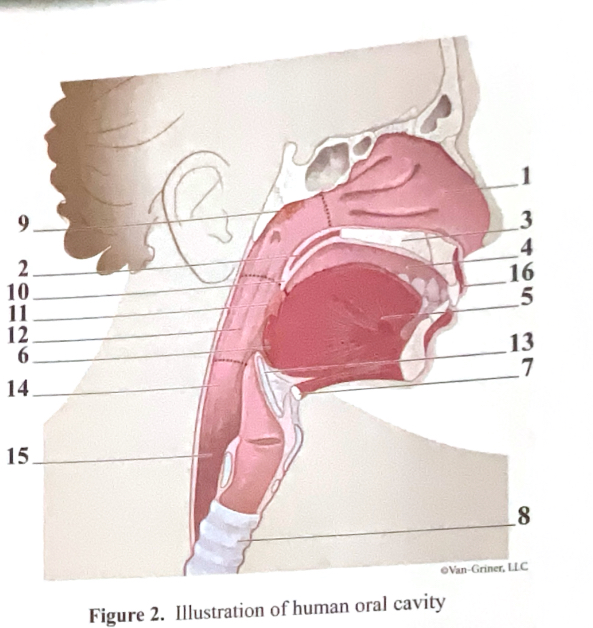
what is number 7?
hyoid bone
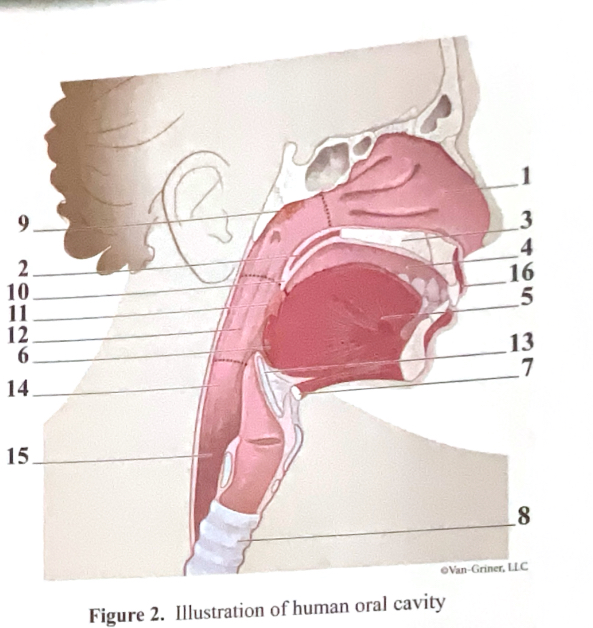
what is number 8?
trachea
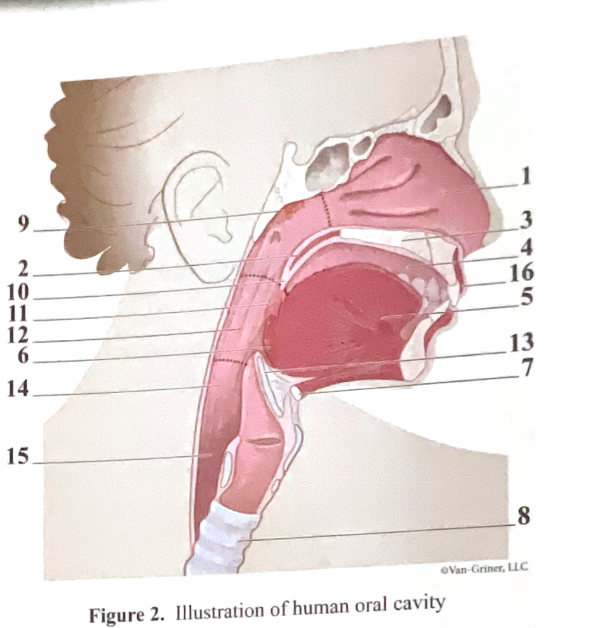
what is number 9?
pharyngeal tonsil
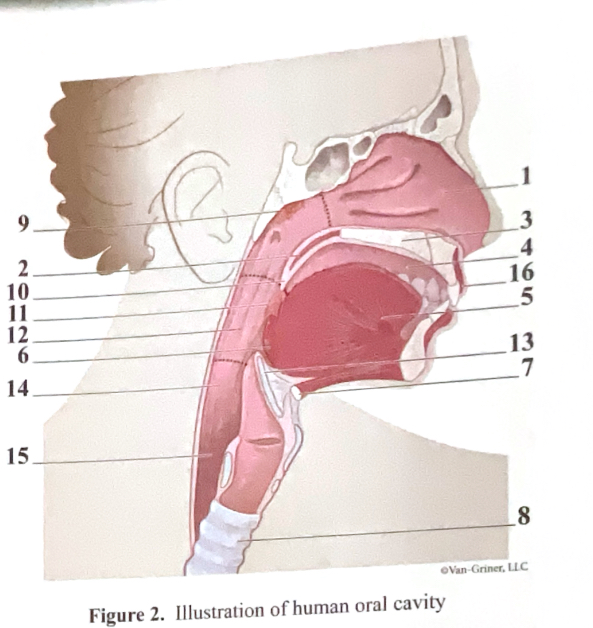
what is number 10?
uvula
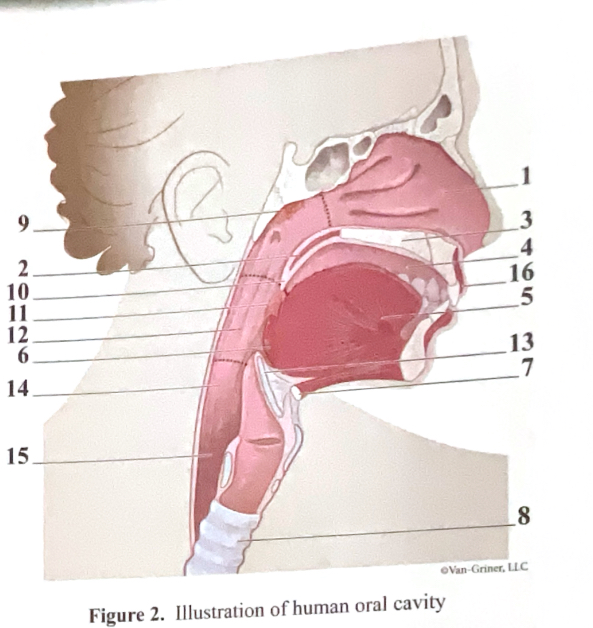
what is number 11?
palatine tonsil
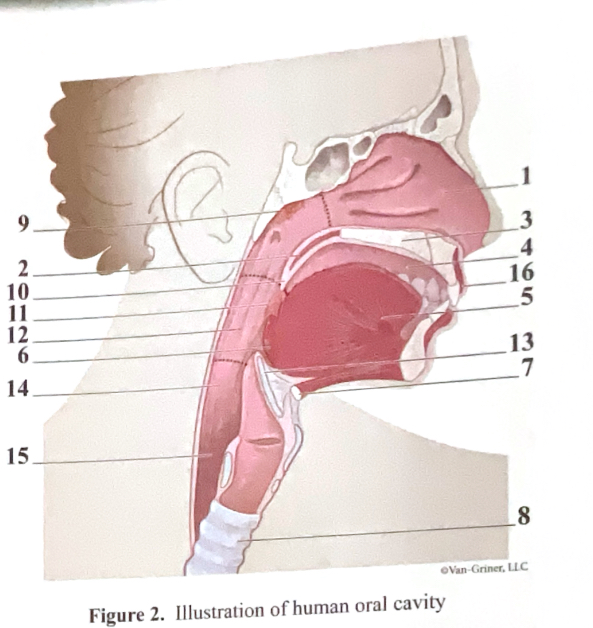
what is number 12?
oropharynx
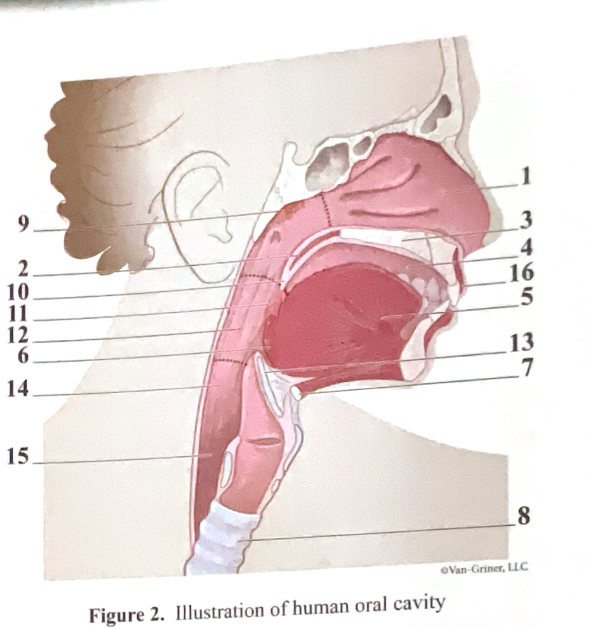
what is number 13?
epiglottis
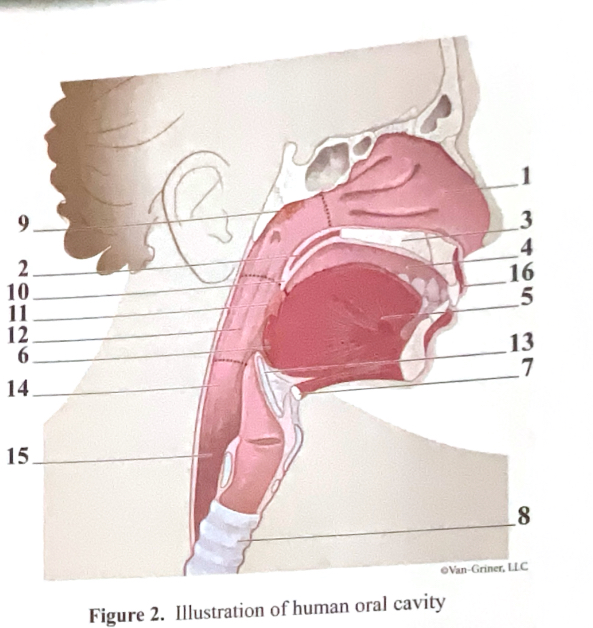
what is number 14?
laryngopharynx
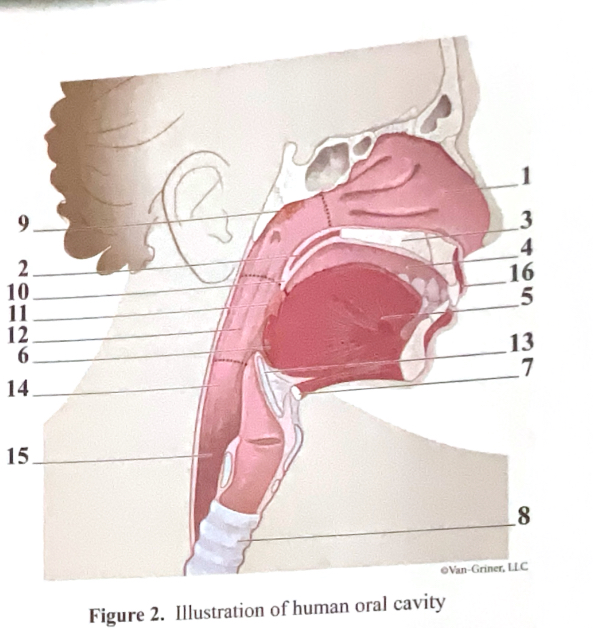
what is number 15?
esophagus
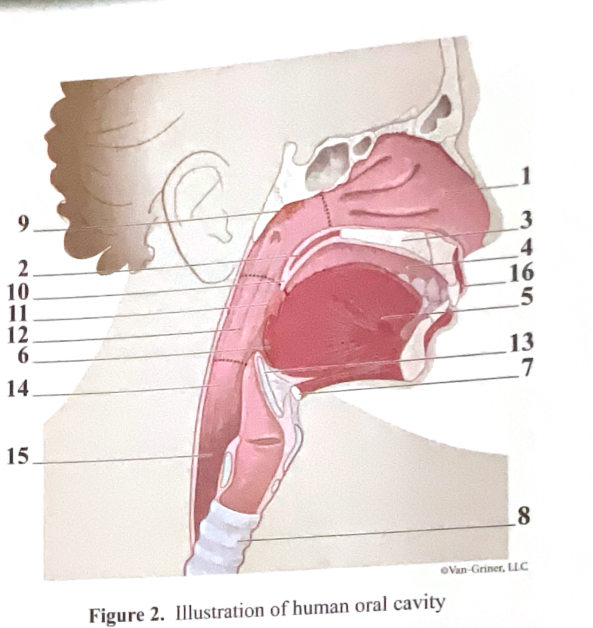
what is number 16?
upper lip
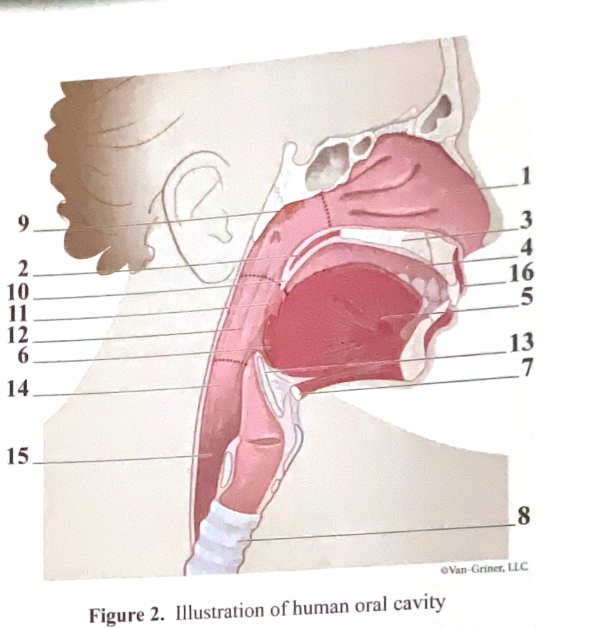
Figure 3. Illustration of the human digestive system
what is number 1?
parotid salivary gland
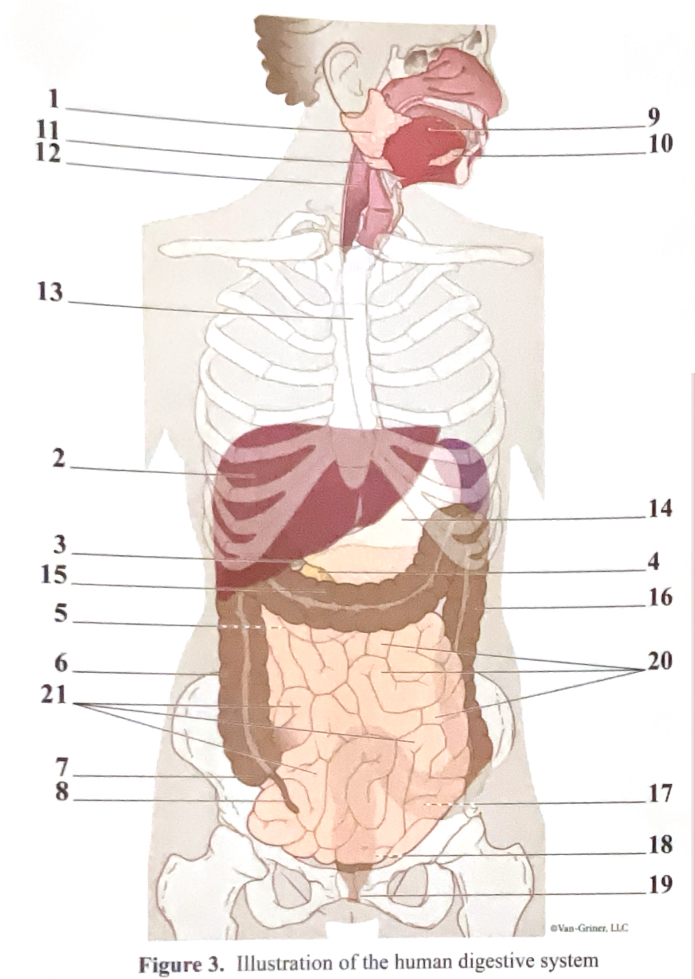
what is number 2?
liver
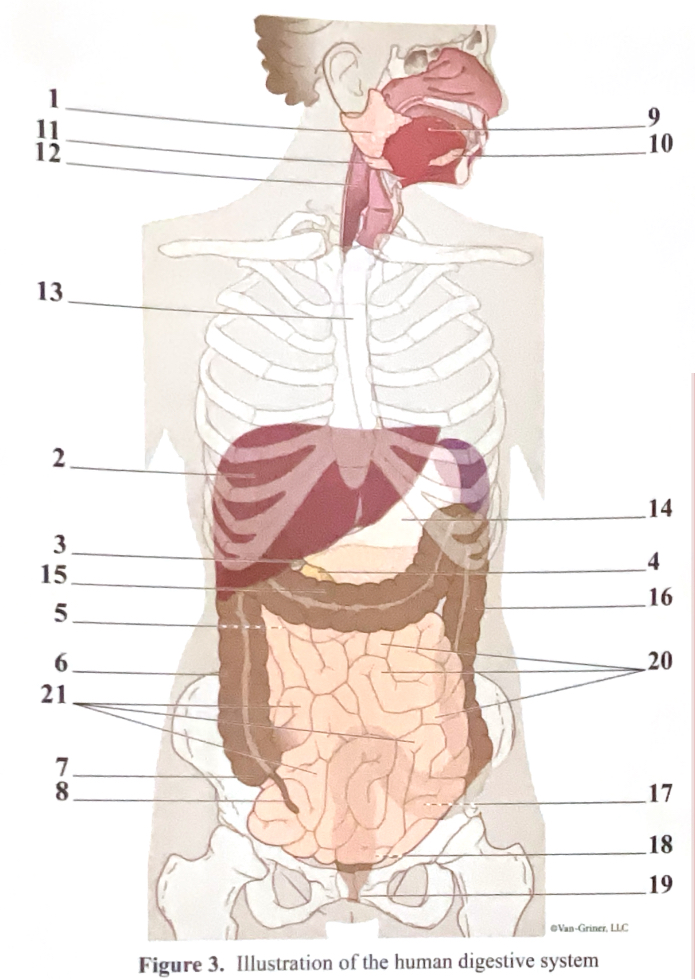
what is number 3?
gallbladder
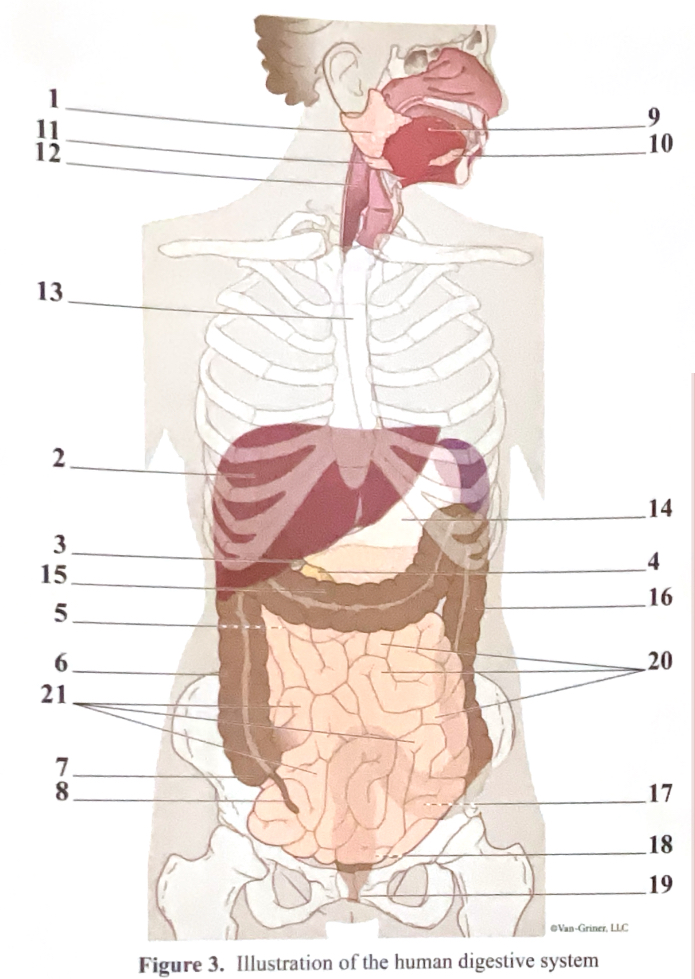
what is number 4?
pancreas (partially hidden by stomach)
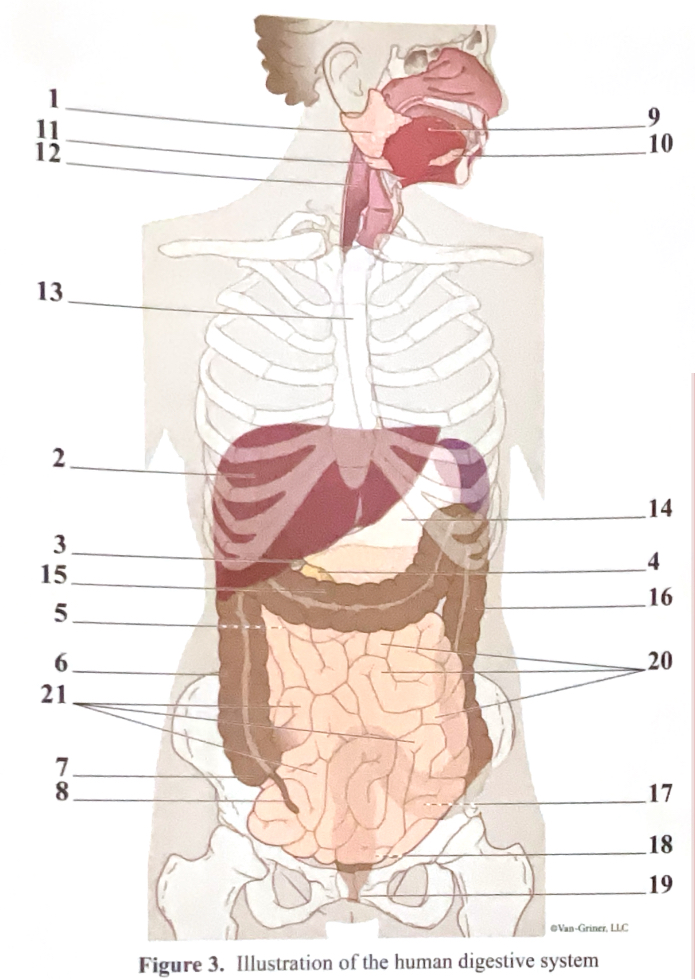
what is number 5?
duodenum (of small intestine)
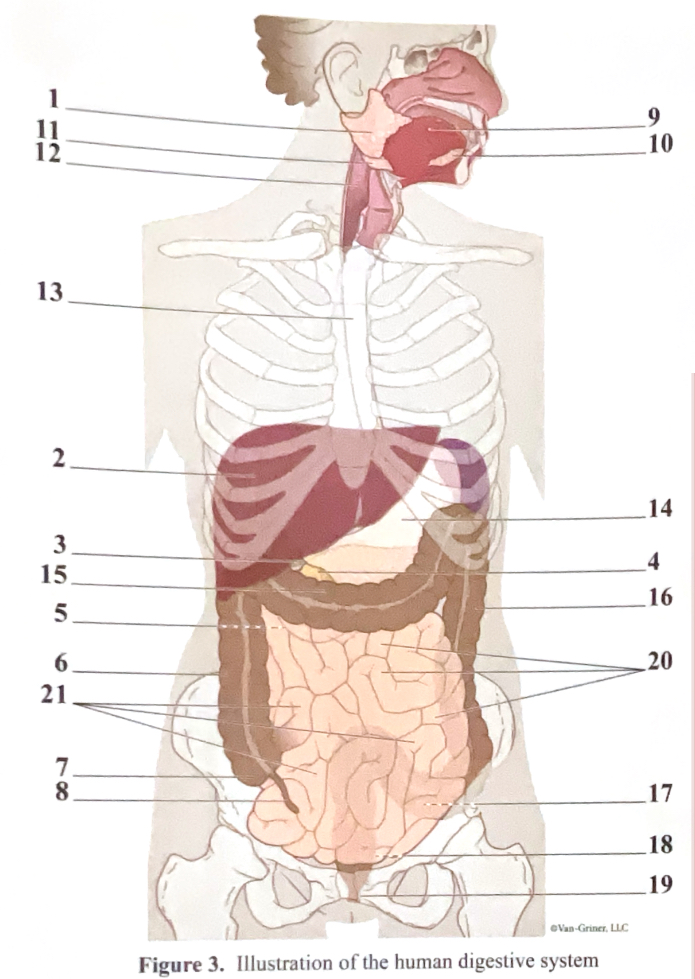
what is number 6?
ascending colon
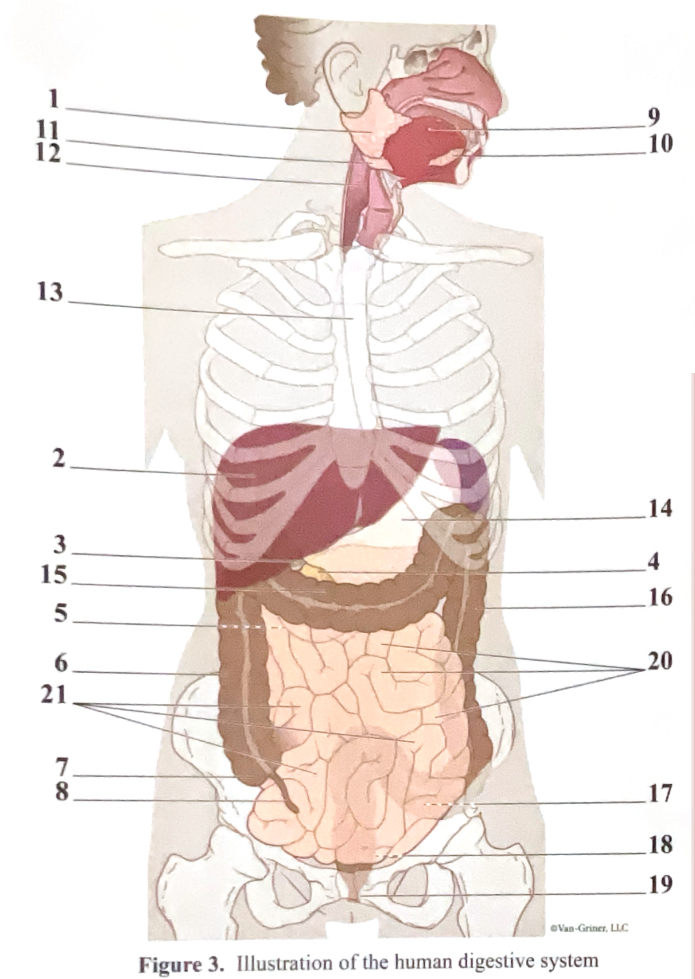
what is number 7?
cecum
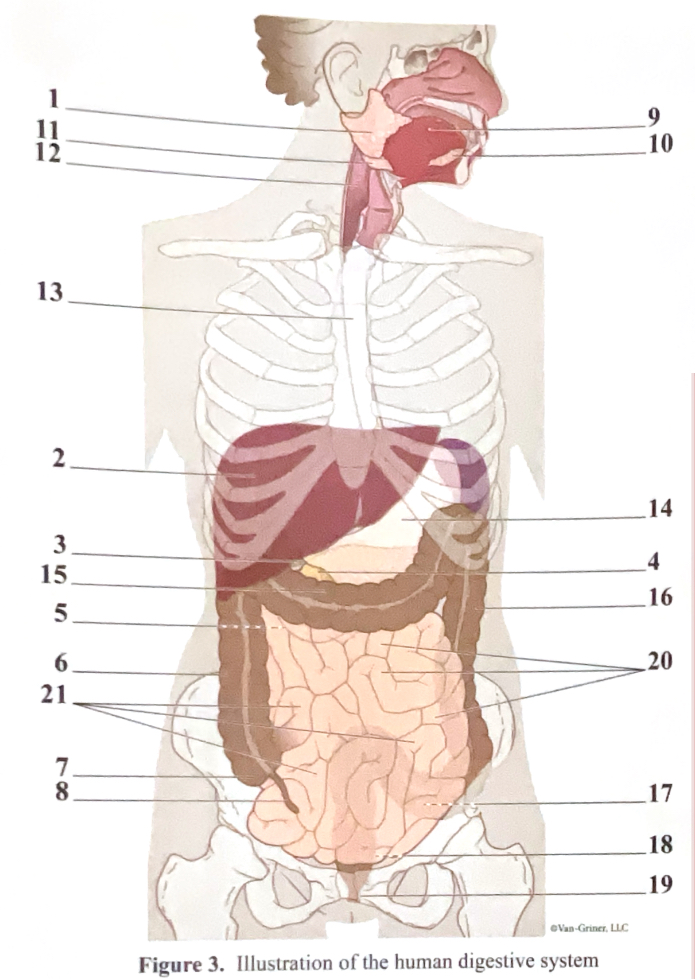
what is number 8?
appendix
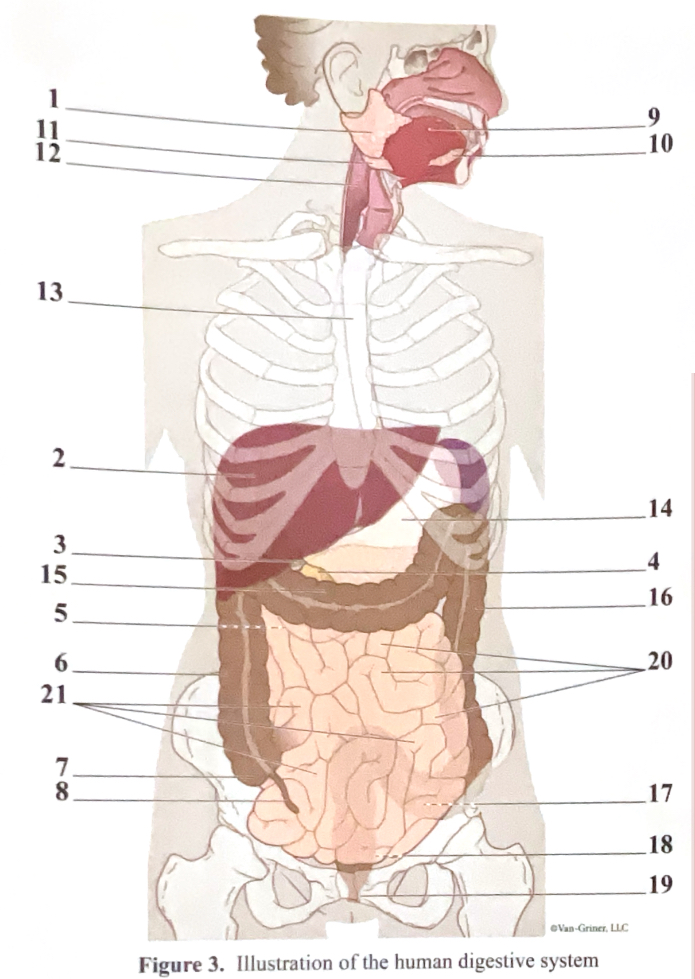
what is number 9?
tongue
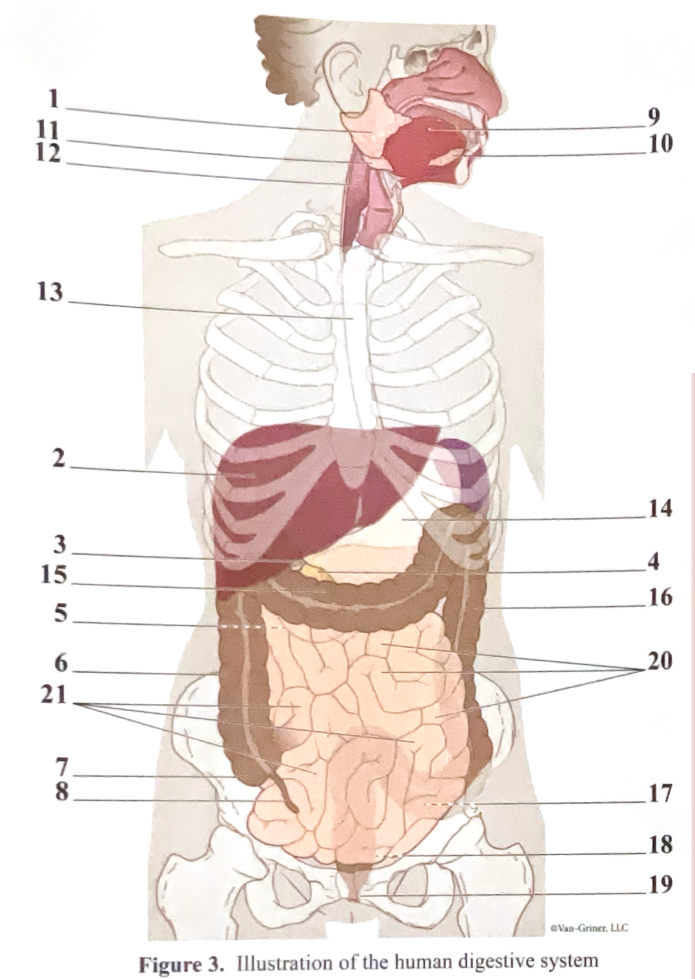
what is number 10?
sublingual salivary gland
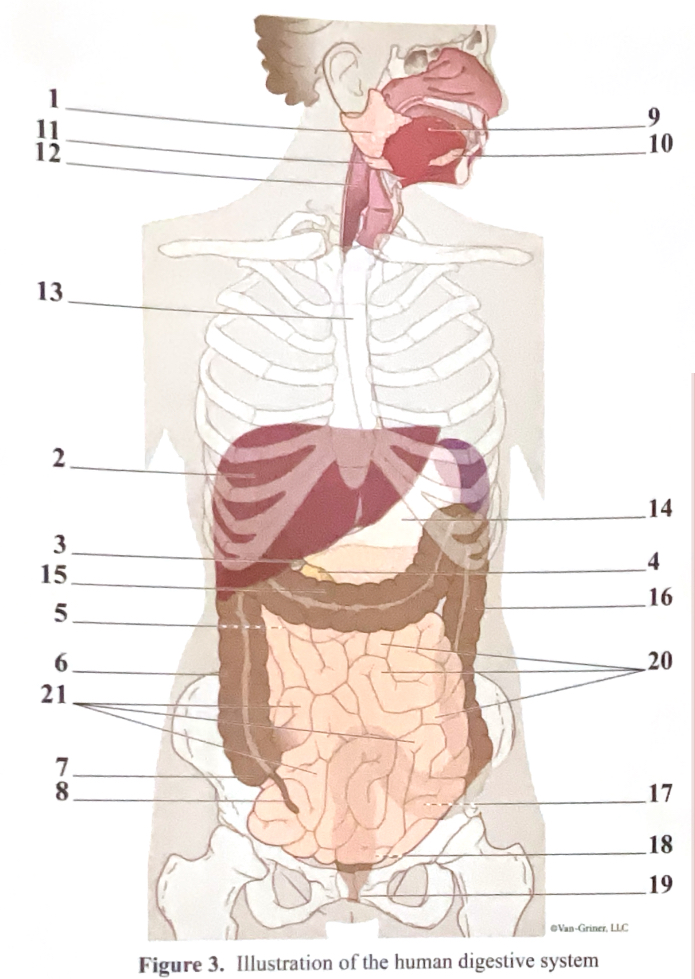
what is number 11?
submandibular salivary gland
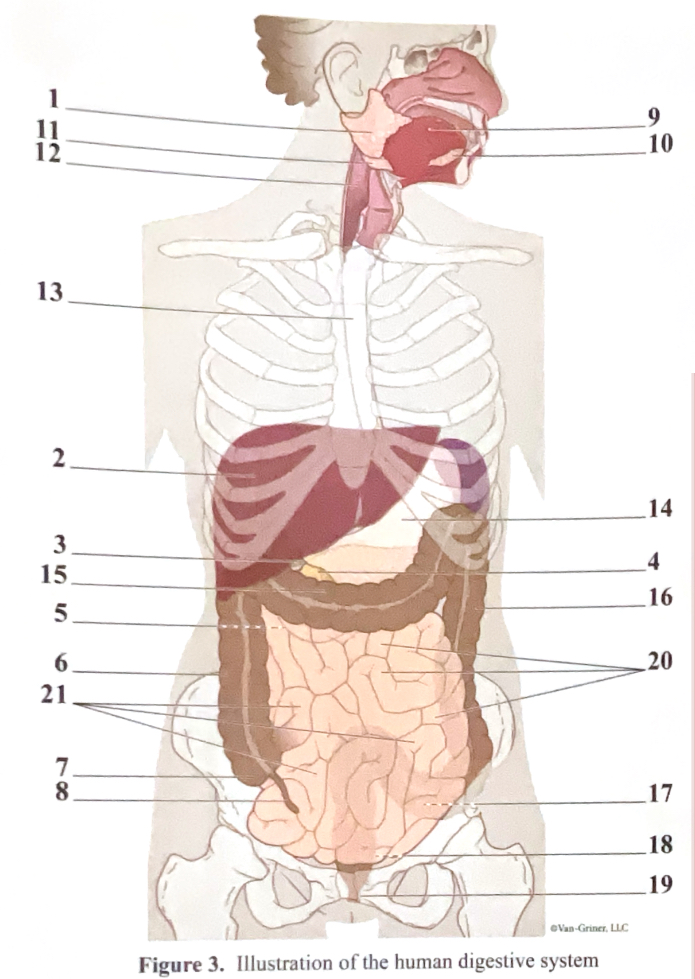
what is number 12?
pharynx
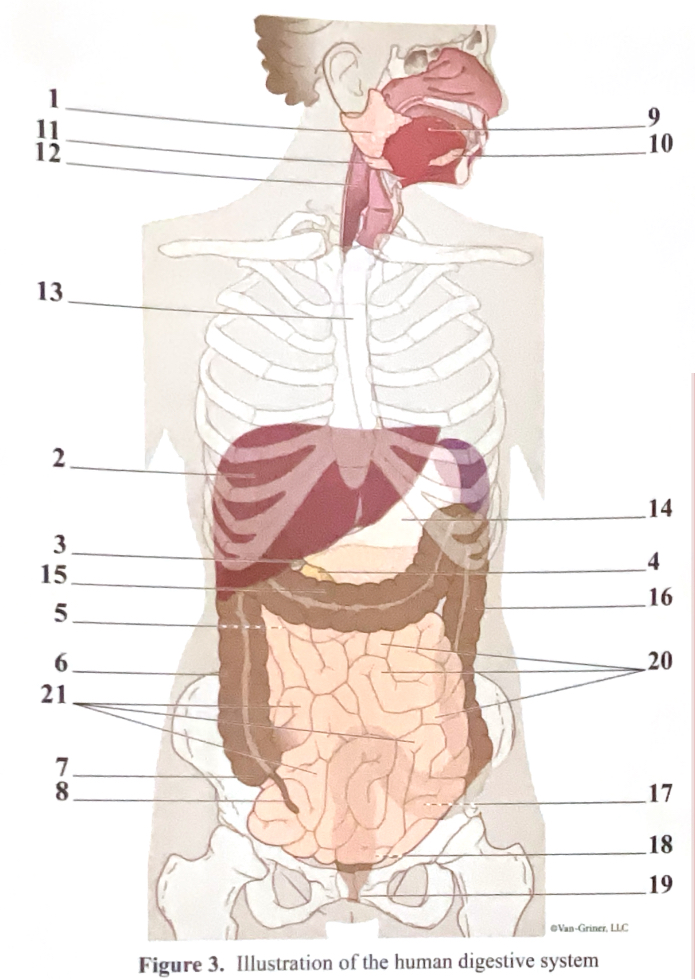
what is number 13?
esophagus
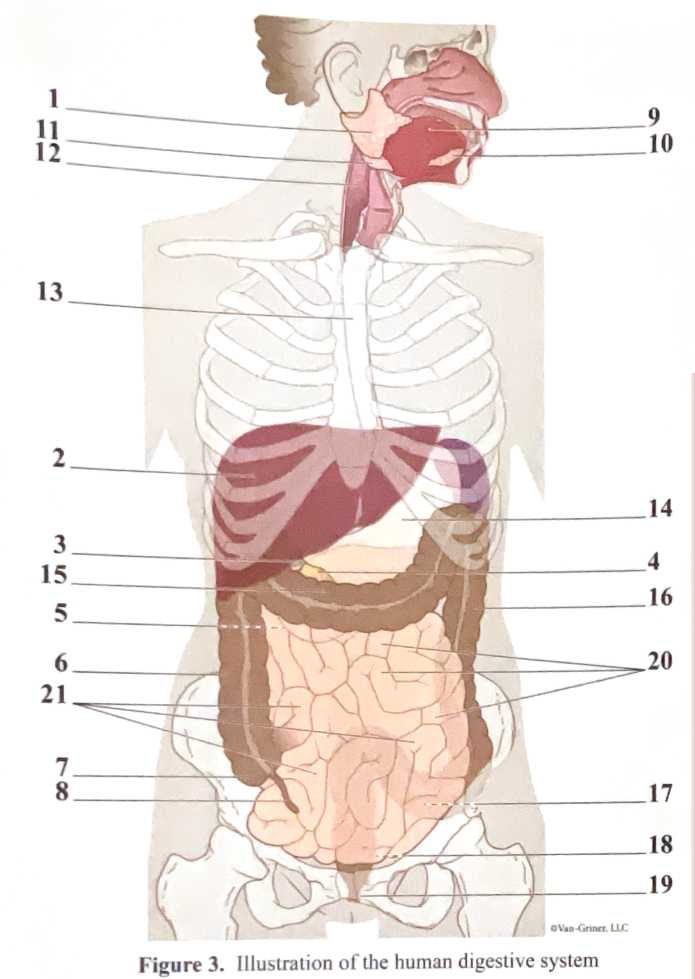
what is number 14?
stomach
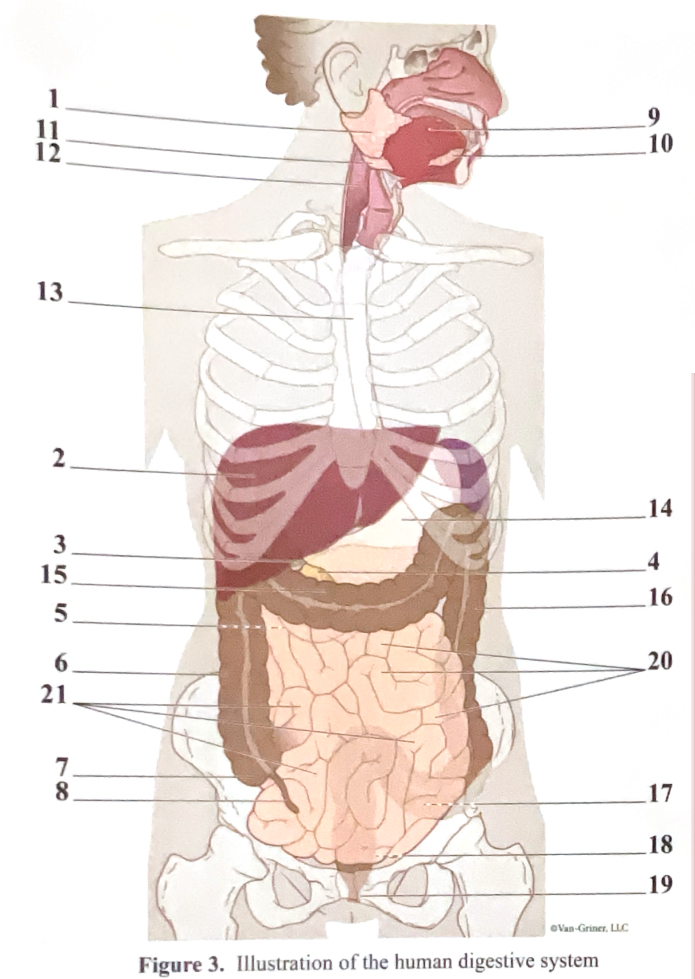
what is number 15?
transverse colon
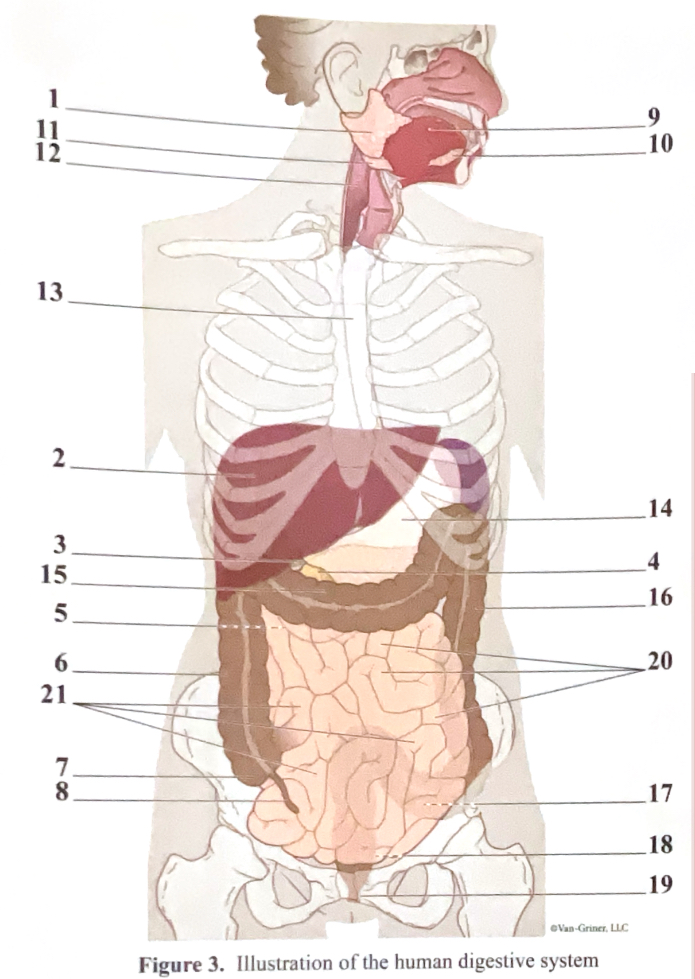
what is number 16?
descending colon
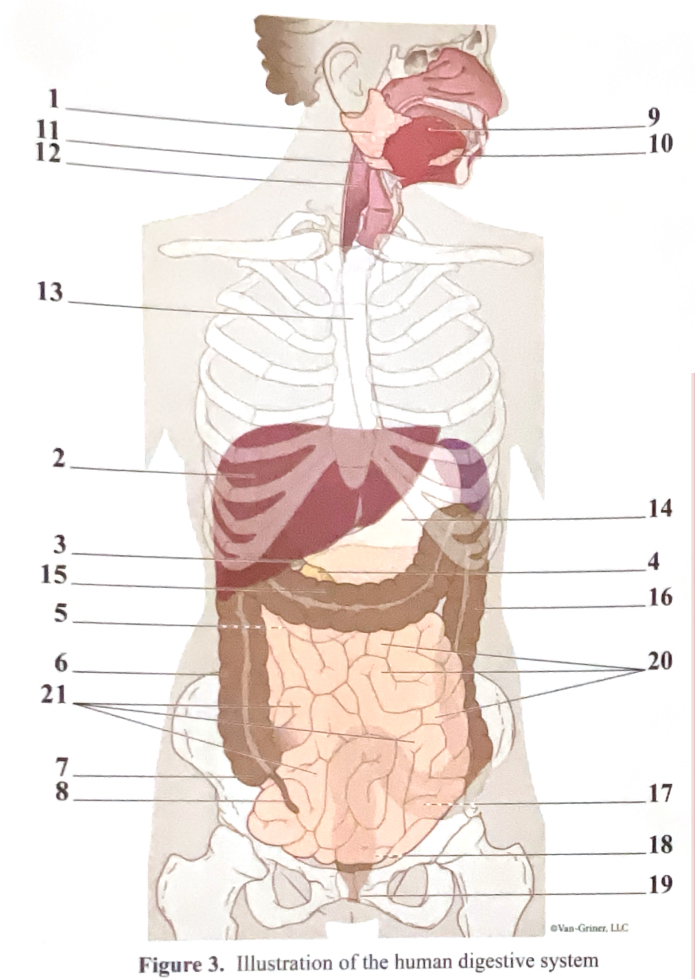
what is number 17?
sigmoid colon
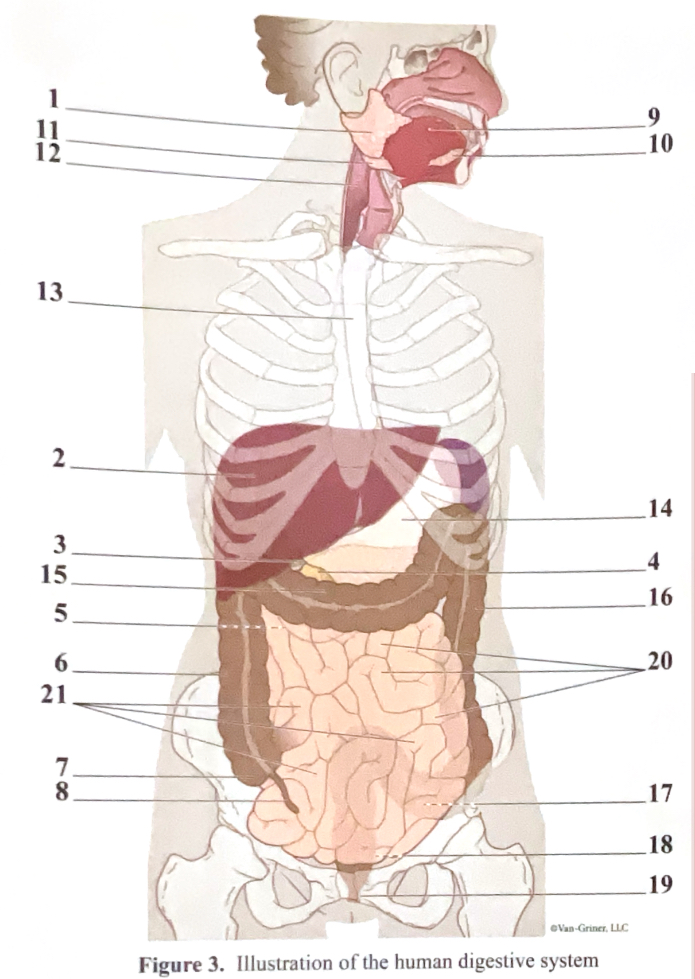
what is number 18?
rectum
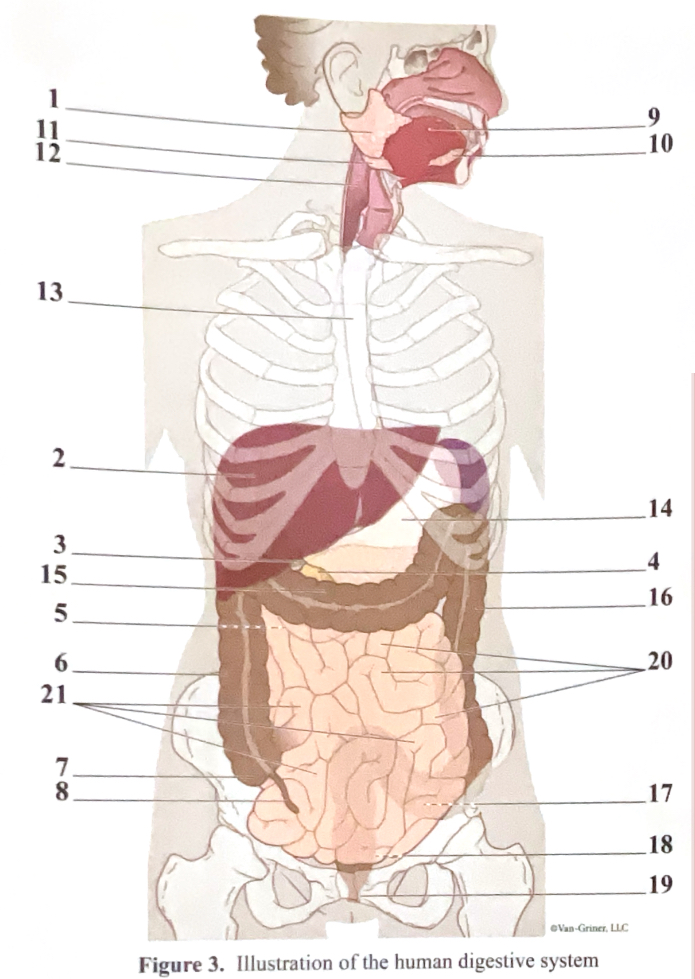
what is number 19?
anal canal
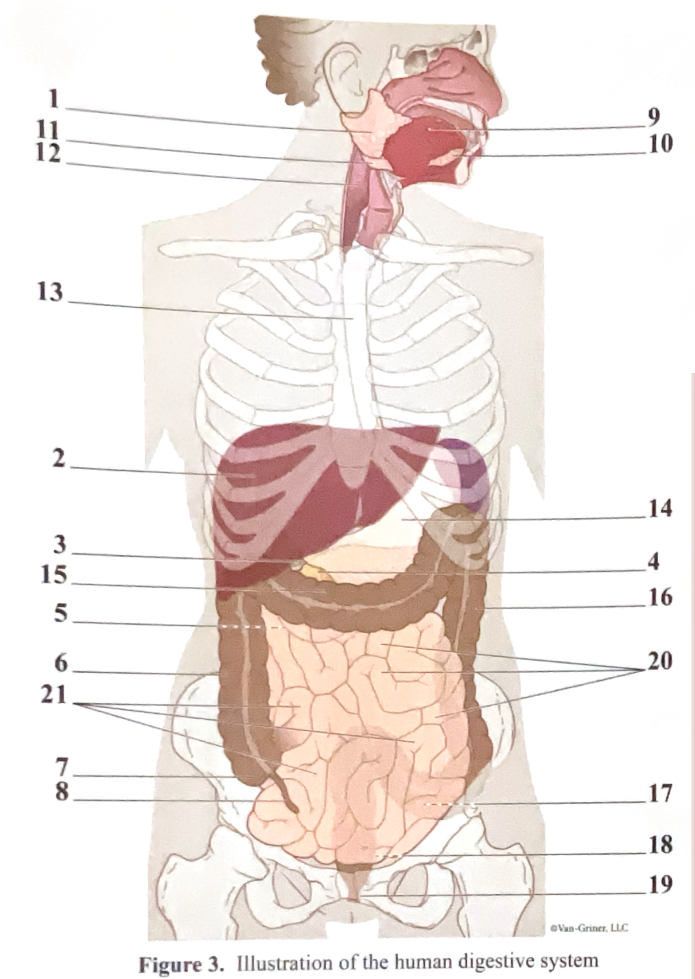
what is number 20?
jejunum (of small intestine)
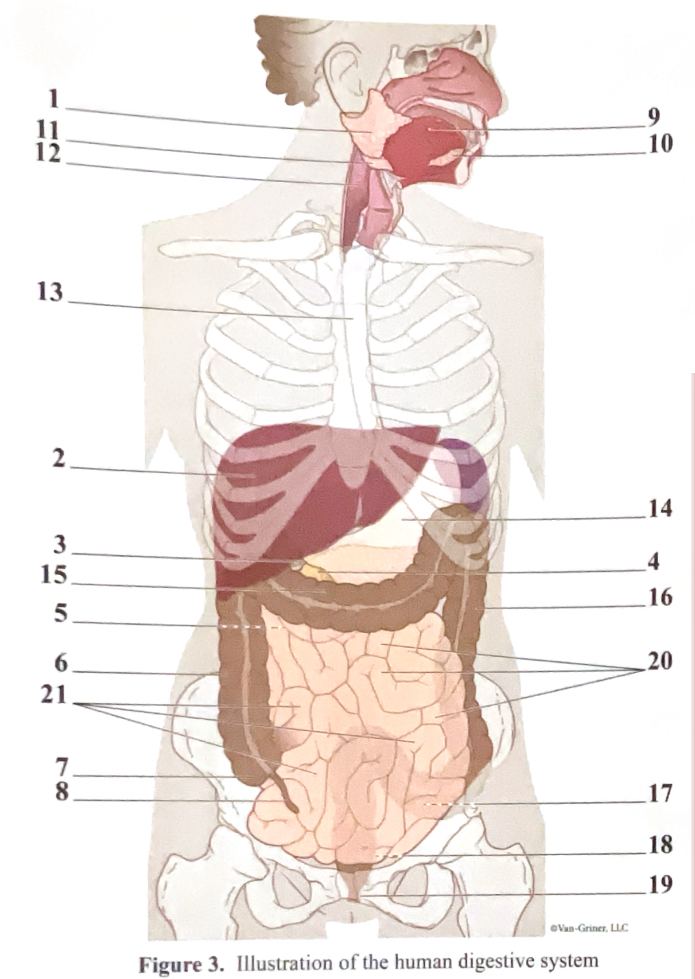
what is number 21?
ileum (of small intestine)
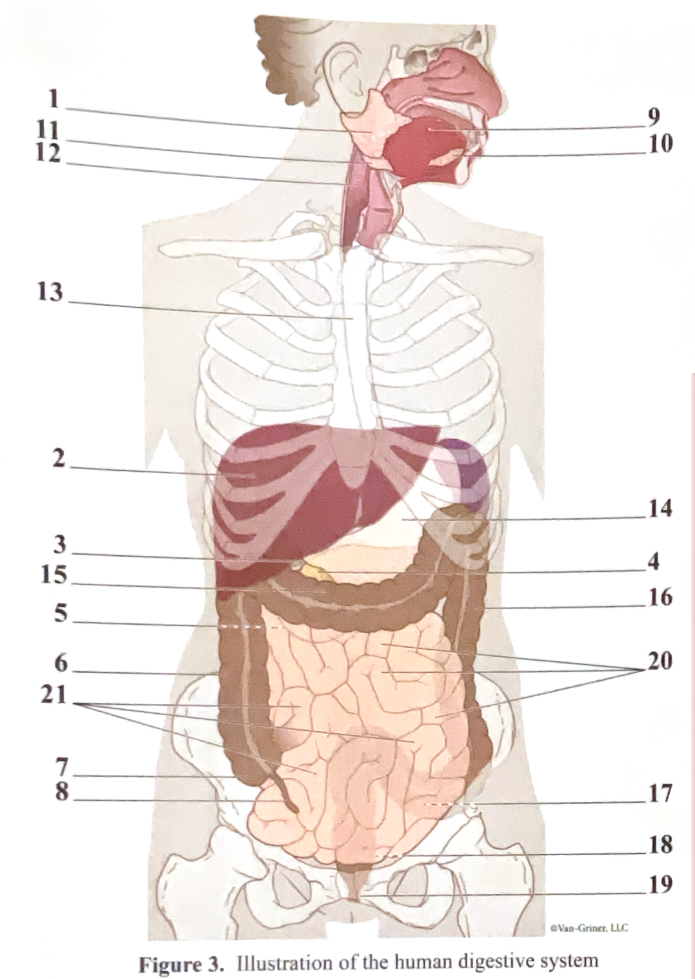
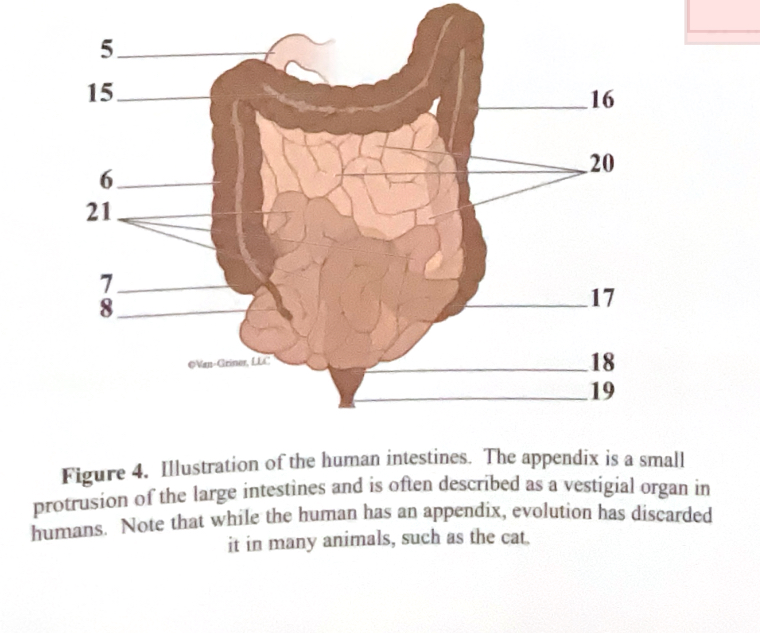
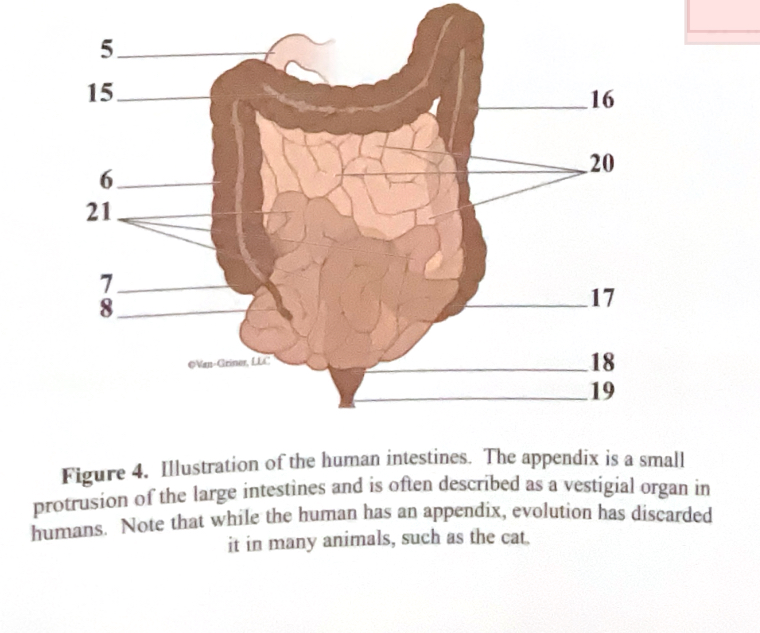
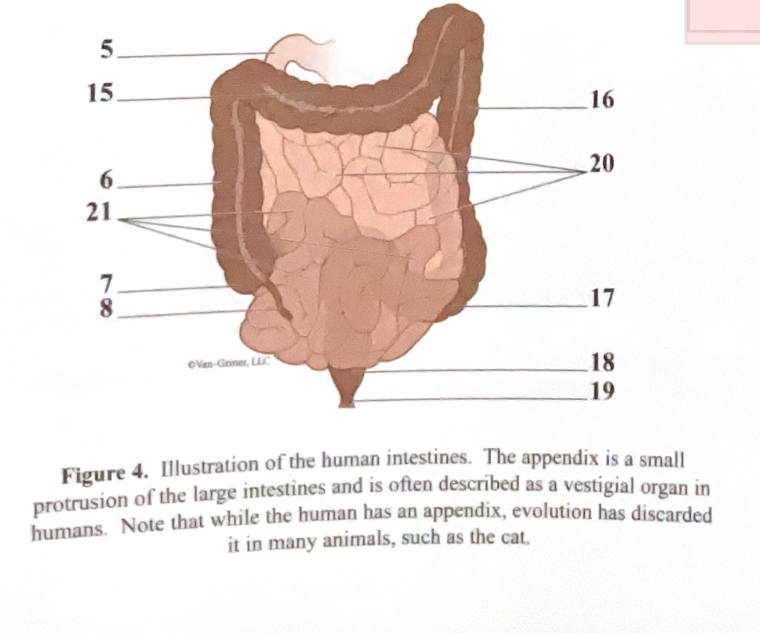
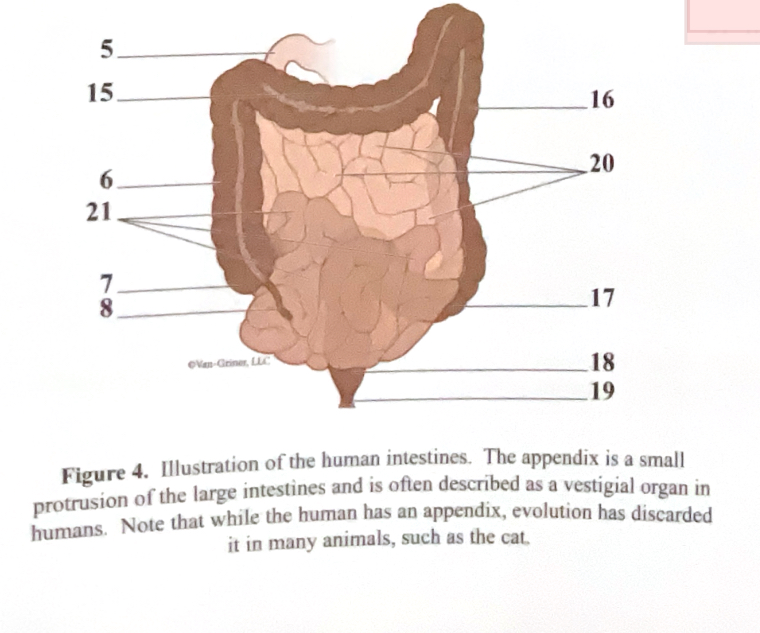
Figure 4. Illustration of the human intestines. the appendix is a small protrusion of the large intestines and is often described as a vestigial organ in humans. note that while the human has an appendix, evolution has discarded it in many animals. such as the cat
what is number 5?
duodenum (of small intestine)
what is number 6?
ascending colon
what is number 7?
cecum
what is number 8?
appendix
what is number 15?
transverse colon
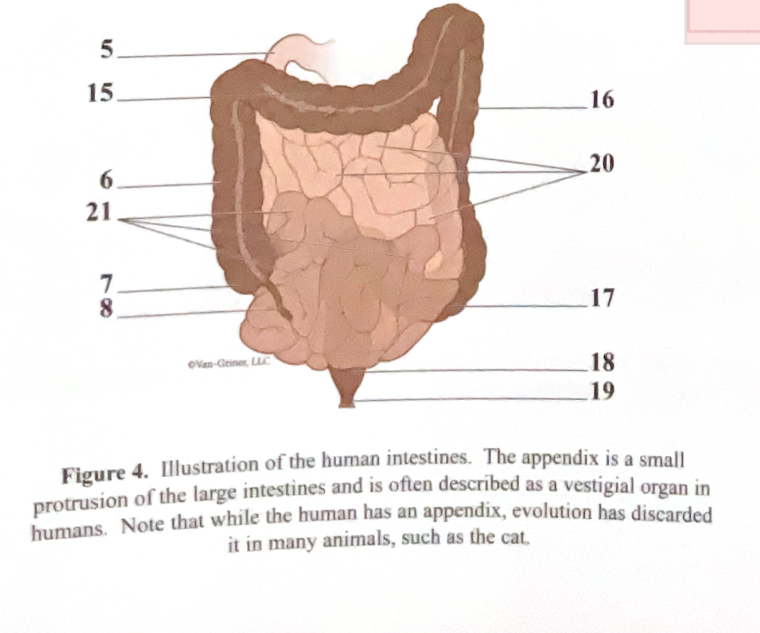
what is number 16?
descending colon
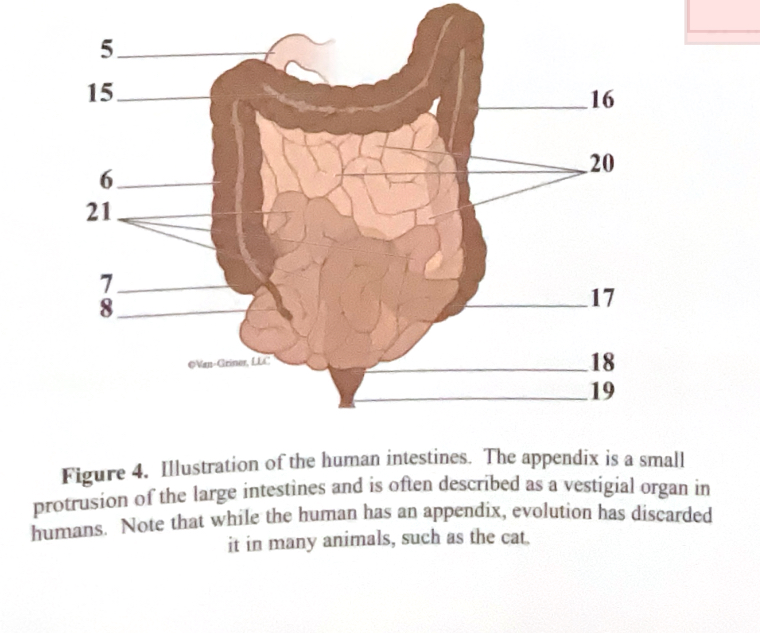
what is number 17?
sigmoid colon
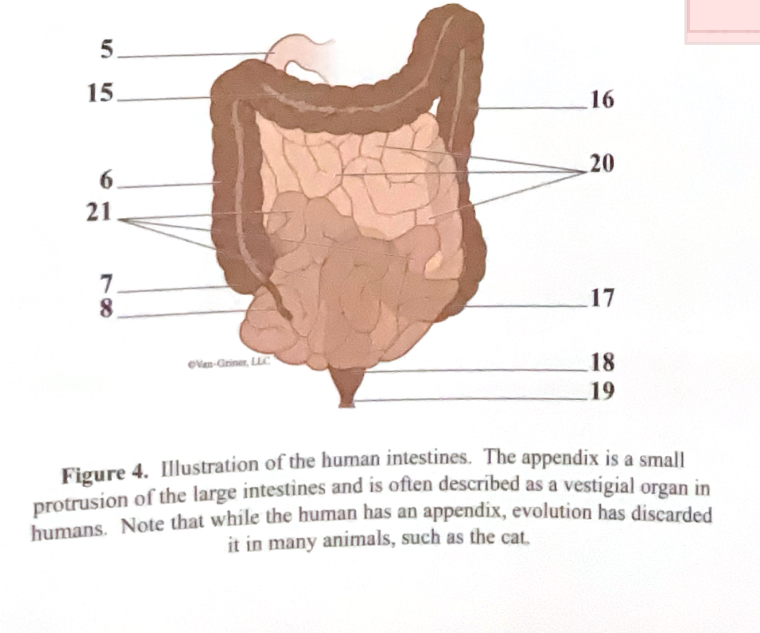
what is number 18?
rectum
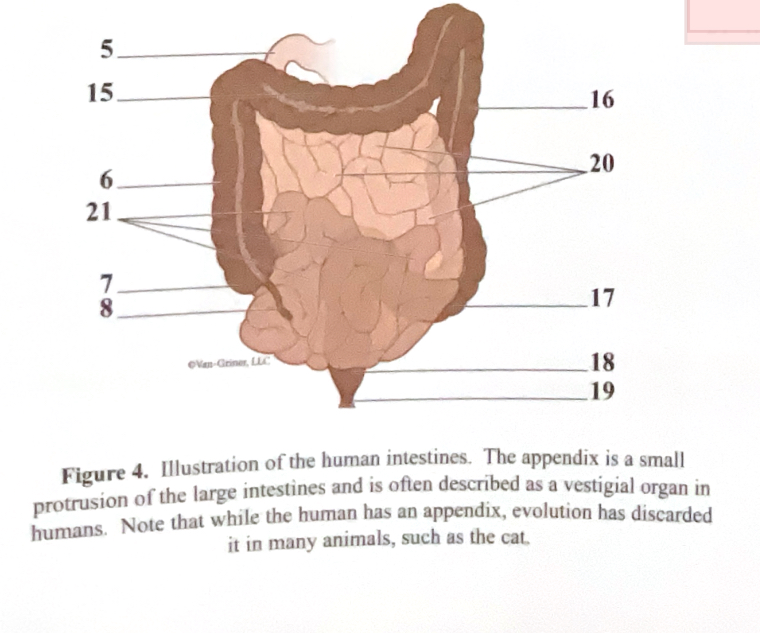
what is number 19?
anal canal
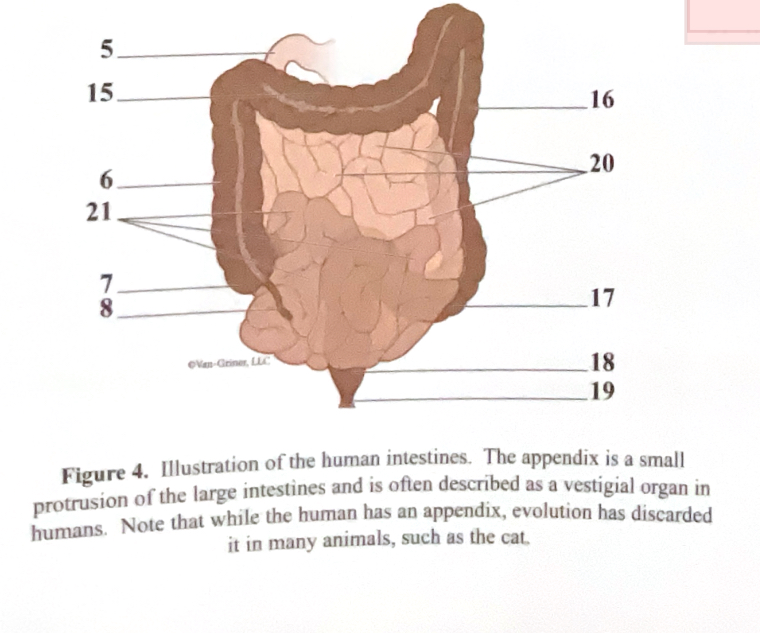
what is number 20?
jejunum (of small intestine)
what is number 21?
ileum (of small intestine)
Figure 5. Illustration of the feline digestive system. note that the greater omentum has been removed in order to see the organs that lie beneath
what is number 1?
medial lobe of liver
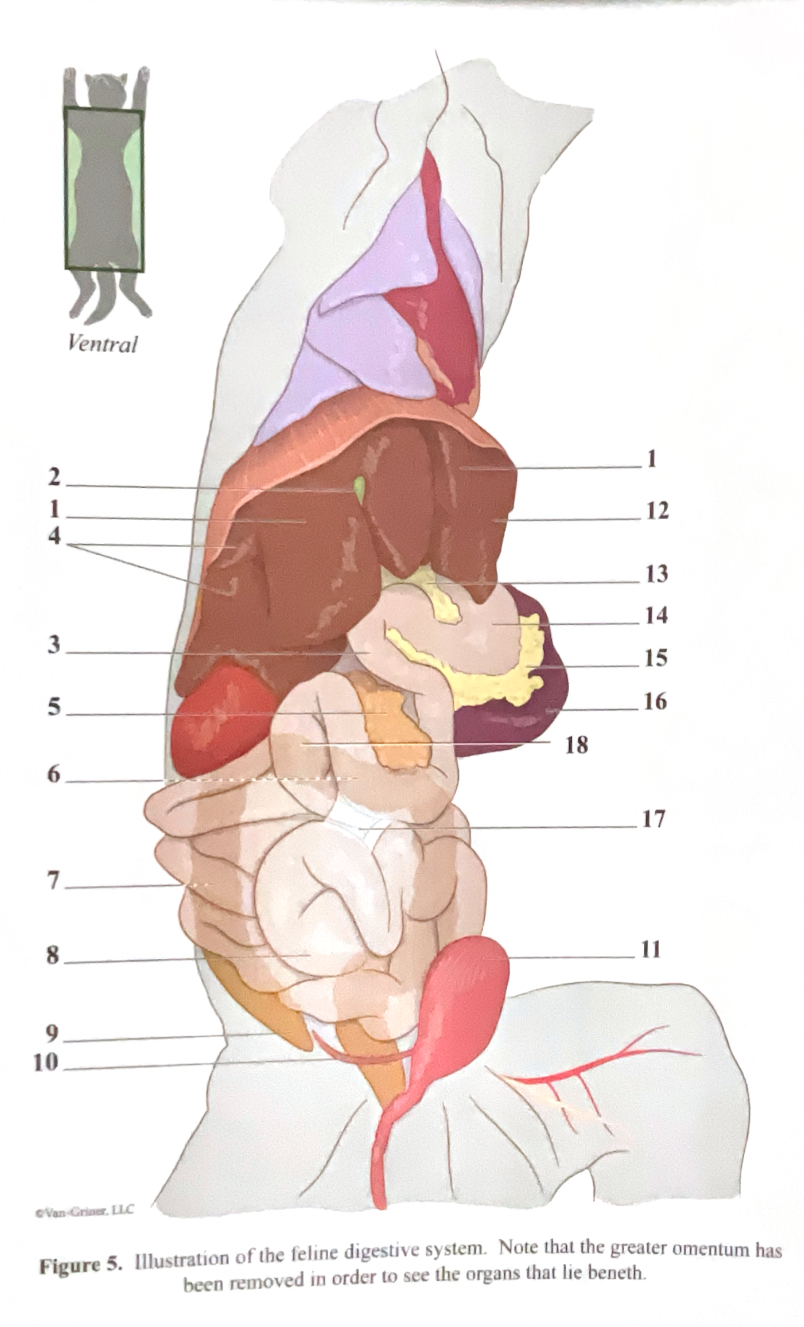
what is number 2?
gallbladder
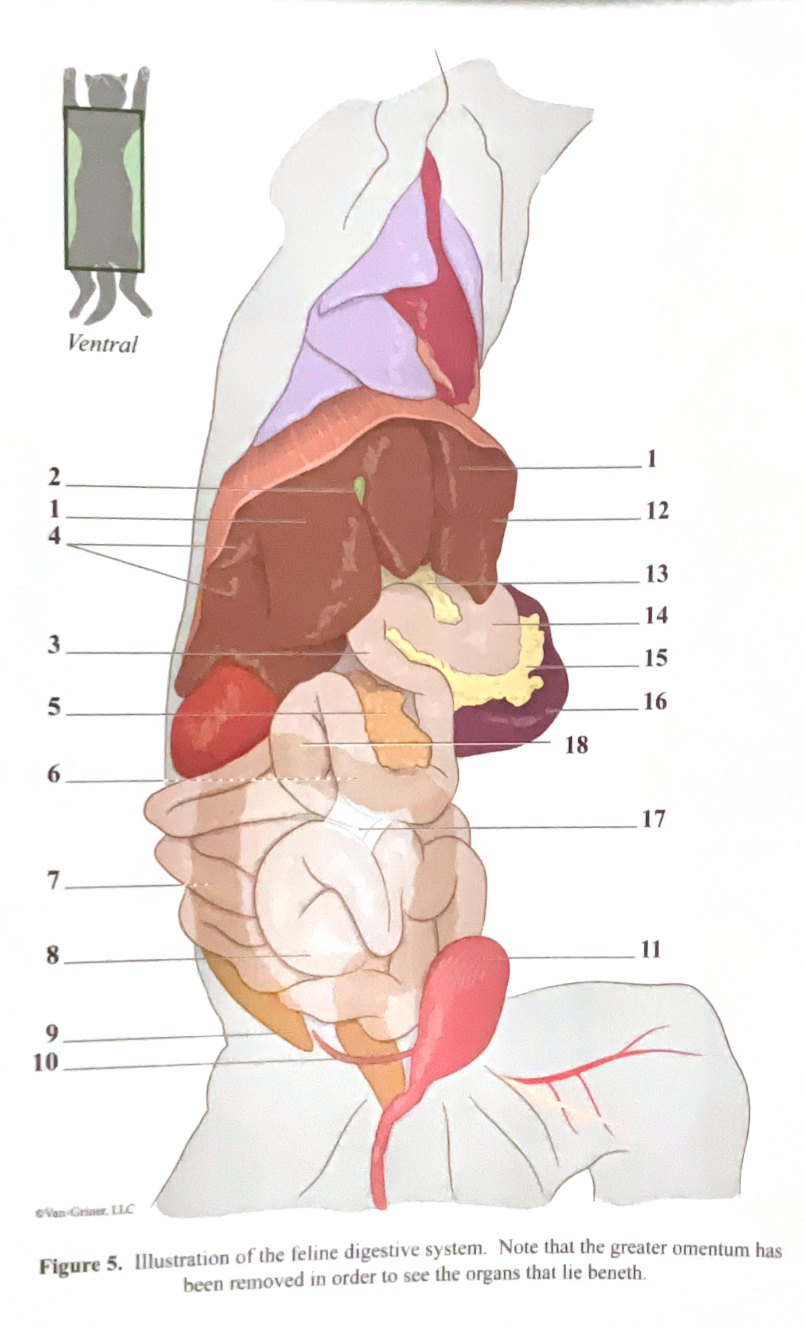
what is number 3?
duodenum
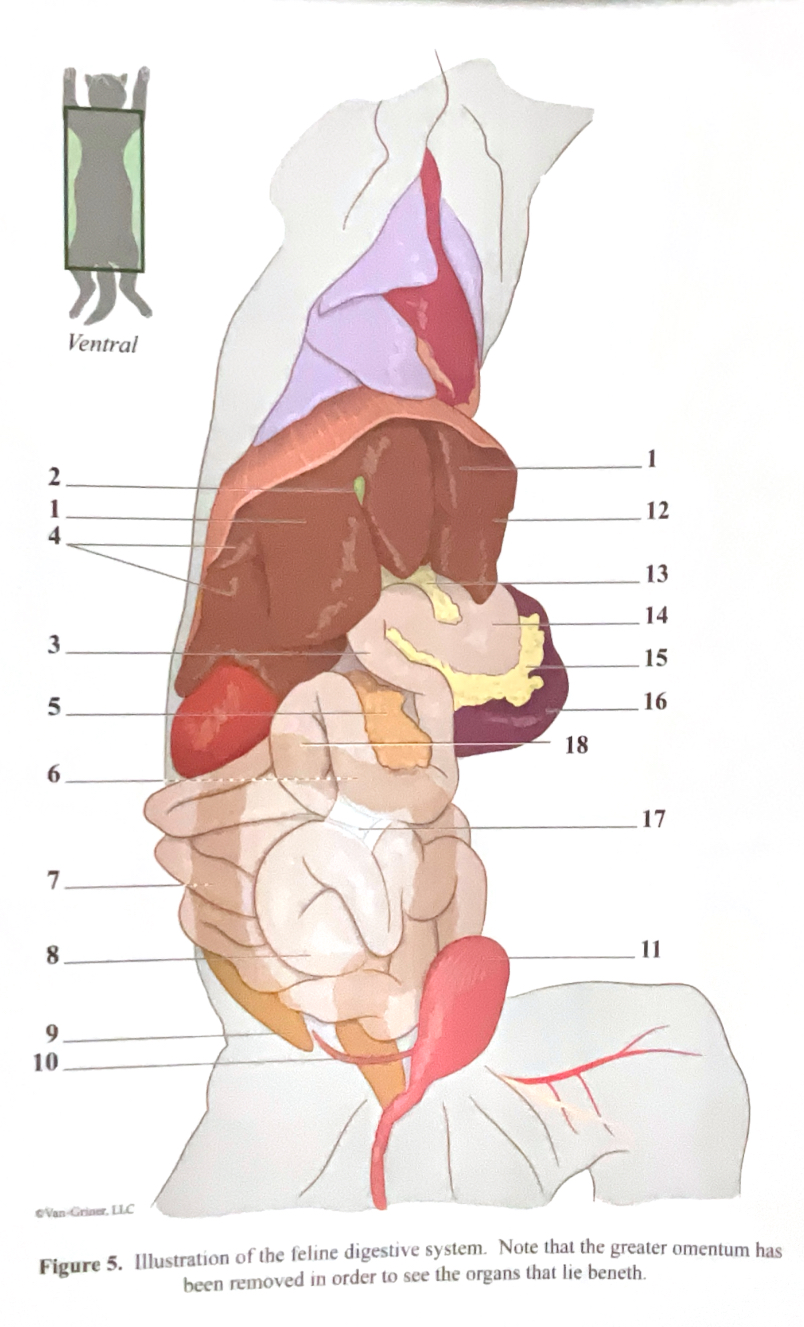
what is number 4?
right lateral lobe of liver
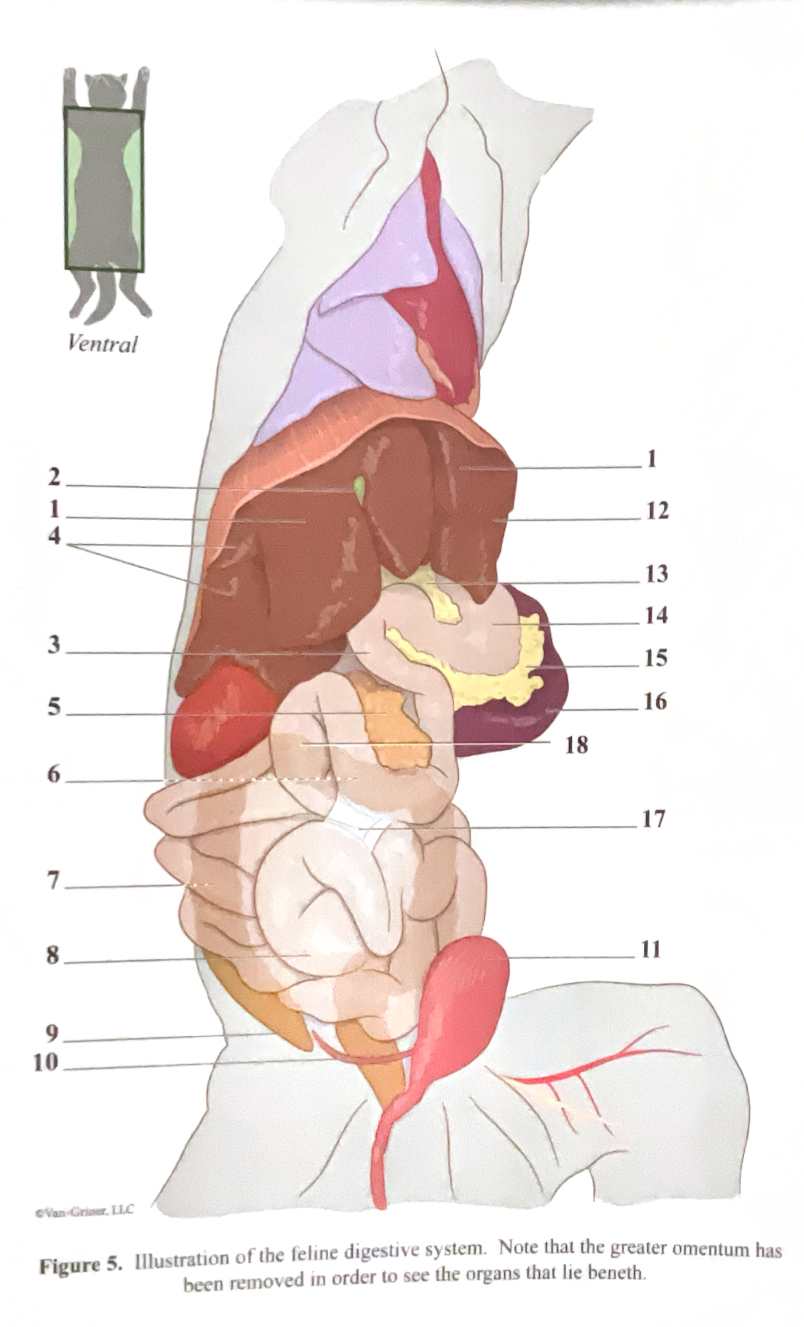
what is number 5?
pancreas
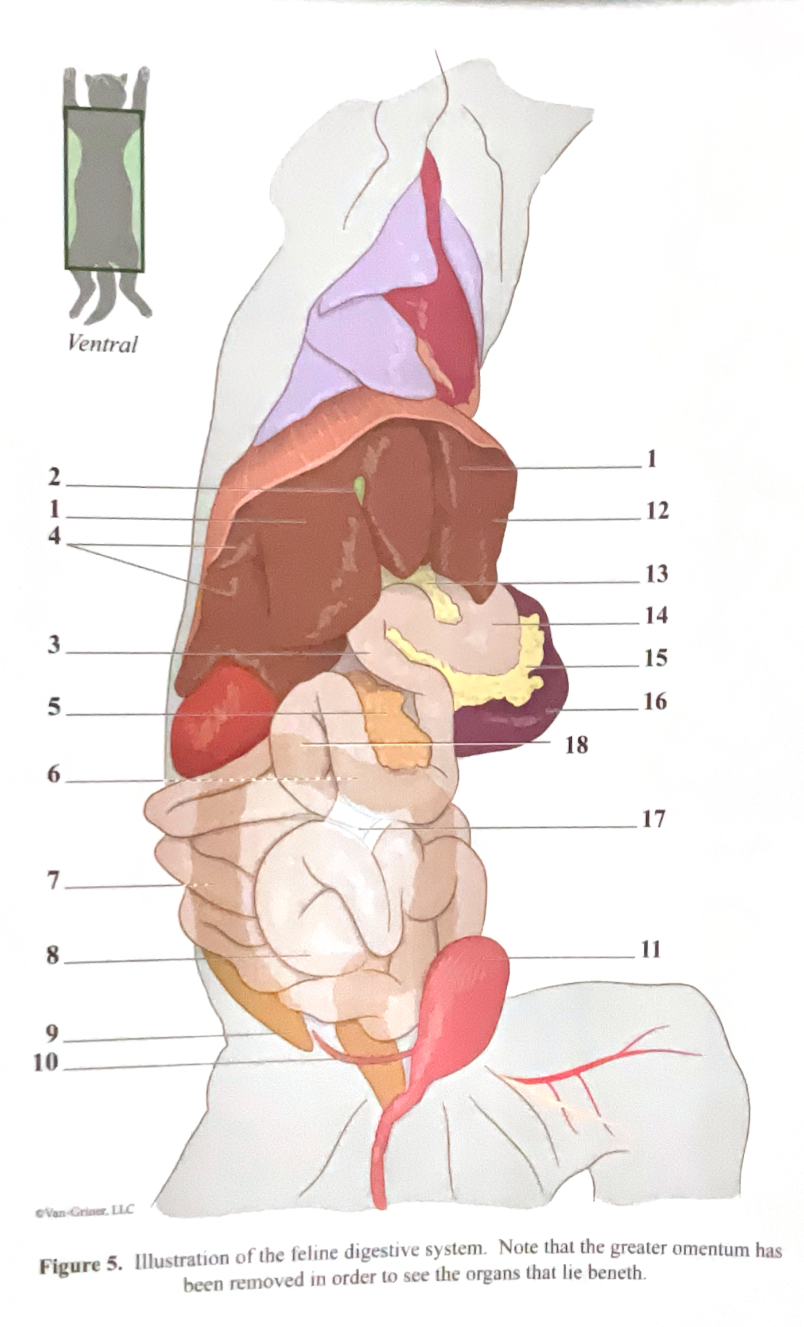
what is number 6?
transverse colon
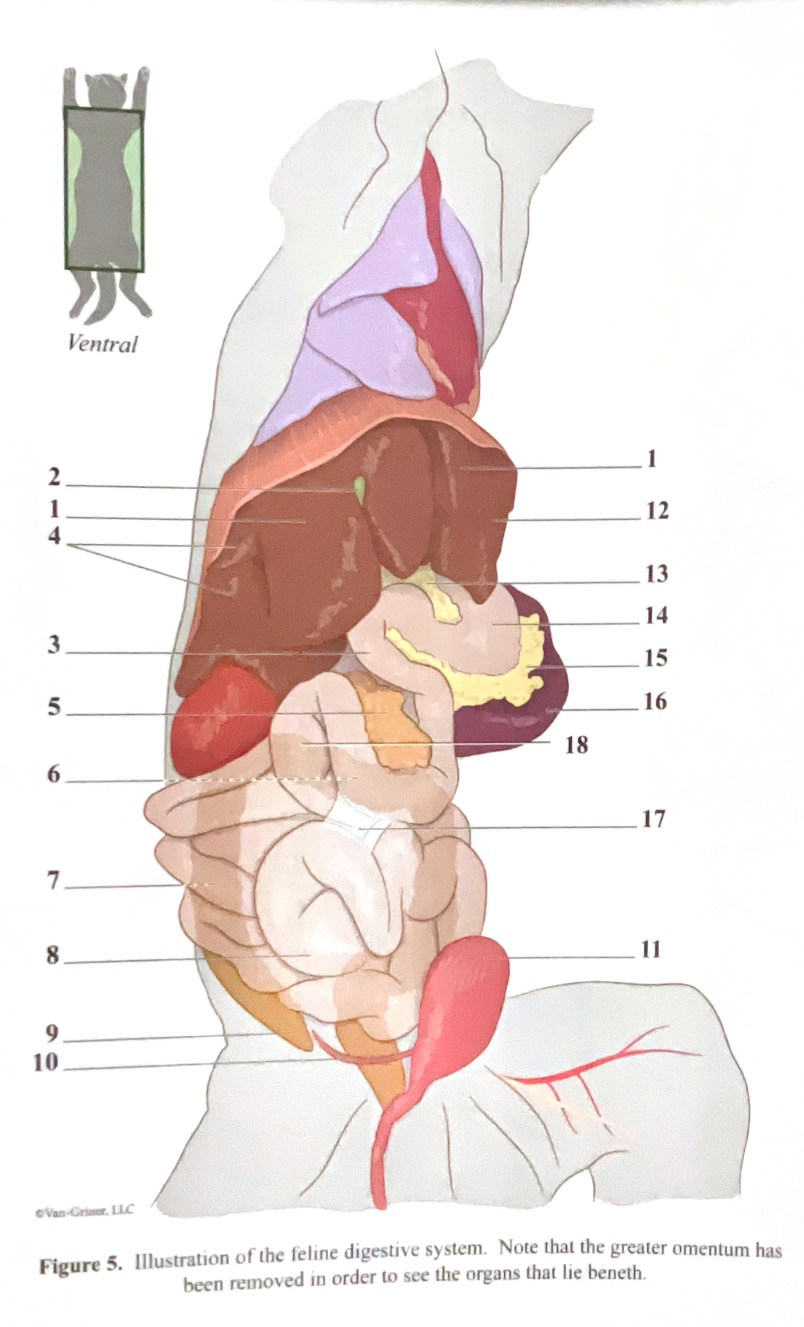
what is number 7?
ascending colon
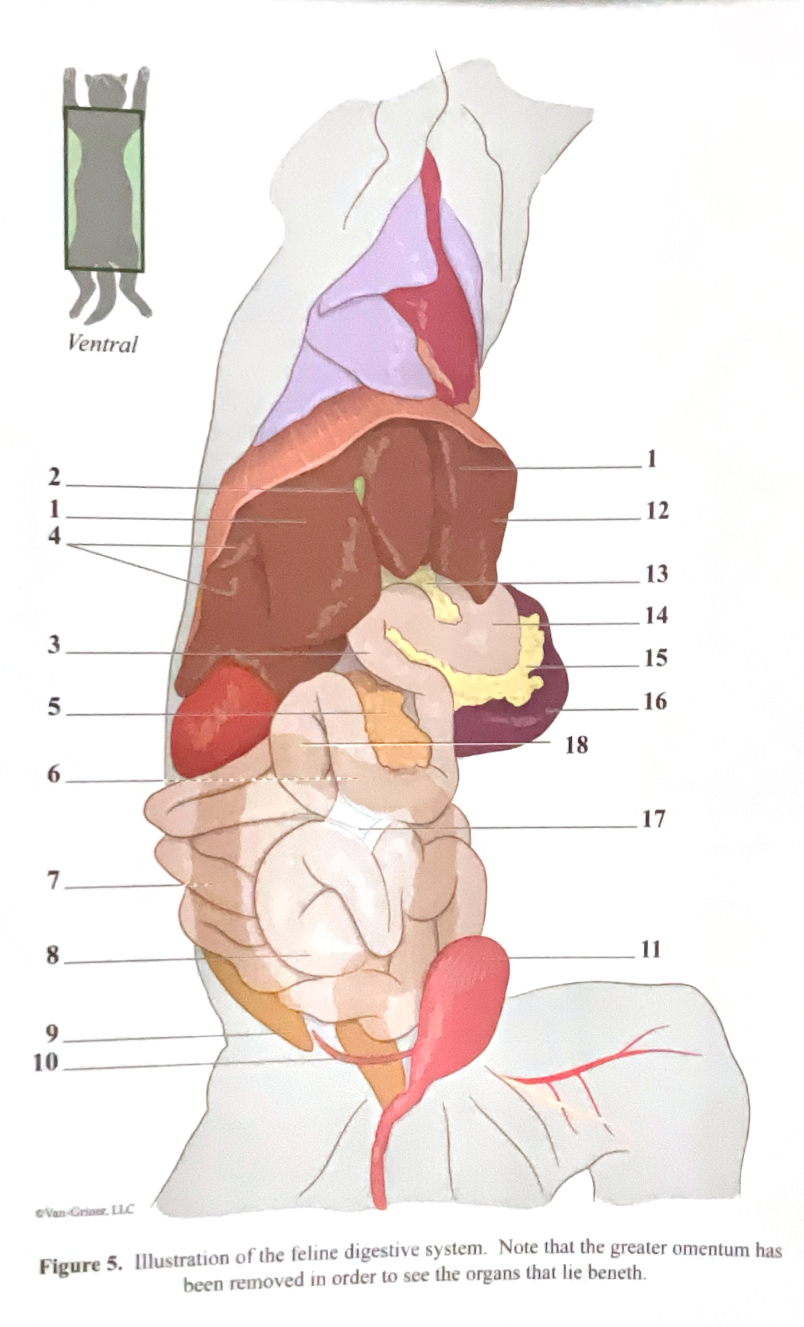
what is number 8?
ileum
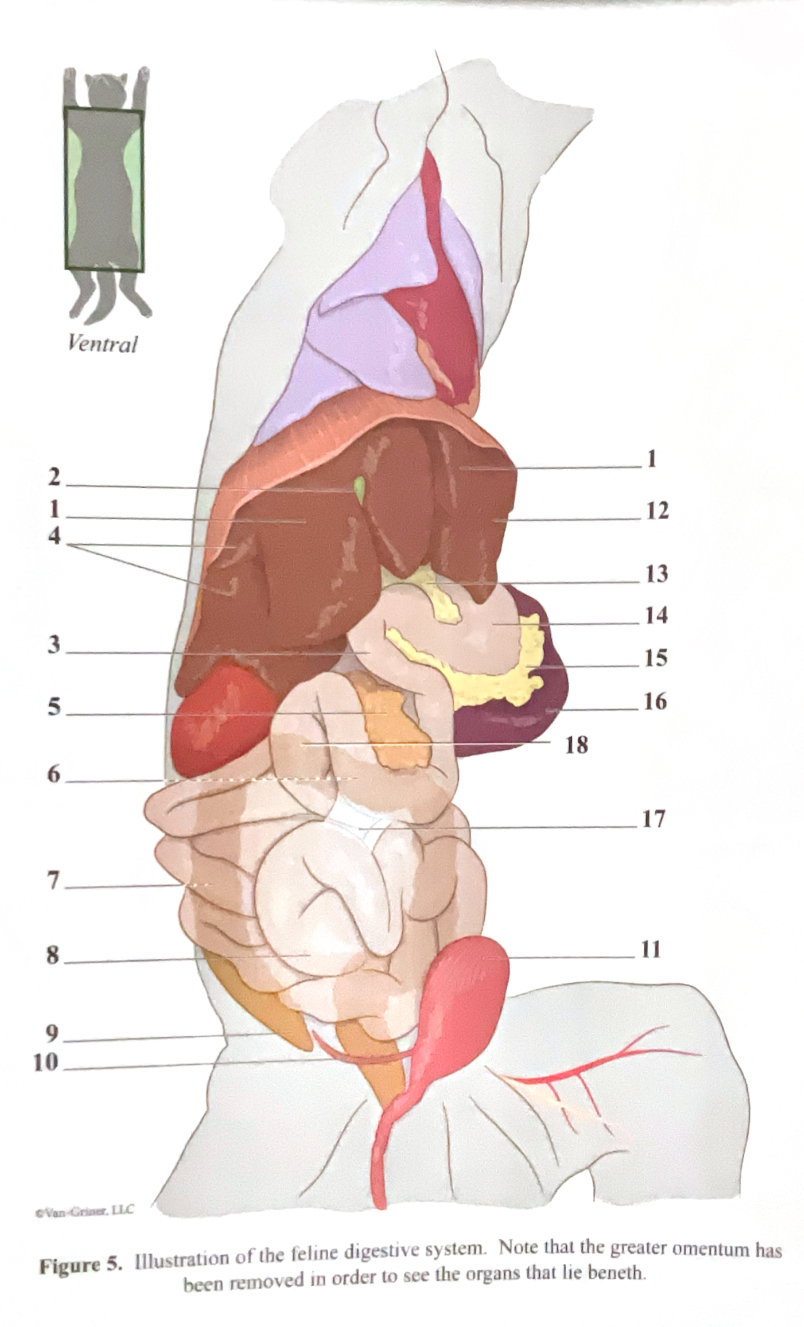
what is number 9?
cecum
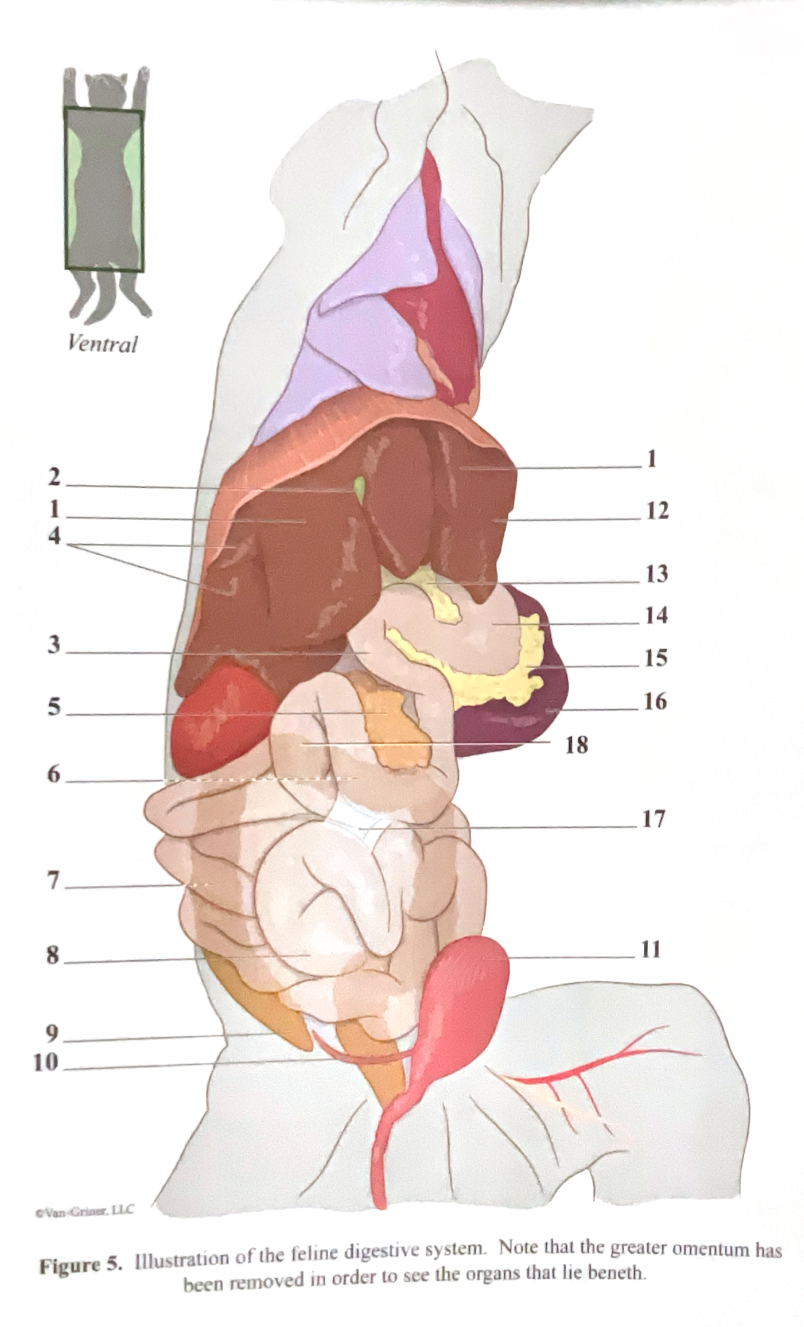
what is number 10?
ureter
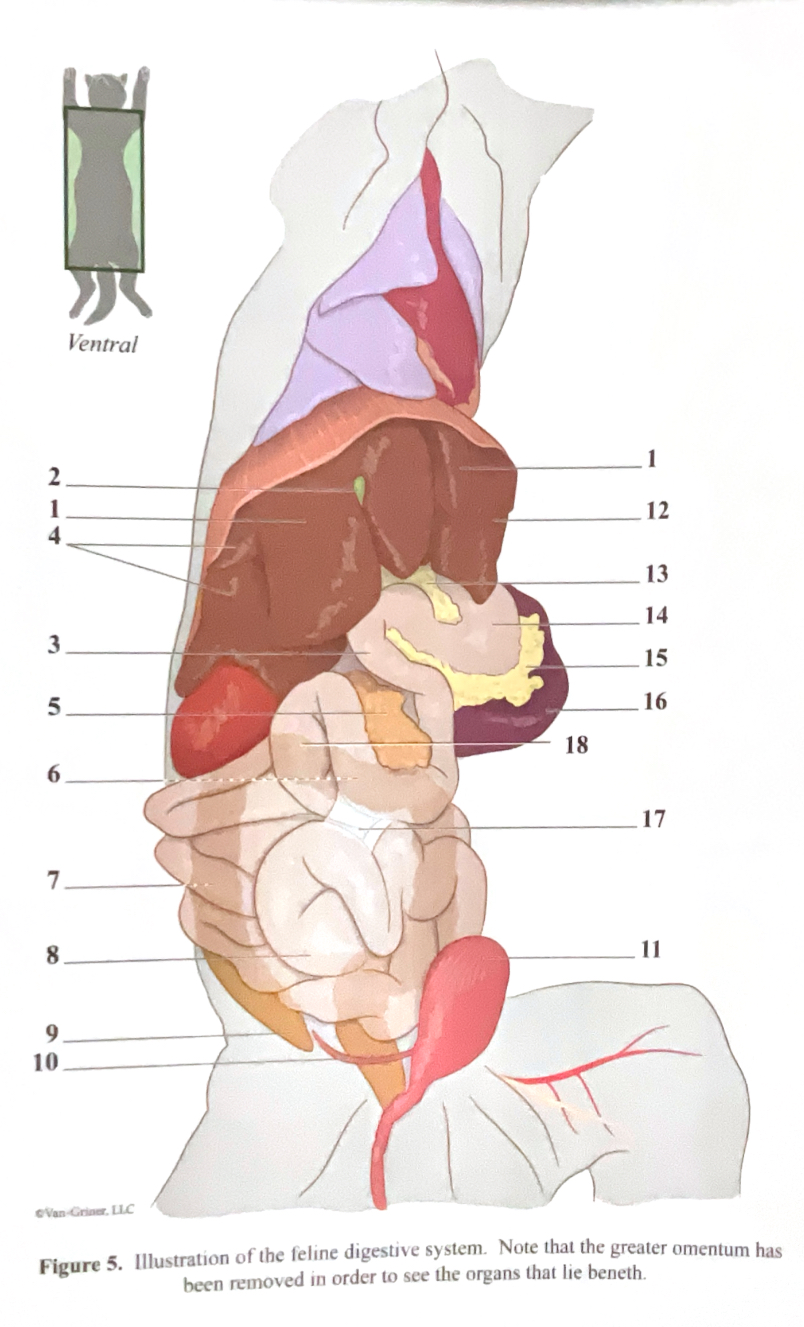
what is number 11?
urinary bladder
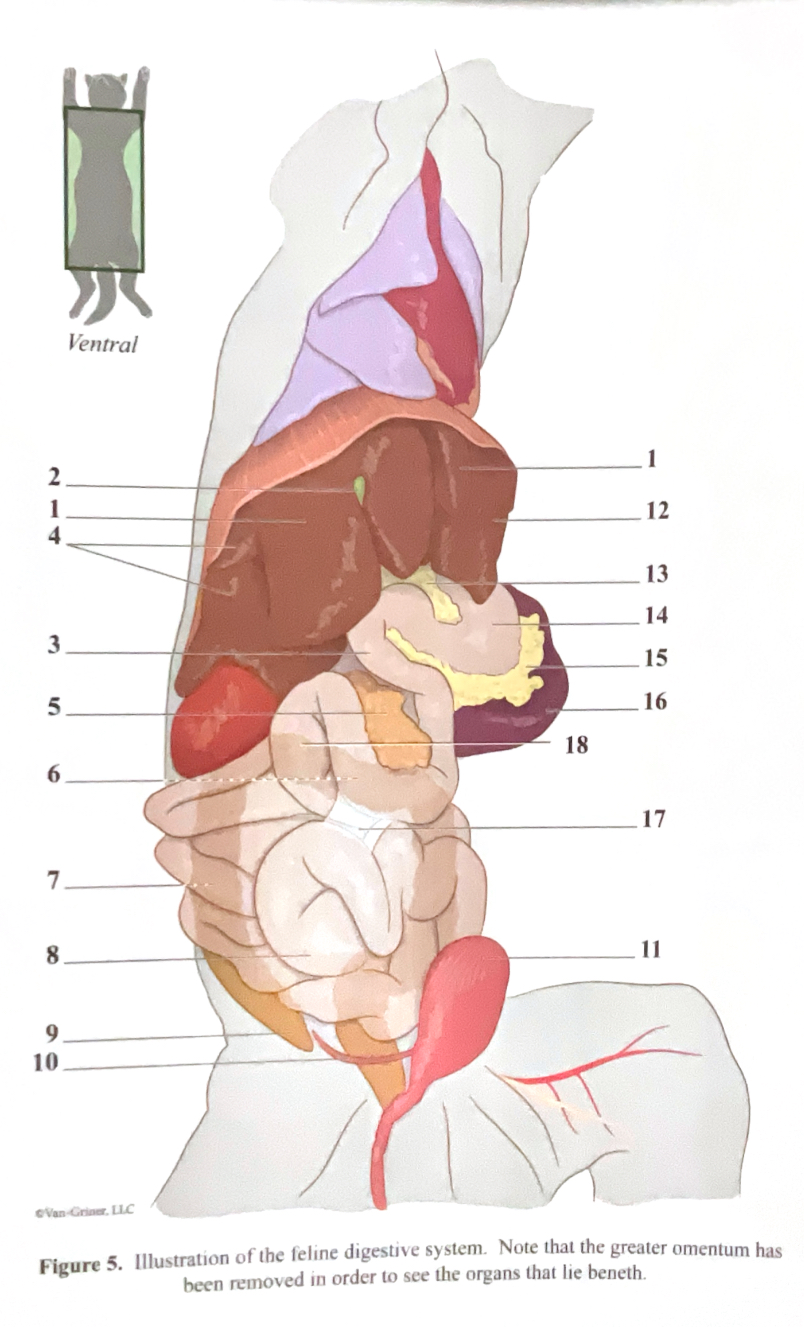
what is number 12?
left lateral lobe of liver
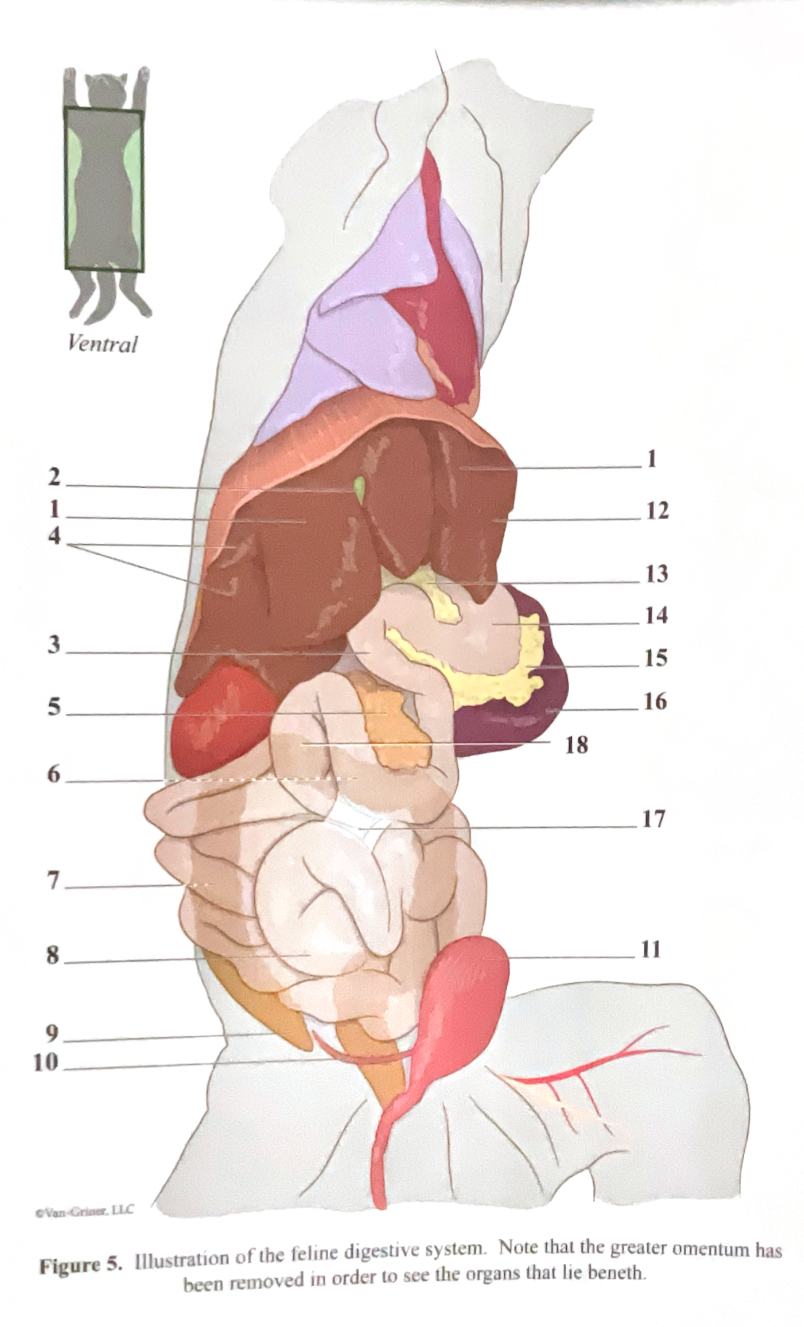
what is number 13?
lesser omentum (hepatoduodenal ligament)
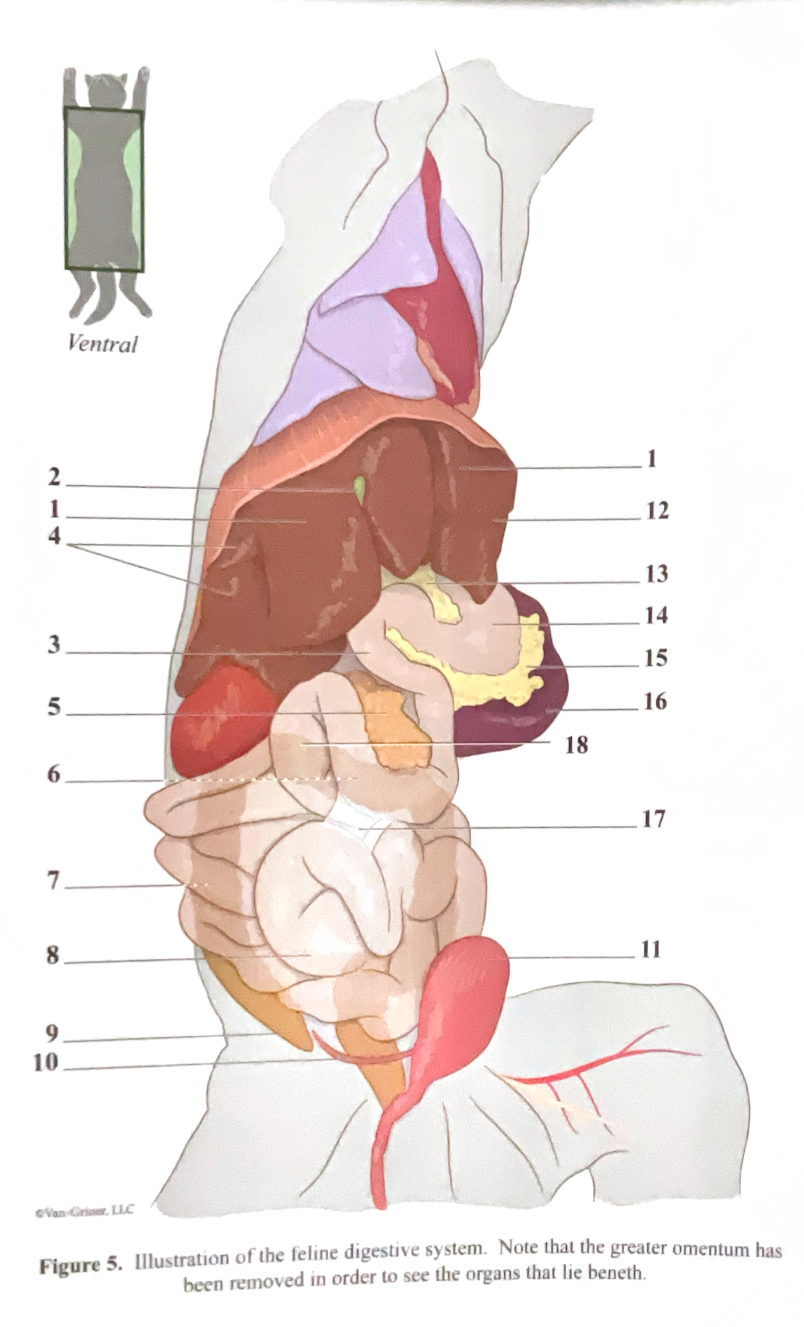
what is number 14?
stomach
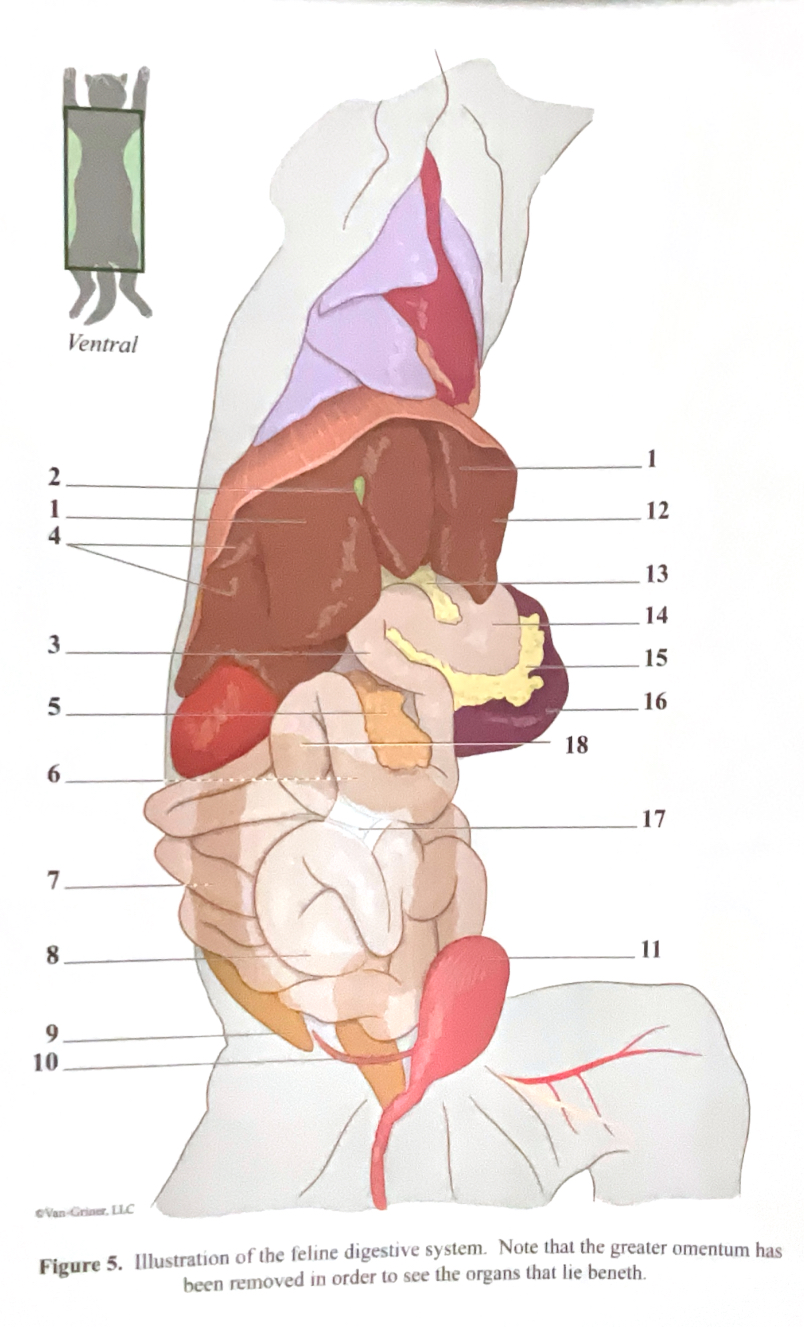
what is number 15?
gastroplenic ligament
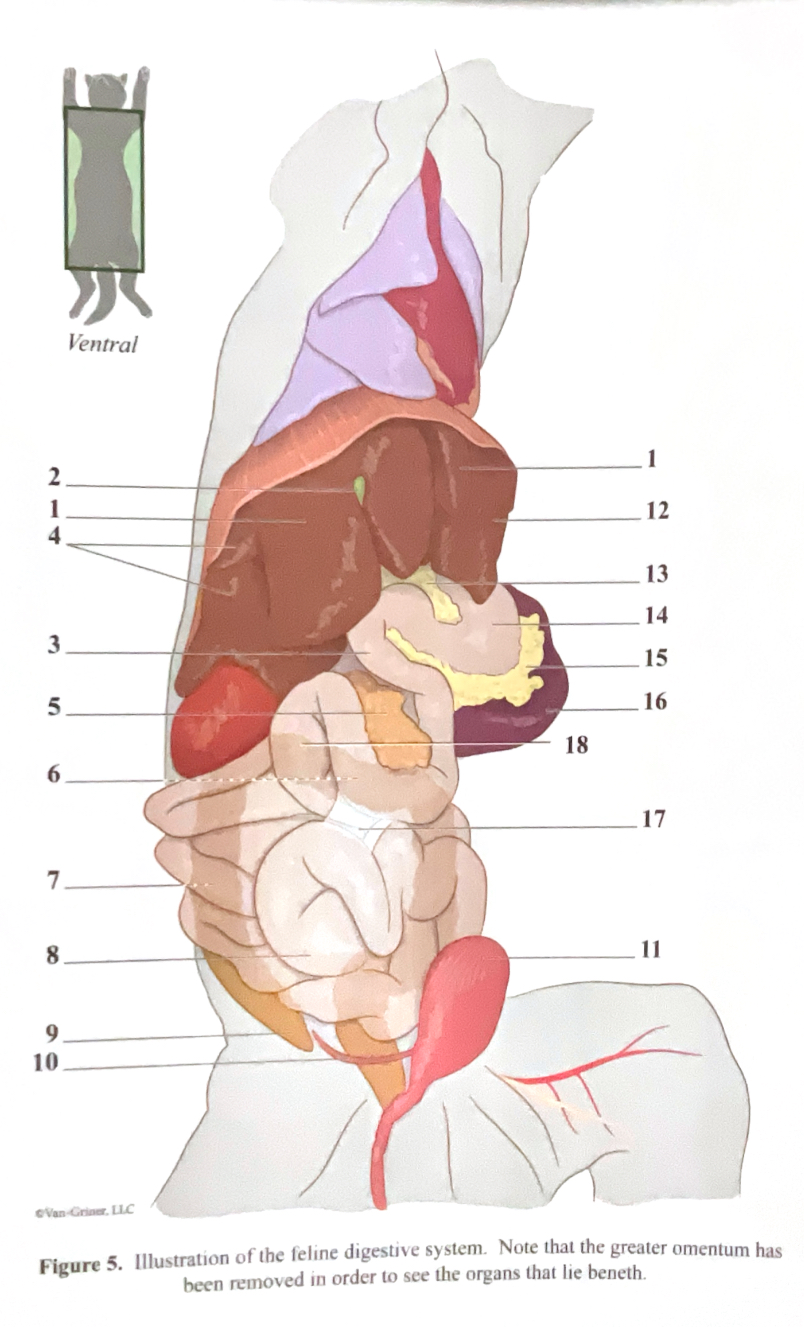
what is number 16?
spleen
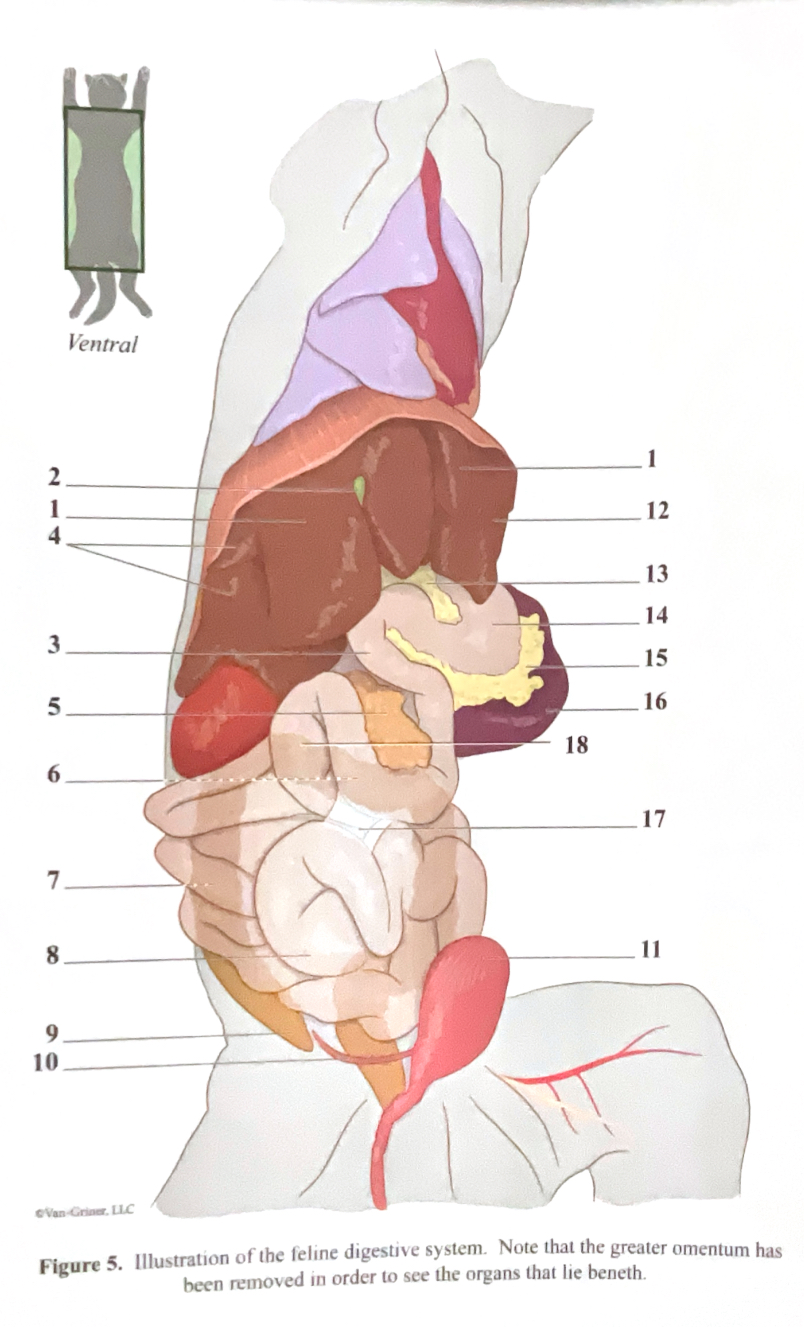
what is number 17?
mesocolon
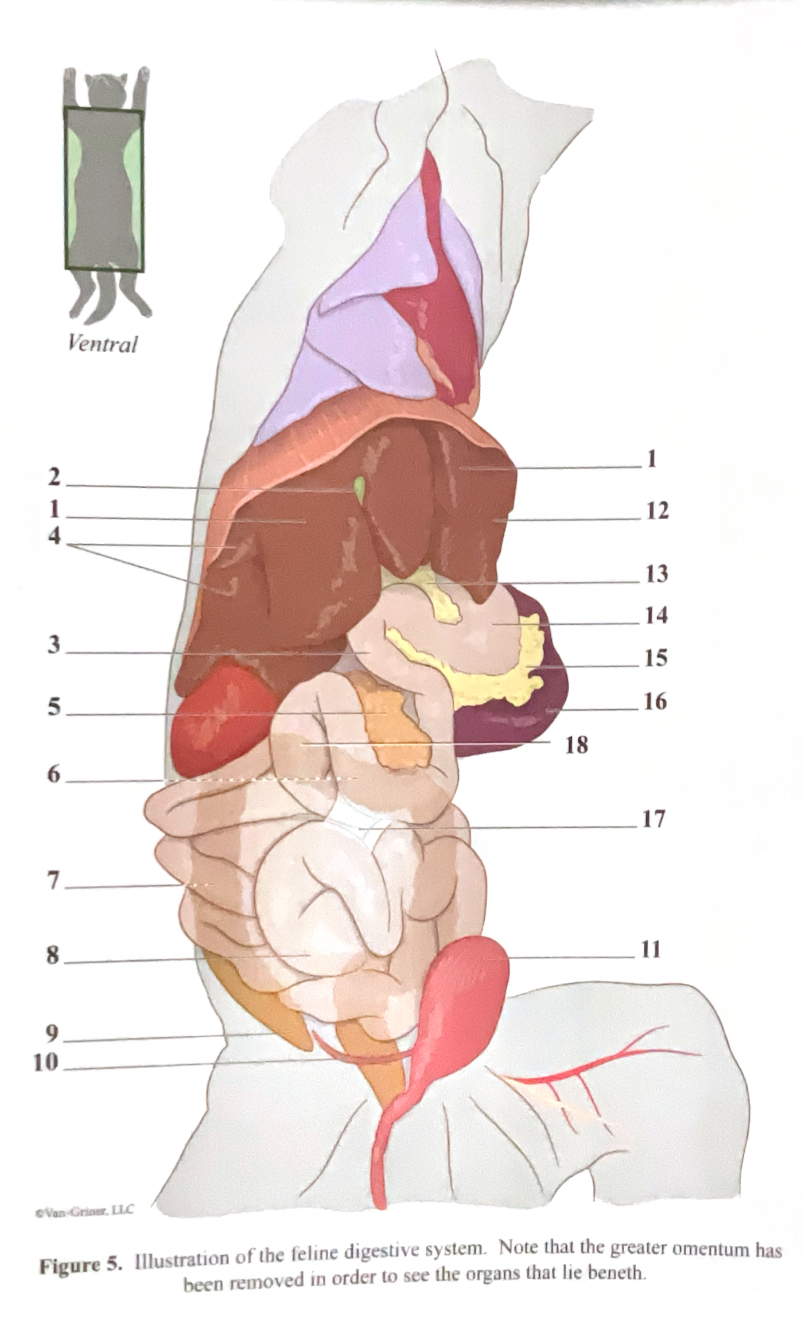
what is number 18?
jejunum
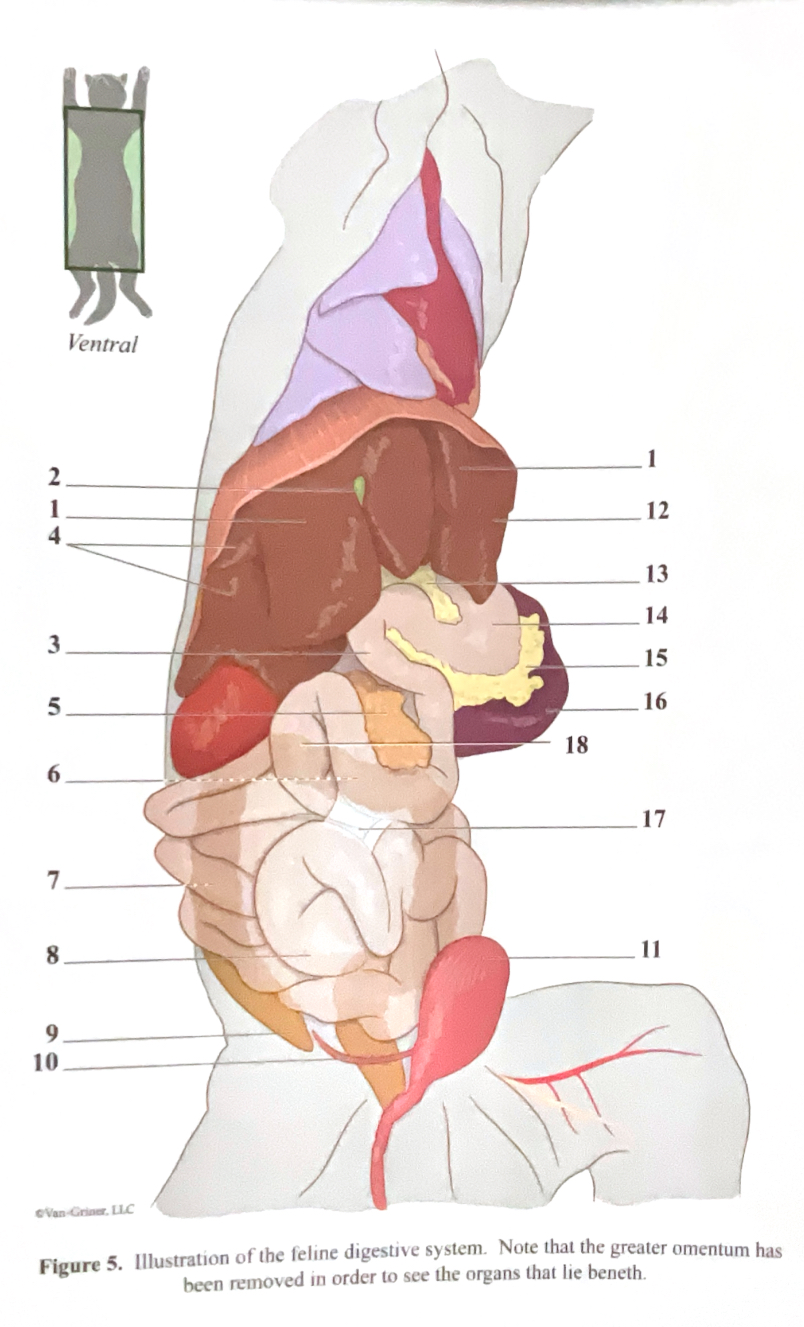
Figure 6. feline digestive system.
what is number 1?
lung
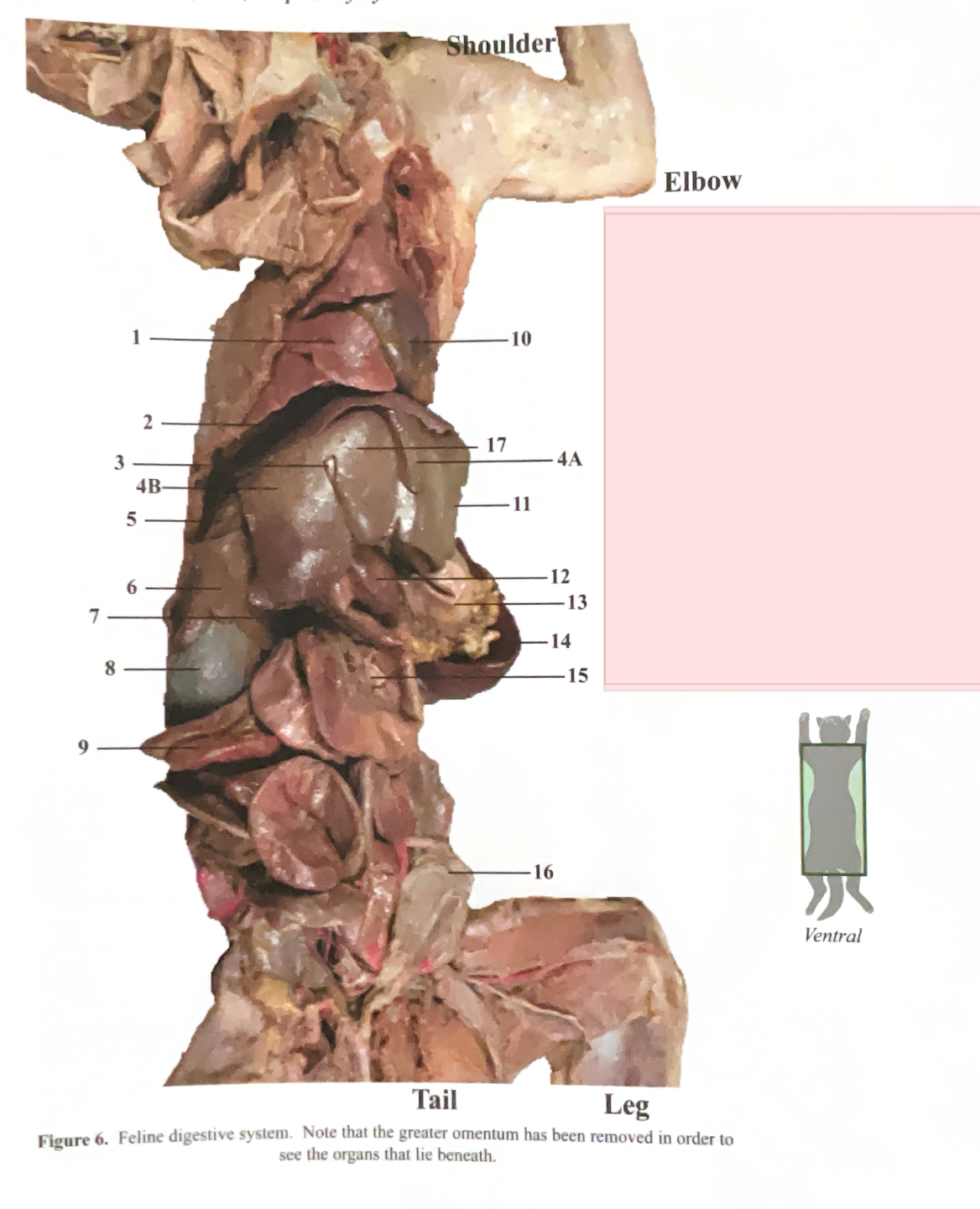
what is number 2?
diaphragm
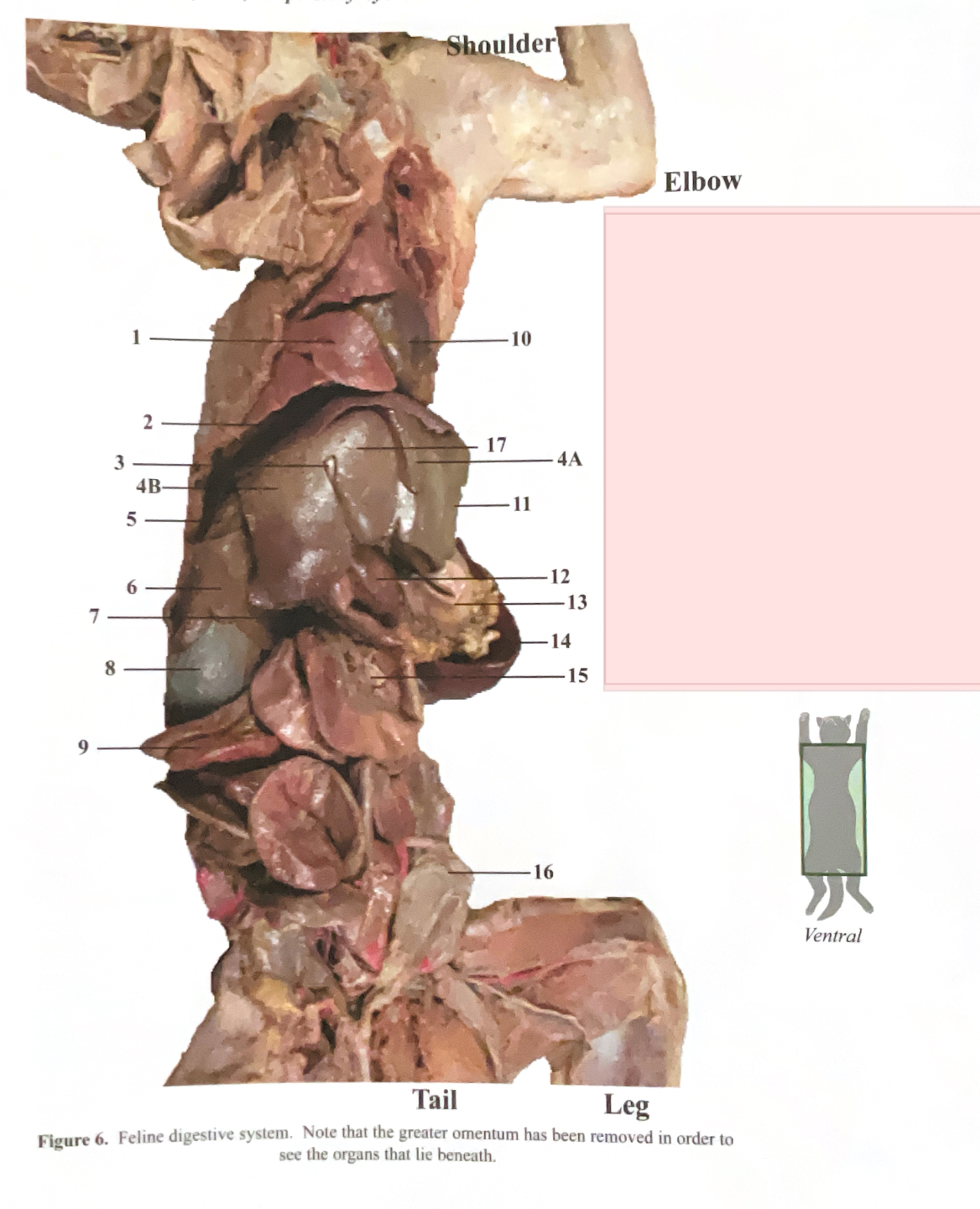
what is number 3?
gallbladder
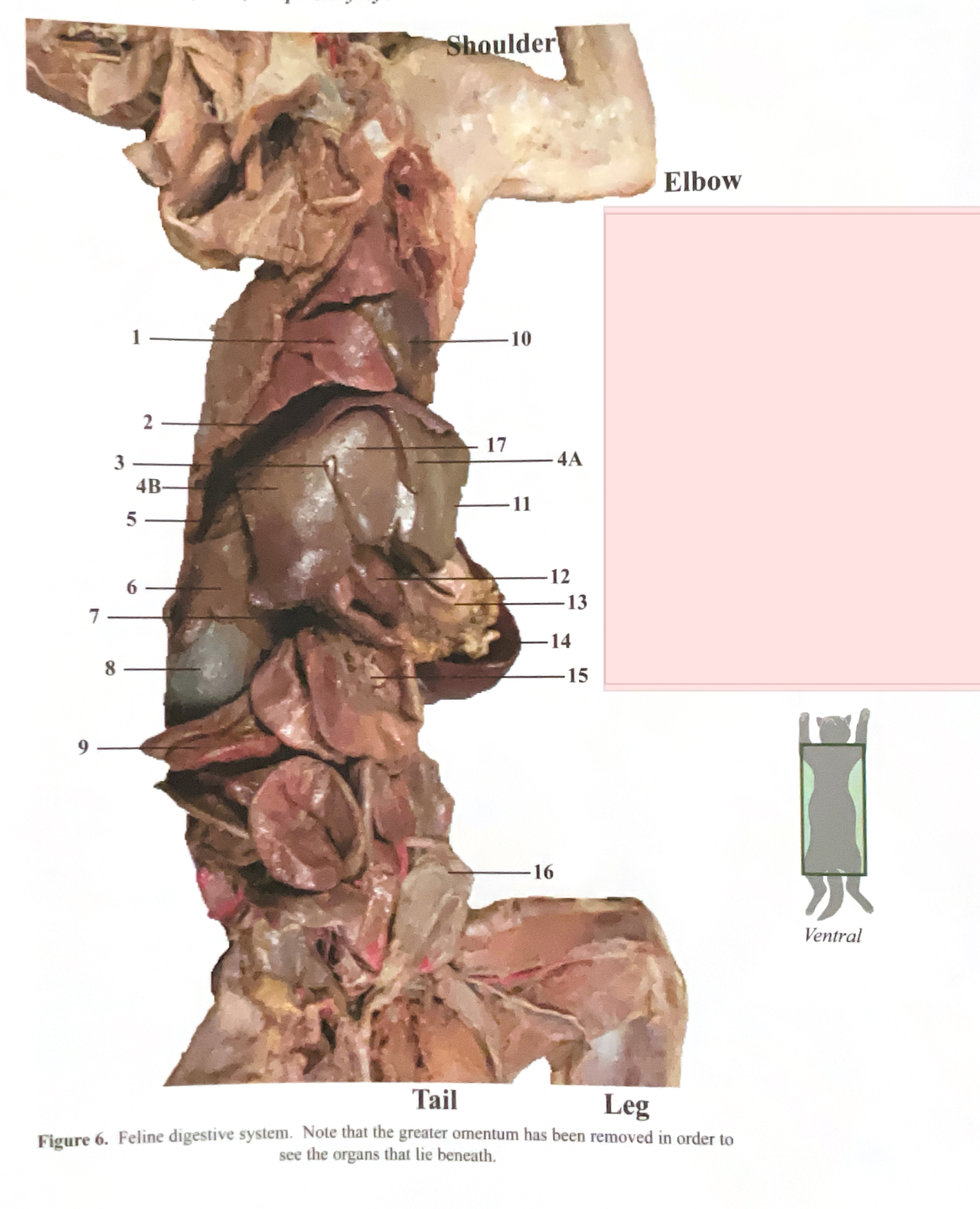
what is number 4A?
left medial lobe of liver
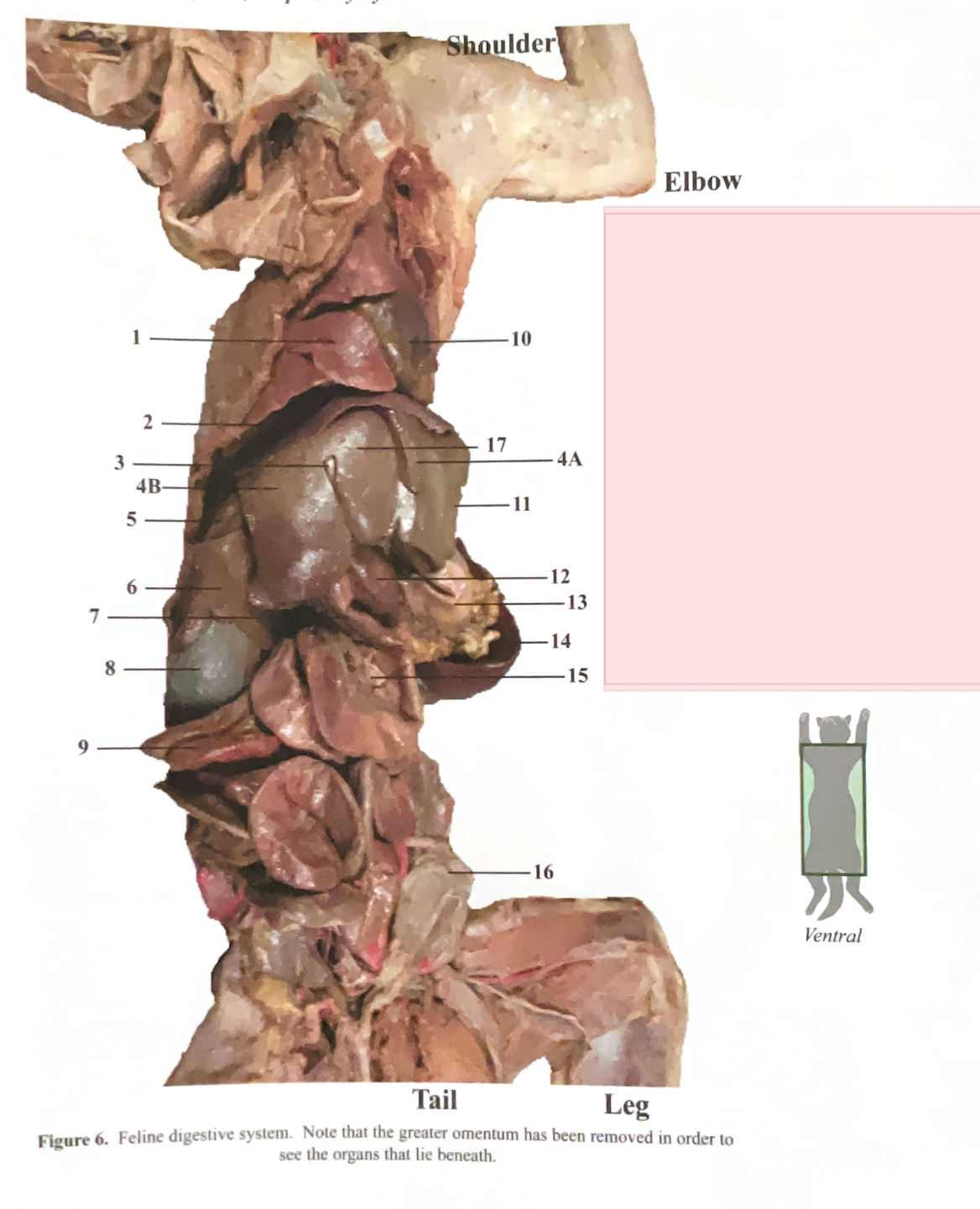
what is number 4B?
right medial lobe of liver
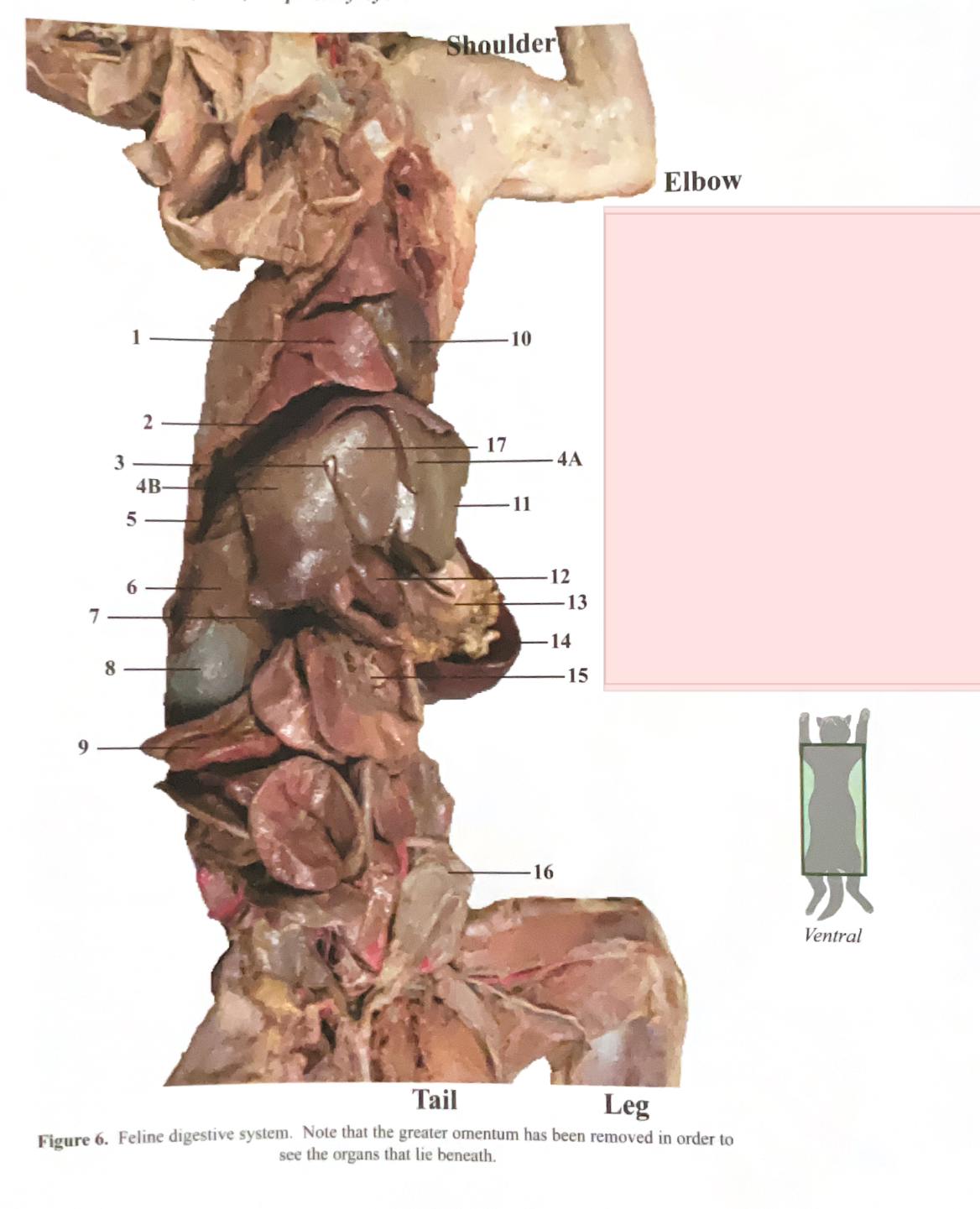
what is number 5?
right lateral lobe
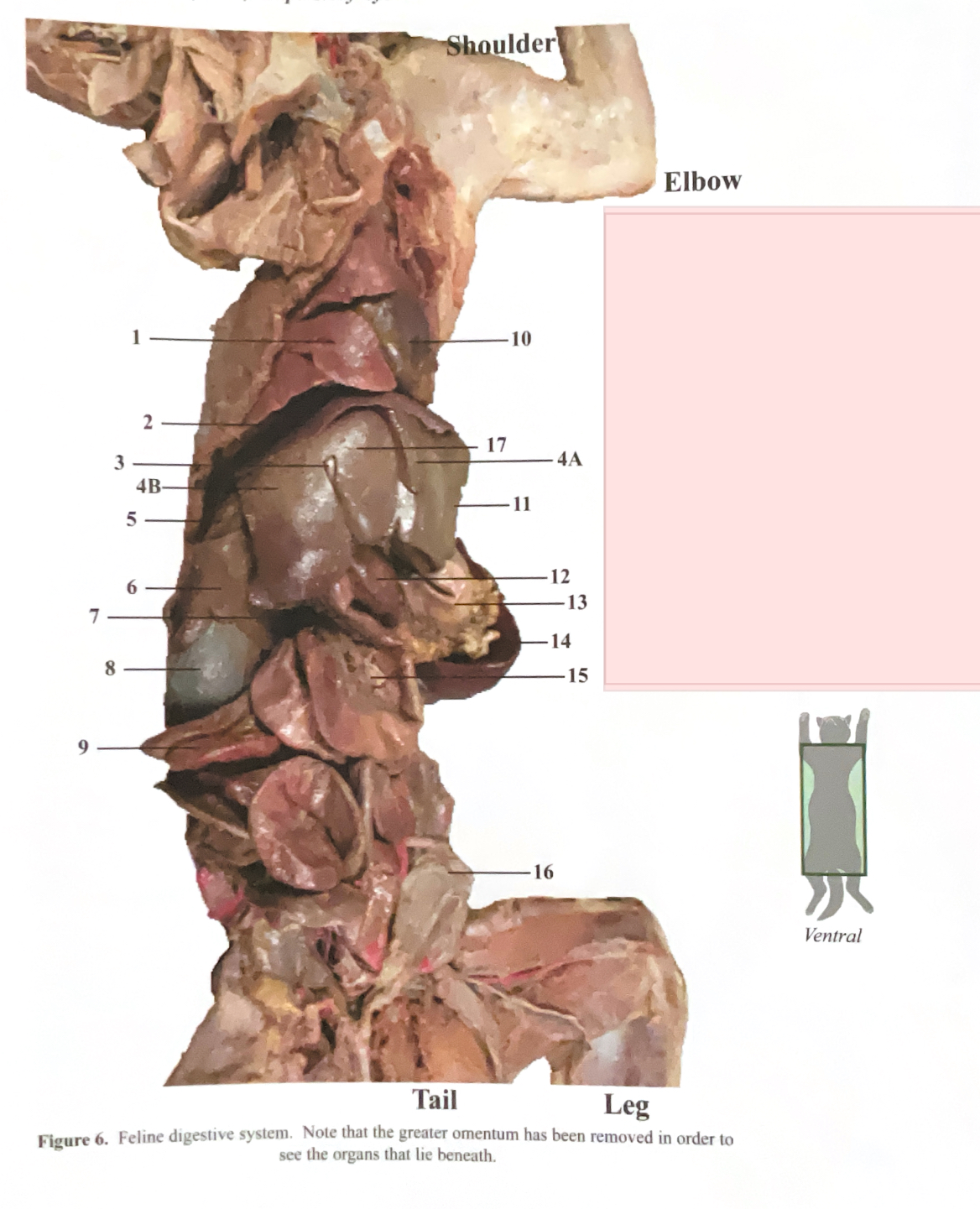
what is number 6?
caudate lobe
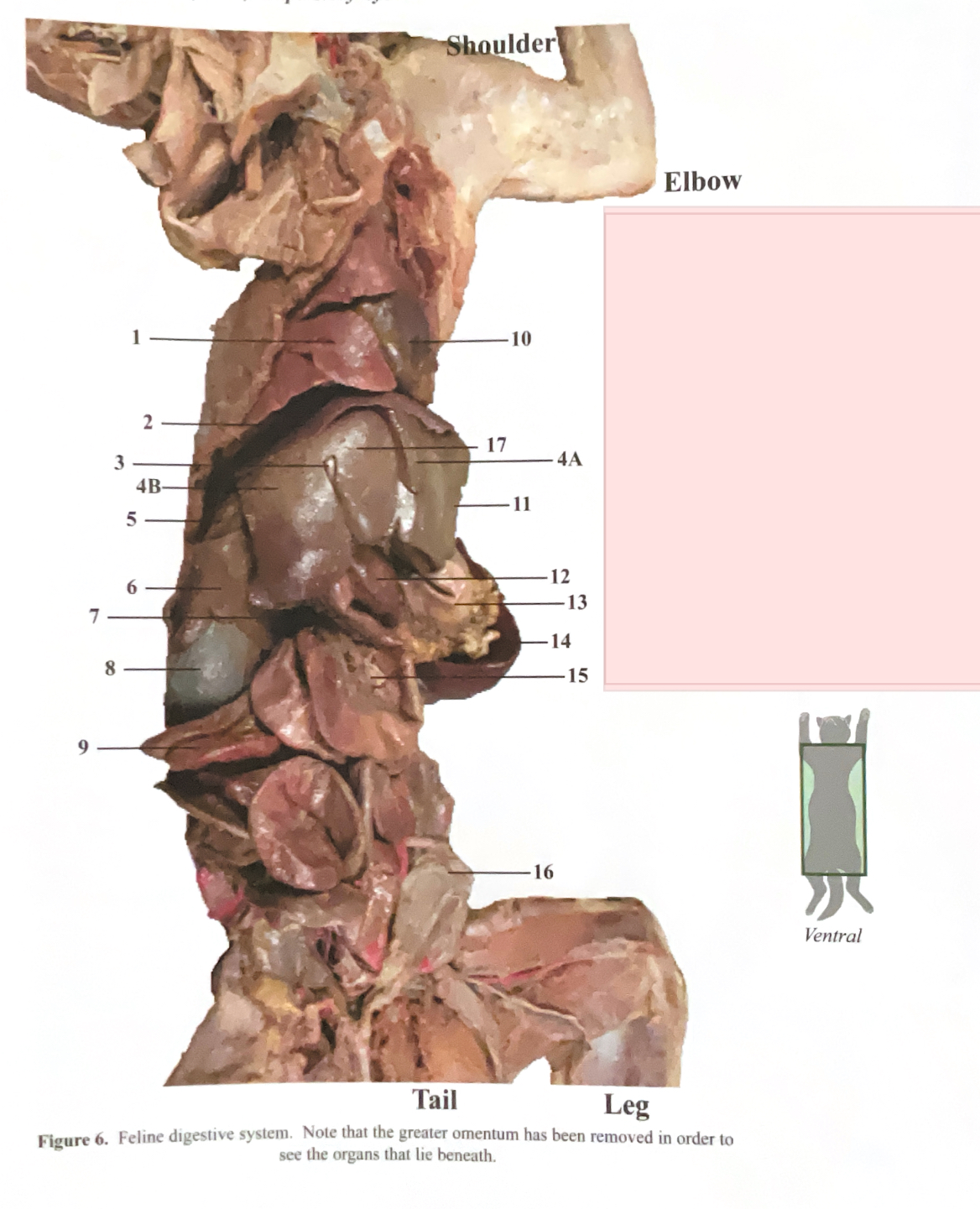
what is number 7?
duodenum
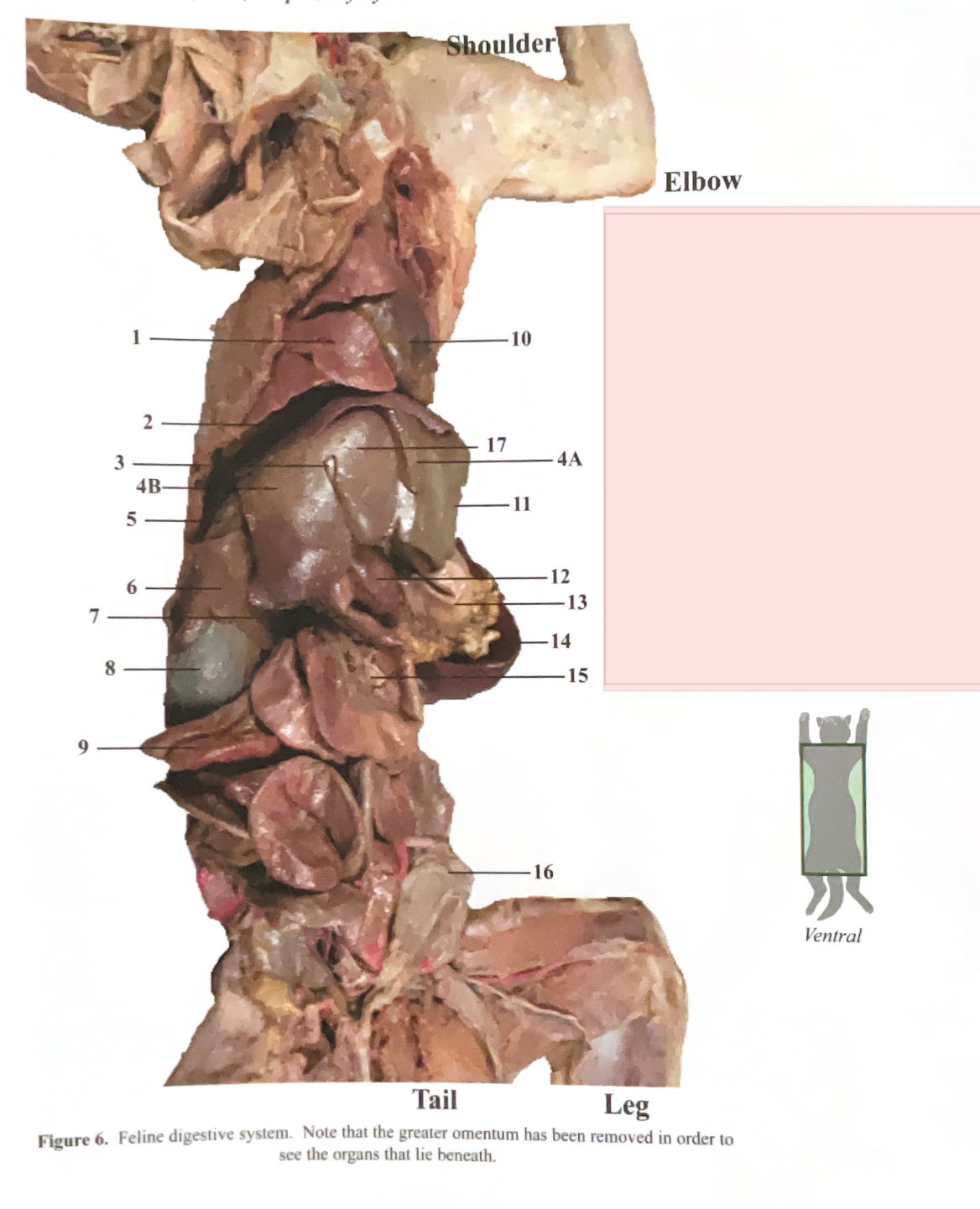
what is number 8?
right kidney
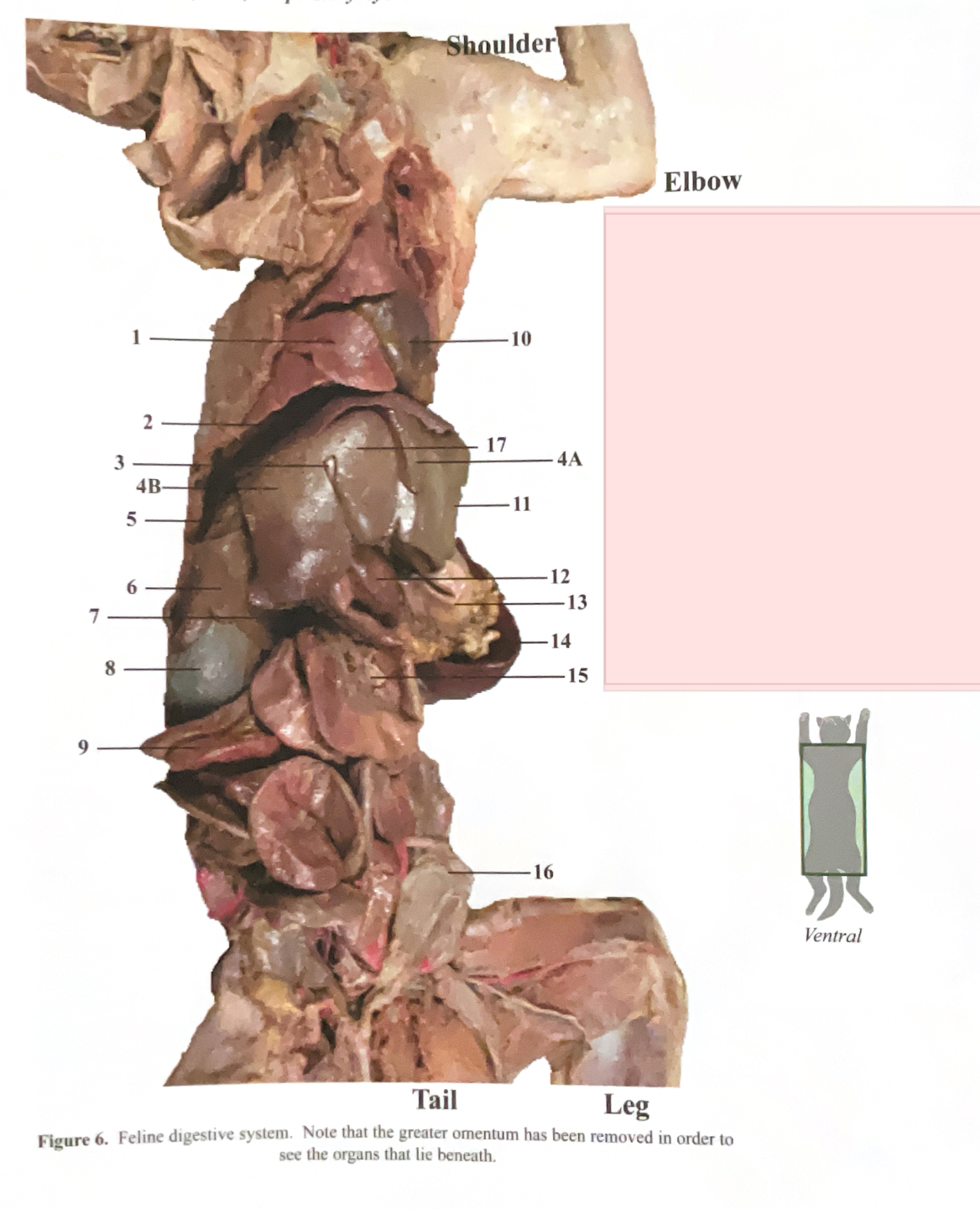
what is number 9?
jejunum
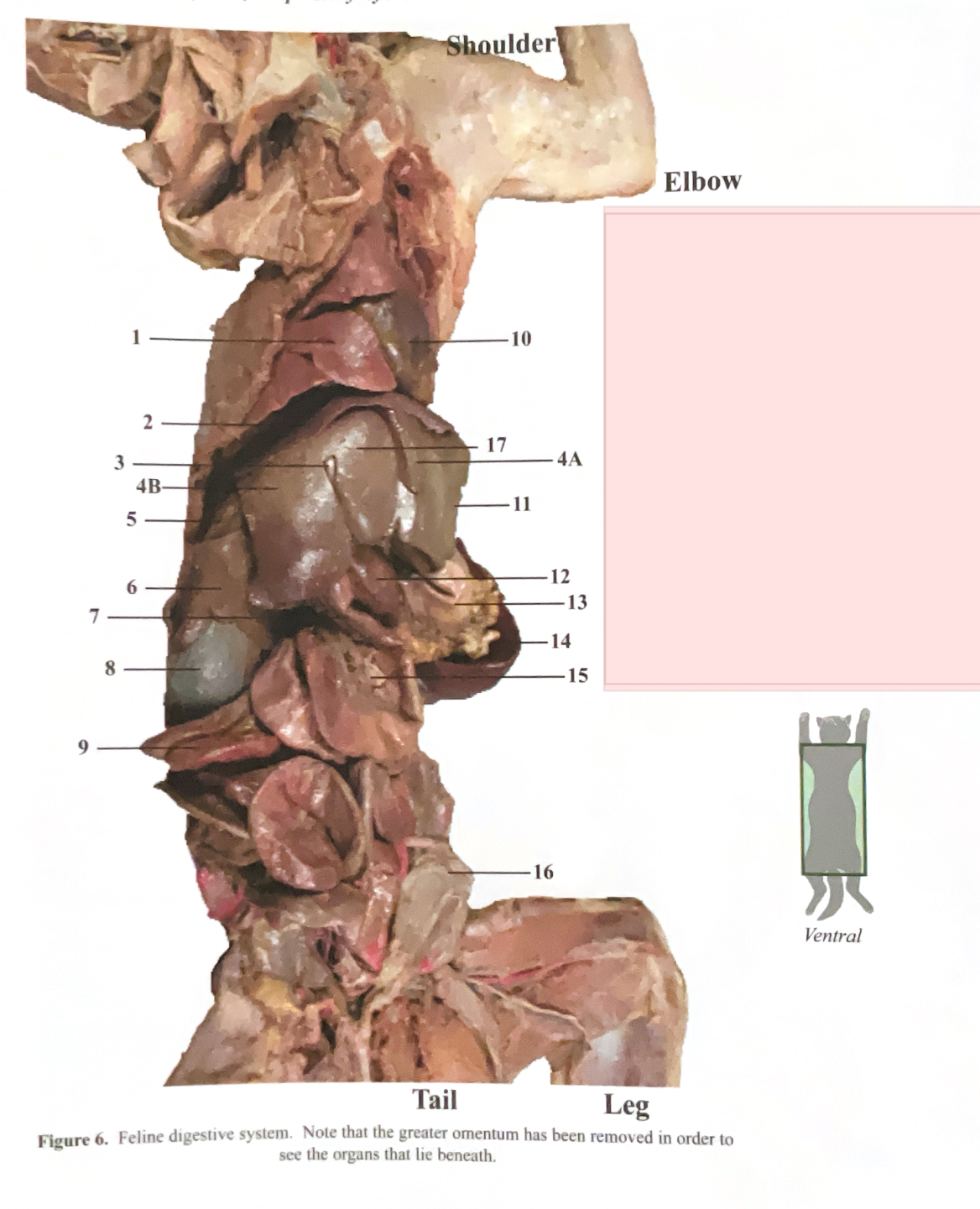
what is number 10?
heart
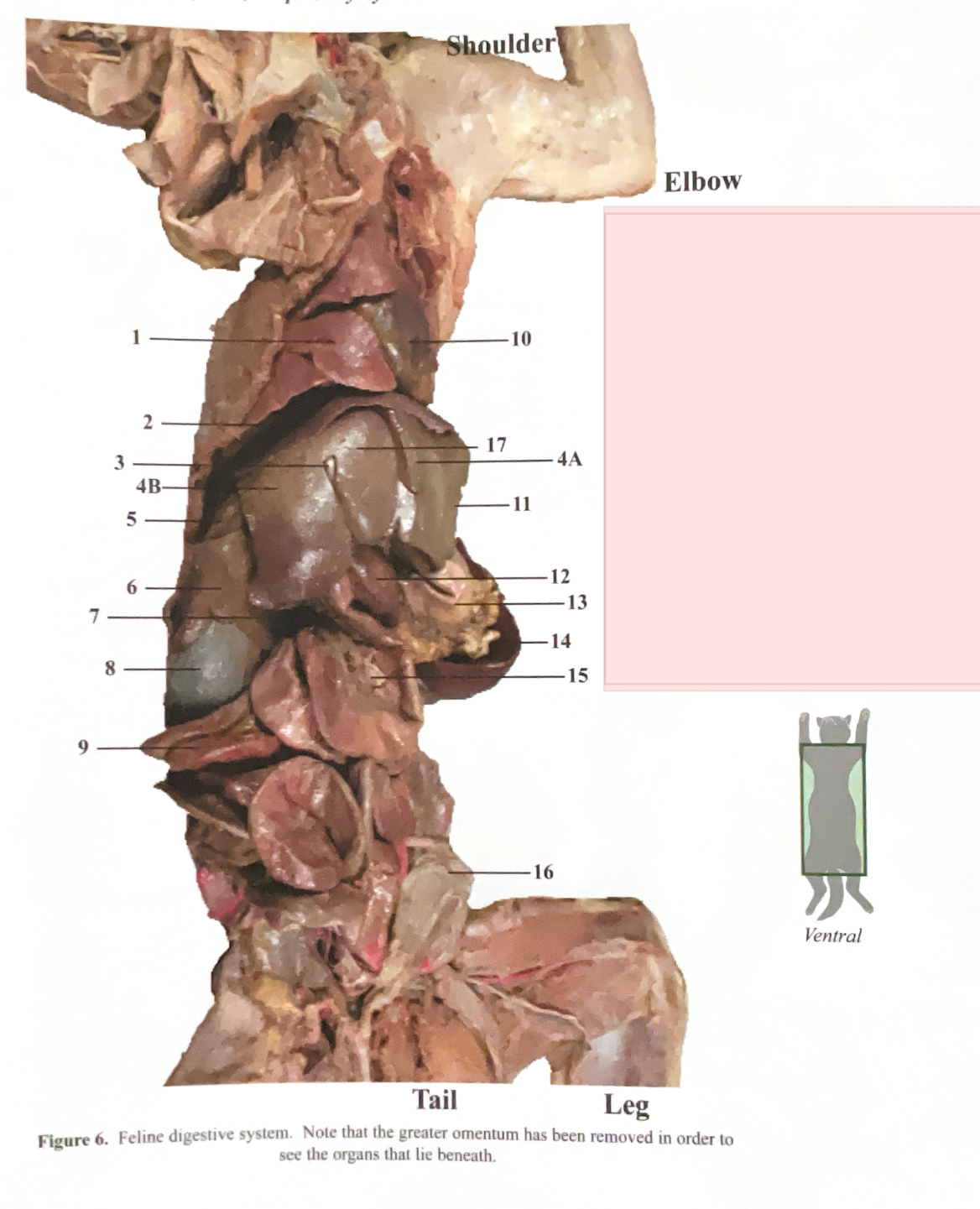
what is number 11?
left lateral lobe of liver
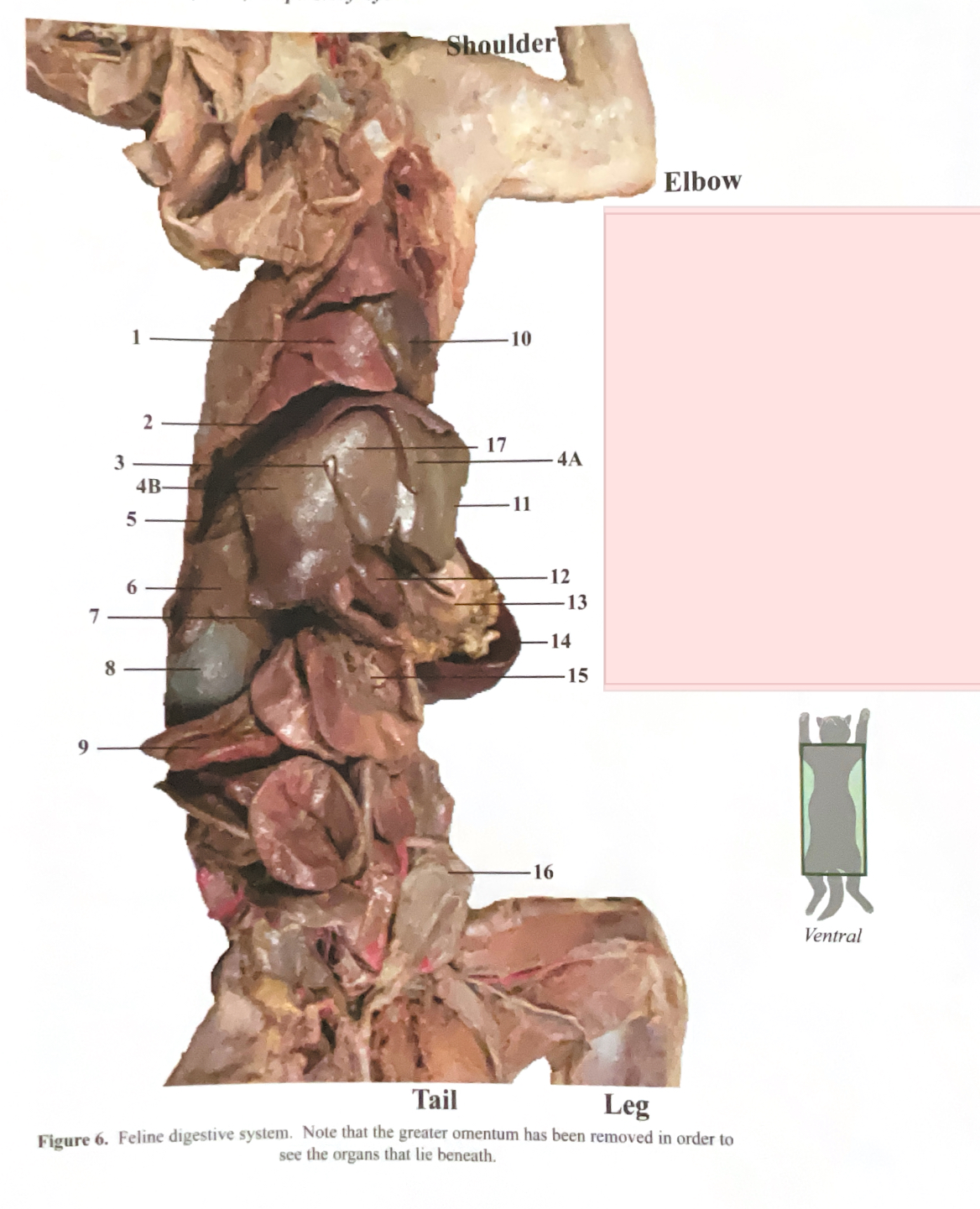
what is number 12?
stomach (pyloric region)
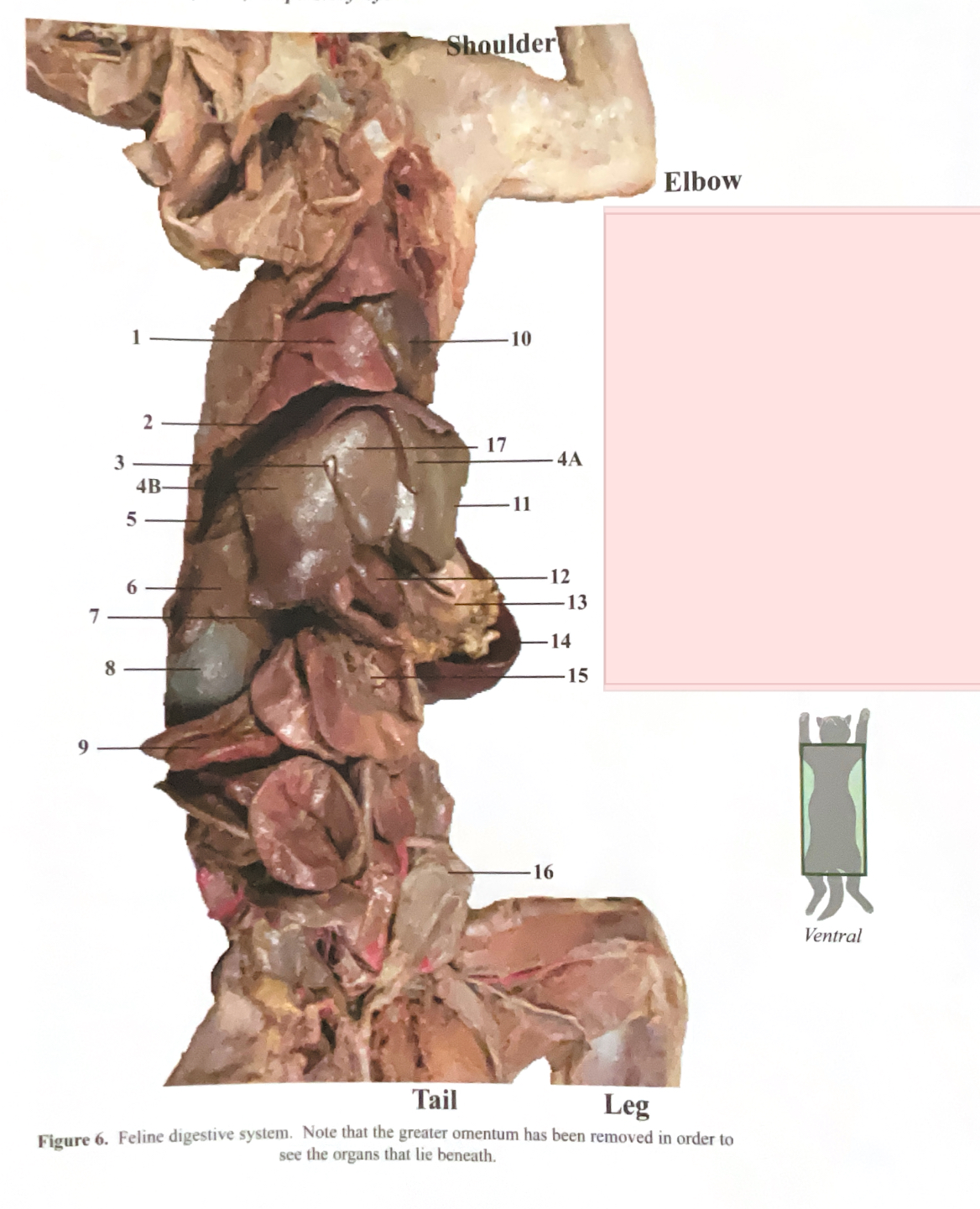
what is number 13?
body of stomach
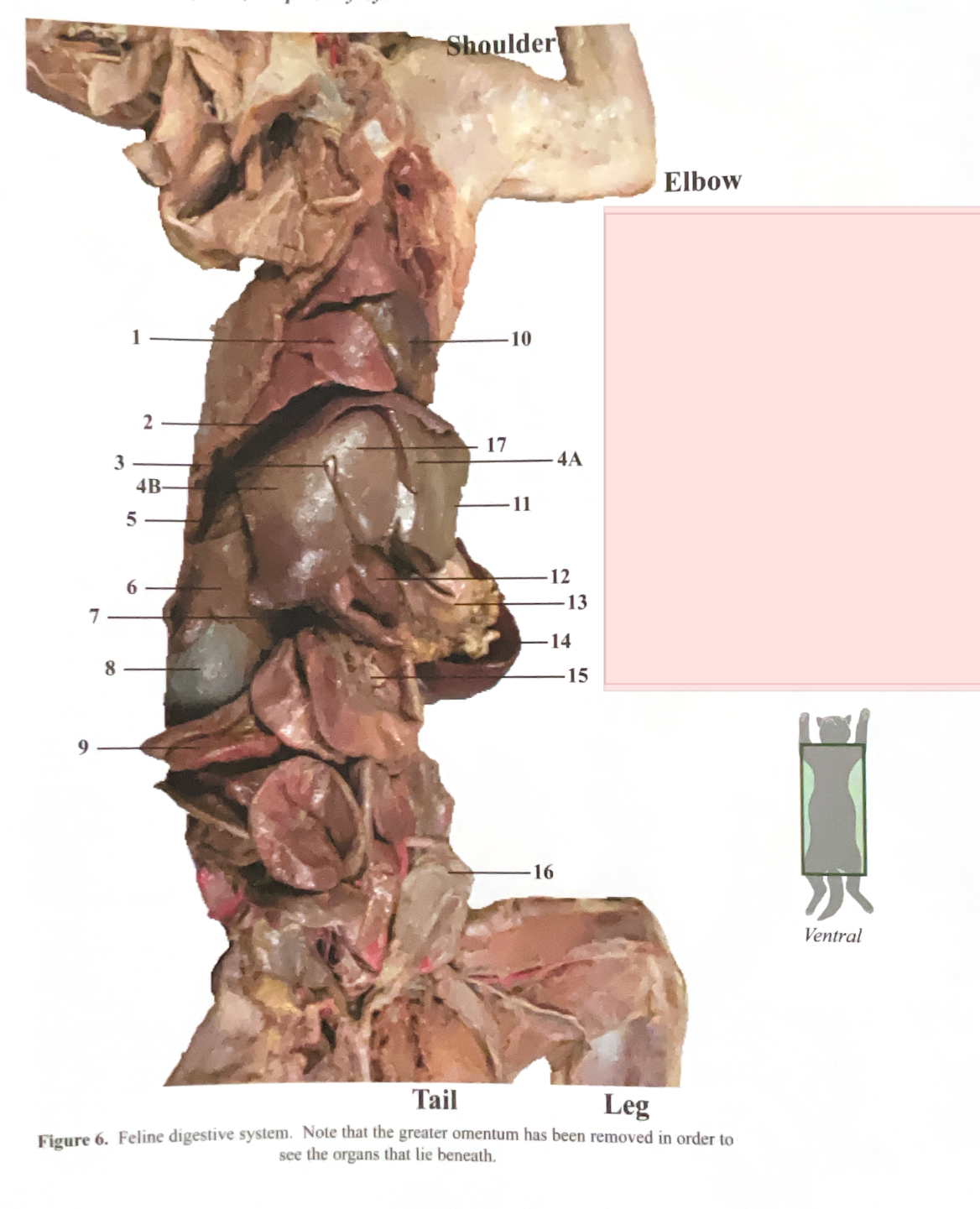
what is number 14?
spleen
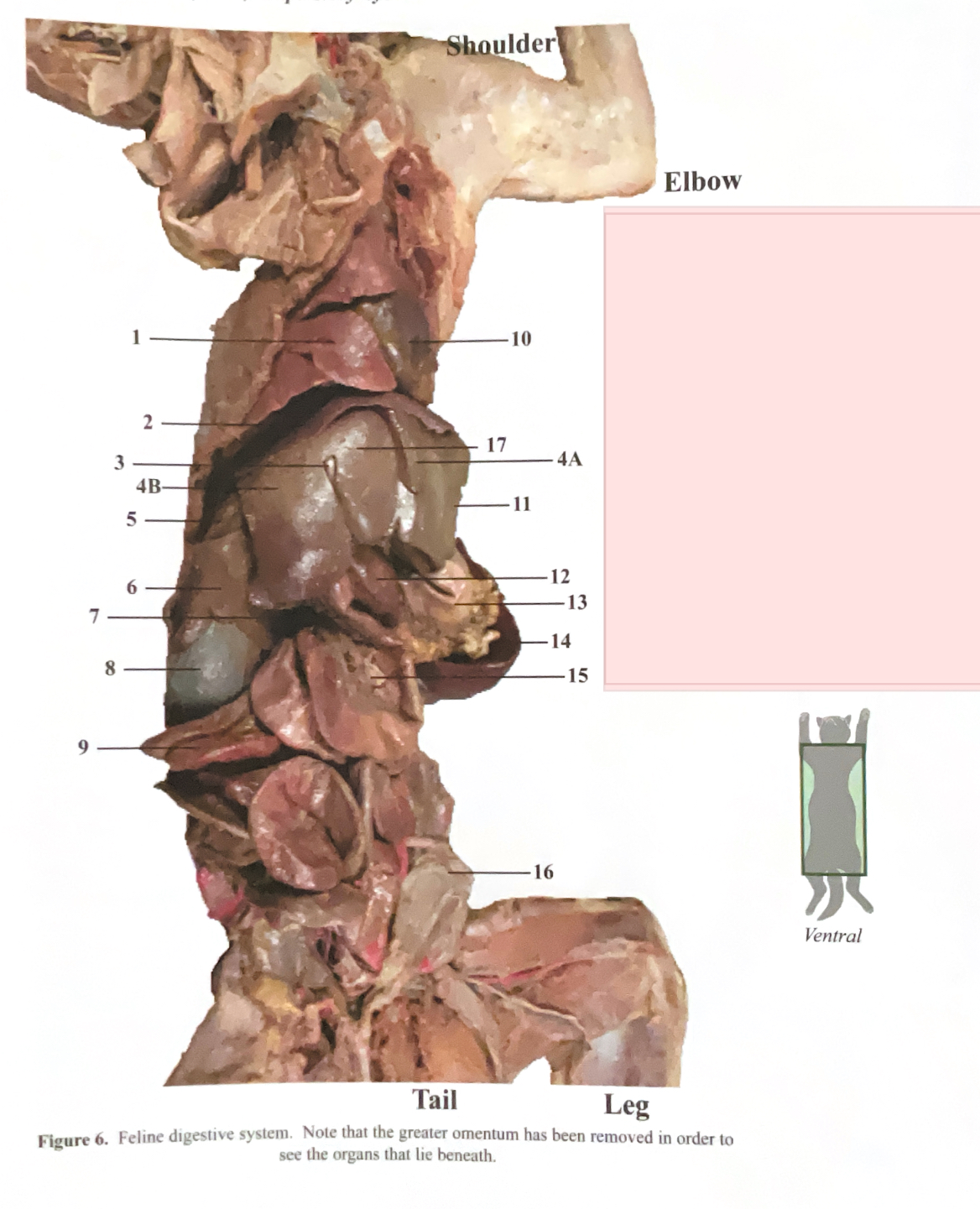
what is number 15?
pancreas
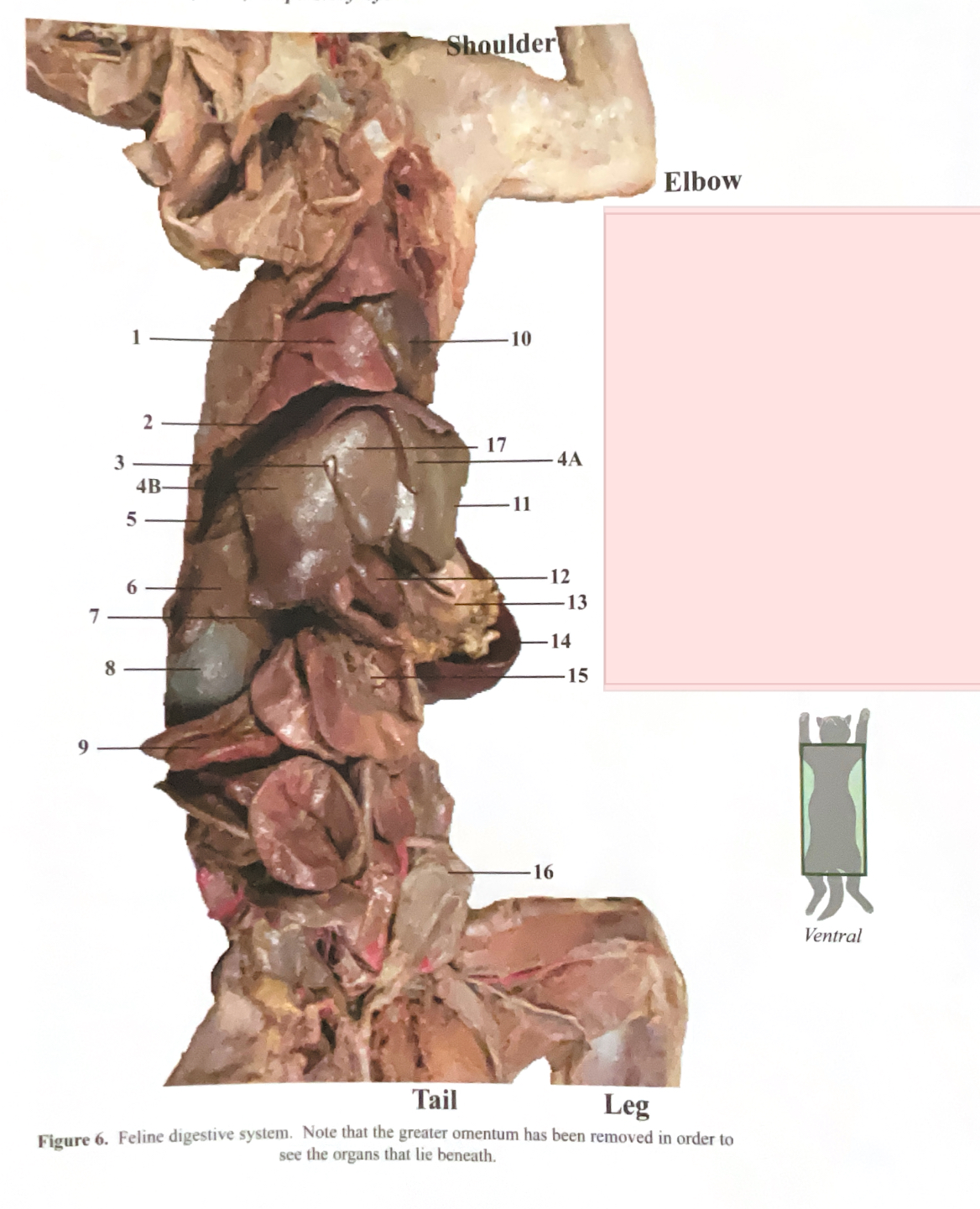
what is number 16?
urinary bladder
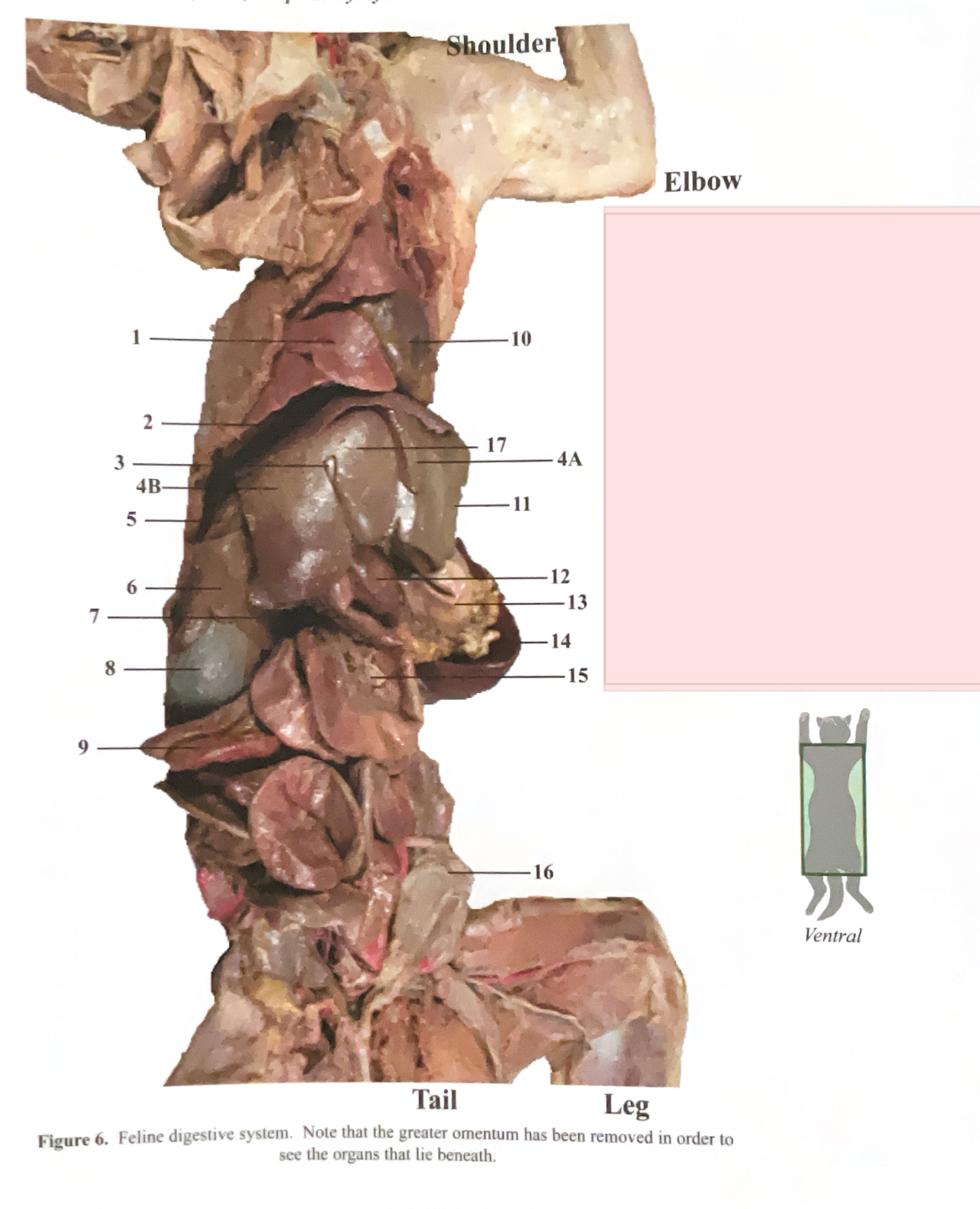
what is number 17?
quadrate lobe
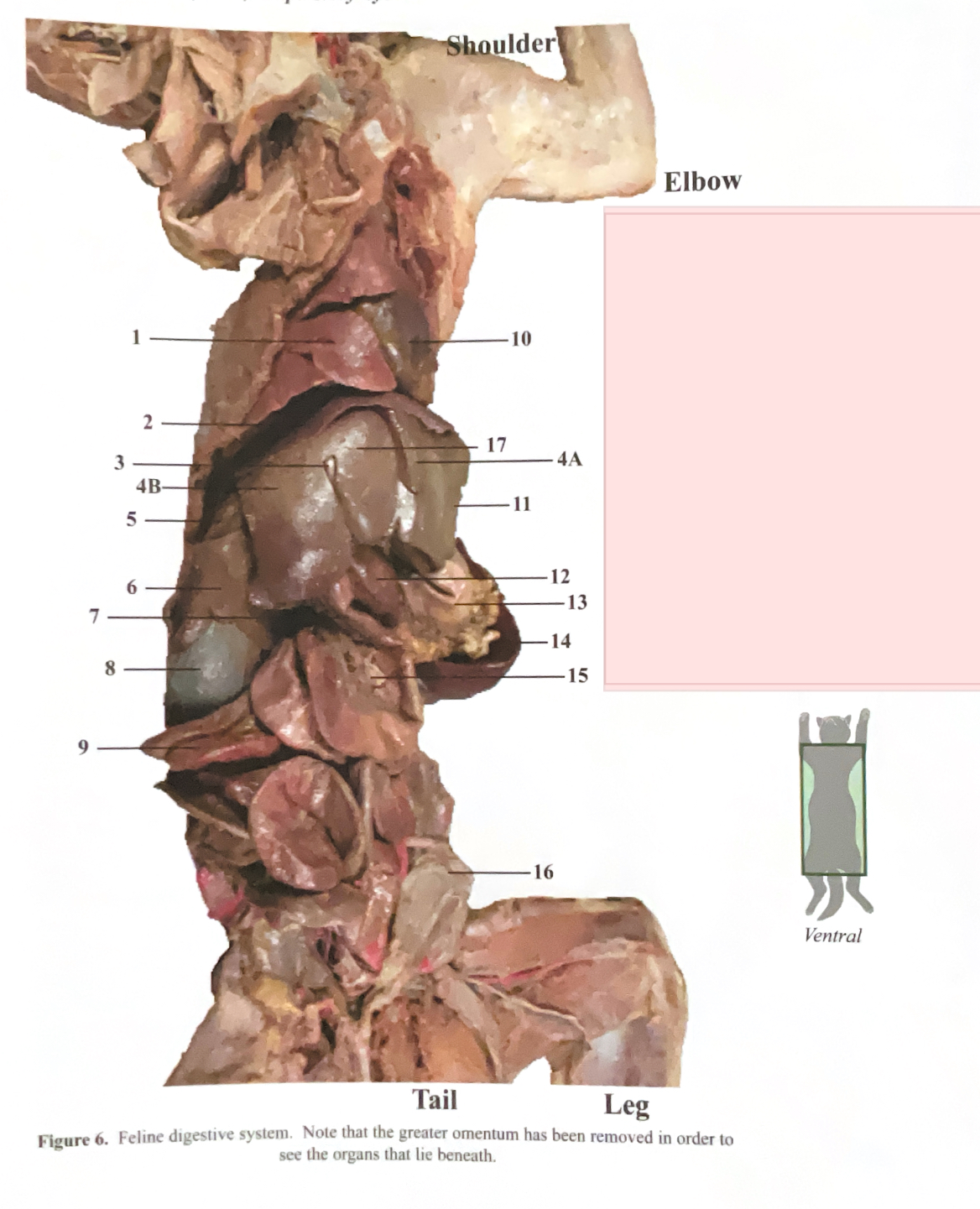
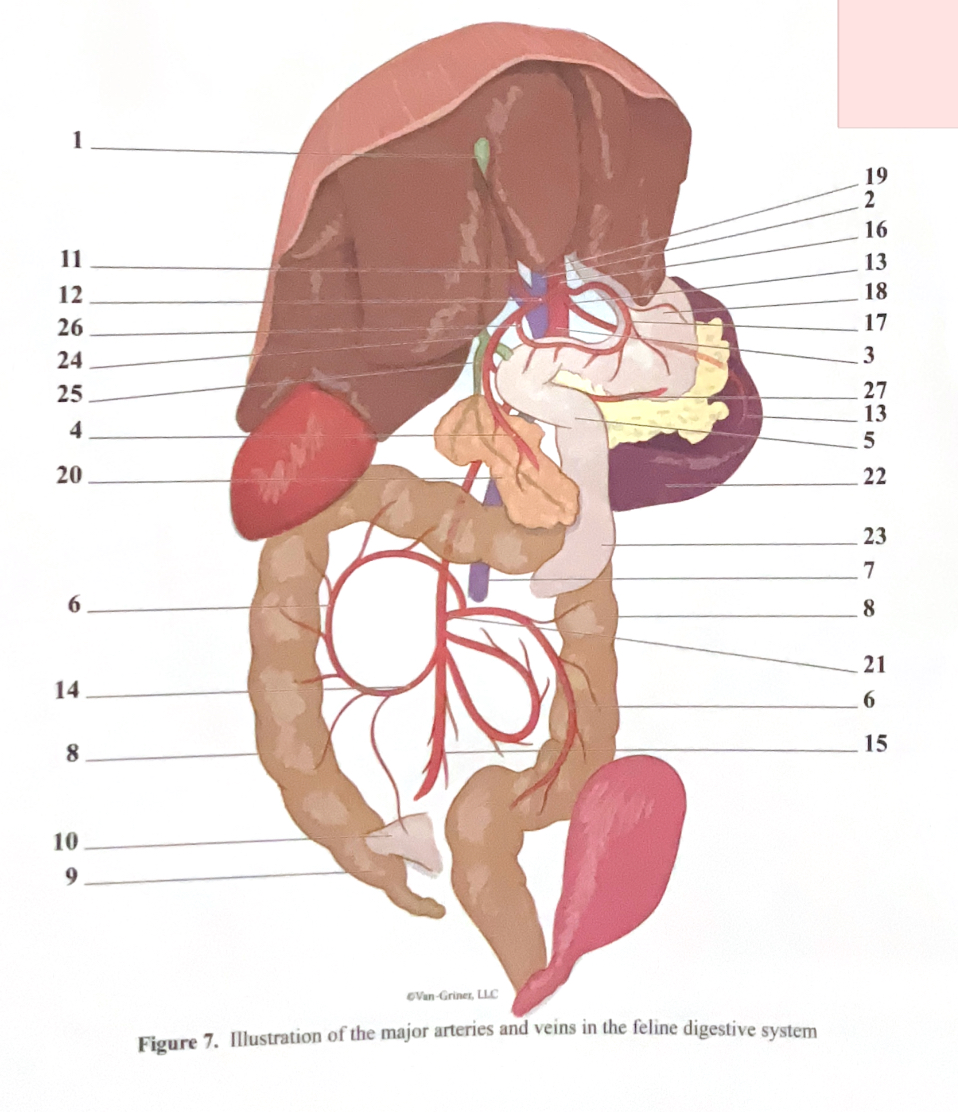
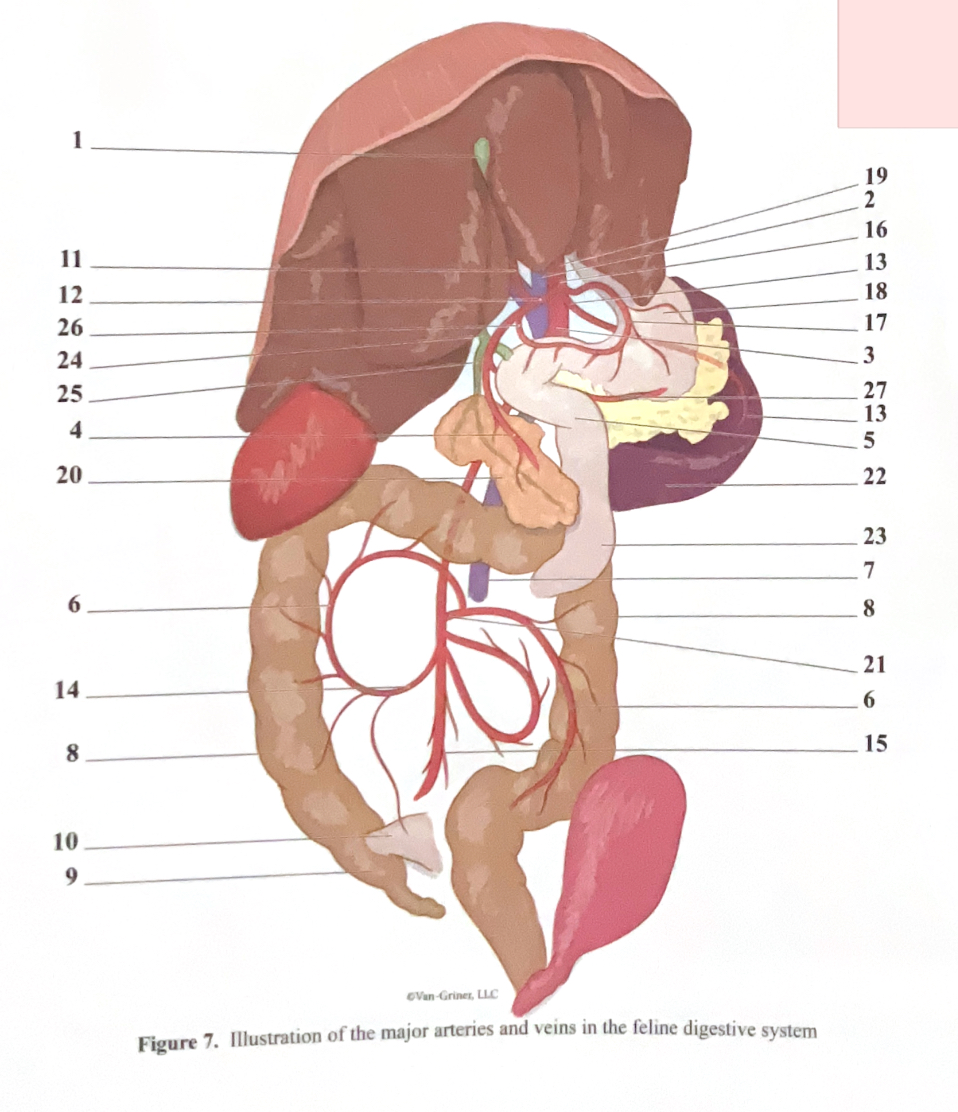
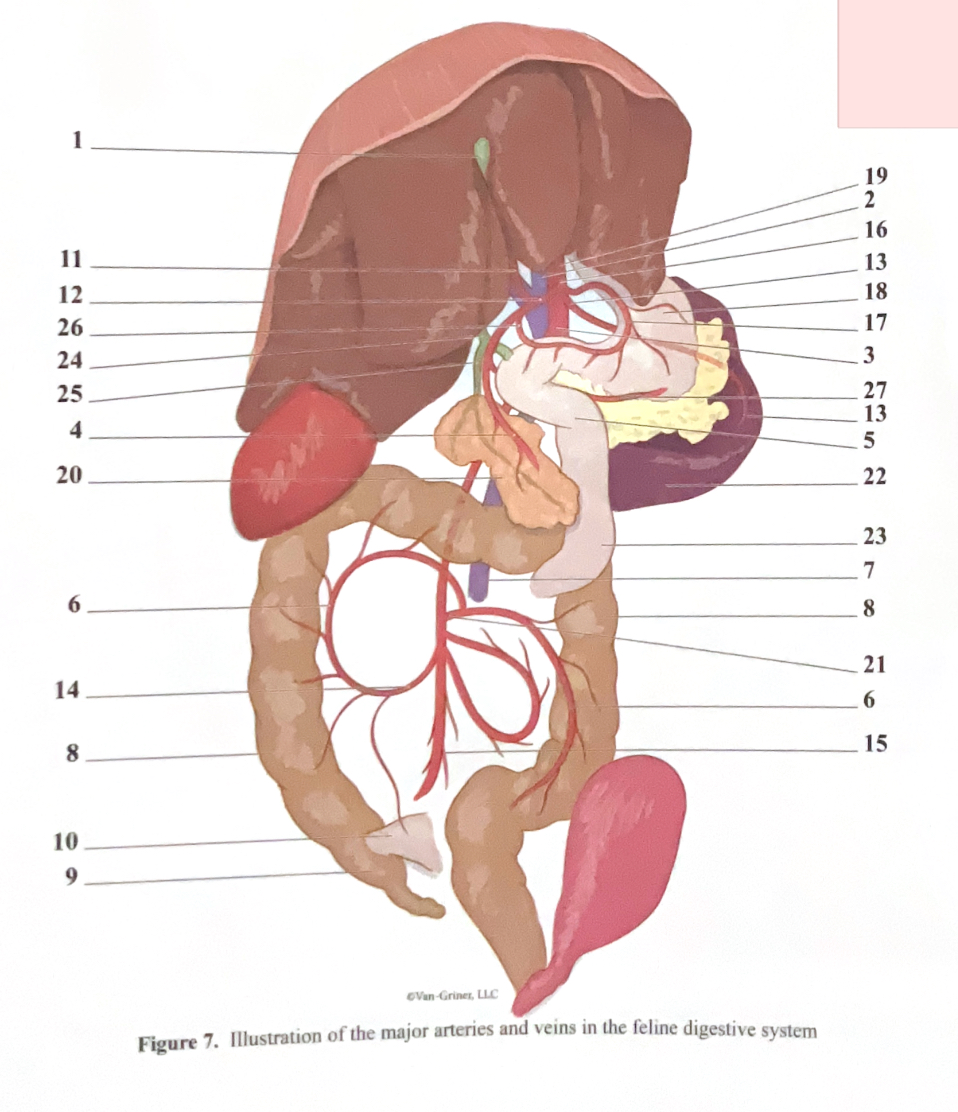
Figure 7. Illustration of the major arteries and veins in the feline digestive system
what is number 1?
gallbladder
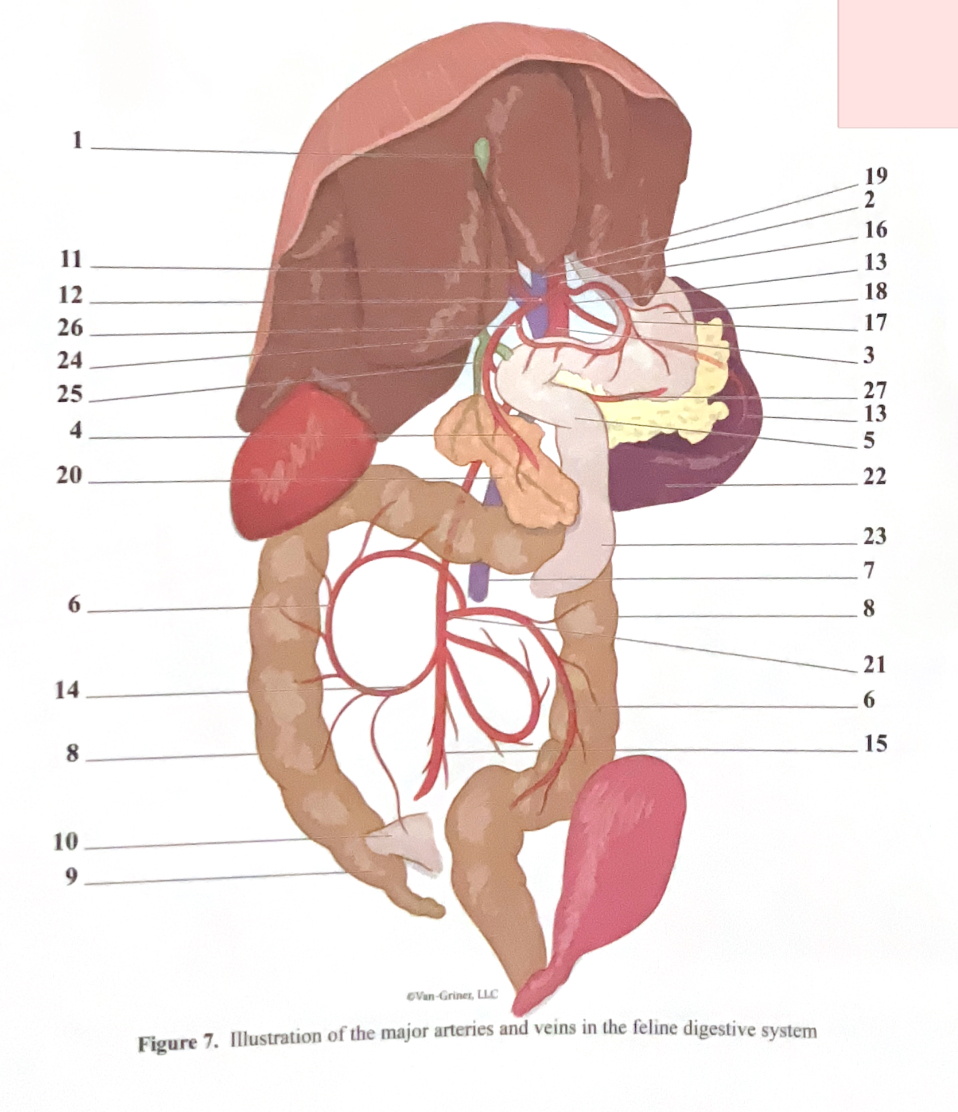
what is number 2?
hepatic portal vein
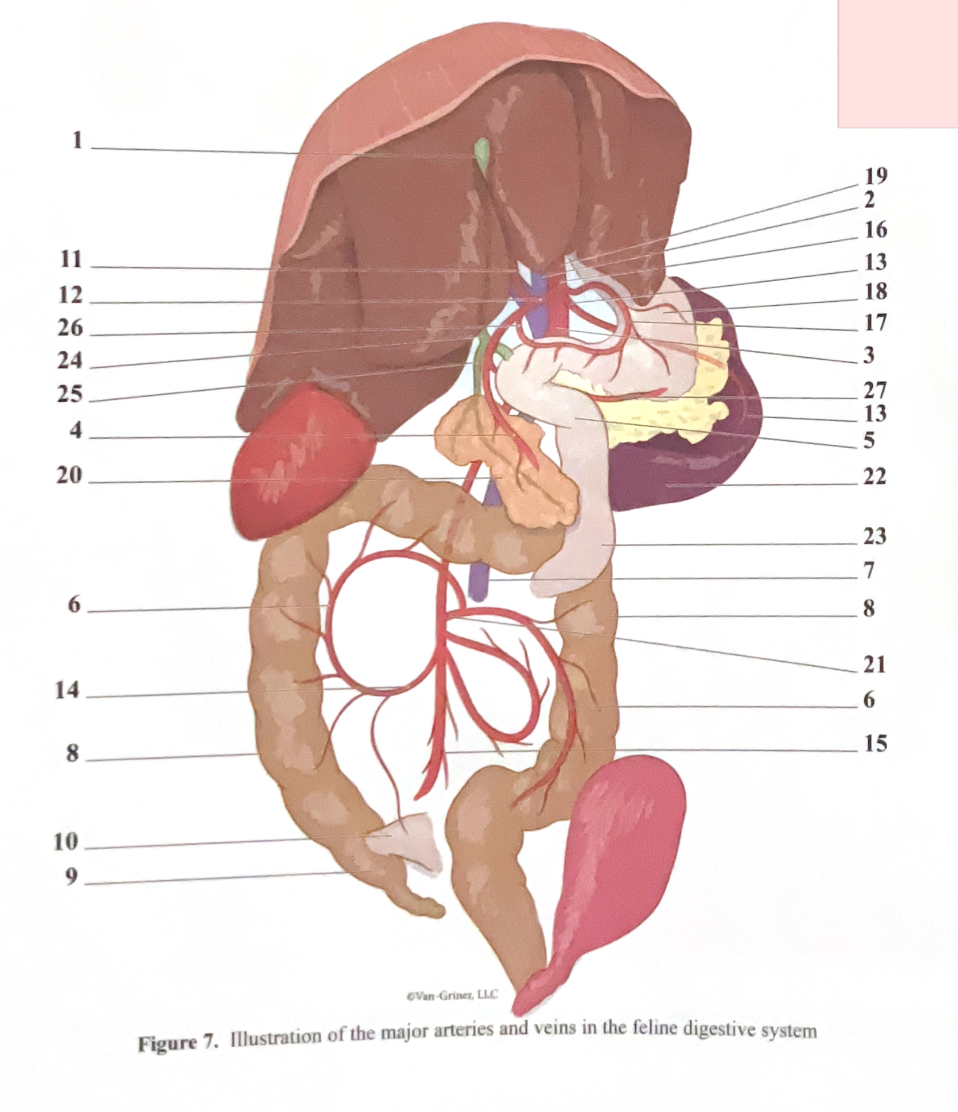
what is number 3?
superior mesenteric artery
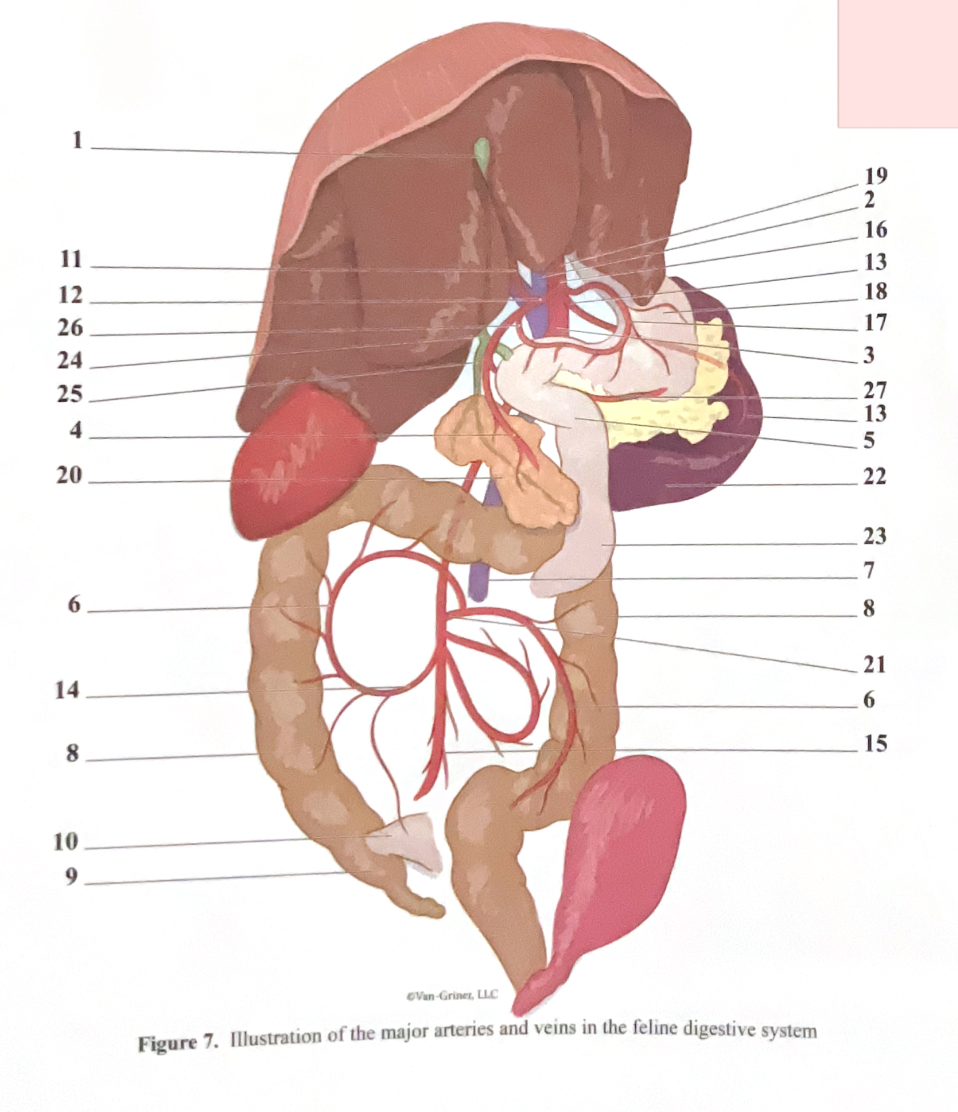
what is number 4?
anterior pancreaticoduodenal artery
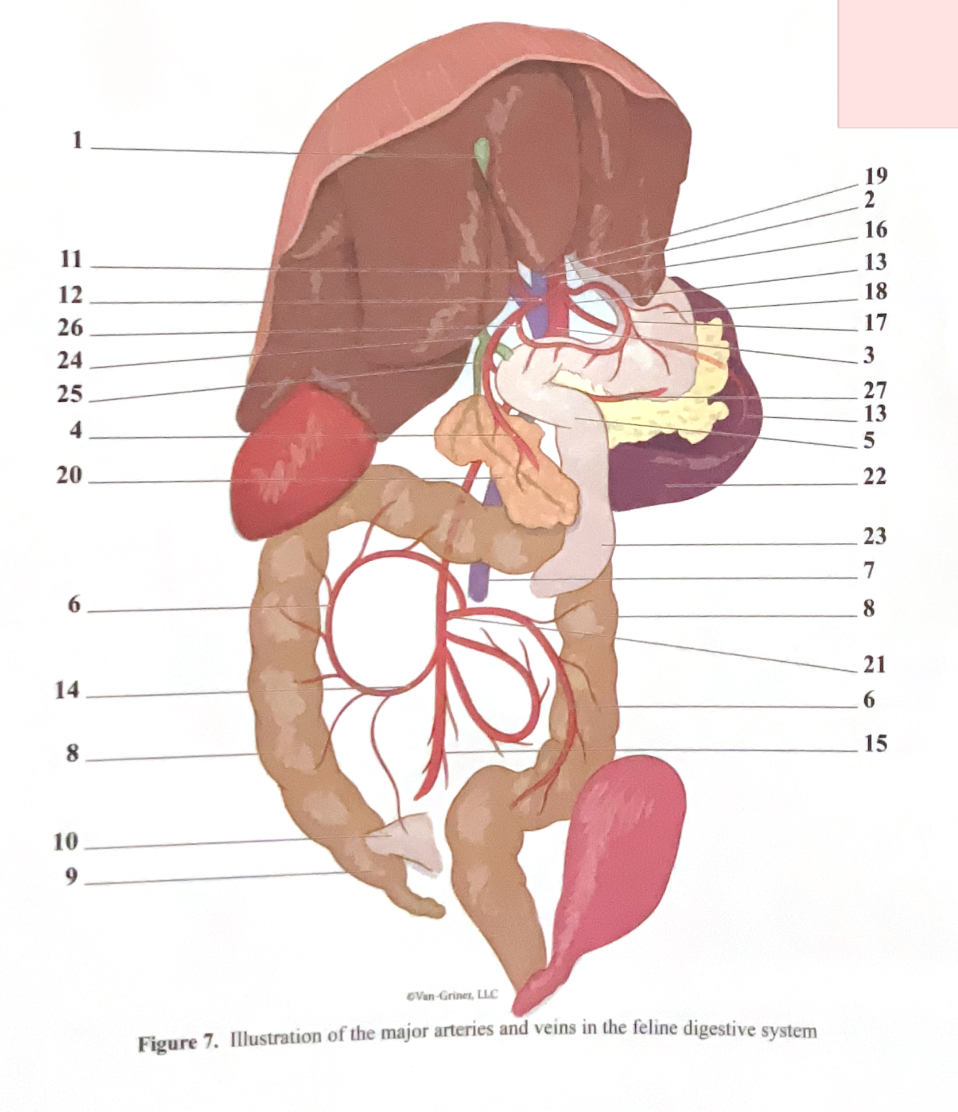
what is number 5?
duodenum
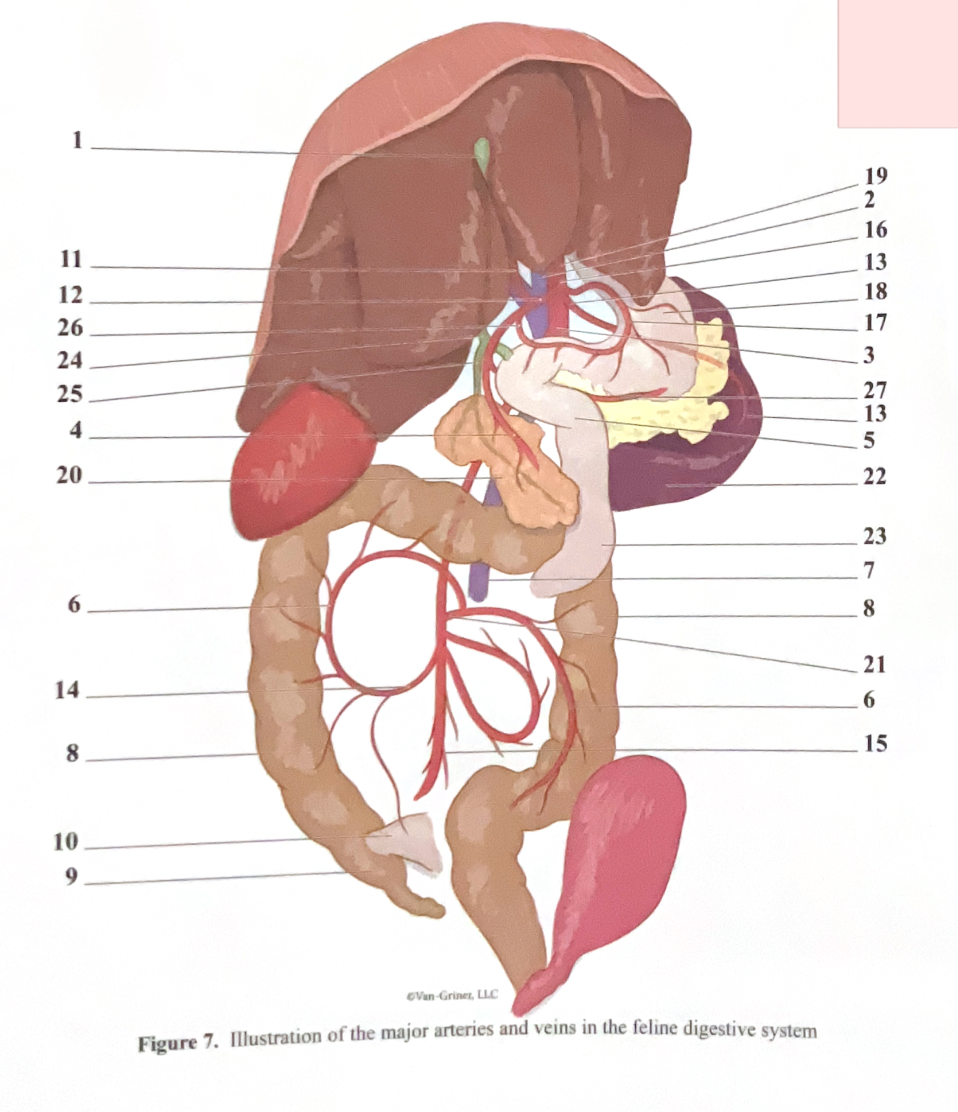
what is number 6?
arcade
what is number 7?
superior mesenteric vein
what is number 8?
colon