Fashion History Exam II
 Call Kai
 Learn
Learn Practice Test
 Spaced Repetition
 Match
Match Flashcards
 Knowt Play
1/19

There's no tags or description
Looks like no tags are added yet.
Name | Mastery | Learn | Test | Matching | Spaced | Call with Kai |
|---|
No analytics yet
Send a link to your students to track their progress
20 Terms
Tetrarchy
A system of government introduced by Emperor Diocletian in 293 CE that divided the Roman Empire into four administrative regions ruled by two senior emperors (Augusti) and two junior emperors (Caesars).
Visigoth
A Germanic tribe that played a significant role in the fall of the Western Roman Empire. They were one of the major barbarian groups that invaded Roman territories and established kingdoms in former Roman lands.
Vandal
A Germanic tribe that invaded Roman territories, eventually establishing a kingdom in North Africa. They were among the barbarian groups that contributed to the fragmentation of the Western Roman Empire.
Caliphate
An Islamic state led by a caliph (successor to Muhammad), representing both political and religious authority, became major political and cultural powers following the rise of Islam in the 7th century.
Palla
A rectangular shawl or mantle worn by Roman women, similar to the Greek himation, was draped over the shoulders and around the body, typically worn over a tunic. It served as an outer garment and status symbol for respectable married women.
Toga Candida
The toga pura whitened to exceptional brightness, worn by candidates for public office (the word "candidate" derives from this term)
Toga Praetexta
A toga with a purple border about 2-3 inches wide, worn by young freeborn boys until age 16, girls until age 12, and by certain magistrates and high priests
Toga Virilis
Plain white, undecorated wool toga worn after age 16 by ordinary male Roman citizens
Hanfu
Traditional Chinese clothing worn during the Han Dynasty (206 BCE-220 CE) that became the standard form of dress. For men, it consisted of an upper garment (yi), loose-tting pants (ku), and an outer robe (pao). For women, it included a longer yi reaching the ankles and a long skirt (shang).
Deel
A traditional Mongolian overcoat that served as the primary garment for Mongol peoples. Made from wool, felt, and leather, it was practical and durable, designed for horseback riding and harsh climates. It was worn with fur-trimmed hats and boots essential for cold weather.
Mongol
A nomadic people from the steppes of Central Asia who, under Genghis Khan (beginning in 1206), created the largest contiguous land empire in history. Occupied China and established the Yuan Dynasty (1279-1368), bringing significant cultural exchange and introducing Central Asian styles to Chinese fashion.
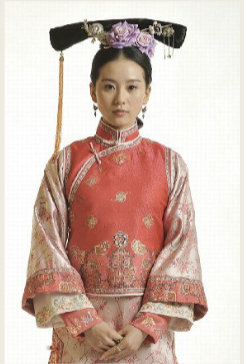
Manchu
An ethnic group from northeastern China who established the Qing Dynasty (1644-1911), the last imperial dynasty of China, brought signicant changes to Chinese dress, including the introduction of the qipao/cheongsam and requirements for Han Chinese men to wear the Manchu hairstyle (queue).
Han
The dominant ethnic group in China, comprising the majority of the Chinese population. The term refers both to the Han Dynasty (206 BCE-220 CE) and to ethnic Han Chinese people. Han Chinese maintained traditional dress styles that contrasted with Manchu clothing during the Qing Dynasty.
Qipao/Cheongsam
A form-fitting dress introduced during the Qing Dynasty under Manchu influence. It features a high stand-up collar (Mandarin collar), side slits for ease of movement, and asymmetrical closure that fastens diagonally from the neck down the right side with decorative knot buttons.
Split of Roman Empire
395 CE
Fall of Western Roman Empire
476 CE
Fall of Eastern Roman Empire (Byzantine)
May 29th, 1453
Fall of Ottoman Empire
November 1st, 1922
Mongol Occupation of Chinese Empire
1279 CE- 1368
Fall of Chinese Empire
February 12th, 1912

