East Meets West Exam 1 - Picture & MC Potion
 Studied by 4 people
 Call Kai
 Learn
Learn Practice Test
 Spaced Repetition
 Match
Match Flashcards
 Knowt Play
1/62

There's no tags or description
Looks like no tags are added yet.
Name | Mastery | Learn | Test | Matching | Spaced | Call with Kai |
|---|
No analytics yet
Send a link to your students to track their progress
63 Terms
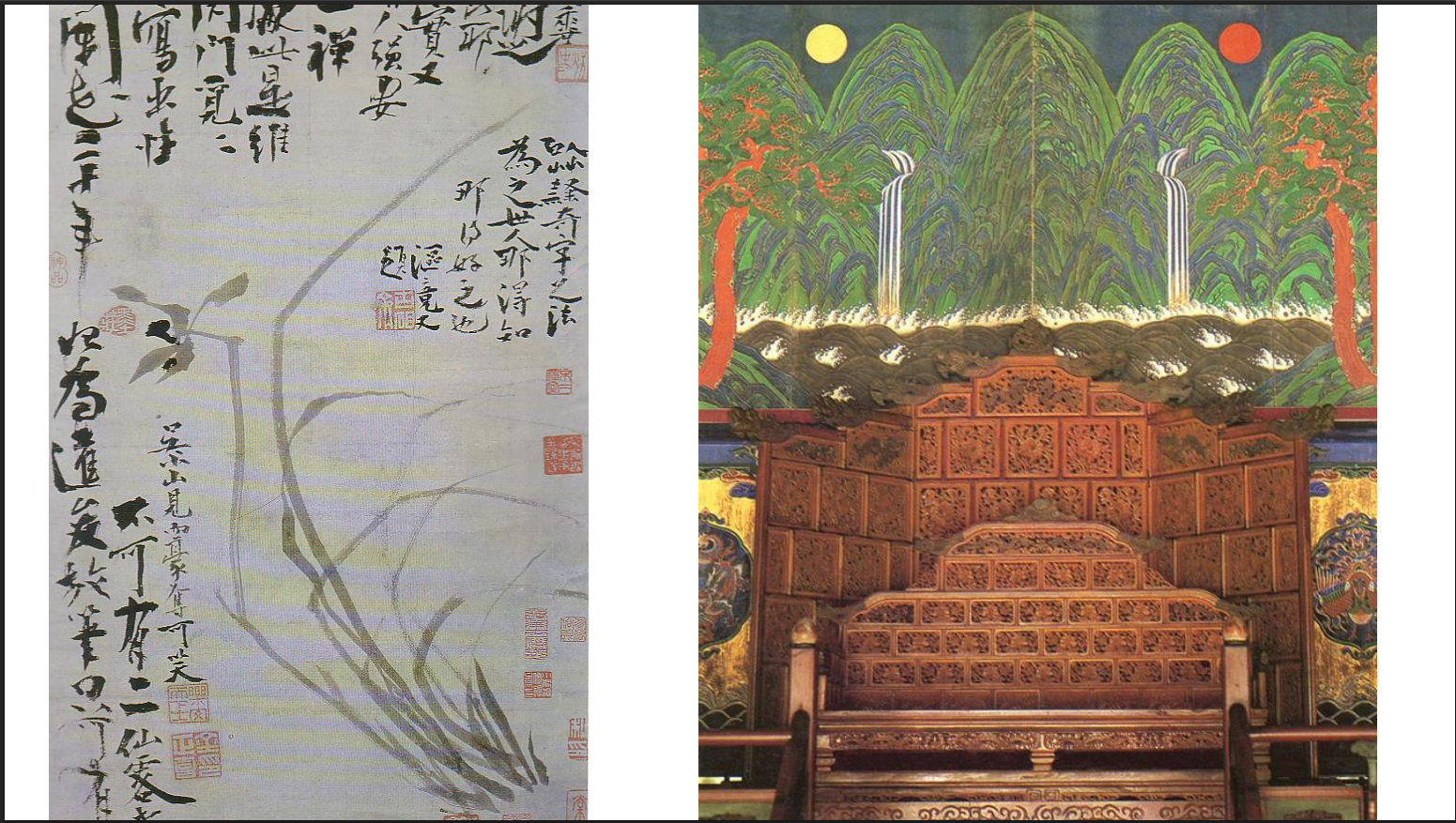
Literati vs Court Painting
Court painting was professional, decorative art for the imperial court. They used more technical skill and realism. Literati painting was the personal, expressive art of scholar-amateurs. Often painted flowers, bamboo, etc.
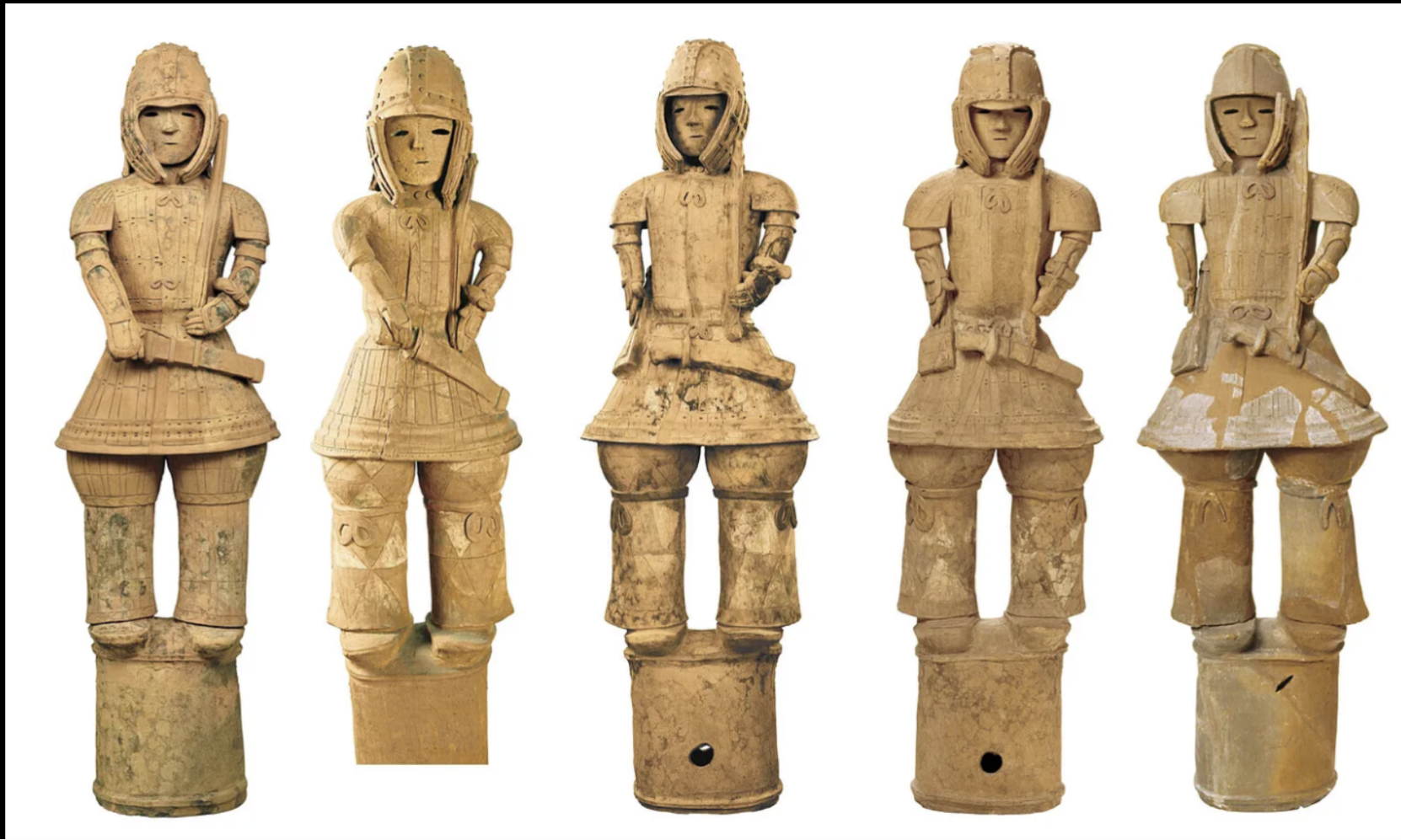
Haniwa Warriors from Japan
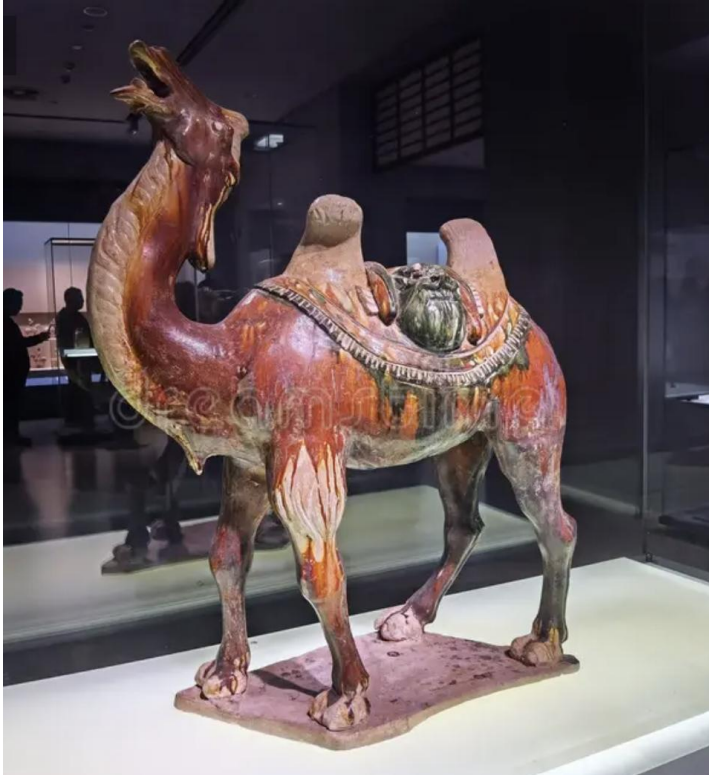
Camel Tang Sancai from China
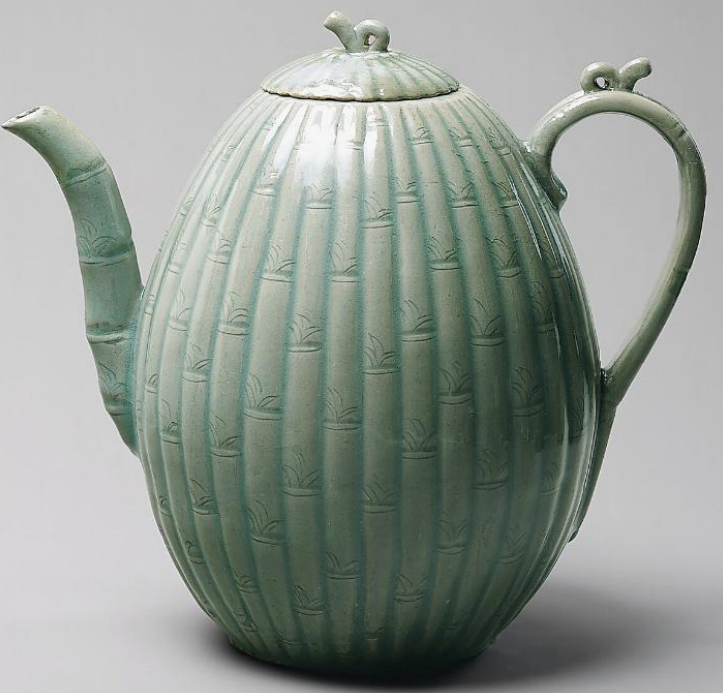
Melon-shaped ewer with bamboo decoration from Korea
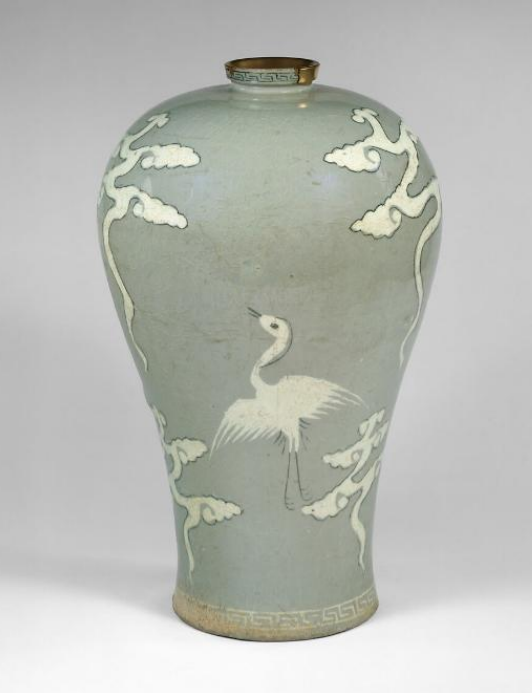
Maebyeong (Plum Bottle) decorated with cranes and clouds from Korea
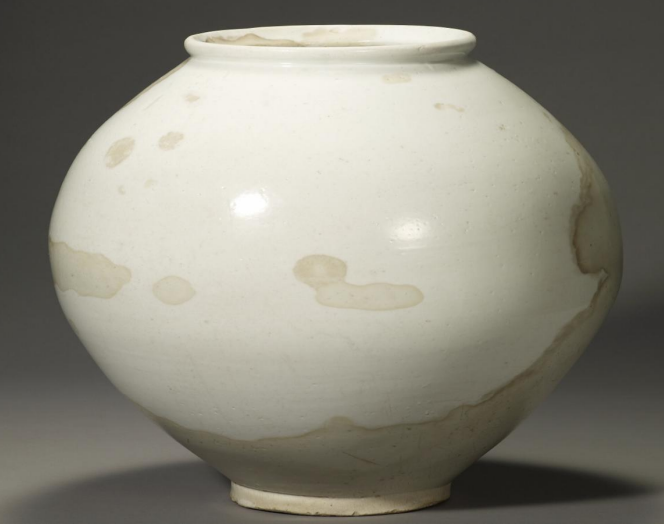
Moon jar from Korea
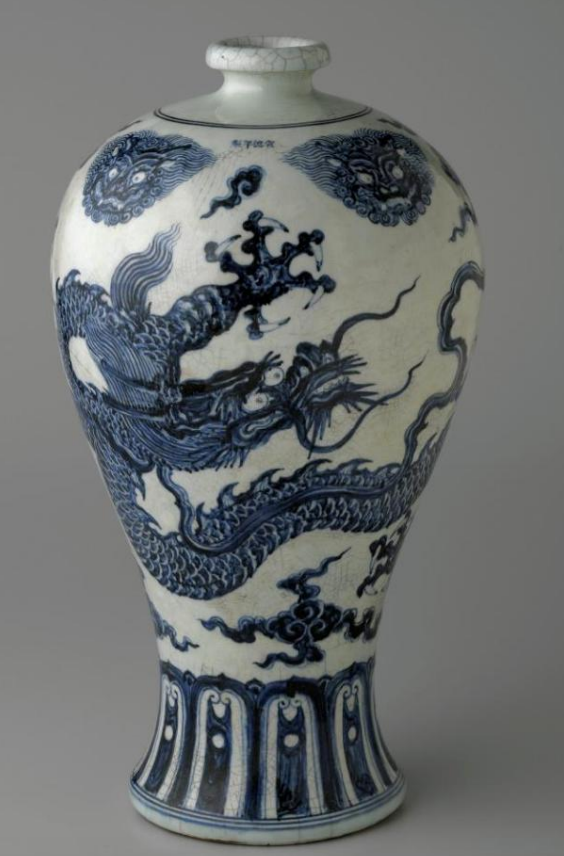
Ming dynasty Xuande period meiping vase
It features an exuberant five-claw imperial dragon as
the central motif, which projects an air of majesty and
power as it strides around the surface of the vessel.
Four frontal lion masks, alternating with stylized clouds,
decorate the shoulder.
The scale and imperial imagery of this magnificent vase
suggest a formal use within the halls of an imperial
compound.
It was likely one of a matching pair of vases, used to
create balanced, formal arrangements in the large
rooms of the Forbidden City, the imperial palace in
Beijing.
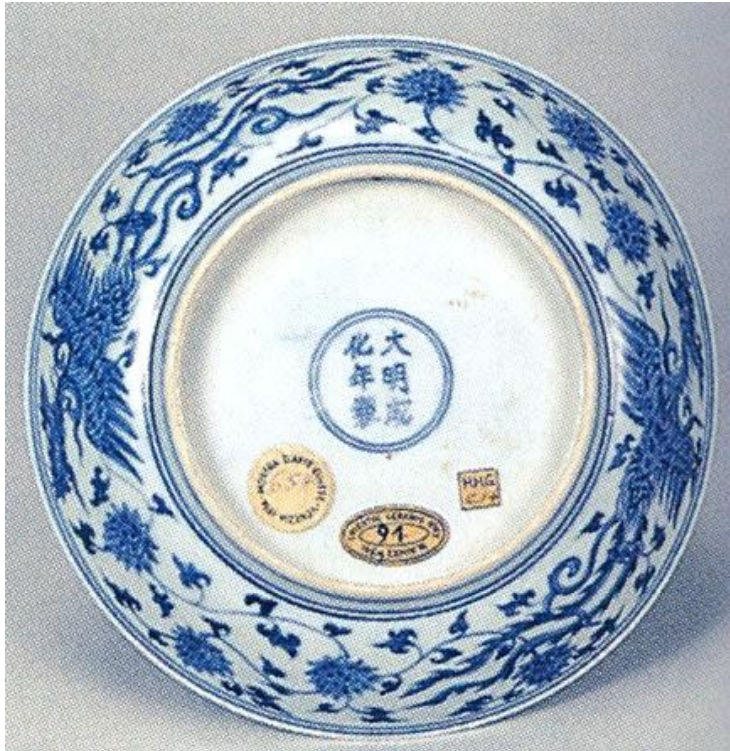
This is a Chinese blue and white porcelain plate, likely from the Ming dynasty Chenghua period (1465-1487) or a later style piece.
The plate features hand-painted underglaze cobalt blue designs of phoenixes and floral motifs.
The base includes a blue six-character Chenghua mark within a double circle, which translates to "Made in the Great Ming Chenghua Period".
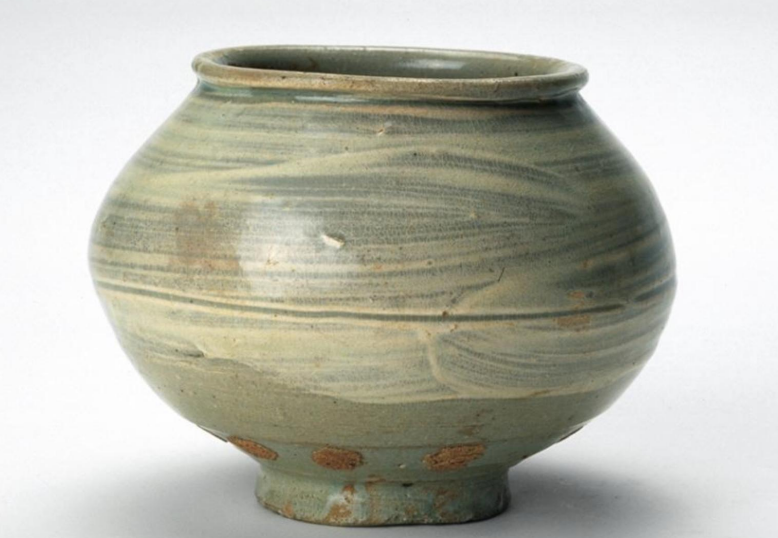
Chinese celadon jar, likely from the Late Ming dynasty, featuring rust burnt leaf decoration around its base. The piece is a stoneware jar with a light green glaze.
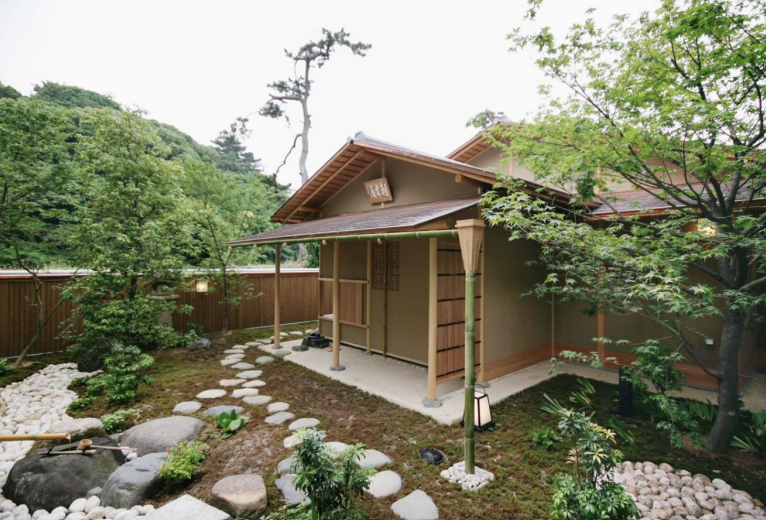
Chōun-an, in Sakai, Osaka Prefecture, is the reconstruction of a
tea house built by Rikyū 420 years ago.
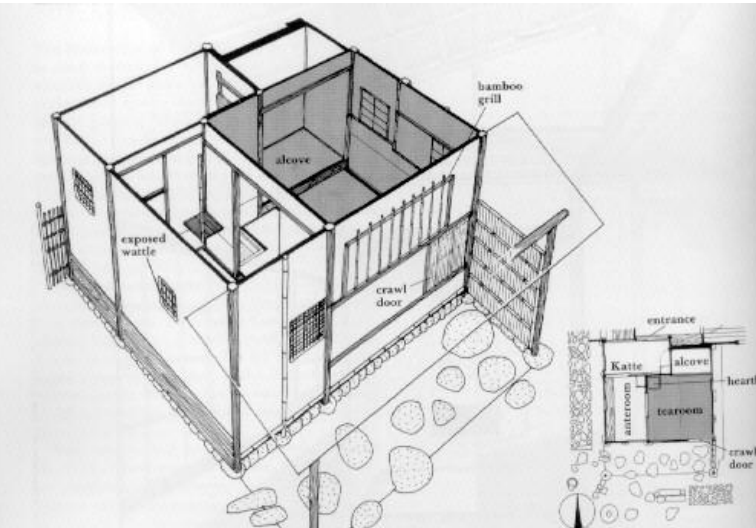
Japanese Tea House (Interior)
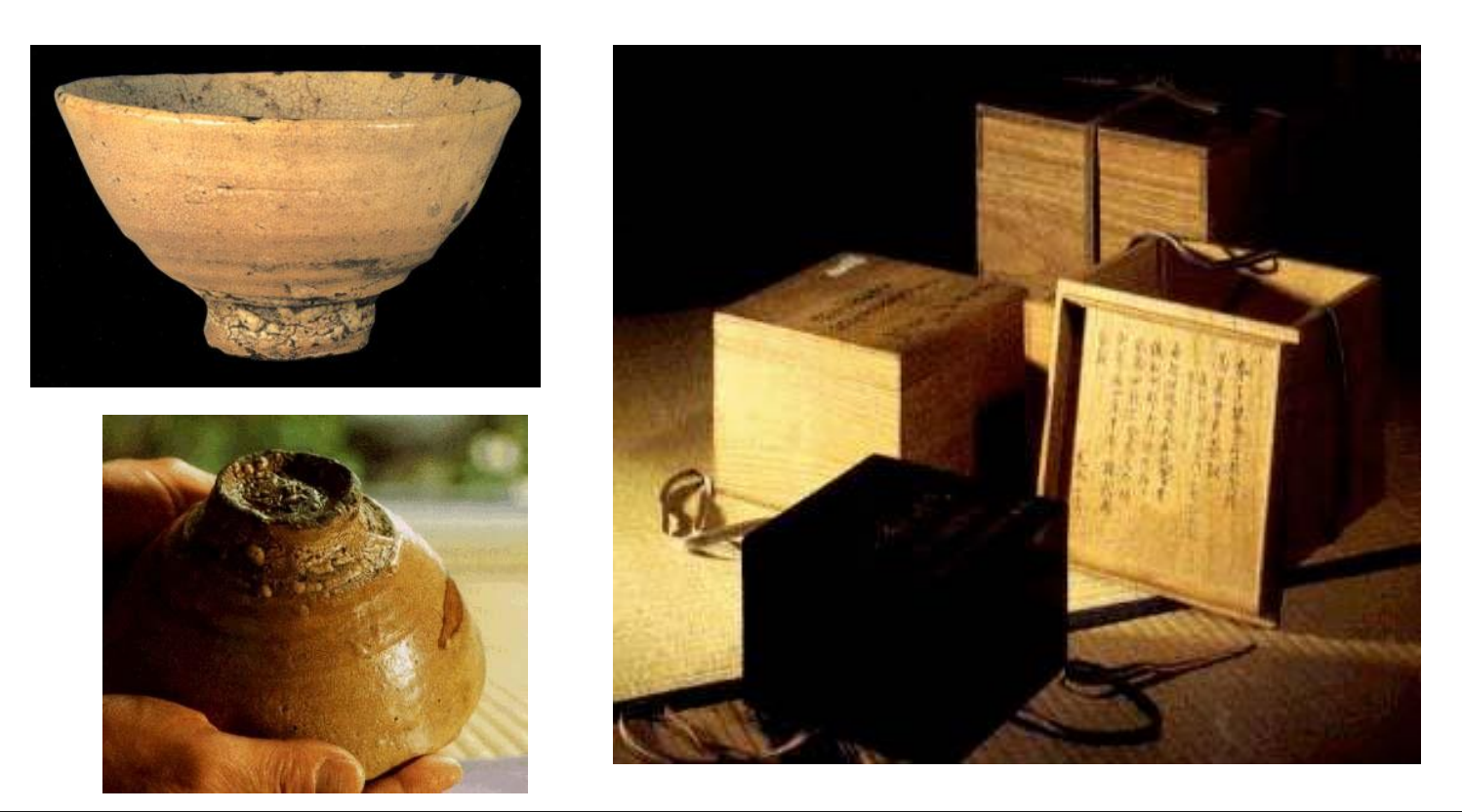
Kizaemon Yido in Daikoku-ji temple in Kyoto, Japan
This image shows a Japanese chawan (tea bowl) and its accompanying wooden storage boxes, known as kiribako.
A chawan is a bowl used for preparing and drinking tea in the Japanese tea ceremony.
The wooden boxes, often made of Paulownia wood, protect the valuable tea bowl and often have inscriptions (called origami or hakogaki) by the tea master or owner detailing the bowl's name, kiln, and history.
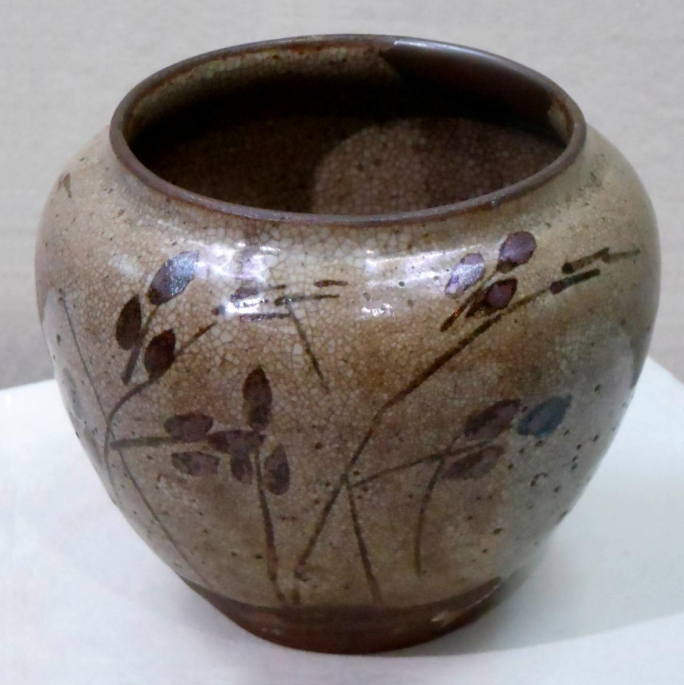
Karatsu jar with bush clover design, stoneware with iron-brown underglaze. Hizen, Momoyama period, 1590-1610s
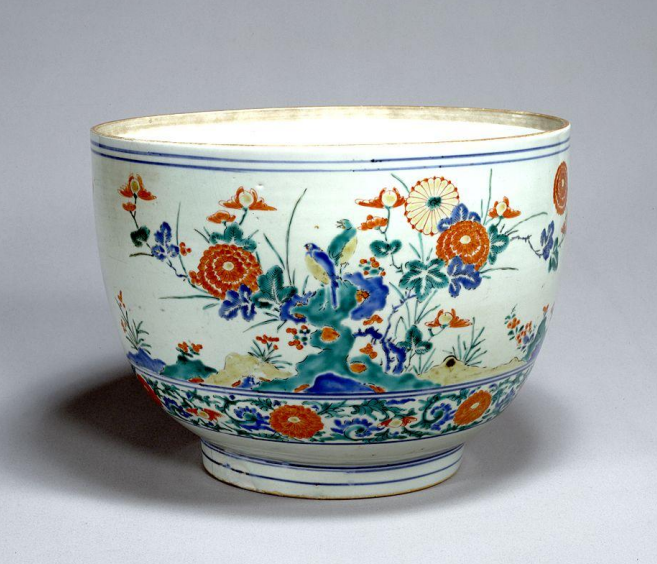
Kakiemon ware
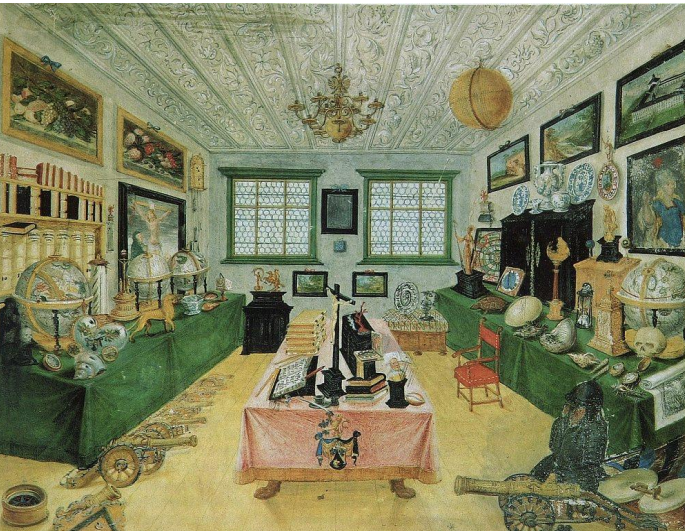
Joseph Arnold, Kunstkammer of the Dimpfel family of Regensburg, 1668, Museum, Ulm.
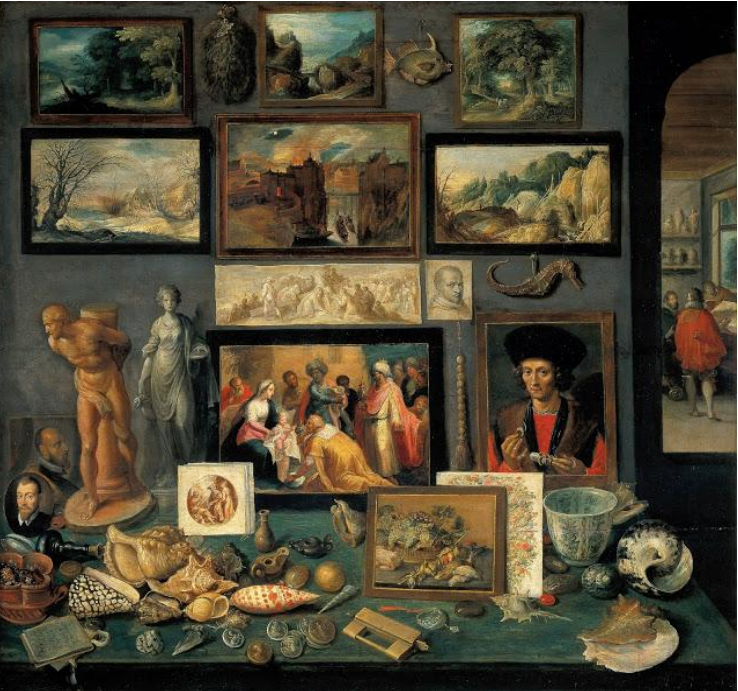
This image is the painting A Collector's Cabinet (also known as Chamber of Art and Curiosities or Art Room) by the Flemish artist Frans Francken the Younger.
The painting, created around 1620-1625, depicts a "cabinet of curiosities" or Wunderkammer, which were early collections of rare and unusual objects that served as the forerunners to modern museums.
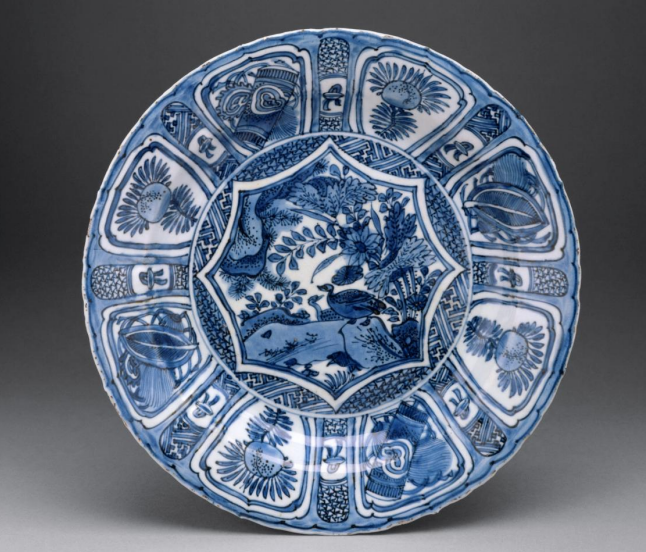
Kraak Ware:
Characteristic features of kraak dishes were decoration divided into panels on the wide border, and a central scene depicting a stylized landscape
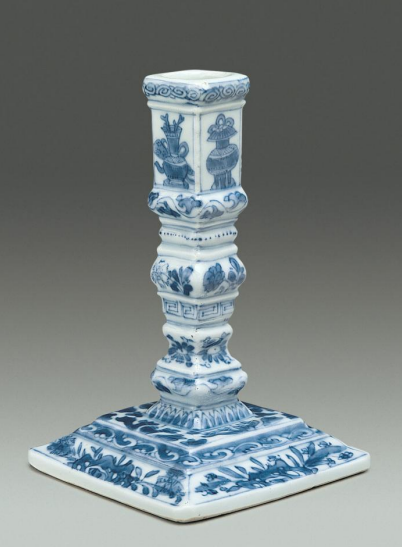
This is a Chinese export porcelain taperstick, designed for the Dutch or English market.
It features a stepped square-sectioned shape derived from European metalwork designs.
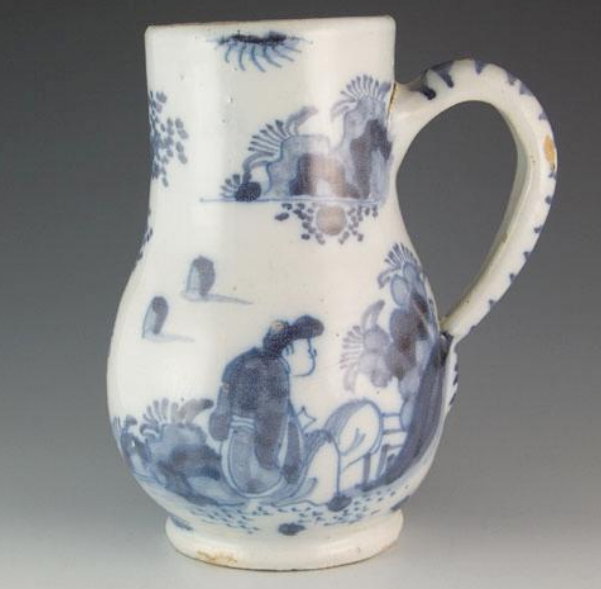
Delftware, c. 1670-1700, Dutch, Delft, tin-glazed earthenware
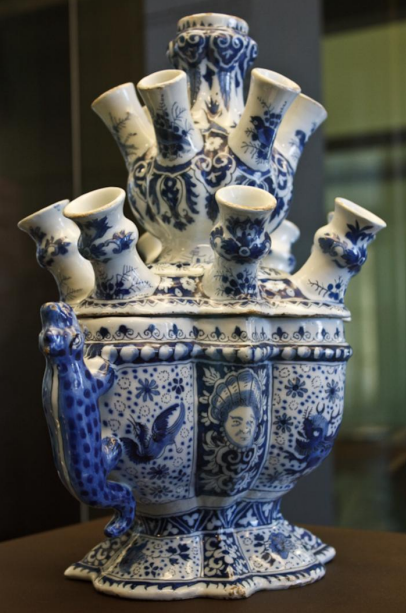
Delftware tulip vase, 18th century
The VOC or Dutch East Indian Company
(VOC: Vereenigde Oostindische Compagnie)
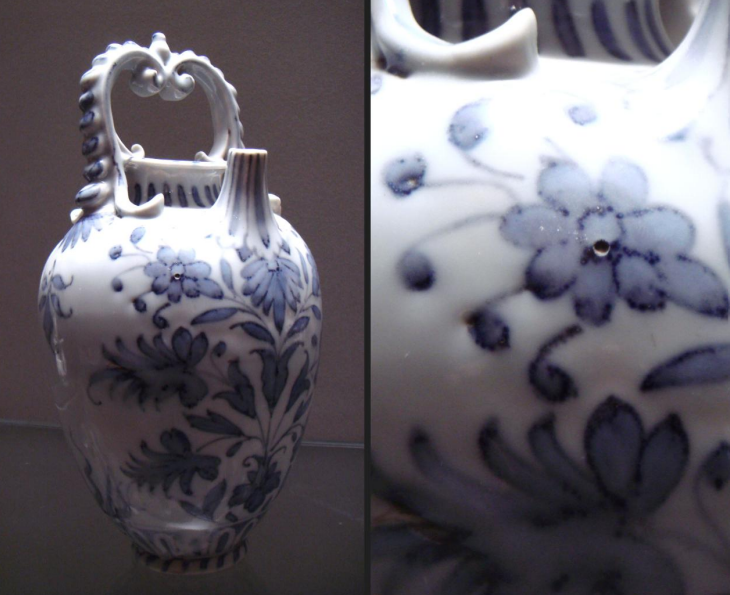
Medici Porcelain (Soft Paste) Works, Bottle, c. 1575–87, with pitted texture detail; Soft Paste Porcelain; OA 2734, Louvre, Paris
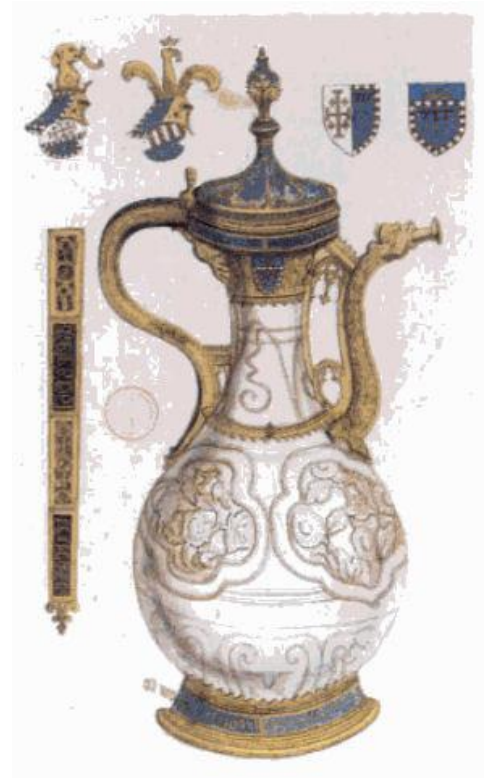
Fonthill vase, by Barthelemy Remy, valet of Francois Roger de Gaignieres, 1713.
The drawings in the upright and upleft corner depict the coat-of-arms of Louis the Great of Hungry
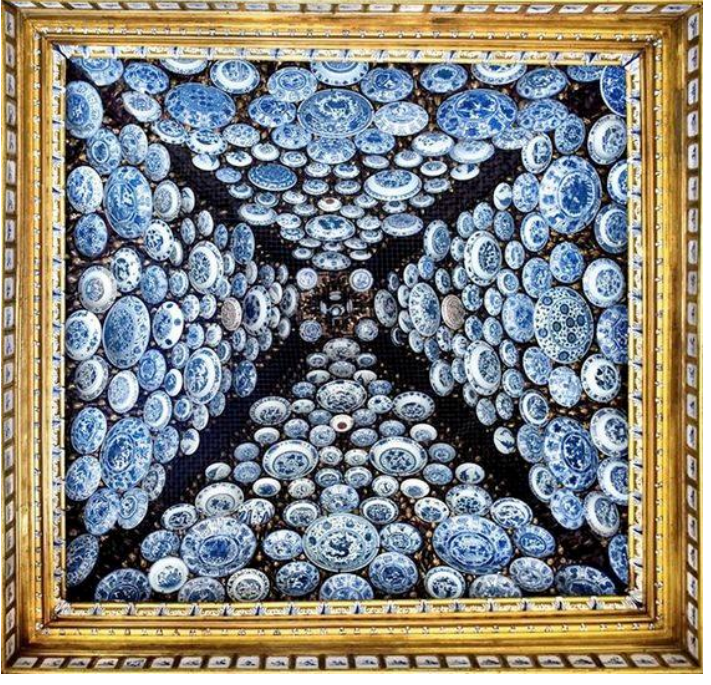
The pyramidal ceiling of the “porcelain room” in the royal Santos Palace in Lisbon
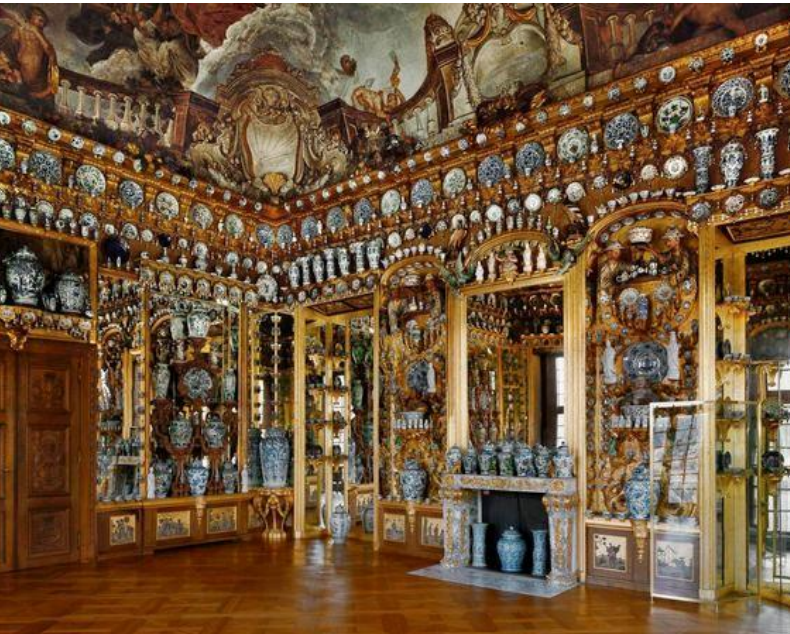
“Porcelain chamber” in Charlottenburg Palace, Berlin
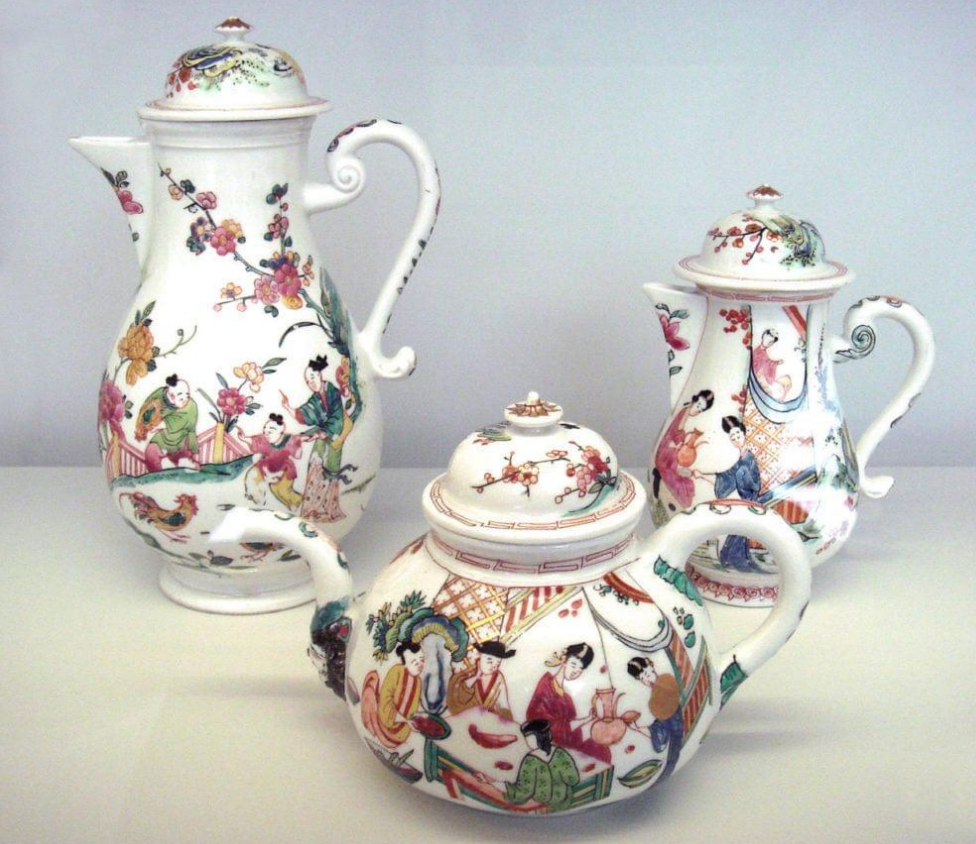
Early Meissen Porcelain Teapots, Circa 1735, Musée des Arts Décoratifs, Paris
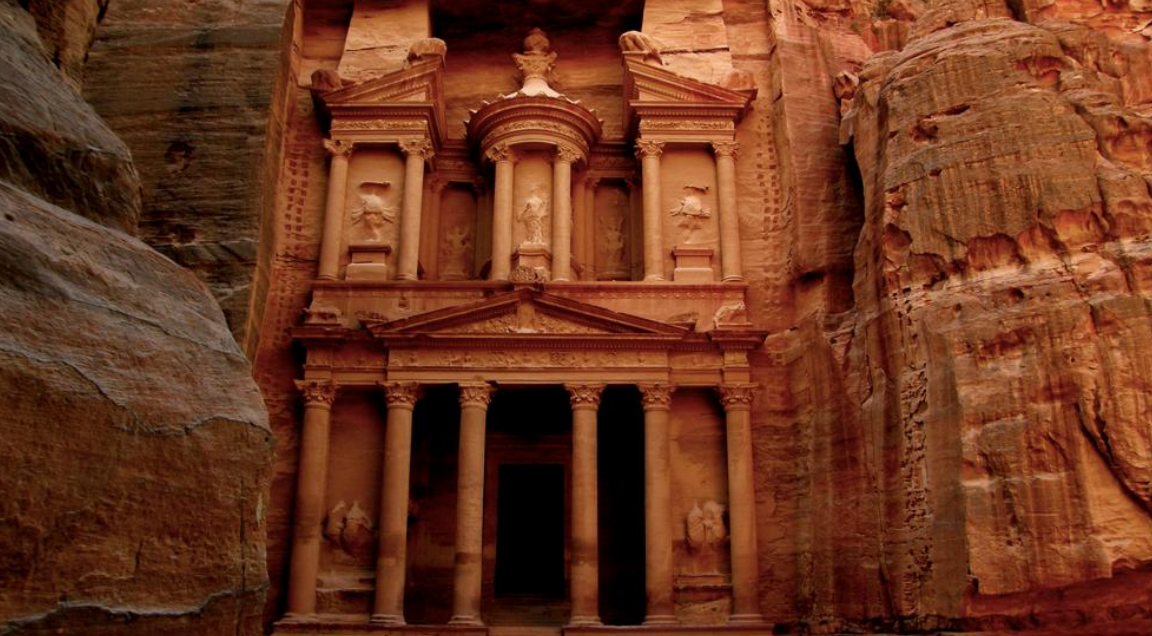
Petra (Greek for “rock”)
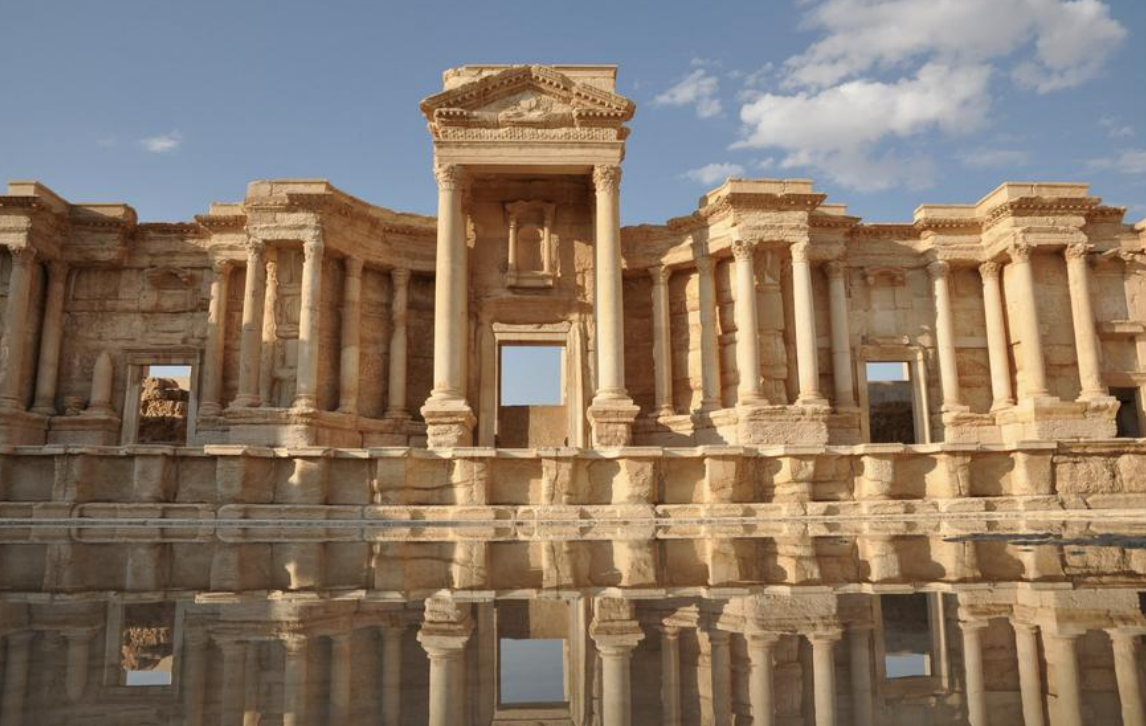
Palmyra (“city of palm trees”) in Syria
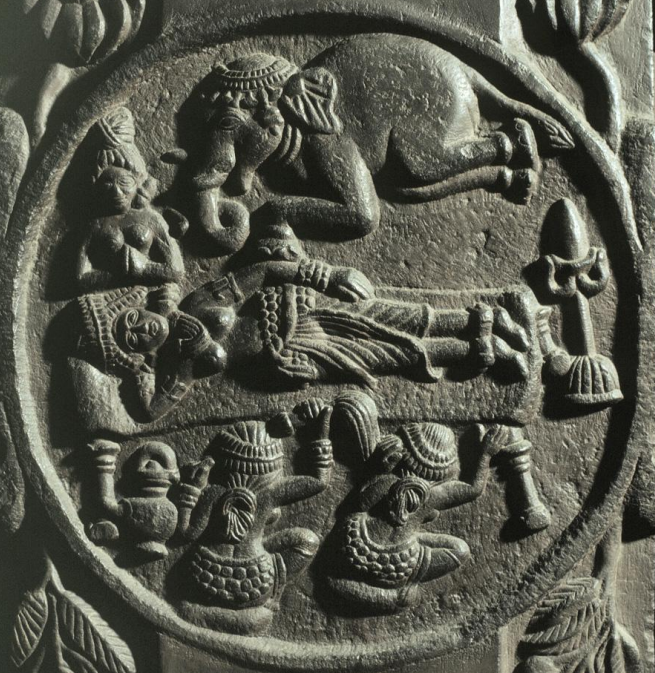
Dream of Queen Maya, Bharhut Shunga period
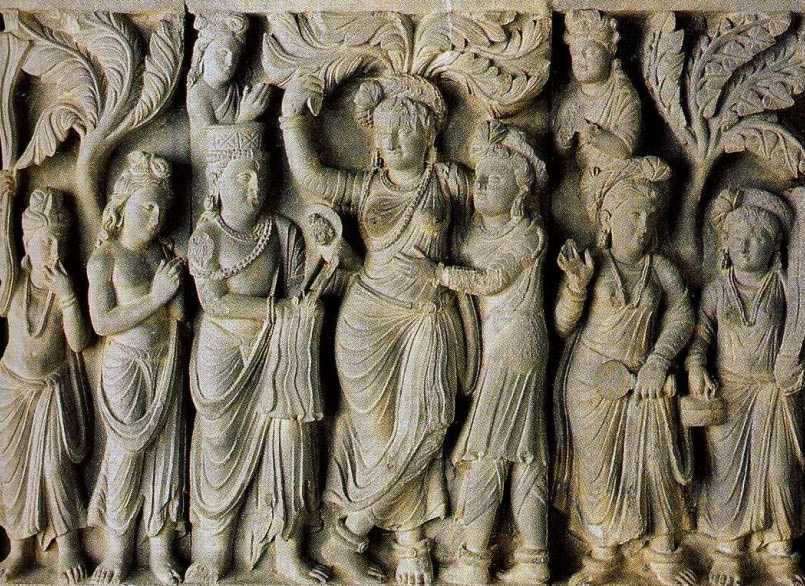
The Birth of Buddha at Lumbini
•Buddha emerges from Maya’s side
•Maya is holding up a tree
•Maya assumes a graceful S-curve
•Maya is surrounded by court ladies
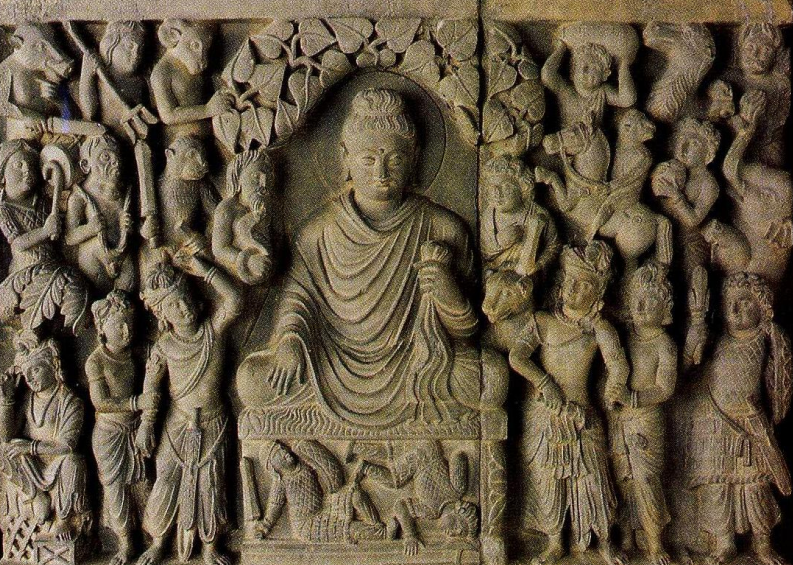
Buddha’s Enlightenment at Bodh Gaya
•Buddha sits under a bodhi tree
•Buddha is surrounded by Mara and his malicious troops
•Buddha touches the earth with his hand
•Buddha has a halo
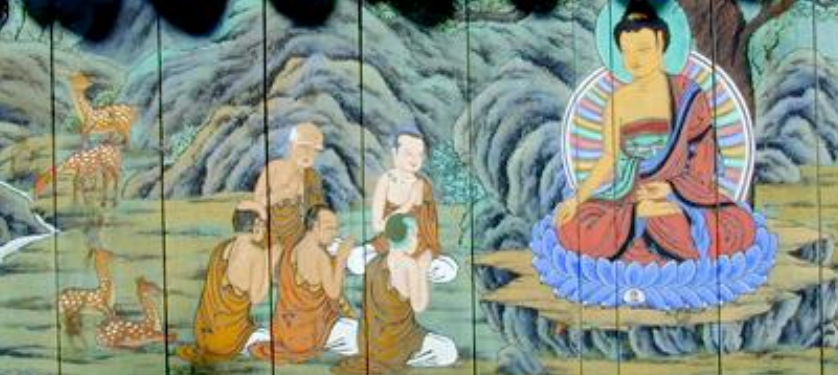
Shakyamuni
• “First Sermon”
– Set forth the Four Truths of the “Wheel of the Law” (Dharma)
1. To be is to suffer
2. Suffering is caused by craving, attachment
3. Craving and attachment can be stopped
4. These are stopped by following a path of wisdom, moral
conduct, and mental discipline
• Founded monastic communities
• Accepted lay believers
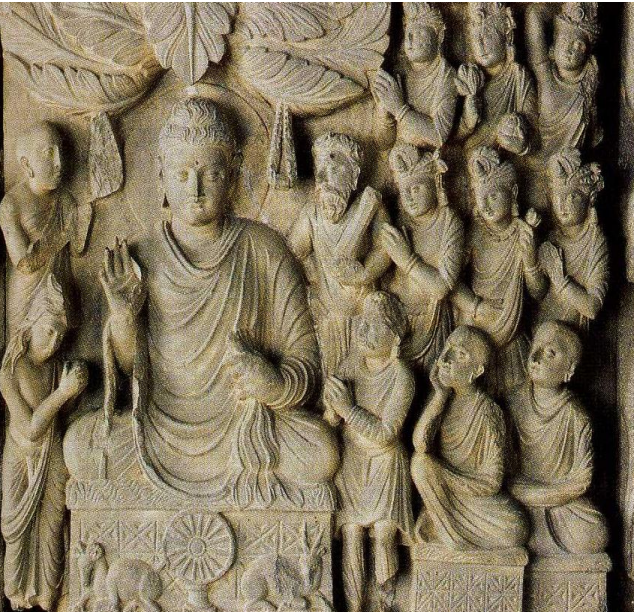
Buddha’s First Sermon at Sarnath
•Buddha’s right palm facing up and out
•Halo behind Buddha’s head
•Deer and bodhi tree
•Wheel of the Law
•Surrounded by disciples and followers
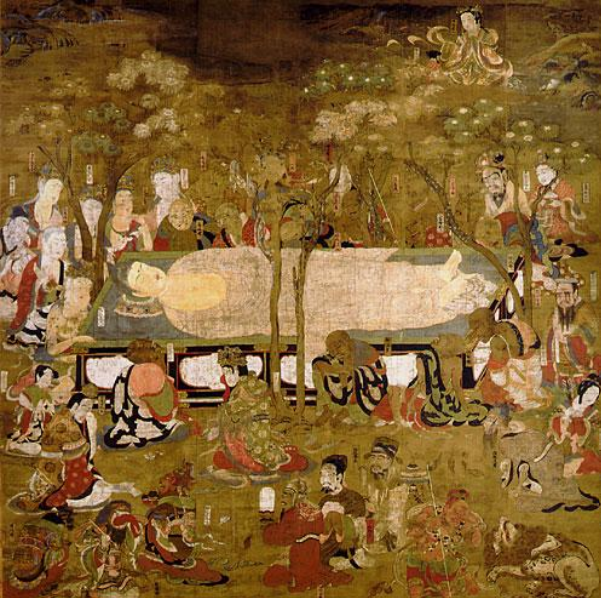
Buddha’s Death or Entering into “Parinirvana”
• At death, attained parinirvana – Final release from the cycle of rebirth
• Cremated
• Relics (remains) enshrined in hemispherical mounds – Stupa: Buddhist reliquaries
• Focuses of worship
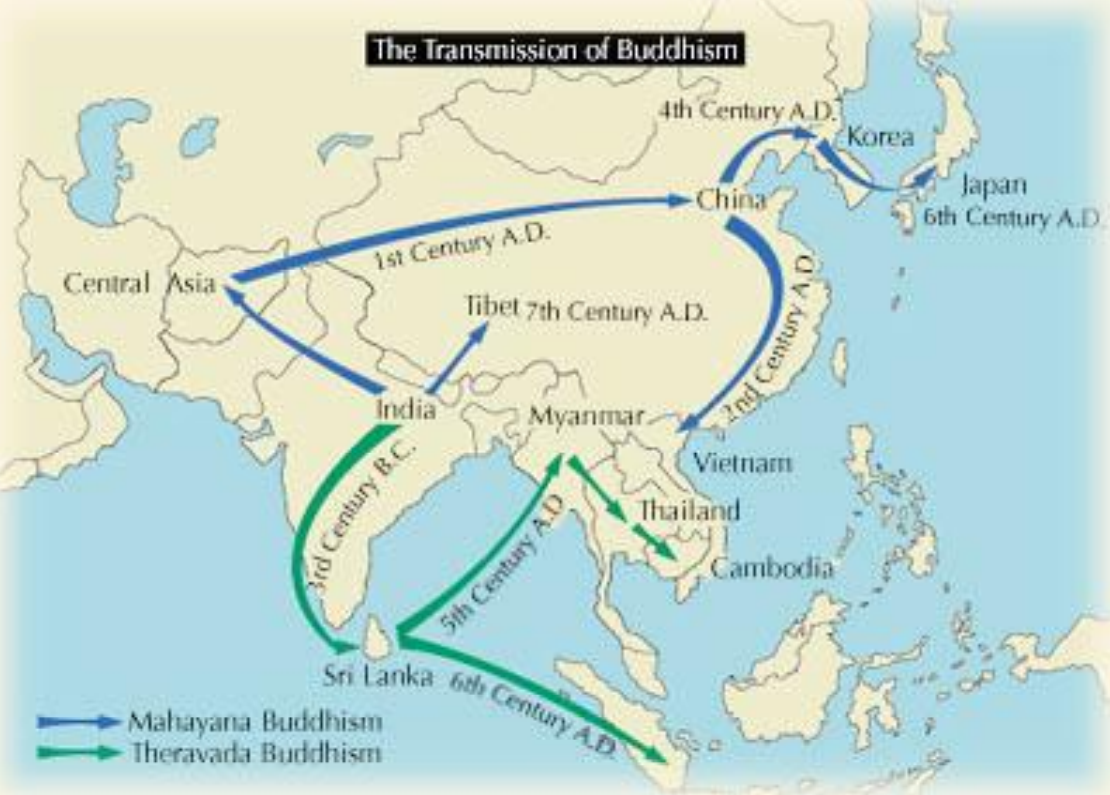
Transmission of Buddhism to Asia
• From India, across Central Asia, to China
• From north and south China to Korea
• From Korea to Japan
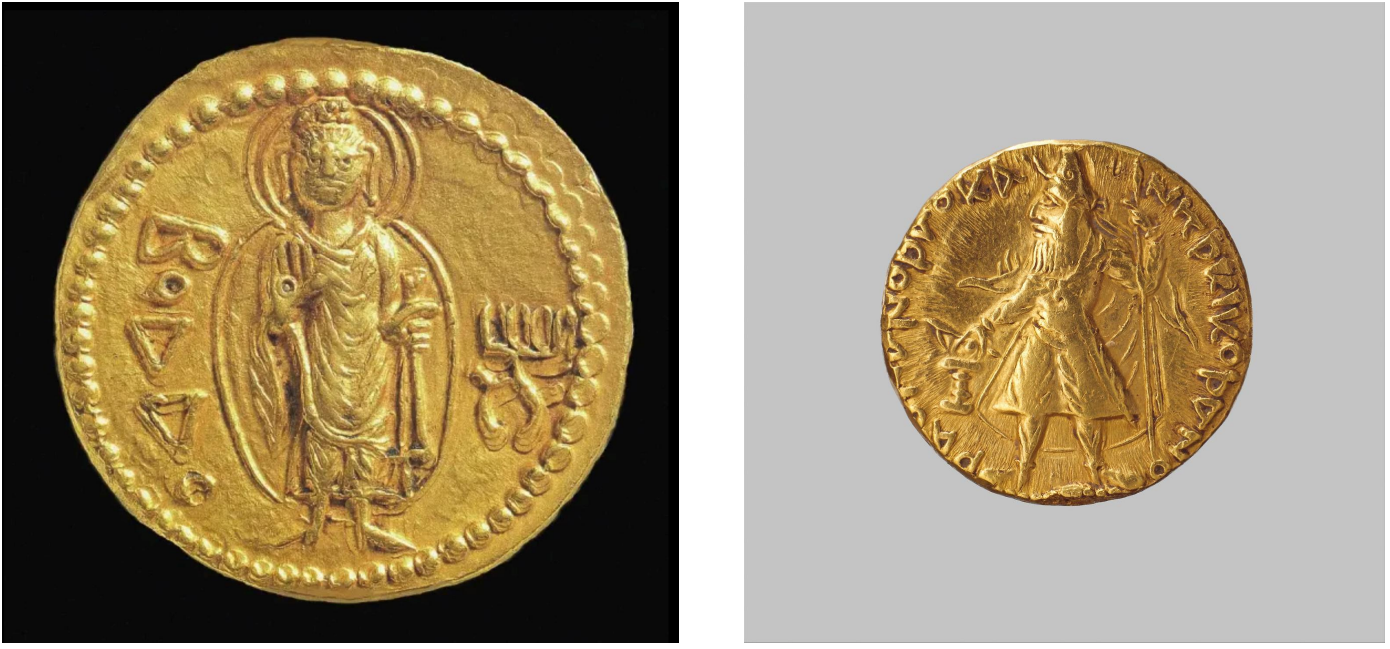
Kushan Empire and Gold Coins
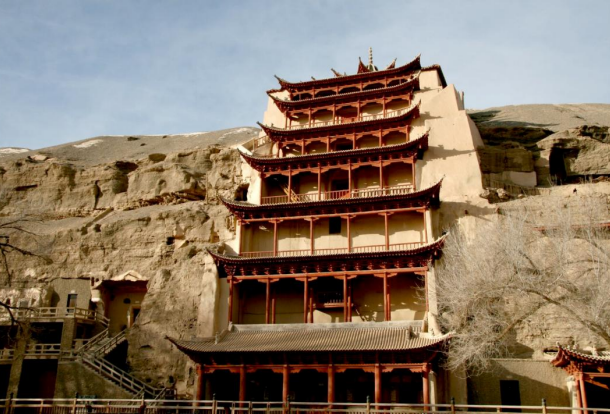
The Mogao Caves
• The Caves of Thousand Buddha form 492 temples located 16 miles
southeast of Dunhuang, an oasis strategically located at a religious and
cultural crossroads on the Silk Road, in Gansu province, China.
• The first caves were dug out in 366 CE for Buddhist meditation and
worship.
• An important cache of documents was discovered in 1900 in a "Library
Cave," which had been walled-up in the 11th century. The content of the
library was dispersed around the world, and the largest collections are now found in Beijing, London, Paris and Berlin.
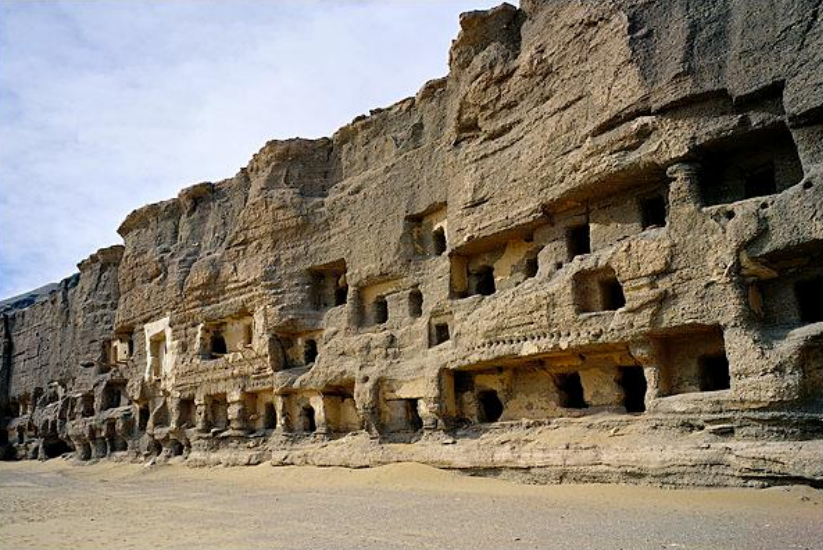
History of Dunhuang
• The major patrons: important clergy, local ruling elite, foreign dignitaries,
as well as Chinese emperors.
• During the Tang Dynasty, Dunhuang became the main hub of commerce of the Silk Road and a major religious center.
• After the Tang Dynasty, the site went into a gradual decline, and
construction of new caves ceased entirely after the Yuan Dynasty.
• During the Ming Dynasty, the Silk Road was finally officially abandoned, and Dunhuang slowly became depopulated and largely forgotten by the outside world.
• Most of the Mogao caves were abandoned; the site was still a place of
pilgrimage and was used as a place of worship by local people at the
beginning of the twentieth century when there was renewed interest in the
site.
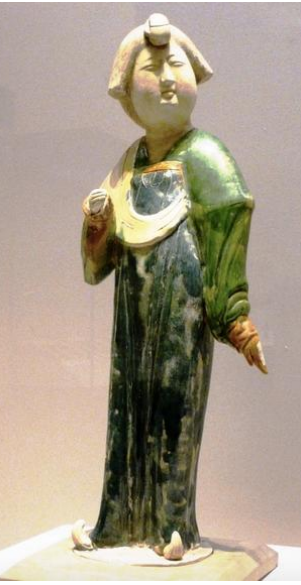
Chinese lady
• The fashion in seventh-century China was for slender women who often wore very low-cut gowns.
• But one of the most famous women in Chinese history, Yang Guifei, was
renowned for her plump beauty, the fashion by her time: or perhaps she set the fashion.
• She was the favorite concubine of an eighth-century emperor who, because of her alliance with the rebel general, An Lushan, was hanged.
• This figure of an aristocratic Chinese lady wears a high-necked under gown and shoes with curled up toes.
• Tricolor glazed earthenware
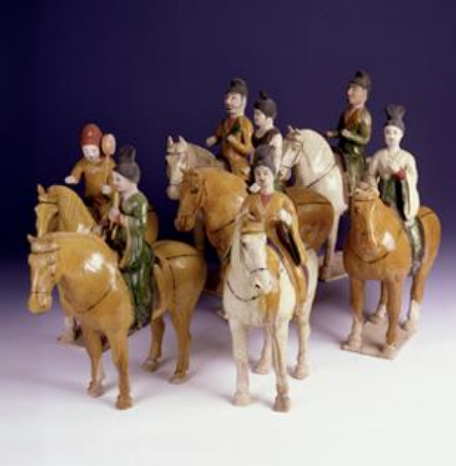
Musicians on horseback
• Music and dance were an everyday part of Silk Road life, whether it was the drummer who accompanied armies on the march, the travelling troupes of musicians and dancers, the chanting of Buddhist monks,
or popular songs sung in the home.
• There are numerous material artifacts showing musicians and dancers. This group dating from c.689 consists of a orchestra on horses.
• They include both men and women, variously dressed in Chinese and Central Asian clothes and hats and playing drums and flutes.
• The artist has carefully painted the bridles and eyelashes of the horses in black over the glaze.
• Tri-color glazed earthenware
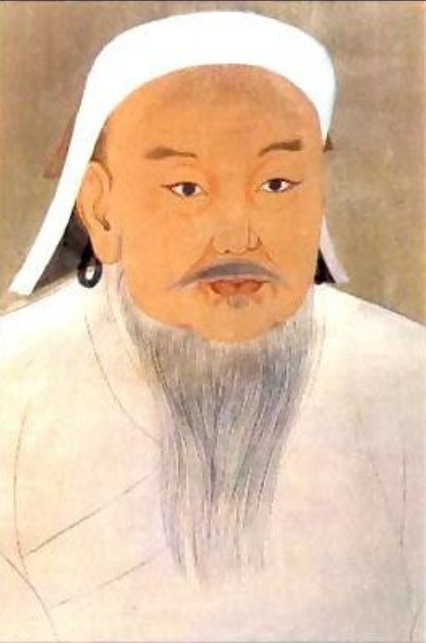
Ghengis Khan (1162-1227)
• Also known as Temuchin or Jinghis Khan
• A Warrior-Ruler
• A unifier of Nomadic Mongolian Tribes
• Established the Great Mongol Empire
Richard Kurin (Cultural Anthropologist at the
Smithsonian institution) wrote:
“With the Mongol descendants of Genghis Khan
in control of Asia from the Black Sea to the
Pacific, a third Silk Road flourished in the 13th
and 14th centuries. The emissary of King Louis IX
of France, Willem van Rubruck, visited the court
of the Mongol ruler in 1253, and, seeing the
wealth of silks, realized that Cathay, or China,
was the legendary Seres of Roman times. The
Venetian Marco Polo followed."
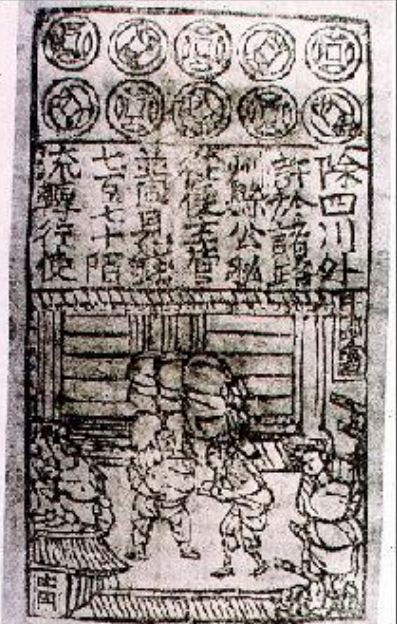
Early paper money
Paper money was first produced in China in 11th century
Notes produced in 1209 that promised a pay holders with gold
and silver were printed on perfumed paper made of silk.
The Mongols were the first people to use paper money as their
sole form of currency.
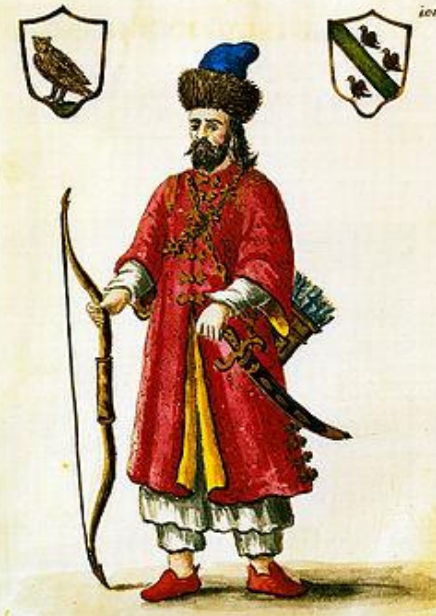
Marco Polo (1254-1324)
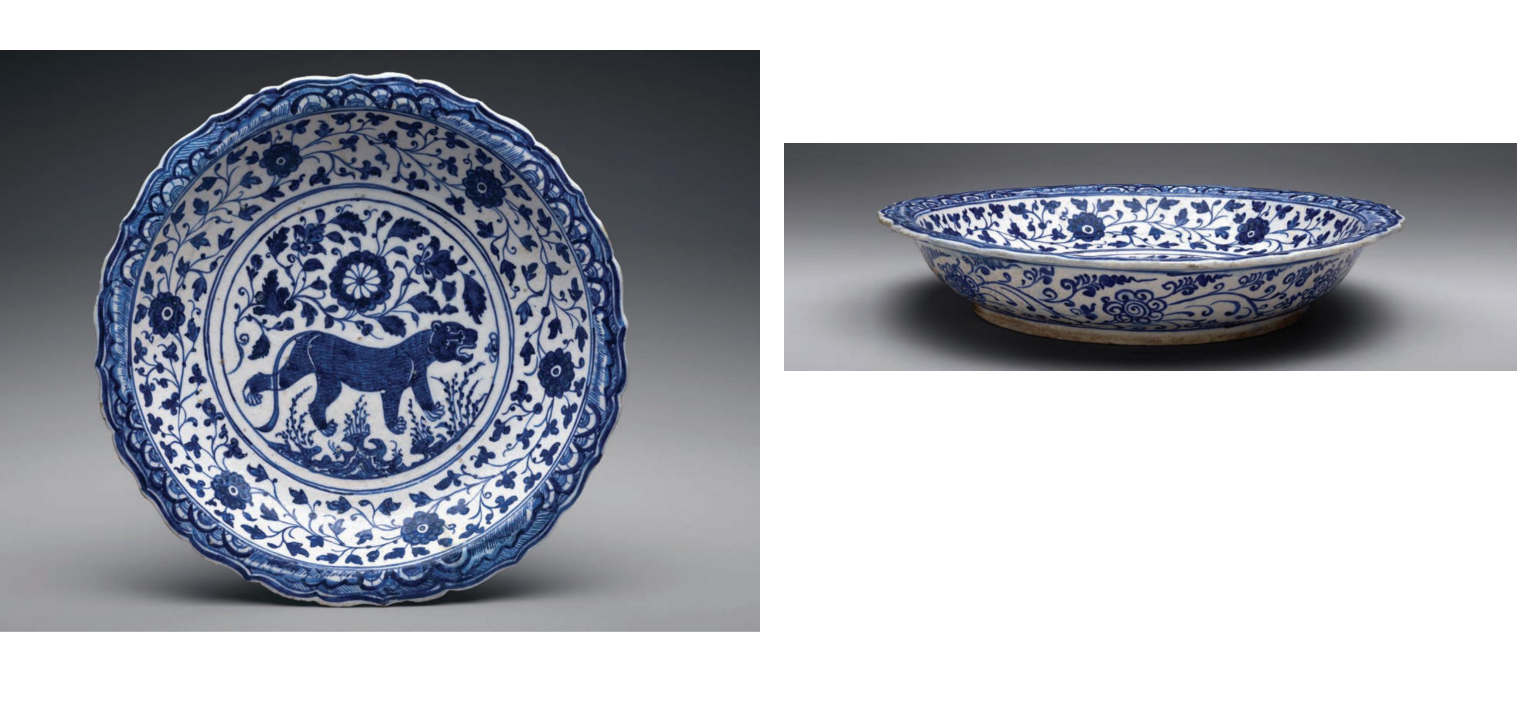
Chinese Blue-and-White Porcelain for Islamic Market
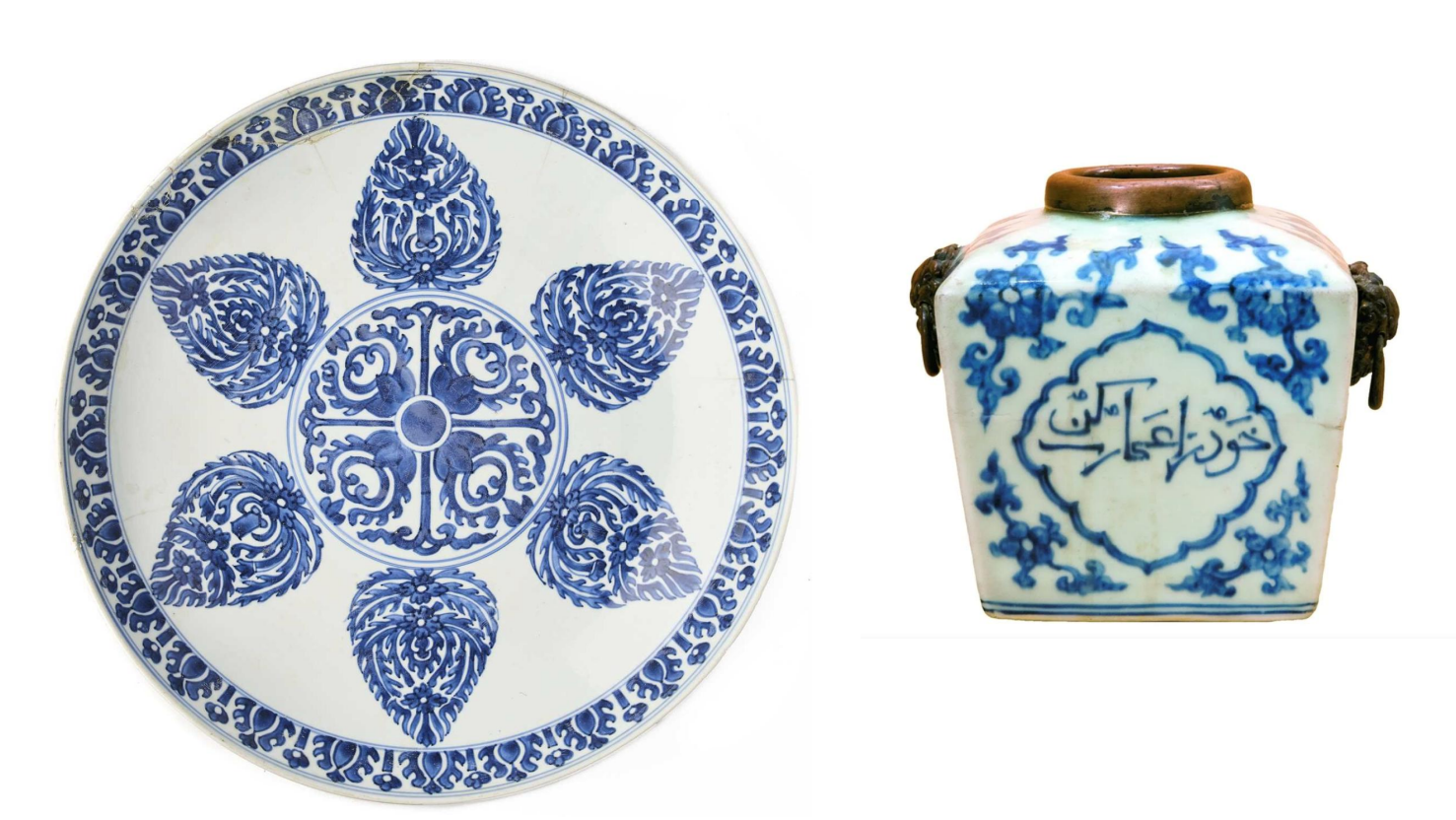
Chinese Blue-and-White Porcelain for Islamic Market
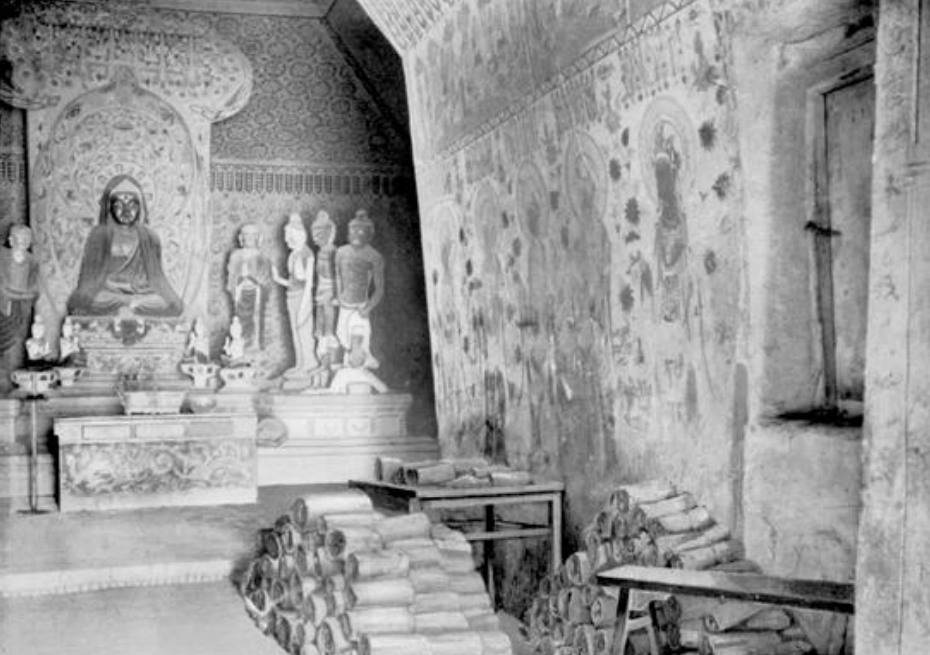
“Library Cave”
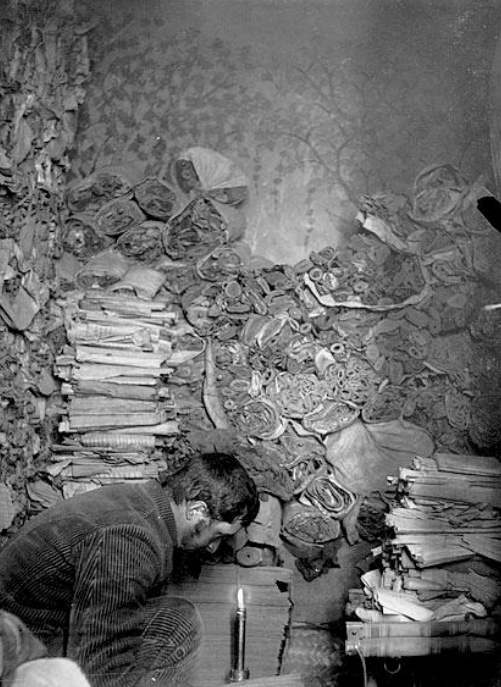
Manuscript from Library Cave
• Dated from 5th to 11th C.
• 50,000 manuscripts
• Most of them are written in Chinese but some are written in Tibetan, Uyghur, Sanskrit, and Sogdian
• Mostly Buddhist texts but has some Confucian, Taoist, Nestorian Christian works as well as government documents
• Chronicle the development of Buddhism in China, record the
political and cultural life of the time, and provide documentation of mundane secular matters
Paul Pelliot examining manuscripts in the Library Cave, 1908
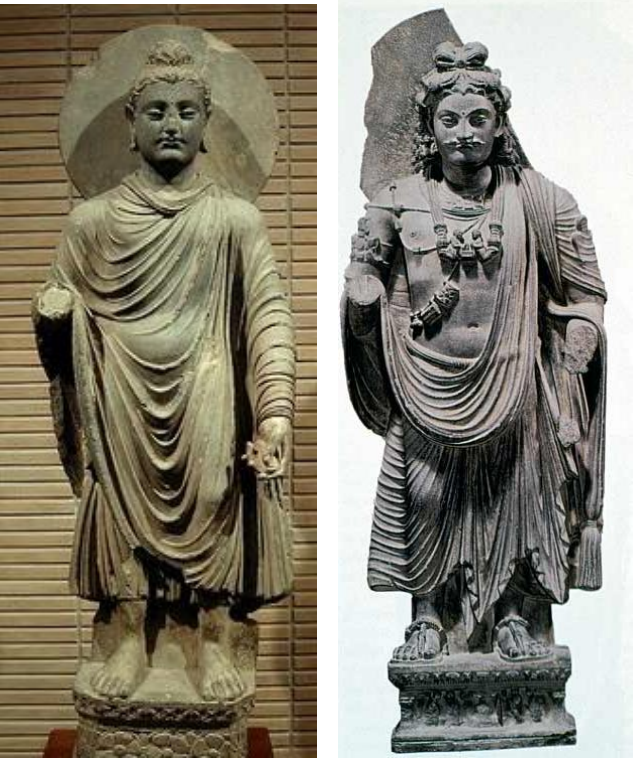
These are examples of Greco-Buddhist art from Gandhara, likely depicting the Standing Buddha (left) and the Bodhisattva Maitreya (right).
The Buddha figure (left) is characterized by its simple monastic robes and the cranial protuberance (ushnisha).
The Bodhisattva (right) is depicted with elaborate garments, jewelry, and a topknot hairstyle, reflecting a more princely appearance.
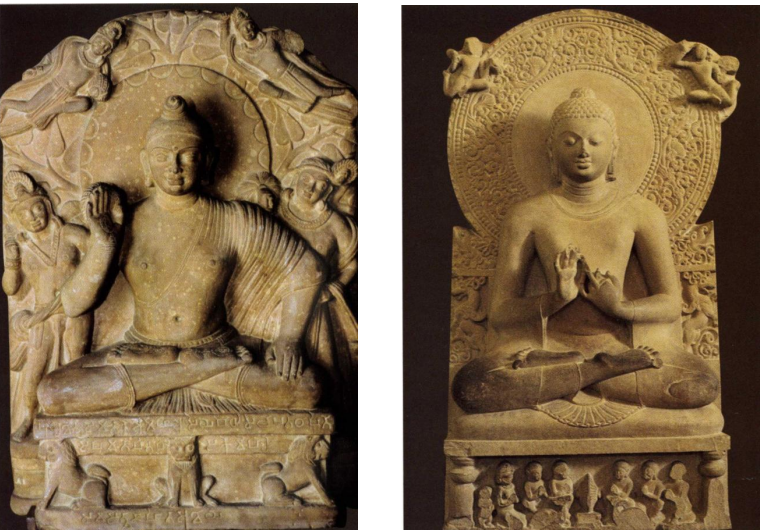
The statue on the left displays the Abhaya mudra, and the statue on the right displays the Dharmachakra mudra.
Abhaya Mudra (Left Image)
Meaning: This gesture symbolizes reassurance, protection, and the dispelling of fear.
Description: The right hand is raised to shoulder level, with the palm facing outward and fingers pointing upward. The left hand typically rests in the lap.
Significance: It is one of the major teaching gestures for Shakyamuni Buddha in Gandharan imagery.
Dharmachakra Mudra (Right Image)
Meaning: This gesture represents the "Turning of the Wheel of Dharma" (Buddhist law).
Description: The thumbs and forefingers of both hands are joined to form a wheel shape, held in front of the chest.
Significance: It symbolizes the Buddha's first sermon at Sarnath after his enlightenment, marking the beginning of his teachings.
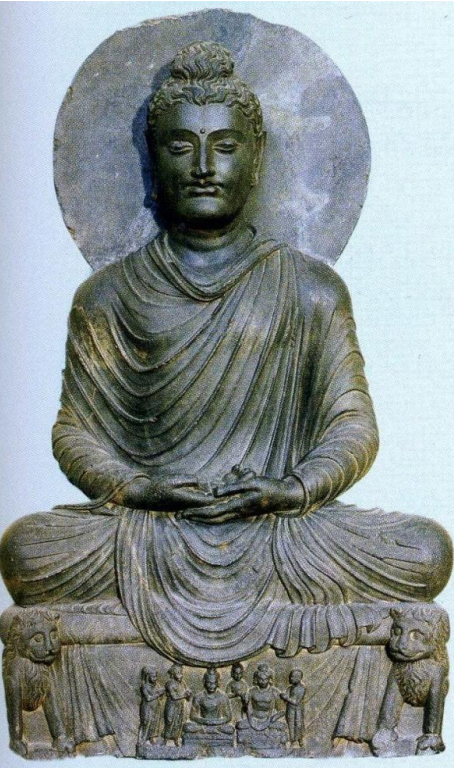
The hand gesture shown in the image is the Dhyana mudra (meditation gesture), also known as the Samadhi mudra.
This specific mudra (symbolic hand gesture) is used to convey spiritual truths and represent divine qualities.
Position: The Buddha is in a seated position with both legs crossed. His hands are placed in his lap, with the right hand resting on top of the left hand, and the thumbs gently touching at the tips.
Symbolism: This posture signifies deep contemplation, focused concentration, and inner tranquility. It represents the meditative state the Buddha achieved during his path to enlightenment.
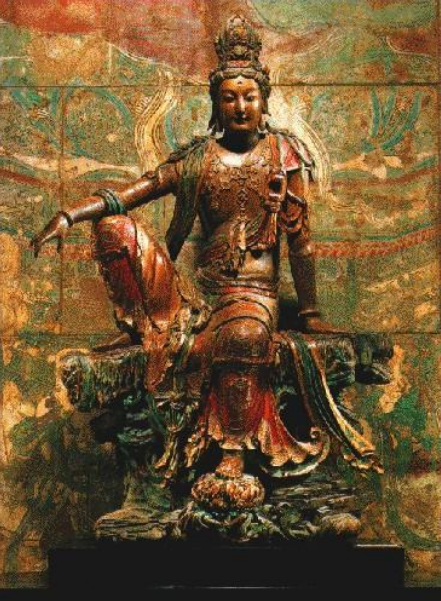
This is a Chinese wooden sculpture of the Guanyin (Avalokiteśvara) Bodhisattva, a revered figure in Buddhism associated with compassion.
Guanyin is known as the "Goddess of Mercy" in China.
The sculpture is believed to date from the 11th/12th century, during the Northern Song or Liao Dynasties.
It depicts the figure in a pose of "royal ease" (rajalilasana), with one leg raised and the other hanging down.
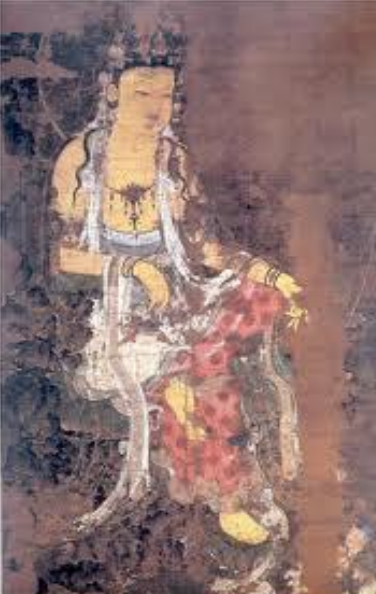
This is a famous Goryeo dynasty Korean Buddhist painting of the Water-Moon Avalokiteśvara (known as Guanseum in Korean or Kannon in Japanese).
The painting was completed in 1310 CE.
It was commissioned by Concubine Sukbi and created by artists including Kim Umun.
The work is renowned for its high degree of artistic completion and is painted with ink and color on silk.
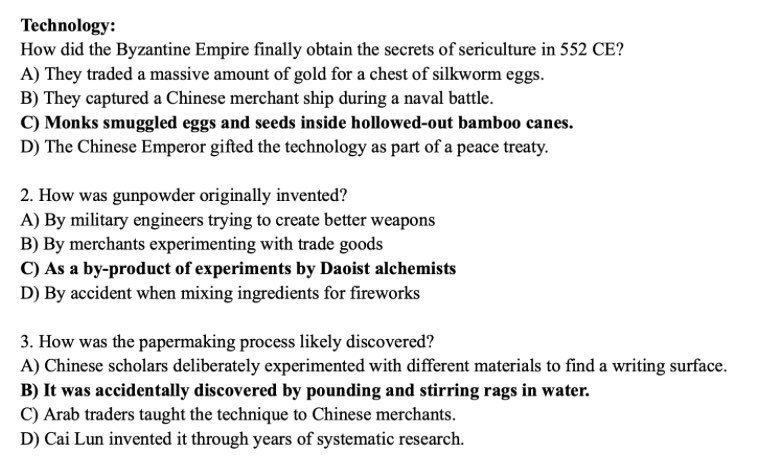
Innovation Group:
Why is jiaozi often considered the first “true” paper currency rather than earlier promissory notes such as Flying Cash?
It became standardized and regulated by the state
It circulated widely outside of China
It was backed by precious metals stored by merchants
It was restricted to administrative use by the elite
Innovation Group:
Paper initially entered Christian Europe through which two primary geographic gateways?
Constantinople and Venice
Samarkand and Baghdad
Sicily and Islamic Spain (Al-Andalus)
Korea and Japan
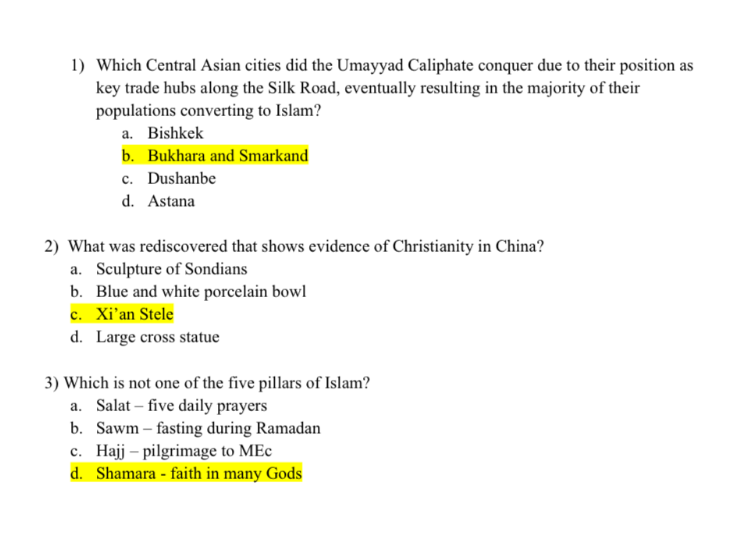
Innovation Group:
Which Buddhist monk brought sutras from India to China in the 7th century?
Wang Yuanlu
Xuanzang
Wu Cheng’en
Taizong
Region/Geography Group:
Which Statement best reflects how the Silk Road actually functioned?
A. A single continuous road connecting China directly to Rome
B. A one direction luxury goods pipeline controlled by one empire
C. A network of regional trade channels shaped by local actors and geography
D. A random series of unrelated caravan paths
Region/Geography Group:
Why were cities like Petra, Palmyra, and Constantinople powerful within Silk Road exchange?
A. They produced most Silk Road goods locally
B. They controlled key gateways and could tax, regulate, and redirect trade flows
C. They eliminated the need for intermediaries
D. They replaced maritime trade with land trade
Region/Geography Group:
What does the Strait of Malacca and Srivijaya case show about Silk Road maritime trade?
A. Sea trade was uncontrolled and open to all merchants equally
B. Maritime trade avoided political influence
C. Geographic bottlenecks allowed regional states to manage passage and profit from exchange
D. Ocean routes mattered less than overland routes
Food group:
Which of the following best reflects the central argument of the presentation regarding everyday food commodities on the Silk Road?
A. Food primarily circulated as luxury items consumed only by political elites
B. Food traveled unchanged, maintaining its original cultural meaning across regions
C. Everyday foods were materially and culturally transformed as they moved, revealing power, adaptation, and unequal exchange
D. Food exchange was less significant than the trade of silk and precious metals
Food Group:
What does the example of brick tea in the Sichuan-Tibet Tea-Horse trade demonstrate about state power and food circulation?
A. Tea spread freely without state involvement due to its religious importance
B. Tea’s compressed from allowed imperial authorities to regulate, tax, and exchange it for military resources
C. Tea was consumed mainly as a ritual object in monasteries
D. Tea circulation declined due to ecological constraints in high-altitude regions
Food Group:
Why were grape products such as wine and raisins particularly significant along the Silk Road?
A. They were luxury goods that replaced existing grain-based diets
B. They spread only through maritime trade routes
C. Their preservation and adaptability allowed them to move across regions and integrate into new social and cultural contexts
D. They remained confined to Mediterranean consumption practices
 Note
Note  Flashcards (106)