5 .continuity of. cells
 Call Kai
 Learn
Learn Practice Test
 Spaced Repetition
 Match
Match Flashcards
 Knowt Play
1/41

There's no tags or description
Looks like no tags are added yet.
Name | Mastery | Learn | Test | Matching | Spaced | Call with Kai |
|---|
No analytics yet
Send a link to your students to track their progress
42 Terms
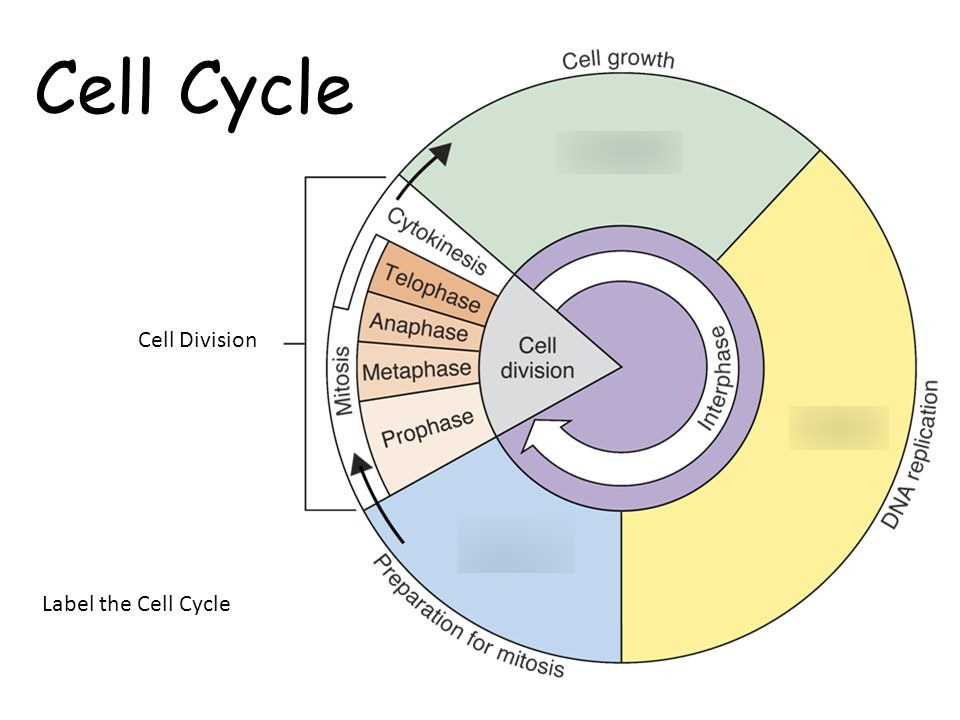
Cell cycle
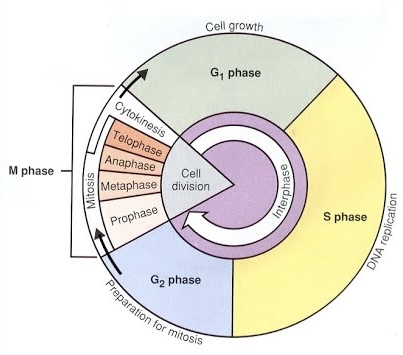
G1 phase
organelles and other cytoplasmic components are replicated
Cell increases in size
S phase
DNA is duplicated
Chromatids form in the nucleus
Histones form
G2 phase
Spindle fibres synthesised
Chromosomes checked for error
2nd growth phase
When does G1 checkpoint take place
end of G1 phase
Before replication, what does this G1 checkpoint ensure
Cell has reached critical size
Enough nutrients for the next stages
Necessary growth factors in place
No DNA damage
What happens if checkpoint requirements not met
Resting state or G0 phase
G2 checkpoin
At end of G2 phase.
DNA replication taken place accurately
No DNA damage
Last checkpoint
Metaphase checkpoint – chromosomes have attached to spindle fibres
cancer preventative drugs vincristine
Vincristine binds to tubulin in spindle fibres can’t contract to pull chromatids apart – anaphase can’t happen. Mitosis stops.
Antimetabolites preventing DNA synthesis e.g. Fluorouracil. Cus cancer
Fluorouracil inhibits enzyme involved in making nucleotides with base thymine –
prevents DNA synthesis and S phase and therefore stops mitosis.
disadvantages of using chemotherapy drugs
Can affect normal cells and cause side effects.
What do Chromosomes consist of
extended DNA molecule supported by histones.
What is a nucleosome
Histones folded into stacks with DNA coiled around them
What is meant by the term diploid?
Chromosomes in homologous pairs
How are homologous chromosomes similar to each other?
Carry same genes in same sequence along their length
How are homologous chromosomes different to each other?
Different alleles for some genes.
What is a karyotype?
Shows chromosome arrangement.
The 23rd pair of chromosomes indicates the gender = female.
4 stages of mitosis
Prophase
Metaphase (middle)
Anaphase (a for apart)
Telophase (transport)
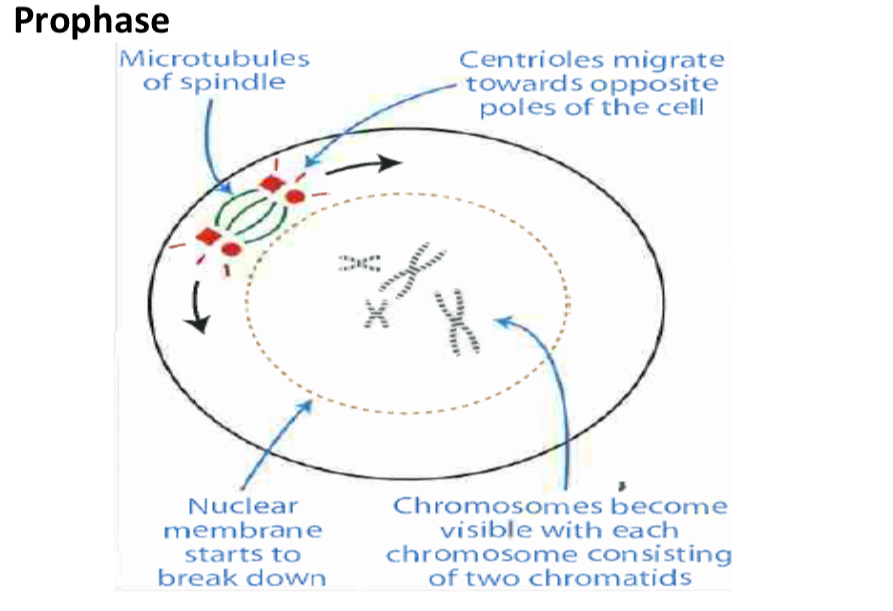
Prophase
Chromatin in nucleus becomes condensed and more visible
Nucleolus disappears
Nuclear membrane breaks down
Centrioles involved in formation of spindle fibres move to opposite poles of cell.
Spindle fibres form
Each chromosome can be seen as 2 chromatids joined by a centromere.
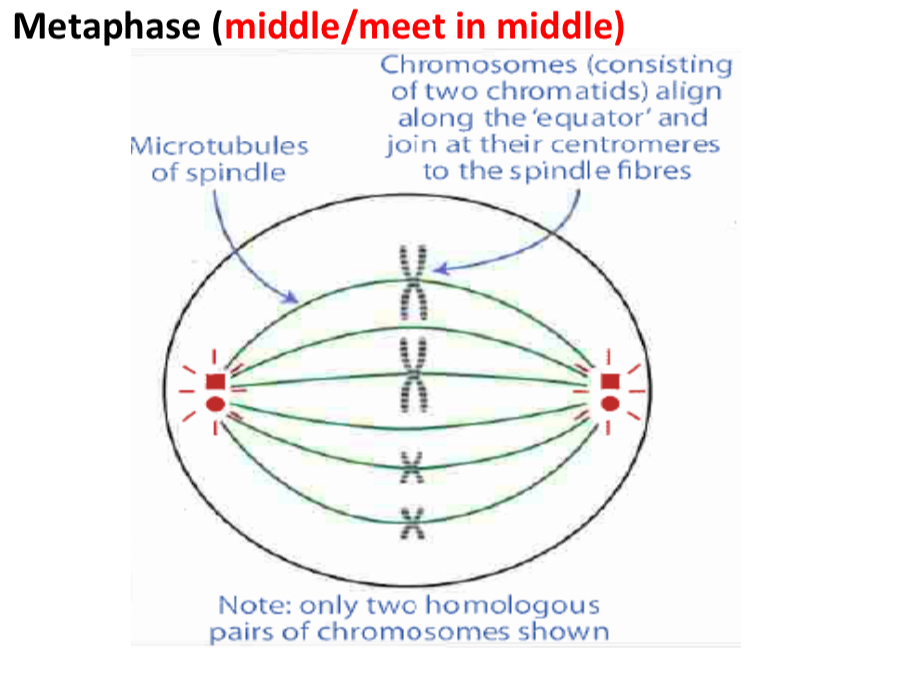
Metaphase
Chromosomes align along the equators
Chromosomes attach to spindle fibres at their centromere
Anaphase
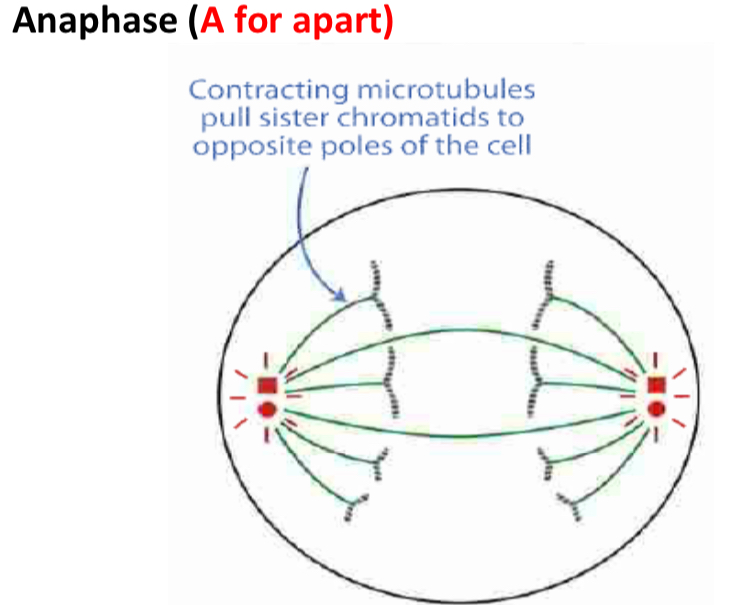
Spindle fibres contract to pull chromatids apart
Centromere splits
Chromatids move to opposite poles of the cell.
Telophase (transported)
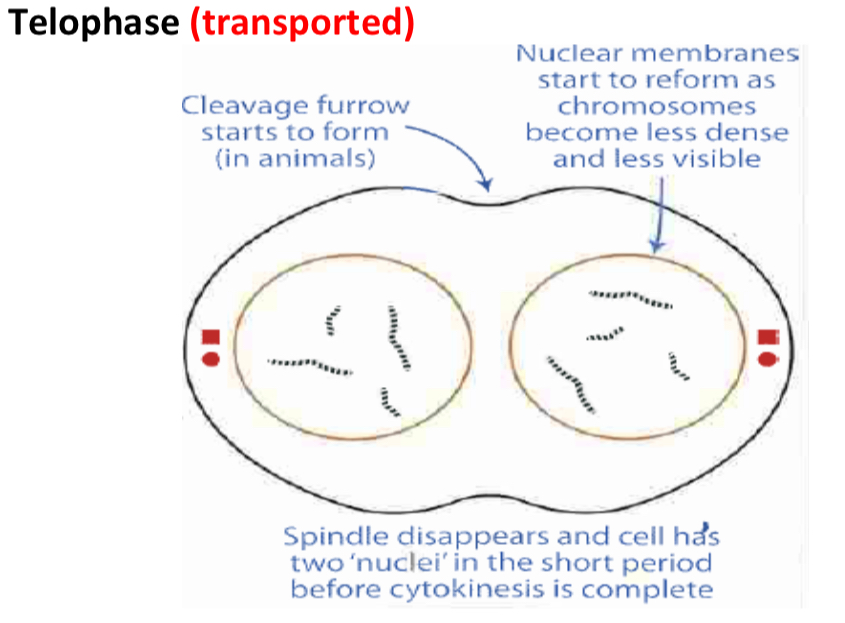
Chromatids reach opposite poles and are now referred to as chromosomes again.
Chromosomes decondense
Nucleolus reappears
Nuclear membrane reforms
Spindles fibres break down
Cleavage furrow starts to form
After mitosis, cytokinesis occurs. What happens?
Cell divides to form 2 daughter cells.
Each daughter cell is genetically identical to each other and parent cell.
Cytokinesis in animal cells
cleavage furrow forms and splits the cell
Cytokinesis in Plant cells
cell plate is laid down in centre of cell = splits it.
No centrioles involved in mitosis in plant cells.
Mitotic cell division maintains state of ploidy . What does this mean?
A diploid cell will produce 2 diploid daughter cells
46 parent 46 daughter chromosomes
Meiosis is process of reduction division. meaning?
Halves no. of chromosomes in gametes. One chromosome from each homologous pair enters a gamete. When female and male gametes fuse together during fertilisation diploid is restored.
How does meiois differ to mitosis?
in meiosis - Chromosomes arrangement in daughter cells is different from each other and the parent cell
2 divisions in meiosis producing 4 daughter cells. One division in mitosis = 2 daughter cells
Meiosis only occurs in the reproductive organs (testes/ovaries)
Prophase I in meiosis
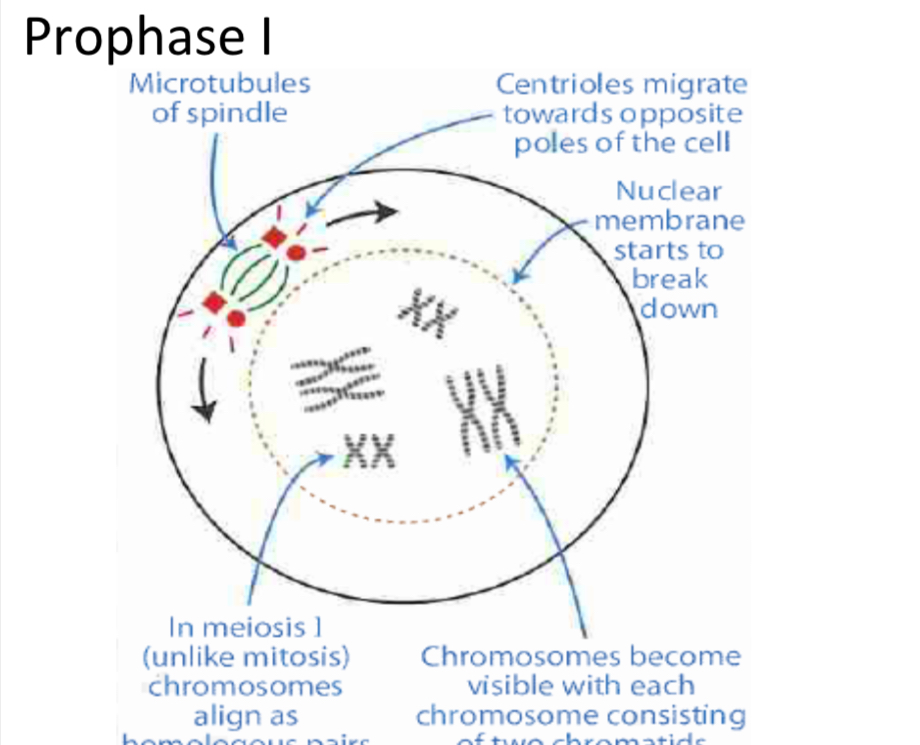
Homologous chromosomes have paired up = bivalents (pairing during interphase)
Chromatin condenses bivalents become more visible
Nucleolus disappears
Nuclear membrane breaks down
Centrioles involved in formation of spindle fibres move to opposite poles of cell.
Spindle fibres form
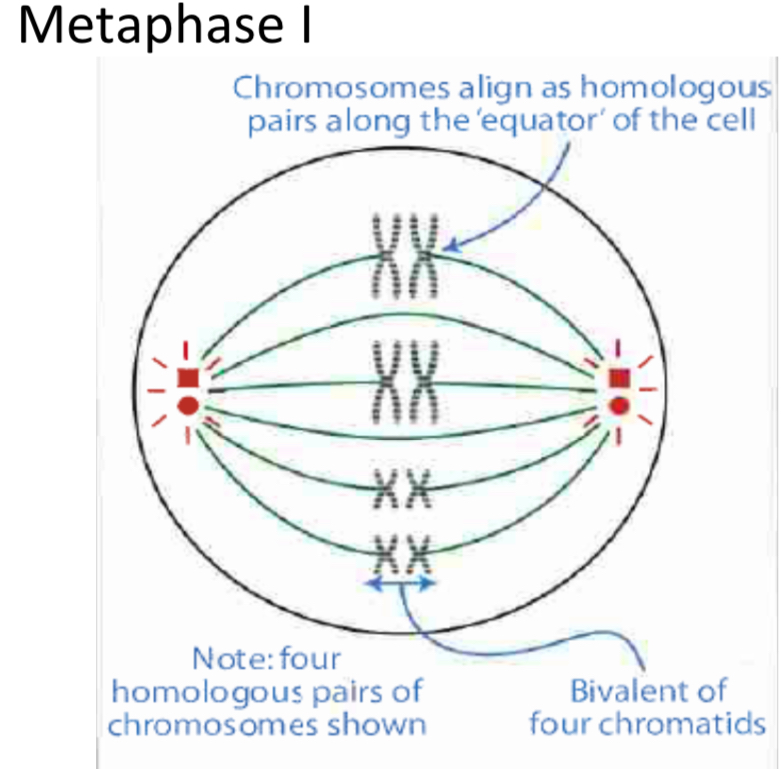
Metaphase I
Bivalents align along the equator and Attach to spindle fibres at their centromeres.
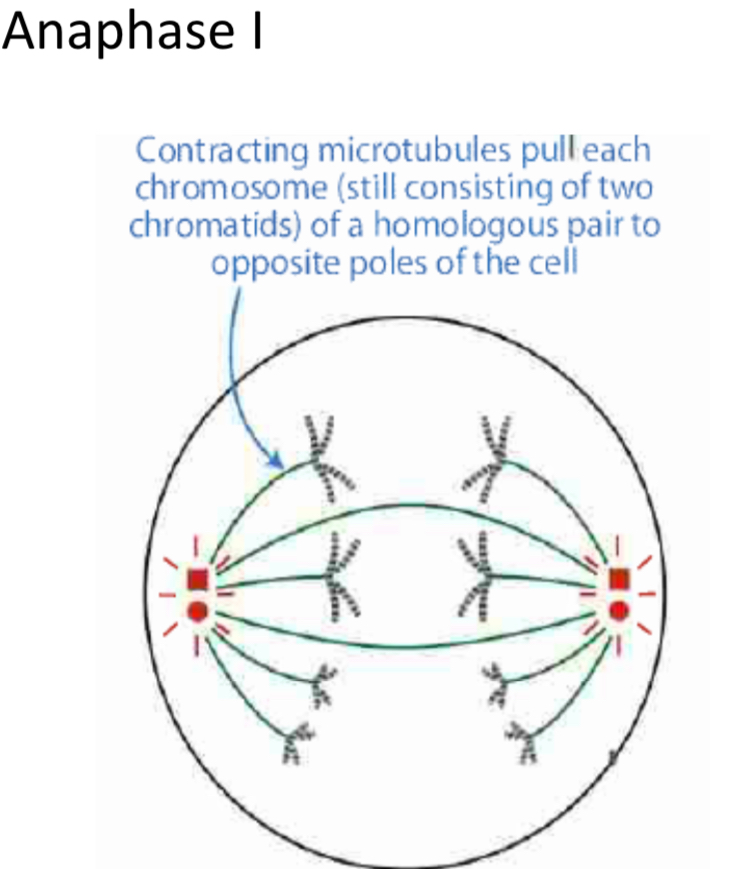
Anaphase I
Spindle fibre contracts pulling chromosomes to opposite poles
2 chromosomes in each bivalent pulled apart.
Telophase I
Chromosomes pulled to opposite poles of cell
Chromosomes decondense slightly
Nucleolus reappears
Nuclear membrane reforms
Spindles fibres break down
Cleavage furrow starts to form
What happens duringMeiosis II
Spindle fibres form at right angles to those in meiosis I and pull sister chromatids apart; two chromatids of each chromosome separate and go into new cells produced by each daghter cell from meiosis 1
Following meiosis II what occurs?
Cytokinesis occurs – each daughter cell produced in meiosis I divides again after a cleavage furrow forms, producing 2 new daughter cells each
Overall 4 haploid daughter cells are produced each genetically different to each other and parent cell.
Meiosis What are the two process that allow variation to be produced?
Independent assortment
Crossing over
1. Independent assortment
Only one chromosome from each homologous pair can enter a gamete
The chromosome that enters a gamete is dependent on the random nature of how chromosomes align along the equator in metaphase 1
There are millions of possible chromosome arrangements for any one gamete.
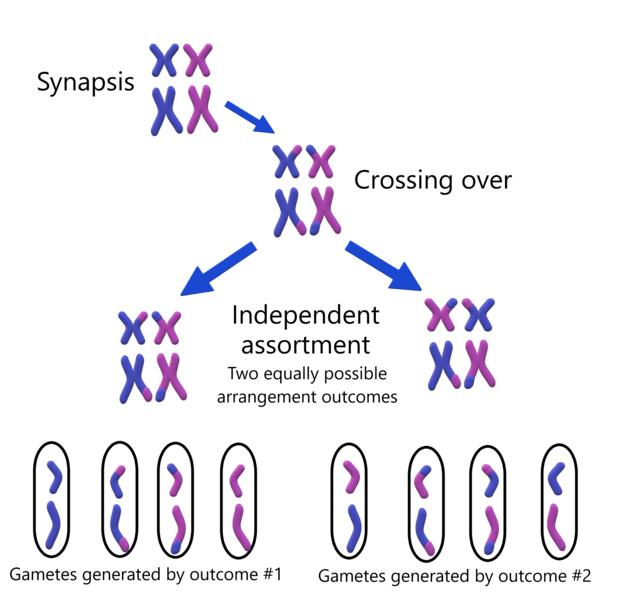
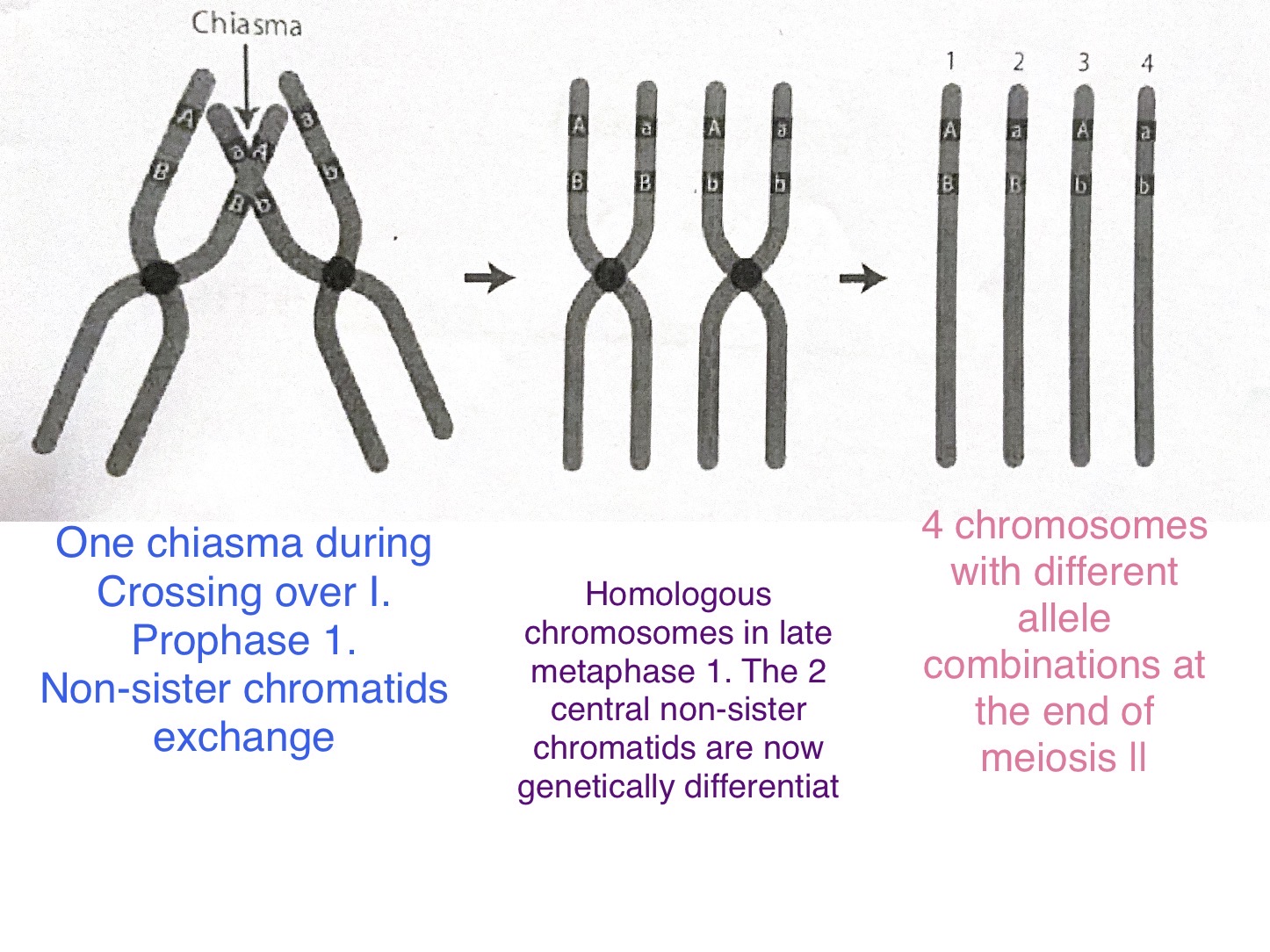
2. Crossing over
Homologous chromosomes pair up to form bivalents (4 chromatids) in prophase I
2 non-sister chromatids from homologous chromosomes can break and exchange sections of DNA with each other (swap alleles)
crossing over occurs during prophase I
Point where chromosomes cross over are called chiasmata (chiasma – singular)
Why is crossing over significant
Two chromosomes or a homologous pair have identical genes but some alleles may differ
Crossing over consequence
two chromatids of same chromosome are no longer identical
Some chromatids now have unique sequences or alleles that did not exist in potential chromosome
The 2 chromatids are now referred to as recombinants
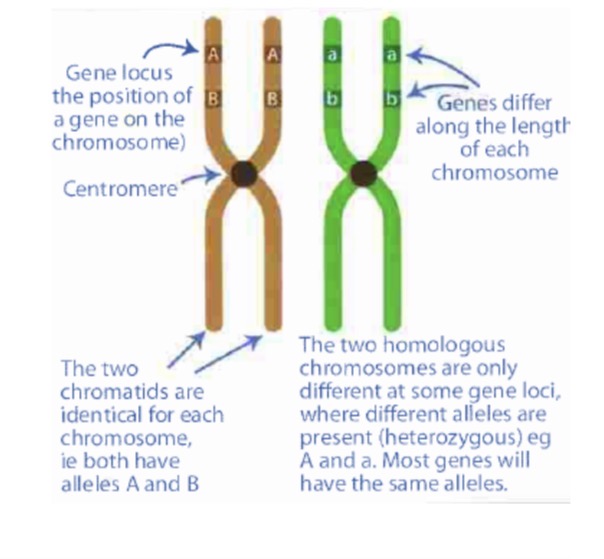
What is a bivalent
A pair of homologous chromosomes (4 chromatids)
Crossing over diagram