Exam 3 – Host Microbe Interactions Epidemiology
 Call Kai
 Learn
Learn Practice Test
 Spaced Repetition
 Match
Match Flashcards
 Knowt Play
1/41

There's no tags or description
Looks like no tags are added yet.
Name | Mastery | Learn | Test | Matching | Spaced | Call with Kai |
|---|
No analytics yet
Send a link to your students to track their progress
42 Terms
Effects of microorganisms on hosts
Stages:
Contamination – presence of microbes
Infection – multiplication of microbes on or in
infestation – worms or insects
Disease – host cannot carry on normally
stages – mild, severe but reversible, severe and irreversible
Pathogenicity
capability to produce disease
low – rarely cause disease (or disease produced is mild)
high – usually cause disease
pathogen – parasite
Virulence
intensity of the disease caused by a pathogen
Attenuation
the weakening of a pathogen’s virulence
natural or through genetic manipulation
attenuated viruses are often used for vaccines (mumps, measles, influenza, etc.)
Transposal of virulence
repeated passage of a pathogen to new hosts (new species)
no longer virulent to original host
Virulence Factors
adherence/invasive factors
pili
slime layer/capsules
avoidance mechanisms
capsules (avoid phagocytosis)
toxins
exotoxins
endotoxins
What is normal flora and resident microflora?
normal flora
also called normal microflora or normal microbiota
live on or in without causing disease (commensals)
10x more microbes per body than cells in body
help compete out bad microbes
resident microflora
always present
How do children get normal flora?
have no normal flora in utero
get it from
passage through the birth canal
contact with other people
contact with feeding material
nursing
contact with instruments
Body parts that are normally microbe free – tissues and organs
middle and inner ear
sinuses
internal eye
bone marrow
muscles
glands
organs
circulatory system
brain and spinal cord
ovaries and testes
Body parts that are normally microbe free – body fluids
blood
cerebrospinal fluid
saliva in glands
urine in kidneys/bladder
Transient microflora
not usually there – "just passing through”
Opportunists microflora
can cause disease if conditions are right
failure of defenses – immunocompromised
unusual body locations
disturbances of normal flora – microbial antagonisms (where normal flora would usually out-compete it)
Modes of disease transmission
contact transmission
direct contact
indirect contact by fomites
droplets
vehicle transmission
waterborne
airborne, including dust particles
foodborne
vector transmission
mechanical
biological
Horizontal transmission
person to person – contagious diseases
Vertical transmission
parents to offspring
Fomites
nonliving objects that harbor an infectious agent (tissue, utensil, money, etc.)
Course of disease
incubation period – no signs or symptoms
prodromal phrase – (“forerunner”) vague symptoms/starting symptoms that are usually nonspecific– fever, malaise
invasive phrase – most severe signs and symptoms
acme – peak of disease – when symptoms distinct to a particular illness occur
decline phase – declining sygns and symptoms
convalescence period
Epidemiology
the study of the following in populations
disease frequency
disease spread
disease control
Etiology
the cause of disease
Incidence
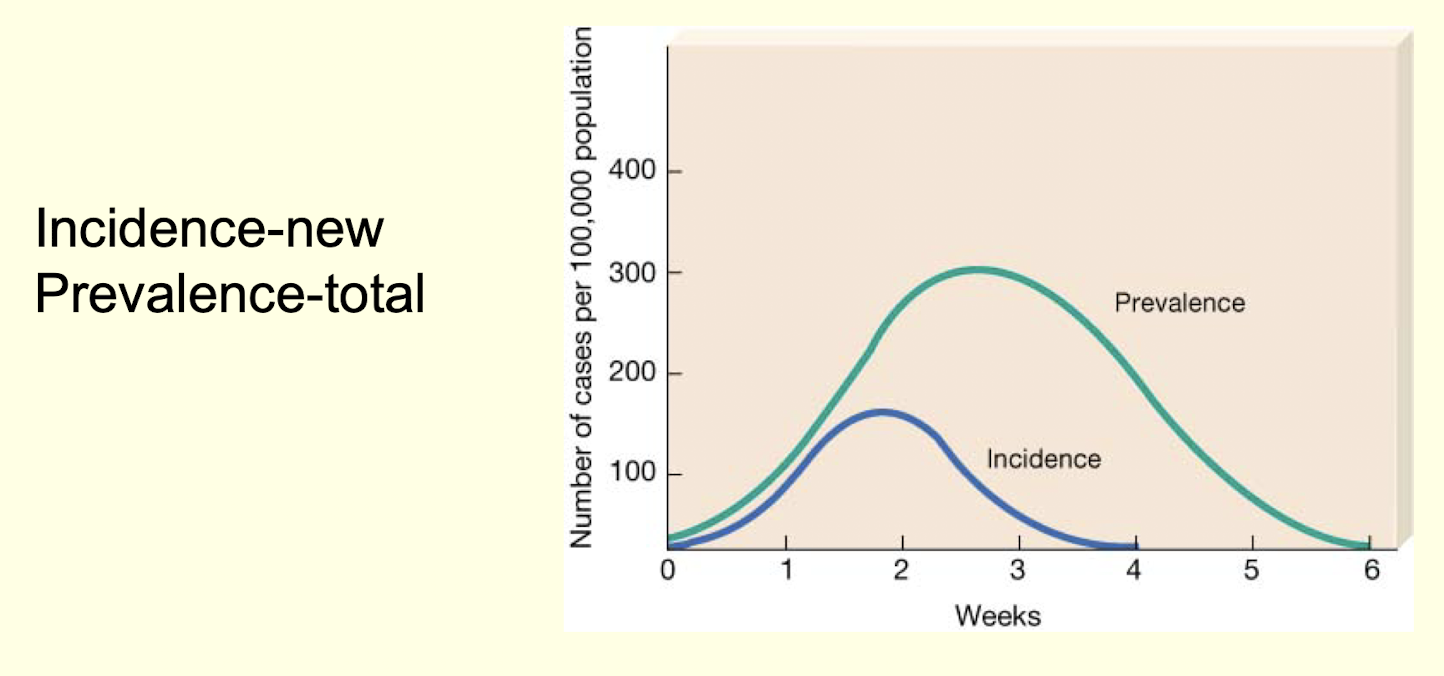
number of cases in a population in a given time period (new cases)
Prevalence
percentage in a population having the disease (new and existing)
Morbidity
number of cases in a population – counted in the Morbidity and Mortality Weekly Report (MMWR)
Mortality
number of deaths in a population – counted in the Morbidity and Mortality Weekly Report (MMWR)
How do incidence and prevalence rates look on a graph?
Diseases in populations – endemic
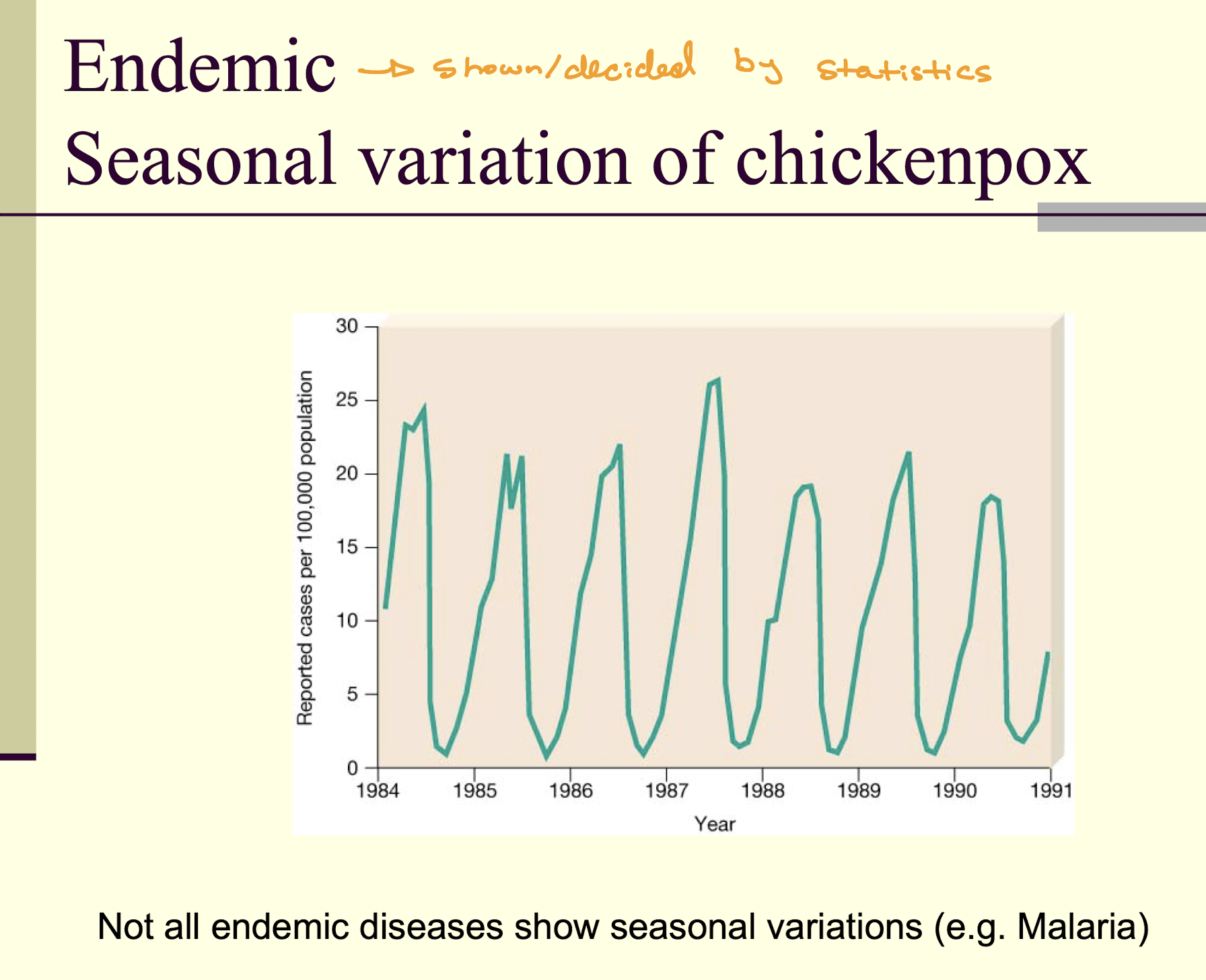
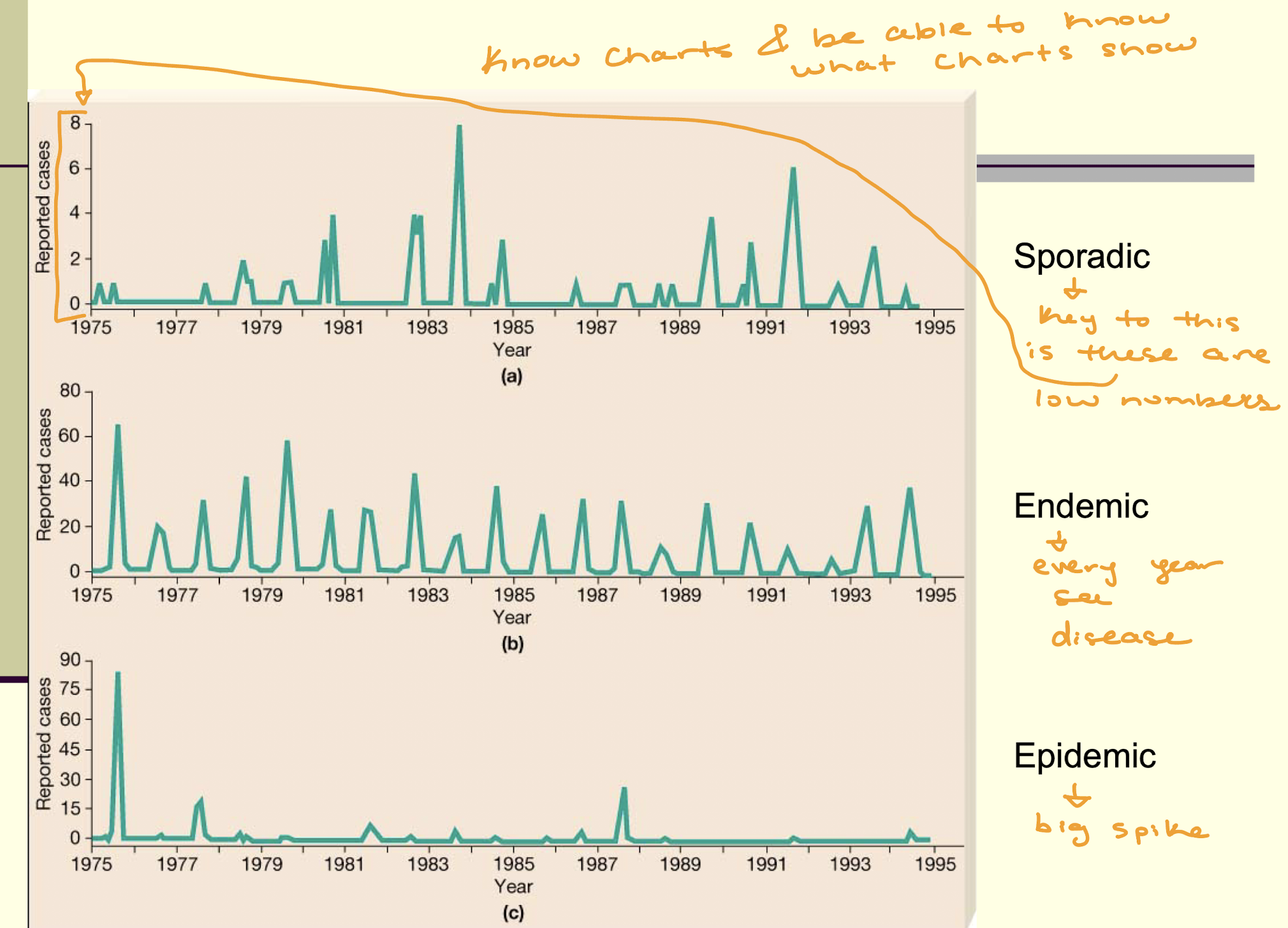
present coninutally
Diseases in populations – epidemic
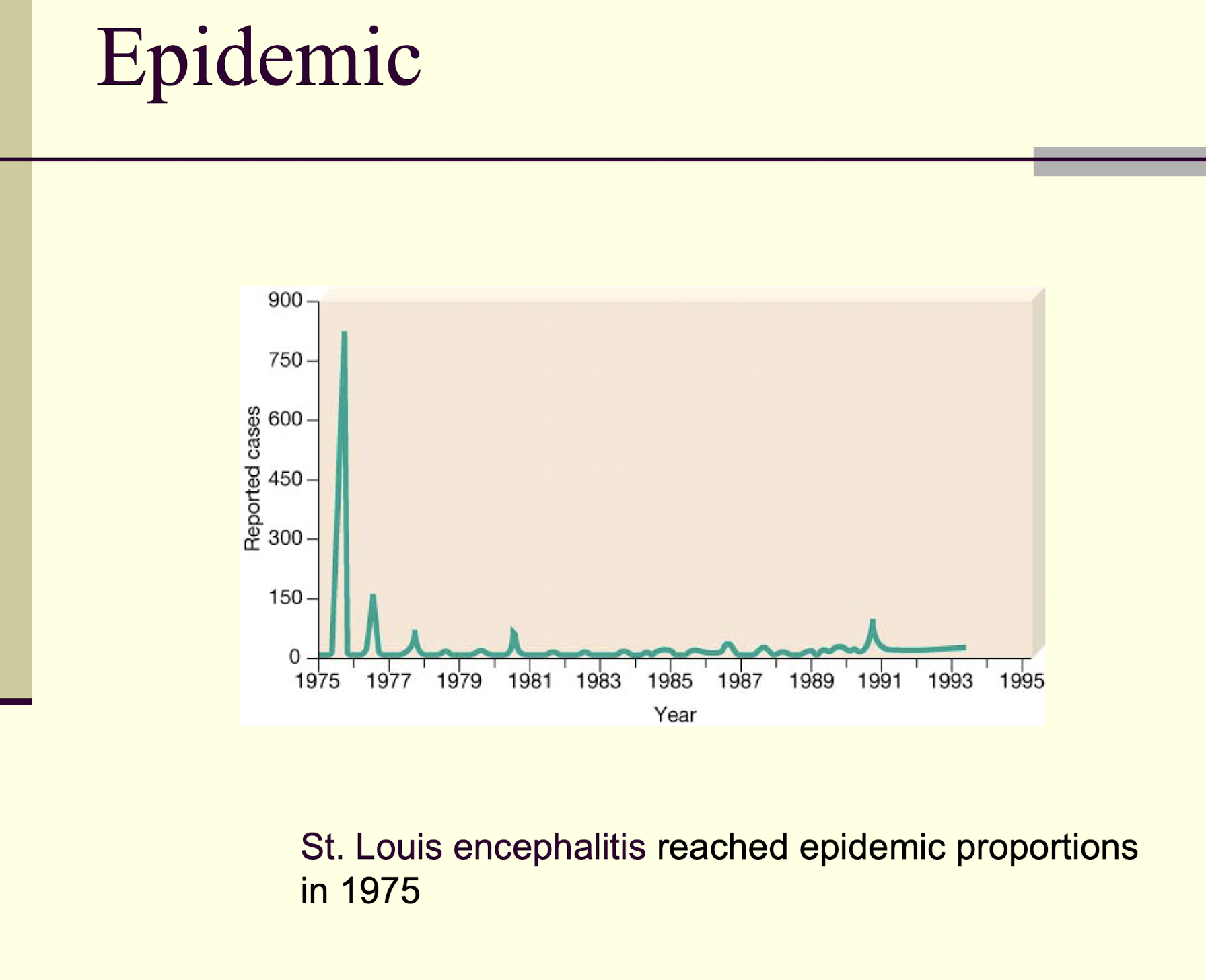
higher than normal incidence
Diseases in populations – pandemic
worldwide epidemic
ex. 1918 flu, 2009 H1N1
Diseases in populations – sporadic
random/unpredictable
What does an endemic disease look like on a graph?
What does an epidemic look like on a graph?
Say how these different outbreaks on the graphs – sporadic, endemic, epidemic?
Common source outbreak
contact with contaminated substances
Propagated epidemics
person to person (horizontal transmission) – contagious
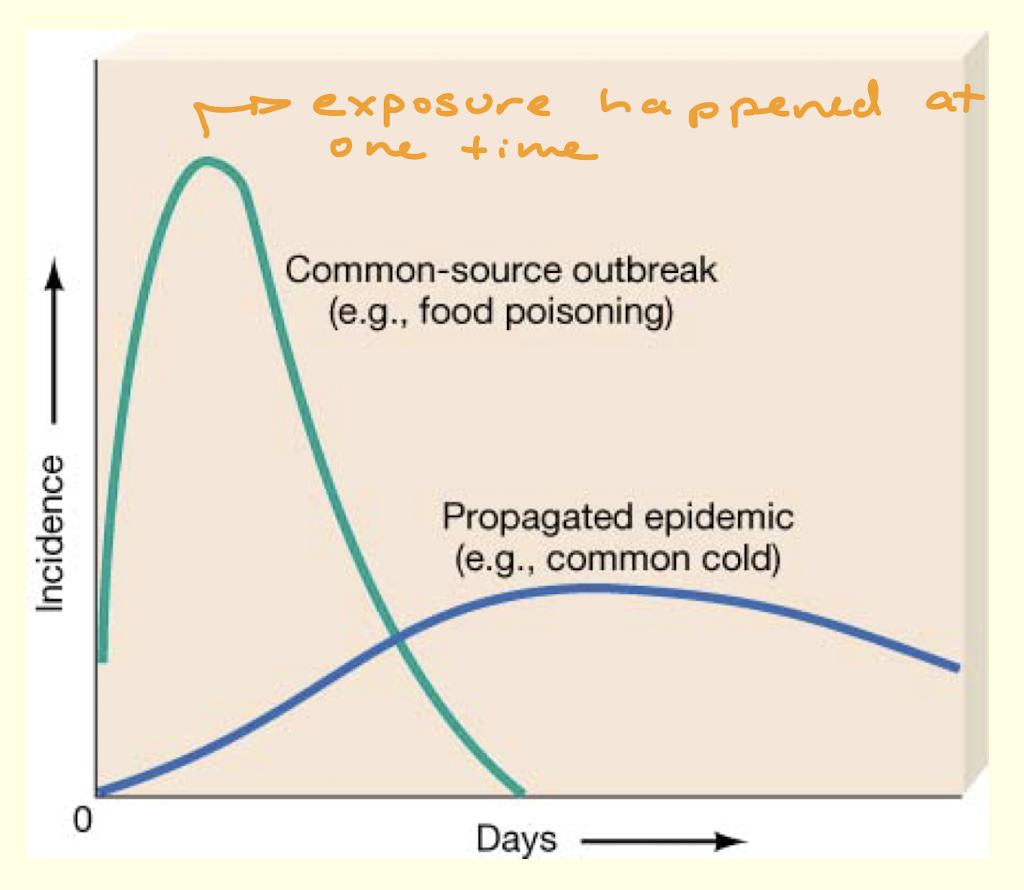
Compare how common source and propagated epidemics look on a graph
Reservoirs of infection
sites where organisms can maintain their ability to infect
Human reservoirs
active or subclinical infections (carriers)
chronic
intermittent
Communicable – infectious (possibly before symptoms)
contagious
Animal reservoirs
zoonoses – diseases from other vertebrates (i.e. anthrax, rabies, hantavirus)
can be transmitted by a vector
Nonliving reservoirs
soil and water
Nosocomial infections
infection acquired in a medical facility
by patients and staff
10% of patients
$5 billion/year in hospital costs
20,000/year die
just know if its common or not (not – 10%)
Methods of controlling disease transmission
isolation – patient with disease isolated
quarantine – separation of “healthy” after exposure
vector control – ex. pesticides, bed nets
active immunizations (vaccines)
pathogen eradication – getting rid of organisms – very difficult
Herd immunity
resistance of a group to infection
for polio – 70% need to be immunized
For influenza – 90%
A major reason why all vaccinations are critical for all
Pathogen eradication
accomplished with smallpox
in progress for polio (close), leprosy, and Guinea worm (close)
most feasible with organism with a single host

